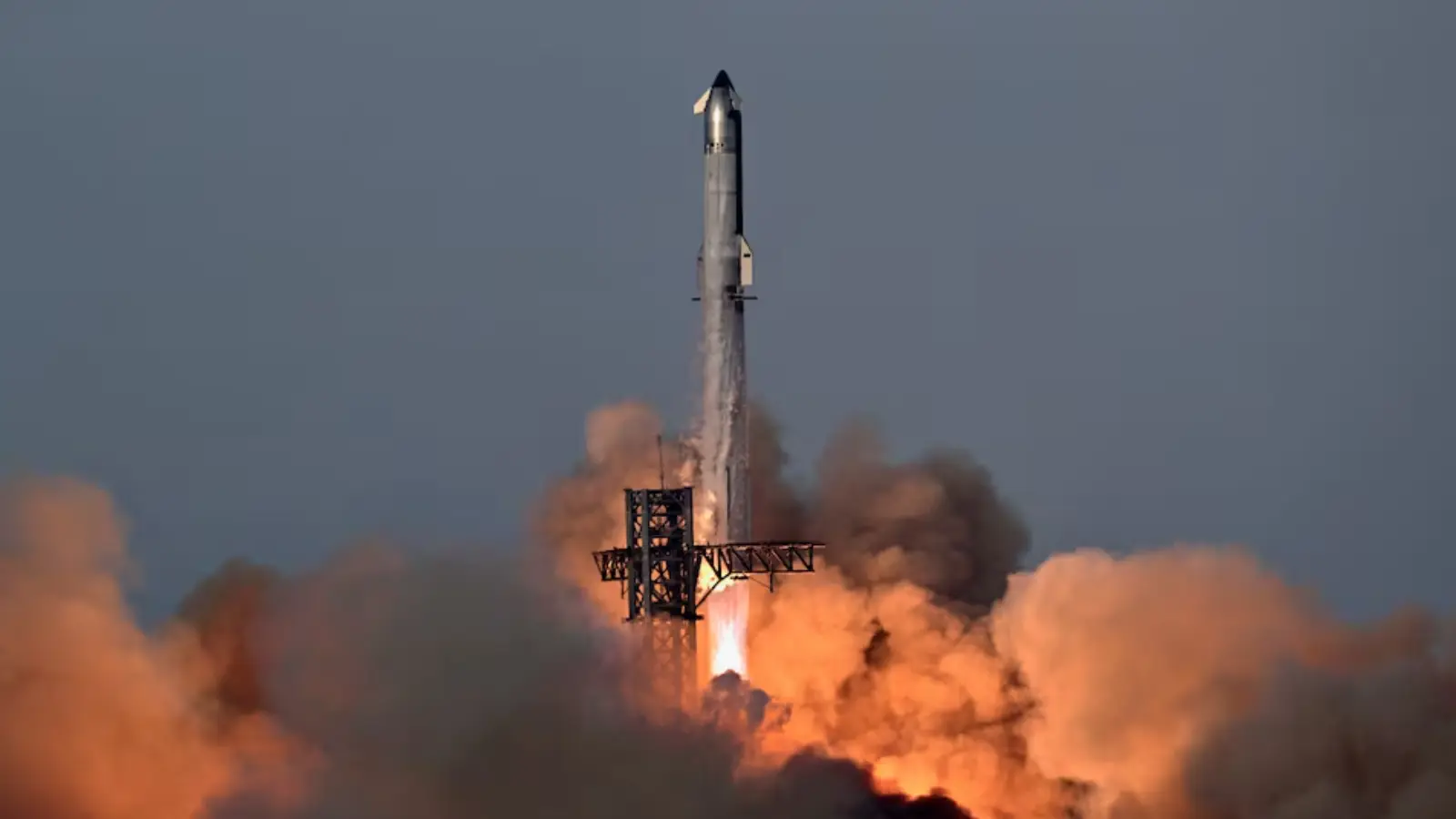
SpaceX is planning to invest more than $74 billion in two large-scale supercomputing campuses in the United States, expanding its business beyond launch vehicles, spacecraft and satellite communications into artificial intelligence infrastructure.
The projects, announced on November 12, 2026, include a facility near Starbase in South Texas valued at more than $24 billion and a roughly $50 billion campus proposed for Cochise County, Arizona.
The expansion would give SpaceX additional infrastructure for training advanced AI systems while creating substantial demand for electricity, supporting infrastructure and specialized computing facilities. The company also expects the projects to generate thousands of construction and permanent jobs.
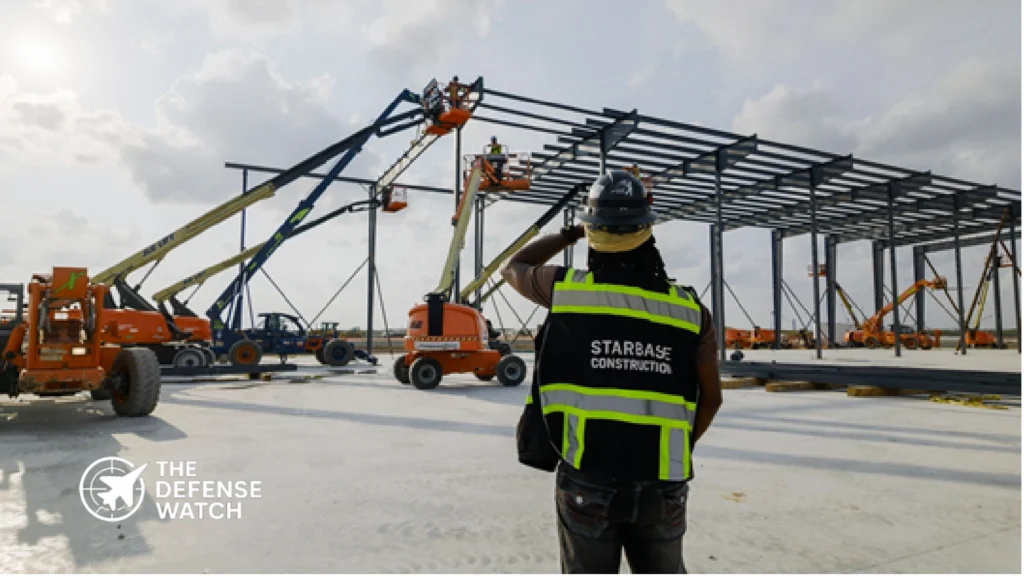
However, the investments remain subject to important development and approval processes, particularly in Arizona, where residents have raised concerns about the scale of the proposed facility and its potential effects on the surrounding community.
Two Campuses, More Than $74 Billion in Planned Investment
SpaceX is pursuing the projects as part of a broader effort to expand its computing and artificial intelligence capabilities.
The proposed investment is divided between two locations:
| Project | Planned investment | Expected permanent jobs |
|---|---|---|
| Starbase, Texas | More than $24 billion | More than 500 |
| Cochise County, Arizona | Approximately $50 billion | Approximately 1,000 |
| Combined | More than $74 billion | More than 1,500 |
The figures represent SpaceX’s announced investment plans and employment projections, not completed construction or confirmed operational capacity.
The company says the Texas project has already generated more than 3,000 construction jobs. Its Arizona proposal could create approximately 5,500 construction positions during development.
The projects also form part of a wider expansion of SpaceX’s industrial activities. The company has announced its $100 billion Terafab semiconductor manufacturing initiative in Grimes County, Texas, and is expanding its Starlink manufacturing operations in Bastrop.
Together, these initiatives point toward a business model increasingly dependent on the integration of computing hardware, semiconductor production, satellite communications and aerospace infrastructure.
Starbase Facility: Dedicated Power for AI Computing
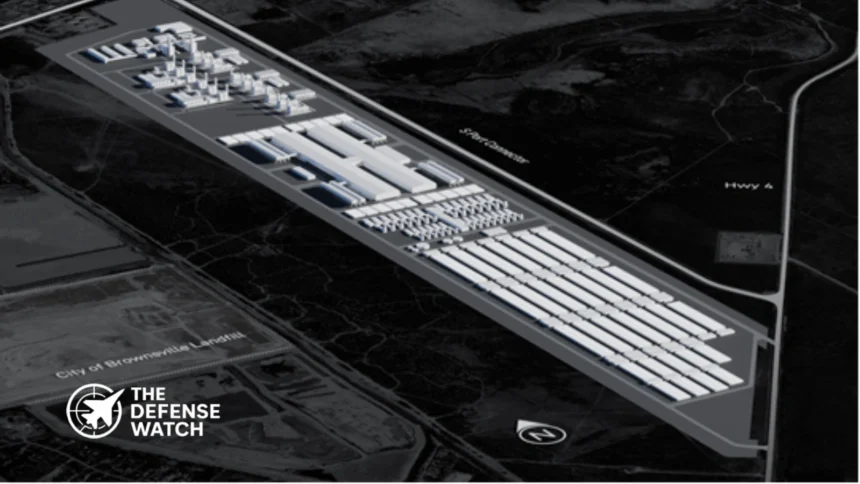
The larger Texas development is planned for approximately 444 acres of privately owned property near the Port of Brownsville and the Brownsville city landfill.
SpaceX intends to invest more than $24 billion in the facility, which will train advanced artificial intelligence systems and support research into future space-based computing technologies.
The company identifies several intended applications for the computing infrastructure, including:
- Medical research and scientific discovery.
- Emergency response and disaster management.
- Advanced manufacturing.
- National security applications.
- Development and testing of space-based computing technologies.
One of the project’s defining features is its proposed independent electricity supply.
SpaceX says the facility will generate its own electricity rather than draw power from the public grid. However, the available announcement does not provide a complete breakdown of generation capacity, fuel consumption, emissions or the proposed power system’s configuration.
A November 2026 report by The Texas Tribune identified the development as including a gas-fired power plant alongside the supercomputing facility.
That distinction matters because independent generation does not automatically mean low environmental impact. The project’s emissions, fuel requirements and air-quality compliance will remain important considerations as its power infrastructure advances.
SpaceX says its power systems will incorporate emissions controls and monitoring to meet applicable federal and state requirements.
Brownsville’s $220 Million Water Infrastructure Agreement
Water infrastructure is another important part of the Texas development.
SpaceX has committed up to $220 million in private funding for water and wastewater improvements benefiting Brownsville and Cameron County. The company says the contribution will help address regional water shortages while reducing the financial burden on local utility customers.
Brownsville’s water supply depends heavily on the Rio Grande, making alternative sources increasingly important amid drought conditions and growing regional demand.
The city’s September 23 announcement provides an important clarification about the actual infrastructure projects.
The approved projects are expected to add approximately 18 million gallons per day of additional capacity, rather than the 20 million gallons cited in SpaceX’s broader announcement.
The planned improvements include:
- Approximately 8 million gallons per day from potable water reuse and wastewater reclamation.
- Approximately 10 million gallons per day through expansion of the Southmost Regional Water Authority facility.
The Brownsville City Commission approved the projects under its agreement with SpaceX, with funding of up to $220 million tied to project milestones.
The agreement also establishes an important distinction: SpaceX’s contribution does not give the company ownership of the public water infrastructure or reserved capacity in the municipal water system.
The facilities will remain under public ownership.
This arrangement is particularly relevant because the supercomputing development and its associated power infrastructure will require careful management of local resources. The company’s water investment is intended to expand regional capacity, not establish preferential access to existing supplies.
SpaceX also says it has provided an initial $40 million contribution toward the projects.
Arizona Campus: A $50 Billion Computing Development
The proposed Arizona development is substantially larger in financial terms, with SpaceX planning an investment of approximately $50 billion in Cochise County.
The company expects the campus to generate approximately 5,500 construction jobs and support around 1,000 permanent positions once operational.
Unlike the Texas project, which SpaceX says will generate its own electricity, the Arizona development is being advanced in cooperation with regional electric cooperatives.
SpaceX says the campus will use existing renewable energy resources and strengthen regional electricity infrastructure. The company also claims the development could reduce electricity bills for cooperative members by up to 20%.
That figure remains a projected benefit rather than a confirmed reduction in customer bills. Its realization will depend on the final electricity arrangements, infrastructure costs and how any savings are distributed among cooperative customers.
Dry Cooling and Groundwater Concerns
Water consumption is a major consideration for large AI computing facilities, particularly in arid regions such as southeastern Arizona.
SpaceX says its proposed Arizona campus will use dry cooling, which relies on air-based heat rejection rather than conventional water-intensive cooling arrangements.
The company also says it does not plan to use industrial groundwater or develop new wells for the facility.
These commitments are relevant to a region where water availability is already a significant planning issue. Nevertheless, the full environmental implications will depend on the final engineering design, electricity supply, supporting infrastructure and regulatory review.
The proposal is not without opposition.
Local residents have raised concerns about water resources, electricity demand, wildlife protection, noise and the scale of the development. Reuters reported that a petition opposing the project had collected approximately 2,400 signatures.
Cochise County’s public hearing process is therefore an important next step before the project can advance through the required approvals.
Why SpaceX Is Expanding Into Supercomputing
SpaceX’s move into supercomputing reflects the growing importance of computing infrastructure in the development of advanced artificial intelligence.
Training large AI models requires substantial computing resources, specialized processors, high-speed networking, cooling systems and reliable electricity supplies.
These requirements have made large computing campuses strategically important to companies developing advanced AI systems.
For SpaceX, building its own infrastructure could provide greater control over computing capacity and the hardware environment supporting its AI operations.
The strategy also connects with its existing aerospace and satellite businesses.
AI systems could support research, engineering, manufacturing, mission planning and the processing of information generated by large satellite networks. SpaceX has also identified national security as one of the intended application areas for its planned Texas facility.
However, the company has not disclosed the specific military or government programs that might use the facilities.
There is also no publicly established breakdown of how much computing capacity will be allocated to aerospace research, commercial AI services or national security applications.
Consequently, the announcement should be understood primarily as an industrial and technology infrastructure expansion, rather than evidence of a new operational military computing capability.
Implications for US Defense and National Security
The proposed facilities could eventually contribute to the computing infrastructure supporting US national security research and advanced technology development.
Artificial intelligence is becoming increasingly relevant to military applications, including intelligence analysis, logistics, autonomous systems, cyber defense, simulation and decision-support tools.
Large-scale computing infrastructure can support the development and testing of these technologies, but access to computing resources alone does not establish an operational military capability.
For SpaceX, the potential connection is particularly relevant because the company already operates in areas with direct national security applications, including satellite communications, space launch and government space services.
Its expanding computing business could create additional opportunities to support government and defense customers.
However, SpaceX has not announced specific Pentagon contracts, military computing deployments or dedicated defense allocations for either proposed campus.
The distinction is important. The facilities could strengthen the broader US AI industrial base, but their direct contribution to military operations remains undetermined.
Investment Scale Brings Infrastructure and Regulatory Challenges
The combined investment also illustrates the infrastructure requirements associated with the expansion of US AI computing.
Large supercomputing facilities require more than buildings and processors. They depend on electricity generation, transmission infrastructure, cooling systems, water management, communications networks and specialized construction.
SpaceX’s proposals address some of these requirements through different approaches in the two states.
| Infrastructure requirement | Texas | Arizona |
|---|---|---|
| Computing investment | More than $24 billion | Approximately $50 billion |
| Electricity approach | Dedicated generation | Regional cooperative arrangements |
| Cooling and water | Details not fully disclosed | Planned dry cooling |
| Water infrastructure | Up to $220 million regional investment | No planned industrial groundwater use |
| Permanent employment | More than 500 | Approximately 1,000 |
The different approaches reflect the locations’ infrastructure and environmental conditions.
Texas will need to address the environmental and regulatory implications of dedicated power generation. Arizona will face questions about electricity demand, transmission capacity and the feasibility of its proposed cooperative arrangements.
Both projects will also require local government engagement.
In Texas, the Starbase City Commission is scheduled to consider a property tax abatement for the proposed development on December 9, 2026, according to Reuters.
In Arizona, the Cochise County Planning and Zoning Commission has scheduled a public hearing for December 9 concerning the proposed supercomputer and AI data center campus. The county’s legal notice identifies a development area of approximately 747 acres, with up to nine computing buildings planned across four phases.
These approval processes will help determine whether the announced investments translate into construction on the proposed scale.
A Broader Shift in SpaceX’s Industrial Strategy
SpaceX’s supercomputing plans represent an expansion beyond its established aerospace and satellite manufacturing activities.
The company’s existing businesses depend on advanced engineering, electronics, communications and large-scale manufacturing. Its new computing projects extend that industrial footprint into the infrastructure required to develop and operate advanced AI systems.
The proposed $74 billion investment also places SpaceX among the companies pursuing large-scale computing infrastructure in the United States.
For the defense sector, the potential significance lies in the availability of additional domestic computing resources and the possibility of future applications across aerospace, intelligence and national security.
Yet substantial questions remain about project financing, final power requirements, environmental approvals, construction schedules and the eventual allocation of computing capacity.
Neither campus should be treated as an operational supercomputer facility at this stage. Both remain announced development projects, with important regulatory and infrastructure milestones ahead.