Lockheed Martin Secures $330.6 Million Contract for 75 F-35 Lot 22 Fighters
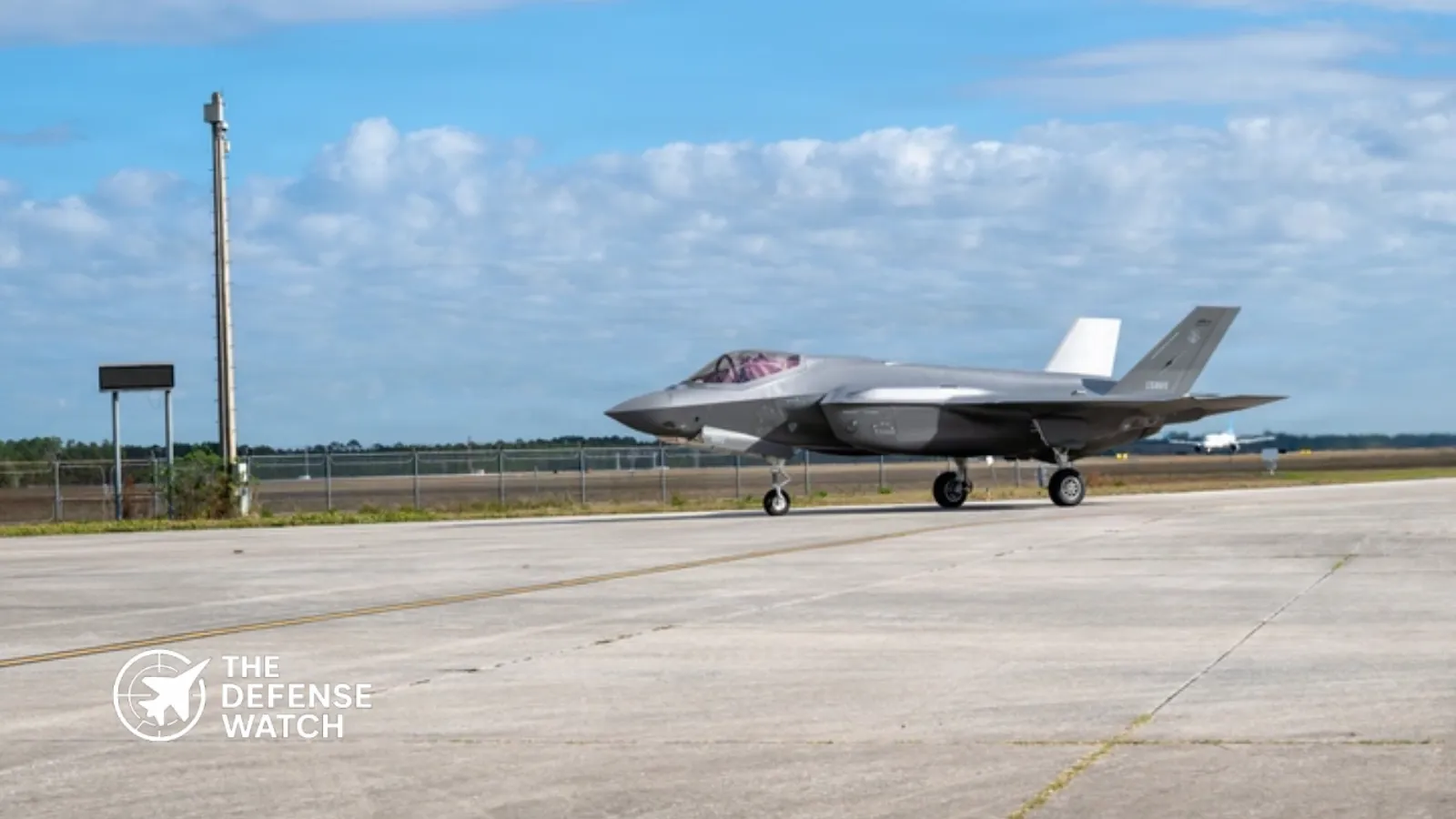
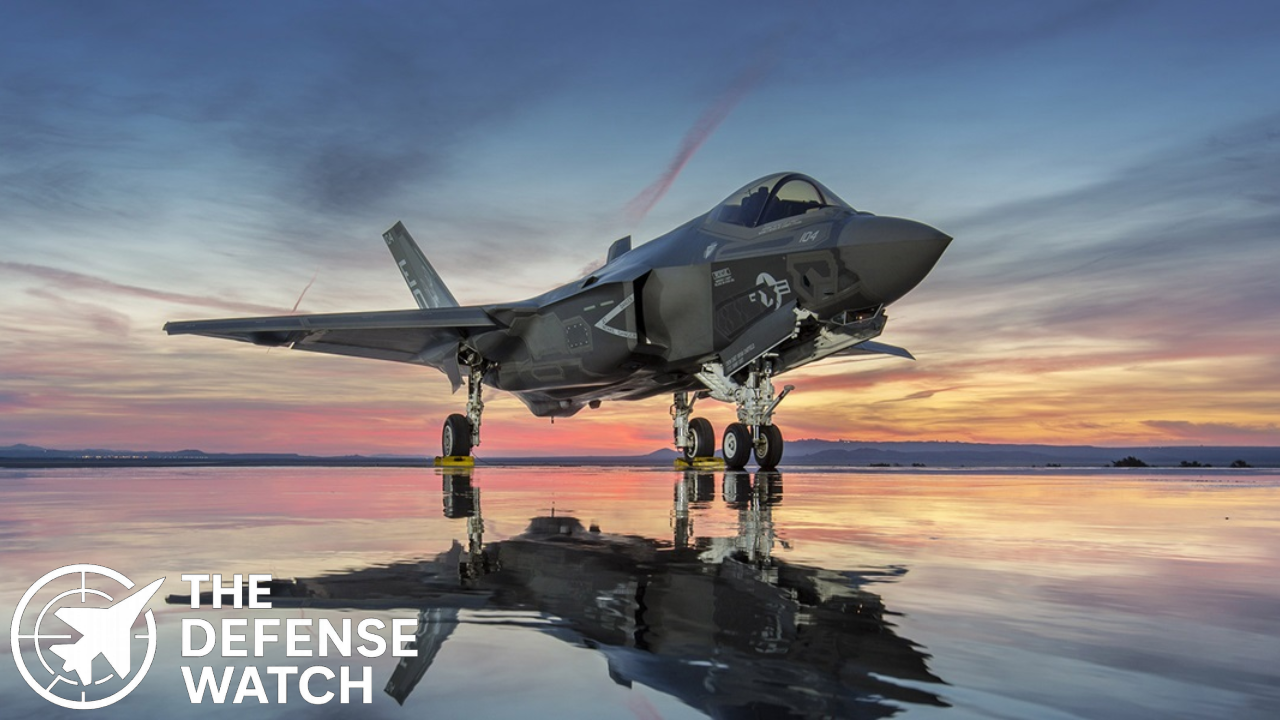
Lockheed Martin has received a $330.6 million U.S. Navy contract modification to purchase long-lead materials, parts and components for 75 F-35 Lightning II fighters planned for the U.S. Air Force, Navy and Marine Corps.
The $330,602,692 award expands an existing advanced acquisition contract managed by Naval Air Systems Command (NAVAIR). It supports the preparation of the next production batch, designated Lot 22, with work scheduled to continue through December 2030.
The modification is structured as a fixed-price incentive, firm-target agreement. Unlike a conventional aircraft delivery contract, this particular award covers materials and components required ahead of full aircraft production. It does not represent payment for 75 completed fighters.
How the $330.6 Million Award Is Structured
The funding comes from two fiscal year 2027 aircraft procurement accounts:
| Funding source | Amount |
|---|---|
| Air Force aircraft procurement | $80,168,692 |
| Navy aircraft procurement | $250,434,000 |
| Total | $330,602,692 |
Both amounts will be obligated when the modification is awarded.
The Navy procurement allocation also supports Marine Corps aviation requirements, although the contract announcement does not identify how the 75 aircraft are divided among the three services.
That distinction matters because the F-35 program includes three different aircraft configurations:
- F-35A: Conventional takeoff and landing aircraft operated by the U.S. Air Force.
- F-35B: Short takeoff and vertical landing aircraft operated by the Marine Corps.
- F-35C: Carrier-capable aircraft operated by the Navy and Marine Corps.
The contract announcement does not provide a variant-by-variant allocation, so the number of F-35As, F-35Bs and F-35Cs covered by this particular modification remains undisclosed.
A Global Supply Chain Supports the Next Production Lot
Although Lockheed Martin’s Fort Worth facility accounts for the largest share of the work, the contract involves a geographically distributed manufacturing network.
The announced work allocation is:
Location Share of work Fort Worth, Texas 59% El Segundo, California 14% Warton, United Kingdom 9% Cameri, Italy 4% Orlando, Florida 4% Nashua, New Hampshire 3% Baltimore, Maryland 3% San Diego, California 2% Other international locations 2% The distribution reflects the multinational industrial structure behind the F-35 program. Production depends on facilities in the United States and international partner countries, rather than a single manufacturing location.
The concentration of work in Fort Worth also reinforces Lockheed Martin Aeronautics’ central role in aircraft assembly and production management. Meanwhile, facilities in California, the United Kingdom and Italy contribute to the wider component manufacturing network.
The work is expected to be completed in December 2030. The contract modification was not competitively procured, with Naval Air Systems Command in Patuxent River, Maryland, serving as the contracting activity.
Lot 22 Within the Wider F-35 Procurement Program
The 75-aircraft requirement fits into a larger procurement effort involving all three U.S. military services.
The Department of Defense’s FY2027 program acquisition documentation identifies 85 planned F-35 purchases for that fiscal year:
- 38 F-35A aircraft for the Air Force.
- 10 F-35B aircraft for the Marine Corps.
- 20 F-35C aircraft for the Navy.
- 17 F-35C aircraft for the Marine Corps.
The same budget document identifies a total FY2027 F-35 program investment of approximately $21.38 billion, including procurement, modifications, spares and support equipment.
These figures provide useful context but should not be confused with the 75-aircraft Lot 22 contract requirement. The annual procurement plan and the production-lot designation represent different aspects of the program’s acquisition schedule.
The F-35 program also continues to introduce upgraded aircraft configurations and supporting infrastructure. The FY2027 budget identifies Technology Refresh 3 (TR-3) aircraft as part of the program’s ongoing transition toward capabilities associated with Block 4 modernization.
For the three U.S. services, continued procurement supports different operational requirements. The Air Force uses the F-35A for conventional land-based operations, while the Marine Corps employs the F-35B for expeditionary operations from shorter runways and amphibious assault ships. The Navy and Marine Corps operate the carrier-capable F-35C.
Why Long-Lead Procurement Matters
Aircraft production requires manufacturers to secure specialized materials, components and equipment well before final assembly.
Long-lead procurement helps reduce the risk that aircraft production schedules will be delayed by components with extended manufacturing or delivery times. It also gives suppliers greater visibility into future demand, allowing them to plan manufacturing capacity and material purchases.
For a program involving multiple international production locations, this coordination is particularly important. Delays affecting a single critical component can influence the assembly schedule even when other aircraft structures and systems are ready.
The fixed-price incentive, firm-target contract structure establishes a pricing framework with incentives tied to cost performance. However, the Navy announcement does not disclose the target cost, ceiling price or detailed incentive arrangements for this modification.
The $330.6 million award therefore provides a defined procurement step, but it does not establish the final production cost or delivery schedule for the 75 aircraft.
For Lockheed Martin, the immediate requirement is to secure and coordinate the materials needed to support Lot 22 production. For the U.S. military services, the modification helps prepare the industrial supply chain for another substantial group of F-35 fighters.
Enjoying our coverage?
Make The Defense Watch a preferred source on Google to see more of our geopolitical and defense insights when relevant to you.