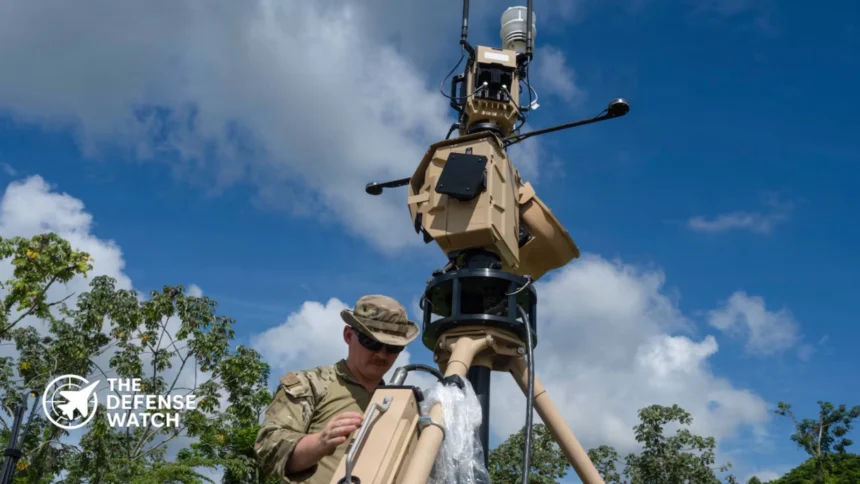
U.S. Air Force Trains Expeditionary Personnel to Counter Small Drone Threats in Puerto Rico
The U.S. Air Force is strengthening counter-drone capabilities among expeditionary security forces in Puerto Rico, as small unmanned aircraft increasingly complicate the defense of military airfields and forward operating locations.
Security Forces personnel assigned to the 346th Air Expeditionary Wing (AEW) are receiving hands-on counter-small unmanned aircraft systems (C-sUAS) training designed to protect personnel, aircraft and infrastructure supporting U.S. Southern Command (SOUTHCOM) operations.
The U.S. Department of Defense reported the training on November 19, 2026. A related report published through the Defense Visual Information Distribution Service (DVIDS) by 12th Air Force identified the training location as José Aponte de la Torre Airport in Puerto Rico.
The training reflects an operational requirement that extends beyond detecting an approaching drone. Expeditionary security forces must understand how counter-UAS equipment fits into wider installation defense arrangements and how to respond when an unmanned aircraft threatens aircraft movements, ground personnel or critical facilities.
346th Air Expeditionary Wing Focuses on Base Protection
The 346th AEW training is intended to improve the ability of security personnel to recognize and respond to small unmanned aircraft threats in an expeditionary environment.
According to the DVIDS report by Staff Sgt. Ty Pilgrim, personnel from the 346th AEW and the 346th Expeditionary Air Base Squadron are developing the technical knowledge and practical judgment needed to operate counter-drone capabilities under operational pressure.
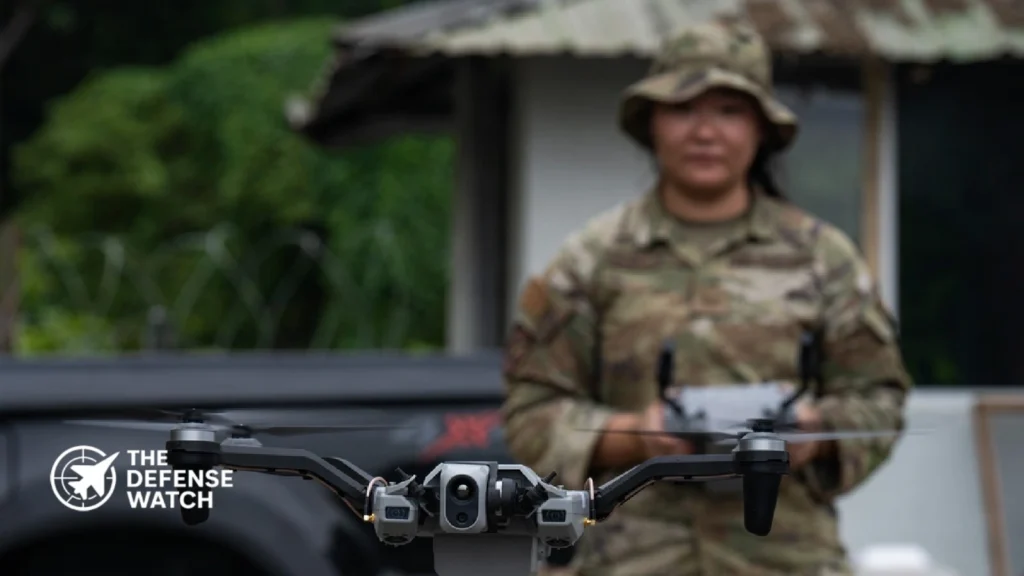
An Air Force security forces specialist assigned to the 346th Expeditionary Air Base Squadron controls a first-person view drone during counter-small unmanned aerial system training in the U.S. Southern Command area of responsibility, Oct. 30, 2026. Counter-small UAS teams must maintain technical proficiency and understand how their responsibilities fit into broader defense planning.
Col. Brad Dvorak, commander of the 346th AEW, said the wing’s counter-UAS capability supports air-domain awareness at forward operating locations.
He also emphasized the importance of maintaining the ability to conduct airpower operations across multiple operating locations without disruption from small unmanned aircraft threats.
The military did not disclose the specific counter-drone equipment used during this training, the number of personnel involved or any detection and engagement performance figures.
That distinction matters because counter-UAS training can involve several different technologies and procedures. The available reporting confirms hands-on training but does not establish that the 346th AEW tested a particular radar, electronic warfare system or kinetic interceptor.
Why Small Drones Are a Growing Problem for Expeditionary Airfields
Small commercial and military unmanned aircraft offer relatively inexpensive ways to conduct surveillance, identify infrastructure vulnerabilities and potentially threaten personnel or aircraft.
For expeditionary airfields, the challenge is particularly difficult. Unlike established military installations, temporary operating locations may have limited infrastructure, fewer defensive personnel and less access to permanent air-defense equipment.
A small drone approaching an airfield can create several operational problems:
- Surveillance: Unmanned aircraft can observe aircraft movements, infrastructure and security arrangements.
- Force protection: Low-altitude drone activity can expose personnel working outside protected facilities.
- Flight operations: Suspected drone activity can require additional security measures or interrupt aircraft operations.
- Infrastructure security: Fuel facilities, maintenance areas, communications equipment and other essential installations may face additional exposure.
These threats do not necessarily require an armed drone. Even an unidentified commercial aircraft operating near a military runway can create a security and airspace-management problem.
For the 346th AEW, counter-UAS proficiency is therefore connected directly to the ability to maintain secure operating locations across the SOUTHCOM area of responsibility.
Counter-UAS Defense Requires More Than Detection
The 346th AEW’s training takes place as the Air Force develops a wider approach to protecting installations against unmanned aircraft.
Counter-drone defense generally requires several coordinated functions:
- Detection: Identifying potentially hostile aircraft through available sensors.
- Tracking and assessment: Determining an aircraft’s location, movement and potential threat.
- Command and control: Sharing information and coordinating decisions among security and defense personnel.
- Defeat: Applying an authorized electronic or physical countermeasure when required.
The precise combination depends on the threat, available equipment, operating environment and rules governing the use of countermeasures.
The Air Force has been working to improve these capabilities through dedicated training and new organizational arrangements.
In August 2026, the 31st Air Task Force conducted a counter-sUAS training event at Hurlburt Field, Florida, culminating in a live-fire demonstration involving kinetic drone interception. The exercise also covered detection and electronic warfare-based defeat methods.
That effort demonstrated a more developed approach to layered counter-drone defense than the publicly disclosed details of the 346th AEW training establish.
The distinction is important. Detection systems can provide early warning, but effective airfield protection also requires trained operators, reliable communications and suitable methods of dealing with an identified threat.
Air Force Expands Its Expeditionary Counter-Drone Structure
The training in Puerto Rico also fits into a broader Air Force effort to develop deployable air-base defense capabilities.
In July 2026, Air & Space Forces Magazine reported that the service was establishing rapidly deployable counter-drone units intended to protect airfields in the Pacific and other potential operational hotspots.
The planned point-defense flights were described as relatively small teams of approximately 20 enlisted personnel, with aviation and battle-management experience.
The report also identified the Small Unmanned Air Defense Systems (SUADS) program as an important element of the Air Force’s counter-drone plans.
According to the publication, SUADS is primarily intended to provide detection and tracking capabilities, with fixed-installation and mobile configurations. The mobile version is intended to support expeditionary deployments and Agile Combat Employment operations.
Air Force budget documents cited in that report showed $51.8 million in fiscal 2026 procurement funding for SUADS. This figure relates to the wider program, not the 346th AEW training activity.
Agile Combat Employment (ACE) relies on distributing aircraft and support personnel across multiple operating locations rather than depending entirely on a small number of established airbases.
That approach can improve operational flexibility, but it also creates additional force-protection requirements. Small operating locations must be capable of detecting and responding to threats without depending entirely on the defensive infrastructure available at larger installations.
The 346th AEW’s counter-UAS training addresses part of this challenge by maintaining security personnel who understand the role of drone defense within expeditionary air-base operations.
Puerto Rico’s Role in Southern Command Operations
The location of the training is also relevant.
Puerto Rico provides an important U.S. military operating environment within the Caribbean and the wider SOUTHCOM area of responsibility.
The DVIDS report connects the 346th AEW’s activities with broader U.S. military objectives supporting Joint Task Force Western Hemisphere, including disrupting illicit drug trafficking, deterring hostile actors and protecting the homeland. DVIDS
Counter-drone capabilities can support these missions by helping protect aircraft, personnel and infrastructure at operating locations.
However, the available reporting does not establish that the 346th AEW training was conducted in response to a specific drone incursion, an identified adversary or an imminent operational threat.
Its stated purpose is preparedness and force protection rather than a response to a disclosed attack.
What Remains Undisclosed
Several important details about the training remain unavailable.
The Air Force has not publicly identified the counter-UAS equipment used by the 346th AEW, the number of participating personnel or the specific scenarios conducted during the exercise.
There is also no published information establishing whether the training included live electronic warfare operations, kinetic interception, integrated radar tracking or simulated engagements.
These details would help determine how closely the activity aligns with the Air Force’s more advanced layered counter-drone exercises.
For now, the confirmed development is the continued training of expeditionary security personnel to counter small unmanned aircraft and protect deployed air operations.
The longer-term effectiveness of these efforts will depend not only on the equipment available to deployed units but also on their ability to maintain proficiency, coordinate defensive responses and operate across geographically dispersed airfields.
Enjoying our coverage?
Make The Defense Watch a preferred source on Google to see more of our geopolitical and defense insights when relevant to you.