

Houthis Claim Saudi F-15 Downing Over Marib
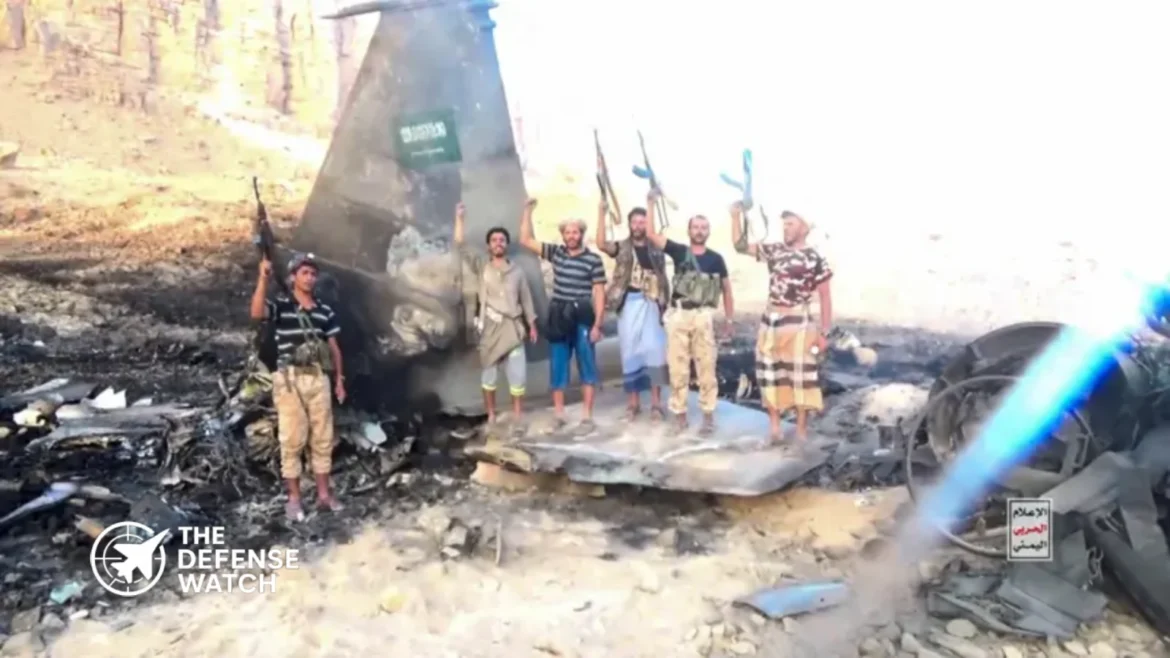
The Saudi F-15 claim emerged on September 16, when Houthi military media released video footage that it said showed a Saudi fighter jet being shot down and its wreckage on the ground in Yemen’s Marib province. Houthi military spokesman Yahya Saree said the aircraft was destroyed during Saudi military operations over Marib.
The footage provides visual material supporting the Houthis’ claim, but it does not independently establish when or where the aircraft was lost. Reuters’ verification note states that the exact location and filming date could not be independently verified, and that no older version of the video was found online before September 16.
That distinction is important because the video itself is not sufficient to establish the circumstances of an aircraft loss.
Takeaways
The Houthis released video claiming to show a Saudi F-15 shot down over Marib, but the aircraft loss and circumstances of the incident remain independently unverified.
What The Houthi Video Shows
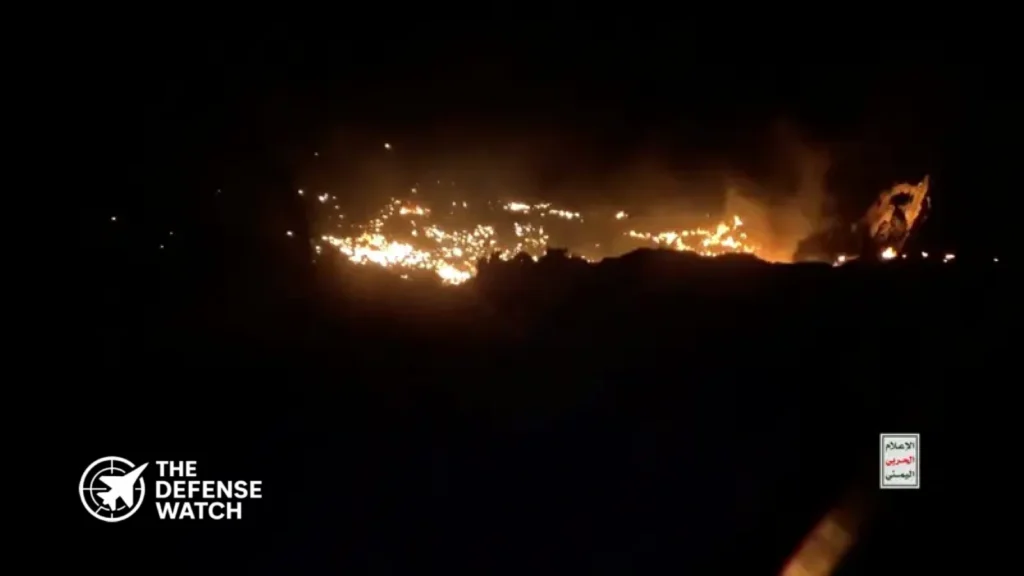
The Houthi military media footage contains several sequences showing what appears to be aircraft wreckage at night, followed by daytime images of armed Houthi fighters near the remains.
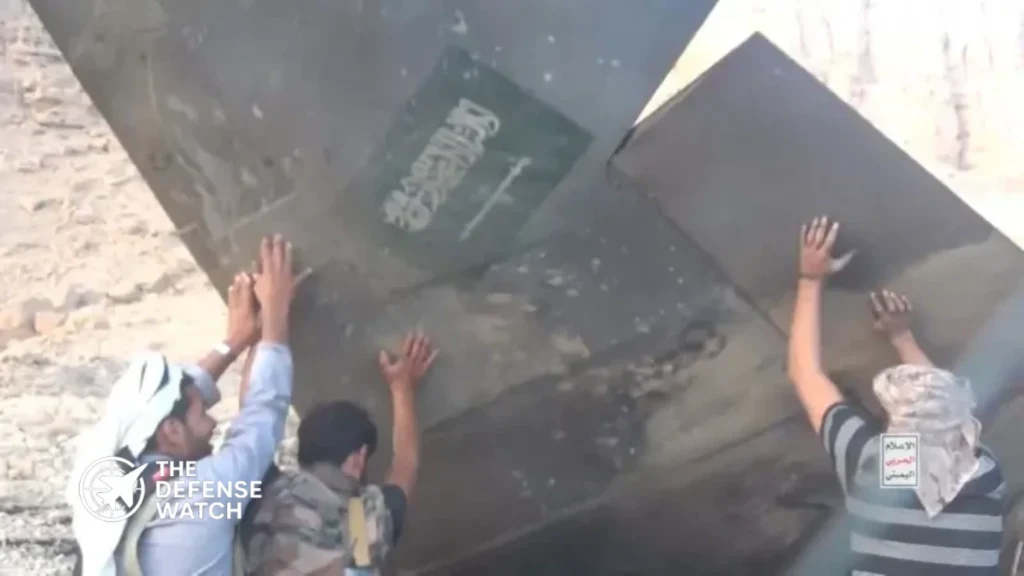
Parts of the wreckage are heavily burned and damaged. A section displaying what appears to be the Saudi national marking is visible in the released imagery. Reuters distributed still images from the video while explicitly noting that the material was supplied by a third party and that its location and date had not been verified.
The Houthi statement identified the aircraft as an F-15 and said it had been engaged in operations supporting military activity over Marib.
Houthi officials also claimed that additional Saudi aircraft entered the area while searching for the reported wreckage and that Houthi air defenses engaged them. That additional claim has also not been independently verified.

Image Source : Reuters How The Saudi F-15 Claim Was Presented
Yahya Saree said Houthi forces had used a locally produced air-defense missile against the aircraft. Other reporting on the Houthi statement described the weapon as a locally manufactured surface-to-air missile.
The Houthis also alleged that Saudi aircraft had conducted more than 450 strikes across several Yemeni provinces during the week. That figure is a Houthi claim and should not be treated as an independently verified strike count.
The reported incident comes during a sharp escalation in fighting between Saudi Arabia and the Houthis. Reuters reported that Saudi aircraft have been striking Houthi positions while the group has responded with drones and missiles against Saudi territory and infrastructure.
Independent Verification Remains Outstanding
The central issue is whether the wreckage shown in the footage is from a Saudi F-15 lost during the reported operation.
At present, there is no independent confirmation establishing the aircraft’s loss, the circumstances of the incident, or the weapon that allegedly brought it down.
Reuters’ visual verification specifically noted that the exact location and date of the footage could not be confirmed. Reuters also reported that no earlier version of the video had been located online before September 16.
Saudi authorities had not publicly confirmed the loss of an F-15 in the reporting available on September 16. Associated Press reporting likewise described the Houthi claim as unverified.
Saudi authorities did, however, publicly address a separate Houthi-related incident involving a drone near Makkah. Saudi Arabia said its air defenses intercepted and destroyed the drone before it entered restricted airspace around the holy city.
That incident should not be conflated with the separate claim concerning the Saudi F-15 over Marib.
Image Source : Reuters Why The Reported Loss Matters
If independently confirmed, the loss of a Saudi F-15 would be a significant development for the air war over Yemen because it would demonstrate that Houthi air defenses had successfully engaged a high-performance fourth-generation fighter.
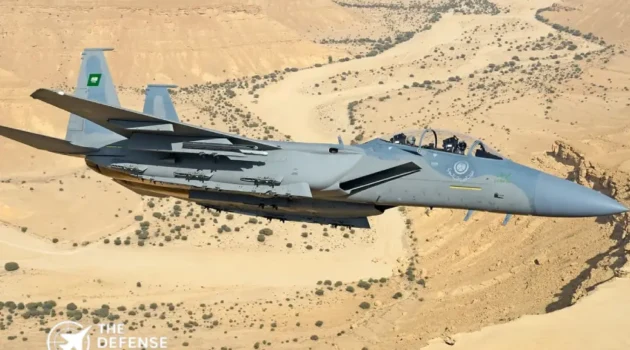
The F-15 family has long been a major component of Saudi Arabia’s combat aviation fleet. Saudi F-15s have been used extensively in operations associated with the Yemen conflict, alongside other aircraft including the Eurofighter Typhoon.
The significance of any aircraft loss, however, depends on the circumstances. A confirmed shootdown would establish that the aircraft was successfully engaged, but additional evidence would be required to determine the engagement geometry, weapon used, aircraft variant, flight profile, and whether electronic warfare or other defensive systems were involved.
Those details cannot be established from the currently available video alone.
Houthi Air Defense Challenge
The reported incident also highlights the continuing challenge posed by ground-based air defenses in Yemen.
The Houthis have developed and acquired a range of missiles, drones and air-defense systems during the long-running conflict. Their ability to threaten aircraft has previously been demonstrated through claims and imagery involving other aircraft, although individual incidents have varied substantially in the quality of available evidence.
A modern fighter such as an F-15 relies on a combination of altitude, speed, maneuverability, electronic warfare, radar warning systems, decoys and other defensive measures to reduce the threat from surface-to-air missiles.
Consequently, establishing how an aircraft was lost is often more important than simply determining that a crash occurred.
In this case, the available material does not yet provide enough verified information to reconstruct the engagement.
Wider Saudi-Houthi Escalation
The alleged F-15 loss comes as the Saudi-Houthi conflict enters another period of intense fighting.
Reuters reported on September 16 that Houthi forces had increased attacks against Saudi targets while Saudi aircraft continued operations in Yemen. The escalation has also affected the wider Red Sea and Bab el-Mandeb security environment.
The broader conflict has implications beyond the immediate battlefield. The Bab el-Mandeb Strait connects the Red Sea with the Gulf of Aden and remains an important route for international commercial shipping.
Reuters has reported that the latest Houthi offensive has included advances along Yemen’s Red Sea coast, adding pressure to an already unstable regional security environment.
For Saudi Arabia, the combination of attacks against military facilities, energy infrastructure and other targets creates a wider air-defense challenge. For the Houthis, demonstrating an ability to threaten Saudi combat aircraft would also have operational and information-war significance, even before the underlying claim is independently confirmed.
What Happens Next
The most important evidence would be an official Saudi confirmation or denial, independently geolocated imagery, additional footage from the crash site, satellite imagery, aircraft identification evidence, or credible reporting from independent investigators.
Until such evidence emerges, the most accurate description is that the Houthis claim to have shot down a Saudi F-15 over Marib and have released video purporting to show the aircraft’s wreckage.
The released footage is significant as evidence of what the Houthis are presenting, but it does not by itself verify the aircraft loss or establish the circumstances of the reported engagement.
The Defense Watch will continue to distinguish between the Houthi claim, independently observed evidence and officially confirmed information as additional details become available.
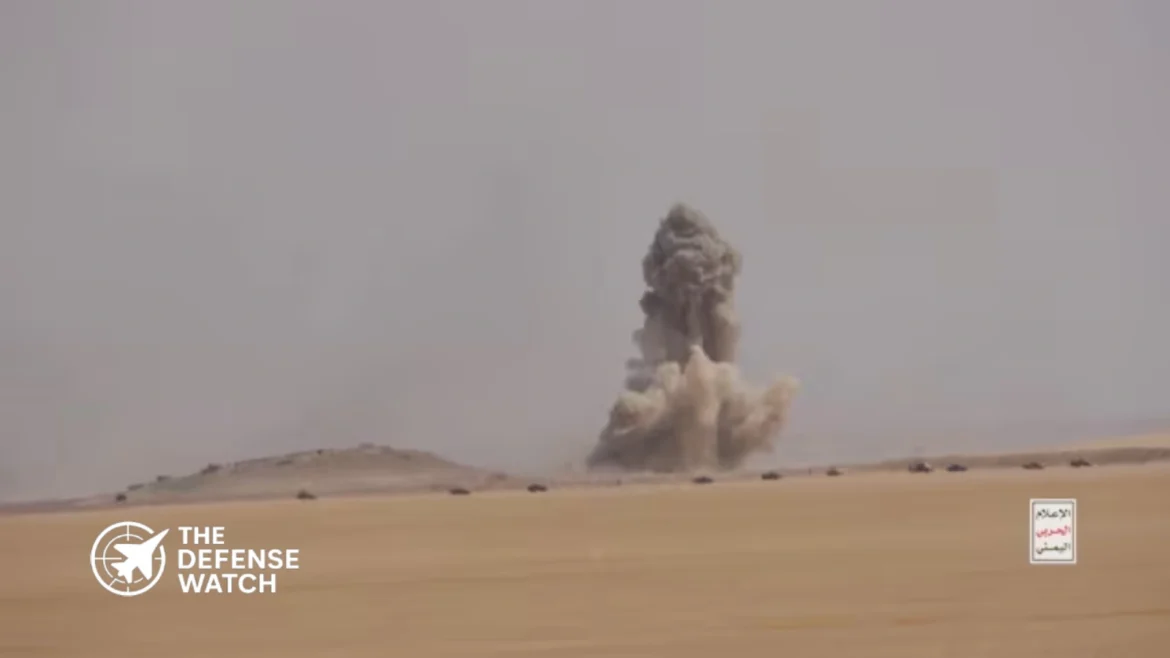
The interception comes amid a renewed wave of Houthi attacks against Saudi targets and rising security concerns around critical infrastructure and airspace.
Takeaways
Saudi Arabia says its air defenses intercepted a Houthi drone south of Mecca before it entered the city’s prohibited airspace, while Houthi officials deny targeting the holy city.
Saudi Air Defenses Intercept Houthi Drone Near Mecca
Saudi air defenses destroyed a Houthi drone south of Mecca before it entered the holy city’s prohibited airspace, according to Saudi-led coalition spokesman Maj. Gen. Turki al-Malki. The interception took place Tuesday evening and was reported by Saudi authorities on Wednesday, Sept. 16.
The incident comes as Saudi Arabia faces a renewed series of attacks linked to the Yemen conflict. Reuters reported that the latest interception occurred during a broader escalation involving Houthi attacks on Saudi targets and growing security concerns across the region.
Saudi authorities said the drone was destroyed before entering Mecca’s restricted airspace. The Saudi account identifies the incident as a significant air defense engagement because of the location near one of Islam’s holiest cities.
Saudi Account Of The Interception
According to the Saudi-led coalition, the drone was detected south of Mecca and intercepted before it could enter prohibited airspace.
Saudi Arabia has not publicly identified the drone’s specific model, launch location, payload, flight path or the air defense system used to destroy it. Those details remain undisclosed.
That distinction is important because the available reporting establishes the interception, but does not provide enough technical information to determine the exact type of unmanned aircraft or the specific interceptor used.
Saudi Press Agency reporting confirms that the Royal Saudi Air Defense Forces intercepted and destroyed the drone while it was attempting to enter the airspace of Makkah.
Houthis Deny Targeting Mecca
Houthi officials have denied that the group targeted Mecca.
Reuters reported that Mohammed al-Farah, a member of the Houthi political bureau, rejected the Saudi allegation and said the claim was false in comments carried by the Houthi-run SABA news agency.
As a result, the available evidence supports reporting that a drone was intercepted south of Mecca and that Saudi authorities attributed it to the Houthis. The stated intention to target the holy city remains disputed.
That distinction should remain clear in coverage because the Saudi and Houthi accounts differ on the intended target.
Why The Location Matters
Mecca is home to the Grand Mosque and is the destination for millions of Muslim pilgrims. Saudi authorities have therefore maintained stringent security restrictions around the city and its airspace.
Al-Malki described Mecca’s security as a red line, according to Reuters.
The reported interception also illustrates a broader challenge for Saudi air defenses. Unmanned aircraft can provide an attacking force with a relatively low-cost way to threaten infrastructure, military facilities and population centers.
For the defender, the problem involves more than simply destroying individual drones. A modern counter-drone architecture generally depends on early detection, tracking, identification and the selection of an appropriate defeat mechanism.
The Saudi government has not disclosed enough information about this particular engagement to establish which combination of sensors, command-and-control systems or interceptors was involved.
Saudi Arabia Faces Wider Drone And Missile Threats
The Mecca incident follows other attacks involving Saudi territory.
Reuters reported that Houthi forces announced attacks against Saudi targets during the previous week, including an attack on an air base on Monday. Saudi coalition officials said that attack wounded 13 civilians.
The renewed attacks come after years in which fighting between Saudi Arabia and the Houthis had substantially declined under a ceasefire and reduced cross-border hostilities.
Reuters reported that the conflict has intensified again after Houthi forces pushed back forces aligned with Yemen’s internationally recognized government earlier this month. Saudi Arabia has subsequently become more directly involved in the renewed fighting.
The security challenge also extends beyond individual military installations.
Saudi Arabia recently reported attacks against its East-West Pipeline, a major oil transportation route connecting production areas in the kingdom’s east with the Red Sea. Saudi authorities attributed that attack to drones launched from Iraq and said the strikes caused casualties and damage.
These incidents demonstrate why Saudi air defense requirements extend across a large geographic area and include both conventional military targets and critical infrastructure.
Air Defense Implications
The latest Saudi air defenses interception provides a useful example of the operational value of layered air defense around sensitive locations.
A drone approaching a protected area can be difficult to defeat if it remains undetected until the final stages of its flight. Effective defense therefore depends on creating enough detection and engagement opportunities before the aircraft reaches its protected target area.
The available reporting does not establish how far from Mecca the drone was detected or how long the Saudi defense network tracked it before engagement.
It also does not identify whether the engagement relied on a surface-to-air missile, gun-based system, electronic warfare equipment or another counter-unmanned aircraft method.
That information gap prevents a reliable assessment of the technical performance of the specific Saudi system involved.
Nevertheless, the successful interception indicates that Saudi Arabia’s air defense network was able to detect and defeat the reported unmanned threat before it entered the restricted airspace over Mecca.
The 2017 Precedent
The latest incident follows a previous Houthi missile launch toward the Mecca area in 2017.
Reuters reported that al-Malki described the September 2026 drone interception as the second Houthi attempt to target Mecca following a ballistic missile launch in July 2017.
Saudi Press Agency reporting from July 2017 also documented the interception of a ballistic missile launched toward the Mecca region.
The two incidents differ technically. The 2017 incident involved a ballistic missile, while the latest reported engagement involved an unmanned aircraft. That difference matters for air defense because drones and ballistic missiles present different detection, tracking and engagement challenges.
What Comes Next
The immediate operational significance of the latest incident is that Saudi air defenses prevented the reported drone from entering Mecca’s prohibited airspace.
The longer-term significance will depend on whether similar attacks continue and how Saudi Arabia adapts its counter-drone and wider air defense architecture.
Saudi authorities have not released technical details about the intercepted aircraft or the weapon system that destroyed it. Without those details, claims about the drone’s capabilities, payload or intended mission cannot be independently established from the current reporting.
For now, the confirmed picture is narrower: Saudi authorities say a Houthi drone was intercepted south of Mecca on Tuesday evening, the drone was destroyed before entering restricted airspace, and Houthi officials deny that Mecca was the intended target.
The incident adds another layer to an increasingly complex air defense environment in Saudi Arabia, where military sites, major cities and energy infrastructure are all exposed to different forms of unmanned and missile threats.

Pakistan has urged Iran to restrain the Houthis after a major wave of attacks on Saudi territory, while Saudi Arabia has intensified military operations against the group in Yemen.
Pakistan Warns Iran Over Houthi Attacks
Pakistan has warned Iran over escalating Houthi attacks on Saudi Arabia as Riyadh expands its military response against the Iran-aligned group in Yemen.
According to Reuters, Islamabad conveyed a Saudi message to Tehran urging Iran to restrain the Houthis and prevent the conflict from expanding into a broader regional confrontation. The warning comes after one of the largest Houthi attacks on Saudi territory since the wider U.S.-Israeli war with Iran began in February.
Takeaways
Pakistan has warned Iran over escalating Houthi attacks on Saudi Arabia while stressing that any Pakistani military role would focus on defending Saudi territory.
The Houthis attacked an airbase in Khamis Mushait and oil infrastructure in nearby Saudi cities on September 8. Reuters reported that the attacks wounded 73 people.
Pakistan’s Ministry of Foreign Affairs separately condemned Houthi attacks against civilian and economic targets in Abha, Khamis Mushait, Jazan and Najran. Islamabad said the attacks violated Saudi sovereignty and reaffirmed its support for Saudi Arabia’s security and territorial integrity.
Saudi Arabia Strikes Back in Yemen
The Houthi attacks have triggered an intensified Saudi military response.
Houthi military spokesman Yahya Saree said Saudi warplanes conducted 54 airstrikes across several Yemeni provinces during a 12-hour period. The figure is a claim from the Houthi side and has not been independently verified by TheDefenseWatch.
Saudi Arabia’s coalition spokesman, Maj. Gen. Turki Al-Malki, separately said Houthi forces continued attacks against Saudi infrastructure. Saudi authorities said the Houthis launched ballistic missiles and drones toward Khamis Mushait, Abha and Jazan on September 9.
The escalation is significant because the fighting is taking place alongside the wider confrontation involving Iran, the United States and regional states. Reuters reported that the renewed Saudi-Houthi conflict represents another potential threat to energy supplies at a time when shipping tensions in the Gulf are already affecting regional security.
Pakistan-Saudi Defense Pact Comes Under Pressure
The latest escalation also puts greater attention on the recently established defense relationship between Pakistan, Saudi Arabia and Türkiye.
Pakistan, Saudi Arabia and Türkiye established the Makkah Joint Defence Agreement framework, with a Strategic Political and Defence Committee created to strengthen cooperation among the three countries. Pakistan’s Foreign Ministry said the first committee meeting was held in Istanbul on August 31 and focused on regional peace, stability, collective deterrence and cooperative security.
Pakistan’s Defense Minister Khawaja Asif told Pakistani television that an attack on one member would be considered aggression against all three and that unprovoked aggression or spillover into Saudi Arabia could make the agreement operational. Reuters reported the comments as part of Islamabad’s warning over the Houthi attacks.
That statement does not mean Pakistan has entered the Yemen conflict.
Reuters reported that Pakistani sources stressed any military role would be defensive and limited to Saudi territory. One source said Pakistani forces could provide military, technical, ground or air support inside Saudi Arabia but would not participate in combat operations on foreign soil.
A separate Pakistani source said no decision had been made for Pakistan to join Saudi retaliatory strikes.
Iran Rejects Control Over Houthis
The diplomatic message creates a difficult position for Tehran.
Reuters reported that a senior Iranian official confirmed Pakistan had conveyed the warning but said Iran does not control the Houthis.
At the same time, two Iranian sources told Reuters that Tehran had instructed the Houthis to intensify attacks against Saudi Arabia and promised additional funding and weapons. The sources also alleged that several Islamic Revolutionary Guard Corps commanders had traveled to Yemen to help coordinate the attacks. These allegations have not been independently verified and contrast with Iran’s stated position.
The competing claims are important because the extent of direct Iranian command and control over Houthi operations remains a politically sensitive issue.
The Houthis maintain their own military and political structures in Yemen, while Iran has long been accused by the United States, Saudi Arabia and other governments of providing support to the group.
Why the Saudi-Houthi Escalation Matters
The immediate concern is the possibility that attacks against Saudi territory could broaden the conflict beyond Yemen.
The Houthis have demonstrated an ability to threaten military facilities, energy infrastructure and shipping in the region. Their latest attacks targeted areas in southern Saudi Arabia, while the wider conflict has already placed pressure on major maritime routes.
The geography is particularly important.
Saudi Arabia borders Yemen along a long southern frontier, while the Red Sea and Bab el-Mandeb form critical maritime routes connecting the Indian Ocean with the Mediterranean through the Suez Canal.
A prolonged escalation could therefore affect military operations, commercial shipping and energy infrastructure simultaneously.
Reuters reported that Saudi officials are expected to keep their military response focused on the Houthis rather than directly attacking Iran. That distinction could become important in preventing the Yemen conflict from developing into another direct Iran-Saudi confrontation.
Pakistan Seeks to Prevent Wider Conflict
Pakistan’s position reflects its competing security interests.
Islamabad maintains close strategic ties with Saudi Arabia while also sharing a border and important economic relationships with Iran. Its latest diplomatic intervention therefore appears aimed at containing the crisis while preserving its defense commitments to Riyadh.
Pakistan has also publicly backed Saudi Arabia’s right to defend its territory.
In its September 8 statement, Pakistan’s Foreign Ministry said it supported Saudi Arabia’s legitimate right under the UN Charter and international law to take necessary measures to defend its territory, citizens and national assets.
At the same time, Islamabad has emphasized diplomacy and regional stability.
This balance is likely to remain central as the Saudi-Houthi confrontation develops. Pakistan’s current position is not an announcement of military intervention in Yemen. Rather, Islamabad is signaling that attacks against Saudi territory could activate a broader defensive framework involving Pakistan and Türkiye.
What Happens Next
The immediate test will be whether the latest Saudi air campaign and diplomatic pressure from Pakistan can reduce Houthi attacks.
If attacks against Saudi territory continue, pressure could grow on Riyadh’s regional partners to provide additional defensive support. Pakistan has already indicated that its defense commitments could become operational if the conflict spills further into Saudi Arabia.
For now, however, there is no confirmed decision for Pakistani forces to conduct combat operations in Yemen.
The distinction matters. Pakistan’s publicly stated position remains focused on Saudi territorial defense, while Saudi Arabia is continuing its military campaign against the Houthis.
The crisis also comes at a sensitive moment for regional energy security. With separate U.S.-Iran tensions affecting Gulf shipping, another sustained front involving Saudi Arabia and Yemen’s Houthis could add further pressure to an already unstable security environment.
For Pakistan, Saudi Arabia and Türkiye, the immediate objective is therefore not simply responding to the latest Houthi attacks. It is preventing those attacks from triggering a much broader regional military confrontation.

Houthi Attacks on Saudi Arabia Mark Major Regional Escalation
Houthi attacks on Saudi Arabia have added a new cross-border front to the widening conflict involving Iran, the United States and their regional partners.
The Iran-aligned Houthi movement said it launched missiles and drones against targets deep inside Saudi Arabia on Tuesday, September 8. Saudi authorities said attacks affected civilian and economic sites in Abha, Khamis Mushait, Jazan and Najran, with 73 people wounded, including women and children.
The strikes came as U.S. forces conducted their own escalation against Iran, destroying five Iranian crude oil carriers after the Islamic Revolutionary Guard Corps attempted to strike a U.S. Navy warship with ballistic missiles on two occasions over two days.
The simultaneous developments show how fighting that had centered on U.S. and Iranian forces is increasingly affecting neighboring countries, energy infrastructure and maritime routes.
Takeaways
The latest attacks have widened the conflict geographically, placing Saudi civilian and energy infrastructure under renewed pressure while U.S. and Iranian forces continue direct military exchanges.
Saudi Energy Infrastructure Comes Under Attack
The Houthi attacks focused on some of Saudi Arabia’s most strategically important southern areas.
The Houthis said their forces targeted a Saudi airbase in Khamis Mushait and assets belonging to Saudi Aramco in Abha, Najran and Jazan. Saudi officials confirmed fires at several sites and said the attacks wounded 73 people.
Reuters reported that satellite imagery showed a large black smoke cloud over the Jazan refinery and white smoke near an oil distribution center in Abha. The imagery provided an independent indication that energy-related facilities were affected, although the full extent of physical damage remained unclear.
The attacks are significant because Saudi Arabia has increasingly relied on routes through the Red Sea as the conflict has constrained traffic through the Strait of Hormuz.
The U.S. Energy Information Administration reported that oil and petroleum liquid flows through Bab el-Mandeb averaged 8.1 million barrels per day in the second quarter of 2026, compared with 5.4 million barrels per day in the fourth quarter of 2025. The increase reflected Saudi efforts to reroute crude away from the Strait of Hormuz.
That makes renewed attacks around southwestern Saudi Arabia more important than a conventional cross-border exchange. Damage or prolonged disruption to infrastructure connected to Red Sea export routes could affect an already strained global energy system.
U.S. Forces Destroy Five Iranian Oil Carriers
The Saudi attacks occurred alongside a separate escalation between Washington and Tehran.
U.S. Central Command said its forces destroyed five Iranian crude oil carriers on September 8 after the IRGC targeted a U.S. Navy warship with ballistic missiles twice during the previous two days. CENTCOM said the warship avoided the attacks and that no American personnel were harmed.
The five vessels identified by CENTCOM were the M/T Kaviz, M/T Charminar, M/T Horizon 1 and M/T Riesco in the Gulf of Oman, along with the M/T Derya near Kharg Island.
CENTCOM said the ships were connected to what it described as a multibillion-dollar shadow network used to finance Iran’s Islamic Revolutionary Guard Corps and regional partners. U.S. forces directed crews to abandon the vessels before the ships were struck and rendered inoperable.
The action followed U.S. strikes against three other Iranian crude carriers on September 5. The expanding maritime campaign adds pressure on Iran’s oil export infrastructure while Washington seeks to restrict Tehran’s ability to finance military operations.
Iran Reports Retaliatory Missile Strike
Iran subsequently said it launched a ballistic missile attack against a U.S. base near Al Azraq in eastern Jordan.
Reuters reported that the claim came through an IRGC statement carried by Iranian state media. At the time of reporting, Jordan and the U.S. military had not independently confirmed the attack.
That distinction is important for accurate reporting because the status and effectiveness of the reported strike remained unverified.
The wider sequence nevertheless shows the increasingly interconnected nature of the conflict. Iranian military pressure on U.S. forces is occurring alongside attacks by the Houthis against Saudi Arabia and continued threats to maritime traffic around the Red Sea and Gulf.
Why the Bab el-Mandeb Matters
The Houthi attacks on Saudi Arabia also carry implications beyond the immediate battlefield.
The Bab el-Mandeb connects the Red Sea with the Gulf of Aden and is an important route for oil, container shipping and other commercial traffic. Saudi Arabia has used infrastructure connected to the Red Sea to redirect some oil flows away from the Strait of Hormuz.
EIA data shows how much the regional conflict has already altered those patterns. Oil and petroleum liquid flows through Hormuz averaged only 4.9 million barrels per day in the second quarter of 2026, compared with 21.6 million barrels per day in the fourth quarter of 2025. At the same time, Bab el-Mandeb flows increased to 8.1 million barrels per day.
This creates a strategic vulnerability. If both major routes face sustained disruption, producers and consumers have fewer practical alternatives.
EIA has previously noted that Saudi Arabia can redirect some crude through the East-West pipeline toward Yanbu and use alternative routes through the Suez Canal and Sumed pipeline. However, those options are more limited and can be more expensive than normal shipping routes.
Conflict Pressure Extends Into Aviation and Trade
The military escalation is also being reinforced by economic measures.
The U.S. Treasury Department announced sanctions on September 8 targeting 36 entities and individuals connected to Iran’s aviation sector. Treasury said the action was designed to restrict networks used to move weapons, personnel and illicit cargo and to limit Iran’s access to aircraft and sensitive aviation technology.
The measure forms part of Washington’s broader economic pressure campaign against Tehran.
Taken together with attacks on oil carriers, the sanctions show that the conflict is being fought through multiple channels: military strikes, maritime interdiction, financial restrictions and pressure on aviation networks.
What the Saudi Attacks Mean for Regional Security
The latest Houthi attacks on Saudi Arabia represent a significant expansion in the geographic reach of the current conflict.
Saudi Arabia has fought the Houthis for more than a decade as part of the broader Yemen war, but hostilities had eased substantially after the 2022 ceasefire. Reuters reported that the ceasefire has now broken down as Saudi-backed Yemeni forces conduct a multipronged offensive against Houthi-held areas.
The renewed fighting inside Yemen provides a direct context for the latest cross-border strikes.
The Houthi ability to reach Saudi military and economic targets also reinforces the importance of layered air and missile defense across the kingdom. Protecting energy infrastructure requires more than defending individual facilities. It requires persistent detection, tracking, interception and rapid recovery after an attack.
For Saudi Arabia and its partners, the challenge is therefore both military and economic. Even limited physical damage can create wider effects if attacks force temporary shutdowns, disrupt shipping schedules or increase insurance and transportation costs.
Energy Markets Remain a Key Pressure Point
Oil prices responded to the latest developments, although Reuters reported that Brent crude remained below $100 per barrel despite the renewed disruptions. The benchmark had risen to its highest level since July 23 as the conflict intensified.
The market reaction reflects the central role of energy infrastructure in the current confrontation.
The Strait of Hormuz and Bab el-Mandeb are not interchangeable routes. They serve different geographic functions, but disruption at either chokepoint can increase shipping costs and reduce the flexibility available to producers and traders.
The attacks on Saudi facilities therefore have significance beyond the immediate damage assessment. If cross-border strikes become persistent, the risk shifts from isolated incidents toward a broader threat to regional energy logistics.
Bottom Line
The latest Houthi attacks on Saudi Arabia have opened another pressure point in an already expanding Middle East conflict.
Missile and drone strikes on Abha, Khamis Mushait, Jazan and Najran wounded 73 people and caused fires at energy-related sites, according to Saudi authorities. At the same time, U.S. forces destroyed five Iranian crude oil carriers after attempted Iranian attacks on a U.S. Navy warship.
The immediate military picture remains fluid, but the strategic concern is clear. Fighting is no longer confined to isolated exchanges between U.S. and Iranian forces. Saudi energy infrastructure, Red Sea shipping and Gulf maritime traffic are increasingly exposed to the same conflict.
For Washington and its regional partners, protecting those networks will be central to limiting the conflict’s wider military and economic effects.
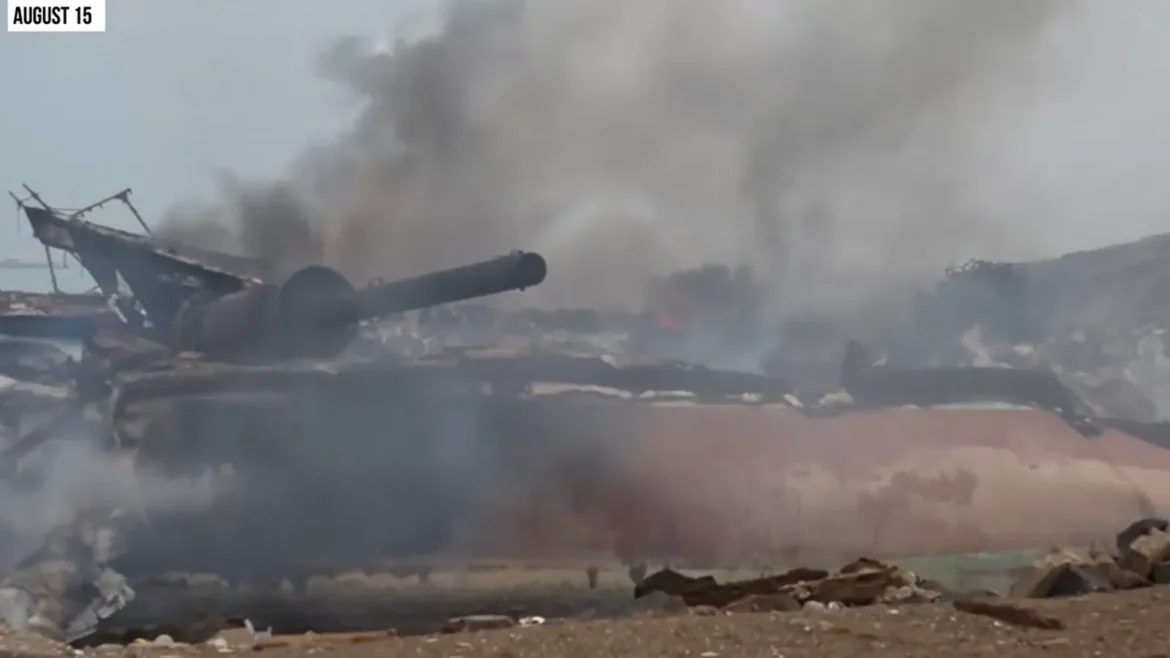
Executive Summary: Yemen’s Mocha port has suspended commercial and maritime activity after a series of Houthi missile attacks caused approximately $16 million in damage, according to the port’s administration. Reuters reported that more than 25 missiles struck the port over several days, killing seven people and damaging critical port infrastructure.
Houthi Missile Attack Disrupts Strategic Red Sea Port
The Houthi missile attack on Yemen’s Mocha port has halted commercial and maritime operations at a facility that has become strategically important to forces aligned with Yemen’s internationally recognized government. The port administration said Saturday that repeated strikes caused roughly $16 million in damage and killed seven people.
More than 25 missiles hit the port over several days. The attack damaged port infrastructure and disrupted the facility’s ability to handle maritime and commercial activity.
The Times of India reported that Yemen’s government accused the Houthis of launching six ballistic missiles against the port, while the Houthi movement said its operation was aimed at a military buildup and warships belonging to Saudi-backed government forces.
The differing descriptions underline the importance of distinguishing between confirmed physical effects and claims made by the opposing sides. The damage, fatalities and operational shutdown have been independently reported, while the precise targeting objectives remain contested.
Damage Extends Beyond the Immediate Strike Area
The reported $16 million loss is significant because Mocha is more than a local port facility. Its position on Yemen’s western coast gives it direct relevance to maritime access around the southern Red Sea and the Bab el-Mandeb Strait.
The port has been used as an alternative maritime access point for areas controlled by Yemen’s internationally recognized government and its allied forces. Damage to piers, warehouses, vessels and supporting infrastructure can therefore affect both military logistics and commercial activity.
Reuters reported that the port administration suspended all commercial and maritime operations following the attacks.
A prolonged shutdown would also increase pressure on alternative ports and transportation networks. For operators moving cargo through the region, the risk is not limited to a single missile strike. Repeated attacks can make port calls more difficult to insure, schedule and protect.
Why Mocha Matters to Red Sea Security
Mocha sits near the southern Red Sea approaches to the Bab el-Mandeb Strait, one of the world’s most important maritime chokepoints.
The security environment around the waterway has already forced commercial operators and governments to adopt additional protective measures. The U.S. Maritime Administration’s current advisory warns that vessels operating in the southern Red Sea, Bab el-Mandeb Strait and Gulf of Aden face threats that include ballistic and cruise missiles, one-way attack drones, unmanned surface vessels and other hostile activity.
The advisory remains active through September 22, 2026. It specifically identifies vessels with U.S., U.K. or Israeli connections as facing elevated risk, while warning that other commercial shipping can also face direct or collateral threats.
The renewed attacks therefore represent a broader maritime security problem rather than an isolated attack on a Yemeni port.
Missile And Drone Threats Create A Complex Defense Problem
The Houthi threat is difficult to counter because it does not depend on a single weapons category.
U.S. maritime authorities identify a mixture of ballistic missiles, cruise missiles, one-way attack UAVs, unmanned surface vessels and small-boat threats. That combination creates a layered defensive problem for ships and fixed facilities.
Ballistic missiles can compress warning and engagement timelines, while low-cost drones can force defenders to use sensors and interceptors against comparatively inexpensive targets. Surface threats can further complicate the defensive picture by requiring ships and coastal forces to monitor both the air and maritime domains simultaneously.
For a port such as Mocha, the problem is even more difficult because fixed infrastructure cannot maneuver away from incoming weapons. Protecting a port requires a combination of early warning, surveillance, air defense, physical hardening, damage control and rapid repair capacity.
The operational objective is therefore not simply to intercept every incoming weapon. Maintaining enough resilience to keep essential functions operating after successful strikes can be equally important.
Renewed Fighting Raises Wider Concerns For Yemen
The Mocha attack comes as fighting between Houthi forces and Yemen’s internationally recognized government has intensified.
Reuters reported earlier in August that a Houthi attack on Mocha killed seven people and wounded 30. Yemeni military officials said the assault involved ballistic missiles and drones, while air defenses reportedly intercepted 11 drones. The Houthis said their targets included Saudi troop concentrations and weapons depots.
The attacks raise concerns that the relative reduction in large-scale fighting following the 2022 truce could be giving way to another period of sustained conflict.
The latest violence also intersects with a wider confrontation involving Saudi Arabia and Houthi forces. The Houthis have announced a maritime blockade targeting Saudi-linked shipping, while Saudi Arabia has said it will protect commercial vessels transiting the Bab el-Mandeb Strait.
That dynamic creates a direct connection between Yemen’s internal conflict and international maritime security.
Implications For U.S. Maritime Security
For the United States, the significance of the Mocha strikes extends beyond Yemen.
The Red Sea remains a major operating environment for U.S. naval forces and an important route for global commerce. The U.S. Maritime Administration advises U.S.-flagged vessels to coordinate voyage planning with Naval Forces Central Command’s Naval Cooperation and Guidance for Shipping organization and to maintain heightened awareness while operating in the region.
The current advisory also notes that Houthi forces can use AIS information, small boats and UAVs to locate commercial vessels. U.S.-flagged ships are advised to take precautions regarding electronic emissions and vessel tracking when operating in areas where the threat is elevated.
This illustrates a broader change in maritime warfare. Commercial ships increasingly have to account for sensors, missiles and drones operating as part of a networked threat environment rather than treating the risk as traditional piracy alone.
The Economic Impact Could Outlast The Physical Damage
The estimated $16 million in physical damage provides only a partial measure of the consequences.
A port can lose economic value even when individual structures remain repairable. Insurance costs, vessel diversions, delays, security requirements and reduced confidence among shipping companies can continue after the visible damage has been cleared.
The International Maritime Organization has warned that renewed attacks on international shipping in the Red Sea threaten seafarers, commercial routes, marine safety and global supply chains. The organization has also urged operators to conduct detailed risk assessments before transiting the region.
The strategic problem is therefore one of cumulative disruption. Repeated attacks can impose costs across the maritime network even when individual strikes do not permanently close a major shipping lane.
Port Resilience Becomes A Military And Commercial Requirement
The Mocha attack demonstrates why port resilience is becoming an increasingly important element of maritime defense planning.
A modern port supporting military or commercial operations needs more than physical infrastructure. It requires surveillance, air and missile warning, communications, emergency response, repair teams and alternative logistics routes.
Yemen itself has been working to improve maritime information sharing. In June 2026, the International Maritime Organization supported a workshop focused on developing a roadmap for a National Maritime Information Sharing Centre and strengthening regional maritime information-sharing capabilities from Aden.
Such systems cannot prevent a missile attack by themselves, but they can improve the speed with which authorities identify threats, distribute warnings and coordinate responses.
For the U.S. and its partners, the lesson is broader. Protecting freedom of navigation in the Red Sea requires not only warships and missile defenses, but also resilient ports, shared maritime intelligence and commercial operators capable of adapting to rapidly changing threats.
What Happens Next
The immediate priority for Mocha will be assessing structural damage and determining when essential maritime operations can safely resume.
The more important strategic question is whether the attacks remain concentrated around Yemen’s west coast or become part of a wider campaign against Saudi-linked military and commercial infrastructure.
Recent developments suggest the latter risk cannot be dismissed. The Houthis have also claimed attacks against Saudi targets, including an August 9 drone strike on the Jazan oil refinery, while Saudi authorities have continued to emphasize protection of maritime traffic. Reuters reported that the Jazan refinery fire was extinguished without casualties.
If attacks continue, the Red Sea security environment could place additional demands on regional air defenses, naval forces and commercial shipping operators.
For now, the shutdown of Mocha port provides a clear measure of the immediate operational effect. A missile campaign has damaged infrastructure, caused fatalities and interrupted maritime activity at a strategically positioned Red Sea facility.
The larger significance lies in what the attack demonstrates about modern maritime conflict: relatively limited missile and drone forces can impose disproportionate costs when they repeatedly target critical infrastructure located along a major international maritime corridor.
Key Facts
| Item | Reported Detail |
|---|---|
| Location | Mocha, Yemen |
| Region | Southern Red Sea |
| Weapon threat | Ballistic missiles and drones |
| Reported missiles | More than 25 over several days, according to Reuters |
| Fatalities | Seven |
| Estimated damage | About $16 million |
| Operational impact | Commercial and maritime activities suspended |
| Strategic importance | Access to the southern Red Sea and approaches to Bab el-Mandeb |
| U.S. relevance | Region covered by an active U.S. maritime security advisory |