Executive Summary:
Anduril Industries has received a $100.3 million contract modification from Space Systems Command to enhance mesh networking across the Space Surveillance Network.
The upgrade supports more resilient and secure Space Domain Awareness operations.
The move reflects growing U.S. emphasis on survivable space infrastructure amid rising orbital threats.
Anduril Industries Contract Expands Space Surveillance Network Capabilities
The Anduril Industries contract marks a significant step in modernizing U.S. space tracking infrastructure, with a $100.3 million modification awarded under an existing indefinite-delivery, indefinite-quantity agreement. The contract ceiling now rises to $200 million, doubling its previous value.
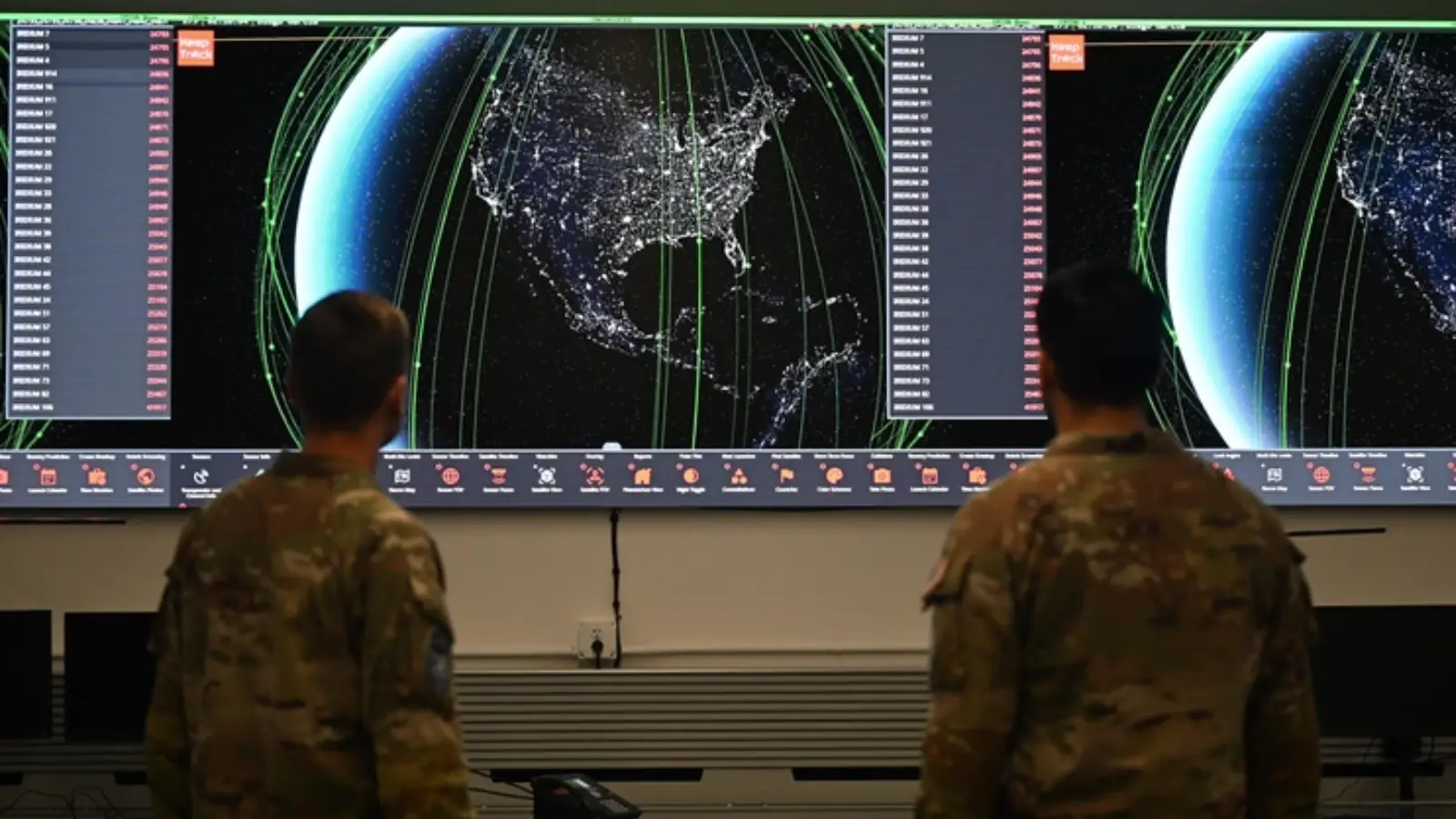
Awarded by the Space Systems Command, the effort focuses on deploying and upgrading mesh networking capabilities that connect sensors across the Space Domain Awareness (SDA) architecture.
Work will take place in Colorado Springs, Costa Mesa, and multiple operational node sites. Completion is scheduled for September 2027.
Notably, no immediate funds were obligated at the time of award, indicating a phased execution aligned with mission needs.
Why Mesh Networking Matters For Space Domain Awareness
At the core of the Anduril Industries contract is the development of secure, redundant, and resilient mesh networking for the Space Surveillance Network (SSN).
Unlike traditional centralized architectures, mesh networks allow sensors and nodes to communicate dynamically. This means:
- No single point of failure
- Improved data flow under contested conditions
- Faster sharing of tracking and threat data
For Space Domain Awareness missions, this is critical. The SSN tracks satellites, debris, and potential threats in orbit. As adversaries develop counterspace capabilities, the network itself becomes a target.
By distributing communications across multiple nodes, the upgraded system ensures continuity even if parts of the network are disrupted.
Strategic Context: Rising Pressure In The Space Domain
The expansion of the Anduril Industries contract comes amid growing concerns about the vulnerability of U.S. space assets.
According to U.S. defense assessments and public statements from the United States Space Force, potential adversaries are investing in:
- Anti-satellite weapons
- Electronic warfare targeting satellites
- Cyber attacks on space infrastructure
This environment demands resilient architectures that can operate in degraded or contested conditions.
Mesh networking aligns with the Pentagon’s broader shift toward distributed operations, a concept also seen in Joint All-Domain Command and Control (JADC2) initiatives.
Operational Impact On The Space Surveillance Network
The upgraded capabilities under the Anduril Industries contract are expected to enhance:
1. Sensor Integration
Existing and future sensors will connect more efficiently, enabling real-time data fusion across global sites.
2. Data Resilience
Information can reroute automatically if nodes are compromised, ensuring uninterrupted tracking of orbital objects.
3. Scalability
The system is designed to support future expansion as new sensors and technologies are added.
4. Cybersecurity
Secure communication layers will reduce vulnerability to interception or disruption.
These improvements directly support Space Domain Awareness, which underpins everything from missile warning to satellite collision avoidance.
Anduril’s Growing Role In Defense Networking
The Anduril Industries contract reflects the company’s expanding footprint in advanced defense technologies, particularly in autonomous systems and networked warfare.
Founded in 2017, Anduril has positioned itself as a key player in:
- AI-driven defense systems
- Autonomous surveillance platforms
- Integrated command and control networks
Its involvement in SDANet highlights a shift toward commercial tech firms delivering core military infrastructure, a trend increasingly visible across U.S. defense programs.
Contract Structure And Execution Timeline
The contract modification (P00008) builds on the original IDIQ framework, allowing flexible task orders over time.
Key details include:
- Total Contract Ceiling: $200 million
- Increment Value: $100.3 million
- Completion Date: September 23, 2027
- Contracting Authority: Space Systems Command, Peterson Space Force Base
This structure enables the government to scale deployment based on evolving mission requirements, rather than committing all funds upfront.
Analysis: A Shift Toward Survivable Space Architectures
The Anduril Industries contract signals more than a routine upgrade. It reflects a broader transformation in how the U.S. approaches space operations.
Traditionally, space systems prioritized performance and coverage. Today, survivability and resilience are equally critical.
Mesh networking represents a foundational shift:
- From centralized to distributed systems
- From static architectures to adaptive networks
- From vulnerability to redundancy
This mirrors changes seen in terrestrial warfare, where decentralized networks have proven more resilient against disruption.
In practical terms, the upgraded Space Surveillance Network will be better equipped to operate in scenarios where communications are contested or degraded.