Executive Summary:
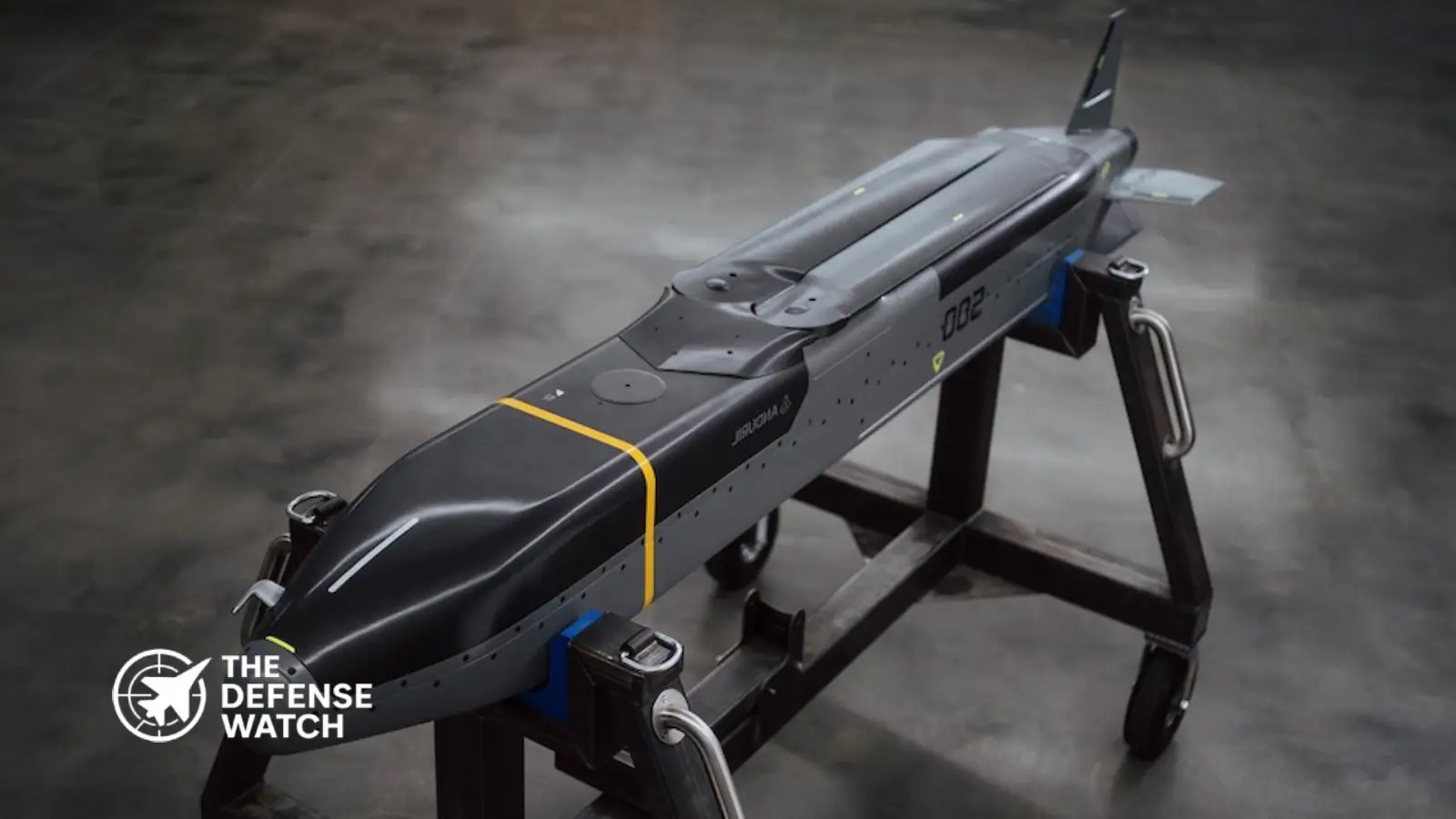
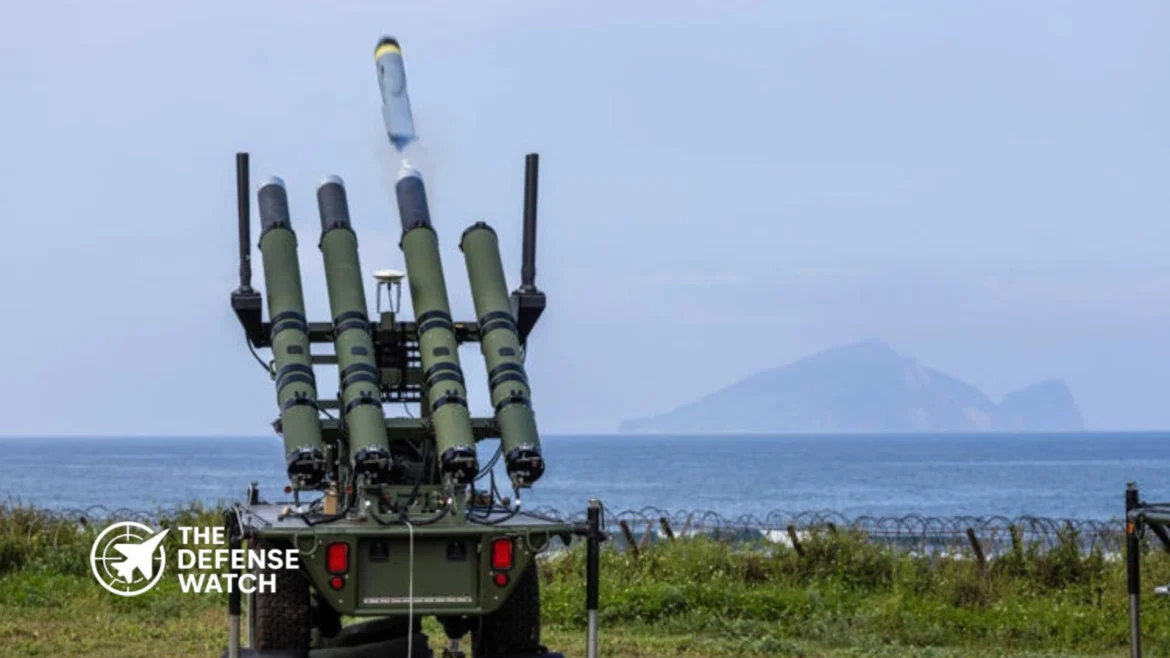
Anduril Industries and Poland’s state owned defense group PGZ have signed an agreement to establish local production of the surface launched Barracuda 500M cruise missile in Bydgoszcz. The partnership aims to produce thousands of affordable long range precision weapons for the Polish Armed Forces while strengthening NATO’s industrial capacity on its eastern flank.
Anduril Barracuda 500M Production Expands Into Poland
Anduril Industries and Polska Grupa Zbrojeniowa (PGZ) have formalized a cooperation agreement to establish localized production of the Barracuda 500M surface launched cruise missile in Poland, marking one of Europe’s most significant recent investments in scalable precision strike manufacturing. The agreement was announced during an official signing ceremony in Bydgoszcz attended by Polish Prime Minister Donald Tusk and Defense Minister Władysław Kosiniak Kamysz.
Production will be centered at Wojskowe Zakłady Lotnicze No. 2 (WZL-2), a PGZ subsidiary, where assembly will begin before gradually transitioning toward broader domestic manufacturing and supply chain localization. According to both companies, the program builds upon a memorandum of understanding first announced in October 2025.
The companies stated that the initiative will ultimately deliver thousands of Barracuda 500M systems for the Polish Armed Forces while supporting NATO’s growing requirement for affordable, mass producible long range strike weapons.
Local Manufacturing Becomes A Strategic Priority
Unlike many traditional missile procurement programs that rely on imported finished systems, the agreement emphasizes industrial participation inside Poland.
Officials said production will initially focus on missile assembly before expanding to incorporate increasing numbers of Polish and European suppliers. The long term objective is to create a Barracuda variant that is majority European made and compliant with the European Union’s SAFE defense industrial framework.
Bydgoszcz was selected because of its established aerospace workforce, military logistics infrastructure, and concentration of defense industries. The city already hosts major NATO organizations and has become one of Poland’s most important defense manufacturing hubs.
What Is The Barracuda 500M?
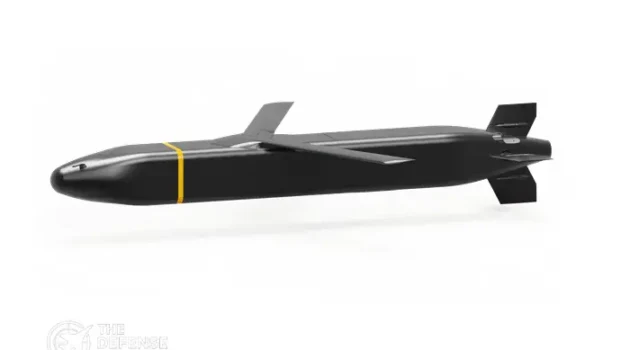
The Barracuda 500M belongs to Anduril’s family of autonomous precision strike systems designed around rapid, low cost manufacturing rather than traditional high expense cruise missile production.
According to Anduril, the weapon was developed to provide:
Capability Description Launch method Surface launched Mission Long range precision strike Production philosophy Mass production at significantly lower cost Employment High volume precision fires Primary users Polish Armed Forces and potential NATO partners Unlike legacy cruise missiles that often require lengthy manufacturing timelines, the Barracuda concept focuses on scalable production capable of replenishing inventories during prolonged conflict.
Why The Program Matters
The agreement reflects a broader shift occurring across NATO following lessons learned from the war in Ukraine.
Modern conflicts have demonstrated that advanced militaries can rapidly deplete stocks of expensive precision guided weapons. As a result, defense planners increasingly emphasize weapons that can be manufactured in much larger numbers without sacrificing operational effectiveness.
The Barracuda 500M addresses this challenge by combining autonomous guidance with production methods intended to reduce cost and shorten manufacturing cycles. Rather than replacing premium cruise missiles, systems such as Barracuda could complement them by providing commanders with greater magazine depth during sustained operations.
For Poland, domestic production also reduces dependence on overseas supply chains while expanding national industrial expertise in precision strike technologies.
Strengthening NATO’s Eastern Flank
Poland has emerged as one of NATO’s fastest growing defense investors, committing substantial resources to missile defense, armored forces, artillery, combat aircraft, and long range fires.
Adding domestic production of the Barracuda 500M complements these modernization efforts by giving Poland a sovereign manufacturing capability for precision strike weapons.
From NATO’s perspective, expanding missile production inside Europe improves resilience should alliance members require rapid replenishment during a major crisis. Rather than relying solely on North American production lines, localized manufacturing creates additional industrial capacity closer to potential operational theaters.
The program also aligns with broader European efforts to increase defense industrial output following heightened security concerns across the continent.
Industrial And Operational Implications
Beyond missile production itself, the agreement demonstrates an evolving model of transatlantic defense cooperation.
Instead of exporting finished systems, U.S. defense companies are increasingly partnering with European manufacturers to establish regional production networks. This approach supports allied industrial bases while maintaining interoperability across NATO.
For Anduril, the partnership provides its first major European production line for the Barracuda family. For PGZ, it expands domestic expertise in precision guided weapons while potentially opening opportunities for future collaborative programs involving autonomous systems and advanced munitions.
If production proceeds as planned, the Bydgoszcz facility could become one of Europe’s largest manufacturing centers dedicated to affordable long range precision strike weapons.
Executive Summary:
Anduril Industries has received a $100.3 million contract modification from Space Systems Command to enhance mesh networking across the Space Surveillance Network.
The upgrade supports more resilient and secure Space Domain Awareness operations.
The move reflects growing U.S. emphasis on survivable space infrastructure amid rising orbital threats.
Anduril Industries Contract Expands Space Surveillance Network Capabilities
The Anduril Industries contract marks a significant step in modernizing U.S. space tracking infrastructure, with a $100.3 million modification awarded under an existing indefinite-delivery, indefinite-quantity agreement. The contract ceiling now rises to $200 million, doubling its previous value.
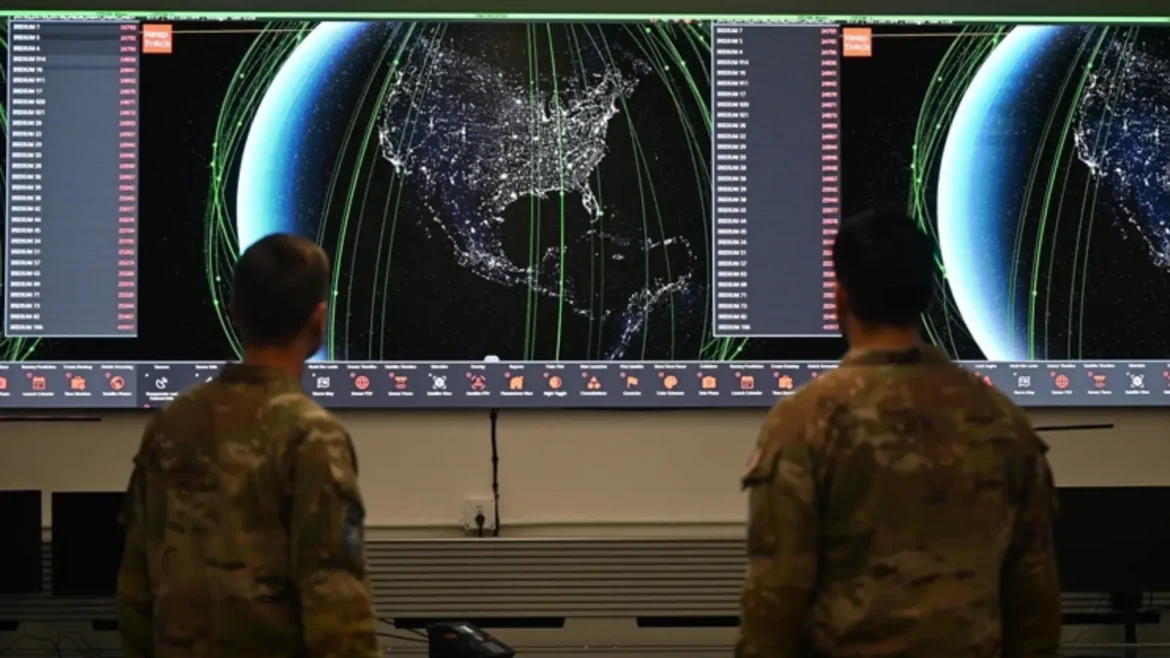
Awarded by the Space Systems Command, the effort focuses on deploying and upgrading mesh networking capabilities that connect sensors across the Space Domain Awareness (SDA) architecture.
Work will take place in Colorado Springs, Costa Mesa, and multiple operational node sites. Completion is scheduled for September 2027.
Notably, no immediate funds were obligated at the time of award, indicating a phased execution aligned with mission needs.
Why Mesh Networking Matters For Space Domain Awareness
At the core of the Anduril Industries contract is the development of secure, redundant, and resilient mesh networking for the Space Surveillance Network (SSN).
Unlike traditional centralized architectures, mesh networks allow sensors and nodes to communicate dynamically. This means:
- No single point of failure
- Improved data flow under contested conditions
- Faster sharing of tracking and threat data
For Space Domain Awareness missions, this is critical. The SSN tracks satellites, debris, and potential threats in orbit. As adversaries develop counterspace capabilities, the network itself becomes a target.
By distributing communications across multiple nodes, the upgraded system ensures continuity even if parts of the network are disrupted.
Strategic Context: Rising Pressure In The Space Domain
The expansion of the Anduril Industries contract comes amid growing concerns about the vulnerability of U.S. space assets.
According to U.S. defense assessments and public statements from the United States Space Force, potential adversaries are investing in:
- Anti-satellite weapons
- Electronic warfare targeting satellites
- Cyber attacks on space infrastructure
This environment demands resilient architectures that can operate in degraded or contested conditions.
Mesh networking aligns with the Pentagon’s broader shift toward distributed operations, a concept also seen in Joint All-Domain Command and Control (JADC2) initiatives.
Operational Impact On The Space Surveillance Network
The upgraded capabilities under the Anduril Industries contract are expected to enhance:
1. Sensor Integration
Existing and future sensors will connect more efficiently, enabling real-time data fusion across global sites.
2. Data Resilience
Information can reroute automatically if nodes are compromised, ensuring uninterrupted tracking of orbital objects.
3. Scalability
The system is designed to support future expansion as new sensors and technologies are added.
4. Cybersecurity
Secure communication layers will reduce vulnerability to interception or disruption.
These improvements directly support Space Domain Awareness, which underpins everything from missile warning to satellite collision avoidance.
Anduril’s Growing Role In Defense Networking
The Anduril Industries contract reflects the company’s expanding footprint in advanced defense technologies, particularly in autonomous systems and networked warfare.
Founded in 2017, Anduril has positioned itself as a key player in:
- AI-driven defense systems
- Autonomous surveillance platforms
- Integrated command and control networks
Its involvement in SDANet highlights a shift toward commercial tech firms delivering core military infrastructure, a trend increasingly visible across U.S. defense programs.
Contract Structure And Execution Timeline
The contract modification (P00008) builds on the original IDIQ framework, allowing flexible task orders over time.
Key details include:
- Total Contract Ceiling: $200 million
- Increment Value: $100.3 million
- Completion Date: September 23, 2027
- Contracting Authority: Space Systems Command, Peterson Space Force Base
This structure enables the government to scale deployment based on evolving mission requirements, rather than committing all funds upfront.
Analysis: A Shift Toward Survivable Space Architectures
The Anduril Industries contract signals more than a routine upgrade. It reflects a broader transformation in how the U.S. approaches space operations.
Traditionally, space systems prioritized performance and coverage. Today, survivability and resilience are equally critical.
Mesh networking represents a foundational shift:
- From centralized to distributed systems
- From static architectures to adaptive networks
- From vulnerability to redundancy
This mirrors changes seen in terrestrial warfare, where decentralized networks have proven more resilient against disruption.
In practical terms, the upgraded Space Surveillance Network will be better equipped to operate in scenarios where communications are contested or degraded.
- $20 billion contract awarded to Anduril Industries for AI driven defense integration.
- The agreement centers on deployment of the Lattice open architecture battlefield data platform.
- System integrates sensors, autonomous platforms, and command networks into a unified operational environment.
- Work will be executed through task orders through 2036 under U.S. Army Contracting Command oversight.
- The effort reflects growing Pentagon emphasis on AI enabled command and control architectures.
Anduril Industries Lattice Contract Expands US Army AI Battlefield Network
The Anduril Industries Lattice contract represents a major step in the modernization of digital battlefield systems for the United States Army. Under the agreement, the Pentagon awarded up to $20 billion to Anduril Industries to consolidate artificial intelligence software, integrated hardware, computing infrastructure, and technical support into a unified operational capability.
The contract centers on the deployment and expansion of the company’s proprietary Lattice platform, an AI enabled system designed to integrate sensors, autonomous platforms, command systems, and battlefield data streams into a single operational architecture.
Officials say the effort will support the Army’s evolving operational and enterprise requirements across multiple mission areas.
The contract was awarded by U.S. Army Contracting Command at Aberdeen Proving Ground in Maryland. Work locations and funding will be assigned through individual orders, with program activities expected to run through March 2036.
The Big Picture
Artificial intelligence driven command systems are becoming central to modern military operations.
The Pentagon increasingly views data integration, sensor networking, and automated decision support as essential capabilities for future conflicts. Programs across the U.S. military services are shifting toward digital architectures that connect drones, satellites, sensors, and weapons platforms into shared operational networks.
Platforms such as the Lattice system represent the type of digital infrastructure required for concepts like Joint All Domain Command and Control, often abbreviated as JADC2. These systems aim to allow commanders to process massive volumes of battlefield data and respond faster than adversaries.
The Anduril Industries Lattice contract reflects this broader strategic shift. Instead of focusing only on physical weapons platforms, the Department of Defense is investing heavily in software driven operational environments.
What Is Happening
The new agreement allows the Army to procure commercial solutions from Anduril that integrate multiple elements into a single mission ready capability.
The contract includes several key components:
• The AI enabled Lattice software suite
• Integrated sensors and hardware systems
• Data infrastructure and computing architecture
• Technical support services
• Ongoing system integration and upgrades
Lattice functions as a command and control layer that processes data from a wide range of sensors and platforms. It uses machine learning algorithms to detect threats, track objects, and provide decision support to operators.
Anduril has previously deployed the platform in several operational environments, including border security, counter drone missions, and autonomous surveillance networks.
Under this Army contract, the platform will be expanded to support both operational military missions and broader enterprise needs.
Why It Matters
The Anduril Industries Lattice contract highlights a growing shift toward software driven military capability.
Modern battlefields generate enormous amounts of data from satellites, drones, radar systems, electronic warfare sensors, and ground units. Without automated processing and integration tools, commanders risk being overwhelmed by information.
AI enabled platforms like Lattice aim to solve this problem by:
• Aggregating data from multiple sources
• Automatically identifying patterns and threats
• Presenting real time situational awareness
• Enabling faster operational decisions
This approach reduces the time between detection and response, which can be decisive in high intensity combat.
For the Army, integrating AI based decision support systems also supports modernization efforts aimed at preparing forces for future conflicts involving peer competitors.
Strategic Implications
The contract also reflects the Pentagon’s increasing reliance on non traditional defense contractors specializing in software and autonomous technologies.
Companies like Anduril have emerged as key players in defense innovation by focusing on rapid development cycles and commercial style software architectures. Their platforms often rely on open architecture systems that allow rapid upgrades and integration with third party technologies.
The Lattice architecture is designed to integrate with a variety of sensors and autonomous systems. This flexibility allows military units to add new capabilities without rebuilding entire command networks.
For the Army, that approach could accelerate modernization while reducing long term system integration challenges.
Competitor View
Rival military powers closely monitor U.S. investments in AI driven command systems.
Both China and Russia have emphasized the importance of information dominance and automated battlefield management in future warfare concepts.
Chinese military doctrine increasingly stresses intelligentized warfare, which includes the use of artificial intelligence to coordinate sensors, weapons, and command networks. Russia has also invested in automated battlefield management systems designed to integrate reconnaissance and strike capabilities.
Large scale contracts such as the Anduril Industries Lattice contract signal that the United States intends to accelerate development of these capabilities.
The deployment of AI enabled command platforms could improve operational tempo and increase the effectiveness of distributed forces.
Capability Gap The Army Is Addressing
The Army faces a long standing challenge in integrating data from multiple platforms and operational domains.
Many legacy command systems operate in isolated networks. This fragmentation slows decision making and limits situational awareness during complex operations.
The Lattice platform aims to close that gap by creating a unified operational picture across sensors, vehicles, and command nodes.
However, implementing such systems across large military organizations remains complex. Integration with legacy hardware, cybersecurity concerns, and operator training all present practical challenges.
Despite these hurdles, AI driven data fusion is widely viewed as essential for modern military operations.
What To Watch Next
Several milestones will determine the long term impact of the program.
First, the Army will begin issuing task orders under the contract framework. These orders will define specific projects, deployments, and operational environments.
Second, integration with existing Army command systems will be critical. The platform must connect with current communications networks and battlefield sensors.
Finally, operational testing will determine how effectively the system supports decision making in real world conditions.
If successful, the Lattice platform could become a foundational element of the Army’s digital command architecture over the next decade.
The Bottom Line
The Anduril Industries Lattice contract signals a major U.S. Army investment in AI driven battlefield data integration, highlighting the growing role of software platforms in future military operations.
War Secretary Pete Hegseth Signs Anduril DIVE LD Autonomous Underwater Vehicle During Facility Visit
Pete Hegseth Highlights Anduril DIVE LD During Facility Tour
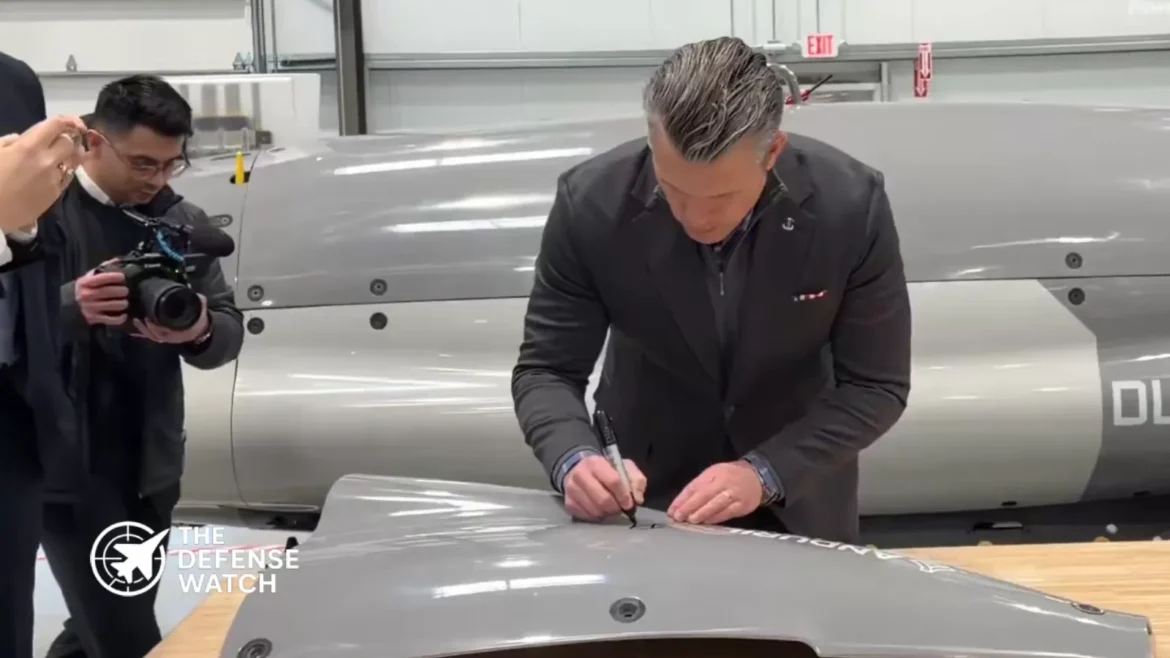
War Secretary Pete Hegseth underscored the Pentagon’s growing focus on unmanned maritime systems during a visit to an Anduril Industries facility, where he signed a display panel of the DIVE LD autonomous underwater vehicle. The gesture, shared publicly during the tour, drew attention to one of the U.S. defense sector’s most visible long endurance unmanned undersea platforms.
The DIVE LD autonomous underwater vehicle is designed for extended duration operations in deep ocean environments, supporting missions that place a premium on persistence, range, and reduced risk to human crews. Hegseth’s visit comes as the Department of Defense continues to emphasize autonomy, artificial intelligence, and distributed maritime capabilities across naval and joint force planning.
A Signal of Pentagon Interest in Undersea Autonomy
Hegseth’s appearance at Anduril reflects sustained senior level interest in unmanned systems that can operate in contested maritime spaces. Autonomous underwater vehicles are increasingly viewed as essential tools for intelligence gathering, surveillance, reconnaissance, and seabed operations, especially in regions where traditional manned platforms face higher operational risk.

While the Pentagon has not announced a new procurement tied directly to the visit, the presence of the War Secretary and the highly visible signing of the DIVE LD panel signals institutional support for continued experimentation and capability development in the undersea domain. Similar engagements with defense innovators have become a regular feature of U.S. modernization efforts.
Anduril DIVE LD Overview
The Anduril DIVE LD autonomous underwater vehicle is built for long endurance missions, with a design optimized for deep sea operations. According to company disclosures, the platform emphasizes modular payload integration, allowing it to support a range of mission sets without major redesign.
Key characteristics highlighted by Anduril include extended range, autonomous navigation, and the ability to operate with limited or no direct human control for long periods. These features align closely with U.S. Navy and broader Department of Defense requirements for distributed sensing and persistent maritime awareness.
Anduril has positioned the DIVE LD as part of a broader ecosystem of autonomous systems, integrating software driven control and data processing with hardware designed for reliability in harsh environments. The company has previously stated that its undersea platforms are intended to complement, not replace, traditional naval assets.
Strategic Context for the U.S. Navy
The U.S. Navy has publicly identified unmanned undersea vehicles as a critical component of future fleet architecture. Navy strategy documents and congressional testimony have repeatedly pointed to the need for persistent undersea sensing, seabed awareness, and scalable platforms that can operate forward without large support footprints.

Autonomous underwater vehicles like the Anduril DIVE LD autonomous underwater vehicle support these goals by offering endurance and flexibility at a lower operational cost than manned submarines. They are also seen as valuable tools for operating in gray zone scenarios, where presence and awareness matter but escalation risks must be managed carefully.
The Pentagon’s interest in such systems also reflects broader competition in the maritime domain, where peer and near peer competitors are investing heavily in undersea surveillance and counter surveillance capabilities.
Anduril’s Role in Defense Modernization
Anduril Industries has emerged as a prominent supplier of software driven defense systems, with a portfolio that spans air, land, sea, and undersea domains. Its approach emphasizes rapid development, commercial style iteration, and close collaboration with military users.
The DIVE LD autonomous underwater vehicle fits within this model, combining commercially inspired engineering with military specific requirements. Anduril has previously worked with the U.S. Navy and other government organizations on autonomous and sensor driven programs, reinforcing its standing as a key player in the Pentagon’s push for faster modernization cycles.
Hegseth’s visit reinforces the company’s visibility at senior policy levels, even as the Department of Defense continues to evaluate how best to integrate emerging technologies into formal acquisition pathways.
What Comes Next
No new contract announcements were made in connection with the visit. However, defense officials have consistently indicated that experimentation, prototyping, and operational trials will shape future decisions on unmanned undersea systems.
As the U.S. Navy refines its concepts for distributed maritime operations, platforms like the Anduril DIVE LD autonomous underwater vehicle are likely to remain central to discussions about persistence, resilience, and cost effective force structure.
Hegseth’s public engagement at the Anduril facility serves as a visible reminder that undersea autonomy is no longer a niche capability, but a core element of U.S. defense planning.
Anduril’s Drone Wingman Takes Flight
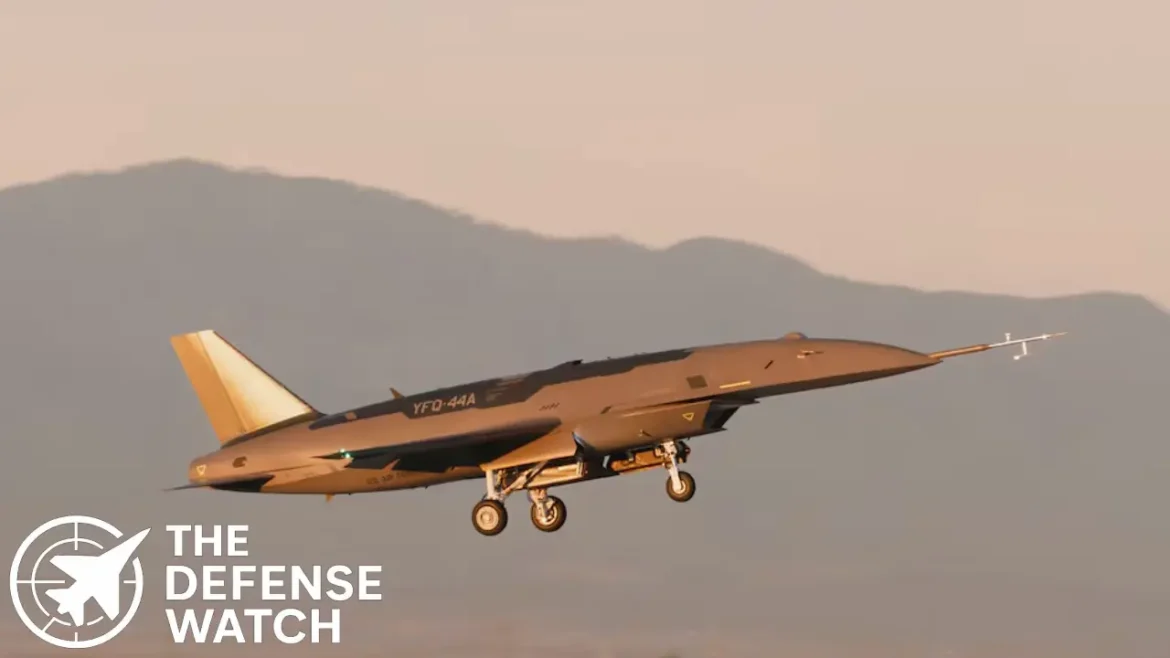
Anduril Industries, the defense technology firm founded by Palmer Luckey, has launched flight testing for its highly anticipated autonomous “Drone Wingman,” a next-generation unmanned aircraft designed to fly alongside U.S. Air Force fighters.
The milestone, announced on October 31, marks the company’s transition from design and ground testing to real-world flight trials — a critical step under the U.S. Air Force’s Collaborative Combat Aircraft (CCA) program. This effort aims to develop autonomous drones capable of teaming with crewed aircraft like the F-35 and F-15EX to perform combat, surveillance, and electronic warfare missions.
Anduril’s announcement comes amid growing competition among U.S. defense contractors to deliver cost-effective, AI-enabled aircraft that can expand the Air Force’s combat capabilities without risking human pilots.
Pioneering the CCA Vision
The Drone Wingman represents Anduril’s bid for the U.S. Air Force’s multibillion-dollar CCA initiative — one of the most ambitious unmanned programs in American defense history. The service envisions a fleet of AI-powered aircraft operating in tandem with human pilots to enhance lethality, survivability, and decision-making in high-threat environments.
While Anduril has not disclosed specific performance details, the company confirmed the aircraft is designed for modularity, enabling rapid integration of sensors, weapons, and mission systems. This design philosophy aligns with the Pentagon’s push for open-architecture platforms that can evolve as technology advances.
In a company statement, Anduril emphasized its “software-first approach,” integrating autonomous systems and artificial intelligence developed across its Lattice OS platform — a command-and-control system that underpins many of the company’s defense products, including counter-drone systems and autonomous underwater vehicles.
Private Sector Competition Intensifies
Anduril is one of several defense innovators — including Boeing, Lockheed Martin, and General Atomics — vying for a share of the Air Force’s future unmanned fleet. Boeing’s MQ-28 Ghost Bat, developed with the Royal Australian Air Force, and General Atomics’ Gambit series have already demonstrated key flight capabilities.
However, Anduril’s rapid development cycle and software-centric approach could set it apart in a field traditionally dominated by legacy aerospace giants.
According to Defense News, Anduril aims to deliver a “low-cost, high-performance” autonomous jet that can be produced and upgraded at the pace of software — a fundamental shift from traditional defense procurement models that often span decades.
This approach mirrors the Pentagon’s growing reliance on commercial innovation to outpace peer adversaries like China, which is aggressively developing its own loyal wingman and AI-enabled combat drone systems.
Analysis: Transforming U.S. Airpower Strategy
The flight test of Anduril’s Drone Wingman marks a pivotal shift in how the U.S. Air Force conceives air superiority in the 21st century. By integrating AI-driven aircraft into its force structure, the service can potentially multiply its combat presence without proportionally increasing costs or manpower.
Autonomous wingmen could serve as “force multipliers,” carrying sensors, weapons, or acting as decoys to protect human pilots. In a potential conflict with a technologically advanced adversary, such as China or Russia, these drones could provide the U.S. military with a decisive operational edge.
Moreover, the initiative reflects a strategic push to reduce risk to human pilots in high-threat environments while maintaining control through human oversight — a concept often described as “human-on-the-loop” rather than “human-in-the-loop.”
If successful, the CCA program could redefine air combat doctrine, replacing traditional formations with networked swarms of manned and unmanned aircraft that coordinate dynamically using AI and data links.
Broader Defense Context
The Air Force’s Fiscal Year 2025 budget request includes significant funding for CCA development, with projections estimating procurement of several hundred autonomous aircraft by the early 2030s.
Anduril’s participation in the program highlights a new model for defense partnerships — one where Silicon Valley-style startups work alongside traditional contractors to rapidly prototype and deploy defense technologies.
The company’s portfolio already includes the Ghost autonomous aircraft, the Dive-LD unmanned submarine, and Sentry Tower border surveillance systems, demonstrating its capability to integrate hardware and AI software across multiple domains.
Conclusion: The Future of AI in U.S. Combat Aviation
The start of flight testing for Anduril’s Drone Wingman signals more than a technological milestone — it represents the future of American airpower. As autonomous systems mature, they are poised to become indispensable elements of next-generation warfare, offering agility, scalability, and resilience.
If Anduril’s approach succeeds, it could redefine not just how the Air Force fights, but how the Pentagon procures and fields advanced systems in an era of strategic competition.