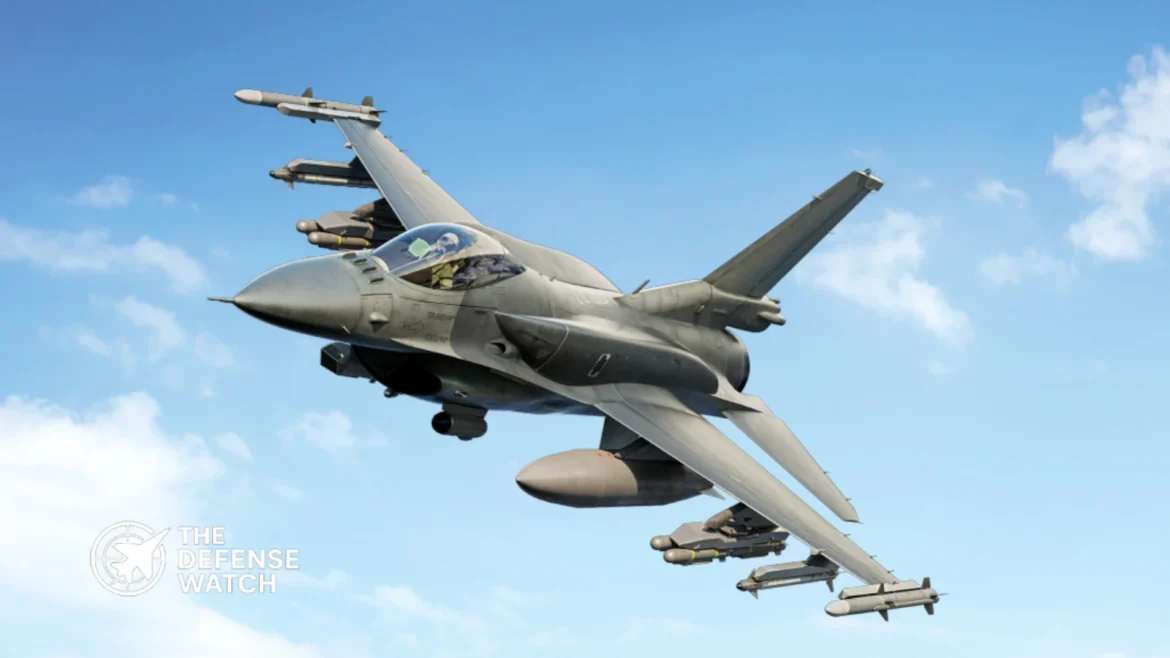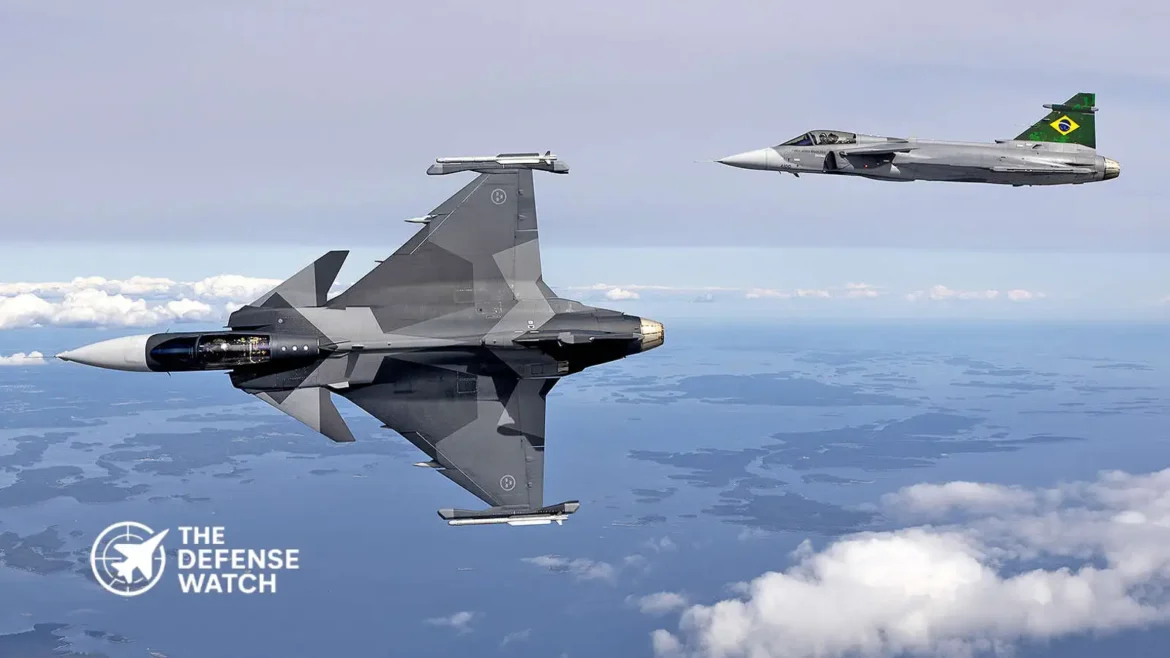
Loyal Wingman Drones Are Becoming a New Layer of Airpower
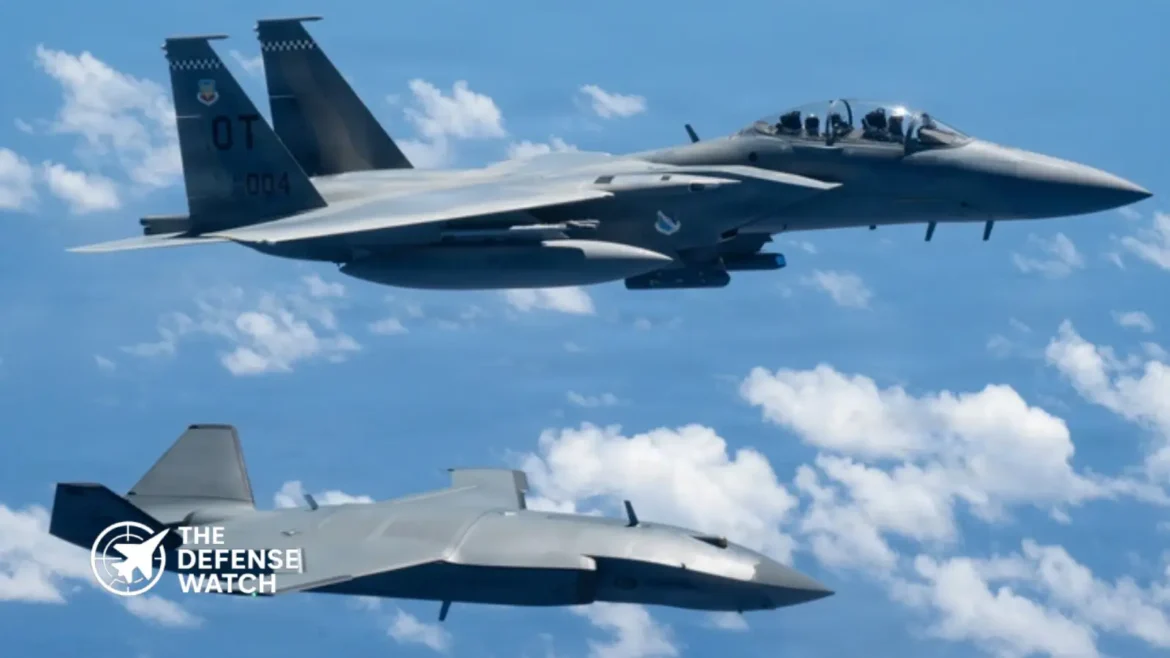
Loyal wingman drones are uncrewed combat aircraft designed to operate alongside crewed fighters, extending their sensors, weapons, electronic warfare capabilities and reach while reducing the risk to pilots. The concept has moved rapidly from experimental demonstrations toward operationally relevant testing, with the U.S. Collaborative Combat Aircraft program, Australia’s MQ-28 Ghost Bat and European and Chinese efforts all pursuing different versions of the same broad idea.
The most important change is that these aircraft are no longer being designed simply as remotely piloted drones. Instead, they are being developed as semi-autonomous or autonomous members of a larger combat formation.
That distinction matters.
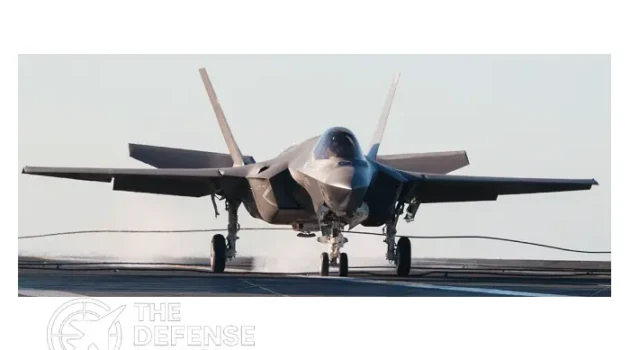
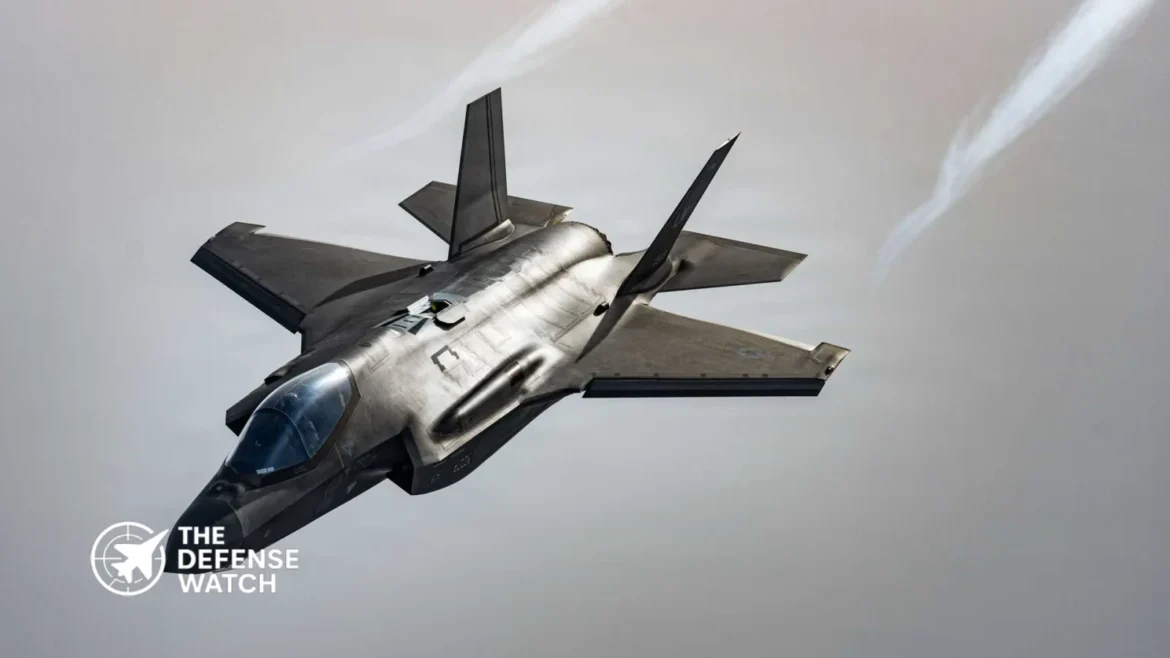
A future fighter formation may include a crewed F-35, F-47 or Eurofighter at the center of the mission, supported by several uncrewed aircraft performing sensing, jamming, communications relay, decoy, air-to-air or strike missions.
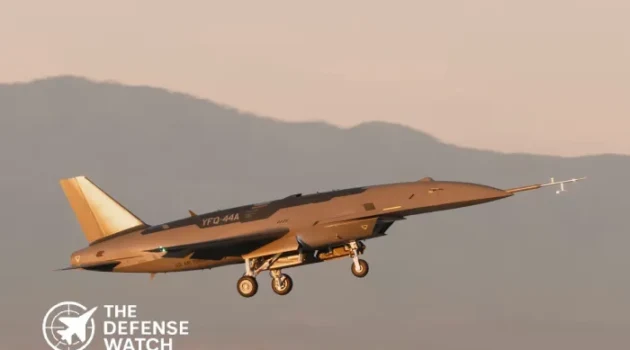
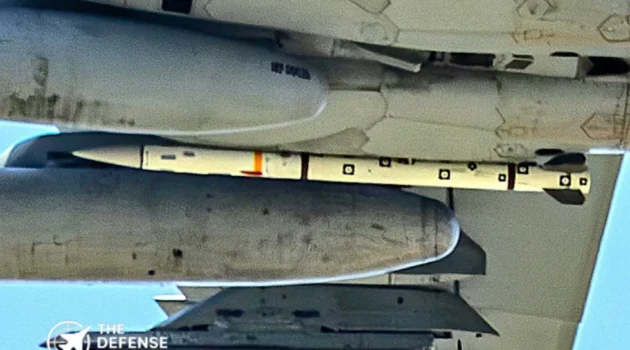
The U.S. Air Force’s CCA program is now one of the most advanced examples. The service designated the General Atomics YFQ-42A and Anduril YFQ-44A in 2025 and moved into increasingly demanding flight, autonomy and weapons testing during 2026. In July 2026, a YFQ-44A conducted a live-fire test involving an AIM-120 weapon against a digital target, marking an important step in weapons integration.
At the same time, Australia’s MQ-28 Ghost Bat has accumulated operationally relevant experience and demonstrated autonomous teaming with crewed aircraft.
The result is a rapidly expanding competition over what could become one of the defining technologies of sixth-generation air warfare.
Key Takeaways
Loyal wingman drones are evolving from experimental unmanned aircraft into networked combat systems intended to operate with crewed fighters in highly contested airspace.
What Is a Loyal Wingman Drone?
A loyal wingman is an uncrewed aircraft designed to cooperate with a crewed aircraft rather than operate as an isolated drone.
The term originally described the idea of an unmanned aircraft accompanying a fighter and following instructions from the human pilot. Modern Collaborative Combat Aircraft, however, go further.
A CCA is intended to receive high-level mission direction while autonomously handling many flight and tactical functions.
That could include:
- Navigation and formation management
- Sensor collection and fusion
- Threat detection
- Electronic warfare
- Target identification
- Communications relay
- Decoy operations
- Intelligence, surveillance and reconnaissance
- Air-to-air weapons employment
- Air-to-ground strike
- Battle damage assessment
The human pilot remains responsible for mission command and critical decisions, while the uncrewed aircraft handles tasks that would otherwise increase the workload of the crewed aircraft.
The U.S. Congressional Research Service has described CCA as semi-autonomous uncrewed aircraft intended to operate alongside crewed fighters, with potential missions including air combat, strike, electronic warfare, targeting and ISR. Earlier Air Force planning used an assumption of roughly 1,000 aircraft, based on two CCAs supporting each of 500 advanced fighters.
Why Militaries Want Loyal Wingman Drones
The underlying problem is straightforward.
Modern fighter aircraft have become extraordinarily capable, but also extraordinarily expensive and complex.
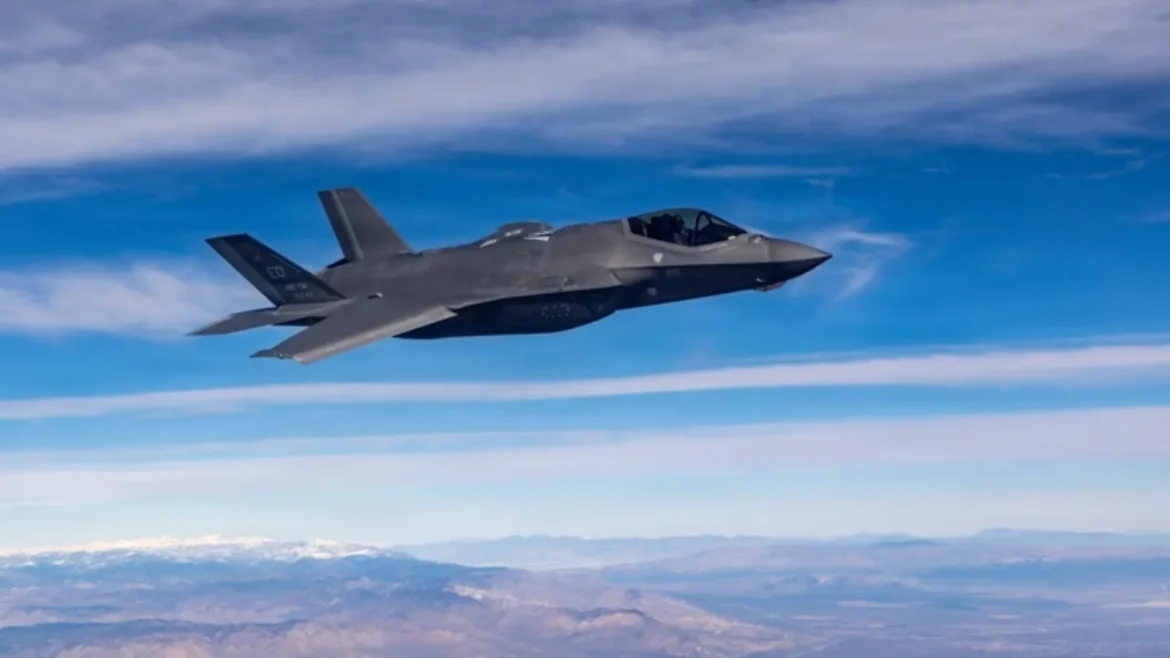
A fifth-generation fighter such as the F-35 can carry sophisticated sensors, electronic warfare equipment, communications systems and precision weapons. But there are limits to how many aircraft a nation can buy, how many pilots it can train and how much risk commanders can accept when placing crewed platforms against advanced air defenses.
Loyal wingman drones offer another option.
Instead of asking one fighter to perform every mission, commanders can distribute functions among several aircraft.
For example, a formation could theoretically include:
Crewed fighter: command, sensor fusion and mission control.
CCA 1: electronic attack.
CCA 2: forward sensing and targeting.
CCA 3: air-to-air weapons.
CCA 4: decoy or communications relay.
The exact allocation would depend on the aircraft and mission, but the broader principle is to create a distributed combat formation.
This makes the formation harder to defeat because an adversary cannot necessarily eliminate the mission by destroying one aircraft.
MQ-28 Ghost Bat: Australia’s Loyal Wingman
The MQ-28 Ghost Bat is one of the most mature loyal wingman programs in the world.
Developed by Boeing Australia for the Royal Australian Air Force, the aircraft began flight testing in 2021 and became the first military aircraft designed and manufactured in Australia in more than five decades.
Boeing describes the MQ-28 as an uncrewed collaborative combat aircraft designed to work with both crewed and uncrewed platforms. The company lists a range of more than 2,000 nautical miles, speeds up to Mach 0.9, a ceiling above 40,000 feet and a maximum takeoff weight of up to 12,000 pounds.
Those figures are important because they place the Ghost Bat in a different category from conventional small tactical drones.
It is intended to operate at fighter-like speeds and ranges rather than simply provide low-cost battlefield surveillance.
MQ-28 and Human-Machine Teaming
The Ghost Bat has also demonstrated increasingly sophisticated teaming.
In 2025, Boeing and the RAAF demonstrated a mission involving MQ-28 aircraft controlled through an E-7A Wedgetail, while the program has also progressed to autonomous weapons engagement testing. Boeing reported an air-to-air autonomous weapon engagement in December 2025 involving an MQ-28 teamed with an E-7A and F/A-18F Super Hornet.
The aircraft also completed international operational flight testing at Point Mugu, California, in 2026, giving the program experience operating from an allied location outside Australia.
That experience gives the MQ-28 an important advantage: it is not simply an airshow concept.
It has accumulated a growing body of flight, autonomy and integration experience.
XQ-58A Valkyrie: The US Experimental Path
The XQ-58A Valkyrie, developed by Kratos with the U.S. Air Force Research Laboratory, represents another major step in the development of attritable combat aircraft.
The Valkyrie was developed through AFRL’s Low Cost Attritable Aircraft Technology effort.
Unlike conventional fighter aircraft, the XQ-58A was designed around affordability and rapid production.
The U.S. National Museum of the U.S. Air Force lists a maximum speed of approximately 652 mph, a range of 3,500 miles, a ceiling approaching 45,000 feet and a maximum weight of 6,000 pounds.
The aircraft also demonstrated an important concept in 2021 when it released an ALTIUS-600 small unmanned aircraft from its internal weapons bay.
This demonstrated that an uncrewed aircraft could itself become a carrier for additional autonomous systems.
That concept is significant because future combat aircraft may not simply carry missiles and bombs. They may deploy smaller drones, decoys or sensors as part of a distributed attack package.
From XQ-58 to the US Collaborative Combat Aircraft
The XQ-58 helped demonstrate the technical feasibility of affordable, high-performance uncrewed aircraft.
The Air Force’s CCA program is taking the concept toward a more formal operational capability.
In March 2025, the Air Force officially designated the two Increment 1 prototypes as:
- YFQ-42A, developed by General Atomics
- YFQ-44A, developed by Anduril
The Y designation identifies a prototype, while F indicates fighter and Q identifies an unmanned aircraft. The Air Force said both aircraft are intended to support crewed-uncrewed teaming in contested environments.
The program has moved quickly.
The YFQ-42A began flight testing in 2025, while the Air Force continued weapons and autonomy testing across both platforms.
In February 2026, the service reported that it was implementing a government-owned Autonomy Government Reference Architecture across multiple CCA vendor platforms. The objective is to reduce dependence on a single proprietary software ecosystem and allow the government to insert new autonomy capabilities more rapidly.
That software architecture may ultimately prove as important as the aircraft itself.
YFQ-44A Live-Fire Test Marks a Major Milestone
The U.S. program crossed another important threshold in July 2026.
The Department of the Air Force conducted a live-fire test involving the YFQ-44A and an AIM-120 weapon over the Mojave Desert.
The test used a digital target and was designed to validate the aircraft’s ability to conduct a safe weapons engagement while retaining human oversight of weapon release.
This distinction is important.
The objective is not simply to create an autonomous aircraft capable of making independent lethal decisions.
The operational model being pursued involves human command authority combined with machine-level autonomy for navigation, sensing, coordination and other tactical functions.
That approach could allow a single pilot to manage several autonomous aircraft without manually flying each one.
How CCA Autonomy Works
A CCA does not need to be intelligent in the same way as a human pilot.
Instead, autonomy can be divided into different layers.
Flight Autonomy
The aircraft must maintain safe flight, avoid collisions and manage fuel and navigation.
Formation Autonomy
Multiple aircraft need to maintain formation geometry without requiring continuous pilot commands.
Mission Autonomy
The system needs to understand assigned objectives and adapt its route or behavior as conditions change.
Tactical Autonomy
The aircraft may detect threats, classify contacts and recommend or execute predefined responses within authorized rules.
Human Command
The human operator remains responsible for mission-level control and applicable weapons decisions.
This division of responsibility is central to the future CCA concept.
The pilot does not need to tell a loyal wingman every time to turn left, climb or adjust its formation position.
Instead, the pilot could issue a higher-level instruction, allowing the autonomous system to determine how best to execute it.
Open Architecture Could Decide the Winners
One of the most important aspects of the U.S. CCA program is not visible in photographs.
It is the software architecture.
Air forces traditionally purchase aircraft as tightly integrated systems. Upgrading them can require major hardware and software modifications.
CCA programs are attempting to break that model.
The Air Force’s government-owned autonomy architecture is intended to support modular software and allow capabilities from different suppliers to operate across multiple aircraft.
That approach could allow the service to improve autonomy much faster than it can redesign an aircraft.
It also creates an important industrial advantage.
If the airframe, sensors and autonomy system use open interfaces, new suppliers may be able to compete for individual components rather than requiring a single company to control the entire platform.
Europe Builds Its Own Loyal Wingman Ecosystem
The loyal wingman concept is not limited to the United States and Australia.
Europe is pursuing similar technologies through next-generation combat-air programs.
Airbus describes collaborative combat aircraft as autonomous armed platforms that can operate alongside crewed fighters such as the Eurofighter. The company highlights missions including sensing, electronic warfare, targeting and strike.
The broader European approach is connected to programs such as Future Combat Air System and associated remote carrier concepts.
The basic philosophy is similar to the U.S. model.
A crewed fighter acts as a command node while uncrewed systems extend its reach and provide additional capabilities.
The United Kingdom is also developing its own CCA technology.
In July 2026, BAE Systems unveiled Brontanax, described by the company as Britain’s first British-designed uncrewed autonomous CCA. BAE said the aircraft is intended to provide additional frontline capability and combat mass alongside crewed aircraft.
These programs show that Europe is not necessarily attempting to reproduce the U.S. CCA model exactly.
Instead, European countries are integrating uncrewed aircraft into their own sixth-generation combat-air architectures.
China’s Loyal Wingman Development
China is also pursuing multiple uncrewed combat aircraft concepts.
The FH-97A is one of the most frequently discussed Chinese loyal wingman designs. It has been associated with manned-unmanned teaming and has been presented as a platform capable of supporting missions such as electronic warfare, reconnaissance and strike.
Independent research has also identified the GJ-11 stealth UCAV as an important component of China’s broader uncrewed combat aircraft development. The International Institute for Strategic Studies and other defense analysts have tracked China’s increasing use of stealth UCAV and CCA-type concepts.
However, publicly available information about Chinese systems is much less complete than information available for U.S. and Australian programs.
This creates an important analytical limitation.
Aircraft displayed at Chinese air shows or military parades do not necessarily represent operational capability.
The distinction between a prototype, technology demonstrator, production aircraft and operational combat system must therefore be maintained.
Loyal Wingman Comparison
System Country Developer Role Approx. Range Approx. Speed Status MQ-28 Ghost Bat Australia Boeing Australia Collaborative combat aircraft 2,000+ nm Up to Mach 0.9 Advanced testing and operational development XQ-58A Valkyrie United States Kratos / AFRL Attritable combat aircraft / CCA technology demonstrator 3,500 miles 652 mph Mature demonstrator and technology platform YFQ-42A United States General Atomics CCA Not publicly disclosed Not publicly disclosed Flight testing YFQ-44A United States Anduril CCA Not publicly disclosed Not publicly disclosed Flight and weapons testing European Remote Carrier / CCA concepts Europe Airbus and industry partners Distributed combat, sensing and EW Program dependent Program dependent Development Brontanax United Kingdom BAE Systems Autonomous CCA Not publicly disclosed Not publicly disclosed Development FH-97A China Chinese aerospace industry Loyal wingman / UCAV concept Not reliably disclosed Not reliably disclosed Development / prototype GJ-11 China Chinese aerospace industry Stealth UCAV Not reliably disclosed Not reliably disclosed Development and testing Publicly available figures are not directly comparable because the aircraft have different design objectives and mission configurations. Chinese specifications in particular should be treated cautiously.
Loyal Wingman vs Traditional Combat Drones
A loyal wingman is different from a conventional remotely piloted drone.
A system such as the MQ-9 Reaper is primarily operated through a human control architecture, although it includes automated flight functions.
A CCA is intended to operate much more independently.
The distinction can be summarized this way:
Conventional Combat Drone Loyal Wingman / CCA Usually remotely operated Designed for high levels of autonomy Human operator manages flight Human provides mission-level direction Often optimized for ISR or strike Designed for fighter support and contested airspace Typically operates as an independent asset Designed to work as part of a formation Ground control is central Airborne crewed aircraft can act as mission commanders Longer endurance often prioritized Speed, survivability and integration are emphasized This does not mean conventional drones are becoming obsolete.
Instead, military aviation is moving toward a broader ecosystem containing multiple types of autonomous aircraft.
What Missions Could Loyal Wingmen Perform?
The flexibility of CCA designs is one of their most important advantages.
Electronic Warfare
An uncrewed aircraft could move closer to hostile radar systems and conduct electronic attack while reducing the risk to a crewed fighter.
Forward Sensing
A CCA could operate ahead of the crewed formation and provide additional sensor coverage.
Air Combat
Some aircraft could carry air-to-air missiles and expand the number of weapons available to a formation.
Decoy Operations
A relatively inexpensive aircraft could force an adversary to reveal radar emissions or expend expensive interceptors.
Strike
CCA platforms could carry precision weapons or provide targeting information to other aircraft.
Communications Relay
A loyal wingman could extend communications between aircraft operating at different locations.
Swarm Support
Larger CCAs could potentially carry or coordinate smaller autonomous aircraft, creating multiple layers of distributed capability.
The Real Advantage: Combat Mass
The strongest argument for loyal wingman drones is not that they can replace fighters.
It is that they can make fighters more effective.
A formation containing one crewed aircraft and several CCAs can potentially generate more sensors, weapons and tactical options than a formation consisting only of crewed aircraft.
The economics are also important.
Boeing describes the MQ-28 as being designed around an affordability objective and says the platform is intended to cost roughly one-tenth of a crewed platform.
The exact acquisition cost of operational variants will depend on production quantities, sensors, engines, weapons, support equipment and software.
Nevertheless, the basic concept is clear.
A military can accept greater risk when the aircraft are cheaper and faster to replace.
That creates the possibility of affordable combat mass.
Survivability Is More Than Stealth
It would be a mistake to judge CCAs only by radar cross-section.
Survivability can come from several factors:
- Low observability
- Electronic warfare
- High speed
- Stand-off weapons
- Distributed formations
- Decoys
- Sensor networking
- Autonomous maneuver
- Communications resilience
- Large numbers
An aircraft does not necessarily have to be invisible if the adversary cannot determine which aircraft is the primary threat.
That is one reason distributed formations are attractive for operations against sophisticated integrated air defense systems.
The Communications Problem
The biggest weakness of a networked combat formation may also be its greatest strength.
If CCAs depend heavily on data links, an adversary will attempt to disrupt those links.
Electronic warfare could interfere with:
- Satellite communications
- Tactical data links
- GPS
- Navigation systems
- Aircraft-to-aircraft communications
- Sensor data
- Ground control networks
A serious CCA architecture therefore needs to continue operating when communications are degraded or denied.
This requires greater onboard autonomy.
An aircraft that cannot receive continuous instructions from its human controller cannot simply stop functioning.
It needs predefined mission logic, navigation resilience and the ability to make bounded tactical decisions without constant external input.
Cost, Maintenance and Attrition
The phrase attritable aircraft is important.
Attritable does not mean disposable.
A military still needs to recover value from each aircraft.
Engines, sensors, electronic warfare equipment, communications systems and software can be expensive even if the airframe is relatively inexpensive.
A fleet of hundreds or thousands of CCAs would also require:
- Engines and spare parts
- Maintenance personnel
- Distributed operating locations
- Secure software infrastructure
- Weapons stocks
- Ground support equipment
- Training systems
- Data management
- Cybersecurity
- Autonomy testing
The economic advantage therefore depends on the entire lifecycle cost, not simply the price of the aircraft.
Why the US CCA Program Matters for the Indo-Pacific
CCA is particularly relevant to the Indo-Pacific because geography places a premium on range, survivability and distributed operations.
Large distances between bases and contested airspace can make traditional assumptions about centralized air operations less practical.
Uncrewed aircraft could provide additional combat power without requiring an equivalent increase in pilot numbers.
They could also operate from dispersed locations, depending on their logistics and runway requirements.
The Air Force has explicitly connected CCA to future air superiority and the broader Next Generation Air Dominance family of systems.
That makes CCA more than a drone procurement program.
It is becoming part of the architecture for future U.S. airpower.
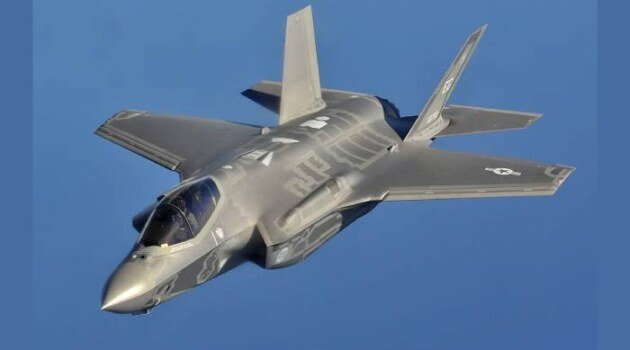
CCA and the F-35
The F-35 could be an important node in future loyal wingman operations.
Its sensors, communications architecture and low-observable design make it well suited to operating inside a distributed combat network.
A future formation could potentially use an F-35 as the human-controlled sensor and command platform while CCAs extend the formation’s weapons and sensing reach.
The exact operational architecture remains under development.
But the concept is straightforward.
The F-35 does not need to carry every sensor and weapon itself if it can coordinate with several autonomous aircraft.
CCA and Future Sixth-Generation Fighters
The long-term vision goes beyond today’s F-35.
The U.S. Air Force is developing CCA alongside the broader NGAD family of systems.
Europe is developing FCAS and GCAP-related technologies.
In these architectures, the crewed fighter becomes one part of a much larger network.
That network may include:
- Crewed fighters
- CCAs
- Tankers
- AEW&C aircraft
- Satellites
- Ground sensors
- Maritime platforms
- Electronic warfare systems
- Long-range missiles
- Smaller autonomous drones
This is why CCA should be viewed as a system-of-systems capability, rather than simply another aircraft.
Major Challenges Ahead
Despite rapid progress, loyal wingman drones remain an emerging capability.
1. Autonomous Decision-Making
The more responsibility given to software, the greater the requirement for testing, verification and reliable human control.
2. Electronic Warfare
CCA networks must function in environments where GPS and communications may be actively attacked.
3. Engine and Maintenance Costs
A supposedly inexpensive aircraft can become expensive if its engine, sensors and support system are difficult to maintain.
4. Weapons Integration
Carrying a missile is relatively straightforward compared with safely integrating targeting, fire control, communications and rules governing weapons release.
5. Production Capacity
The strategic value of affordable mass disappears if industry cannot produce aircraft quickly enough during a major conflict.
6. Training and Doctrine
Pilots and commanders must learn how to manage several autonomous aircraft without becoming overloaded by information.
7. Cybersecurity
A compromised autonomy system could create risks far more serious than the loss of a conventional remotely piloted aircraft.
The Future of Loyal Wingman Drones
The next stage of development will probably focus less on proving that an aircraft can fly autonomously and more on proving that it can operate reliably inside a contested combat network.
That means testing increasingly difficult combinations of:
Autonomy + sensors + electronic warfare + weapons + communications + human command.
The U.S. Air Force’s rapid progress from prototype development to flight and weapons testing demonstrates how quickly the CCA concept is advancing.
Australia’s MQ-28 provides another model, emphasizing operational experimentation and allied interoperability.
Europe is embedding similar capabilities into sixth-generation combat-air programs, while China is developing multiple UCAV and loyal wingman concepts.
The competition is therefore no longer about whether autonomous combat aircraft will exist.
It is increasingly about who can integrate them at scale, connect them securely and produce them quickly enough to matter in a major conflict.
Analytical Conclusion
Loyal wingman drones represent one of the most significant changes in fighter aviation since the introduction of stealth and networked warfare.
The MQ-28 Ghost Bat demonstrates how an uncrewed aircraft can progress from technology demonstrator toward operationally relevant teaming. The XQ-58A Valkyrie demonstrated the potential of affordable, high-performance attritable aircraft. The U.S. YFQ-42A and YFQ-44A now push the concept toward an operational Collaborative Combat Aircraft fleet.
The central objective is not to eliminate the fighter pilot.
It is to give the pilot more options.
A single crewed fighter supported by several autonomous aircraft could potentially see farther, carry more weapons, conduct electronic attack from multiple directions and force an adversary to divide its defensive resources.
That changes the economics of air combat.
The future air force may therefore not be measured simply by how many fighters it owns.
It may be measured by how effectively it can combine crewed aircraft, autonomous combat aircraft, sensors, weapons and software into one distributed combat system.
For the United States and its allies, the race to develop that architecture is already underway.
The decisive advantage will likely belong to the force that can combine autonomy with reliable human command, resilient communications, affordable production and large-scale operational deployment.
In that sense, the loyal wingman is not replacing the fighter.
It is becoming the fighter’s next layer.

STARK Gambit Loitering Munition Clears Key Warhead Milestone
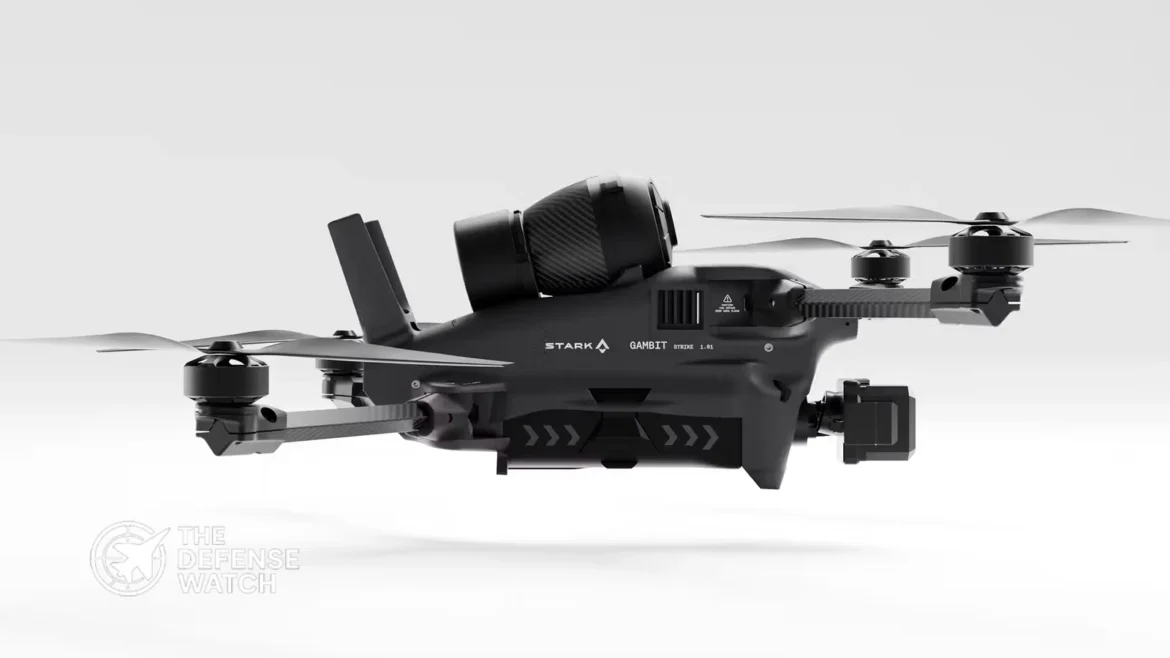
STARK’s Gambit loitering munition has moved closer to delivery after a live test in Germany demonstrated the effectiveness of its TDW-developed warhead against lightly armored targets. STARK and TDW announced the milestone on Aug. 26, saying the test satisfied a key requirement for the man-portable weapon system.
Takeaways
STARK’s Gambit loitering munition has cleared a key development milestone after a TDW warhead demonstrated the required effect against lightly armored targets in Germany.
The test involved the complete TDW effect system, including the multi-effect warhead, fuze, and safety and arming mechanism. STARK said the package was integrated into Gambit’s foldable quadcopter through an accelerated development process.
The result is significant because the warhead is not being developed in isolation from the aircraft. The demonstration validated the interaction between the payload and a small unmanned platform intended for tactical reconnaissance and precision strike missions.
TDW Warhead Demonstrates Effect Against Light Armor
TDW, an MBDA company, developed the warhead system used in the Gambit test. STARK said the warhead is fully qualified and already in service with NATO forces, although the companies have not publicly disclosed the specific NATO users or detailed performance figures for the Gambit configuration.
The companies also emphasized the safety certification work associated with the weapon. TDW Managing Director Andreas Seitz said the company did not rely on lower proof requirements that can apply to some unmanned systems, instead treating warhead, fuze and overall safety assessment as an integrated engineering problem.
That approach matters for a weapon intended to be carried by troops. A loitering munition may be smaller than a conventional missile, but it still has to meet requirements for transport, handling, arming and operation close to friendly forces.
TDW’s broader role is centered on warhead systems, including associated fuzes and safety and arming devices. MBDA identifies TDW as a specialist in warhead design and manufacture within its German operations.
What Gambit Brings to the Tactical Level
STARK introduced Gambit in June as a lightweight, foldable quadcopter intended for intelligence, surveillance and reconnaissance as well as precision effects at the forward tactical level. The company states that the system has a total weight of about 6 kilograms and can be carried and operated by one person.
STARK’s published figures provide the following baseline:
Gambit Characteristic Published Information Configuration Foldable quadcopter Weight Approximately 6 kg Reconnaissance endurance Up to 50 minutes Reconnaissance operational range Up to 40 km Strike payload Up to 2 kg Strike range Up to 25 km Sensors Electro-optical and infrared Navigation GNSS-free visual navigation Communications Jam-resistant European data link Optional control Fiber-optic control These figures come from STARK’s June 2026 product announcement. The company distinguishes between the reconnaissance configuration and the strike configuration, with the latter designed to carry payloads of up to 2 kilograms at ranges of up to 25 kilometers.
The combination of size, range and payload places Gambit in a different category from larger unmanned aircraft. Its intended value is not persistent surveillance over a wide area, but giving small tactical units an organic ability to locate and engage targets without relying entirely on higher-level artillery or aviation assets.
Fiber-Optic Control Addresses Electronic Warfare Risk
One of Gambit’s more relevant features for modern combat is its optional fiber-optic control architecture.
STARK says the system can be configured for fiber-optic control in contested electromagnetic environments. The company also identifies a jam-resistant European data link and GNSS-free visual navigation as elements intended to support operation when satellite navigation or conventional radio communications are degraded.
This is an important distinction in the current loitering-munition market.
Radio-controlled drones can become vulnerable when an opponent uses electronic warfare systems to interfere with command links or satellite navigation. A fiber-optic connection can reduce exposure to radio-frequency jamming along the control path, although it also introduces physical limitations associated with the fiber itself.
For a small strike system, the broader lesson is that survivability increasingly depends on communications and navigation architecture as much as on the airframe. Gambit’s design therefore reflects a wider shift toward unmanned weapons that can continue operating when the electromagnetic environment is heavily contested.
Why the Warhead Integration Matters
Integrating a qualified warhead into a small unmanned aircraft creates several engineering requirements beyond simply mounting an explosive payload to a drone.
The aircraft must safely carry the warhead during transportation and flight, while the fuze and safety and arming system must prevent unintended initiation. At the same time, the airframe has to deliver the payload to the intended target with sufficient accuracy and terminal performance.
The recent test therefore provides more information than a basic flight demonstration. It shows that STARK and TDW have moved the Gambit program through an important portion of the integration process, from separate components toward a functioning weapon system.
That distinction is important when evaluating claims about loitering-munition readiness. Flight testing can demonstrate navigation, endurance and control, but it does not by itself establish the complete weapon’s operational effectiveness.
The Gambit test addressed one of those remaining questions by demonstrating the required effect against a lightly armored target.
Germany Is Building a Broader Loitering Munition Capability
The Gambit development is taking place alongside a broader German effort to field loitering munitions.
The Bundeswehr says it signed procurement contracts with German manufacturers Helsing and STARK on Feb. 26, 2026, followed by a contract with Rheinmetall on April 22. The service says its procurement model is intended to account for the unusually rapid development cycles associated with loitering munitions.
The Bundeswehr describes loitering munitions as systems that can fly to an operating area, remain airborne while searching for targets, and then be directed against selected targets. The service highlights their ability to provide rapid and precise engagement options compared with some conventional fire-support systems.
STARK’s existing Virtus system is part of that German procurement effort. The Bundeswehr identifies Virtus as a STARK loitering munition capable of vertical takeoff before transitioning to horizontal flight toward its target.
Gambit represents a smaller tactical concept within the company’s broader unmanned portfolio.
From Virtus to Gambit
The latest test also builds on earlier cooperation between STARK and TDW.
In December 2025, the companies conducted a live firing of a TDW LION STRIKE 110 warhead integrated with STARK’s Virtus loitering munition. STARK said that demonstration was the first live firing of a loitering munition in Germany involving the companies’ system.
That earlier work established a development path for integrating German warhead technology with European unmanned systems. The Gambit test extends that work into a smaller, man-portable platform.
The two programs should not be treated as identical weapons. Virtus and Gambit occupy different roles, while the common element is the effort to integrate domestically developed effect systems with scalable unmanned platforms.
European Defense Industrial Implications
The Gambit program also illustrates a broader European defense-industrial priority: reducing the time required to turn mature components into deployable weapons.
STARK says its collaboration with TDW is based on modularity, scalability and production at scale. The companies argue that modular architectures can allow capabilities to be added more quickly while supporting larger production volumes.
For European militaries, that approach has become increasingly important as demand for expendable unmanned systems grows.
The operational challenge is not simply developing a drone that can carry a warhead. Militaries need systems that can be manufactured in meaningful quantities, transported efficiently, integrated with command-and-control networks and maintained at the tactical level.
The German procurement model reflects that reality. The Bundeswehr has explicitly acknowledged that conventional acquisition cycles can struggle to keep pace with the rapid evolution of loitering munitions.
What the Test Does Not Establish
The successful demonstration should not be interpreted as proof that Gambit has completed all stages of operational qualification.
STARK has established that the TDW warhead achieved the required effect against lightly armored targets during live testing. Publicly available information does not provide detailed figures for terminal accuracy, probability of kill, resistance to specific electronic warfare systems, production quantities or an operational delivery schedule for Gambit.
Those factors will determine how the system performs as a military capability rather than simply as a successful technology demonstration.
The published specifications also do not establish how Gambit’s performance changes under different weather conditions, electronic attack levels or target configurations. Such information would normally require additional testing and operational evaluation.
Implications for U.S. and NATO Forces
For the United States and other NATO members, the development is relevant because small loitering munitions are increasingly becoming part of the alliance’s layered approach to precision fires.
A system in the Gambit class can potentially give small units a strike option that sits between conventional small arms and larger artillery, missile or aviation assets. Its relatively small logistics footprint also supports the concept of distributing precision effects across more units and locations.
The NATO relevance is reinforced by TDW’s statement that the multi-effect warhead is already qualified and in service with NATO forces.
However, interoperability will depend on more than the warhead. Data links, command-and-control interfaces, target identification procedures, training, electronic warfare resilience and rules for employment will all influence how such systems fit into multinational formations.
The main significance of Gambit is therefore not simply its ability to carry an explosive payload. It is the combination of a man-portable airframe, precision strike capability, modular control architecture and a qualified European warhead system.
A Step Toward Delivery
The successful TDW test removes a significant technical milestone from the Gambit development path.
STARK now has a demonstrated warhead effect for a compact loitering munition that the company designed for short-range ISR and precision strike missions. The next questions concern broader qualification, production, integration and the timing of deliveries.
As Germany and other European NATO members seek greater quantities of unmanned precision weapons, systems such as Gambit are likely to be evaluated not only on individual performance but also on how quickly they can be produced, adapted and integrated into battlefield networks.
For STARK and TDW, the latest test shows that the technical integration of a qualified German warhead with a man-portable European loitering munition has reached a significant stage. For the broader European defense sector, it is another example of an effort to shorten the path from development to fieldable, scalable unmanned strike capability.
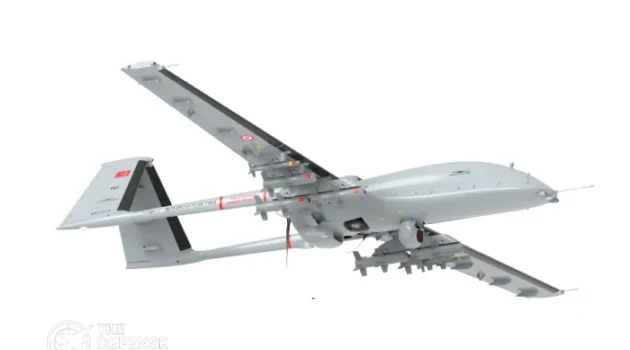
Turkish Defense Industry Puts Baykar at Center of Unmanned Warfare Push
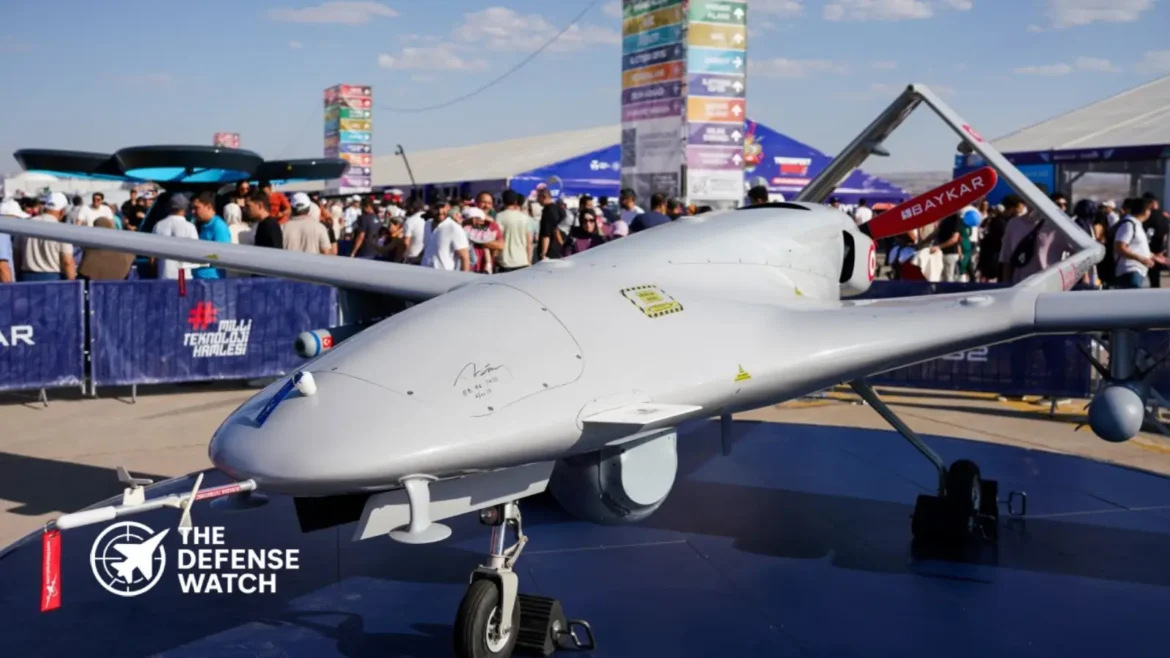
The Turkish defense industry is placing increasing emphasis on Baykar’s unmanned aircraft, precision weapons and emerging unmanned fighter technology as Ankara expands indigenous military capabilities. Türkiye’s Defense Ministry highlighted Baykar’s contribution to reconnaissance, surveillance, intelligence and attack capabilities during a September 3 briefing held at the company’s Özdemir Bayraktar National Technology Center in Istanbul.
<h2 style=”margin:0 0 8px;font-size:26px;”>TakeawaysTürkiye is expanding its indigenous unmanned warfare capabilities through Baykar’s established drone fleet and newer combat aircraft and precision weapons programs.
Defense Ministry spokesperson Zeki Aktürk said Baykar’s engineering and research capabilities were contributing to the Turkish Armed Forces while also strengthening Türkiye’s position in the international defense market. The ministry specifically identified the Bayraktar TB2, Akıncı, KIZILELMA, Kemankeş and K2 systems among the company’s products.
The significance of Baykar extends beyond one aircraft. Its portfolio now covers several layers of unmanned operations, from the mature TB2 to the heavier Akıncı, carrier-capable TB3 and the faster, more fighter-like KIZILELMA.
Baykar’s Portfolio Is Moving Up the Capability Ladder
Baykar’s current portfolio shows how Türkiye’s unmanned aircraft strategy has expanded beyond the relatively simple armed reconnaissance mission associated with the early TB2.
The company’s official product portfolio includes the TB2, Akıncı, TB3 and KIZILELMA, along with smaller unmanned systems and the Kemankeş family of mini cruise missiles.
System Primary Role Key Development Significance Bayraktar TB2 Armed ISR and strike Mature, widely exported UCAV Bayraktar Akıncı Heavy UCAV Larger payload and higher-altitude operations Bayraktar TB3 Naval UCAV Designed for operations from short-runway vessels KIZILELMA Unmanned combat aircraft High-speed combat aircraft development Kemankeş Mini cruise missile Adds long-range precision effects to unmanned platforms K2 Kamikaze UAV AI-assisted autonomous and loitering capability The distinction matters because these platforms are not simply larger versions of the same aircraft. They represent different approaches to surveillance, strike, naval aviation and increasingly complex combat-air missions.
TB2 Established the Export Model
The Bayraktar TB2 remains the foundation of Baykar’s international business.
Baykar says it has signed TB2 export agreements with 36 countries and AKINCI agreements with 16 countries. The company reported $2.2 billion in exports in 2025, describing that figure as a record.
The company’s export expansion has also helped make unmanned systems a significant component of Türkiye’s defense-industrial presence abroad. That creates a feedback loop in which international sales support production capacity and provide an expanding installed base of Turkish-origin systems.
The TB2’s importance is therefore not limited to its technical specifications. Its widespread adoption has helped establish Türkiye as a major supplier in the global armed unmanned aircraft market.
Baykar says the TB2 has accumulated more than 1.25 million flight hours. Its published specifications include a 27-hour endurance, 12-meter wingspan and maximum speed of 120 knots.
TB3 Adds a Naval Aviation Dimension
The Bayraktar TB3 represents a different operational challenge because it is designed to operate from a short runway aboard a ship.
The aircraft successfully conducted autonomous takeoffs and landings from TCG Anadolu during testing, establishing a capability that connects unmanned aircraft operations with Turkish naval aviation.
That capability received additional exposure during NATO Steadfast Dart 2026. Baykar reported that TB3 operated from TCG Anadolu and conducted a live-fire MAM-L strike against surface targets during the exercise in the Baltic Sea.
Türkiye’s Defense Industry Agency also reported that TB3 conducted operations from TCG Anadolu during Steadfast Dart 2026, including 232 sorties and flight operations alongside Eurofighter aircraft over the Baltic Sea.
For naval forces, the operational value of a short-runway UCAV is tied to more than simply carrying weapons. It provides a way to extend surveillance and strike capacity from a ship without requiring a conventional aircraft carrier with catapults and arresting gear.
The principal challenge is maintaining reliable launch, recovery, communications and command-and-control performance in a maritime environment. Wind, deck movement, limited runway length and electromagnetic interference all impose constraints that do not exist to the same degree at a conventional land airfield.
KIZILELMA Marks a More Ambitious Step
KIZILELMA represents Baykar’s move toward an unmanned combat aircraft rather than a conventional MALE-class UCAV.
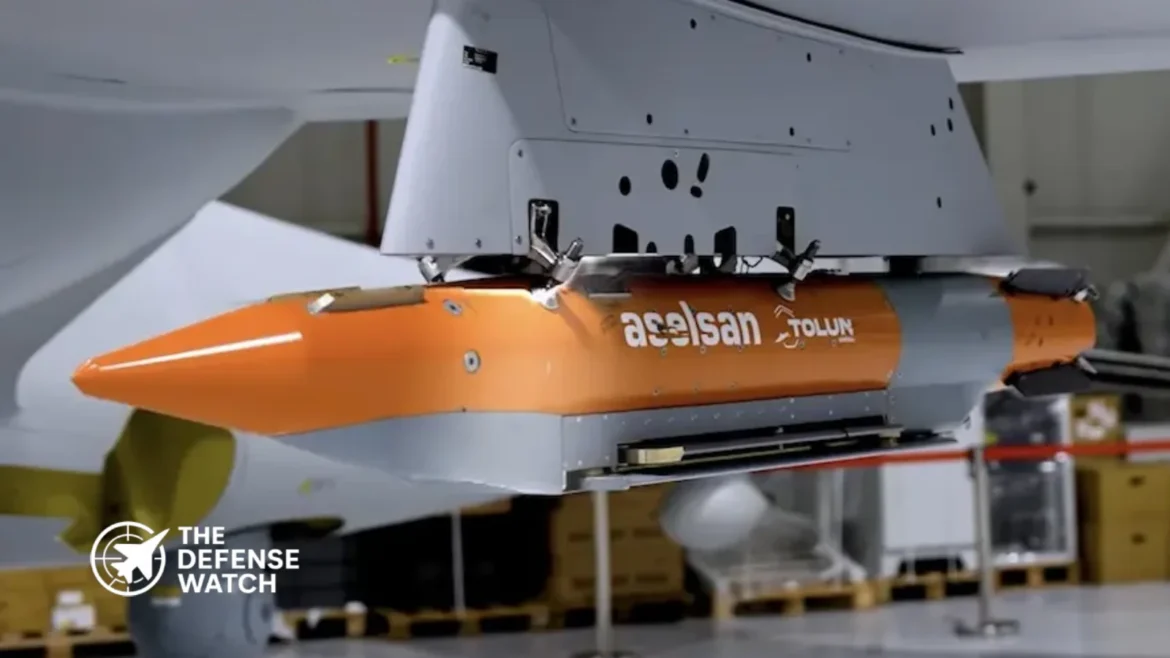
The program has progressed through increasingly complex weapons and autonomy testing. In July 2026, the serial production S2 aircraft conducted its first firing tests from its internal weapons bay, using ROKETSAN TEBER-82 and ASELSAN TOLUN munitions.
The internal weapons bay is significant because weapon carriage affects an aircraft’s radar signature and aerodynamic characteristics. Baykar says the configuration is intended to support strike operations while maintaining a lower radar signature than external carriage.
KIZILELMA has also demonstrated air-to-air and air-to-ground weapons integration. Baykar reported that the aircraft successfully engaged a jet-powered aerial target with the GÖKDOĞAN beyond-visual-range missile during a November 2025 test.
In July 2026, the aircraft also conducted a firing test with Roketsan’s JET-230 supersonic air-to-ground missile.
These tests do not by themselves establish operational combat capability. They do, however, show the direction of the program: integrating an unmanned aircraft with sensors, weapons and autonomous flight functions normally associated with more complex combat aircraft.
Autonomy Is Becoming a Core Design Feature
Another important element of Baykar’s development strategy is autonomy.
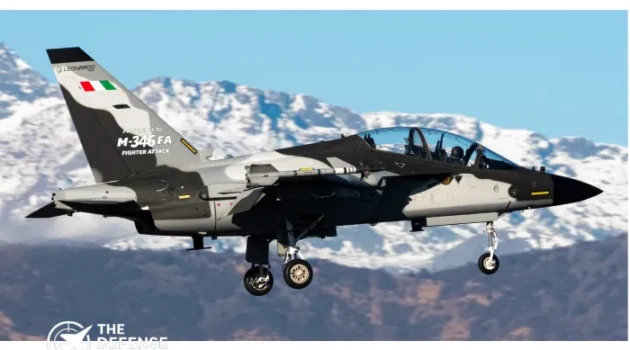
In December 2025, two KIZILELMA prototypes conducted an autonomous close-formation flight using algorithms developed by Baykar. The company has also participated in the K-SWARM program with Leonardo, involving autonomous formation operations between KIZILELMA aircraft and Leonardo M-346 aircraft.
This points toward a broader concept of crewed and uncrewed aircraft working as a coordinated force.
For military planners, the challenge is not simply making an aircraft fly autonomously. Effective combat autonomy requires reliable navigation, sensor fusion, communications, identification and engagement controls, while maintaining human authority over critical decisions.
That makes software, data links and mission systems as important as the aircraft’s airframe.
Why Baykar Matters to U.S. and NATO Defense Planning
Baykar’s expansion is relevant beyond Türkiye because Turkish unmanned aircraft are increasingly appearing in NATO exercises and in the inventories of allied countries.
The TB3’s Steadfast Dart deployment is particularly significant because it demonstrated a Turkish unmanned naval aviation concept in a multinational NATO environment rather than solely during a domestic test program.
For NATO planners, the broader issue is interoperability.
A growing fleet of allied unmanned aircraft introduces requirements for common communications, airspace deconfliction, intelligence sharing, electronic warfare resilience and command-and-control integration. These considerations become more demanding as unmanned platforms move from intelligence and surveillance missions toward contested air operations.
The KIZILELMA program adds another layer. An unmanned combat aircraft operating alongside crewed fighters could eventually change how air forces approach high-risk missions, but doing so requires extensive validation of autonomy, communications resilience, weapons employment and human-machine teaming.
Türkiye’s experience therefore provides a useful case study in how a country can build an indigenous unmanned aviation ecosystem rather than purchasing individual platforms as isolated capabilities.
Export Growth Supports a Broader Defense Ecosystem
Baykar’s reported $2.2 billion in 2025 exports are important because the company has become a significant source of foreign demand for Türkiye’s defense sector.
The company’s product portfolio also illustrates a broader Turkish industrial model in which aircraft, sensors, weapons and mission systems are increasingly developed domestically or integrated through national defense companies.
KIZILELMA’s recent testing provides a clear example. Its weapons trials have involved systems from several Turkish companies, including ASELSAN and ROKETSAN, while the aircraft itself is developed by Baykar.
That level of domestic integration can reduce dependence on foreign suppliers for individual components and gives Türkiye greater control over how its aircraft evolve.
It also creates export opportunities for a wider group of Turkish defense companies when aircraft, sensors, communications systems and weapons are marketed as an integrated capability.
The Next Challenge Is Operational Maturity
The most important question for Baykar is no longer whether Türkiye can develop and export armed UAVs. The TB2 has already demonstrated that.
The harder challenge is scaling more advanced systems into reliable operational fleets.
For KIZILELMA, that means moving from successful individual demonstrations to repeatable performance across navigation, sensing, weapons employment, communications, maintenance and autonomous operations. For TB3, the challenge is sustaining shipborne operations at useful tempo while integrating the aircraft into wider naval and joint-force command structures.
The evolution also raises questions about survivability. Modern air defenses can combine radar, passive sensors, electronic warfare and short-range interceptors, making the operating environment considerably more difficult than the permissive conditions in which many earlier armed UAVs demonstrated their value.
Baykar’s trajectory suggests that Türkiye is addressing that challenge by developing a layered family of systems rather than relying on one platform.
The TB2 provides a mature and widely exported baseline. Akıncı increases payload and mission capacity. TB3 extends unmanned aviation to naval operations. KIZILELMA moves toward high-speed combat missions, while Kemankeş and other systems provide additional precision effects.
That progression is the central development to watch in Türkiye’s defense industry. The country’s unmanned warfare strategy is increasingly becoming an ecosystem of aircraft, weapons, sensors and autonomous systems rather than a single successful drone program.
Finland Completes First F135 Engine Assembly
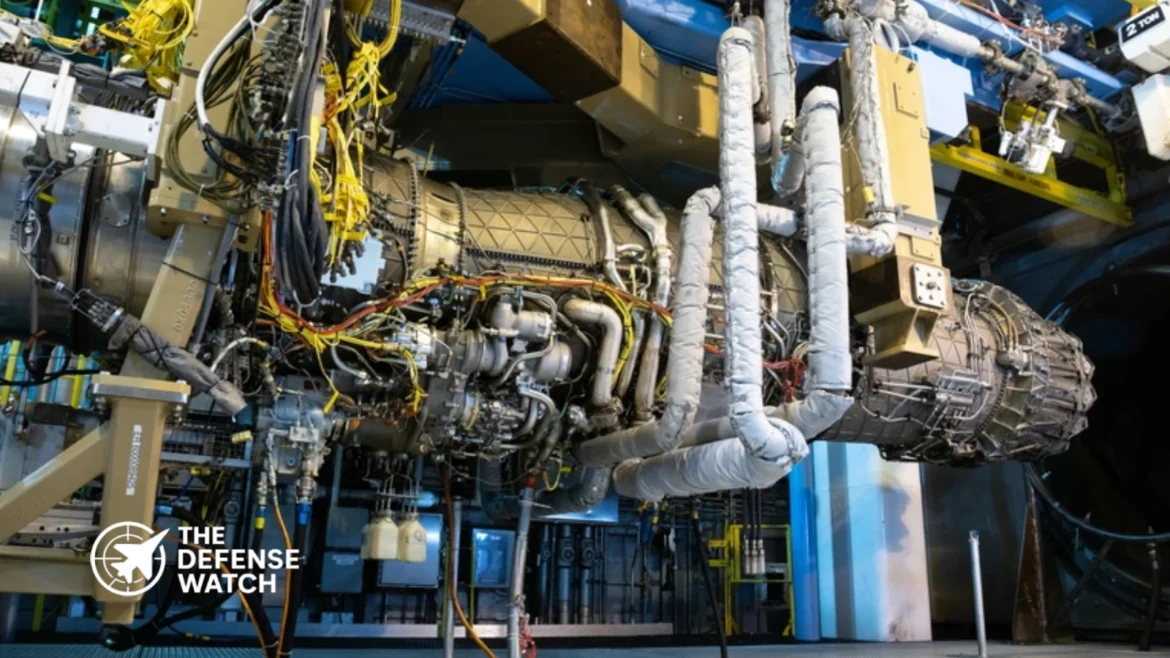
Finland has completed its first locally assembled F135 engine, giving Patria an operational production capability ahead of the arrival of the country’s first F-35A Lightning II fighters. Patria announced September 3 that the engine was completed at its new Linnavuori assembly and maintenance facility in Nokia, Finland.
Takeaways
Finland has completed its first locally assembled F135 engine as Patria establishes the industrial base needed to support the country’s incoming F-35A fleet.
The milestone is significant because the Linnavuori facility is being established not simply as an assembly site, but as part of Finland’s long-term F-35 propulsion support infrastructure. Patria is responsible for initial engine assembly and is expected to take on maintenance, repair, overhaul and upgrade work later in the program.
Production began following a February 2026 agreement between Patria and Pratt & Whitney, an RTX business. The initial assembly phase is scheduled to continue through 2030, after which the facility will transition toward broader F135 sustainment activities.
Linnavuori Establishes a Domestic F135 Sustainment Base
The Finnish approach is closely tied to the country’s emphasis on security of supply.
When Finland selected the F-35A in 2021, its procurement decision placed substantial weight on domestic industrial participation and the ability to maintain critical defense capabilities during exceptional circumstances. The government’s plan calls for critical maintenance capacity to be established within Finland while also connecting the fleet to the wider multinational F-35 support network.
That requirement is particularly important for propulsion.
The F135 is the sole engine used across all three F-35 variants and represents one of the aircraft’s most technically demanding sustainment areas. Pratt & Whitney has described its global F135 support system as a distributed network involving depot facilities, operating bases and other support infrastructure serving F-35 users worldwide.
For Finland, having trained personnel and dedicated infrastructure inside the country provides an additional layer of control over an essential part of fighter readiness.
The capability does not mean Finland will operate independently of the international F-35 sustainment system. Instead, the Linnavuori facility adds Finnish capacity within that wider network, allowing national and multinational support arrangements to work together.
F135 Production Is Timed With the Arrival of Finland’s F-35A Fleet
The timing of the engine milestone is closely aligned with Finland’s aircraft introduction schedule.
Finland ordered 64 F-35A Block 4 fighters to replace its aging F/A-18C/D Hornet fleet. The aircraft are scheduled for delivery between 2026 and 2030, with the first Finnish F-35As arriving at the Lapland Air Wing in Rovaniemi during autumn 2026.
Eight Finnish F-35 aircraft are also part of the U.S.-based training effort, allowing Finnish pilots and maintainers to build experience before the fleet becomes fully established at home. The broader program is therefore progressing on several tracks at once, including aircraft production, personnel training, infrastructure construction and domestic industrial participation.
The engine assembly milestone adds another piece to that transition.
Key Finnish F-35 Program Facts
Area Finland’s Program Aircraft F-35A Lightning II Quantity 64 aircraft Configuration Block 4 Engine Pratt & Whitney F135 Finnish engine facility Patria Linnavuori, Nokia Engine assembly Planned through 2030 Future engine support Maintenance, repair, overhaul and upgrade First aircraft arrival in Finland Autumn 2026 Main operating location Lapland Air Wing, Rovaniemi Finland’s Ministry of Defence says the F-35 procurement also includes training, sustainment solutions, spare parts, maintenance services and related infrastructure. The aircraft are intended to replace the Hornet fleet and provide the Finnish Air Force with a fighter system designed for service into the 2060s.
Why Domestic Engine Capability Matters
The most important aspect of the Patria milestone is not the assembly of a single engine. It is the development of industrial knowledge that can support the propulsion system over decades.
Modern fighter sustainment depends on specialized equipment, certified processes, trained technicians, engineering support and access to replacement components. Establishing these capabilities before a fleet reaches full operational scale gives Finland time to build the workforce and technical processes required for long-term support.
Patria says the F135 program is expected to create approximately 50 direct jobs between 2025 and 2030. The company has also described Linnavuori as a long-term location for F135 maintenance and sustainment activities after the initial production phase.
This creates an industrial capability with value beyond the initial aircraft delivery schedule.
Finland’s F-35 industrial participation also includes production of aircraft structures. Lockheed Martin identifies Patria as a Finnish F-35 partner responsible for front fuselage manufacturing as well as F135 engine assembly and sustainment. The company says the broader F-35 industrial effort involves more than 30 Finnish companies and academic institutions.
The result is a more distributed Finnish industrial base around the aircraft rather than a procurement model focused solely on buying completed fighters.
Integration With the Global F-35 Support Network
Domestic capability is only one part of the F135 sustainment model.
The F-35 program is designed around a multinational industrial and logistics structure. Pratt & Whitney has supplied more than 1,400 production F135 engines, supporting a global F-35 enterprise that includes 20 allied nations, according to company figures released in 2026.
That scale matters because engine maintenance and supply-chain resilience depend on common standards and access to a wider pool of technical expertise.
Finland’s Linnavuori capability therefore adds a national node to a larger system. This approach is consistent with Finland’s NATO membership and its emphasis on maintaining national defense capabilities while participating in collective defense arrangements.
For NATO, the broader value is interoperability. Finland’s F-35 fleet will operate alongside other European F-35 fleets, including those of Norway and Denmark, while benefiting from common aircraft, propulsion and support architecture. Finland’s Ministry of Defence has specifically identified NATO interoperability and participation in the Alliance’s collective defense structure as important elements of its post-accession defense posture.
The F135 Engine Remains Central to F-35 Readiness
The F135 provides propulsion for every F-35A, F-35B and F-35C aircraft. For Finland, which is procuring the conventional takeoff and landing F-35A, the engine is a central component of aircraft availability and operational readiness.
The Finnish F-35A uses the F135-PW-100 configuration. Finnish Ministry of Defence technical data lists a maximum afterburning thrust of approximately 191 kilonewtons for the engine.
Pratt & Whitney is also developing the F135 Engine Core Upgrade, intended to improve the engine’s durability and provide additional thermal and performance capacity for future F-35 capabilities. The company says the upgrade will use the existing F135 sustainment infrastructure and provide a pathway for continued propulsion support as the aircraft evolves.
That makes Finland’s investment in engine expertise relevant beyond the initial production period.
A workforce trained during assembly can provide a foundation for later maintenance and potentially more advanced sustainment activities as the Finnish F-35 fleet matures.
Finland’s F-35 Industrial Strategy Takes Shape
The first Finnish-assembled F135 is therefore best understood as part of a much larger industrial strategy.
Finland’s original F-35 decision included an industrial participation package designed to strengthen domestic production, maintenance and security of supply. The government estimated thousands of direct and indirect person-years of employment from the industrial participation arrangements.
The Linnavuori facility turns one part of that strategy into an operational capability.
With engine assembly now underway, aircraft deliveries approaching and future maintenance planned at the same site, Finland is building the industrial infrastructure required to support its F-35 fleet over a service life expected to extend for decades.
For Finland, the immediate objective is straightforward: ensure that the arrival of the F-35A is matched by the technical infrastructure needed to keep the aircraft available. For the wider F-35 program, the development adds another European location to the aircraft’s growing global propulsion sustainment network.
What Comes Next
The next major milestones will be the arrival of Finland’s first F-35As at Rovaniemi, continued F135 assembly at Linnavuori and the gradual development of the Finnish maintenance workforce.
Patria’s current production phase is scheduled to run through 2030. The company then plans to adapt the facility for F135 maintenance and overhaul activities that will continue throughout the lifecycle of Finland’s F-35 fleet.
The first completed engine is therefore an early indicator that Finland’s F-35 transition is moving beyond aircraft procurement and into the more demanding phase of establishing a sustainable national operating and maintenance system.
For a country preparing to operate advanced fifth-generation fighters in NATO’s northern flank, that support infrastructure will be as important to long-term readiness as the aircraft themselves.
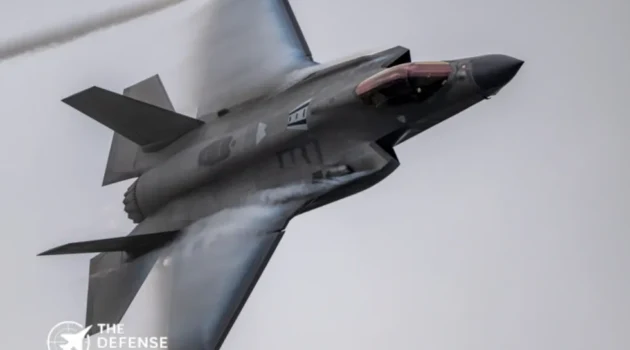
F-35 Six In The Bay Upgrade Targets More Internal Firepower
The F-35 six internal missiles upgrade is moving toward a planned September 2030 milestone as the Pentagon seeks to increase the aircraft’s internal missile capacity from four to six while preserving its low observable configuration. The latest F-35 Modernized Selected Acquisition Report identifies the Six in the Bay, or SITB, effort as part of the aircraft’s broader modernization program.
Takeaways
The Pentagon’s Six in the Bay program is intended to increase the F-35’s internal missile capacity from four to six by September 2030, strengthening air combat capacity while retaining internal weapons carriage.
The planned change addresses a basic limitation of stealth fighters. Carrying weapons externally can increase the aircraft’s radar signature, while internal carriage preserves the configuration designed for operations in heavily defended airspace.
For the F-35, the objective is therefore not simply to carry more weapons. It is to increase the number of air combat engagements an aircraft can support without giving up the survivability benefits associated with internal carriage.
From Four Missiles To Six
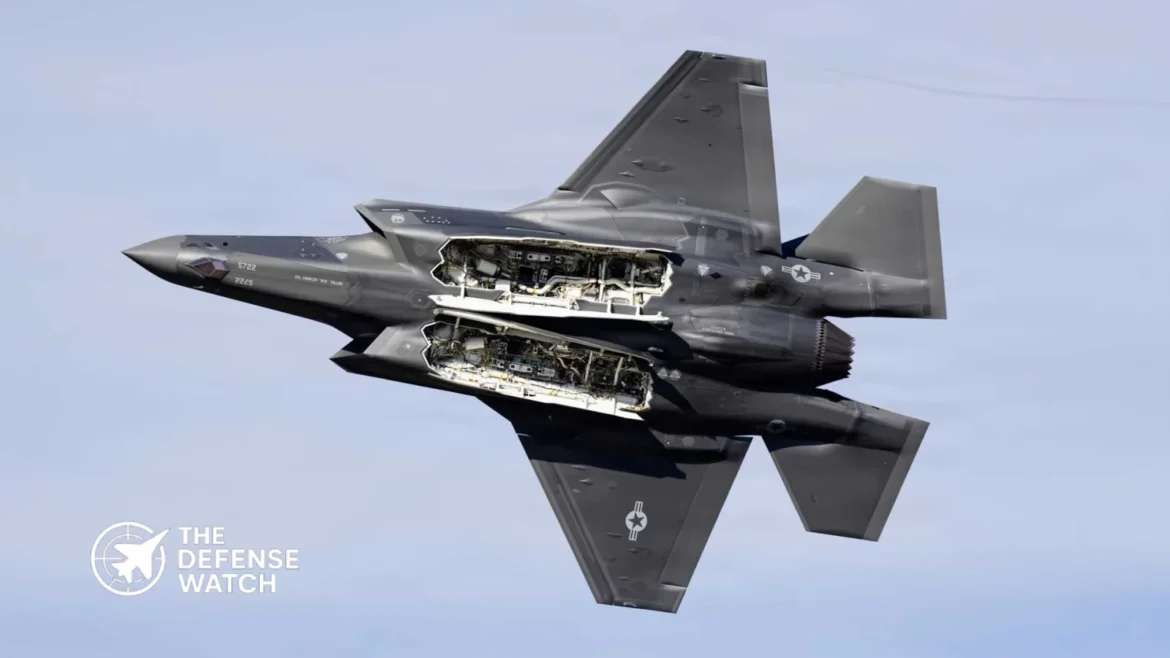
Current F-35 internal air-to-air configurations can accommodate up to four AIM-120-class missiles when the aircraft is configured for an air-to-air mission. The F-35’s two internal weapons bays were designed around a mixture of larger and smaller weapons, giving the aircraft flexibility between air-to-air and air-to-ground missions. U.S. Air Force material has previously described the aircraft as having four internal weapon stations.
The planned Six in the Bay configuration represents a 50 percent increase in internal missile capacity.
Capability Current Configuration Six In The Bay Internal missile capacity Up to 4 Up to 6 Increase Baseline 50 percent External weapons required for additional internal capacity Not applicable No Planned milestone Existing capability September 2030 Exact missile configuration Varies by integration Not publicly specified The latest acquisition documentation is important because it confirms the capability increase while avoiding a claim about the exact missile type. The report does not establish that all six weapons will necessarily be AIM-120Ds.
That distinction matters because the F-35 weapons portfolio is changing at the same time.
Sidekick And The F-35 Weapons Bay
The Six in the Bay effort has also been associated with the Sidekick weapons adapter concept. Earlier reporting on the program described Sidekick as a weapons bay adapter designed to allow two additional AIM-120-sized missiles to be carried internally on F-35A and F-35C aircraft.
The F-35B presents a different engineering challenge. Its short takeoff and vertical landing architecture requires a lift fan behind the cockpit, contributing to a smaller internal weapons bay than those of the F-35A and F-35C. Earlier reporting therefore identified Sidekick as an F-35A and F-35C capability rather than an F-35B modification.
The latest acquisition material, however, does not publicly assign SITB to a specific F-35 variant. The safest description is therefore that the Pentagon is developing a six-missile internal carriage capability and that earlier Sidekick work provides important technical context.
Why Internal Capacity Matters
The operational value of Six in the Bay is closely tied to the F-35’s low observable design.
An F-35 carrying additional missiles on external pylons can increase its weapons inventory, but external stores can compromise some of the aircraft’s signature-management advantages. Internal carriage allows the aircraft to maintain a cleaner external configuration.
That creates a tradeoff between magazine depth and survivability that has become increasingly important as air forces prepare for operations against sophisticated integrated air defense and fighter forces.
Six internal missiles do not make the F-35 an air-superiority fighter in the traditional sense. Instead, the upgrade gives the aircraft more opportunities to employ its sensors, network connections and air-to-air weapons before it must return to base, rendezvous with a tanker or operate in a different weapons configuration.
The improvement is particularly significant for distributed operations. A formation of F-35s carrying six internal missiles each would have substantially more collective internal air-to-air capacity than the same number of aircraft limited to four missiles apiece.
For example, a four-aircraft flight would move from a theoretical 16 internally carried air-to-air missiles to 24. That is a 50 percent increase before considering any external weapons.
Six In The Bay Is Only One Part Of Block 4
The missile-capacity increase is being pursued alongside a much wider modernization effort.
The F-35 Block 4 program is designed to introduce new weapons, improved sensors, electronic warfare capabilities and expanded processing capacity. Technology Refresh 3, or TR-3, provides the computing and memory architecture needed to support these capabilities. The Government Accountability Office has identified Block 4 and TR-3 as major components of the F-35 modernization effort.
The Pentagon’s roadmap also includes improvements to the Multifunction Advanced Data Link, Link 16 and infrared sensing capabilities. These changes are significant because the value of additional missiles depends partly on the aircraft’s ability to detect, identify, track and prioritize targets before weapons employment.
In other words, Six in the Bay increases the aircraft’s magazine, while other Block 4 improvements are intended to strengthen the information and engagement chain around that magazine.
AIM-120D Improvements Are Also Planned
The F-35 modernization roadmap separately includes an AIM-120D two-way data link capability. The latest reporting on the acquisition documentation places that capability in the same general modernization timeframe as Six in the Bay.
The two efforts should not be treated as one confirmed upgrade, however. The documentation identifies them as separate capabilities.
That distinction is particularly important for reporting on future F-35 armament. The fact that the aircraft is being prepared for six internal missiles does not, by itself, establish the exact six-weapon loadout that will eventually be certified.
The F-35’s future missile mix could also evolve as newer air-to-air weapons enter development and integration. The U.S. is separately pursuing the AIM-260 Joint Advanced Tactical Missile as a successor to the AIM-120 family, although publicly available information does not establish that Six in the Bay will automatically translate into a six-AIM-260 operational loadout.
Engineering And Certification Remain Key Challenges
Increasing internal weapons capacity requires more than adding two attachment points.
The weapons bay, launcher mechanisms, aircraft structure, software, weapons interfaces and store-separation characteristics all have to work together. Missile release must remain safe across the aircraft’s relevant flight envelope, including high-speed and maneuvering conditions.
The F-35 program has extensive experience with internal weapons separation testing. Earlier Air Force testing evaluated the aerodynamic effects and store separation characteristics of internal and external weapons configurations, including AIM-120 and AIM-9X missiles.
Six in the Bay therefore represents an integration and certification challenge as much as a hardware change.
The program’s wider modernization schedule also carries technical risk. The Government Accountability Office has repeatedly highlighted delays, development challenges and rising F-35 costs, while the Pentagon continues to work through the large number of capabilities associated with Block 4.
Implications For High-End Air Combat
The most important effect of Six in the Bay is the combination of stealth, sensing and magazine depth.
Earlier F-35 employment concepts often emphasized the aircraft’s ability to penetrate defended airspace, collect information and contribute to networked operations. As the air combat environment becomes more dependent on long-range sensing and weapons, the ability to carry enough missiles internally becomes increasingly important.
An aircraft that detects several threats but carries only a small number of internally stored weapons faces a magazine constraint. Six missiles do not eliminate that constraint, but they provide more capacity without requiring an external weapons load.
This also gives commanders another option between two extremes: a highly stealthy internal weapons configuration with limited missile capacity, or a larger external weapons load with a potentially less favorable signature.
The significance extends beyond individual aircraft. F-35s operate as part of larger formations and joint networks, where one aircraft can contribute sensor information to another platform that performs the engagement. More internal weapons allow F-35s performing air-to-air missions to remain armed for longer while continuing to provide sensing and targeting functions.
The F-35 Modernization Timeline
The September 2030 target places Six in the Bay within the broader period in which the F-35 is expected to receive substantial improvements in weapons, sensors, communications and electronic warfare.
That timeline also illustrates how the F-35 is evolving from its original design baseline. The aircraft’s airframe remains largely unchanged, but its combat capability is being expanded through new computing hardware, software, weapons integration and modifications to the internal weapons system.
The Pentagon’s approach reflects the central challenge of maintaining a fifth-generation aircraft against increasingly capable air and missile threats without sacrificing the characteristics that made the F-35 valuable in the first place.
Six in the Bay is consequently a relatively small physical modification with potentially important operational consequences. Increasing internal missile capacity from four to six gives the F-35 more air-to-air weapons while preserving the option to operate without external stores.
The Pentagon’s current documentation confirms the capability target, but the final weapon configuration, variant applicability and detailed implementation remain matters for further testing and certification.
Bottom Line
The F-35 Six in the Bay upgrade is intended to increase internal missile carriage by 50 percent, from four to six weapons, with a September 2030 milestone identified in the latest modernization roadmap.
Its importance goes beyond the additional two missiles. By increasing internal magazine capacity, the program aims to improve the F-35’s persistence and flexibility in high-threat air combat without forcing the aircraft to rely on external weapons for the added capacity.
The upgrade is also part of a much broader Block 4 modernization effort involving computing, sensors, networking, electronic warfare and new weapons. Together, those changes are intended to keep the F-35 relevant as the U.S. Air Force, Navy and Marine Corps prepare for increasingly contested air operations.
U.S. Plans Starshield Satellite Communications For The F-35
The United States plans to equip the F-35 Lightning II with a Starshield-enabled Beyond Line of Sight satellite communications capability by September 2031, according to the FY2027 F-35 Modernized Selected Acquisition Report dated April 21, 2026. The planned upgrade is part of the aircraft’s Block 4 modernization roadmap and is intended initially to move track data through satellite links beyond the range of conventional line of sight tactical communications.
Takeaways
The Pentagon plans to add a Starshield-enabled Beyond Line of Sight satellite communications capability to the F-35 by September 2031, expanding the aircraft’s ability to move track data across geographically dispersed forces.
The capability is designated BLOS Phase 0 SATCOM in the acquisition documentation. It is planned to use the Protected Tactical Waveform and operate across Ku band and Ka band frequencies, according to the reporting on the acquisition report.
The significance is not simply that an F-35 will receive another communications system. The larger change is the extension of the aircraft’s role from a tactical sensor operating within local networks to a forward sensing node capable of contributing information to a geographically dispersed force.
What The Starshield Upgrade Is Designed To Do
Starshield is SpaceX’s government-focused satellite network derived from the company’s Starlink technology and launch architecture. SpaceX describes Starshield as a secure satellite network for government users, with communications, Earth observation and hosted payloads among its primary areas. It also identifies additional high-assurance security measures for government missions.
For the F-35, however, the relevant capability is the communications function rather than Starshield as a complete standalone military architecture.
The initial BLOS Phase 0 capability is focused on transferring track data. That distinction is important because the acquisition reporting does not establish that the F-35 will directly control a distant weapon through Starshield.
Instead, the immediate objective is to extend the movement of sensor information beyond the aircraft’s local tactical network. The F-35 could detect, identify or track an object and make relevant track information available through a longer range communications path to other elements of a joint force.
That creates a potentially important separation between sensing and engagement.
Planned Capability Target Date Intended Function BLOS UHF receiver software September 2026 Receive Integrated Broadcast Service track data BLOS Phase 0 SATCOM September 2031 Transmit track data through satellite communications BLOS Phase 1b September 2031 Add two-way video communications BLOS Phase 2 September 2035 Add voice communications MADL dynamic mesh September 2030 Improve network resilience and connectivity Expanded Link 16 capability September 2031 Increase network participation and message handling The dates above come from the reported F-35 modernization roadmap. The acquisition documentation also distinguishes the 2026 UHF capability from the later SATCOM architecture.
Why Beyond Line Of Sight Communications Matter
Modern long range combat increasingly depends on networks connecting sensors, command nodes and weapons that may be separated by hundreds or thousands of miles.
A fighter may possess the best tactical view of a target without being the aircraft that ultimately engages it. Conversely, a ship, aircraft, ground unit or long range weapon may have the required range but lack the sensor information needed to act.
That is the basic problem a distributed kill chain attempts to solve.
The Space Force has identified data transport as a critical element of long range kill chains. Its broader Protected Tactical SATCOM work is aimed at maintaining communications in environments where adversaries can interfere with satellite and radio links.
Adding BLOS SATCOM to the F-35 therefore addresses an important part of the network rather than adding another weapon to the aircraft.
The F-35 already combines sensors, onboard processing and tactical data links. Its value in a distributed force increasingly depends on how reliably that information can reach other nodes. Lockheed Martin describes the aircraft as a platform designed to gather, process and securely share information across domains, while Block 4 adds further sensor, electronic warfare and weapons capabilities.
The planned SATCOM upgrade extends that networking concept beyond the geographic limits imposed by line of sight.
Protected Tactical Waveform Is A Key Part Of The Architecture
The Protected Tactical Waveform is particularly relevant because a long range communications link is useful only if it can survive the electromagnetic environment of a major conflict.
The U.S. Space Force demonstrated PTW capabilities in 2025, including frequency hopping under variable interference levels, secure voice over internet protocol communications and operation through a commercial satellite. Space Systems Command said the program is intended to provide anti-jam and low probability of intercept communications for tactical users.
That work provides important context for the planned F-35 integration.
The challenge is not simply establishing a satellite connection. A military aircraft operating against a capable opponent may face jamming, interference, detection and attempts to disrupt the broader network. Protected waveforms and resilient satellite architectures are intended to reduce those vulnerabilities.
The Space Force is also developing additional protected tactical satellite capacity. In June 2026, Space Systems Command awarded contracts totaling $437.7 million for the first two Protected Tactical SATCOM Global satellites, designed to provide anti-jam communications and connectivity in denied environments.
F-35 Communications Modernization Extends Beyond Starshield
The planned Starshield capability is only one element of a much larger communications modernization effort.
By September 2030, the F-35 program plans to transition the Multifunction Advanced Data Link from its current manually configured string topology toward a dynamic mesh architecture. The objective is to improve network resilience and reduce connectivity losses.
Link 16 is also scheduled for further upgrades, including increased message handling and the ability to listen to as many as four Link 16 networks simultaneously by September 2031. The roadmap also includes improved electronic warfare coordination.
Taken together, these changes point toward a communications architecture with several layers rather than dependence on a single data link.
That matters because different networks serve different operational purposes. MADL is central to F-35 tactical connectivity, Link 16 provides broad joint and allied interoperability, while BLOS SATCOM provides a longer range communications path.
The combination gives commanders more options for moving information when individual links are unavailable or geographically unsuitable.
The F-35 Is Becoming More Important As A Sensor Node
The planned upgrade also reinforces an established direction in F-35 development.
The aircraft was designed around sensor fusion and information sharing rather than treating the fighter solely as a platform that carries weapons. Its ability to collect information from onboard sensors and distribute useful data has become a central part of its operational value.
Lockheed Martin has also demonstrated concepts in which F-35 information can be passed through other communications nodes to fourth generation aircraft and ground based systems, including scenarios involving HIMARS and MLRS family weapons.
The Starshield integration would extend that basic concept over a much larger geographic area.
An F-35 operating forward could potentially provide track information to a distant command or engagement architecture without requiring the receiving element to be within the fighter’s conventional line of sight communications range.
The acquisition report does not specify which aircraft, ships, ground systems or weapons will receive Phase 0 data. It also does not establish a direct F-35 to weapon engagement pathway through Starshield. Those distinctions are important when assessing what the program has actually announced.
Technical And Operational Challenges Remain
The 2031 target should be viewed as a planned fielding date rather than evidence that the capability is already operational.
The F-35 Block 4 modernization effort involves major changes to software, computing, sensors, electronic warfare equipment, communications and weapons. The acquisition documentation identifies the technical complexity of the modernization effort as a significant risk and calls for expanded laboratory, simulation and flight testing.
Nine new fully instrumented Flight Science Aircraft are planned to support Block 4 development, weapons integration and certification. Technology Refresh 3 provides the additional computing capacity and memory required for future capability inserts.
SATCOM integration also creates aircraft-level engineering challenges.
The system must fit within the F-35’s existing architecture while preserving aircraft performance, electromagnetic compatibility and low observable characteristics. It must also integrate with classified mission systems and broader joint communications networks without creating an unacceptable dependency on any single communications path.
These issues are especially important because the F-35 operates in environments where electromagnetic emissions can affect survivability and where communications systems may themselves become targets.
Strategic Implications For U.S. And Allied Forces
The strategic value of the planned capability lies in network reach.
Large Indo-Pacific operating areas make this particularly relevant to U.S. force planning, but the underlying requirement applies more broadly to any theater where aircraft, ships, ground forces and long range weapons are separated by significant distances.
A distributed force can reduce the need to place every sensor and weapon in the same location. The F-35 can operate forward and collect information, while other platforms positioned farther away can contribute command, sensing or engagement functions.
That approach also fits the broader U.S. move toward joint all domain operations, in which information must move between air, maritime, land, space and cyber elements.
The F-35’s future communications architecture is therefore becoming almost as important as its individual aircraft capabilities. A stealth aircraft with advanced sensors has greater operational value when the information it generates can reach the rest of the force reliably.
A Staged Path Toward A More Connected F-35
The planned modernization schedule shows that the Pentagon is not treating BLOS communications as a single upgrade.
The 2026 UHF receiver capability provides an earlier means of receiving beyond line of sight track information. Phase 0 in 2031 would add satellite based track-data transmission. Phase 1b would expand the system to two-way video, while Phase 2 is planned to add voice communications in 2035.
This staged approach is consistent with the wider development of protected tactical SATCOM across the Department of Defense.
The U.S. Space Force is simultaneously expanding protected satellite communications through government and commercial satellite architectures, including systems designed around the Protected Tactical Waveform.
For the F-35, the result could be a more flexible communications architecture in which the aircraft contributes sensor information through multiple paths depending on the tactical environment.
Bottom Line
The planned Starshield integration represents a significant change in how the F-35 is expected to participate in distributed combat networks.
The initial objective is specific: provide Beyond Line of Sight SATCOM capable of transmitting track data by September 2031. The program does not currently establish that the F-35 will directly control distant weapons through Starshield.
Its importance is instead tied to the broader sensor-to-shooter problem. By connecting the F-35’s sensors to geographically separated forces through a protected satellite communications path, the Pentagon is seeking to make the fighter a more effective node in long range joint kill chains.
That effort will depend on successful integration with MADL, Link 16, Block 4 mission systems and protected tactical SATCOM infrastructure. If the planned milestones are met, the F-35’s role will increasingly extend beyond detecting and engaging targets itself to helping other elements of the joint force act on information collected at the forward edge.
F-16 Block 70/72 Gains New Combat Systems
The F-16 Block 70/72 is being positioned by Lockheed Martin as a modernized fourth-generation fighter built around an advanced radar, upgraded mission systems, improved cockpit displays and extensive weapons integration. The company says its current Block 70/72 backlog stands at 119 aircraft, with 41 fighters delivered to customers across seven countries.
Takeaways
The F-16 Block 70/72 combines a proven fourth-generation airframe with modern sensors, avionics, safety systems and weapons integration intended to keep the fighter relevant for decades.
The latest production standard does not turn the F-16 into a stealth aircraft or change its fundamental fourth-generation design. Instead, the modernization focuses on the systems that determine how effectively a fighter can detect, identify, track and engage targets in a networked combat environment.
Lockheed Martin says the wider F-16 fleet now includes about 2,800 aircraft operating across 29 countries, with more than 14 million sorties and 21 million flight hours.
APG-83 AESA Radar Provides Fifth-Generation-Derived Capability
The most important sensor upgrade is Northrop Grumman’s AN/APG-83 Scalable Agile Beam Radar, or SABR.
The APG-83 is an active electronically scanned array, or AESA, fire-control radar. Northrop Grumman says the system brings modern AESA technology associated with the F-22 and F-35 to the F-16 while fitting within the aircraft’s existing physical, power and cooling constraints.
Lockheed Martin describes the radar as providing fifth-generation fighter radar capabilities. That description refers to radar technology and processing rather than the F-16 itself becoming a fifth-generation fighter. The aircraft remains a fourth-generation design without the low-observable characteristics associated with platforms such as the F-35 and F-22.
The radar upgrade matters because modern air combat increasingly depends on the quality and speed of information available to the pilot. AESA technology supports functions including air-to-air search and tracking, air-to-ground mapping and targeting in a single integrated radar architecture.
Modern Cockpit Improves Pilot Access to Sensor Data
The Block 70/72 also introduces a high-resolution Center Pedestal Display, giving pilots a larger digital interface for tactical information.
Lockheed Martin says the display can present radar and targeting-pod information, color moving maps and enlarged air-to-air situation displays. It also supports digital flight instrument information and helmet-mounted display integration.
This is an important part of the modernization because sensor performance alone does not determine combat effectiveness. A fighter can collect large volumes of information, but the pilot still needs to interpret that information quickly enough to make decisions.
The Block 70/72 architecture therefore combines radar improvements with cockpit displays, mission computing, navigation and networking rather than treating each upgrade as a separate capability.
Advanced Targeting and IRST Expand Sensor Options
The fighter can also incorporate the Sniper Advanced Targeting Pod and Legion-ES infrared search and track system.
These systems provide additional means of detecting and identifying targets beyond the primary radar. Infrared search and track is particularly relevant because it gives the aircraft a passive sensing option that does not rely on radar emissions.
Lockheed Martin also identifies an advanced data link, precision GPS and inertial navigation, and upgraded mission computing as elements of the Block 70/72 architecture.
The result is a fighter that can combine information from multiple sensors and present it through a substantially more modern cockpit than earlier F-16 configurations.
Weapon Integration Remains a Core F-16 Advantage
Weapons flexibility is another major element of the Block 70/72 package.
Lockheed Martin says the F-16 program has certified more than 3,300 carriage and release configurations covering more than 180 weapon and store types.
That integration history gives the aircraft access to a broad range of air-to-air and air-to-ground weapons, depending on the customer configuration and applicable U.S. export approvals.
Recent Foreign Military Sales packages demonstrate how broad that ecosystem can be. For example, the U.S. government approved a possible $5.58 billion F-16 package for the Philippines in April 2025 that included Block 70/72 aircraft, APG-83 radars, AIM-120C-8 AMRAAMs, AIM-9X Block II missiles, GBU-39/B Small Diameter Bombs and JDAM-related equipment.
The significance is not simply the number of weapons available. A modern multirole fighter must integrate weapons with its radar, mission computer, navigation system, targeting sensors and data links. That systems-level integration determines how effectively the aircraft can transition between air-to-air and air-to-ground missions.
12,000-Hour Airframe Supports Long-Term Service
The Block 70/72 also addresses one of the central challenges facing mature fighter fleets: structural age.
Lockheed Martin gives the aircraft a 12,000-hour structural service life, more than 50 percent beyond previous production F-16 aircraft according to the company.
The extended life is important for operators that want to retain a relatively large fighter fleet while gradually introducing newer platforms. It can also reduce the pressure to replace every aircraft solely because of accumulated airframe fatigue.
The modernization approach therefore combines a new-production airframe with a significantly revised electronic architecture. That distinction is important because many existing F-16 operators are simultaneously pursuing modernization programs for older aircraft.
Auto GCAS Adds a Major Safety Layer
Another standard Block 70/72 feature is Lockheed Martin’s Automatic Ground Collision Avoidance System, or Auto GCAS.
The system is designed to detect situations in which an aircraft is at risk of controlled flight into terrain and automatically initiate a recovery when required. Lockheed Martin says Auto GCAS entered U.S. Air Force F-16 service in 2014 and has saved pilots and aircraft in multiple incidents.
For a high-performance fighter, this type of system has operational significance beyond routine safety. Pilots can become spatially disoriented, lose situational awareness or become overloaded while concentrating on tactical tasks.
Reducing the likelihood of a catastrophic ground collision can therefore protect both trained personnel and expensive aircraft.
Why the Block 70/72 Matters to Global Fighter Fleets
The central value of the F-16 Block 70/72 is not a single new sensor. It is the combination of mature airframe design, modern computing, AESA radar, networking, targeting systems, weapons integration and extended structural life.
For many air forces, that combination offers a path to fielding a modern multirole fighter without moving entirely to a fifth-generation fleet.
The F-16 also benefits from a large international support ecosystem. Lockheed Martin’s current program information identifies roughly 530 suppliers worldwide, while more than 700 F-16s operate in Europe according to company data.
That existing ecosystem can matter to operators because training, maintenance, spare parts, weapons integration and interoperability are increasingly important factors in determining the practical value of a fighter fleet.
A Fourth-Generation Fighter With a Modernized Electronic Core
The Block 70/72 illustrates how an established fighter can remain relevant through changes to its sensors, computers, displays, networking and weapons rather than through a completely new airframe.
The aircraft still lacks the low-observable design and other characteristics that define fifth-generation fighters. Its value instead comes from improving the information, targeting and weapons systems carried by a proven fourth-generation platform.
That distinction is important as air forces balance the cost and availability of fifth-generation aircraft with the need to maintain sufficient numbers of capable multirole fighters.
For the F-16, the modernization path now extends well beyond the original Cold War-era configuration. The Block 70/72 is designed around a 12,000-hour airframe, APG-83 AESA radar, modern mission computing, improved cockpit displays, advanced targeting and broad weapons integration, giving the platform a long runway for continued service.
F-16 Block 70/72 Key Specifications
Feature F-16 Block 70/72 Aircraft type Multirole fighter Generation Fourth-generation Primary radar Northrop Grumman AN/APG-83 SABR AESA Structural service life 12,000 hours Maximum speed More than Mach 2 Maximum takeoff gross weight 48,000 lb Design load factor 9 g Targeting systems Sniper Advanced Targeting Pod, optional IRST Navigation GPS/INS Safety system Automatic Ground Collision Avoidance System Weapons integration More than 180 weapon and store types across certified configurations Production location Greenville, South Carolina Specifications are based on Lockheed Martin’s published Block 70/72 product information.
What Comes Next for the F-16
Lockheed Martin’s current production figures show that international demand for the F-16 has not ended with the arrival of newer fighter designs. The company reported 122 aircraft in its June 2026 fast-facts document, although its September 2026 update cited a 119-aircraft backlog and 41 deliveries, reflecting the changing production status as aircraft are delivered and orders are updated.
The continuing production line also provides operators with a route to acquire new aircraft while maintaining compatibility with a large global F-16 community.
For countries that already operate the F-16, the Block 70/72 architecture also provides a reference point for modernization. Radar, mission computing, cockpit displays and other systems can extend the operational usefulness of existing fleets, although the exact equipment available depends on aircraft configuration, customer requirements and applicable export approvals.
The result is a fighter that retains the familiar F-16 aerodynamic and operational architecture while replacing much of the electronic foundation with systems designed for contemporary networked combat.
ASELSAN Demonstrates TOLUN Deep-Strike Capability
ASELSAN has demonstrated the TOLUN deep-strike munition family from a Bayraktar AKINCI during live-fire trials against containerized, armored and reinforced targets, according to reporting published September 2, 2026. The demonstration took place at the Konya Karapınar Firing Test Range on September 1 and was attended by military officials from more than 15 countries.
Takeaways
ASELSAN has demonstrated three TOLUN deep-strike configurations from the Bayraktar AKINCI, showing different warhead and fuze effects against containerized, armored and reinforced targets.
Three configurations, TOLUN I, TOLUN F and TOLUN P, were employed against separate targets. ASELSAN reported successful execution of the planned engagement profiles and successful impacts in each test.
The demonstration is significant because it shows how a single unmanned combat aircraft can employ different precision-guided effects without relying on a single warhead configuration. Instead, the TOLUN family is being developed around a modular approach in which the weapon’s effect is matched to the target.
TOLUN I, F And P Show Different Target Effects
TOLUN I uses an impact fuze and fragmentation warhead. During the September 1 demonstration, it achieved a direct hit on a container, illustrating the basic impact-detonation configuration of the family.
TOLUN F is designed around a fragmentation warhead and proximity-sensing capability. During the trial, it engaged an armored personnel carrier, with the proximity sensor intended to detonate the weapon before impact and distribute fragmentation around the target.
ASELSAN’s published TOLUN F specifications identify a maximum stated range of up to 87 kilometers from fighter aircraft and up to 52 kilometers from UAVs. The weapon has a stated total weight of 119 kilograms, a 70-kilogram warhead and a claimed accuracy of less than 3 meters CEP.
TOLUN P is the hard-target configuration. During the live-fire demonstration, the weapon penetrated a two-storey concrete structure before neutralizing elements at the designated level. ASELSAN says the configuration uses a penetrating warhead, a programmable time-delay fuze and its ASAF-Hard Target Fuze.
ASELSAN’s TOLUN P documentation lists a 105-kilogram warhead, 136-kilogram total weight and a stated UAV range of up to 57 kilometers. The company also states that TOLUN P is designed to penetrate up to 1 meter of reinforced concrete under specified conditions.
TOLUN Variant Comparison
Variant Primary Effect Demonstrated Target Stated UAV Range Total Weight TOLUN I Fragmentation, impact fuze Container Not specified in current source Not specified TOLUN F Fragmentation, proximity effect Armored personnel carrier Up to 52 km 119 kg TOLUN P Penetration, delayed detonation Reinforced concrete structure Up to 57 km 136 kg The ranges above are manufacturer-published figures and can vary according to launch altitude, aircraft configuration, flight profile and operational conditions.
Bayraktar AKINCI Provides The Strike Platform
The Bayraktar AKINCI is a twin-engine unmanned combat aircraft developed by Baykar for long-range intelligence, surveillance and strike missions. Baykar lists a 20-meter wingspan, a maximum takeoff weight of 6,000 kilograms and a payload capacity of 1,500 kilograms for the current platform specification.
Baykar also identifies both line-of-sight and beyond-line-of-sight communications, autonomous flight functions and a range of air-to-ground and air-to-air weapons among the aircraft’s capabilities.
The aircraft’s payload capacity is important to the TOLUN integration. A weapon weighing roughly 120 to 140 kilograms falls within a class that can be carried in multiple numbers while leaving room for other mission equipment, although the exact number and configuration depend on aircraft loadout and rack integration.
Baykar’s own payload documentation confirms that TOLUN was integrated with AKINCI through the SADAK-4T multiple carriage system. The company lists TOLUN as a GPS/INS-guided munition intended for hard and soft ground targets, with a stated range of 55 nautical miles for the original configuration.
SADAK-4T Enables Multiple Precision Weapons
One of the most important parts of the system is not the munition itself but the carriage architecture.
ASELSAN’s SADAK-4T smart pneumatic rack is designed to carry four compatible TOLUN weapons. The rack allows multiple weapons to be released during a sortie, potentially against separate targets or in a coordinated sequence.
This changes the operational value of the weapon compared with a single-store munition. A platform can potentially engage several targets without returning to base for rearming, provided that mission planning, target availability and aircraft operating constraints permit such a loadout.
ASELSAN has previously reported successful four-round TOLUN firing tests from a fighter aircraft against four separate targets. Its 2025 annual report also records integration work involving TOLUN and the AKINCI platform, including a demonstration using the SADAK-4T rack and an anti-jam GNSS system.
Navigation And Electronic-Warfare Resilience
The TOLUN family uses GPS/INS-based navigation, but the system is not presented as dependent on an unprotected GPS signal alone.
ASELSAN’s published documentation describes anti-jamming capabilities based on a four-channel controlled reception pattern antenna and software designed to resist GPS spoofing. TOLUN P also supports waypoint navigation, selectable impact angle and retargeting during captive flight.
These functions matter because precision-guided weapons increasingly operate in environments where satellite navigation can be degraded or manipulated. Anti-jam technology can improve the probability of maintaining navigation performance, although manufacturer specifications do not establish how the weapon would perform against every possible electronic-warfare threat.
The distinction is important. Navigation resilience can reduce vulnerability to some forms of interference, but it does not make a weapon immune to electronic warfare.
Why The Demonstration Matters
The September demonstration illustrates a broader shift in the role of medium and large unmanned aircraft.
Earlier generations of armed UAVs were frequently associated with relatively small precision weapons and tactical strike missions. AKINCI’s larger payload capacity allows it to carry heavier guided weapons, including weapons intended for hardened targets.
That creates a different mission set. A UAV carrying a precision penetrator can potentially attack fortified positions, protected command facilities and other hardened structures without requiring a conventional manned strike aircraft for every engagement.
The hard-target capability is particularly relevant because destroying a reinforced structure requires more than simply achieving a precise impact. The weapon must arrive at the correct angle, penetrate the target material, survive the penetration event and initiate its warhead at the appropriate point.
TOLUN P’s programmable fuze and penetrating warhead are therefore as important as its navigation system. The September test demonstrated the complete engagement chain rather than simply a flight or separation test.
A More Flexible Strike Architecture
The three TOLUN configurations also illustrate a move toward effects-based weapon selection.
A fragmentation weapon can be appropriate for exposed personnel or lightly protected equipment. A proximity-fuzed configuration can expand the effective area around an armored or non-armored target. A penetrator is intended for structures where the desired effect must occur after the weapon passes through a hard barrier.
Putting these effects within a common weapon family can simplify training, logistics and aircraft integration compared with maintaining entirely unrelated weapon systems. It can also allow planners to select the weapon configuration according to target characteristics.
For Turkey, the approach fits a wider effort to develop indigenous aircraft, weapons, guidance systems and carriage systems as an integrated ecosystem.
ASELSAN’s 2025 annual report records the development of multiple TOLUN configurations, including TOLUN-F, TOLUN-IIR and other guidance technologies, while also noting export activity involving TOLUN and SADAK-4T.
Implications For Unmanned Strike Operations
The AKINCI-TOLUN combination is also relevant beyond Turkey because it reflects how unmanned aircraft are moving into missions traditionally associated with crewed combat aircraft.
The combination of long endurance, substantial payload capacity, beyond-line-of-sight communications and precision weapons gives the AKINCI a role that extends beyond basic close air support or tactical reconnaissance. Baykar describes the platform as capable of long-range precision air-to-ground missions and lists a range of sensor and weapon options.
At the same time, the system should not be treated as an automatic replacement for fighter aircraft. The operational effectiveness of an unmanned strike platform depends on air-defense conditions, electronic warfare, communications availability, target intelligence and the ability to operate within the weapon’s launch envelope.
The TOLUN demonstration instead shows how UAVs can expand the number of platforms capable of delivering precision effects against a wider range of targets.
The Broader Defense Significance
For NATO members and other countries evaluating affordable precision-strike options, the development is an example of the growing convergence between unmanned aviation and guided air-to-ground weapons.
The combination of a reusable unmanned aircraft, a multiple-ejector rack and specialized precision munitions can reduce the number of aircraft required for some strike packages while increasing the number of weapons available per sortie.
The critical question for any such system remains survivability. Long-range precision weapons can extend the reach of an aircraft, but the launch platform still has to operate within a contested battlespace or reach a suitable release point.
That makes the integration of navigation resilience, communications, sensors, electronic warfare support and precision weapons as important as the weapon’s published range.
The September 1 firing therefore represents more than another weapons test. It demonstrates a mature integration path in which the Bayraktar AKINCI serves as a carrier for multiple specialized TOLUN effects, while ASELSAN’s SADAK-4T provides the carriage architecture needed to turn the weapon family into a multi-target strike capability.
Conclusion
ASELSAN’s live-fire demonstration of TOLUN I, TOLUN F and TOLUN P from the Bayraktar AKINCI shows the increasing sophistication of Turkey’s indigenous unmanned strike ecosystem.
The tests demonstrated three distinct effects, from impact fragmentation to proximity-fuzed engagement and reinforced-concrete penetration. Combined with the SADAK-4T multiple carriage system and AKINCI’s substantial payload capacity, the architecture gives operators a broader set of precision-strike options from an unmanned platform.
The most important development is the integration of aircraft, carriage system, guidance technology, fuzing and specialized warheads into a single strike architecture. That approach is becoming increasingly relevant as militaries seek precision effects while reducing dependence on a limited number of high-value crewed combat aircraft.
Europe’s combat air sector is in the middle of its most consequential upgrade cycle since the Cold War. Legacy platforms are receiving fifth-generation-grade sensors, next-generation fighters are moving from concept to metal, and export order books are the fullest they have been in decades. This list ranks the European military aircraft setting the pace in 2026 — spanning frontline fighters, tankers, transports, and the sixth-generation programs now taking shape on the factory floor.
KEY FACTS AT A GLANCE
Aircraft Manufacturer Generation Max Speed Combat Radius Key Sensor Primary Armament Dassault Rafale F5 Dassault Aviation (FR) 4.5+ Gen Mach 1.8 ~1,850 km RBE2-AESA / SPECTRA EW Meteor, MICA NG, SCALP Eurofighter Typhoon (ECRS Mk2) BAE Systems / Leonardo / Airbus 4.5 Gen Mach 2.0 ~1,390 km ECRS Mk2 AESA (GaN) Meteor, IRIS-T, Storm Shadow Saab Gripen E/F Saab AB (SE) 4.5+ Gen Mach 2.0 ~1,500 km Raven ES-05 AESA Meteor, IRIS-T, RBS15 GCAP/Tempest Demonstrator Edgewing (BAE/Leonardo/JAIEC) 6th Gen (dev.) Classified Classified Distributed sensor fusion suite Next-gen BVR + CCA control Leonardo M-346FA Leonardo (IT) Light Combat Mach 0.95 ~556 km Grifo-M AESA (opt.) AIM-9, laser-guided bombs Airbus A400M Atlas Airbus Defence & Space Strategic Airlift Mach 0.72 ~3,300 km (with load) Defensive Aids Sub-System N/A (airlift/tanker role) Airbus A330 MRTT Airbus Defence & Space Tanker/Transport Mach 0.86 ~7,400 km ferry ARBS boom + hose-drogue N/A (refueling platform) NHIndustries NH90 Airbus/Leonardo/Fokker Multirole Helicopter 300 km/h ~450 km FLIR/EO turret, dipping sonar (NFH) Torpedoes, ATGMs (variant-dependent) Eurodrone (Airbus/Dassault/Leonardo) Airbus DS-led consortium MALE RPAS 165+ km/h 24-hr endurance Multi-sensor EO/IR + SAR Precision-guided munitions TAI KAAN (Turkey/NATO partner) Turkish Aerospace 5th Gen (dev.) Mach 2.0 (proj.) Classified AESA radar (dev.) Meteor-class BVR (planned) Executive Summary
2026 has been a milestone year for European military aircraft. Dassault formally launched the Rafale F5 standard, pairing a new AESA radar and uprated Safran M88 engines with a stealthy unmanned combat air vehicle derived from the nEUROn demonstrator. The Eurofighter consortium secured a £453.5 million production contract for 40 ECRS Mk2 AESA radars, closing Typhoon’s longest-standing capability gap. Saab’s Gripen E/F line is scaling toward 30+ aircraft annually as Brazil, Thailand, Colombia, and Ukraine join the customer list. Most notably, the UK-Italy-Japan GCAP/Tempest program awarded a £4.6 billion detailed-design contract to Edgewing in July 2026, with a crewed demonstrator now in final assembly — cementing Europe’s arrival in sixth-generation development.
The Top 10 Ranked
1. Dassault Rafale F5 (France) — The Rafale has evolved from an “omnirole” 4.5-gen fighter into what Dassault now markets as a 2026-era digital combat hub. The F5 standard, formally launched in October 2025, adds a next-generation radar, 20%-more-thrust M88 engines, hardened data architecture for nuclear-mission assurance, and control of a stealthy Unmanned Combat Air System derived from the nEUROn program. With France’s FCAS partnership with Germany and Spain stalled, Dassault is now charting an independent roadmap toward a “Super-Rafale” and beyond, targeting F5 entry into service between 2033 and 2035.
2. Eurofighter Typhoon — ECRS Mk2 (UK/Germany/Italy/Spain) — Nine air forces now fly the Typhoon, and its biggest weakness — the aging mechanically scanned Captor-M radar — is finally being retired. The ECRS Mk2, built by Leonardo UK and integrated by BAE Systems, uses gallium-nitride AESA modules across roughly 200 degrees of field of regard, fusing air-to-air search, ground targeting, and offensive electronic-attack jamming into a single aperture. Full-rate production of 40 units for RAF Tranche 3 jets began following a January 2026 contract award, with first flight already completed.
3. Saab Gripen E/F (Sweden/Brazil) — The Gripen E/F backlog has grown to 117+ firm orders across Sweden, Brazil, Colombia, and Thailand, with a Ukraine order for 16 aircraft also on the books. Brazil’s Embraer-built assembly line delivered its first locally produced Gripen E in March 2026 and rolled out the first two-seat Gripen F in June, which completed its maiden flight in August. Saab is doubling production capacity to 25–30 jets a year, powered throughout by the GE F414G engine.
4. GCAP/Tempest Demonstrator (UK, Italy, Japan) — The Global Combat Air Programme is the West’s most advanced sixth-generation effort outside the U.S. F-47. The July 2026 £4.6 billion Edgewing contract funds an 18-month detailed-design phase, and the crewed Tempest demonstrator is now in final assembly, with a flight-test aircraft targeted for 2026 and a Combat Air Demonstrator for 2027. Canada joined as the program’s first observer nation in July 2026, and entry into service remains targeted for 2035, though UK funding timelines have slipped toward the late 2030s.
5. Leonardo M-346FA (Italy) — A light combat variant of the widely exported M-346 trainer, the FA model adds an optional Grifo-M AESA radar, an integrated self-defense suite, and combat wiring for AIM-9 missiles and precision-guided munitions — making it a cost-effective bridge for air forces needing 4th-gen-adjacent capability without a full fighter budget.
6. Airbus A400M Atlas (Multinational) — Europe’s flagship strategic/tactical airlifter combines a 37-tonne payload with rough-field and low-level tactical capability, plus an air-to-air refueling role that few competitors match.
7. Airbus A330 MRTT (Multinational) — The backbone of NATO’s Multinational MRTT Fleet, offering both boom and hose-drogue refueling alongside strategic transport and medevac configurations.
8. NHIndustries NH90 (France/Germany/Italy/Netherlands) — A fly-by-wire, composite-airframe multirole helicopter fielded in naval (NFH) and tactical transport (TTH) variants across more than a dozen European air arms and navies.
9. Eurodrone (Airbus/Dassault/Leonardo) — Europe’s sovereign MALE RPAS answer to the Reaper and Bayraktar TB2, combining twin-turboprop endurance with a certifiable design for flight in unsegregated European airspace.
10. TAI KAAN (Turkey, NATO-integrated program) — Turkey’s twin-engine fifth-generation fighter, developed with European industrial input, rounds out the list as the platform to watch as it moves toward low-rate production and its first export discussions.
Technical Deep-Dive
Airframe & Stealth
Among frontline European fighters, true low-observable shaping remains limited to the developmental GCAP/Tempest and KAAN airframes, which use faceted, blended-wing designs, internal weapons bays, and advanced RAM (radar-absorbent material) coatings to minimize frontal RCS. The Rafale and Typhoon instead rely on a “reduced-signature, not stealth” philosophy — semi-recessed weapon carriage, radar-absorbent edge treatments, and composite structures — while leaning on electronic warfare to offset a higher baseline RCS. The Gripen E takes the smallest-signature approach among legacy-generation jets, prioritizing a compact frontal cross-section and canted vertical stabilizers.
Avionics & Sensor Fusion
This is where 2026’s upgrades matter most. The Typhoon’s ECRS Mk2 and Rafale’s F5-standard radar both move to gallium-nitride AESA modules for greater power efficiency and jamming resistance, paired with wide-band IRST search-and-track and comprehensive EW suites (SPECTRA on Rafale, Praetorian DASS on Typhoon). Gripen E’s Raven ES-05 AESA and its data-link-centric “smart” avionics architecture emphasize networked situational awareness over raw radar power. GCAP’s demonstrator introduces a distributed, AI-assisted sensor-fusion backbone designed from inception to command Collaborative Combat Aircraft (CCA) drone wingmen.
Propulsion
The Rafale’s Safran M88 is being uprated for roughly 20% more thrust under F5 without airframe modification. Typhoon retains its twin EJ200 engines, while Gripen E/F relies on a single GE F414G producing around 98 kN of thrust — the same engine family powering South Korea’s KF-21. GCAP’s next-generation engine core, under development by a UK-Italy-Japan consortium, is progressing toward ground testing as part of the program’s detailed-design phase.
Strategic & Export Outlook
Export momentum favors platforms offering sovereignty without US ITAR entanglement. Rafale’s order backlog exceeds 220 aircraft, including a landmark 80-jet UAE deal, ongoing Indonesian deliveries, and advancing negotiations with India for 114 more. Gripen E/F has become the preferred choice for buyers wary of both cost and political strings, with Brazil, Colombia, Thailand, and Ukraine all committed. Typhoon’s future exports likely hinge on Turkey, the Philippines, and Gulf state fleet expansions. GCAP, meanwhile, has already attracted India and Canada as dialogue/observer partners — a sign that Europe’s next-generation fighter ecosystem is positioning itself as a genuine alternative to US programs like the F-47.
Conclusion
No single European military aircraft dominates every category in 2026 — but collectively, the continent’s combat air industry has never been more competitive. The Rafale F5 and Typhoon’s ECRS Mk2 keep 4.5-generation platforms relevant against emerging threats, Gripen E/F proves that affordability and capability aren’t mutually exclusive, and GCAP/Tempest’s rapid progress from bridging contract to demonstrator assembly shows Europe is serious about sixth-generation air dominance. The regional air balance — and NATO’s collective posture toward Russia and beyond — will be shaped as much by these programs as by any single airframe.
FAQ
Which is the most advanced modern European military aircraft in 2026?In terms of pure development stage, the GCAP/Tempest demonstrator represents Europe’s most advanced sixth-generation effort. Among fielded fighters, the Eurofighter Typhoon with ECRS Mk2 and the Rafale F5 standard are the most capable in service or entering service.
Is the Rafale F5 a fifth-generation fighter?No — the F5 is officially a 4.5+ generation upgrade, though Dassault markets its sensor fusion, AI tools, and UCAV-teaming as approaching fifth-generation functionality.
When will the GCAP Tempest enter service?The stated target is 2035, though UK funding timelines disclosed in 2026 suggest a possible slip toward the late 2030s or early 2040s.
Which European fighter has the largest export backlog in 2026?The Dassault Rafale, with a firm order backlog exceeding 220 aircraft as of mid-2026.
Key Takeaways
What defense professionals need to remember about Europe’s 2026 combat air fleet
Radar Is the Real Upgrade
ECRS Mk2 and Rafale’s next-gen AESA are the single biggest capability jumps of 2026 — not new airframes.
Gripen E Wins on Value
A 117+ aircraft backlog across four export customers proves affordability still sells in 2026.
FCAS Is Effectively Dead
France is now pursuing a national Rafale F5-to-Super-Rafale path instead of the Franco-German-Spanish FCAS.
GCAP Is Moving Fast
From a bridging contract to a £4.6B detailed-design award and demonstrator assembly in a single year.
Sovereignty Sells
Buyers wary of US ITAR restrictions are driving Rafale, Gripen, and GCAP interest from India, Canada, and the Gulf.
From the Cockpit to the Console: For strategy-gaming and esports fans, this leaderboard shift will feel familiar — it’s the defense-industry equivalent of a mid-season balance patch. The Rafale and Typhoon are the “buffed legacy units” getting stat boosts (new radar, better EW) rather than being replaced outright, while GCAP/Tempest is the new S-tier unit still in the testing server, not yet live but already reshaping how everyone else plans their loadout. Just as competitive players track patch notes to stay ahead of the meta, defense planners are now tracking radar contracts and demonstrator milestones to judge who holds the regional air-power advantage.