F-35B StormBreaker Test Demonstrates Higher Strike Capacity
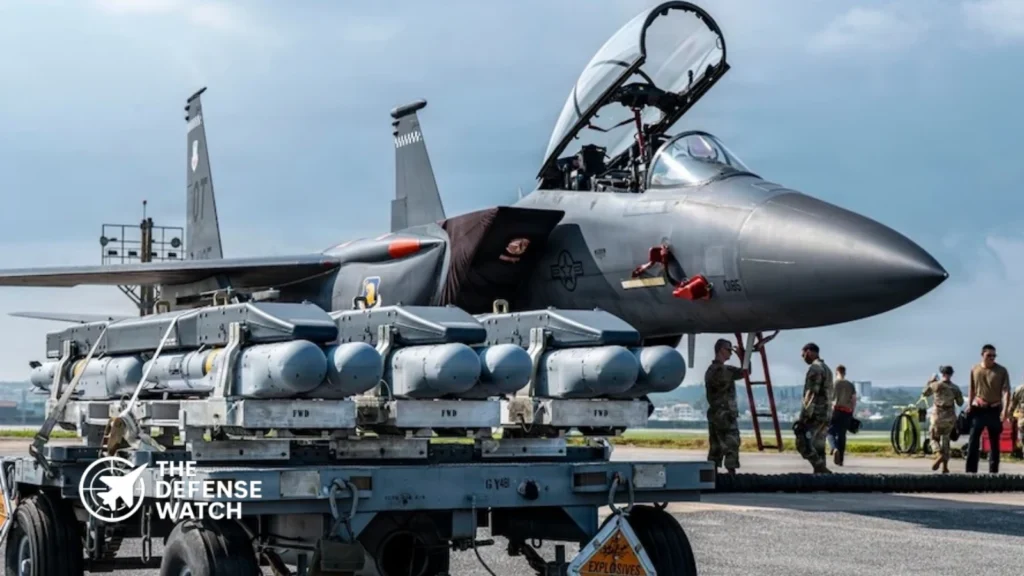
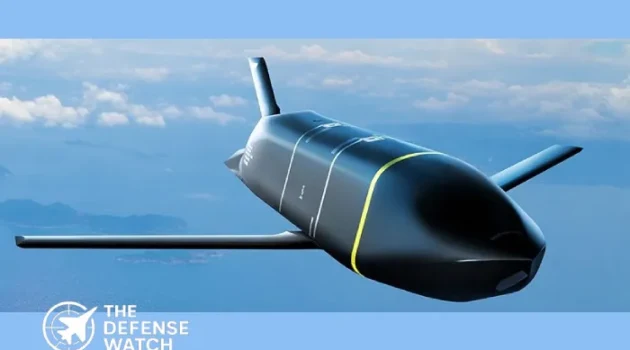
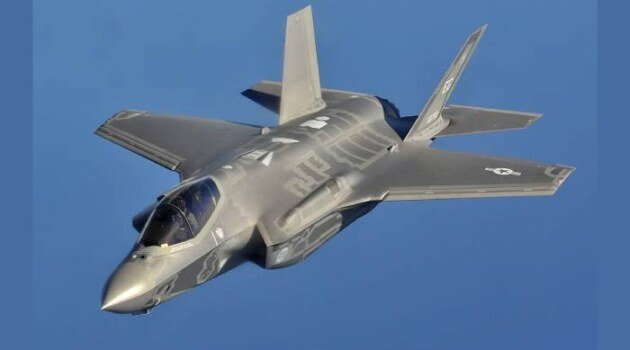
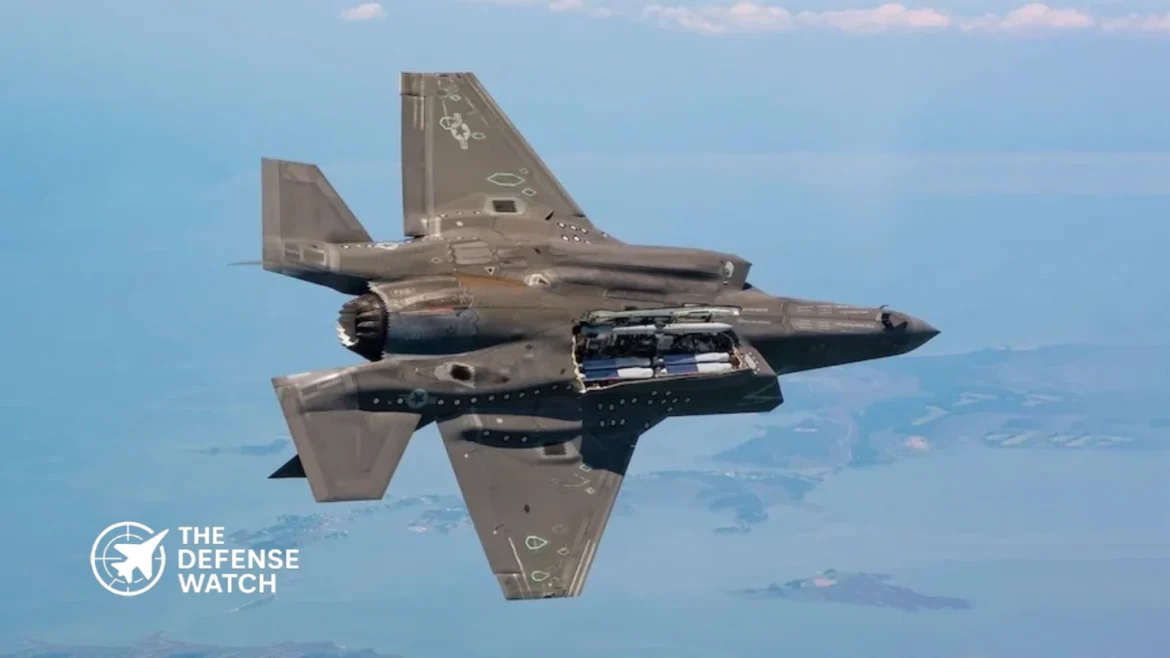
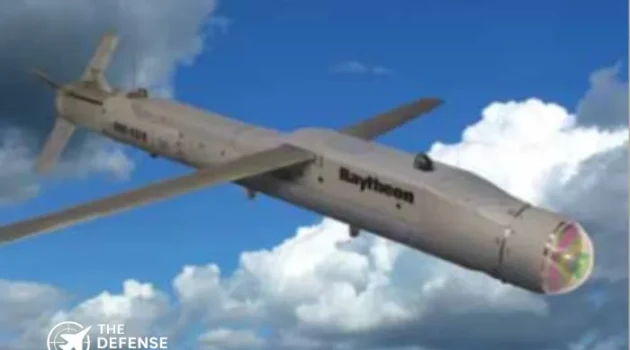
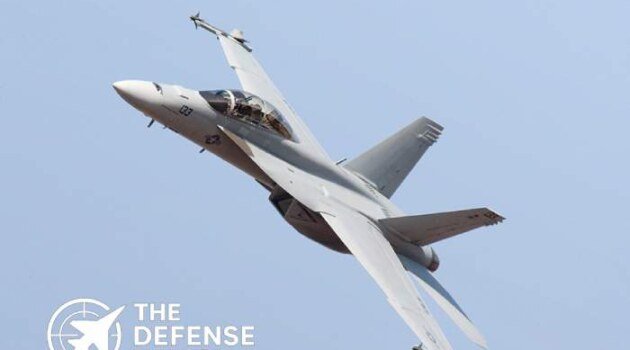
The F-35B StormBreaker weapons integration effort has reached another test milestone, with Raytheon reporting that an F-35B launched eight GBU-53/B StormBreaker smart weapons simultaneously during a recent flight test in Arizona. The company said the demonstration validated the weapon’s ripple eight capability, allowing one aircraft to release eight weapons in a closely coordinated sequence.
Takeaways
Raytheon says an F-35B launched eight StormBreaker weapons simultaneously during an Arizona flight test, demonstrating a higher-volume precision strike capability against moving targets.
The test is significant because StormBreaker is designed specifically for precision engagement of moving and stationary targets under difficult weather and visibility conditions. The U.S. Navy identifies the GBU-53/B as an air-launched precision strike weapon intended to engage moving and fixed targets while using network connectivity to receive updated target information during flight.
The latest demonstration does not by itself establish a new operational deployment date for StormBreaker on the F-35B. Instead, it demonstrates progress in integrating the weapon with the fifth-generation fighter and in expanding the number of weapons that can be employed during a single mission.
What The Eight-Weapon Demonstration Shows
The central feature of the Arizona test is the simultaneous launch of eight StormBreakers from an F-35B.
Raytheon describes this as ripple eight, a capability intended to allow one aircraft to prosecute multiple targets during a single attack sequence. The company said the test was focused on increasing the number of targets an individual aircraft could engage during one mission.
That distinction matters because StormBreaker is not simply a smaller version of a conventional guided bomb. Its design combines a compact airframe with a seeker and network architecture intended to support engagements against targets that can move after weapon release.
The U.S. Navy lists the GBU-53/B as a 250-pound-class weapon with a listed weight of 208 pounds, a length of 70 inches and a diameter of seven inches. Its compact dimensions are central to the weapon’s value on aircraft with limited internal weapons-bay volume.
StormBreaker GBU-53/B At A Glance
Capability GBU-53/B StormBreaker Weapon designation GBU-53/B Program name Small Diameter Bomb Increment II Manufacturer Raytheon Weight 208 pounds Length 70 inches Diameter 7 inches Primary targets Moving and stationary targets Guidance Imaging infrared, millimeter-wave radar, semi-active laser Navigation GPS-aided inertial navigation Network Link 16 and UHF data links Moving-target range More than 45 miles, according to Raytheon F-35 threshold platforms F-35B and F-35C Source: U.S. Navy, NAVAIR, U.S. Department of Defense and Raytheon.
A Tri-Mode Seeker For Difficult Conditions
One of StormBreaker’s most important characteristics is its tri-mode seeker.
The weapon combines millimeter-wave radar, imaging infrared and digital semi-active laser guidance. These sensing modes allow the weapon to operate across conditions in which conventional electro-optical or laser-guided weapons can face limitations.
Millimeter-wave radar provides the ability to detect and track targets through conditions such as rain and other degraded visibility environments. Imaging infrared provides another method of target detection and discrimination, while the semi-active laser mode allows the weapon to engage a target designated by an aircraft or ground operator.
The combination is particularly relevant to moving targets. A weapon intended to hit a stationary coordinate can rely heavily on precise navigation to a known location. A weapon attacking a moving vehicle must instead locate and track the target as its position changes.
StormBreaker was designed around that problem.
Network Connectivity Adds Another Layer
StormBreaker’s capabilities also extend beyond the seeker itself.
NAVAIR states that the weapon can receive updated target coordinates while in flight through two-way datalink communications. Link 16 and UHF communications can allow airborne or ground controllers to provide updated information, while the weapon also has an abort capability after release.
This network-enabled architecture changes the tactical problem from simply releasing a weapon toward a predetermined coordinate to maintaining a connection between the weapon, aircraft and wider force.
That capability becomes more relevant when targets are mobile, when the target picture changes after launch, or when the original target position is no longer valid.
The F-35’s own sensor and networking architecture provides an important complement. The aircraft is designed to collect information from multiple sensors and distribute relevant targeting information across the force. StormBreaker adds a weapon that can use networked information after release.
Why The F-35B Integration Matters
The F-35B presents a particularly demanding integration challenge because it combines fifth-generation aircraft characteristics with short-takeoff and vertical-landing requirements.
Earlier U.S. Navy testing established that StormBreaker could be integrated into the F-35B’s internal weapons configuration. Navy aviation documentation described the weapon as part of the effort to expand the F-35B and F-35C weapon inventory while preserving the aircraft’s low-observable configuration.
The latest eight-weapon demonstration therefore builds on a longer integration effort rather than representing the beginning of StormBreaker work on the F-35B.
The internal carriage issue is especially important. Carrying weapons internally allows the F-35B to retain the aerodynamic and signature advantages associated with its low-observable configuration.
External weapons carriage can increase available payload, but it also changes the aircraft’s signature and aerodynamic characteristics. Internal carriage is consequently valuable for missions in which survivability against sophisticated air defenses remains a priority.
From F-15E To F/A-18E/F And F-35
StormBreaker has progressed beyond developmental testing on the F-15E.
The U.S. Air Force approved the GBU-53/B for operational flights on the F-15E in 2020, and an Air Force operational unit subsequently employed the weapon during evaluation activities. The F-15E’s larger weapons capacity also highlights the weapon’s small physical footprint.
The U.S. Navy has since advanced the weapon on the F/A-18E/F Super Hornet. NAVAIR announced initial operational capability for the SDB II on the Super Hornet in February 2026, following limited early operational use in 2025.
Raytheon also announced in February 2026 that the Navy had approved StormBreaker for operational use on the Super Hornet fleet. The company said the weapon provides the aircraft with a precision-strike capability against moving and stationary targets in both favorable and adverse weather.
The continuing F-35 integration effort therefore extends an existing weapon capability across multiple U.S. tactical aircraft rather than creating an entirely separate weapon ecosystem.
The Operational Value Of More Weapons Per Sortie
The most important implication of the Arizona test is the relationship between aircraft numbers and target capacity.
A fighter can only attack as many targets as its available weapons, targeting information and engagement sequence permit. Increasing the number of precision weapons carried by an aircraft can allow a smaller force package to engage more targets during a mission, assuming sufficient target-quality information and weapon availability.
Raytheon specifically highlights this feature of StormBreaker, stating that its compact design can allow aircraft to carry more weapons and engage a greater number of targets without requiring additional aircraft. The company also states that the weapon can fly more than 45 miles against mobile targets.
The practical value is therefore not simply eight weapons released at once. It is the potential combination of aircraft survivability, weapon quantity, target discrimination, networking and standoff range.
That combination is relevant to contested environments where aircraft may face layered air defenses and where mobile targets can relocate quickly.
What The Test Does Not Establish
The Arizona demonstration should not be interpreted as evidence that every F-35B unit can immediately employ eight StormBreakers operationally under all mission conditions.
Flight testing validates specific aspects of weapon and aircraft integration. Operational fielding also depends on certification, software, tactics development, maintenance procedures, training, logistics and formal authorization.
The U.S. government continues to describe F-35B and F-35C as threshold platforms for the SDB II program, while StormBreaker has already achieved operational status on other aircraft.
The distinction between a successful flight demonstration and full operational availability is important when evaluating defense technology announcements.
A Broader Shift Toward Networked Precision Weapons
StormBreaker represents a broader U.S. shift toward weapons that combine precision guidance with onboard sensing and network connectivity.
Traditional precision weapons can be highly effective against fixed coordinates, but moving targets create a more difficult engagement problem. A mobile target can change position between target identification, weapon release and impact.
StormBreaker’s architecture addresses that challenge through a combination of onboard sensing, navigation and networked updates.
For the F-35B, the value is amplified by the aircraft’s ability to operate from amphibious assault ships and austere locations. A weapon capable of engaging moving targets at standoff distance gives the aircraft another option for precision strike without relying exclusively on larger weapons.
The latest test therefore represents more than a weapons release demonstration. It is a step toward increasing the number of precision engagements a fifth-generation aircraft can conduct during a single mission while maintaining the advantages of a compact, network-enabled weapon.
Outlook
Raytheon’s eight-weapon F-35B demonstration adds another milestone to the StormBreaker integration program and shows how the GBU-53/B is being developed as a multi-platform precision weapon for the U.S. tactical aviation fleet.
The weapon is already operational on the F-15E and has reached initial operational capability on the F/A-18E/F. Continued F-35 integration could extend its combination of moving-target capability, adverse-weather performance and networked targeting to the Joint Strike Fighter fleet.
For U.S. forces, the larger issue is capacity. A precision weapon that can fit in a fighter’s internal weapons bay, identify moving targets and receive updated targeting information can increase the number of useful engagements generated by each aircraft.
The Arizona test indicates that Raytheon and U.S. military test teams are continuing to push that capability toward a more mature F-35 employment option.
Takeaways
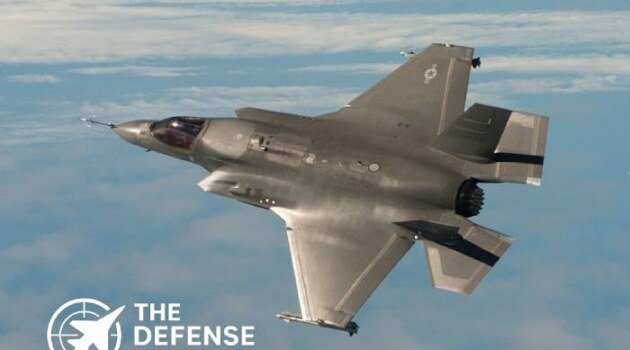
The U.S. Navy is moving the MQ-25A Stingray from development into low-rate production, establishing the first production path for a carrier-based unmanned aerial refueling aircraft.
Boeing MQ-25A Stingray Contract Moves Navy Into Production
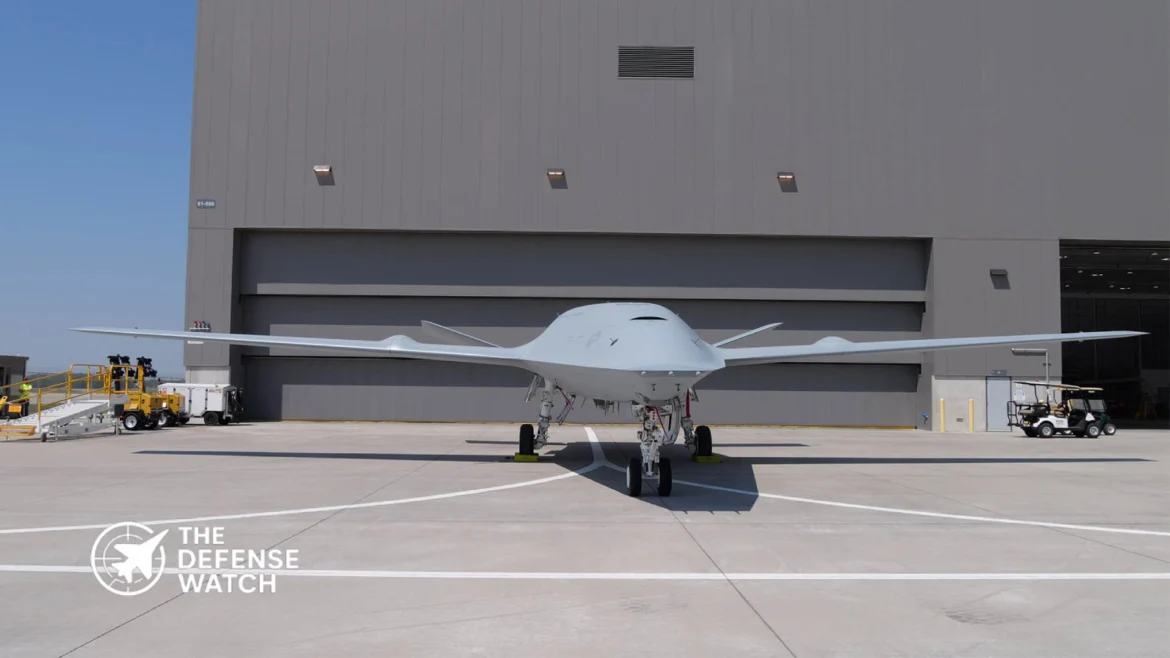
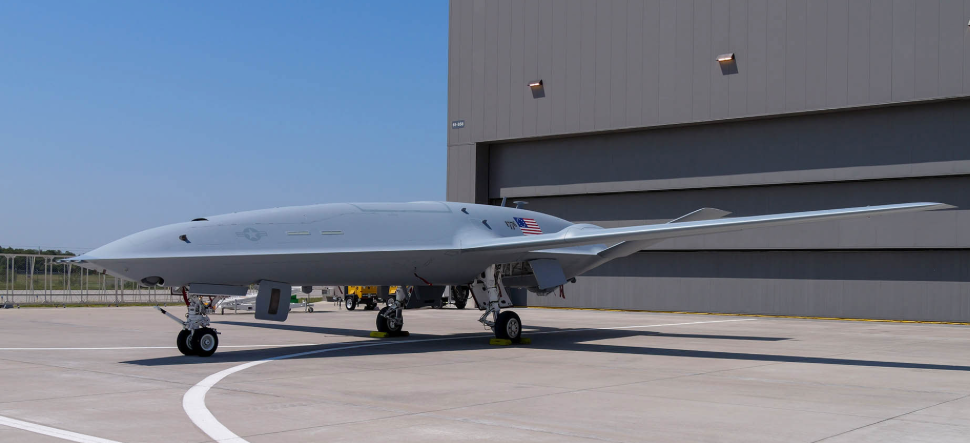
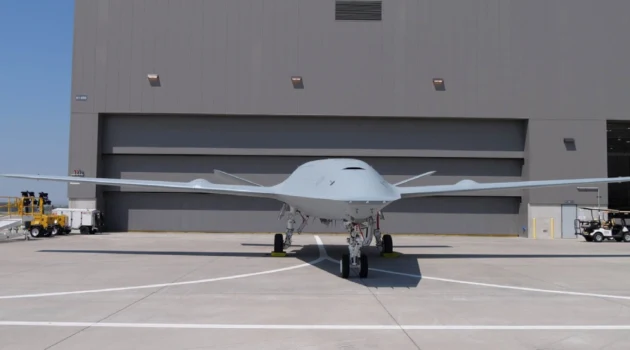
The Boeing MQ-25A Stingray program has entered a significant production phase after the U.S. Navy awarded Boeing a major modification covering three Low Rate Initial Production Lot 1 aircraft and advance procurement for three additional Lot 2 aircraft. The modification provided in the contract notice is valued at up to $552.053 million and extends work through July 2031.
The Navy separately described the overall Sept. 14 production award as a $562 million fixed-price incentive contract, with initial Lot 1 deliveries expected to begin in 2029. The difference reflects the distinction between the modification value specified in the contract language and the Navy’s rounded public description of the production award.
The action is being executed under contract N0001922C0048, originally awarded to Boeing in 2022 for MQ-25A Lot 1 advance acquisition work. Naval Air Systems Command, based at Patuxent River, Maryland, is the contracting activity.
What the MQ-25A Contract Buys
The latest modification covers two closely related procurement activities.
| Item | Current Contract Action |
|---|---|
| Contractor | Boeing |
| Aircraft | MQ-25A Stingray |
| Lot | Lot 1 LRIP |
| Lot 1 aircraft | 3 |
| Lot 2 advance procurement | Long lead components for 3 aircraft |
| Contract modification | Up to $552.053 million |
| Navy public award value | $562 million |
| Completion | July 2031 |
| Contract type | Undefinitized fixed-price incentive modification |
| Competition | Not competed |
| Contracting activity | Naval Air Systems Command |
The Navy said the production contract funds three Lot 1 aircraft and advance acquisition of long lead components for three Lot 2 aircraft. The service also said the MQ-25 program of record contains 76 aircraft, including developmental and test aircraft already associated with the program.
At award, the Navy is obligating $100 million in fiscal 2025 aircraft procurement funds and $64.42848 million in fiscal 2026 aircraft procurement funds, for a combined initial obligation of about $164.43 million.
The remaining contract value will be obligated as the program progresses.
MQ-25A Reaches Production After First Flight
The production decision follows two major milestones in 2026.
The MQ-25A completed its first flight on April 25, 2026, flying for approximately two hours from Boeing’s facility at MidAmerica Airport in Mascoutah, Illinois. Navy and Boeing air vehicle pilots controlled the aircraft through the Unmanned Carrier Aviation Mission Control System. The flight tested basic flight controls, engine performance and handling characteristics.
The Navy subsequently announced Milestone C approval on May 19, allowing the aircraft to enter Low Rate Initial Production. At the time, the service said the initial production award would cover three Lot 1 aircraft and include options for later production lots.
The sequence is important because the MQ-25A is not simply another unmanned aircraft procurement. The program is intended to establish an operational unmanned aircraft inside the carrier air wing, where the aircraft must function within one of the most demanding aviation environments in the U.S. military.
Why the MQ-25A Matters to the Carrier Air Wing
The primary mission of the MQ-25A is aerial refueling.
The Navy intends to use the aircraft as an organic carrier-based tanker, reducing the requirement for F/A-18E/F Super Hornets to perform tanker duties. That can allow more crewed fighters to remain available for combat missions rather than being assigned primarily to tanker operations.
NAVAIR describes the MQ-25A as the Navy’s first operational carrier-based unmanned aircraft and says its integration will extend the range of carrier aircraft while improving the use of combat strike fighters.
This creates an important operational distinction. The MQ-25A is not designed primarily to replace the carrier’s strike fighters. Its value comes from changing how those aircraft are employed.
A carrier air wing has a finite number of aircraft and a finite amount of fuel available in the carrier operating area. A dedicated unmanned tanker can absorb the refueling mission while allowing fighters, electronic warfare aircraft and other receiver-capable platforms to retain greater mission availability.
The Navy has already demonstrated the basic concept with earlier MQ-25A testing. Test aircraft have conducted aerial refueling with the F/A-18 Super Hornet, F-35C Lightning II and E-2D Advanced Hawkeye.
Production Is Only One Part of the MQ-25A System
The MQ-25A program is broader than the aircraft itself.
NAVAIR identifies two major elements: the MQ-25A air vehicle and the Unmanned Carrier Aviation Mission Control System, which provides command and control for the aircraft. Carrier integration also involves deck handling, taxiing, launch and recovery procedures.
That integration requirement is one of the program’s most important technical challenges.
A conventional land-based unmanned aircraft can operate from a prepared runway with relatively predictable ground infrastructure. The MQ-25A must operate from a moving aircraft carrier, where launch and recovery involve catapult and arresting systems, deck handling procedures, limited space and complex interactions with crewed aircraft.
The aircraft must therefore be integrated into the carrier’s existing aviation cycle rather than treated as an independent unmanned system.
Long Lead Components Signal Continued Production Planning
The inclusion of long lead components for three Lot 2 aircraft is particularly significant from an industrial perspective.
Long lead procurement allows the Navy and Boeing to begin acquiring components that require substantial manufacturing time before the complete aircraft are assembled. This can reduce the risk of production delays when subsequent aircraft move through the manufacturing process.
The approach also provides an early indication that the Navy is planning beyond the initial three aircraft.
The Department of the Navy’s FY2026 budget documentation had already identified funding for three MQ-25A low-rate initial production aircraft and advance procurement for long lead material for subsequent aircraft.
The Navy’s broader program planning calls for a total inventory of 76 MQ-25A aircraft. Its FY2026 budget documents describe a fleet structure that includes operational squadrons, detachments and supporting mission-control systems.
The Industrial Base Is Spread Across the United States and Canada
The modification also illustrates the distributed industrial base supporting the MQ-25A.
The work allocation in the contract includes:
Location Share of Work St. Louis, Missouri 56% Torrance, California 8% Indianapolis, Indiana 4% Quebec, Canada 3% McKinney, Texas 2% Ontario, Canada 2% Kansas City, Missouri 1% Wichita, Kansas 1% Irvine, California 1% Other locations 22% St. Louis remains the dominant location, reflecting Boeing’s central role in MQ-25 production and program activity.
The distributed work structure also demonstrates how a single unmanned aircraft program supports suppliers and manufacturing operations across several U.S. states and Canadian provinces.
MQ-25A Production Comes With a Long Test and Integration Path
The move into LRIP does not mean the MQ-25A has completed all operational testing.
The Navy’s first flight in April began a broader flight test program intended to expand the aircraft’s performance envelope and verify mission systems.
GAO’s 2026 weapons systems assessment identifies the MQ-25A as a catapult-launched uncrewed aircraft intended for carrier operations and aerial refueling. GAO’s program timeline places the initial operational capability period around 2029 and the full-rate production decision around 2030.
That timeline puts the current production award in context. The Navy is buying production aircraft while the program continues through the testing and operational evaluation process required before full-rate production.
This is normal for a major defense acquisition program entering LRIP. The purpose of LRIP is to establish production capacity and produce a limited number of operationally representative aircraft while testing, evaluation and manufacturing processes continue.
What the MQ-25A Changes for U.S. Naval Aviation
The most important consequence of the MQ-25A program is not simply the addition of an unmanned tanker.
It is the introduction of an unmanned aircraft into the carrier air wing as an operational asset that works alongside crewed aircraft.
The Navy has described the Stingray as a pathfinder for future unmanned carrier aviation. Its mission-control architecture, carrier integration and manned-unmanned operating concept provide a foundation for additional unmanned systems that could eventually operate from carriers.
For the carrier air wing, the immediate benefit is tanker capacity. The longer-term significance lies in demonstrating that unmanned aircraft can be integrated into the launch, recovery, command-and-control and maintenance cycles of a nuclear-powered aircraft carrier.
That distinction matters as the Navy develops a future carrier air wing that is expected to combine crewed and uncrewed systems.
The MQ-25A therefore represents both an aircraft procurement and an operational integration effort.
A New Production Baseline for the Stingray
Boeing’s latest contract establishes the first LRIP production baseline for the MQ-25A.
Three Lot 1 aircraft will be produced while long lead components are acquired for three Lot 2 aircraft. Initial Lot 1 deliveries are expected to begin in 2029, according to the Navy.
The next major milestones will be continued flight testing, carrier integration, operational evaluation and preparation for fleet introduction.
The MQ-25’s eventual impact will depend on how effectively the Navy integrates the aircraft into carrier operations and how reliably it can provide tanker support without creating additional burdens on the carrier deck.
For now, the latest Boeing contract marks a clear transition: the MQ-25A Stingray is moving from a development program toward production and eventual fleet service as the U.S. Navy’s first operational carrier-based unmanned aircraft.

U.S. Air Force Launches New Bomber Readiness Drive
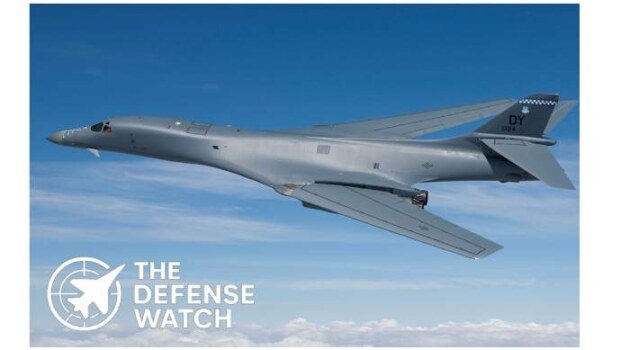
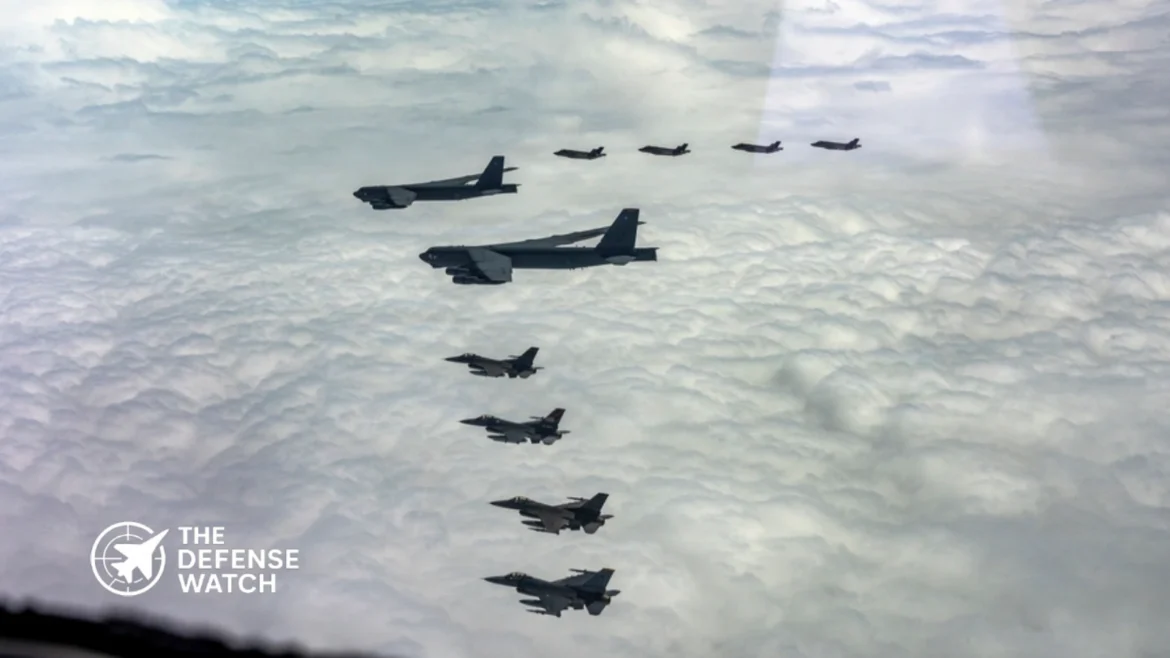
The U.S. Air Force is pushing to increase U.S. bomber readiness by putting more B-52 Stratofortress and B-1B Lancer aircraft into mission-capable status under a new initiative called the North Star Readiness Campaign.
Air Force Global Strike Command launched the campaign with Air Force Materiel Command and the Defense Logistics Agency. The effort is focused on the practical factors that determine how many bombers can actually be generated for operations, including spare parts, engineering support, depot maintenance and supply-chain performance.
Takeaways
The U.S. Air Force has launched a focused campaign to increase the number of mission-capable B-52 and B-1 bombers by addressing parts shortages, maintenance delays and supply-chain problems.
The initiative comes as the Air Force manages an aging bomber fleet while simultaneously modernizing the B-52, sustaining the B-1 and preparing for the expanding B-21 Raider program.
The distinction is important. Buying or upgrading aircraft does not automatically translate into combat power if aircraft remain unavailable because of maintenance requirements or missing components.
Parts Availability Becomes A Central Readiness Issue
One of the clearest findings from the North Star campaign is the effect of supply-chain delays on bomber availability.
According to Air Force Global Strike Command, mission-impacting parts problems, known as Mission Impaired Capability Awaiting Parts, or MICAPs, have fallen from more than 450 to approximately 160 since the campaign began.
The campaign has also established daily aircraft-on-ground meetings involving DLA personnel, supply-chain specialists, base logistics organizations and flight-line maintainers.
The purpose is straightforward: identify the component preventing an aircraft from completing maintenance, locate the part and move it to the required location as quickly as possible.
Some lateral shipments that previously required more than a week can now be completed in approximately two to three days, according to the Air Force.
That improvement matters because bomber readiness is affected not only by major scheduled maintenance but also by comparatively small component shortages. A single unavailable part can prevent an otherwise serviceable aircraft from generating a mission.
B-1B Lancer Receives Particular Attention
The B-1B Lancer is receiving specific attention under the campaign, particularly for structural and avionics components.
Air Force Global Strike Command said the B-1 sustainment effort is designed to improve parts availability while streamlining depot-level maintenance. The objective is to return aircraft to the operational fleet more quickly and reduce the likelihood that future component shortages become mission-stopping events.
The B-1 remains a significant conventional long-range strike platform. The aircraft can carry a large conventional weapons load and is designed for long-range operations, giving combatant commanders another option for delivering conventional strike effects over long distances.
The readiness problem is therefore not simply an issue of aircraft age. It is also a question of how effectively the Air Force can maintain a shrinking and increasingly specialized fleet while continuing to support aircraft that have undergone extensive modernization.
A recent example illustrates the challenge. In May 2026, the Air Force reported that a B-1B returned to operational status following almost two years of work after spending time in storage at the 309th Aerospace Maintenance and Regeneration Group at Davis-Monthan Air Force Base.
That case demonstrates the potential value of depot capacity and regeneration work, but it also shows why accelerating maintenance throughput can have a direct effect on available bomber capacity.
B-52 Modernization Adds Another Layer
The B-52H represents a different sustainment challenge.
The aircraft has been in U.S. service for decades, but the Air Force continues to invest in upgrades intended to keep the platform relevant for future long-range strike missions.
The B-52 is undergoing modernization that includes an upgraded radar and the Commercial Engine Replacement Program. The Air Force has also described the bomber as a platform expected to remain in service well into the future.
The upgraded radar is particularly significant from a sustainment perspective. The Air Force has said the new active electronically scanned array radar is replacing the aircraft’s aging legacy radar and is intended to improve navigation, targeting and maintainability.
At the same time, modernization introduces additional engineering and maintenance requirements.
This creates a delicate balance. The Air Force must keep aircraft flying while modifying systems that are themselves essential to the aircraft’s future operational usefulness.
Bomber Fleet Status
The current U.S. bomber force is built around three operational legacy types, with the B-21 entering the force as the next-generation platform.
Bomber Primary Role Current Position B-1B Lancer Conventional long-range strike Sustainment and readiness improvements B-2 Spirit Stealth penetrating strike Continued sustainment pending B-21 transition B-52H Stratofortress Long-range conventional and nuclear strike Extensive modernization B-21 Raider Next-generation penetrating strike Testing, production expansion and introduction Air Force Global Strike Command says the B-52 and B-1 are being upgraded to remain operational for decades, while the B-2 will continue to be sustained until the B-21 is fully operational.
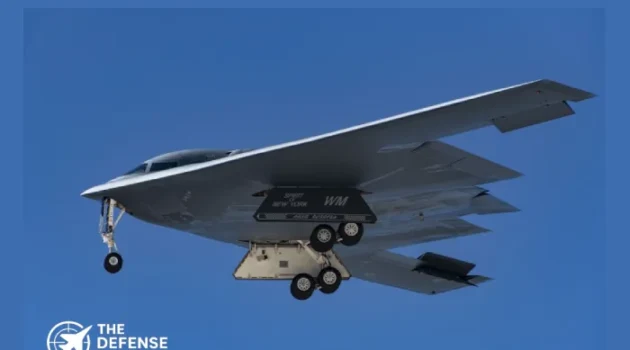
The B-2 also illustrates why aircraft availability can have outsized strategic importance.
In July 2026, a B-2 known as the Spirit of Ohio returned to the fleet after completing programmed depot maintenance. The Air Force said returning the aircraft directly increased the number of available bombers while providing additional flight hours for crew training and readiness.
The B-2 fleet currently consists of 20 aircraft, including one test aircraft, according to the Air Force’s May 2026 fact sheet.
That small fleet size makes the availability of individual aircraft particularly important.
Why Bomber Availability Matters
The immediate value of the North Star campaign is not the creation of additional bombers. It is the effort to increase the percentage of the existing fleet that can actually perform assigned missions.
For a global long-range strike force, that distinction is critical.
The United States uses bomber deployments to demonstrate the ability to move combat power over long distances and to support deterrence missions with allies and partners. Air Force Global Strike Command’s Bomber Task Force construct is designed to provide flexible deployments while assuring allies and deterring adversaries.
A larger mission-capable fleet gives commanders more flexibility to conduct training, deployments, exercises and contingency operations without consuming the entire available aircraft pool.
It also reduces the pressure created when scheduled maintenance, unscheduled repairs and operational taskings compete for the same aircraft.
From a force-generation perspective, improving logistics can therefore produce additional usable capacity without immediately requiring the purchase of another airframe.
The B-21 Is The Long-Term Answer, But Not The Immediate One
The North Star campaign also has to be viewed alongside the B-21 Raider transition.
The Air Force is accelerating B-21 production capacity. In February 2026, the Department of the Air Force and Northrop Grumman agreed to increase annual production capacity by 25 percent using $4.5 billion in previously authorized and appropriated funding.
The B-21 has also continued flight testing and systems maturation. In April 2026, the Air Force highlighted aerial refueling testing with a KC-135 as part of the program’s development of long-range penetrating strike capability.
In July, the Air Force announced that the B-21 will operate with a two-pilot crew configuration.
These developments point toward a future bomber force increasingly centered on the B-21, but the transition will take time.
That creates a near-term requirement to keep the B-1, B-2 and B-52 available while the new bomber enters operational service.
The Sustainment Problem Is As Important As The Aircraft
The North Star initiative highlights a broader issue facing advanced military aviation.
Aircraft availability depends on more than the number of airframes owned by a service. It depends on engines, avionics, structural components, technical expertise, depot capacity, supply-chain responsiveness and the ability to identify emerging failures before they ground aircraft.
For older platforms, those challenges can become more difficult because manufacturers may no longer produce certain components at scale and maintenance organizations may need to manage increasingly specialized parts.
The Air Force’s approach under North Star is therefore notable because it brings operational commanders, acquisition and sustainment organizations and logistics personnel into the same readiness effort.
That approach targets the complete maintenance chain rather than treating each delay as an isolated problem.
Readiness Improvements Support U.S. Global Strike Capacity
The United States continues to rely on long-range bombers for a combination of conventional strike, nuclear deterrence, force projection and allied assurance.
The B-52 provides substantial weapons capacity and long-range endurance. The B-1 supplies a large conventional weapons payload and high-speed long-range strike capability. The B-2 provides a penetrating stealth capability against heavily defended targets. The B-21 is being developed to provide the next generation of survivable long-range strike capability.
Keeping those aircraft available requires more than modernization programs.
The North Star Readiness Campaign shows that supply-chain performance and maintenance throughput can directly influence the amount of combat power available to U.S. commanders on any given day.
For the Air Force, the immediate objective is therefore straightforward: return more aircraft to service, keep them flying safely and prevent parts shortages from becoming avoidable barriers to operations.
The broader goal is to maintain sufficient bomber capacity during the transition from the legacy fleet to the B-21.

Executive Summary:
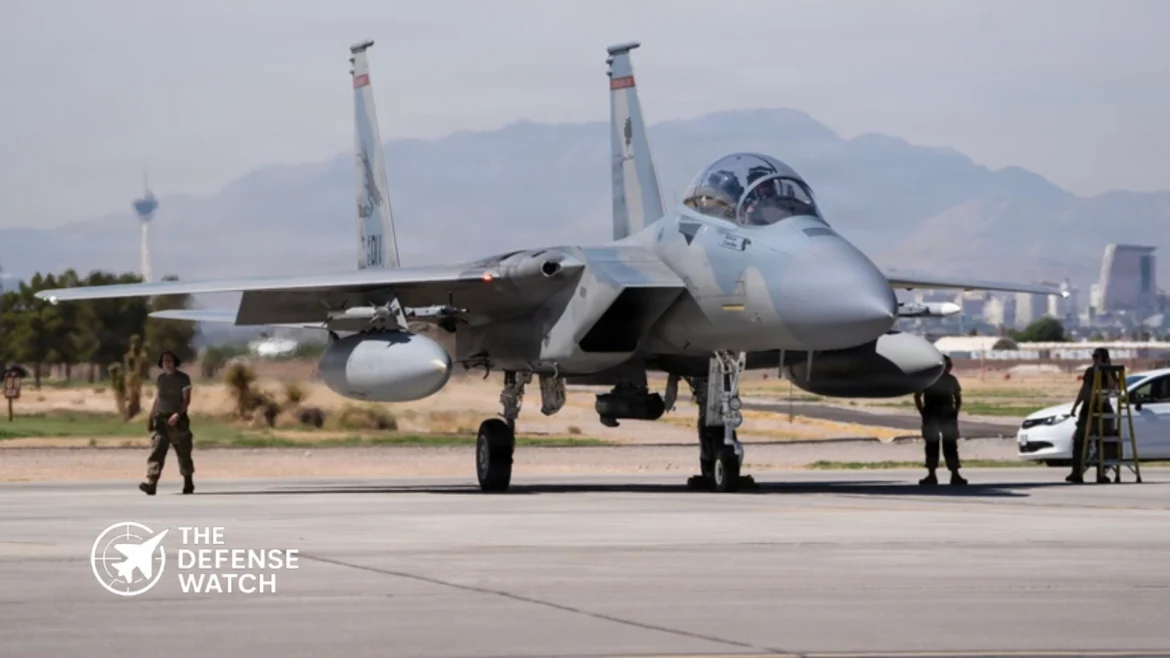
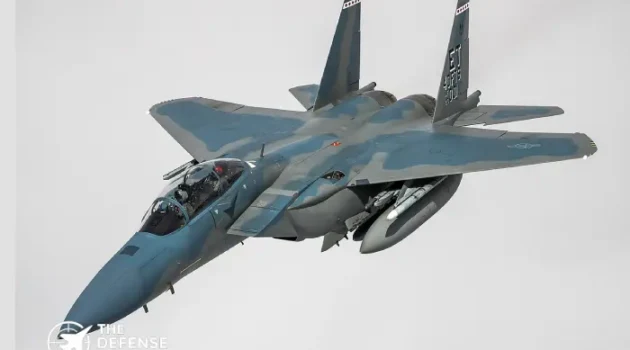
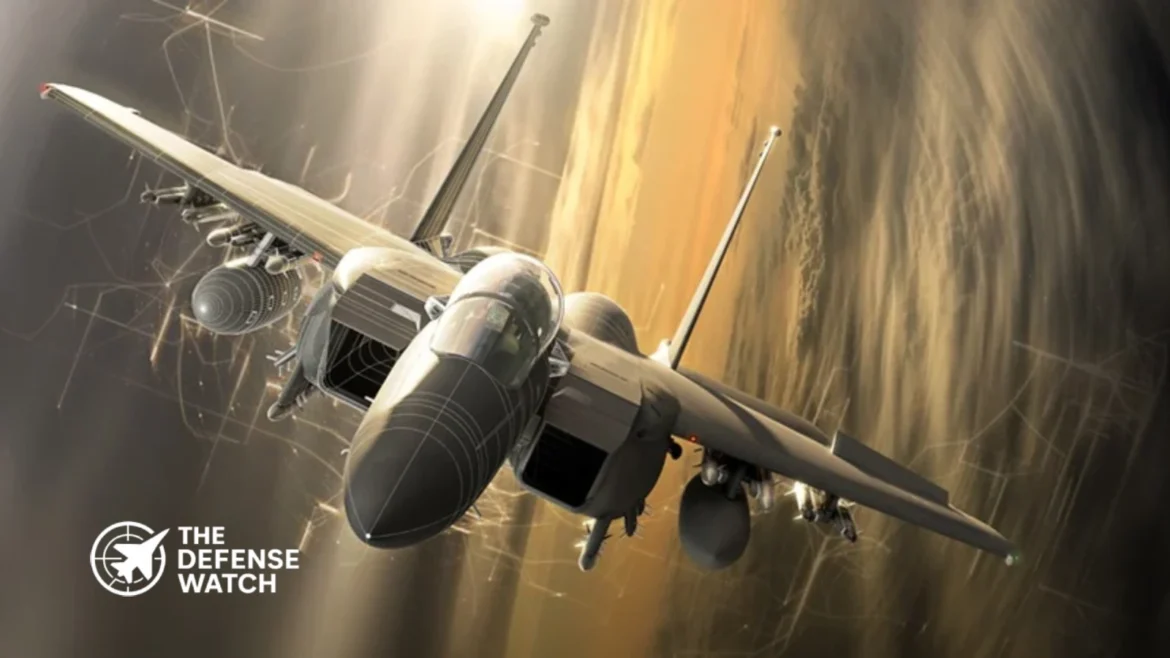
The U.S. Air Force’s first 16 F-15EX Eagle II fighters achieved an average materiel availability rate of 72.4% in fiscal 2026, according to a Department of War acquisition report. The result is 12.4 percentage points above the program’s 60% minimum sustainment threshold but 7.6 points below its 80% objective. The finding comes as the Air Force prepares to expand the planned F-15EX fleet to 268 aircraft, making sustainment performance increasingly important as production scales.
F-15EX Eagle II Availability Reaches 72.4%
The F-15EX Eagle II availability rate for the first 16 aircraft averaged 72.4% in fiscal 2026, according to an acquisition report cited in a Sept. 14 report by Defence Industry Europe. The reported performance applies to aircraft EX1 through EX16 and reflects demonstrated performance through Feb. 24, 2026.
The 72.4% figure clears the program’s minimum materiel availability threshold of 60%. However, it remains below the Air Force’s 80% objective established under the program’s acquisition baseline. The acquisition assessment characterized the result as slightly below the objective and reported no formal performance deviation.
That distinction matters. A threshold represents the minimum acceptable performance level, while an objective establishes the level the program is intended to achieve. The early F-15EX fleet therefore met its formal minimum requirement but has not yet demonstrated the higher availability level the Air Force ultimately wants.

Image: U.S. Air Force. Availability Gap Is 7.6 Percentage Points
The reported figures put the early F-15EX fleet in a relatively clear position:
F-15EX Sustainment Measure Reported Result Average materiel availability 72.4% Program threshold 60% Program objective 80% Margin above threshold 12.4 percentage points Gap to objective 7.6 percentage points Aircraft covered EX1 through EX16 Performance date Feb. 24, 2026 The most important point is that 72.4% should not be interpreted as a failure of the aircraft to meet its acquisition requirement. The reported rate is above the established threshold.
The more significant issue is whether the Air Force can improve availability as the fleet grows from a small initial population into a much larger operational force.
Why F-15EX Sustainment Matters
Materiel availability measures whether an aircraft is available for its intended mission rather than simply counting how many aircraft have been delivered.
For a fighter fleet, that distinction is important. An aircraft can be physically present in the inventory but unavailable because it is undergoing scheduled maintenance, awaiting parts, receiving repairs or otherwise unavailable for operational use.
The Air Force is now relying on the F-15EX for more than a limited replacement program. The aircraft was initially intended to replace aging F-15C and F-15D fighters, while also complementing fifth-generation aircraft in missions where its payload, range and weapons capacity provide useful additional capacity. The Air Force says the aircraft is designed around a digital backbone, open architecture and advanced electronic warfare capabilities.
That makes sustainment performance increasingly important as procurement expands.
Air Force Plans a Much Larger F-15EX Fleet
The availability result comes at a significant point in the program’s development.
The Air Force has substantially expanded its planned F-15EX procurement. A fiscal 2027 acquisition report identifies a planned fleet of 268 aircraft, a major increase from earlier procurement plans. Defence Industry Europe reported that 18 aircraft had been delivered as of April 14, 2026.
The expansion means that sustainment performance demonstrated by the first aircraft will become increasingly important.
A small early fleet can produce different maintenance dynamics from a mature fleet. As more aircraft enter operational units, the Air Force gains a larger pool of maintainers, spare parts, technical experience and maintenance data. At the same time, the larger fleet creates a much greater demand for engines, components, depot capacity and trained personnel.
The challenge will be converting a 72.4% early availability result into a consistently higher rate across a much larger operational population.
F-15EX Has Already Passed Major Operational Milestones
The availability result should also be viewed alongside the aircraft’s broader acquisition progress.
The F-15EX completed initial operational test and evaluation and live-fire testing in November 2023. The program subsequently achieved full-rate production approval in June 2024 and initial operational capability in July 2024, according to the acquisition reporting cited by Defence Industry Europe.
The Air Force has described the aircraft as a replacement for aging F-15C/D fighters and as a complementary platform to fifth-generation aircraft.
The service’s operational testing has included air-superiority missions and defensive and offensive counter-air missions. Testing also established a basic air-to-ground capability.
This is important because availability is only one part of combat capability. A modern fighter must combine mission effectiveness with the ability to generate sorties repeatedly.
Maintenance Is the Largest Sustainment Cost
The acquisition assessment also highlights the financial importance of maintaining the F-15EX fleet.
Annual operating and support costs are estimated at approximately $13.1 million per aircraft in constant fiscal 2020 dollars. Maintenance accounts for the largest portion at about $7.2 million per aircraft, followed by unit operations at roughly $3 million and unit-level manpower at approximately $1.9 million.
F-15EX Operating and Support Cost Annual Estimate Per Aircraft Total operating and support $13.1 million Maintenance $7.2 million Unit operations $3.0 million Unit-level manpower $1.9 million Other sustainment and improvements Remaining balance The maintenance figure is particularly relevant to the availability issue because improvements in reliability, parts availability and maintenance turnaround can directly influence the number of aircraft available for operations.
Production Growth Adds Another Sustainment Test
The Air Force’s F-15EX program is also dealing with production expansion and industrial-base challenges.
The Air Force previously reported that deliveries resumed after a strike at Boeing’s St. Louis facility disrupted production between August and November 2025. Aircraft 14, 15 and 16 were subsequently delivered to Portland Air National Guard Base.
The production issue is separate from the 72.4% availability figure, but both point to the same broader challenge: scaling a fighter program requires more than producing airframes.
The Air Force needs a supporting industrial system capable of supplying engines, avionics, electronic warfare equipment, structural components and other parts at the rate required by an expanding fleet.
F-15EX Is Becoming More Important in the Indo-Pacific
The availability question is particularly relevant as the F-15EX moves toward a larger role in the Indo-Pacific.
The Air Force has been preparing the aircraft for permanent deployment to Kadena Air Base, Japan. In September 2026, the first F-15EX designated for Kadena departed Boeing’s St. Louis facility for Portland, where it was scheduled to receive additional preparation before moving to Japan.
The Air Force has also used F-15EX deployments to Kadena to familiarize local personnel with the aircraft and validate maintenance, logistics and combat-generation procedures.
This gives the availability metric greater operational significance. Forward-based fighters must be supported in environments where maintenance capacity, spare parts and transportation can be more constrained than at U.S. bases.
For the Indo-Pacific, where distances between operating locations can be considerable, aircraft availability directly affects the number of sorties a force can generate over time.
What 72.4% Means for the Program
The current result does not indicate that the F-15EX program has failed its sustainment requirement. It indicates that the early fleet has cleared the minimum threshold while still leaving room to improve toward the 80% objective.
The key question is therefore not whether the first 16 aircraft reached 80%. They did not.
The more important question is whether the Air Force can improve availability as the fleet matures and expands.
That will depend on several factors, including maintenance turnaround times, spare-parts availability, supply-chain performance, technical workforce capacity and the maturity of the aircraft’s support infrastructure.
The program’s future scale makes those factors more important than the performance of a 16-aircraft sample alone.
F-15EX Expansion Raises the Stakes
The Air Force’s decision to expand the planned F-15EX fleet makes sustainment a central issue for the program.
The aircraft offers the service a large, modern weapons platform that can complement F-35 and F-22 aircraft rather than performing exactly the same role. The Air Force has specifically described the F-15EX as a complementary platform for fifth-generation fighters, while its large weapons capacity provides additional options for long-range fires and air operations.
But a fighter’s value depends on its ability to generate sorties when required.
For that reason, the 72.4% availability figure is best understood as an early sustainment indicator rather than a verdict on the aircraft. Clearing the 60% threshold is a positive program result, while the 7.6 percentage-point gap to the 80% objective identifies an area the Air Force will need to monitor closely as procurement accelerates.
The next stages of the F-15EX program will therefore test not only Boeing’s ability to deliver aircraft, but also the Air Force’s ability to sustain a rapidly expanding fleet at the readiness levels expected from a front-line fighter force.
Bottom Line
The first 16 F-15EX Eagle II fighters recorded a 72.4% average materiel availability rate in fiscal 2026, exceeding the program’s 60% threshold but falling short of the 80% objective. The result does not represent a formal program failure, but it provides an important early measure of the aircraft’s sustainment performance.
With the Air Force now planning for a fleet of 268 F-15EX aircraft, improving availability will become increasingly important. The aircraft is moving from an initial fielding phase toward a much larger operational role, including planned deployment to Japan.
For the F-15EX program, the central sustainment test is now clear: maintain and improve availability while the fleet expands substantially in size and geographic scope.
Shield AI X-BAT Targets Europe With Polish Production Plan
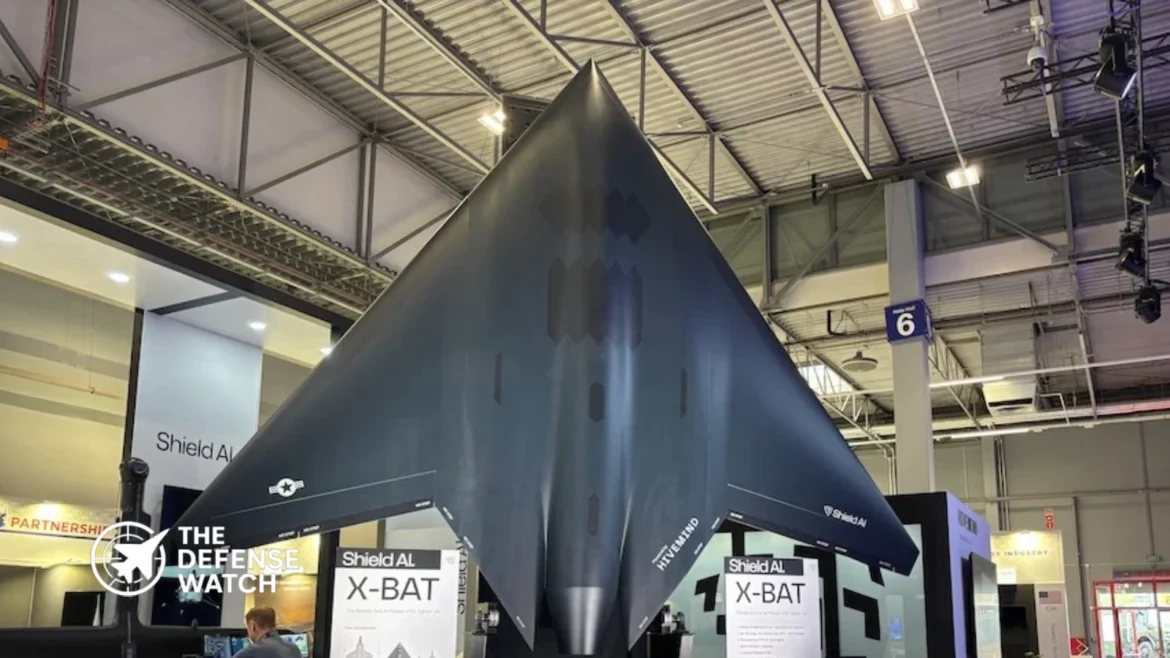
Shield AI is positioning the X-BAT uncrewed strike fighter for the European market after signing a five-year letter of intent with Poland’s Polska Grupa Zbrojeniowa and Wojskowe Zakłady Lotnicze Nr 2 covering potential design, production, delivery and sustainment work in Poland. The agreement was signed during the MSPO defense exhibition in Kielce and could establish a Polish industrial role in the program, although it is not yet a production contract.
Takeaways
Shield AI is positioning the X-BAT as a runway-independent autonomous combat aircraft for Poland and other European markets.
The proposed partnership is significant because X-BAT combines three requirements that are increasingly important to air forces operating under threat from long-range missiles and attacks against fixed infrastructure: vertical takeoff and landing, autonomous flight and a substantial internal weapons capacity.
Shield AI says X-BAT is designed to operate without conventional runways, including from remote sites, ships and austere forward locations. The company is seeking to connect that operational concept with European industrial capacity through PGZ and its aviation subsidiary WZL-2.
Poland Could Become a Production and Sustainment Hub
Under the letter of intent, PGZ Group companies and Shield AI will define how Polish industry could participate in X-BAT design, production and delivery for customers in Poland and other countries.
The proposed cooperation also covers maintenance, repair and overhaul, training, supply-chain participation, technology transfer and technology development. Discussions extend to Shield AI’s Hivemind autonomy software and its V-BAT uncrewed aircraft.
The arrangement therefore goes beyond a conventional foreign military sale. If definitive agreements are reached, the objective would be to establish Polish industrial participation across several stages of the aircraft’s life cycle.
Shield AI has not announced a production quantity for Poland, a contract value, or a final production site. Those details remain subject to further agreements.
That distinction is important. The current announcement establishes an industrial framework for negotiations, rather than confirming that Poland has ordered X-BAT aircraft.
WZL-2 Brings F-16 and F-110 Experience
WZL-2 is particularly relevant to the proposed partnership because the Polish aviation facility already supports military aircraft including the F-16 and C-130.
The company is also preparing to expand its capabilities for the GE Aerospace F110 engine family that will power X-BAT. Shield AI and WZL-2 therefore see an opportunity to connect existing Polish aviation maintenance expertise with the new autonomous aircraft program.
This could reduce some of the industrial barriers associated with introducing a new combat aircraft architecture, although X-BAT’s autonomous flight systems, propulsion configuration and VTOL operating concept will create requirements that differ substantially from conventional fighter sustainment.
The Polish government has also been pursuing additional U.S. defense-industrial partnerships. In July, PGZ and WZL-2 signed an agreement with Anduril Industries concerning the assembly and later production of Barracuda-500M autonomous cruise missiles in Poland.
The X-BAT proposal therefore fits into a broader Polish effort to place more defense production and sustainment capability inside the country.
X-BAT’s Technical Architecture
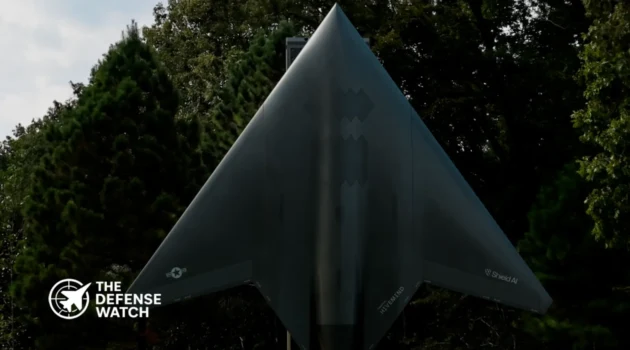
Shield AI describes X-BAT as an AI-piloted, low-observable, multirole strike fighter capable of vertical takeoff and landing.
The published specifications include:
X-BAT Characteristic Publicly Stated Information Aircraft type Uncrewed multirole strike fighter Flight concept Vertical takeoff and landing Autonomy Shield AI Hivemind Combat radius 1,000 nautical miles Maximum range More than 2,000 nautical miles Wingspan 39 feet Internal weapons capacity 2,000-pound class Internal bays Sized to match F-35 bay dimensions Electrical power 80 kW Propulsion GE Aerospace F110-GE-129E Thrust vectoring Axisymmetric Vectoring Exhaust Nozzle, AVEN Flight testing Planned to begin in 2026 Shield AI’s published X-BAT information lists a maximum range of more than 2,000 nautical miles, while its September announcement specifies a 1,000-nautical-mile combat radius. These are different performance measures and should not be treated as interchangeable.
The aircraft is also designed around substantial electrical power generation. Shield AI states that its 80-kilowatt electrical capacity can support electronic warfare systems, radar and intelligence, surveillance and reconnaissance payloads.
That electrical capacity matters because future autonomous combat aircraft are likely to depend heavily on onboard sensing, electronic warfare, communications and computing rather than simply carrying weapons.
GE Aerospace F110 Provides the Propulsion Foundation
The X-BAT’s VTOL capability depends on a modified propulsion arrangement built around GE Aerospace’s F110-GE-129E engine and AVEN thrust-vectoring technology.
In July, Shield AI and GE Aerospace completed integration, actuation and engine light-off testing of AVEN with the F110-GE-129E at GE Aerospace’s Peebles Test Operation in Ohio. The test campaign was an important ground milestone before flight testing.
AVEN is an axisymmetric thrust-vectoring nozzle originally developed during earlier research into advanced fighter maneuverability. Shield AI and GE Aerospace have refurbished and integrated the technology into the X-BAT propulsion system, with further engineering work planned as development continues.
The configuration is notable because X-BAT does not use a conventional vertical-lift system such as separate lift engines or a large mechanical lift fan.
Instead, the aircraft uses engine thrust and vectoring to support vertical flight. That approach can simplify the basic aircraft architecture, but it places demanding requirements on propulsion control, flight-control software, thermal management and autonomous flight control during takeoff and landing.
Runway Independence Is the Central Operational Concept
The strongest operational argument for X-BAT is its ability to operate without a conventional runway.
Fixed air bases remain essential to modern air forces, but they are also predictable targets for ballistic missiles, cruise missiles, loitering munitions and other long-range strike systems. A fighter force that depends on a limited number of large runways can therefore face significant operational constraints if those facilities are damaged or suppressed.
X-BAT’s VTOL architecture is intended to address that vulnerability by allowing aircraft to disperse across a larger number of operating locations.
Shield AI specifically highlights remote sites, maritime operations and austere bases as potential operating environments.
For Poland, this concept has particular relevance because of the country’s position on NATO’s eastern flank and its increasing emphasis on resilient military infrastructure.
The value is not simply that an aircraft can take off without a runway. The larger operational question is whether fuel, weapons, maintenance equipment, communications, data links and personnel can also be dispersed sufficiently to support the aircraft.
That makes logistics and sustainment just as important as the aircraft’s VTOL capability.
Autonomy Could Change How X-BAT Is Used
X-BAT is being developed around Shield AI’s Hivemind autonomy software.
The company says the aircraft will be capable of operating independently or as part of a force package with crewed aircraft. The design therefore fits into the broader development of autonomous collaborative aircraft, where uncrewed systems perform missions that could expose manned aircraft to greater risk.
The combination of autonomy and VTOL creates an important distinction from traditional unmanned aircraft.
Many current military UAVs are primarily designed for surveillance, communications relay or relatively low-risk strike missions. X-BAT is being developed as a combat aircraft with fighter-like performance requirements, internal weapons carriage, electronic warfare capabilities and operation in contested environments.
That creates considerably more demanding certification and operational challenges.
An autonomous system must reliably manage abnormal situations, navigation failures, sensor degradation, communications loss and dynamic changes in the tactical environment. For a VTOL aircraft, the most difficult moments also occur during takeoff and landing, when the aircraft has limited energy and little margin for control errors.
These requirements will have to be demonstrated through flight testing rather than inferred from the aircraft’s design.
Poland Already Has a Relationship With Shield AI
The proposed X-BAT industrial partnership builds on an existing Polish relationship with Shield AI.
In June, Poland’s Armament Agency signed a contract to acquire Shield AI’s V-BAT VTOL unmanned aircraft for Polish Navy operations. Shield AI said the systems are intended to support maritime domain awareness and ISR from a Polish Navy vessel, with deliveries planned for later in 2026.
That relationship provides a practical entry point for Poland into Shield AI’s broader autonomous aviation ecosystem.
V-BAT and X-BAT occupy very different capability classes, however. V-BAT is a Group 3-class VTOL ISR platform, while X-BAT is being designed as a much larger autonomous combat aircraft capable of carrying substantial internal weapons and operating at fighter-like ranges.
The common element is the autonomy architecture and the ability to operate without conventional runways.
European Market Competition
Shield AI’s push into Poland also places X-BAT within a rapidly developing European market for autonomous combat aircraft.
European governments are examining ways to increase aircraft numbers without relying exclusively on expensive crewed fighters. At the same time, the proliferation of long-range precision weapons is forcing air forces to consider dispersal, survivability and distributed operations.
For NATO members, the ability to operate combat aircraft from dispersed locations could complement existing fighter fleets rather than replace them.
Poland already operates F-16s and is receiving F-35s, while the country’s defense industry is expanding cooperation with U.S. companies. X-BAT could theoretically occupy a different role by providing an autonomous strike and electronic warfare capability that complements crewed aircraft.
However, no Polish acquisition of X-BAT has been announced as part of the current letter of intent.
The Key Development Milestone Is Still Flight Testing
The next major test for the X-BAT program is flight.
Shield AI and GE Aerospace have completed an important ground propulsion milestone, but the aircraft still needs to demonstrate that its engine, AVEN nozzle, flight-control architecture and Hivemind autonomy can operate together in actual flight.
Shield AI says flight testing is scheduled to begin in 2026.
Successful flight testing would establish a substantially stronger basis for international procurement discussions. It would also provide the first meaningful evidence that the aircraft can translate its proposed VTOL architecture and autonomous control system into operationally relevant performance.
For Poland, the industrial question will develop in parallel. The five-year letter of intent gives PGZ and WZL-2 a framework to negotiate production, sustainment, supply-chain and technology roles, but the final structure remains to be determined.
What the Poland Agreement Means for U.S. and NATO Defense Strategy
The proposed X-BAT partnership reflects a broader shift in how NATO countries are approaching autonomous combat aviation.
Rather than treating unmanned aircraft solely as expendable surveillance or strike systems, defense planners are increasingly considering larger autonomous platforms that can carry sensors, electronic warfare equipment and weapons while operating alongside crewed fighters.
For the United States, European industrial participation could also provide an additional production and sustainment pathway for an American-designed autonomous aircraft.
For Poland, the attraction is more direct: industrial participation could provide domestic expertise in autonomous aircraft, propulsion maintenance, systems integration and through-life support rather than leaving the country dependent on imported complete systems.
The most important caveat is that the current agreement does not establish those capabilities yet. Definitive agreements will determine which PGZ companies participate, where work is performed, how much technology is transferred and whether Polish production ultimately supports foreign customers.
The X-BAT program therefore remains at a developmental stage, but the Poland agreement marks a significant step in Shield AI’s effort to turn the aircraft into a potential European defense product.
What Happens Next
Shield AI, PGZ and WZL-2 now have to translate the letter of intent into detailed industrial arrangements.
The immediate technical priority is X-BAT flight testing. In parallel, the companies will need to establish the proposed Polish roles in manufacturing, maintenance, training, supply-chain participation and technology development.
No production quantity, contract value or final Polish production location has been disclosed.
For now, the significance of the agreement is less about a confirmed Polish X-BAT fleet and more about the industrial architecture being discussed around it. If the planned arrangements progress, Poland could become an important European node for an American-developed autonomous combat aircraft designed around runway-independent operations.
Lockheed Martin Vectis Reaches Another Development Step
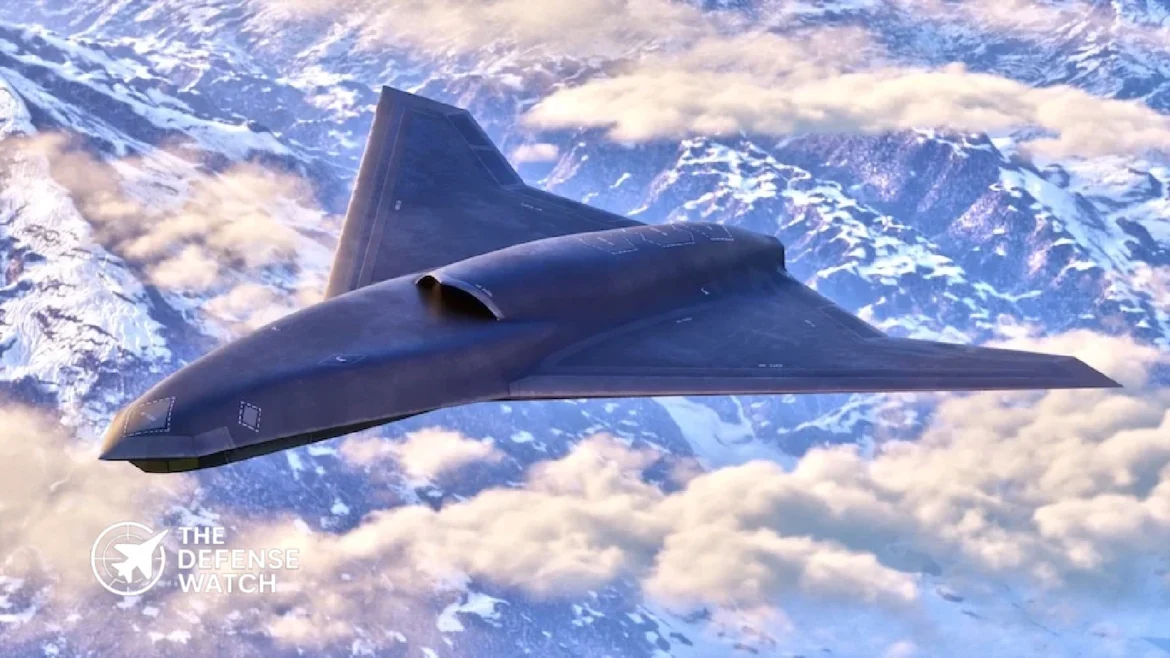
The Lockheed Martin Vectis stealth combat drone has reached another reported development milestone as Skunk Works moves toward a planned prototype flight in 2027. Lockheed Martin signaled the update through a September 12, 2026 social media post, but did not disclose what technical or programmatic achievement had been completed.
Takeaways
Lockheed Martin has signaled another development milestone for Vectis, its Group 5 collaborative combat aircraft intended to operate with fifth-generation fighters.
The limited announcement is important because Vectis remains one of Lockheed Martin’s internally funded approaches to the growing collaborative combat aircraft market. The company introduced Vectis in September 2025 as a Group 5 uncrewed aircraft designed around survivability, autonomy, mission flexibility and integration with crewed combat aircraft.
Lockheed Martin’s current Vectis program page describes the aircraft as capable of operating independently or teaming with crewed platforms such as the F-35 and future next generation aircraft. The company has also explicitly identified the F-22 as part of the intended fifth generation integration concept.
Vectis Is Moving Toward a 2027 Prototype Flight
Lockheed Martin has previously said that Vectis is being developed under an accelerated design, build and flight approach. In December 2025, the company said parts for the prototype were being ordered and that first flight was targeted for 2027.
The propulsion plan provides one example of the program’s emphasis on using mature technologies where possible. Lockheed Martin selected Williams International’s FJ44-4 turbofan for the demonstrator, with the company stating that the engine produces more than 3,600 pounds of thrust.
That choice is significant from a development perspective. Rather than making a new propulsion system a prerequisite for flight testing, Vectis can use an established commercial turbofan architecture while Lockheed Martin concentrates development effort on the aircraft’s low observable design, mission systems, autonomy and integration requirements.
The latest milestone could therefore represent progress in one of several areas, but Lockheed Martin has not identified which one. It would be premature to describe the update as a flight test, completed prototype or demonstrated operational capability.
What Lockheed Martin Has Disclosed About Vectis
Lockheed Martin introduced Vectis as a Group 5 collaborative combat aircraft. The Group 5 classification covers large uncrewed aircraft with greater size, endurance and capability than smaller tactical drone categories.
The company has positioned the aircraft around several potential mission sets:
Capability Lockheed Martin Position Aircraft class Group 5 uncrewed aircraft Program role Collaborative combat aircraft Crewed teaming F-35, F-22 and future combat aircraft Potential missions Strike, ISR targeting, electronic warfare and counterair Propulsion for prototype Williams International FJ44-4 Engine thrust More than 3,600 pounds Planned first flight 2027 Development approach Internally funded, accelerated design and development Architecture Open and customizable mission systems The company has not publicly released a complete set of aircraft specifications such as maximum speed, combat radius, weapons payload, internal weapons capacity or detailed dimensions. Those figures should not be treated as established Vectis specifications unless Lockheed Martin or another authoritative source releases them.
Why F-22 and F-35 Integration Matters
Vectis is being developed against a major change in how the U.S. Air Force is approaching air superiority. Instead of relying exclusively on increasingly sophisticated crewed fighters, the service is building a force in which crewed aircraft can work with autonomous or semi-autonomous uncrewed aircraft.
The F-35 is particularly relevant because its sensor fusion, communications and data-sharing capabilities make it a natural node for distributed air operations. The F-22 presents a different challenge because it is optimized for air dominance and was designed before today’s CCA architecture became a central element of U.S. fighter modernization.
Lockheed Martin’s own 2026 material shows Vectis alongside F-35 and F-22 aircraft as part of a broader family of systems concept.
The operational value of such an arrangement would not depend simply on adding another aircraft to a formation. The more important issue is how information, targeting data, electronic warfare effects and weapons employment are distributed among the aircraft.
A survivable uncrewed aircraft could potentially allow a crewed fighter to remain farther from a threat while another platform performs a higher risk sensing, jamming, targeting or strike function. That is the broader operational logic behind collaborative combat aircraft.
Vectis Enters a More Mature CCA Environment
The timing of the Vectis development is notable because the U.S. Air Force’s own Collaborative Combat Aircraft program has moved substantially beyond the concept stage.
The Air Force selected General Atomics’ YFQ-42A and Anduril’s YFQ-44A as its initial CCA aircraft and has continued flight, autonomy, weapons and operational testing.
In July 2026, the Air Force conducted live fire testing involving a YFQ-44A and an AIM-120 weapon against a digital target. The service described the test as part of a phased approach to validating CCA operations.
The Air Force has also begun examining how these aircraft can operate in realistic conditions. An exercise at Creech Air Force Base in July tested servicing, refueling, weapons loading and rapid operational activities involving YFQ-42A and YFQ-44A aircraft.
This creates a more demanding environment for Vectis. Lockheed Martin is developing the Aircraft outside the Air Force’s initial CCA air vehicle selections, while the broader CCA ecosystem is already generating operational lessons about autonomy, logistics, weapons integration and human-machine teaming.
Open Architecture Could Be Central to Vectis
Another important element of the Vectis concept is its emphasis on an open and customizable architecture.
Lockheed Martin has said the aircraft is intended to accept different sensors, weapons and communications systems. That approach could allow the same basic airframe to be adapted for different missions rather than creating a separate aircraft for every operational requirement.
The U.S. Air Force is pursuing a similar principle through its Autonomy Government Reference Architecture. The service has been working to separate mission autonomy software from individual airframes, allowing different vendors and platforms to use common architectural standards.
For Vectis, this distinction could be important. A CCA’s usefulness will depend not only on its aerodynamic and stealth characteristics but also on how quickly its mission software, sensors, communications and weapons can evolve.
That creates a different development model from traditional fighter programs, where a large amount of capability is locked into an aircraft design for decades.
Stealth and Survivability Remain Central
Lockheed Martin has placed particular emphasis on Vectis survivability. The company describes the aircraft as a survivable Group 5 CCA and says its design draws on decades of work in low observable aircraft.
For a platform intended to operate with F-22 and F-35 fighters, survivability is especially important. An uncrewed aircraft that cannot operate inside a contested environment would have limited value for the missions in which crewed fifth generation fighters face the greatest risks.
However, Lockheed Martin has not released detailed radar cross section data, infrared signatures, electronic warfare performance or other classified survivability measurements. Claims about Vectis being more or less stealthy than a specific fighter therefore cannot currently be verified from public information.
The Main Technical Challenge Is Integration
The most difficult part of a future Vectis deployment may not be simply building the aircraft. It will be integrating the aircraft into a wider combat network while preserving human control over critical decisions.
The Air Force’s ongoing CCA testing illustrates the breadth of that challenge. Weapons integration, autonomy, logistics, communications and operational procedures all have to mature alongside the aircraft itself.
Vectis will also need to demonstrate that its autonomy and mission systems can function reliably when communications are degraded or contested. That requirement is particularly relevant to operations against advanced air defenses and electronic warfare systems.
The current public information does not establish how much autonomy Vectis will have during individual missions or which functions will require continuous human authorization.
What Comes Next for Vectis
The immediate milestone is the transition from development activity toward prototype flight. Lockheed Martin’s established target remains a first flight in 2027, while the latest September 2026 update indicates that work continues toward that objective.
The next significant evidence will therefore come from physical prototype completion, ground testing, engine operation, taxi testing and ultimately flight testing.
If the aircraft reaches flight testing on schedule, Lockheed Martin will be able to begin demonstrating whether the Vectis design can deliver the combination of survivability, autonomy, range, mission flexibility and crewed-uncrewed integration that the company has described.
For the U.S. Air Force, the significance extends beyond a single Lockheed Martin aircraft. Vectis represents another potential path toward a larger family of affordable uncrewed combat aircraft that could complement rather than replace high-end crewed fighters.
The September milestone is therefore best understood as a development signal rather than an operational breakthrough. Until Lockheed Martin releases additional technical information, the most concrete conclusion is that Vectis remains on a development path toward its planned 2027 prototype flight.
Netherlands Moves Toward A Dedicated GlobalEye Capability
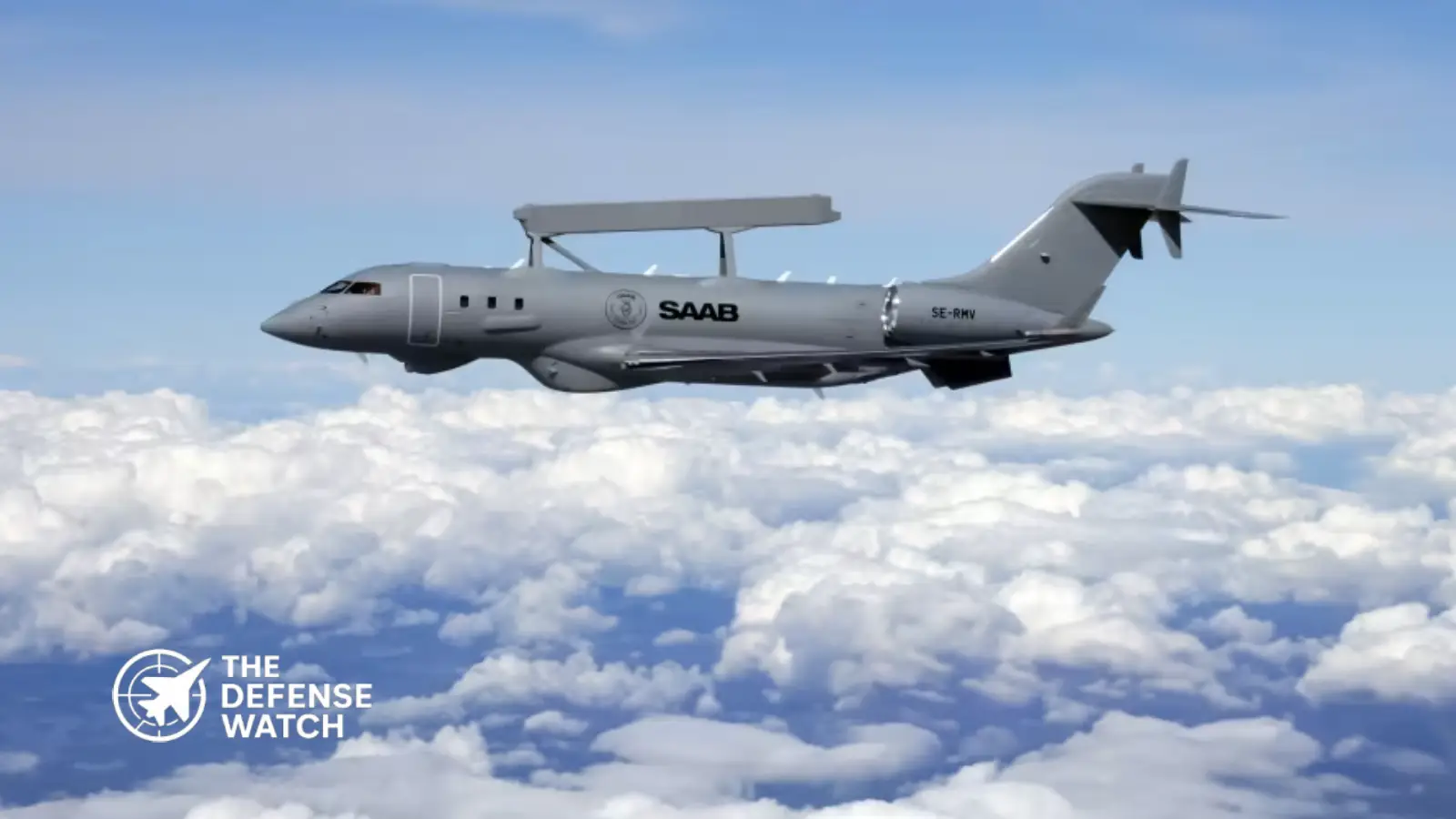
The Netherlands has signed a Letter of Intent with Sweden to acquire one Saab GlobalEye airborne early warning and control aircraft, marking a move toward a dedicated national capability for long-range airborne surveillance and command and control. The Dutch Ministry of Defence said the aircraft is expected to be delivered in 2031, although Saab has emphasized that the Letter of Intent is not yet a contract and that the company has not received an order from the Netherlands.
Takeaways
The Netherlands intends to acquire one Saab GlobalEye, giving the country a dedicated airborne early warning and control capability while integrating closely with Sweden and NATO.
The decision is part of a broader European and NATO effort to replace aging airborne surveillance infrastructure. The Netherlands is simultaneously participating with 10 other NATO members in a multinational program for up to 10 GlobalEye aircraft intended to succeed part of NATO’s Boeing E-3A AWACS fleet.
What The Dutch GlobalEye Acquisition Means
The Dutch government currently does not operate its own aircraft dedicated to the airborne early warning and control mission. It has instead relied in part on NATO’s AWACS capability, based at Geilenkirchen, Germany.
A national GlobalEye would give the Netherlands greater control over when and where an AEW&C aircraft is assigned to Dutch missions, exercises and international operations. That distinction matters because airborne early warning aircraft are not simply surveillance platforms. They can provide a common operating picture and distribute information to aircraft, ships and ground units.
The Dutch Ministry of Defence describes GlobalEye as capable of monitoring air, maritime and land activity while processing and distributing information in real time. The aircraft can also perform airborne command functions, allowing it to contribute to the coordination of military operations.
The Netherlands therefore gains more than another aircraft. It is acquiring a node that can connect multiple elements of a force through airborne sensing, communications and command and control.
GlobalEye’s Multi-Domain Sensor Architecture
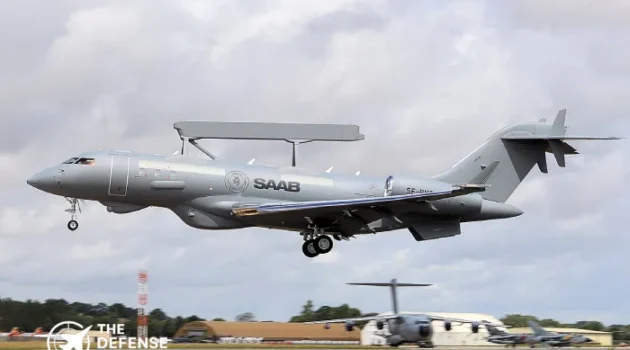
GlobalEye is based on Bombardier’s Global 6000/6500 business jet platform and integrates Saab’s Erieye Extended Range radar with additional sensors and a multi-domain command and control architecture. Saab says the system is designed to support surveillance across air, land and maritime environments.
Capability GlobalEye Primary mission Airborne Early Warning and Control Aircraft platform Bombardier Global 6000/6500 family Primary radar Saab Erieye Extended Range Surveillance domains Air, land and maritime Instrumented range 350 nautical miles, according to Saab Operational endurance Up to 12 hours, according to Saab Command and control Multi-domain C2 National Dutch delivery Expected 2031 Dutch access to Swedish aircraft From 2028 Saab states that GlobalEye has an instrumented range of 350 nautical miles and an operational endurance of up to 12 hours. The company also highlights the system’s ability to detect and track air and maritime targets and conduct ground surveillance.
The combination of sensors is important because modern surveillance requirements extend beyond conventional aircraft detection. NATO identifies drones, ballistic missiles, cruise missiles and other complex threats as part of the environment in which its next-generation airborne warning capability must operate.
Netherlands And Sweden Plan A Shared Operating Model
The Dutch acquisition is also notable for its operating arrangement with Sweden.
According to the Dutch Ministry of Defence, the future Dutch GlobalEye will be placed into a joint pool with three Swedish GlobalEye aircraft. Dutch and Swedish crews will therefore have access to the available aircraft, creating opportunities for common training, operational experience and support arrangements.
Dutch personnel are expected to gain access to Swedish aircraft beginning in 2028, several years before delivery of the Netherlands’ own aircraft. This provides a pathway for crews and support personnel to develop experience with the platform and associated operating procedures before the national aircraft arrives.
The arrangement also creates a practical form of defense cooperation. Rather than treating the Dutch aircraft as a completely independent national asset, the two countries are building a framework around shared access and future development.
GlobalEye Is Becoming A Key NATO AWACS Replacement
The Dutch decision cannot be separated from NATO’s broader airborne surveillance modernization.
At the NATO Summit Defence Industry Forum in Ankara on July 7, 2026, 11 Allies announced the joint procurement of up to 10 Saab GlobalEye aircraft. The participating countries are Belgium, Canada, Denmark, Germany, Latvia, Lithuania, Luxembourg, the Netherlands, Norway, Romania and Sweden.
The program is intended to replace part of NATO’s aging Boeing E-3 AWACS capability. NATO says its existing E-3 fleet provides air surveillance, command and control, battlespace management and communications, but the aircraft are approaching the end of their practical service life.
NATO has stated that the current E-3 fleet is being sustained until 2035, after which further life extensions are no longer considered practical.
The transition is strategically significant because airborne warning and control aircraft remain central to NATO’s ability to detect, track and coordinate responses to air threats across large geographic areas.
Why The GlobalEye Architecture Matters
The main advantage of an AEW&C aircraft is not simply the radar itself. Its value comes from putting sensors at altitude and combining their information with communications and command systems.
A high-altitude surveillance aircraft can observe a much larger area than many ground-based sensors, while also moving with the force it supports. That creates an airborne layer for detecting, tracking and distributing information about targets that may otherwise be difficult for individual fighters, ships or ground units to see.
GlobalEye’s multi-domain design is particularly relevant to European operations because air and maritime threats increasingly overlap. An aircraft capable of supporting surveillance across air, land and sea can contribute to a common operating picture instead of forcing separate platforms to maintain isolated views of the battlespace.
For the Netherlands, that has direct relevance to both national defense and NATO operations. The country’s geographic position gives it an important role in the security of the North Sea, European airspace and NATO’s northern and central operating areas.
The Netherlands Is Building A Layered Surveillance Network
The GlobalEye acquisition should also be viewed alongside other surveillance capabilities rather than as a standalone replacement for every existing sensor.
NATO’s future surveillance architecture is moving toward a system-of-systems approach that links airborne, maritime, ground and space-based sensors. NATO says its Alliance Federated Surveillance and Control effort is intended to integrate NATO-owned and national assets into a broader collaborative surveillance and control network.
That approach reduces dependence on any single sensor or platform.
A GlobalEye aircraft can provide a mobile airborne sensor and command node, while ground-based radars, fighter aircraft, naval sensors, uncrewed systems and space-based capabilities provide complementary information. The operational objective is therefore a more connected surveillance architecture rather than simply replacing one radar aircraft with another.
Procurement Status Remains At The Letter Of Intent Stage
The distinction between an announced intention and a signed procurement contract is important.
Saab explicitly states that the Netherlands and Sweden have not yet entered into a contract for the Dutch aircraft and that Saab has not received an order from the Netherlands. The company said it is prepared to support the next stages of the procurement process.
No contract value for the Dutch aircraft was disclosed in the announcement.
This means the September announcement establishes the intended capability and framework, but it should not yet be treated as a completed Saab sale. The subsequent procurement process will determine the final contractual terms, configuration, schedule and associated support arrangements.
What Comes Next
The immediate next step is the continuation of the Dutch procurement process toward a formal contract.
In parallel, the Netherlands and Sweden are expected to deepen cooperation around operation and future development of GlobalEye. The Dutch Ministry of Defence says the two countries will work together on further development of the system as part of the wider cooperation agreement.
The planned 2028 access to Swedish aircraft gives the Netherlands an earlier entry point into the GlobalEye operating community, while the expected 2031 delivery would establish the country’s dedicated national aircraft.
The larger significance extends beyond the Netherlands. With NATO and multiple European nations moving toward GlobalEye, the platform is becoming part of a broader transition from the aging E-3 AWACS architecture toward a more distributed, multi-domain surveillance network.
For the Netherlands, the acquisition would provide a national airborne early warning and control asset while allowing the country to remain integrated into a multinational European and NATO surveillance structure.
Bottom Line
The Netherlands’ GlobalEye decision represents a move from relying primarily on shared NATO airborne warning capacity toward maintaining a national AEW&C capability within a multinational operating framework.
The aircraft will give Dutch forces an airborne platform for long-range surveillance, information sharing and command and control across air, maritime and land environments. At the same time, the planned integration with Sweden and participation in NATO’s larger GlobalEye program could give the Netherlands a more connected role in Europe’s emerging airborne surveillance architecture.
The key qualification is that the procurement remains at the Letter of Intent stage. Saab has not yet received a Dutch order, and the formal contract remains the next major milestone.
Executive Summary:
The U.S. Air Force is preparing for a major technical refresh of the F-15EX Eagle II as it extends the fighter’s planned production from eight to 12 lots and more than doubles the planned fleet to 267 aircraft. A new Pentagon acquisition report warns that the longer production timeline could make the aircraft’s radar, mission computer, electronic warfare suite and engines obsolete before the final jets are delivered. The service plans to manage the problem through future Operational Flight Program releases and phased integration of upgraded subsystems between 2031 and 2035. At the same time, current F-15EX production faces shortages involving displays, GE F110 engines and ejection-system components, while Boeing’s 2025 St. Louis strike has created delivery delays.
F-15EX Technical Refresh Becomes a Program Priority
The F-15EX technical refresh is emerging as one of the central engineering challenges created by the U.S. Air Force’s decision to expand the Eagle II fleet.
The Air Force originally structured the F-15EX acquisition around eight production lots. The revised plan extends procurement to 12 lots, creating a substantially longer production window and increasing the possibility that key components will reach the end of their manufacturing life before the program is complete.
The Pentagon’s selected acquisition report identifies four major areas that could require replacement or redesign:
System Future Concern Planned Approach Radar Component obsolescence New-generation radar integration Mission computer Hardware and technology obsolescence Updated mission computing Electronic warfare suite Evolving threats and component availability New EW architecture Engines Manufacturing and supply risks Future engine replacement or redesign The report describes the required work as a major technical refresh and warns that replacing these systems would constitute a significant redesign effort.
Why the F-15EX Needs a Longer-Term Upgrade Path
The issue is not that the current F-15EX configuration is considered inadequate.
The Eagle II already incorporates an AN/APG-82 AESA radar, digital fly-by-wire flight controls, an advanced mission system and the Eagle Passive Active Warning Survivability System, or EPAWSS. Boeing describes the aircraft as an open-mission-system platform designed to accommodate future upgrades.
The problem is the length of the production program.
A fighter assembled in the early 2030s will encounter a different technology and supply environment from one built in the 2020s. Electronics suppliers may discontinue older processors, displays or components, while radar and electronic warfare technologies will continue to evolve.
This creates a familiar defense acquisition problem: keeping a production line open can eventually require redesigning the aircraft around components that remain available.
The Pentagon therefore intends to integrate major subsystem changes through future Operational Flight Program releases scheduled between 2031 and 2035. According to the acquisition report, this approach is intended to allow testing and fielding without creating a production-line gap.
Radar Upgrade Could Shape the Future F-15EX
Radar is one of the most important areas identified for future modernization.
The current F-15EX uses the Raytheon AN/APG-82 AESA radar, which provides electronically scanned air-to-air and air-to-ground sensing. The system is already part of the aircraft’s broader sensor and weapons architecture.
Raytheon has also publicly discussed the APG-82(V)X, an enhanced version incorporating gallium nitride technology intended to increase radar effectiveness without requiring additional aircraft power. The company says the system is designed to improve detection, tracking and multifunction operation, including electronic warfare functions.
The Pentagon report does not establish that the APG-82(V)X will become the selected future F-15EX radar.
That distinction matters. The acquisition report identifies the need for a future radar refresh, but it does not publicly identify a final replacement configuration. Any specific future radar selection should therefore be treated as an open requirement rather than an awarded upgrade.
Mission Computing Is Equally Important
The F-15EX’s mission computer is another potential obsolescence point.
Modern fighters increasingly depend on software-defined mission systems to combine radar, electronic warfare, communications, navigation and weapons information. For the F-15EX, maintaining the computing architecture is particularly important because the aircraft is intended to operate alongside fifth-generation fighters and future collaborative combat aircraft.
Boeing says the Eagle II uses an open mission systems architecture that supports future software and hardware upgrades. The company has also highlighted the aircraft’s networking capabilities and its ability to support manned-unmanned operations.
The Air Force’s approach of incorporating future hardware through Operational Flight Program releases is therefore significant.
Rather than treating the F-15EX as a fixed configuration, the service is effectively planning for the aircraft to evolve during production.
Electronic Warfare Will Remain a Core Requirement
The electronic warfare system presents another long-term modernization challenge.
The F-15EX was designed around the EPAWSS survivability suite, which provides integrated threat warning, electronic protection and electronic attack capabilities. Air Force testing has demonstrated the importance of integrating radar, electronic warfare and mission systems in realistic contested environments.
The Air Force has previously described EPAWSS as a system intended to improve the aircraft’s ability to operate against advanced air-defense and electronic threats.
For future production aircraft, however, the requirement is not simply to preserve today’s electronic warfare capability.
Threat emitters, radar modes and electronic attack techniques change over time. A production aircraft entering service in the early 2030s will need an electronic warfare architecture capable of receiving updates throughout its operational life.
That makes software architecture, processing capacity and access to replacement hardware as important as the individual electronic warfare sensors themselves.
Engine Supply Is Already a Production Risk
The engine issue is more immediate.
The F-15EX uses two General Electric F110 engines per aircraft, and the Pentagon’s FY2027 budget documentation specifically identifies engine procurement as part of the aircraft’s recurring production cost.
The latest acquisition reporting also identifies GE F110 engines among components affected by supply-chain pressure. Other shortages include large-area displays, low-profile heads-up displays and Collins Aerospace cartridges associated with the aircraft’s ejection system.
This illustrates the difference between an aircraft’s technical modernization requirement and its immediate production problem.
The long-term concern is whether current components remain viable through later production lots. The near-term concern is whether suppliers can provide enough components to maintain the required aircraft delivery rate.
Both problems must be managed simultaneously.
Boeing Production Delays Add Pressure
The F-15EX expansion comes while the existing production schedule is already under pressure.
A strike at Boeing’s St. Louis facility from August through November 2025 disrupted production. According to the Pentagon acquisition report, the disruption created delays that cannot be fully recovered.
Lot 3 provides a clear example.
Boeing’s contract required delivery of all 12 Lot 3 aircraft in early 2026. The Pentagon now expects only six of those aircraft to be delivered by the end of 2026.
Lot 4 has also slipped, with deliveries previously expected in 2026 now forecast to begin in 2028. The program needs Boeing to reach a production rate of approximately two F-15EX aircraft per month to meet its delivery requirements.
The first F-15EX intended for permanent deployment at Kadena Air Base in Japan departed Boeing’s St. Louis facility in August 2026, but the aircraft is now expected to arrive at Kadena during fiscal 2027.
F-15EX Expansion Has Strategic Implications
The Air Force’s decision to increase the planned F-15EX fleet from 129 to 267 aircraft represents a major change in the service’s future fighter mix.
The additional aircraft are intended not only to complete existing F-15EX units but also to begin replacing aging F-15E Strike Eagles. The Air Force has said it needs a mix of F-15EX and F-35A capabilities rather than relying exclusively on one fighter type.
The F-15EX provides a different force structure option from the F-35A.
Its large weapons capacity, long range and substantial aircraft size make it particularly useful as a capacity platform operating alongside lower-observable aircraft. Boeing also emphasizes its ability to carry large weapons loads and operate within networked formations.
The planned deployment of F-15EX aircraft to Kadena is particularly important for the Indo-Pacific. The Air Force has described the aircraft as providing additional capacity for long-range fires, sensors and electronic warfare while complementing fifth-generation fighters.
What the Technical Refresh Means for Future Lots
The key point is that the F-15EX modernization plan is not simply an equipment upgrade.
It is a production-management strategy designed to keep an existing fourth-generation-derived fighter relevant as its manufacturing program extends into the 2030s.
The approach can be summarized as follows:
- Continue producing the current configuration while maintaining the production line.
- Identify components approaching obsolescence or facing diminishing manufacturing sources.
- Develop replacement radar, computing, electronic warfare and propulsion solutions.
- Test those systems through future Operational Flight Program releases.
- Introduce the upgraded systems into later production aircraft without creating a prolonged production gap.
This approach reduces the risk of abruptly stopping production for a complete redesign. It also allows the Air Force to spread engineering and testing work over several years.
The challenge is cost and integration risk. The Pentagon has not yet completed a detailed cost assessment for the additional aircraft and associated redesign work. Officials have begun a rapid cost-estimation process to support future budget planning.
F-15EX Program at a Glance
Item Current Plan Aircraft F-15EX Eagle II Manufacturer Boeing Planned fleet 267 aircraft Previous planned fleet 129 aircraft Production strategy 12 lots Current radar AN/APG-82 AESA Electronic warfare EPAWSS Engine Two GE F110 engines Future modernization Radar, mission computer, EW suite and engines Planned upgrade window 2031 to 2035 Key overseas location Kadena Air Base, Japan Primary role Air superiority, counter-air and high-capacity weapons carriage Current program and budget information from the Air Force, Pentagon and Boeing supports the basic configuration and acquisition figures above.
The Bottom Line
The F-15EX expansion gives the U.S. Air Force a much larger capacity fighter fleet, but it also creates a long-term technology management problem.
Keeping production open through 12 lots means the aircraft cannot remain frozen in its current configuration. Radar electronics, mission computing, electronic warfare equipment and engines will have to evolve as components become obsolete and new technologies become available.
The Air Force’s planned 2031 to 2035 upgrade pathway provides a way to introduce those changes without shutting down the production line. The harder challenge will be controlling redesign costs, maintaining supplier capacity and avoiding additional delivery delays while the service simultaneously expands the fleet.
For U.S. airpower planning, the F-15EX is therefore becoming more than a replacement for aging Eagles. Its future value will depend on whether the Air Force can maintain the aircraft’s open, upgradeable architecture while sustaining production through a period of rapid change in radar, electronic warfare, computing and propulsion technology.
Australia Declares JASSM-ER and LRASM Operational on F/A-18F Super Hornets
Australia has declared initial operational capability for the AGM-158B Joint Air-to-Surface Standoff Missile Extended Range (JASSM-ER) and AGM-158C Long Range Anti-Ship Missile (LRASM) on Royal Australian Air Force F/A-18F Super Hornets, marking a significant expansion of the country’s air-launched long-range strike capability. The Australian Department of Defence announced the milestone on September 11, 2026.
Takeaways
Australia has reached an important long-range strike milestone by declaring initial operational capability for JASSM-ER and LRASM on its F/A-18F Super Hornet fleet.
The two weapons give the F/A-18F a broader standoff strike role. JASSM-ER is intended for long-range attacks against land targets, while LRASM is optimized for maritime strike against high-value surface targets.
Australia’s Defence Department says the JASSM-ER can engage targets at ranges of up to 900 kilometers from the launch aircraft, while LRASM is designed to operate at ranges exceeding 370 kilometers.
Two Missiles, Two Distinct Strike Missions
The AGM-158B and AGM-158C belong to the same broader U.S.-developed missile family, but they address different operational problems.
Missile Primary mission Australian launch platform Stated range AGM-158B JASSM-ER Long-range land attack F/A-18F Super Hornet Up to 900 km AGM-158C LRASM Long-range maritime strike F/A-18F Super Hornet More than 370 km JASSM-ER is a precision-guided cruise missile intended to attack fixed or relocatable land targets from outside the immediate engagement envelope of many air-defense systems.
LRASM uses a different mission focus. The weapon is designed to locate and engage high-value maritime targets and incorporates specialized sensing, communications and guidance technologies intended to support operations in contested environments.
The U.S. Department of Defense describes LRASM as derived from JASSM-ER but equipped with a multimode sensor suite, weapons datalink, enhanced anti-jam GPS capabilities and a 1,000-pound penetrator and blast-fragmentation warhead.
Operational Testing Established the Australian Capability
Australia’s declaration follows a series of operational tests designed to demonstrate that the missiles could be prepared, loaded, targeted and employed by Australian crews.
In February 2025, two LRASM missiles were successfully test-fired from RAAF F/A-18F Super Hornets at the Point Mugu Sea Range in California. Two JASSM-ER missiles were subsequently test-fired at the Woomera Test Range in South Australia in November 2025.
The Australian government had already announced in March 2025 that LRASM was ready for operational use following a successful live firing from an RAAF F/A-18F off the California coast. The government said the LRASM acquisition was valued at $895.5 million and would increase Australia’s maritime strike range beyond 370 kilometers.
Operational testing has also continued through multinational activities. During Exercise RIMPAC 2026, an Australian P-8A Poseidon successfully fired an LRASM and struck its target, providing another demonstration of the country’s expanding maritime strike architecture.
Why the F/A-18F Matters
The Australian F/A-18F Super Hornet remains an important component of the RAAF’s combat-aircraft fleet despite the introduction of the F-35A Lightning II.
Australia operates 24 F/A-18F Super Hornets, based at RAAF Base Amberley. The aircraft reached full operational capability in December 2012 and continues to perform air combat, interception and strike missions.
Adding JASSM-ER and LRASM changes the aircraft’s role in an important way. Instead of relying primarily on shorter-range weapons that require the aircraft to operate closer to the target area, the Super Hornet can now deliver long-range land or maritime effects while remaining farther from the defended target.
This is particularly relevant to Australia’s geography. The country operates across an exceptionally large area of responsibility, where distance is a central factor in air operations. A missile’s range can therefore influence not only the aircraft’s ability to reach a target, but also how commanders position aircraft, tankers, intelligence assets and supporting electronic-warfare platforms.
JASSM-ER Extends Australia’s Land-Strike Reach
The JASSM-ER provides Australia with a substantially longer-range air-launched land-attack option than the country’s earlier strike weapons.
According to the Australian Defence Department, the missile is designed to locate, identify and defeat targets at ranges of up to 900 kilometers from the launching aircraft.
The operational significance is not simply the distance represented by the missile’s published range. Standoff weapons can allow an aircraft to launch from outside portions of an adversary’s integrated air-defense engagement area, although actual survivability depends on factors including launch geometry, target location, intelligence quality, electronic warfare, missile routing and the composition of the opposing air-defense network.
That distinction is important. A longer-range missile does not make an aircraft invulnerable, but it gives commanders more options for separating the launch platform from the defended target.
LRASM Adds a Dedicated Maritime Strike Option
LRASM addresses a different operational problem.
The missile is intended to attack high-value maritime targets and is designed to operate in environments where conventional navigation and targeting methods may be challenged by electronic warfare and other defensive measures. The U.S. defense budget describes LRASM as incorporating a multimode sensor suite, weapons datalink and enhanced anti-jam GPS capabilities.
For Australia, that capability is particularly relevant because maritime strike is closely connected to the country’s wider defense strategy.
The RAAF identifies maritime strike from the air as one of the missions performed by its Air Combat Group. The group also operates EA-18G Growlers, which provide electronic attack capabilities alongside the F/A-18F fleet.
The combination matters because long-range strike effectiveness depends on more than the missile itself. Finding a target, maintaining an accurate target picture, generating a viable launch solution and managing the electromagnetic environment are all part of the broader kill chain.
Australia’s Long-Range Strike Architecture Is Expanding
The new IOC declaration forms part of a wider Australian effort to expand guided-weapons capacity.
The Australian Guided Weapons and Explosive Ordnance Plan identifies LRASM and JASSM-ER as major air-launched strike capabilities. The plan states that both AGM-158 variants would initially be integrated with F/A-18F Super Hornets, followed by integration with F-35A Lightning II aircraft.
That creates a pathway toward a more distributed strike force.
The F/A-18F provides a mature and operationally established launch platform, while the F-35A can eventually add its own combination of sensors, low-observable characteristics and networked targeting capabilities.
The future force therefore does not depend on one aircraft type carrying the entire long-range strike mission. Instead, Australia is building a larger family of platforms and weapons that can contribute different parts of the overall mission.
The U.S. Connection Is Central
Australia’s AGM-158 capability also demonstrates the depth of U.S.-Australian defense integration.
The two countries have long worked together on weapons development, acquisition, testing and interoperability. The Australian Defence Department said the introduction of JASSM-ER and LRASM required cooperation among the Royal Australian Air Force, Defence Delivery Group, Joint Capabilities Group, other government organizations and U.S. military and industry partners.
The relationship is continuing into the next generation of Australian air combat weapons.
In August 2026, Australia announced an investment of almost $736 million to acquire the U.S.-developed AIM-260 Joint Advanced Tactical Missile. The weapon is planned for initial integration with the F/A-18F, followed by the F-35A and EA-18G Growler.
Taken together, these acquisitions show that the Super Hornet is becoming an important launch platform for multiple classes of long-range weapons rather than simply serving as a transitional aircraft between older Australian fighters and the F-35A.
What the IOC Declaration Changes
The most important distinction is between a weapon being acquired or test-fired and a capability being formally declared operational.
Australia’s September 2026 announcement confirms that the RAAF has completed enough operational testing and integration work to declare initial operational capability for both missiles on the F/A-18F.
IOC does not mean that every planned capability or future integration milestone has been completed. It establishes an operational baseline from which Australia can continue expanding the system, building experience, increasing readiness and integrating the weapons with additional platforms.
For Australia’s air force, the immediate result is greater flexibility in planning long-range strike missions.
Strategic Significance for the Indo-Pacific
Australia’s long-range strike expansion is relevant to the broader Indo-Pacific security environment because geography places substantial emphasis on maritime access, airbase survivability and the ability to operate over long distances.
Long-range air-launched missiles allow combat aircraft to contribute to strike operations without necessarily penetrating as deeply into defended airspace. They can also complicate an opponent’s planning by increasing the number of potential launch locations and attack axes that must be considered.
That is particularly significant when combined with Australia’s broader investments in air combat, electronic warfare, maritime surveillance, guided weapons and allied interoperability.
The capability also fits Australia’s stated approach of strengthening deterrence through the ability to hold military forces and infrastructure at risk from greater distances. Australia’s Chief of Air Force said the new long-range maritime and land strike capabilities are intended to increase aircraft lethality and help avoid increasingly sophisticated air defenses.
What Comes Next
The September 2026 IOC declaration is therefore best understood as a milestone rather than the endpoint of Australia’s long-range strike program.
Australia is continuing to develop a broader network of aircraft, sensors, electronic-warfare systems and long-range weapons. The F/A-18F now provides an operational launch platform for both JASSM-ER and LRASM, while future integration with the F-35A is intended to extend the AGM-158 family’s role across Australia’s air combat fleet.
For the RAAF, the immediate significance is clear: the F/A-18F Super Hornet can now deliver both long-range land attack and maritime strike with operationally declared AGM-158 weapons.
That gives Australia greater standoff strike flexibility and adds depth to its broader air and maritime deterrence architecture.
GCAP Electronics Contract Advances Sixth Generation Fighter Development
GCAP Electronics Evolution has received an 18-month contract to further develop the integrated sensing, communications and non-kinetic effects architecture of the Global Combat Air Programme, marking another step in the development of the Japan, Italy and UK sixth generation fighter. The contract was awarded by Edgewing, the industrial joint venture responsible for designing and developing the aircraft.
Takeaways
A new 18-month contract moves GCAP’s integrated electronics architecture into another development phase as Japan, Italy and the UK work toward a 2035 next-generation fighter.
The agreement covers the Integrated Sensing And Non-Kinetic Effects and Integrated Communications Systems, known as ISANKE & ICS. The architecture is intended to combine information from multiple sensing and communications functions and give the aircraft an integrated view of the battlespace.
The development is important because GCAP is not being designed around an aircraft in which individual avionics systems operate largely as separate functions. The programme’s stated approach is to build sensing, communications and non-kinetic effects into an integrated architecture from the beginning.
Edgewing Awards Contract To GCAP Electronics Evolution
Edgewing is the joint venture established by BAE Systems of the UK, Leonardo of Italy and Japan Aircraft Industrial Enhancement Co. Ltd., or JAIEC, to lead industrial development of the GCAP fighter.
G2E operates as a strategic electronics partner within that wider structure. Its consortium consists of ELT Group and Leonardo in Italy, Mitsubishi Electric in Japan, and Leonardo UK.
The latest award follows the broader government and industry contracting framework established for GCAP. In July 2026, the GCAP International Government Organisation and Edgewing signed a major contract covering work through the end of 2027. Japan’s Ministry of Defense said that agreement was intended to strengthen the programme foundation and accelerate development.
The UK government separately announced a £4.6 billion contract in July for the next stage of GCAP development. That agreement was designed to advance the aircraft’s design and support the programme’s target of bringing the sixth generation fighter into service from 2035.
What ISANKE & ICS Means For GCAP
The central technical feature of the new contract is the integration of sensing, communications and non-kinetic effects.
In a conventional fighter architecture, radar, electronic warfare equipment, communications systems and other sensors can be developed as distinct subsystems. Integration still occurs, but the aircraft’s information architecture can remain constrained by interfaces between those systems.
GCAP is taking a different approach.
The programme describes ISANKE & ICS as an integrated architecture that will combine large volumes of information and provide pilots with the data required to operate in complex and contested airspace.
Area GCAP Approach Operational Relevance Sensing Integrated sensing architecture Builds a broader picture of the battlespace Communications Integrated communications systems Supports information exchange across the force Non-kinetic effects Included within the wider electronics architecture Supports operations involving the electromagnetic spectrum Data integration Fusion of information from multiple sources Reduces dependence on isolated sensor displays System architecture Designed into the aircraft from the outset Allows electronics requirements to influence the aircraft design The significance is less about a single new sensor and more about how the aircraft processes and distributes information.
For a future fighter operating against modern air defenses, the ability to collect information is only one part of the problem. The aircraft also needs to determine what information matters, share relevant information with other assets and operate effectively when communications or sensors are degraded or contested.
Why The Electronics Architecture Matters
Sixth generation combat aircraft are increasingly being designed as nodes within a larger combat network rather than as standalone platforms.
That means the aircraft’s value depends not only on aerodynamic performance, weapons or low observability, but also on its ability to function within a wider system of sensors, communications links, weapons and other aircraft.
The GCAP approach reflects this shift.
The programme’s electronics architecture is intended to make the aircraft a major airborne sensing and information platform. G2E has described its role as delivering information superiority for future congested and contested airspace.
This also creates a demanding engineering problem. Sensor fusion requires common data structures, high-speed processing, carefully managed interfaces and software that can combine information without creating additional workload for the pilot.
Communications introduce another challenge. A future combat aircraft must exchange information with other platforms while dealing with electromagnetic interference, hostile electronic warfare and the possibility that some communication paths may be unavailable.
The inclusion of non-kinetic effects in the same architecture makes the problem more complex because electromagnetic operations can involve both sensing and effects. The aircraft therefore needs an architecture capable of supporting multiple functions without creating unnecessary conflicts between them.
GCAP Moves Into A More Integrated Development Phase
The latest contract comes as GCAP moves deeper into joint industrial development.
Japan, Italy and the UK established GCAP to develop a common next-generation fighter, with the three governments targeting 2035 for the aircraft. The partners have repeatedly reaffirmed that schedule.
Japan’s defense planning also connects the aircraft to future unmanned capabilities. Its 2026 defense budget documents include funding for GCAP development and separate research into UAVs intended to collaborate with the next-generation fighter.
That broader direction matters for the electronics architecture.
If a future fighter operates alongside uncrewed aircraft, ships, ground-based sensors and other combat aircraft, the value of its sensing and communications systems extends beyond the aircraft itself. The fighter can become part of a distributed network in which information is collected by one platform and used by another.
GCAP’s integrated architecture is therefore closely connected to the programme’s wider concept of a future combat air system.
Implications For The U.S. And Allied Air Forces
For the United States and other allied air forces, GCAP is significant beyond the aircraft itself.
The programme brings together three major U.S. security partners and creates an independent multinational pathway toward a sixth generation combat aircraft. The UK, Japan and Italy are developing technologies across areas including aircraft design, propulsion, sensors, data systems and digital engineering.
The electronics work is particularly relevant because the same broad operational problem exists across future U.S. combat aircraft programmes: how to maintain an information advantage when adversaries can challenge aircraft sensors, communications and command networks.
The U.S. is pursuing its own sixth generation systems under the Next Generation Air Dominance effort, including the Air Force’s F-47 programme and the Navy’s F/A-XX effort. The parallel development of GCAP means allied nations are also building expertise in advanced sensing, networking and electromagnetic operations.
For Washington, this could create opportunities for closer interoperability with Japan, the UK and Italy, while also highlighting the importance of common data standards, secure communications and cross-domain information sharing.
However, GCAP remains a separate multinational programme, and the details of its classified electronics architecture, sensor performance and communications capabilities have not been publicly disclosed.
The Industrial Challenge Behind GCAP’s Electronics
The formation of G2E is also significant from an industrial perspective.
Rather than leaving the electronics work divided permanently among national companies, the consortium is attempting to operate the participating companies as a single strategic partner. G2E said the latest contract reflects progress in moving from national companies toward a unified international organization.
That model could help reduce duplication and improve integration, but it also requires the partners to align engineering processes, intellectual property arrangements, software development practices and national requirements.
GCAP’s multinational structure makes those issues central to programme execution.
The UK has also updated its export-control framework for GCAP. A new open general licence published in September 2026 reflects the programme’s move into its next phase and allows specified military and dual-use goods, software and technology to move among approved GCAP partner and supply-chain nations under defined conditions.
This is an important supporting element because advanced electronics development depends on the ability to exchange technology, components, software and engineering information across national industrial bases.
What Comes Next
The new G2E contract covers 18 months, making it part of the near-term development cycle rather than a final production agreement.
The immediate focus is further development of ISANKE & ICS and continued integration with the wider GCAP aircraft architecture.
The larger objective remains the same: deliver a sixth generation combat aircraft for Japan, Italy and the UK around 2035.
The key measure of progress will therefore not simply be the maturity of individual sensors or communications components. It will be whether the programme can combine those technologies into a reliable architecture that provides useful information to the pilot, supports other platforms and remains effective in a heavily contested electromagnetic environment.
GCAP’s latest electronics contract represents progress toward that goal, while the difficult work of integrating those capabilities into a production-ready combat aircraft remains ahead.