Executive Summary:
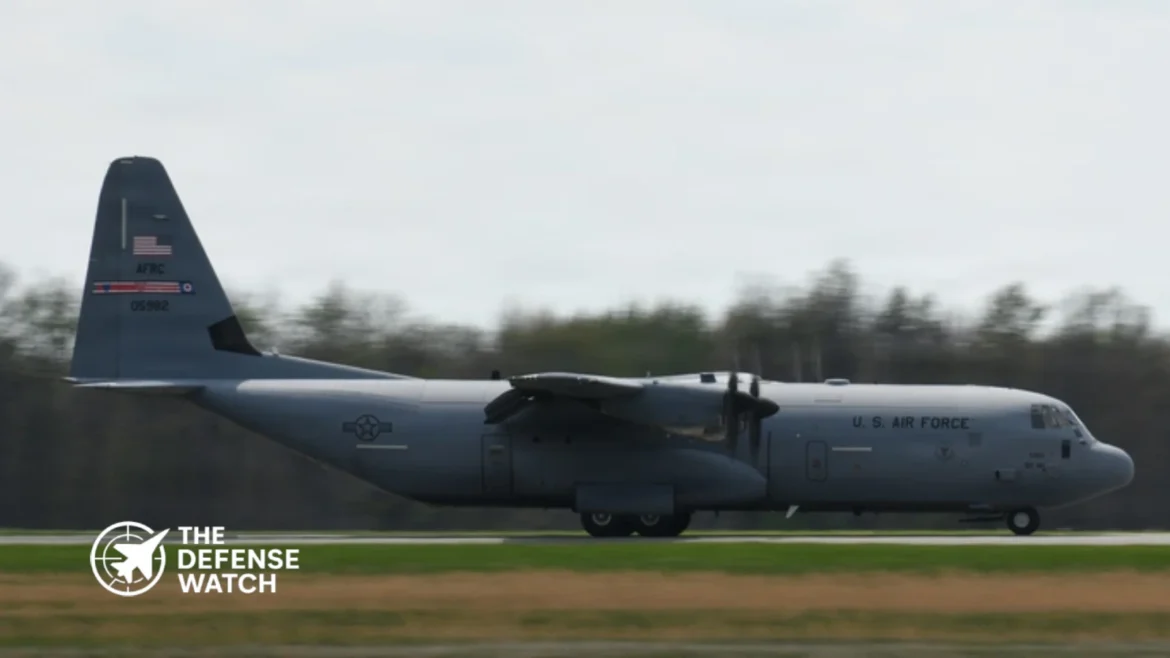
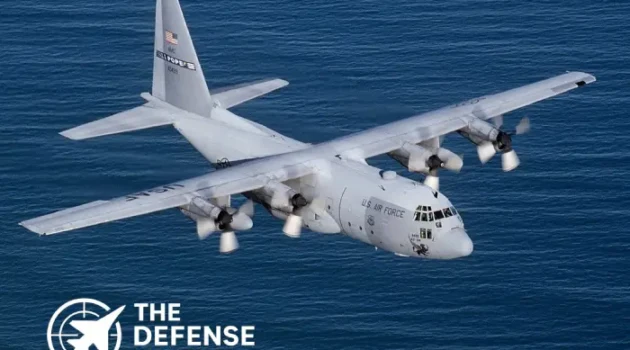
Canada is preparing to transfer 10 surplus CC-130H Hercules aircraft to Coulson Aviation, which plans to use the aircraft to expand its aerial firefighting fleet. The transaction follows Canada’s replacement of the legacy CC-130H search and rescue fleet with newer CC 295 aircraft and is subject to final arrangements and required regulatory approvals.
Coulson Aviation Set To Expand C-130 Hercules Firefighting Fleet
C-130 Hercules firefighting operations are set for a significant expansion after Canada agreed to sell 10 surplus CC-130H aircraft to Coulson Aviation, according to reporting by FlightGlobal. The aircraft were formerly operated by the Royal Canadian Air Force and are being made available after Canada transitioned its fixed wing search and rescue capability to the Airbus CC-295 Kingfisher.
The transaction is particularly significant because Coulson already operates a dedicated fleet of Hercules aircraft configured for aerial firefighting. The company uses its C-130 fleet with the proprietary RADS firefighting system, giving the former military transports a new role as large airtankers.
Why Canada Is Releasing The Aircraft
The Canadian aircraft became surplus as part of the country’s long running Fixed Wing Search and Rescue Aircraft Replacement program.
Canada acquired 16 CC-295 aircraft to replace the search and rescue functions previously performed by CC-115 Buffalo and CC-130H Hercules aircraft. The program was designed to provide sensor equipped aircraft with long term support for search and rescue missions throughout Canada’s large area of responsibility.
The RCAF continues to operate other Hercules variants. Its current fleet includes the CC-130J Hercules for transport missions, while the CC-130H has historically supported search and rescue and related duties.
The disposal of the older aircraft therefore represents a capability transition rather than a reduction in Canada’s primary tactical airlift fleet.
Canada is also continuing to invest heavily in its CC-130J fleet. In May 2026, the government announced two contract amendments with Lockheed Martin worth $462.5 million and an estimated $684.3 million respectively for continued support and upgrades to Canada’s 17 CC-130J aircraft.
Canadian C-130H Background
The CC-130H is a four engine turboprop transport aircraft derived from the Lockheed C-130 Hercules family.
The RCAF lists the aircraft at a maximum gross weight of 87,320 kilograms, a maximum speed of 556 kilometers per hour and a range of more than 7,200 kilometers without additional tanks. Its ability to operate from relatively short and unpaved runways was particularly valuable for Canadian search and rescue operations across remote regions.
Capability Canadian CC-130H Maximum gross weight 87,320 kg Maximum speed 556 km/h Range without tanks 7,222 km Primary former role Search and rescue Secondary capability Transport Powerplant Four turboprop engines These characteristics also explain why the platform is attractive for aerial firefighting.
Coulson Has Already Built A C-130 Firefighting Model
Coulson Aviation is not entering the C-130 airtanker market for the first time. The company has spent years converting military surplus Hercules aircraft into dedicated firefighting platforms.
Its current fleet page identifies the C-130 Hercules as one of its principal aerial firefighting aircraft. Coulson says its Hercules tankers are equipped with a 4,000 gallon RADS XX L system designed to deliver large quantities of retardant during wildfire suppression missions.
The company’s experience also includes former U.S. Navy EC-130Q aircraft and C-130H aircraft obtained from foreign military operators.
In April 2025, Coulson announced that it had acquired four former Royal New Zealand Air Force C-130H aircraft. The acquisition increased its planned C-130H firefighting fleet to 10 aircraft at that time. Coulson said those aircraft would undergo conversion and modernization before entering aerial firefighting service.
The Canadian acquisition therefore builds on an established conversion program rather than requiring the company to create a new firefighting aircraft concept.
RADS Technology Is Central To The Conversion
The main technical change is the conversion of a military transport into an aerial tanker.
Coulson’s RADS system is designed to carry and release water or fire retardant through a controlled delivery system. The company identifies its RADS XX L system as a 4,000 gallon firefighting system for its C-130 aircraft.
The underlying C-130 airframe is well suited to this mission because it was originally designed to carry substantial payloads and operate from austere airfields.
That combination matters during wildfire response. Large tankers must frequently operate from bases that are closer to fire zones but have less infrastructure than major airports.
Coulson’s use of a common firefighting system across multiple C-130 aircraft also has potential logistical advantages. A more standardized fleet can simplify crew training, maintenance procedures, spare parts planning and deployment between regions.
The C-130 Offers A Different Capability From Scooper Aircraft
The Hercules occupies a different part of the aerial firefighting market from amphibious aircraft such as the Canadair CL 415.
A water bomber can scoop water from suitable lakes and other bodies of water, potentially reducing the time required to return to a base. A C-130 airtanker instead normally loads retardant or water at an established air tanker base and delivers a large payload directly over the fire.
The advantage is flexibility.
The C-130 can operate from conventional airfields and austere locations, while its large internal payload allows it to establish long retardant lines during a single pass. Coulson specifically highlights the aircraft’s range, short field performance and ability to deliver large quantities of retardant as reasons for its continued use in firefighting.
Why The Acquisition Matters For North American Fire Response
The planned transfer comes as governments increasingly rely on a mix of military, government and commercial aircraft to respond to large wildfires.
In the United States, C-130 aircraft operated by Air National Guard units can also be equipped with the Modular Airborne Fire Fighting System. Lockheed Martin states that MAFFS II can deliver approximately 3,000 gallons of retardant using a roll on, roll off configuration.
Coulson’s dedicated tanker configuration takes a different approach, with aircraft permanently or semi permanently configured around aerial firefighting operations.
This distinction is important for fleet availability. Military aircraft equipped with modular firefighting systems retain their primary military missions and can be tasked for wildfire response when required. A commercial tanker fleet, by contrast, can be structured primarily around firefighting contracts and seasonal deployments.
The Canadian sale therefore has implications beyond aircraft disposal. It effectively transfers a proven military airframe into a specialized emergency response fleet.
Regulatory Approval Remains An Important Step
The aircraft cannot simply move directly from military service into commercial firefighting operations.
Former military aircraft require appropriate inspections, maintenance, configuration changes and civil certification before they can operate under commercial aviation rules.
The reported transaction remains conditional on final contractual arrangements and Transport Canada approvals. That means the number of aircraft ultimately entering commercial service, their timelines and their eventual registration status will depend on completion of those processes.
This is particularly important for older C-130H aircraft. The airframes have substantial structural histories, and conversion to firefighting service introduces a different operating profile involving repeated low altitude operations and heavy retardant loads.
Coulson already has experience addressing those requirements through its existing Hercules tanker program. The company says its C-130 fleet undergoes modernization and conversion work before entering firefighting service.
A New Life For Surplus Military Aircraft
The transfer also illustrates how military aircraft can retain operational value after leaving national service.
Canada’s C-130H fleet played an important role in search and rescue, transport and disaster response for decades. The RCAF’s own historical material describes the Hercules as a long serving platform used across Canada and internationally for missions ranging from transportation to humanitarian assistance.
Instead of being dismantled or stored indefinitely, the aircraft can now potentially support another form of emergency response.
For Coulson, the acquisition provides additional airframes that are closely related to aircraft the company already operates. For Canada, it offers a route to monetize surplus defense equipment while keeping the aircraft within the broader Canadian aerospace ecosystem.
The deal also reflects the continuing value of the C-130 family more than seven decades after the prototype’s first flight.
The Larger Defense And Aerospace Significance
The transaction is not a military procurement program, but it is relevant to defense aviation because it demonstrates the growing overlap between military airlift infrastructure and civilian emergency response.
Military transport aircraft are designed around demanding requirements for payload, range, ruggedness and operations from less developed airfields. Those same attributes can make them useful for disaster response, humanitarian missions and aerial firefighting after their military careers end.
The Canadian case also shows the importance of fleet replacement planning. The RCAF can retire an older C-130H search and rescue capability because its replacement architecture has been established, while its newer CC-130J fleet continues to provide military transport capacity.
For Coulson, the next challenge is converting the aircraft into safe, certified and economically sustainable airtankers.
If completed, the acquisition would give the company another substantial pool of Hercules airframes for a firefighting market in which large airtanker availability remains an important operational consideration.
The immediate focus will therefore be on the aircraft themselves, their inspection and conversion, and the regulatory approvals required before they can return to service in their new role.
Key Facts
Item Details Buyer Coulson Aviation Seller Government of Canada Aircraft 10 surplus CC-130H Hercules Former operator Royal Canadian Air Force Planned role Aerial firefighting Primary conversion Large airtanker configuration Existing Coulson system RADS XX L Reported RADS XX L capacity Up to 4,000 U.S. gallons Regulatory requirement Transport Canada approvals Canadian replacement CC 295 Kingfisher Related Canadian fleet CC-130J Hercules The planned sale represents a significant transition for 10 former Canadian military aircraft. Rather than ending their service lives after leaving the RCAF, the Hercules airframes are positioned to become specialized firefighting assets operated by a company with extensive experience converting and deploying C-130s as large airtankers.


Executive Summary:
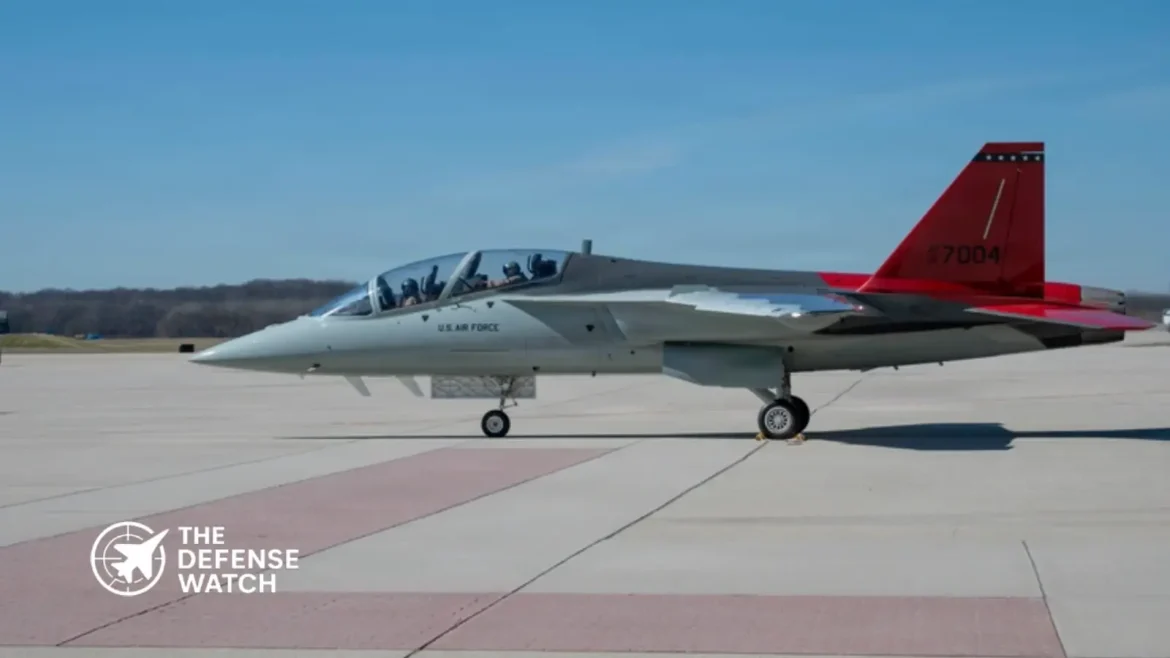
The UK Ministry of Defence has opened the procurement process for a new Royal Air Force advanced jet trainer, beginning a technical dialogue with potential suppliers on Aug. 7, 2026. The program is intended to replace the RAF’s Hawk fleet while preparing pilots for future fourth, fifth and sixth-generation combat aircraft, with the Boeing Saab T-7A Red Hawk among the aircraft positioned for the competition.
UK Opens RAF Advanced Jet Trainer Procurement
The RAF advanced jet trainer replacement program has formally entered the procurement process as the UK prepares to replace its aging Hawk fleet and update the training pipeline for future combat aircraft.
According to Defence Industry Europe, the Ministry of Defence began a technical dialogue with prospective suppliers on Aug. 7, with interested companies required to submit documentation by Sept. 11. The process could lead to a relatively rapid procurement decision as the RAF approaches the planned retirement of its Hawk aircraft.
The move follows the UK’s 2025 Strategic Defence Review, which specifically called for the Hawk T1 and Hawk T2 to be replaced with a cost-effective fast jet trainer and said the existing fast jet training arrangements needed urgent revision.
The requirement is broader than simply replacing an aircraft. The future system will have to support the training of pilots destined for increasingly sophisticated combat aircraft, while integrating modern synthetic and digital training technologies.
Hawk Replacement Becomes a Priority
The RAF currently uses the Hawk T2 as its advanced fast jet trainer. The aircraft provides two-seat training and uses advanced avionics and synthetic radar to replicate aspects of frontline combat aircraft such as the Eurofighter Typhoon.
BAE Systems describes the Hawk as a training platform capable of simulating radar, weapons and defensive systems associated with frontline fighters, helping pilots transition from training aircraft to operational fast jets.
The UK has continued to invest in Hawk support. In 2022, BAE Systems received an 11-year, £590 million contract covering support for the RAF Hawk fleet, including availability support for Hawk T2 aircraft and maintenance for the Red Arrows’ Hawk T1s.
But continued support does not eliminate the longer-term requirement for a replacement.
The older Hawk T1 aircraft used by the Red Arrows are scheduled to leave service by the end of 2030, according to the latest reporting on the procurement program. That creates a second requirement alongside conventional pilot training: the RAF must identify a future platform capable of supporting its aerobatic display team.
T-7A Red Hawk Emerges as a Major Contender
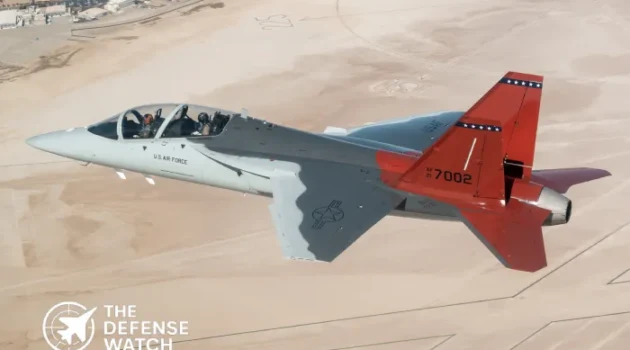
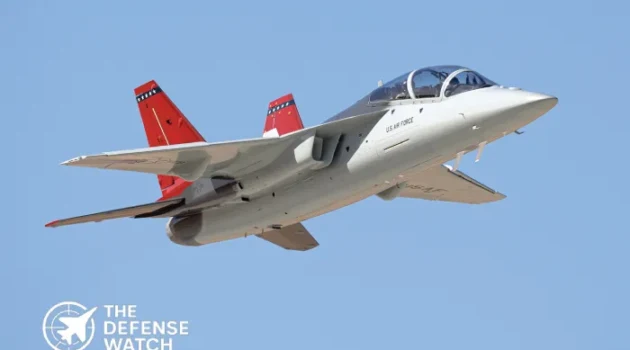
The Boeing Saab T-7A Red Hawk is one of the most significant potential candidates because it already exists as a modern advanced jet training system and has been selected by the U.S. Air Force.
In May 2026, the T-7A received U.S. Air Force Milestone C approval, clearing the program to enter low-rate initial production. Boeing’s current U.S. program calls for 351 aircraft, supported by 46 training systems and associated infrastructure under the original $9.2 billion contract awarded in 2018.
The first T-7A was formally inducted into U.S. Air Force service at Joint Base San Antonio Randolph in January 2026. The aircraft is intended to replace the T-38 Talon and train future fighter and bomber crews.
T-7A Red Hawk at a Glance
Area T-7A Red Hawk Primary role Advanced pilot training Manufacturer Boeing, with Saab as development partner U.S. customer U.S. Air Force U.S. planned fleet 351 aircraft Configuration Single engine, two-seat Cockpit Stadium seating Training architecture Live, virtual and constructive Controls Digital fly-by-wire Production status Low-rate initial production authorized UK industrial proposal Boeing, Saab and BAE Systems The T-7A’s importance to the British competition also comes from its digital architecture. Boeing describes the aircraft as a digitally designed, built and tested training system with an open architecture and integrated live, virtual and constructive training capabilities.
That approach could allow the UK to connect aircraft flying with ground-based simulation and other synthetic training environments rather than treating the trainer as a standalone aircraft.
Boeing, Saab and BAE Systems Build UK Industrial Offer
Boeing and Saab are not approaching the UK requirement alone.
BAE Systems, Boeing and Saab announced in 2025 that they would collaborate on a UK fast jet trainer proposal centered on the T-7 platform. The companies said the proposed arrangement would integrate live and synthetic training and explore expansion of the UK supply chain. BAE Systems would lead the UK activity, including a proposed UK-based final assembly capability.
The partnership is significant because UK industrial participation is an explicit consideration in the new procurement process.
The latest reporting indicates that Leonardo is another potential participant, while Korea Aerospace Industries is seeking British partners for a possible proposal. Turkish Aerospace Industries could also compete with the Hürjet advanced trainer.
This means the RAF competition is likely to assess more than aircraft performance.
The Ministry of Defence will have to consider training-system integration, delivery schedules, through-life support, industrial participation, infrastructure requirements and the ability of each candidate to fit into Britain’s broader fast jet training architecture.
Training Requirements Are Changing
The RAF’s requirement is emerging at a time when pilot training is becoming increasingly dependent on synthetic environments.
The service introduced mixed-reality technology at RAF Valley in 2026 to upgrade 11 training devices used by Hawk T2 and Texan aircraft students. The system allows trainees to practice activities such as formation flying and low-level navigation while interacting with physical cockpit equipment and virtual environments. The RAF said the program could save up to £4 million annually in training costs.
That development provides important context for the new trainer competition.
The next RAF trainer is unlikely to be evaluated only on traditional measures such as speed, handling characteristics and cockpit layout. Its ability to work within a connected training environment could be equally important.
For pilots destined for aircraft such as the F-35B, Eurofighter Typhoon and eventually next-generation combat aircraft, the training system needs to introduce increasingly complex sensor, information-management and tactical concepts before students reach operational conversion units.
The UK government’s earlier Military Flight Training System followed a similar philosophy, using multiple aircraft types and synthetic training to progressively prepare pilots for frontline aircraft.
Why the Competition Matters to U.S. Defense Strategy
The British trainer competition also has implications beyond the RAF.
The T-7A is already a U.S. Air Force program, giving Washington and London an opportunity to potentially align parts of their pilot-training architecture around a common aircraft and broader training ecosystem.
That could offer advantages in areas such as interoperability, instructor familiarity, logistics, training development and future upgrades, although any UK acquisition would still require a separate assessment of British requirements and industrial arrangements.
The T-7A’s development is also relevant because the U.S. Air Force has now moved the aircraft into low-rate initial production. That reduces one major procurement risk compared with an aircraft that remains entirely at the design or prototype stage.
At the same time, the UK would need to evaluate the aircraft independently. A platform designed primarily around U.S. Air Force requirements does not automatically satisfy RAF operational, training, industrial or support requirements.
Delivery Timing Could Shape the Competition
Schedule is one of the most important factors in the British requirement.
The RAF must maintain a credible advanced fast jet training pipeline while transitioning away from its existing Hawk fleet. The Red Arrows’ Hawk T1 retirement timetable adds another deadline to the overall requirement.
The UK’s Strategic Defence Review has already identified replacement of the Hawk T1 and T2 as a priority. The government’s Defence Investment Plan also allocates £860 million for Hawk T1 and T2 capability during fiscal years 2026-27 through 2029-30, underscoring the continuing cost of sustaining the existing fleet during the transition.
For the competing manufacturers, this makes delivery credibility a central issue.
An aircraft with strong performance characteristics but a long introduction schedule could be less attractive than a platform with an established production line and mature training infrastructure.
What Comes Next
The immediate milestone is the Sept. 11 deadline for companies interested in participating in the technical dialogue. The UK will then have to refine its requirement and determine which potential suppliers advance toward the formal competition.
The T-7A enters that process with several advantages, including U.S. Air Force selection, an established Boeing Saab industrial partnership and recent authorization for low-rate production.
Other candidates could compete on different combinations of aircraft capability, cost, industrial participation and delivery schedules.
For the RAF, however, the central objective is clear: replace the Hawk without creating a gap in advanced fast jet training and establish a training system capable of preparing pilots for a combat fleet that is moving toward increasingly connected and digitally enabled operations.
The decision will therefore shape not only which aircraft RAF instructors and students fly, but also how Britain prepares combat pilots for the next generation of air warfare.
Executive Summary:
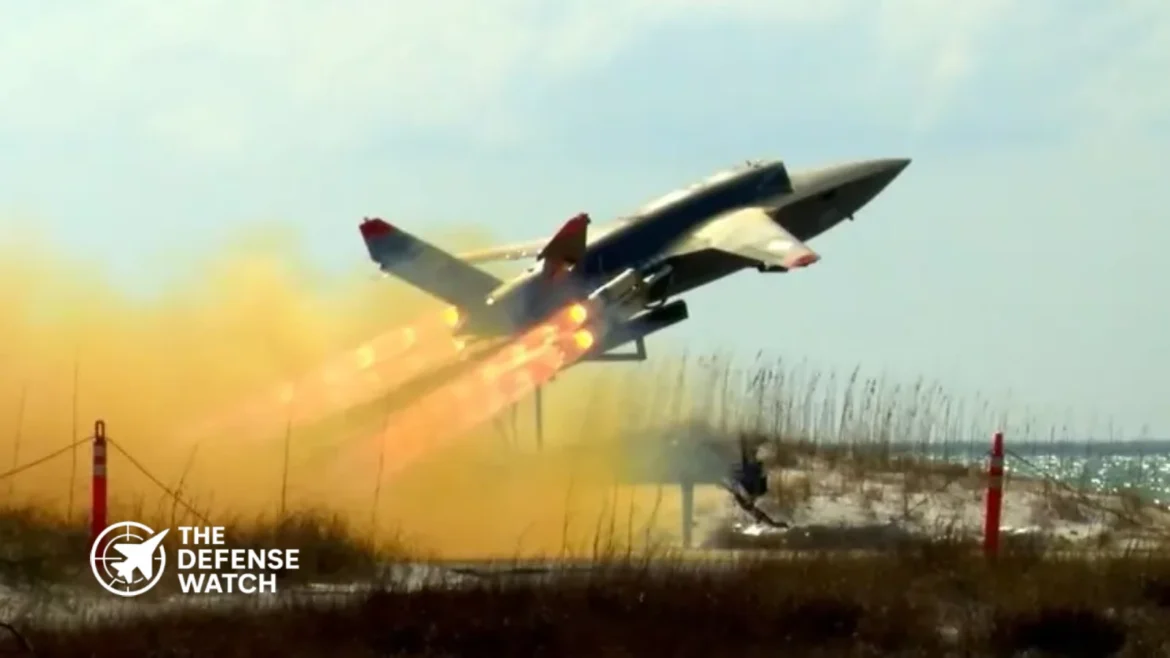
Kratos Defense & Security Solutions plans to increase production of its XQ-58A Valkyrie unmanned combat aircraft to approximately 18 aircraft in 2027. The planned expansion supports deliveries for the U.S. Marine Corps, Taiwan, and additional overseas customers while reflecting growing demand for affordable collaborative combat aircraft capable of operating alongside manned fighters.
Kratos Expands XQ-58A Valkyrie Production As Demand Accelerates
Kratos Defense & Security Solutions is preparing a significant increase in XQ-58A Valkyrie production after company executives confirmed plans to manufacture approximately 18 aircraft during 2027. The production target reflects expanding orders from the U.S. Marine Corps, Taiwan, and other international customers while highlighting the growing importance of affordable autonomous aircraft in modern military operations.
The production outlook was outlined by Kratos leadership during its latest financial update and follows continued investment in manufacturing capacity for the Valkyrie family. The company has positioned the aircraft as a low-cost, runway-independent platform capable of supporting a wide range of intelligence, strike, and collaborative combat missions.
Production Capacity Continues To Expand
Kratos has steadily transitioned the XQ-58A from an experimental demonstrator into a production-ready aircraft intended for operational use.
According to company officials, approximately 18 Valkyrie aircraft are expected to be produced during 2027, representing another step in scaling manufacturing after several years of development, testing, and customer evaluations.
The planned production increase reflects confidence that demand for autonomous combat aircraft will continue to grow among U.S. and allied militaries seeking lower-cost force multipliers.
Unlike traditional fighter aircraft programs that require years to expand production capacity, the Valkyrie was designed from the outset to emphasize affordability, rapid manufacturing, and simplified logistics.
U.S. Marine Corps Continues Valkyrie Development
One of the primary recipients of future Valkyrie production is the U.S. Marine Corps, which has been evaluating the aircraft for expeditionary operations.
The Marine Corps is exploring autonomous aircraft capable of supporting distributed operations across the Indo-Pacific, where long distances and contested environments create significant operational challenges.
The XQ-58A’s ability to launch without conventional runways aligns closely with the Marine Corps’ Expeditionary Advanced Base Operations (EABO) concept, allowing unmanned aircraft to operate from dispersed locations while reducing dependence on large air bases.
Potential mission areas include:
- Intelligence, surveillance, and reconnaissance (ISR)
- Electronic warfare
- Communications relay
- Precision strike
- Decoy operations
- Loyal wingman support for manned aircraft
Taiwan Becomes A Key International Customer
Taiwan represents another important customer driving production growth.
The island has increasingly invested in asymmetric defense capabilities designed to strengthen deterrence while complicating potential military operations by adversaries.
Affordable autonomous aircraft offer several operational advantages, including:
- Rapid deployment
- Lower procurement costs
- Reduced pilot risk
- High operational flexibility
- Distributed force structure
For Taiwan, collaborative combat aircraft could complement existing fighter fleets while providing additional reconnaissance and strike capacity during high-intensity operations.
International Demand Continues To Increase
Kratos also indicated that additional overseas customers are contributing to future production requirements.
While not all international operators have been publicly identified, interest in autonomous combat aircraft has expanded rapidly as governments seek cost-effective alternatives to purchasing larger fleets of traditional fighters.
Many allied nations are now pursuing collaborative combat aircraft programs to complement fifth-generation fighters rather than replace them.
This trend mirrors broader modernization efforts across NATO and Indo-Pacific partners focused on combining crewed aircraft with increasingly capable autonomous systems.
XQ-58A Valkyrie At A Glance
Specification Details Manufacturer Kratos Defense & Security Solutions Aircraft Type Unmanned Combat Air Vehicle (UCAV) Primary Role Collaborative Combat Aircraft (CCA) Launch Method Rocket-assisted launch Recovery Parachute landing system Designed For ISR, strike, electronic warfare, loyal wingman missions Primary Customers U.S. military and international partners Why The Valkyrie Matters To U.S. Defense Strategy
The expansion of Valkyrie production reflects a broader shift occurring across U.S. military aviation.
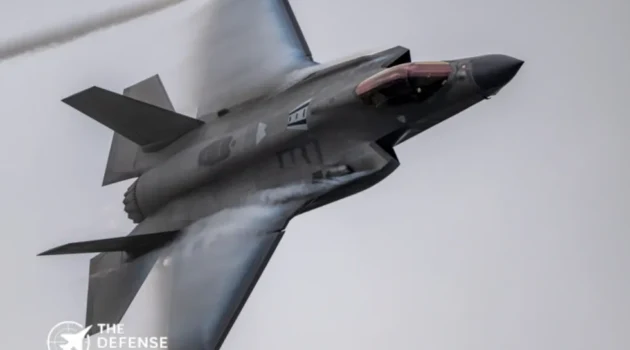
Rather than relying exclusively on increasingly expensive crewed fighters, the Department of Defense is investing heavily in autonomous aircraft capable of working alongside platforms such as the F-35 Lightning II, F-22 Raptor, and future Next Generation Air Dominance (NGAD) systems.
Collaborative combat aircraft are expected to assume higher-risk missions that would otherwise expose pilots to advanced air defenses.
Potential operational roles include:
- Forward reconnaissance
- Electronic attack
- Suppression of enemy air defenses
- Decoy operations
- Additional missile carriage
- Communications networking
By distributing missions across multiple autonomous aircraft, commanders gain greater operational flexibility while reducing the overall cost of generating combat mass.
Manufacturing Scale Becomes A Strategic Advantage
One of the most significant aspects of Kratos’ announcement is not simply the aircraft itself but the ability to manufacture it at increasing scale.
Traditional fighter aircraft often require complex production lines, specialized suppliers, and lengthy delivery schedules.
The Valkyrie was intentionally designed with affordability and manufacturability as core requirements. That approach allows production capacity to expand more rapidly than conventional combat aircraft while lowering acquisition costs for customers.
As defense planners increasingly emphasize inventory depth alongside technological superiority, manufacturing capacity itself has become a strategic capability.
Growing Importance In The Indo-Pacific
The Indo-Pacific remains the primary region driving investment in collaborative combat aircraft.
Military planners expect future operations across vast maritime distances where autonomous aircraft can extend sensor coverage, distribute weapons, and increase survivability for crewed aircraft.
The U.S. Marine Corps’ interest, combined with Taiwan’s procurement efforts, illustrates how autonomous systems are becoming integrated into regional deterrence strategies rather than serving solely as experimental technologies.
As additional allied nations pursue similar capabilities, production scalability is likely to become an increasingly important competitive advantage for manufacturers capable of delivering operational aircraft quickly.
Outlook
Kratos’ plan to manufacture approximately 18 XQ-58A Valkyrie aircraft during 2027 marks another milestone in the transition of autonomous combat aircraft from prototype programs to operational fleets.
While production numbers remain modest compared with traditional aircraft programs, the expansion demonstrates growing confidence among U.S. and allied defense organizations that collaborative combat aircraft will play a central role in future air operations.
For the U.S. Marine Corps, Taiwan, and other international customers, the Valkyrie offers a combination of affordability, operational flexibility, and scalable production that aligns with evolving military requirements for contested environments.

Executive Summary:
U.S. Marines have completed the Marine Corps’ first live fire first person view (FPV) attack drone training series in South Korea using the Neros Archer loitering munition. The milestone reflects the service’s accelerating effort to integrate low cost precision strike systems into forward deployed forces across the Indo-Pacific while strengthening interoperability with South Korean and U.S. joint forces.
U.S. Marines Expand FPV Attack Drone Capability In South Korea
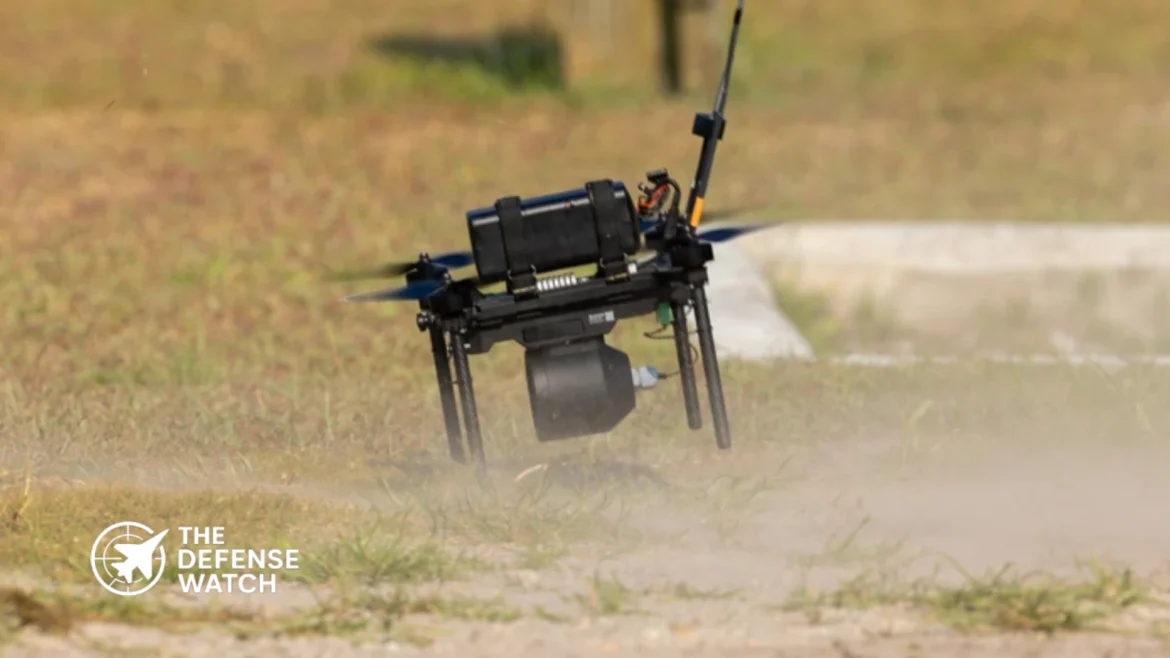
The U.S. Marines FPV attack drone program reached a significant milestone after the Marine Corps successfully completed its first live fire series of first person view attack drone missions on the Korean Peninsula. Conducted by the 4th Marine Regiment, 3rd Marine Division, the training demonstrated how rapidly deployable FPV drones are becoming part of the Marine Corps’ evolving operational toolkit for distributed warfare.
The historic exercise included two live fire events. The first was conducted on July 30 by the 3rd Light Armored Reconnaissance Battalion, followed by a second iteration carried out by the 3rd Battalion, 7th Marine Regiment. Both units are forward deployed to the Indo-Pacific under the Marine Corps’ Unit Deployment Program.
The training centered on the Neros Archer, an FPV attack drone designed to deliver precision effects against armored vehicles and personnel targets at ranges approaching 20 kilometers.
Neros Archer Brings Precision Fires To Small Units
Unlike traditional indirect fire systems that often require support from higher headquarters, the Neros Archer provides squad and platoon level Marines with an organic precision strike capability.
According to the Marine Corps, the drone enables operators to engage targets from relatively protected positions while extending the reach of infantry formations well beyond conventional small arms.
Marine Corps 1st Lt. Evan Brace, company executive officer with the 3rd Light Armored Reconnaissance Battalion, said the live fire events allowed Marines to evaluate the system under realistic conditions.
He noted that operating the drones in a deployed environment provides valuable lessons for refining tactics, techniques, and procedures before the capability is employed during operational missions.
The training also demonstrated how FPV drones can complement existing weapons rather than replace them, giving commanders additional options for engaging armored vehicles, fortified positions, and other battlefield targets.
Modernization Reflects Lessons From Contemporary Conflicts
The introduction of FPV attack drones aligns with broader Marine Corps Force Design initiatives that emphasize distributed operations, smaller formations, and long range precision fires.
Low cost FPV drones have gained increasing military attention following their widespread use in recent conflicts, particularly in Ukraine, where they have proven effective against armored vehicles, defensive positions, and logistics assets at relatively low cost.
For the Marine Corps, integrating systems such as the Neros Archer reflects an effort to provide frontline units with affordable precision capabilities that can be fielded quickly without relying on larger aviation or artillery assets.
This approach also supports the Marine Corps’ concept of Expeditionary Advanced Base Operations (EABO), which envisions small, dispersed units operating across contested maritime environments throughout the Indo-Pacific.
The South Korea training represents an operational validation of those concepts under realistic conditions rather than a laboratory demonstration.
Joint Coordination Enabled Historic Live Fire Event
Because the event marked the first FPV attack drone live fire series conducted by U.S. Marines in South Korea, extensive planning and coordination were required before the training could begin.
The 4th Marine Regiment worked alongside the U.S. Army’s 2nd Infantry Division, 8th Army, 2nd Combat Aviation Brigade, and South Korean authorities to establish the required safety procedures, airspace coordination, and regulatory approvals.
Before each live fire mission, Marines completed dry run rehearsals and procedural safety checks designed specifically for explosive equipped FPV drone operations.
Brace credited close cooperation with South Korean partners and a mission focused approach for overcoming regulatory and operational challenges associated with introducing the new capability on the Korean Peninsula.
Strengthening Alliance Readiness In The Indo-Pacific
Senior Marine leaders described the exercise as more than a technology demonstration, emphasizing its role in strengthening combined readiness with South Korea.
Marine Corps Sgt. Maj. Ismael Bamba, senior enlisted leader for U.S. Marine Corps Forces Korea, said providing Marines with FPV attack drones gives even fire team sized elements an additional precision strike option capable of shaping the battlefield.
He added that young Marines have adapted rapidly to the technology, allowing small units to become increasingly self sufficient while improving their ability to operate alongside South Korean allies during future contingencies.
Beyond the immediate training objectives, the exercise establishes a framework for future combined FPV drone events involving U.S. and allied forces throughout the region.
Analysis: Small Drones Are Becoming Core Combat Systems
The significance of the Marine Corps’ first FPV attack drone live fire series extends beyond a single training event. It highlights a broader shift underway across Western militaries, where inexpensive unmanned systems are transitioning from experimental capabilities into standard battlefield equipment.
Rather than relying exclusively on high value aircraft or expensive precision guided munitions, modern forces increasingly seek layered strike options that combine affordability, flexibility, and rapid deployment. FPV drones fill an important niche by enabling infantry formations to deliver precision effects without waiting for external fire support.
For forward deployed Marine units operating across the vast Indo-Pacific, these systems could prove especially valuable. The region’s geography favors dispersed operations across islands and coastal areas where traditional artillery coverage may be limited and rapid resupply cannot always be guaranteed.
The South Korea exercise also demonstrates that successful adoption of emerging technologies depends on more than hardware. Airspace management, explosive safety procedures, operator training, and allied coordination are equally critical for integrating FPV drones into routine military operations.
As more allied militaries adopt similar systems, standardized tactics and combined training will likely become increasingly important for maintaining interoperability across coalition forces.
Looking Ahead
The Marine Corps has identified unmanned systems as a key component of its future force structure, and the successful completion of the first FPV attack drone live fire series in South Korea provides operational experience that can inform future deployments throughout the Indo-Pacific.
By validating the Neros Archer in a forward deployed environment alongside U.S. joint forces and South Korean partners, the Marine Corps has taken another step toward integrating low cost precision attack drones into everyday combat operations.
Executive Summary:
A French Air and Space Force Rafale fighter operating under NATO’s Baltic Air Policing mission shot down an unidentified drone that entered Latvian airspace on June 8, marking the first live drone engagement by French fighters during the mission. The incident underscores NATO’s growing focus on countering aerial threats and electronic warfare along its northeastern border.
French Rafale Shoots Down Drone During NATO Baltic Air Policing Mission
A French Rafale drone interception over Latvia has marked a significant operational milestone for NATO’s Baltic Air Policing mission, demonstrating the alliance’s ability to rapidly respond to emerging aerial threats on its eastern flank.
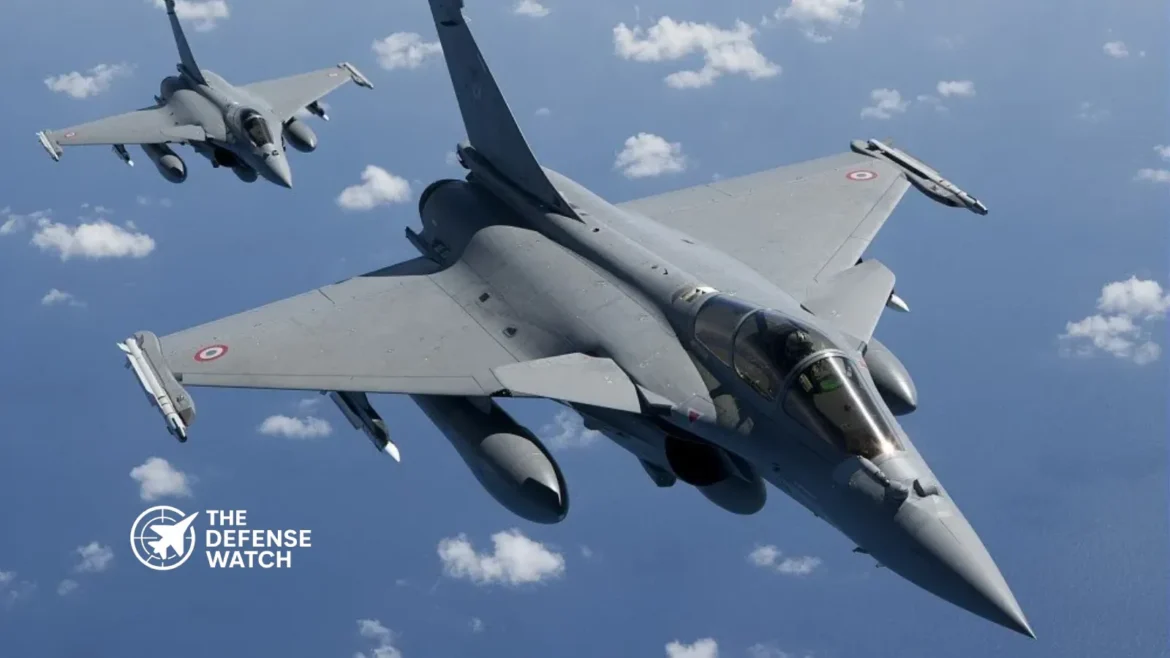
According to the French Ministry of the Armed Forces, two French Rafale C fighters launched from Šiauliai Air Base in Lithuania on June 8 following an Alpha Scramble order issued by NATO’s Combined Air Operations Centre (CAOC) in Uedem, Germany. During the mission, one of the fighters destroyed an unauthorized drone flying over Latvian airspace.
French officials described the event as the first live drone shootdown conducted by French fighters during NATO’s Baltic Air Policing mission. The deployment includes four Rafale fighters and approximately 100 French personnel assigned to Lithuania between April and August 2026.
Latvia Links Incident To Russian Electronic Warfare
Latvia’s National Armed Forces confirmed that NATO aircraft intercepted the drone after it entered Latvian airspace over the Latgale region.
Officials stated the aircraft entered Latvian airspace as a consequence of Russian electromagnetic warfare, although authorities did not publicly identify the drone’s origin or model. Air threat warnings issued for several municipalities in eastern Latvia were lifted after the engagement.
The incident occurred amid increasing reports of drones unintentionally crossing into NATO territory as electronic warfare activity intensifies near the alliance’s eastern border.
NATO Demonstrates Rapid Air Defense Response
The engagement highlights how Baltic Air Policing has evolved beyond traditional interceptions of military aircraft.
Originally established in 2004 to protect the airspace of Estonia, Latvia, and Lithuania, the NATO mission increasingly faces challenges posed by drones, electronic warfare, cruise missiles, and other low altitude threats.
The French Rafales responded under NATO command after receiving orders from the Combined Air Operations Centre, illustrating the alliance’s integrated command structure and ability to coordinate multinational air defense assets within minutes.
Baltic Air Policing French Deployment
Capability Details Aircraft 4 Rafale C fighters Operating Base Šiauliai Air Base, Lithuania Deployment Period April 1 to August 1, 2026 Personnel Around 100 French Air and Space Force personnel NATO Command CAOC Uedem, Germany Mission Baltic Air Policing Source: French Ministry of the Armed Forces.
Why The Incident Matters
Although only a single drone was destroyed, the operational significance extends beyond the immediate engagement.
Russia’s ongoing war against Ukraine has transformed drones from tactical reconnaissance platforms into routine weapons capable of crossing national borders intentionally or unintentionally through navigation failures, GPS spoofing, or electronic warfare.
For NATO, every unauthorized aerial object entering alliance airspace requires rapid identification and, when necessary, immediate neutralization to protect civilian populations and military infrastructure.
This incident also demonstrates that Baltic Air Policing has shifted from a mission focused largely on intercepting Russian military aircraft to one increasingly tasked with responding to complex, low altitude drone threats.
Counter Drone Missions Becoming A Core NATO Requirement
The growing frequency of drone incursions has exposed capability gaps across Europe.
Small unmanned aircraft are more difficult to detect than conventional military aircraft because they fly lower, present smaller radar signatures, and can be affected by electronic warfare.
For NATO air forces, successful counter drone operations increasingly depend upon:
- Integrated radar networks
- Electronic surveillance systems
- Rapid command and control
- Fighter aircraft capable of immediate interception
- Ground based air defense coordination
The Latvian incident demonstrates that these systems are becoming increasingly integrated across NATO’s eastern flank.
Strategic Implications For European Air Defense
The shootdown also reflects the broader evolution of European air defense following repeated drone incidents near NATO borders.
Several Baltic states have sought stronger integrated air and missile defense capabilities after multiple drone incursions over the past two years. Electronic warfare has emerged as an additional challenge because GPS jamming and spoofing can redirect unmanned aircraft away from their intended routes, creating hazards for neighboring countries even when those aircraft were never intended to enter NATO territory.
From a strategic perspective, the French Rafale engagement signals that NATO is increasingly willing to respond decisively to unidentified aerial threats entering alliance airspace, regardless of whether they originate from deliberate incursions, navigation failures, or electronic interference.
For France, the operation also demonstrates the Rafale’s expanding operational role beyond conventional air superiority and strike missions. The aircraft is now regularly employed within NATO’s integrated air defense architecture, including real world counter drone operations.
Executive Summary:
China has released its first official in flight footage showing an H-6N strategic bomber carrying the JL-1 nuclear capable air launched ballistic missile while escorted by two J-20 stealth fighters. The imagery highlights Beijing’s continued efforts to strengthen its long range conventional and nuclear strike capabilities while demonstrating an increasingly integrated strategic air force.
China Reveals H-6N Bomber Carrying JL-1 Air Launched Ballistic Missile
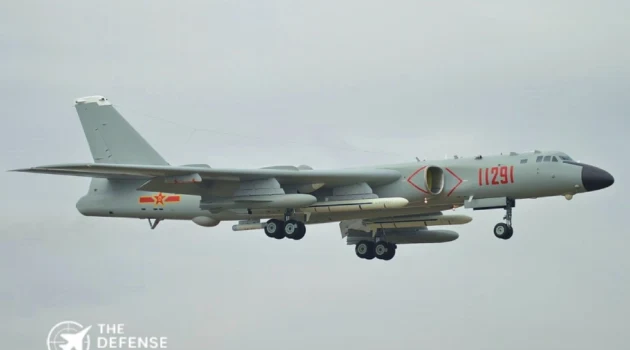
China has publicly released the first in flight footage of an H-6N bomber carrying the JL-1 air launched ballistic missile (ALBM), providing the clearest official view to date of one of the country’s most significant strategic aviation capabilities.
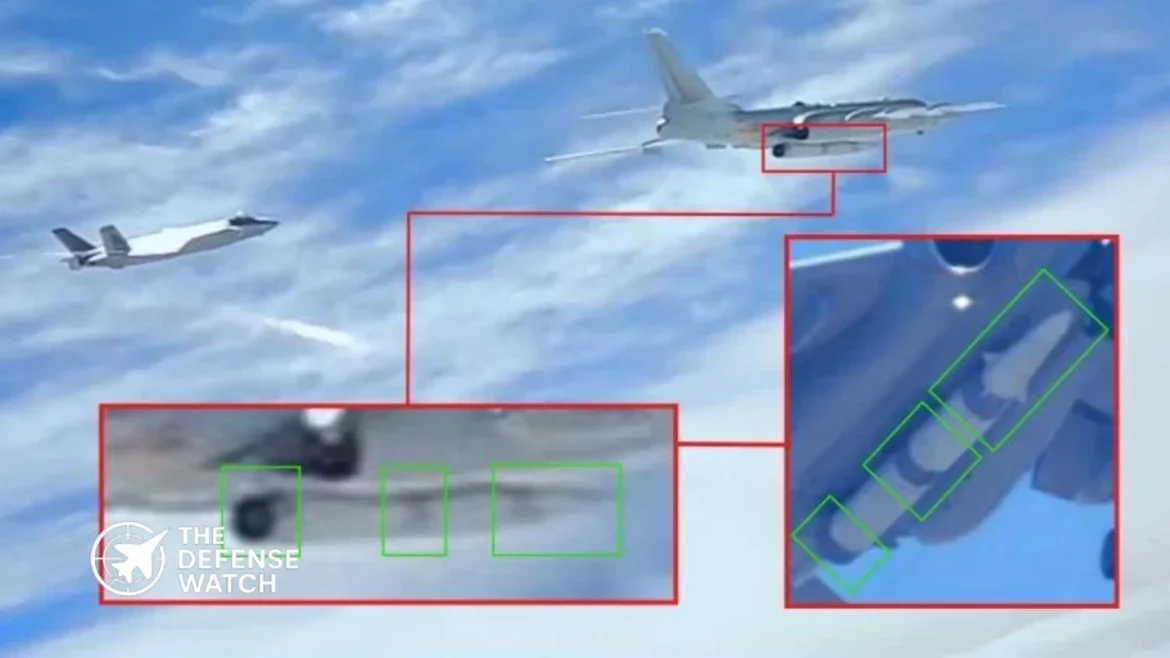
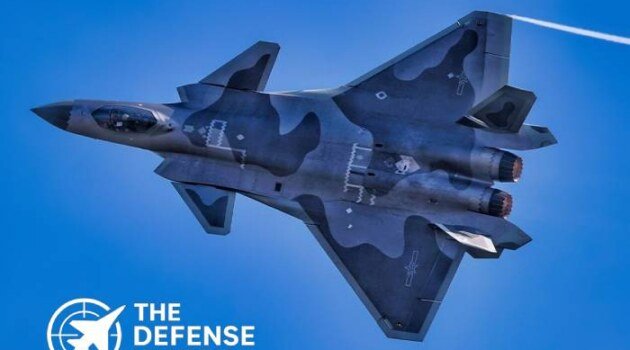
The video shows the H-6N operating with two J-20 fifth generation stealth fighters, underscoring the People’s Liberation Army Air Force’s emphasis on integrating strategic bombers with advanced fighter escorts during long range missions.
The release marks another step in China’s effort to showcase key elements of its evolving strategic deterrent while demonstrating improvements in long range strike operations.
First Official View of the JL-1 Air Launched Ballistic Missile
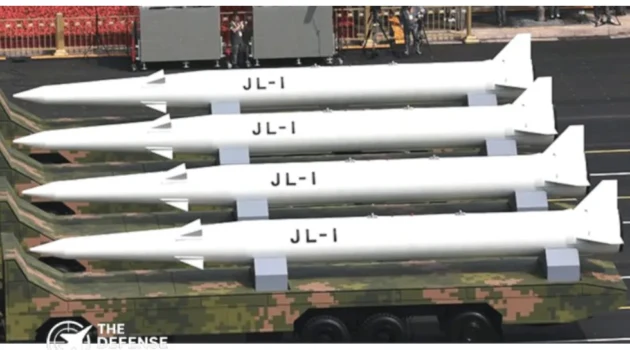
The footage provides the first official confirmation of the H-6N carrying the large externally mounted JL-1 missile beneath its fuselage.
Unlike earlier H-6 bomber variants, the H-6N was specifically modified with a recessed fuselage section to accommodate oversized weapons, including air launched ballistic missiles. The aircraft also incorporates aerial refueling capability, allowing significantly longer mission endurance than previous members of the H-6 family.
Defense analysts have long assessed that the H-6N was developed to serve as China’s first dedicated airborne platform for launching ballistic missiles capable of striking targets far beyond the reach of conventional cruise missiles.
JL-1 Strengthens China’s Long Range Strike Options
The JL-1 air launched ballistic missile is believed to be a nuclear capable weapon designed to expand China’s strategic strike flexibility.
Open source defense assessments indicate the missile offers an estimated range approaching 8,000 kilometers, depending on launch profile and payload configuration.
Key reported capabilities include:
- Nuclear capable payload
- Air launched ballistic trajectory
- Hypersonic reentry vehicle
- Long range land attack capability
- Potential anti ship strike capability against high value naval targets
Launching a ballistic missile from an airborne platform extends operational reach because the missile begins its flight at altitude and speed rather than from a fixed ground launcher.
This combination increases deployment flexibility while complicating an adversary’s early warning and missile defense planning.
J-20 Escort Highlights Integrated Air Operations
Another notable aspect of the released footage is the presence of two J-20 stealth fighters accompanying the H-6N.
The J-20 is China’s premier fifth generation fighter and is increasingly tasked with protecting high value airborne assets during long range operations.
Operating strategic bombers alongside stealth fighters reflects an evolving operational concept similar to those employed by other major air forces, where escorts enhance survivability against advanced air defense systems and hostile fighters.
The pairing also demonstrates improvements in command, control, and coordinated air operations across multiple aircraft types.
Strategic Significance Beyond the Video
While the footage primarily serves as an official demonstration, it also reflects broader trends within China’s military modernization program.
Over the past decade, Beijing has invested heavily in expanding its strategic aviation capabilities through new bombers, long range precision weapons, hypersonic systems, aerial refueling assets, and advanced fighter aircraft.
The H-6N forms an important component of this modernization effort by providing an airborne launch platform capable of supporting both conventional and nuclear missions.
For regional militaries and defense planners, an operational air launched ballistic missile introduces additional complexity compared with traditional ground based missile forces. Airborne launch platforms can approach from multiple directions, operate over vast distances with tanker support, and create less predictable attack profiles.
Although many technical details of the JL-1 remain classified, the newly released imagery offers additional visual confirmation of a capability that analysts have monitored for several years.
Regional Security Implications
The appearance of the H-6N carrying the JL-1 comes as security competition across the Indo-Pacific continues to intensify.
China has accelerated modernization across its air, naval, missile, and space forces while regional countries and the United States continue investing in integrated air and missile defense, advanced fighters, and long range precision strike systems.
The release of official imagery is therefore significant not only as a technological milestone but also as a strategic communication effort highlighting China’s expanding long range deterrence capabilities.
While the video does not reveal new technical specifications, it provides valuable confirmation of an operational configuration that had previously been observed primarily through satellite imagery and unofficial photographs.
Conclusion
China’s first official in flight footage of the H-6N bomber carrying the JL-1 air launched ballistic missile represents an important public demonstration of its evolving long range strike capabilities. Combined with J-20 stealth fighter escorts, the imagery illustrates an increasingly integrated strategic aviation force capable of supporting both conventional and nuclear deterrence missions.
Although many characteristics of the JL-1 remain undisclosed, the footage reinforces assessments that China continues to expand the flexibility, reach, and survivability of its strategic air power as part of its broader military modernization strategy.
Executive Summary:
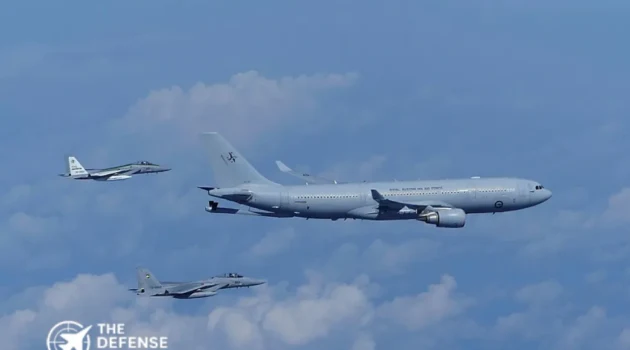
A Multinational Multi Role Tanker Transport (MRTT) aircraft has successfully refueled a Royal Australian Air Force KC-30A for the first time. The achievement demonstrates growing interoperability among allied air forces and strengthens multinational aerial refueling capabilities that support global military operations.
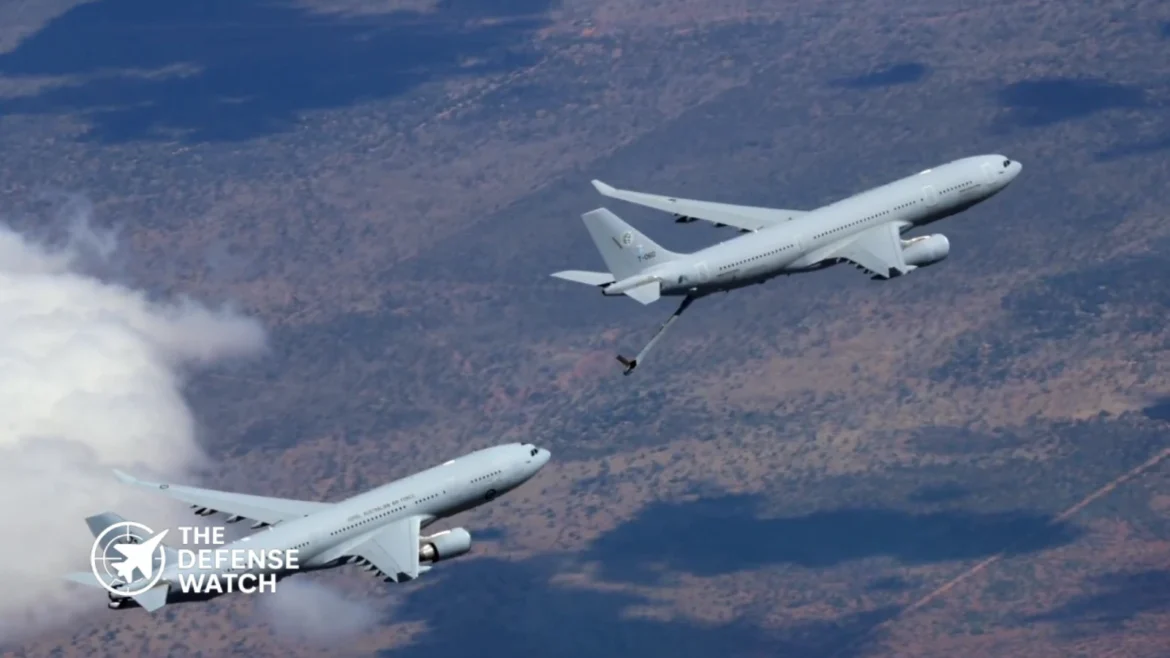
The Multinational MRTT aircraft has completed its first successful air to air refueling of a Royal Australian Air Force (RAAF) KC-30A, marking a significant milestone in multinational military aviation cooperation. The event demonstrates increasing interoperability between allied air forces and highlights the growing maturity of shared aerial refueling capabilities.
The successful mission represents another step toward integrating tanker fleets operated by NATO partners and close allies, allowing aircraft from different nations to support one another during training, exercises, humanitarian missions, and operational deployments.
First Of Its Kind Refueling Operation
During the mission, the Multinational MRTT aircraft transferred fuel to an Australian KC-30A while both aircraft remained airborne. Although tanker aircraft routinely refuel combat aircraft and transport platforms, tanker to tanker refueling between multinational fleets requires extensive certification, standardized procedures, and close coordination between participating air forces.
The achievement confirms that compatible systems, operational procedures, and crew training now enable this capability between the multinational MRTT fleet and Australia’s KC-30A.
Air to air refueling remains one of the most important force multipliers for modern militaries because it extends aircraft endurance, increases operational range, and reduces reliance on forward operating bases.
Why The Milestone Matters
While the event may appear routine, its operational significance is considerable.
Modern military operations increasingly rely on multinational coalitions rather than single nation deployments. Shared tanker fleets allow participating nations to maximize aircraft availability while reducing operating costs and improving logistics.
The successful refueling of an Australian tanker by another allied tanker demonstrates that partner nations can support each other’s aerial refueling networks without requiring national assets to operate independently.
This flexibility becomes particularly valuable during large multinational exercises, disaster response missions, and long distance deployments across the Indo Pacific, Europe, and the Middle East.
Growing Multinational MRTT Capability
The Multinational MRTT Fleet was established to provide participating nations with shared aerial refueling and strategic airlift capabilities through a pooled fleet rather than maintaining separate national tanker forces.
The fleet is based on the Airbus A330 MRTT, one of the world’s most capable aerial refueling aircraft. Besides air to air refueling, the aircraft can transport troops, cargo, and medical evacuation patients during military and humanitarian missions.
Participating nations share aircraft availability according to previously allocated flying hours, improving efficiency while lowering overall ownership costs.
Australia’s KC-30A is also based on the Airbus A330 MRTT platform, making the successful interoperability demonstration an important validation of multinational operating standards.
Operational Benefits For Allied Air Forces
The first successful refueling between these two tanker fleets provides several operational advantages.
Aircraft from participating nations can now conduct longer ferry flights with greater flexibility.
Coalition commanders gain additional options for sustaining air operations during multinational missions.
Shared aerial refueling networks reduce pressure on individual national tanker fleets during periods of high operational demand.
The milestone also strengthens readiness for future NATO exercises and Indo Pacific coalition activities where interoperability between allied aircraft is increasingly important.
From an operational perspective, tanker interoperability increases resilience by allowing one nation’s aircraft to support another without requiring dedicated national refueling assets in every theater.
Broader Strategic Significance
The achievement reflects a broader trend toward multinational defense cooperation as allied nations seek to improve readiness while controlling costs.
Shared capabilities such as the Multinational MRTT Fleet enable participating countries to pool resources without sacrificing operational effectiveness.
As military operations become more multinational, standardized aerial refueling procedures are becoming increasingly important for sustaining combat aircraft, surveillance platforms, strategic airlifters, and tanker fleets operating across multiple regions.
The successful refueling of the RAAF KC-30A illustrates how technical compatibility and common operational standards can translate into greater flexibility during real world operations.
Rather than representing a single demonstration flight, the event highlights the continued evolution of coalition air mobility capabilities that support collective defense, humanitarian assistance, and rapid global response missions.
Strengthening Coalition Air Mobility
The successful refueling mission reinforces the importance of multinational cooperation in modern air operations. As allied air forces continue expanding interoperability through common procedures, shared aircraft platforms, and integrated training, aerial refueling networks become more flexible and resilient.
For participating nations, the milestone demonstrates that multinational tanker fleets can provide practical operational benefits while improving readiness for future coalition missions across multiple theaters.
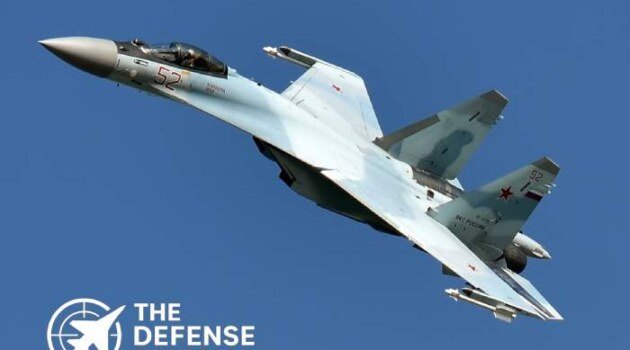
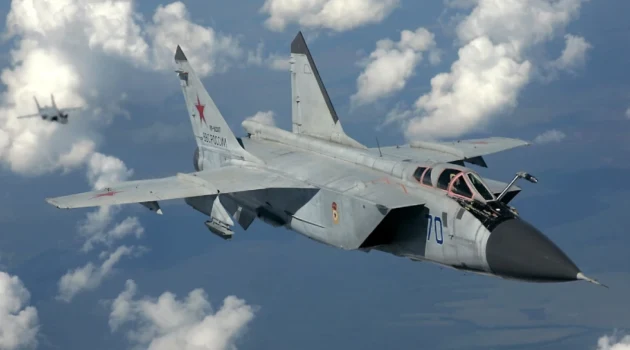
Top 5 Russian Fighter Jets in 2026: Su-57 to MiG-35 Ranked
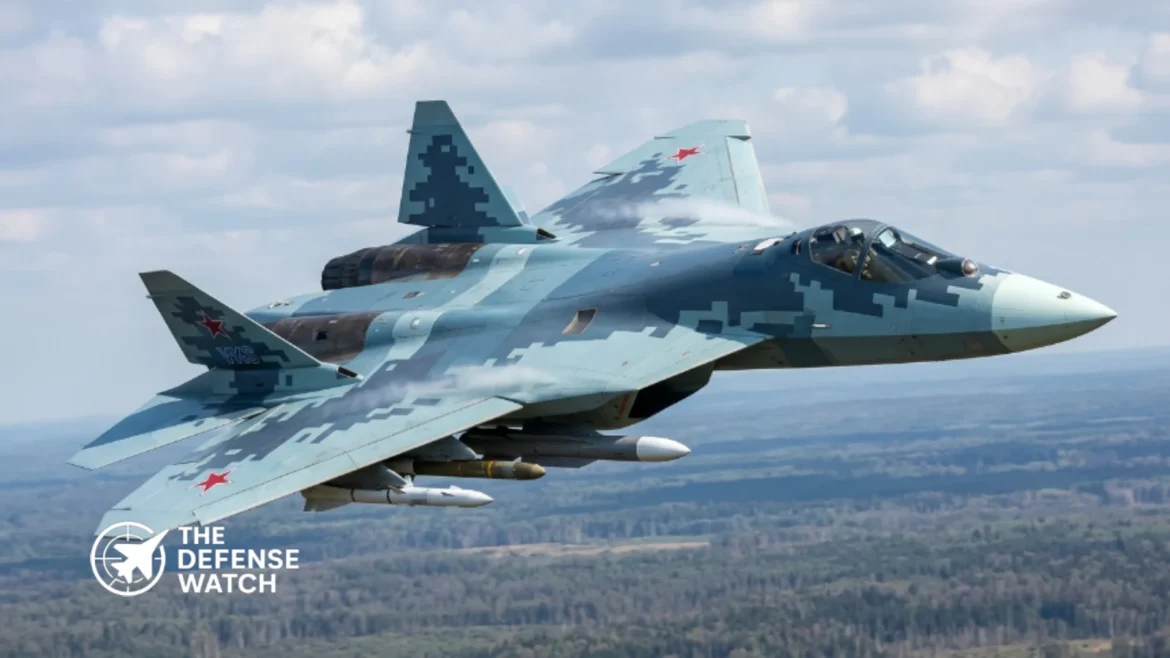
Russian fighter jets remain a central pillar of Moscow’s airpower strategy in 2026, as wartime attrition, sanctions pressure, and a renewed export push reshape the Russian Aerospace Forces (VKS) fleet. From the fifth-generation Su-57 Felon to the Mach-capable MiG-31BM interceptor, this technical ranking breaks down the five most significant Russian fighter jets currently in production or frontline service.
KEY FACTS AT A GLANCE
| Aircraft | Manufacturer | Generation | Max Speed | Combat Radius | Key Sensors | Primary Armament |
|---|---|---|---|---|---|---|
| Su-57 Felon | Sukhoi / UAC | 5th Gen | Mach 2.0 | ~1,500 km | N036 Byelka AESA, 101KS Atoll IRST | R-77M, R-37M, RVV-SDM |
| Su-35S Flanker-E | Sukhoi / UAC | 4++ Gen | Mach 2.25 | ~1,600 km | Irbis-E PESA radar, OLS-35 IRST | R-77-1, R-37M, R-73 |
| Su-34M Fullback | Sukhoi / UAC | 4+ Gen (strike) | Mach 1.8 | ~1,100 km | Sh-141 radar suite, Khibiny EW | Kh-38, Kh-59MK2, FAB-series glide bombs |
| MiG-31BM Foxhound | MiG / UAC | 4th Gen (interceptor) | Mach 2.83 | ~1,450 km | Zaslon-M PESA radar | R-37M, Kh-47M2 Kinzhal |
| MiG-35 Fulcrum-F | MiG / UAC | 4++ Gen | Mach 2.25 | ~1,000 km | Zhuk-AME AESA radar, OLS-UEM IRST | R-77-1, R-74M, Kh-31 |
Executive Summary:
Russia’s fighter fleet in 2026 reflects a dual reality: a slow-maturing fifth-generation program and a battle-hardened 4th/4.5-generation core sustaining wartime operations. The Su-57 has begun limited export deliveries to Algeria and secured new contracts at DSA-2026 in Kuala Lumpur, even as a fire at the Komsomolsk-on-Amur plant briefly disrupted output. Meanwhile, the Su-35S and Su-34M continue rolling off the same production line at a steady wartime tempo, with the MiG-31BM still flying Kinzhal-armed strike missions and the MiG-35 awaiting broader fleet integration. Together these five platforms define Russia’s current and near-term airpower posture.
Technical Deep-Dive
Airframe & Stealth
The Su-57 is Russia’s only true low-observable design, using semi-recessed weapon bays, faceted intake ducting, and composite/RAM (Radar Absorbent Material) coatings to reduce frontal RCS (Radar Cross Section), though its rear-aspect signature is widely assessed as less stealthy than Western fifth-gen peers. The Su-35S, Su-34M, MiG-31BM, and MiG-35 are non-stealth designs relying on speed, payload, and electronic warfare for survivability rather than signature reduction — the Su-34M’s armored cockpit “bathtub” being a notable structural feature for the strike role.
Avionics & Sensor Fusion
Sensor fusion is the clearest generational divide in this lineup. The Su-57’s N036 Byelka AESA radar array (with side-facing panels for wide-angle coverage) is paired with the 101KS Atoll IRST/EW suite for a genuinely fused targeting picture. The Su-35S instead uses the powerful but mechanically-scanned Irbis-E PESA radar, giving strong detection range without true AESA agility. The MiG-35 fields Russia’s newest Zhuk-AME AESA radar, positioning it as an avionics testbed for future upgrades, while the MiG-31BM’s Zaslon-M remains a legacy PESA optimized for long-range, high-altitude intercepts rather than fusion.
Propulsion
The Su-57 currently flies primarily on AL-41F1 “izdeliye 117” engines, with the definitive izdeliye 30 engine still in staged rollout for full supercruise performance. The Su-35S and MiG-35 both use variants of the AL-41F1S/RD-33MK family for thrust-vectoring agility, while the MiG-31BM’s twin D-30F6 turbofans remain unmatched among this group for sustained high-Mach interception, enabling its signature Kh-47M2 Kinzhal launch profile.
Strategic & Export Outlook
Russia’s export strategy centers on the Su-57E, marketed through Rosoboronexport with an active Block-style capability roadmap — baseline aircraft, followed by upgraded avionics, AESA integration, and eventual two-seat variants pitched to India for potential licensed production. Algeria remains the only confirmed foreign Su-57 operator, with Middle Eastern and Southeast Asian buyers cited as active prospects following the DSA-2026 exhibition. The Su-35S export line, heavily weighted toward Iran, is absorbing a growing share of Komsomolsk-on-Amur capacity, directly constraining how many airframes reach the VKS domestically.
Gaming & Esports Crossover: Flanker Firepower in Digital Skies
For strategy and combat-sim audiences, this lineup reads like a tech tree: the MiG-31BM is the glass-cannon interceptor built for alpha-strike Kinzhal runs, the Su-35S is the balanced all-rounder favored in dogfight-heavy loadouts, and the Su-57 is the late-game unlock — powerful but bottlenecked by production, mirroring how sim titles gate fifth-gen stealth platforms behind steep resource costs.
FAQs
Is the Su-57 a true fifth-generation fighter?It has stealth shaping and an internal weapons bay, but its rear RCS and engine maturity trail the F-22 and F-35, leading most analysts to call it a “4.5-to-5th-gen” transitional design.
Which Russian fighter has seen the most combat use?The Su-34M and Su-35S have flown the highest sortie counts in the Ukraine conflict, primarily in strike and escort roles.
Has Russia exported the Su-57?Algeria is the only confirmed foreign operator as of 2026, with additional Rosoboronexport contracts announced but customers undisclosed.
Conclusion
The Su-57, Su-35S, Su-34M, MiG-31BM, and MiG-35 collectively illustrate a fleet in transition — wartime demand keeps 4th/4.5-generation production lines running hot, while fifth-generation ambitions advance unevenly under sanctions and industrial strain. Until Su-57 output scales meaningfully, Russia’s regional air balance will continue to rest on these proven, non-stealth workhorses.

Executive Summary:
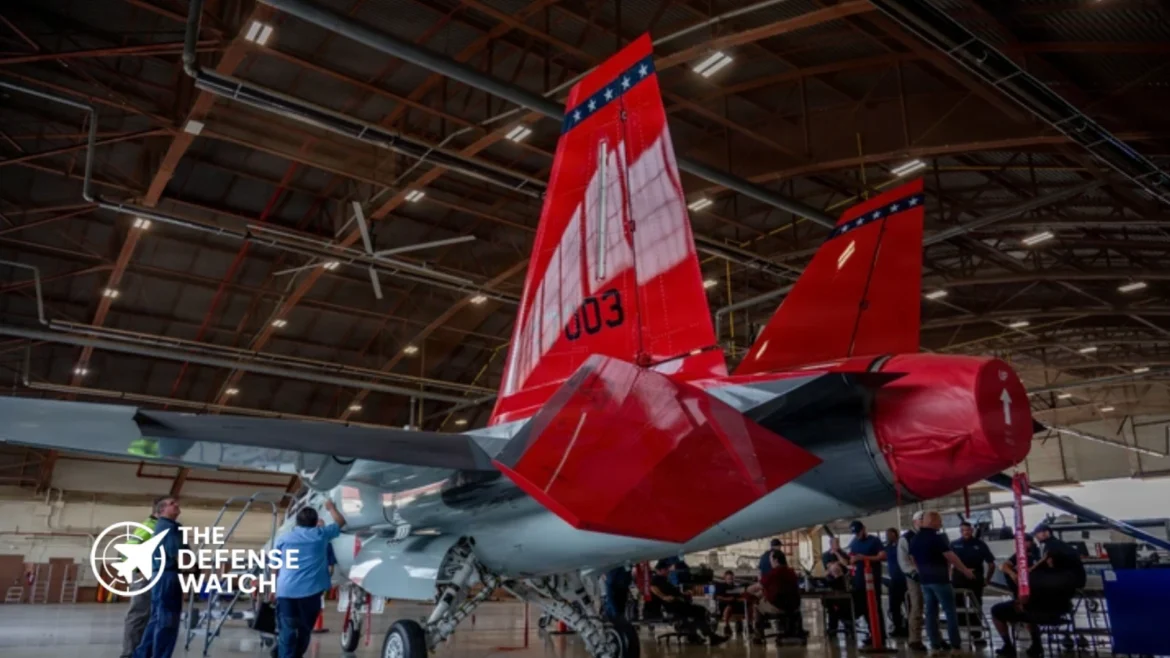
Saab expects production of the Boeing T-7A Red Hawk advanced trainer to accelerate following the U.S. Air Force’s Milestone C approval, which formally cleared the program to enter low rate initial production. The decision is expected to improve production stability at Saab’s Indiana manufacturing facility, which has experienced reduced activity while the aircraft completed development and testing.
Saab T-7A Red Hawk Production Enters A New Phase After Milestone C
Saab’s T-7A Red Hawk production program is entering a more stable manufacturing phase after the U.S. Air Force approved Milestone C, allowing the advanced trainer aircraft to transition from development into low rate initial production. The approval, announced by the Air Force in May 2026, authorized Boeing to begin building the first production aircraft under a $219 million contract covering 14 aircraft, associated support equipment, simulators, and spares.
For Saab, which manufactures the aircraft’s aft fuselage at its West Lafayette, Indiana facility, the decision represents an important industrial milestone. Company executives have indicated that higher production rates are expected to support a multi year financial recovery for the U.S. operation after several years of lower than anticipated output during program delays.
The T-7A is being jointly developed by Boeing and Saab to replace the U.S. Air Force’s aging T-38 Talon fleet, which has served as the primary advanced jet trainer for more than six decades.
Indiana Factory Positioned For Higher Output
Saab invested heavily in its purpose built manufacturing facility in West Lafayette to support long term T-7A production. The site now serves as the exclusive production location for all production aft fuselage sections after manufacturing transitioned from Sweden to the United States.
Earlier program delays affected manufacturing schedules, resulting in lower factory utilization than originally planned. With Milestone C completed, Saab expects aircraft deliveries to gradually increase as Boeing begins assembling production aircraft.
According to previous Saab statements, the Indiana facility was designed specifically around advanced digital manufacturing techniques developed jointly with Boeing, allowing highly automated assembly and improved production precision.
What Milestone C Actually Means
Milestone C is one of the most significant decision points in the U.S. Department of Defense acquisition process.
Rather than representing full rate production, it authorizes Low Rate Initial Production (LRIP) after developmental testing demonstrates sufficient maturity.
For the T-7A program, the Air Force adopted an incremental production strategy that differs from many previous acquisition programs.
Milestone Significance Development Complete Major engineering and testing objectives achieved Milestone C Approval for Low Rate Initial Production Initial Production First 14 production aircraft ordered IOC Target Operational service beginning in 2027 Full Rate Production Expected after additional operational evaluation The Air Force has stated that each of the first three LRIP production lots will receive separate approval, allowing engineers to incorporate lessons learned before committing to larger production quantities. That phased approach is intended to reduce technical and manufacturing risk while maintaining delivery schedules.
Why The T-7A Matters To The U.S. Air Force
The Red Hawk represents a substantial modernization of pilot training.
Unlike the T, 38 Talon, which entered service during the Cold War, the T-7A was designed using digital engineering techniques and incorporates modern avionics, open architecture systems, and training capabilities intended to prepare pilots for fifth and future sixth generation aircraft.
The aircraft supports training for future operators of platforms including:
- F, 35 Lightning II
- F, 22 Raptor
- F, 15EX Eagle II
- B, 21 Raider
Its digital design also enables software updates and future capability enhancements more efficiently than legacy trainer aircraft.
Industrial And Strategic Importance
Beyond replacing the T-38, the T-7A has become an important example of how the Pentagon is attempting to modernize defense acquisition.
The program has faced challenges, including ejection seat redesigns, flight control software improvements, and schedule delays. Rather than immediately transitioning into large scale manufacturing, the Air Force adopted an incremental production strategy intended to reduce concurrency risk.
That approach reflects broader acquisition reforms emphasizing testing before large procurement commitments. While it slows initial production growth, it reduces the likelihood of expensive retrofits after aircraft enter service.
For Saab, sustained production at the Indiana facility also strengthens its long term U.S. industrial footprint. The company has invested significantly in domestic manufacturing capacity, positioning itself as a supplier within the American defense industrial base rather than solely as a foreign defense contractor.
Outlook For Production
With Milestone C complete, Boeing and Saab can now begin increasing production in line with Air Force procurement decisions.
Initial Operational Capability remains targeted for 2027, while the full program is expected to eventually replace hundreds of T, 38 trainers across multiple Air Education and Training Command bases.
Although production will expand gradually rather than immediately reaching full capacity, Saab’s Indiana facility is expected to benefit from more predictable manufacturing schedules and improved financial performance as additional production lots are approved.
Executive Summary:
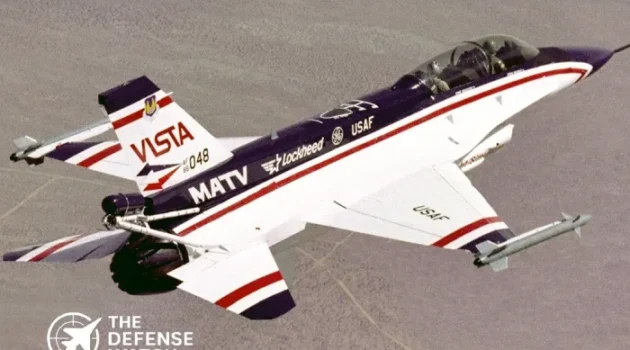
The US Air Force has successfully demonstrated an artificial intelligence controlled airborne interception using its X-62 VISTA experimental aircraft, expanding autonomous flight testing beyond air combat maneuvering into real world interception scenarios. The milestone highlights the growing role of AI in future Collaborative Combat Aircraft and next generation air superiority programs.
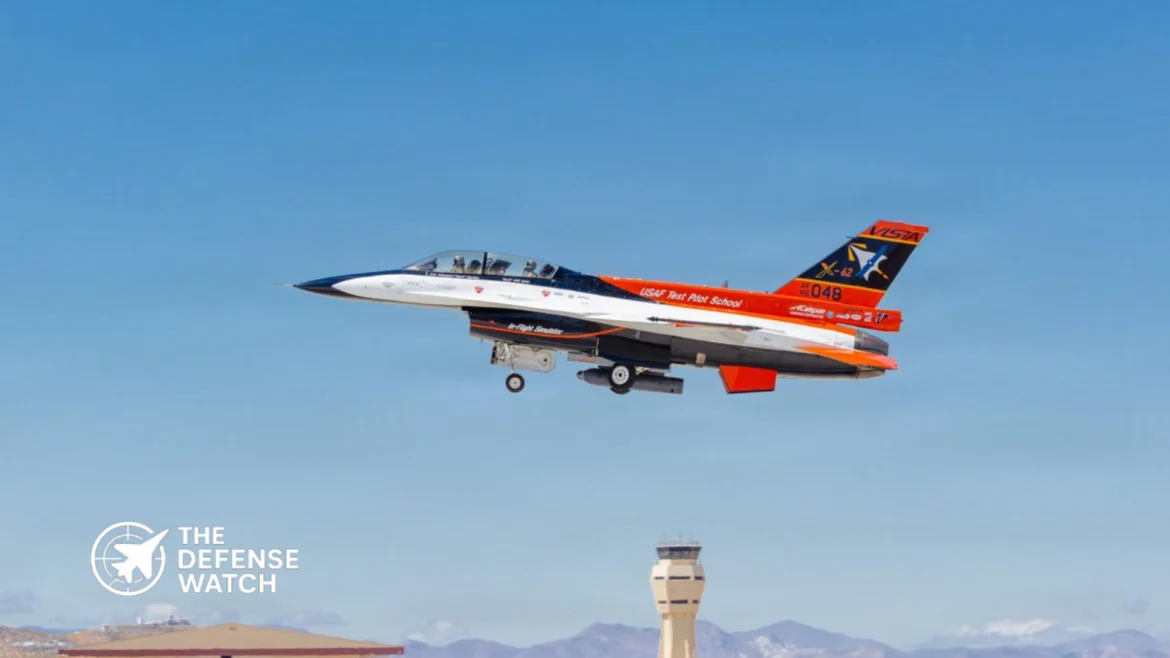
US Air Force Demonstrates AI Led X-62 Airborne Intercept Capability
The US Air Force X-62 AI program has reached another milestone after successfully demonstrating an artificial intelligence controlled interception of airborne targets using the X-62A Variable Stability In-flight Simulator Test Aircraft (VISTA). The demonstration marks the first publicly reported instance of AI directing an intercept mission rather than solely executing defensive maneuvers or within-visual-range dogfights.
Conducted by the US Air Force Test Pilot School at Edwards Air Force Base, the test represents another step in integrating autonomous software into tactical aviation while retaining a qualified safety pilot onboard.
The demonstration builds upon several years of research under the Defense Advanced Research Projects Agency (DARPA) Air Combat Evolution initiative and ongoing Air Force autonomy programs.
How The X-62 VISTA Serves As An AI Flight Testbed
The X-62A VISTA is a heavily modified F-16D Block 30 equipped with advanced simulation software that allows engineers to rapidly install and evaluate different autonomous flight algorithms.
Unlike a conventional fighter, the aircraft can emulate multiple aircraft types and flight control characteristics through its Variable Stability In-flight Simulator architecture. Since receiving major autonomy upgrades, it has become the Air Force’s primary flying laboratory for evaluating machine learning in tactical aviation.
Previous milestones include:
- AI controlled supersonic flight
- Autonomous dogfight testing against human pilots
- AI controlled defensive missile evasion
- Evaluation of collaborative autonomous flight behaviors
The latest airborne interception demonstration expands these capabilities into another mission area that future autonomous combat aircraft are expected to perform.
What Makes Airborne Interception More Challenging
Intercepting another aircraft is significantly more complex than executing scripted maneuvers.
The autonomous system must continuously:
Mission Function AI Requirement Detect target Process sensor information rapidly Track aircraft Predict changing flight paths Maneuver safely Maintain aircraft performance limits Select intercept geometry Optimize closure rates and positioning Adapt in real time Respond to unexpected target maneuvers These functions require autonomous software to make rapid decisions while operating within strict flight safety constraints.
Unlike demonstrations focused solely on aggressive maneuvering, interception requires balancing tactical effectiveness with safe aircraft handling throughout the engagement.
Supporting Future Collaborative Combat Aircraft
The demonstration directly supports the Department of the Air Force’s broader effort to field autonomous Collaborative Combat Aircraft (CCA).
Future CCAs are expected to operate alongside crewed fighters including the F-35A and the forthcoming Next Generation Air Dominance (NGAD) platform.
Rather than replacing pilots, autonomous aircraft are envisioned to perform missions such as:
- Forward scouting
- Airborne interception
- Defensive counter air
- Electronic warfare
- Decoy operations
- Cooperative missile employment
Testing these capabilities aboard the X-62 allows engineers to validate software in realistic flight conditions before transitioning algorithms to operational uncrewed aircraft.
AI Development Continues To Expand
The X-62 continues to receive upgrades designed to support increasingly sophisticated autonomy testing.
The Air Force is enhancing the aircraft with advanced mission systems, including modern radar and sensor integration, enabling autonomous software to process more representative combat information during future experiments. Those improvements are intended to support testing involving multiple aircraft and more operationally realistic scenarios.
The aircraft also complements the VENOM (Viper Experimentation and Next-generation Operations Model) program, which is modifying additional F-16s to accelerate autonomy research across a larger test fleet.
Why This Matters
Although the latest demonstration remains an experimental flight test, its significance extends well beyond a single aircraft.
Modern air combat is increasingly defined by compressed decision timelines, large numbers of airborne sensors, electronic warfare, and cooperation between crewed and uncrewed platforms. Artificial intelligence offers the potential to process information and recommend or execute tactical actions at speeds beyond human capability while allowing pilots to focus on mission command.
The interception test also illustrates a gradual shift in Air Force AI development. Earlier efforts concentrated on proving that autonomous systems could safely fly an aircraft or compete in basic dogfights. Current testing is expanding into operational mission sets that reflect how autonomous aircraft may contribute during future combat operations.
Importantly, the Air Force continues to emphasize that these demonstrations occur with extensive human oversight, rigorous safety controls, and onboard safety pilots. The objective is not fully independent combat aircraft today, but developing trusted autonomous systems that can operate alongside human aircrews in increasingly complex environments.
As Collaborative Combat Aircraft move toward operational service later this decade, demonstrations aboard the X-62 provide valuable risk reduction by validating software in real flight conditions before integration into next generation autonomous combat platforms.