Executive Summary
- Lockheed Martin and the U.S. Department of War signed a framework agreement on September 17, 2026, to accelerate production and delivery of the AIM-260 Joint Advanced Tactical Missile.
- The agreement is intended to establish the foundation for a multiyear procurement contract, although Congressional approval is still required.
- The production push comes as the United States seeks greater long-range air-to-air missile capacity for fifth-generation fighters and a stronger industrial base capable of supporting U.S. and allied demand.
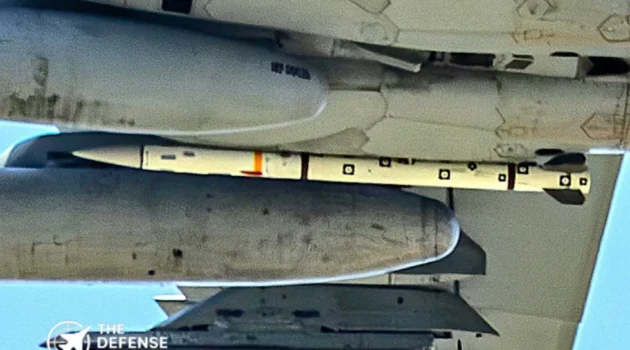
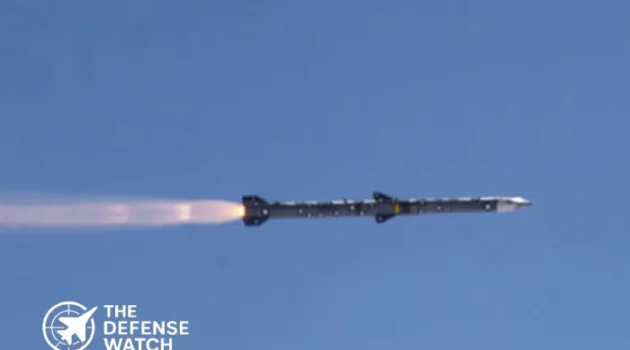
Lockheed Martin and the U.S. Department of War have signed a framework agreement intended to accelerate production of the AIM-260 Joint Advanced Tactical Missile, a next-generation air-to-air weapon being developed for U.S. Air Force and Navy aircraft. The agreement announced September 17, 2026, is designed to support higher production rates and establish the basis for a future multiyear procurement contract.
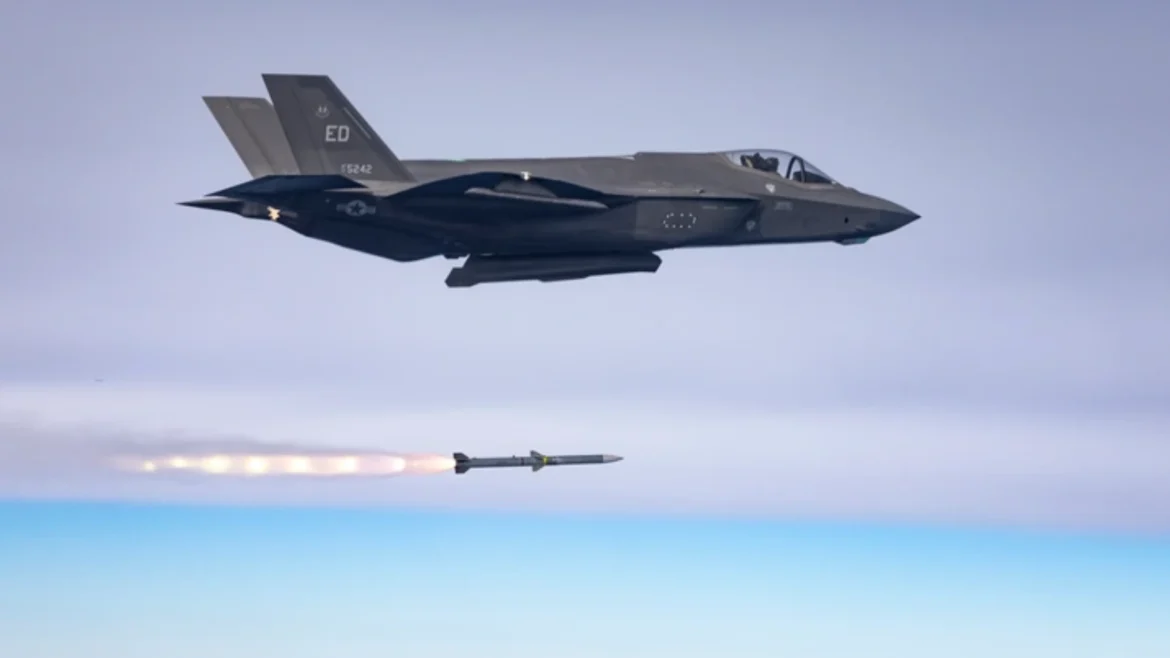
The AIM-260 is planned for integration with multiple U.S. combat aircraft, including the F-22 Raptor and F-35 Lightning II. Lockheed Martin says the missile provides greater range and effectiveness than existing air-to-air weapons, although detailed performance specifications remain classified.
The agreement is significant not simply because of the missile itself, but because it links operational demand with longer-term production planning. That approach could give Lockheed Martin and its suppliers greater certainty to invest in manufacturing capacity while the U.S. military seeks to expand its inventory of advanced air-to-air weapons.
New framework targets faster AIM-260 production
Under the new agreement, Lockheed Martin will support investments required to increase AIM-260 production. The company produces the missile in partnership with the U.S. Air Force and U.S. Navy.
The framework agreement does not itself constitute the final multiyear procurement contract. Lockheed Martin said the framework provides the foundation for a multiyear procurement arrangement that remains subject to Congressional approval.
That distinction is important. The announcement establishes an industrial and acquisition framework, but the eventual scale, funding and schedule of the multiyear procurement will depend on subsequent government action.
AIM-260 program at a glance
Item Current information Missile AIM-260 Joint Advanced Tactical Missile Developer and manufacturer Lockheed Martin U.S. partners U.S. Air Force and U.S. Navy Mission Long-range air-to-air combat Aircraft compatibility Includes F-22 and F-35 Performance Greater range and effectiveness than existing air-to-air weapons, according to Lockheed Martin Production plan Accelerated production Multiyear procurement Planned, subject to Congressional approval Export activity Australia has sought AIM-260 acquisition Why the AIM-260 matters for the F-22 and F-35
The AIM-260 is intended to address a central requirement of modern air combat: engaging aircraft at extended distances while operating against increasingly capable sensors, electronic warfare systems and long-range weapons.
The U.S. Air Force has previously described the AIM-260 as the planned successor to the AIM-120 AMRAAM for long-range air-to-air missions. An Air Force Test Center historical account stated that the JATM is intended to provide improved long-range performance and an enhanced ability to operate against electronic warfare jamming.
For the F-22, the missile would complement an aircraft specifically designed for air superiority. The Air Force says the Raptor’s low-observable design, aerodynamic performance and integrated avionics provide capabilities for air-to-air operations. Its existing air-to-air configuration carries AIM-120 and AIM-9 missiles internally.
For the F-35, the significance is broader. The aircraft is designed to combine stealth, sensors, electronic warfare and networked operations. A longer-range air-to-air weapon can extend the distance at which the aircraft can engage airborne threats while preserving the advantages associated with low observability.
The combination therefore involves more than simply replacing one missile with another. It pairs fifth-generation aircraft sensing and networking capabilities with a weapon intended to provide greater engagement reach.
Production capacity is becoming a strategic requirement
The industrial component of the announcement may prove as important as the missile’s technical characteristics.
Modern air combat depends on sufficient weapons inventories, not simply on the number of aircraft available. A fighter force can have advanced sensors and stealth characteristics, but sustained operations also require adequate stocks of compatible missiles, replacement components, test assets and support equipment.
The new framework is intended to create longer-term demand that can justify investment across the AIM-260 manufacturing base. Lockheed Martin said the arrangement is intended to strengthen and expand the defense industrial base supporting the program.
That approach follows a wider U.S. effort to increase production of critical munitions. Lockheed Martin has announced similar production acceleration initiatives for systems including Precision Strike Missile and PAC-3 MSE.
The AIM-260 agreement therefore fits into a broader shift toward using longer-term procurement commitments to encourage industrial investment rather than relying exclusively on short production runs and annual demand signals.
U.S. budget documents show the program is moving into procurement
The AIM-260 is already visible as a distinct line in U.S. Air Force budget documentation.
The Department of the Air Force’s FY2027 research and development budget identifies the Joint Advanced Tactical Missile under program element 0207172F. The document lists $500.422 million for FY2027, compared with $420.110 million in the FY2026 total shown in the budget exhibit.
These figures should not be interpreted as the eventual value of the multiyear production agreement. They represent budget authority associated with the program in the cited Air Force budget documentation.
The separate procurement documentation also identifies JATM as a dedicated missile procurement line, demonstrating that the program is moving beyond a purely developmental effort.
Australia adds an allied demand signal
The AIM-260 program is also developing an international dimension.
U.S. congressional records show that Australia was notified in January 2026 of a possible Foreign Military Sale involving up to 450 AIM-260 missiles, five integration test vehicles and 30 guided test vehicles. The estimated value of the proposed package was $3.16 billion, including major defense equipment and associated support.
Lockheed Martin subsequently said Australia had announced an investment of nearly $736 million to equip the Royal Australian Air Force with JATM.
The difference between the congressional notification value and the later announced investment reflects the different stages and structures of the proposed acquisition. The congressional notification represented a maximum estimated case including support and associated equipment, rather than a finalized contract price for the missiles themselves.
For the U.S. production system, an allied customer can provide an additional demand signal. It can also create requirements for interoperability, training, logistics and sustainment across partner air forces.
The China factor behind the requirement
The AIM-260 has been developed against a changing air combat environment in which long-range engagement, electronic warfare and low-observable aircraft are increasingly important.
Reuters reported September 17 that Lockheed Martin developed the missile in secrecy for years as a U.S. response to increasingly capable long-range air threats from China. The report also connected the current production push to the broader U.S. effort to rebuild depleted missile inventories.
The U.S. Air Force has not publicly disclosed the complete performance envelope of the AIM-260. Consequently, specific claims about its maximum range, speed, seeker characteristics or precise advantages over individual foreign missiles should be treated cautiously unless supported by official disclosures.
The available public information nevertheless establishes the basic requirement: the United States wants a more capable long-range air-to-air weapon for its advanced fighter fleet, while expanding production capacity sufficiently to support sustained operations.
What changes for U.S. airpower
The immediate effect of the framework agreement is industrial rather than operational. It does not mean that the AIM-260 suddenly becomes available in large numbers.
The more important development is the move toward a production model capable of supporting larger and more predictable procurement quantities.
For the F-22 and F-35 fleets, that could eventually affect three areas:
- Magazine depth: More missiles available for training, deployment and combat replenishment.
- Air combat reach: A next-generation long-range weapon designed to extend engagement opportunities beyond current systems.
- Industrial resilience: Greater production capacity and a more stable supplier base for a strategically important air-to-air missile.
The planned multiyear procurement could reinforce all three, but its eventual effect will depend on Congressional approval, funding, production expansion and the pace at which the missile enters operational service.
What remains undisclosed
AIM-260 remains a sensitive weapons program, and many of the characteristics most relevant to an operational comparison remain classified.
Publicly undisclosed areas include:
- Maximum effective range
- Maximum speed
- Warhead size
- Seeker architecture
- Guidance architecture
- Exact propulsion configuration
- Production rate
- Unit procurement cost
- Initial operational capability timeline
- Detailed F-22 and F-35 integration status
This limits meaningful public comparisons with weapons such as the AIM-120D, China’s PL-15 or other long-range air-to-air missiles. Open-source estimates about these characteristics should not be presented as confirmed specifications.
A shift toward sustained missile production
The AIM-260 announcement is best understood as part of a larger U.S. effort to rebuild and expand the missile manufacturing base.
For decades, advanced weapons programs often operated around relatively low annual production requirements. A major-power conflict would place very different demands on the industrial system, particularly for weapons that could be consumed faster than they can be manufactured.
The new Lockheed Martin framework attempts to address that problem by connecting government demand with industrial investment before the final multiyear procurement contract is approved.
If Congress authorizes the planned arrangement, the resulting production commitment could give Lockheed Martin and its suppliers a clearer basis for expanding manufacturing capacity. For the U.S. Air Force and Navy, the objective would be a deeper inventory of an advanced air-to-air missile that can be integrated with the country’s most capable fighter aircraft.
The key question now is not whether the AIM-260 is intended to replace or supplement existing long-range air-to-air weapons. The program’s direction is already clear. The more consequential question is how quickly the industrial base can translate the new framework into sustained production and how many missiles the United States and its allies ultimately procure.