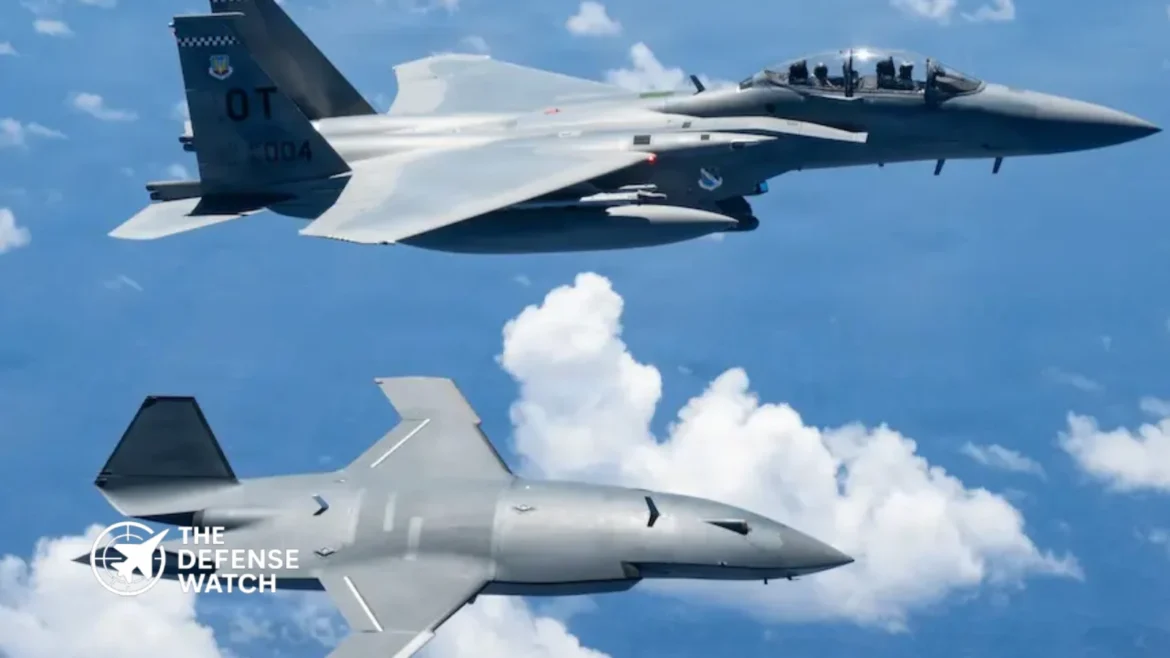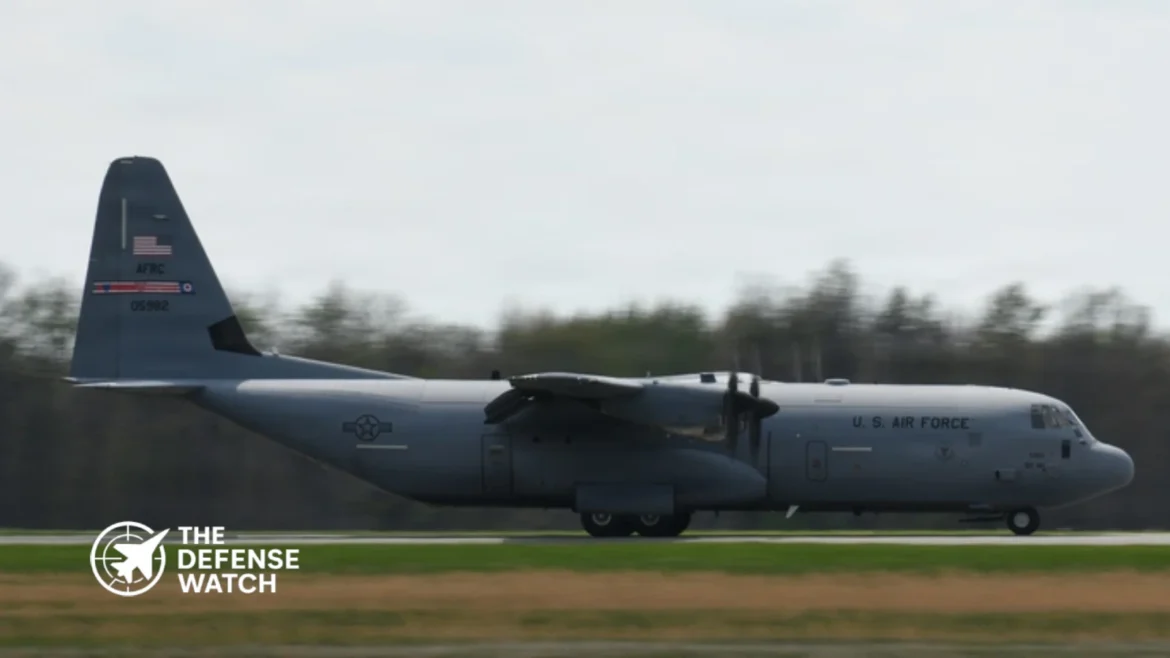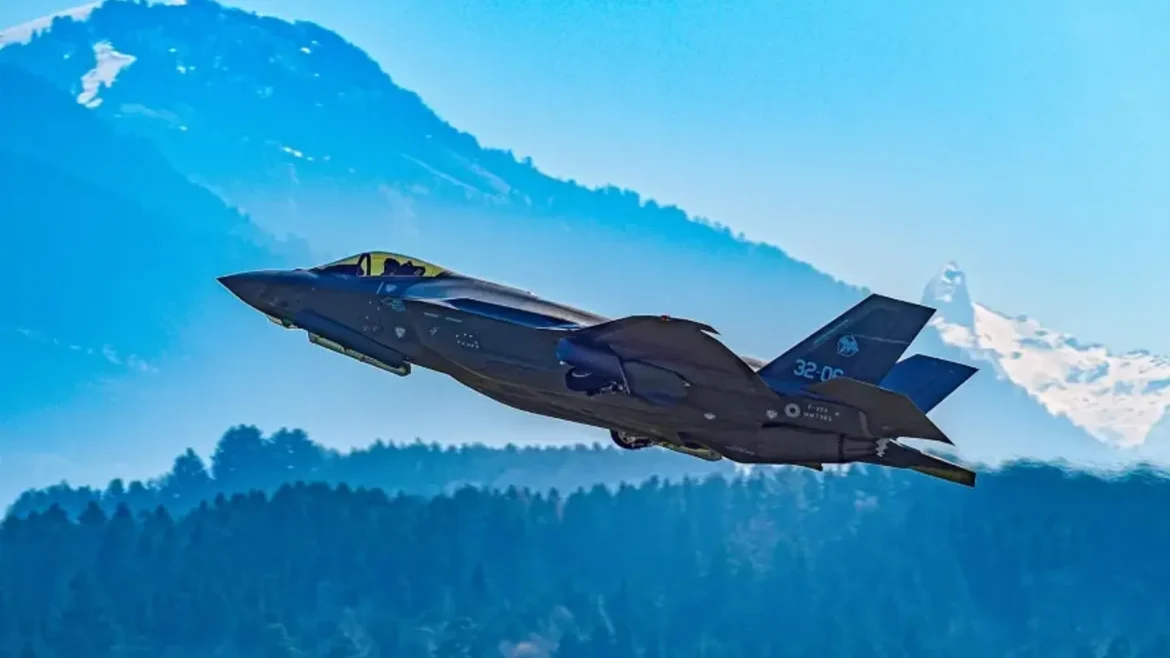
Executive Summary: Switzerland’s F-35A program is moving through production milestones as Leonardo’s Cameri facility in northern Italy prepares to deliver Swiss-configured aircraft beginning in 2028. The first eight Swiss F-35As are being produced in the United States for pilot training, while the remaining aircraft were originally scheduled to come from Cameri, although Switzerland is now reassessing the final fleet size because of higher program costs.
Swiss F-35A Production Moves Into the Next Phase
Swiss F-35A production is advancing as the international F-35 industrial network prepares aircraft for Switzerland, with Leonardo’s Cameri facility serving as the European final assembly location for most of the Swiss fleet.
The Swiss government said in May 2026 that main assembly of the first F-35A destined for Switzerland had begun at Lockheed Martin’s facility in Marietta, Georgia. The milestone follows the production of initial components and puts the first Swiss aircraft deeper into the manufacturing process.
The first eight aircraft are scheduled to be delivered to Ebbing Air National Guard Base in Arkansas from mid-2027. They will initially remain in the United States to support Swiss pilot training before the aircraft are transferred to Switzerland.
Swiss authorities expect the first aircraft to arrive in Switzerland from mid-2028, with subsequent aircraft supplied from Leonardo’s final assembly facility at Cameri.
Cameri Provides Europe’s F-35 Final Assembly Capability
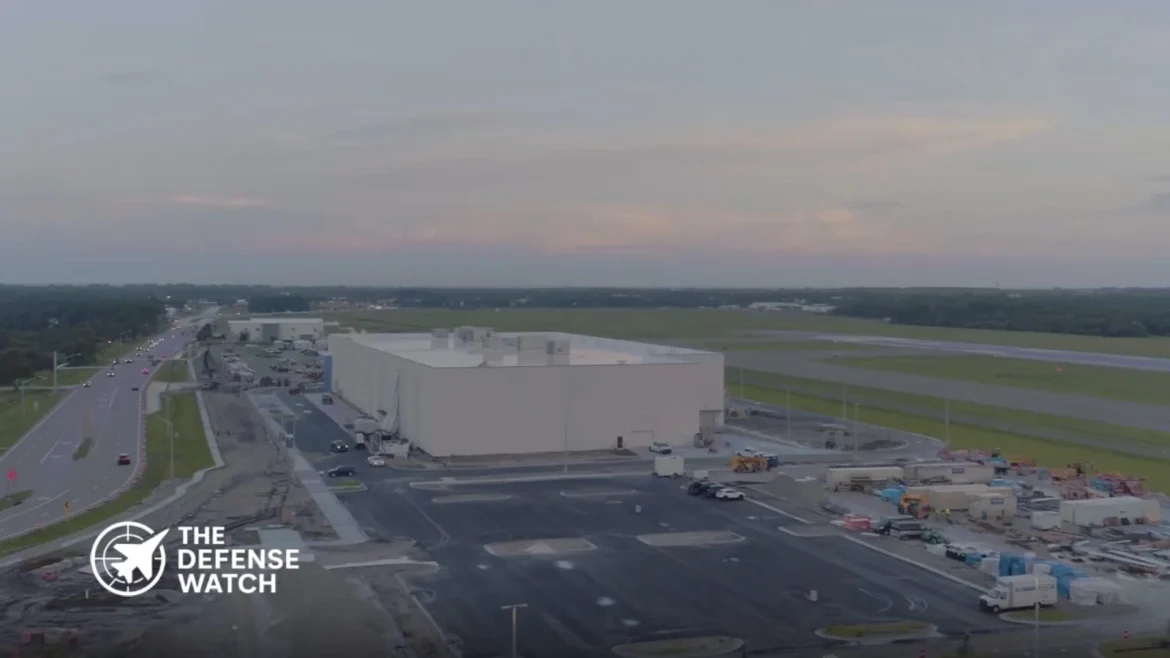
Cameri is a critical part of the F-35 international production network. Leonardo operates the facility in cooperation with Lockheed Martin, producing F-35 aircraft and supporting other activities connected with the program.
The facility manufactures major structural components, including wing assemblies, and performs final assembly and checkout work. Leonardo has also developed Cameri as an important European center for F-35 maintenance, repair, overhaul and upgrade activities.
For Switzerland, the arrangement reduces the need to establish a separate national final assembly line while retaining an industrial connection to the European F-35 production and sustainment network.
Switzerland announced in 2022 that at least 24 of its planned 36 aircraft would be manufactured at Cameri. The original production arrangement allowed up to 28 of the 36 aircraft to be produced in Italy, while the first eight would be manufactured in the United States for training purposes.
Original Swiss F-35A Production Plan
Item Original plan Aircraft selected 36 F-35A Manufacturer Lockheed Martin European final assembly Leonardo Cameri, Italy U.S.-built training aircraft 8 Cameri-built aircraft At least 24, with up to 28 originally planned Initial delivery period 2027 to 2030 First Cameri deliveries 2028 Aircraft planned from Cameri in 2028 8 Aircraft planned from Cameri in 2029 10 Aircraft planned from Cameri in 2030 10 The schedule above reflects Switzerland’s established F-35A delivery plan. However, the final number of aircraft Switzerland will receive is now subject to a major funding decision.
Switzerland Is Reassessing the Size of Its F-35 Fleet
The production milestone comes against a significant change in Switzerland’s procurement position.
In March 2026, the Swiss Federal Council confirmed that it would not seek the additional funding required to acquire all 36 F-35As originally planned. The government said approximately 1.1 billion Swiss francs in additional funding would be required to reach the full fleet because of higher costs linked to inflation, raw materials and other factors.
Instead, Switzerland intends to acquire the maximum number of F-35As possible within the 6 billion Swiss franc funding framework approved by voters.
The government has proposed an additional 394 million Swiss francs to absorb certain cost increases and allow Switzerland to establish the final production quantity with the U.S. government by the second quarter of 2027.
This creates an important distinction for reporting on the program. The original contract covers 36 aircraft, but Switzerland’s current policy is not to provide additional funding to restore the fleet to that original number.
As a result, the number of Swiss F-35As ultimately entering service could be lower than the 36 aircraft initially planned.
Why Cameri Matters to the Swiss Program
The Cameri connection is more significant than simply being an assembly location.
The F-35 program relies on a distributed industrial base involving thousands of suppliers across multiple countries. Switzerland is therefore entering an established multinational manufacturing and sustainment ecosystem rather than creating an independent fighter production capability.
Swiss authorities said the broader F-35 program involves more than 2,100 suppliers worldwide. Switzerland is also pursuing industrial cooperation with domestic companies through offset arrangements involving research, development, production and maintenance activities.
One example is cooperation between Lockheed Martin and Pilatus on a pilot training technology project designed around the requirements of fifth-generation air forces.
For Switzerland, this industrial participation provides a way to connect its aerospace sector with a much larger international defense supply chain while the Swiss Air Force transitions to a new fighter architecture.
F-35A Will Replace Switzerland’s Aging Fighter Fleet
The F-35A was selected by Switzerland in 2021 following an evaluation that compared it with competing aircraft, including the Eurofighter Typhoon, Dassault Rafale and Boeing F/A-18 Super Hornet.
The Swiss government selected 36 F-35As as part of the Air2030 modernization program. The procurement contract was signed in September 2022, with a value of approximately 6.035 billion Swiss francs for the aircraft and associated equipment, weapons, logistics, training and mission systems.
The aircraft are intended to replace Switzerland’s F/A-18 Hornets and F-5 Tigers.
The transition represents a major change in Swiss air-defense architecture. The F-35A combines low-observable design with an integrated sensor and mission system intended to provide pilots with a broader picture of the battlespace.
That capability is particularly relevant to Switzerland because its fighter force has historically been focused heavily on air policing and national airspace protection. The F-35A adds a significantly more networked platform to that mission set.
Production and Delivery Schedule Remains a Key Milestone
The first Swiss F-35A has already entered main assembly in the United States, demonstrating that the procurement is progressing beyond the early component-production stage.
The first eight aircraft have a distinct role in the program. Rather than immediately moving to Switzerland, they are scheduled to operate from Ebbing Air National Guard Base in Arkansas, where Swiss pilots will receive initial training.
The remaining aircraft are tied to the European production system, with Cameri expected to become the principal source of Swiss F-35 deliveries from 2028.
The established schedule calls for eight Cameri-built aircraft in 2028, followed by ten in 2029 and another ten in 2030. That schedule corresponds to the original 36-aircraft requirement and should therefore be treated as the baseline plan rather than a guarantee of the final fleet size after Switzerland’s 2026 funding decision.
Broader European Significance
Switzerland’s F-35 program adds another European operator to a growing network of countries using the same fifth-generation fighter.
The aircraft’s value to European operators extends beyond individual fleet performance. Common platforms can support shared training, logistics, maintenance infrastructure and exchange of operational information.
Switzerland is not a NATO member, but its acquisition of the F-35 places its future air force within a broader European ecosystem centered on the aircraft.
That interoperability factor was explicitly identified by the Swiss government as one of the reasons it considers abandoning the F-35 program unacceptable, despite the financial pressure surrounding the procurement.
For the United States and its European partners, the Swiss purchase therefore has implications beyond the number of aircraft ultimately delivered. It strengthens the geographic reach of the F-35 support network and gives Switzerland access to a common fighter ecosystem already used by numerous European air forces.
What Happens Next
The immediate priority is production of the initial Swiss aircraft and preparation for pilot training in the United States.
The more consequential issue is the final size of the Swiss fleet. The Federal Council plans to use the available funding envelope to acquire as many F-35As as possible and expects to establish the definitive production quantity by 2027.
Cameri will remain central to the program regardless of the final number because the facility is the designated European production point for Swiss aircraft after the initial U.S.-built training batch.
The production activity therefore marks two developments at once: Switzerland is moving toward its first fifth-generation fighter capability, while the country is simultaneously adjusting the scale of that capability to remain within its approved defense spending limits.
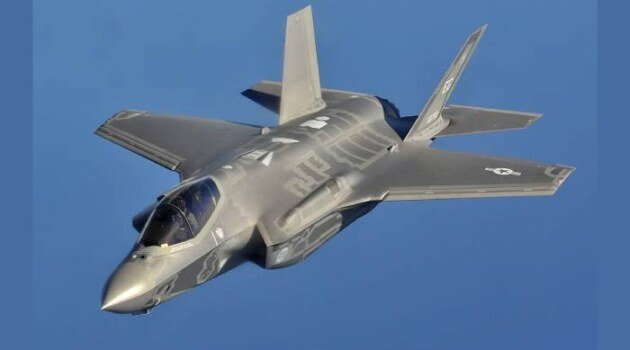

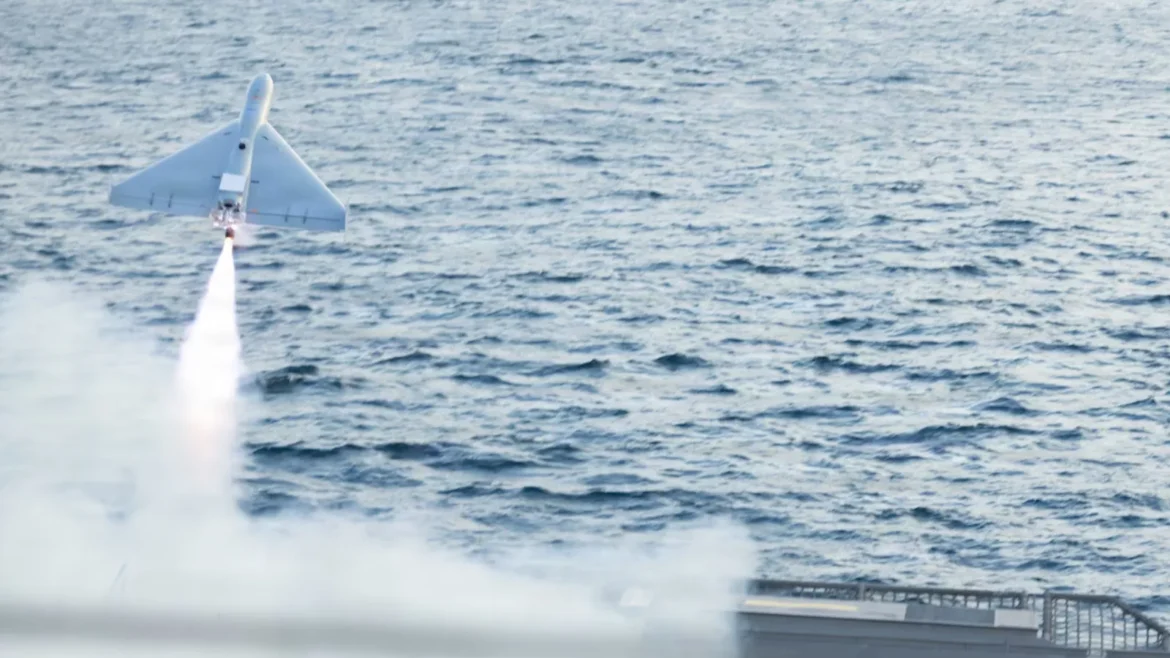
Executive Summary: U.S. Central Command is establishing Task Force Falcon Strike, its first multinational, multidomain task force dedicated to one-way attack drones. The initiative will integrate U.S. personnel and regional partners operating unmanned systems in the air, surface, and subsurface domains, expanding on the combat experience of Task Force Scorpion Strike.
CENTCOM Launches Falcon Strike Attack Drone Task Force
CENTCOM Falcon Strike represents a new step in the U.S. military’s effort to integrate low-cost unmanned strike systems across multiple operating domains in the Middle East. CENTCOM announced Aug. 13 that it had begun consultations and issued invitations to regional partners for the new task force, which will combine U.S. and partner capabilities as participating nations formally join.
The command said Falcon Strike will employ one-way attack drones consisting of unmanned systems operating above, on, and below the sea. Military support personnel from the United States and regional partners will operate the systems as the task force expands.
Navy Adm. Brad Cooper, commander of CENTCOM, said the initiative builds on the experience gained from Task Force Scorpion Strike and is intended to take advantage of innovation occurring among U.S. regional allies and partners.
Falcon Strike Builds On Scorpion Strike
The new task force follows the creation of Task Force Scorpion Strike, CENTCOM’s dedicated one-way attack drone squadron established in late 2025.
Scorpion Strike was formed as part of CENTCOM’s broader effort to accelerate the fielding of affordable unmanned systems. The squadron operates the Low-cost Unmanned Combat Attack System, or LUCAS, a one-way attack unmanned aircraft designed for relatively inexpensive strike missions.
CENTCOM has described Scorpion Strike as an effort to place lower-cost strike capabilities with deployed forces more quickly. The initiative was connected to the command’s Rapid Employment Joint Task Force, which was created to accelerate the transition of emerging technologies into operational use.
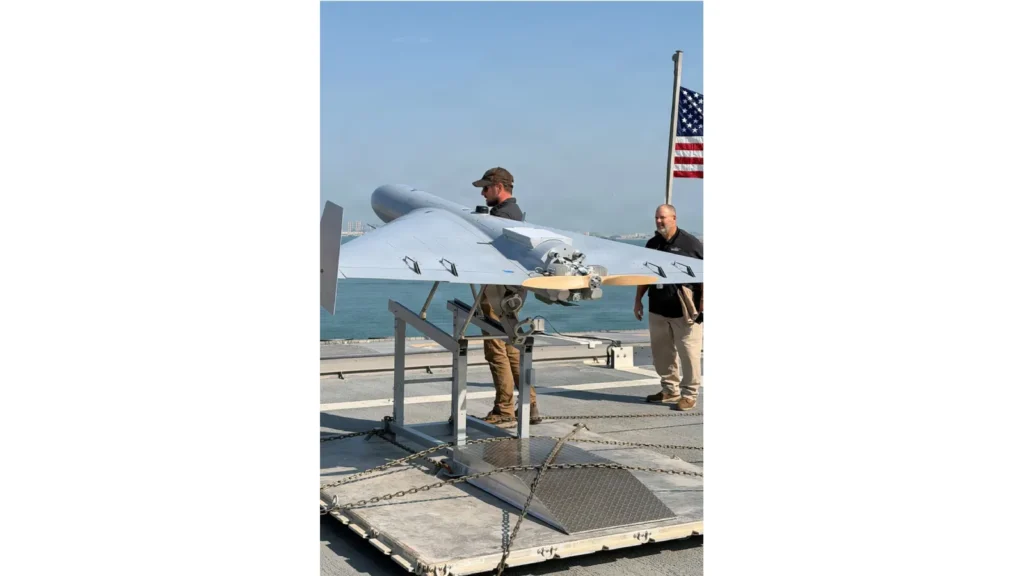
Nick Fancher, a shipboard weapons integration team weapons logistics analyst, and Rob Pavel, a logistician with Naval Air Warfare Center Weapons Division, conduct shipboard weapons integration work on the low-cost unmanned combat attack system aboard the combat ship USS Santa Barbara in the Arabian Gulf, Dec. 6, 2025, as part of Task Force Scorpion Strike operations. U.S. Central Command announced the launch of Task Force Falcon Strike Aug. 13, 2026. The new task force will expand on the success of Task Force Scorpion Strike, the U.S. military’s first dedicated one-way attack drone squadron in the Middle East. (Image: DOW)
The progression from Scorpion Strike to Falcon Strike is significant because the latter is not simply another U.S. drone unit. CENTCOM is seeking to create a framework in which multiple countries can operate and integrate unmanned strike capabilities under a common task force structure.
From Airborne Drones To Maritime Unmanned Systems
Falcon Strike’s most important distinction is its multidomain structure.
| Domain | Planned capability |
|---|---|
| Air | One-way attack unmanned aircraft |
| Surface | Unmanned surface attack systems |
| Subsurface | Unmanned underwater systems |
| Personnel | U.S. and regional partner military support staff |
| Command structure | Staff led by Special Operations Command Central personnel |
CENTCOM has not publicly identified the regional countries invited to join or provided a complete inventory of systems that will eventually form the task force.
That distinction matters. The announcement establishes the organizational framework, but the final scale and composition of Falcon Strike will depend on which regional partners formally participate and what systems they contribute.
Scorpion Strike Demonstrated Maritime Launch Operations
Scorpion Strike has already expanded beyond conventional land-based drone employment.
On Dec. 16, 2025, the Independence-class littoral combat ship USS Santa Barbara launched a LUCAS drone from its flight deck while operating in the Arabian Gulf. CENTCOM identified the event as the first time the U.S. Navy employed an attack drone at sea in the region.
The demonstration provided an operational example of how relatively small unmanned aircraft can be integrated with naval platforms without requiring the infrastructure associated with traditional manned aircraft.
CENTCOM subsequently employed Scorpion Strike during Operation Epic Fury. The command stated that the operation marked the first U.S. combat employment of Group 3 one-way attack drones and highlighted the lower cost per effect compared with more expensive platforms used for comparable missions.
Why Multidomain Integration Matters
The primary operational value of Falcon Strike is not simply the number of drones involved. It is the ability to combine different unmanned systems within a single multinational framework.
Airborne systems can provide reach and access against targets ashore, while surface and subsurface unmanned platforms can extend the same general concept into maritime environments. A common task force structure could allow participating forces to coordinate employment, sustainment, training, and operational support more closely than separate national programs.
For CENTCOM, this approach also addresses a broader challenge in modern warfare: the growing availability of relatively inexpensive unmanned systems that can impose costs on much more expensive military platforms.
Falcon Strike gives the command an organizational mechanism for experimenting with that cost imbalance across several domains rather than treating aerial, surface, and underwater drones as separate technology programs.
Regional Partners Will Be Central To The Initiative
CENTCOM said consultations are underway and that official invitations have been issued to regional partners. The command has not yet announced the final list of participating countries.
That makes partner integration one of the most important next steps for Falcon Strike.
Multinational unmanned operations require more than compatible hardware. Forces must establish procedures for command and control, communications, training, maintenance, logistics, intelligence sharing, targeting authorities, and rules governing the employment of weapons.
The task force will therefore have to reconcile different national systems and operating procedures while maintaining effective U.S. command relationships.
Special Operations Command Central personnel, who were responsible for launching Scorpion Strike, will lead the Falcon Strike staff consisting of U.S. and regional representatives.
A New Model For Low-Cost Strike Operations
Falcon Strike also reflects a wider shift in U.S. military thinking toward affordable unmanned strike capabilities.
CENTCOM’s 2026 posture materials describe the command’s effort to accelerate emerging technologies and field economical unmanned systems. The command has specifically linked this effort to establishing a more favorable cost relationship between U.S. systems and the threats they are intended to defeat.
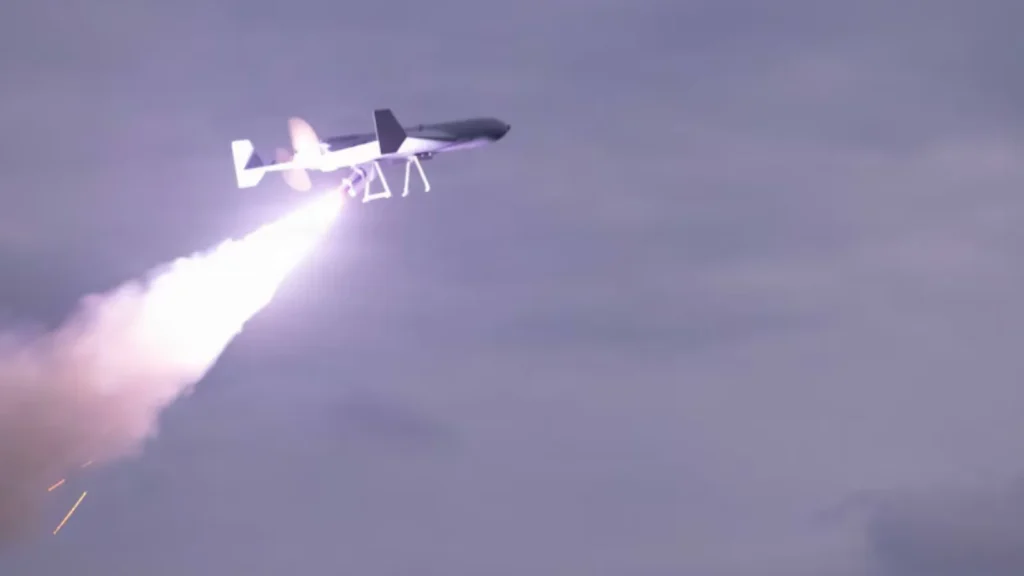
The LUCAS program provides an early example of this approach. CENTCOM says the system can operate autonomously and can be launched through several methods, including catapults, rocket-assisted takeoff systems, and mobile ground or vehicle systems.
Falcon Strike broadens that concept. Instead of relying on a single drone type or a single service, the task force is intended to bring together different unmanned platforms and operators across the maritime and air domains.
What Comes Next
CENTCOM’s announcement does not yet establish the final operational size of Falcon Strike, identify all participating nations, or disclose the specific systems that will be assigned to the task force.
The immediate priority will be partner participation and the creation of a common operating structure. Subsequent developments will likely focus on integrating U.S. and regional unmanned systems, establishing training and support arrangements, and determining how the task force will operate alongside existing CENTCOM formations.
The move nevertheless marks a clear organizational expansion of the U.S. military’s unmanned warfare effort in the Middle East. Scorpion Strike established a dedicated one-way attack drone capability; Falcon Strike is intended to turn that experience into a multinational, multidomain framework.
For CENTCOM, the objective is to make unmanned strike capabilities more widely available across the region while giving U.S. forces and their partners a common structure for operating emerging systems.
Executive Summary: The UK Ministry of Defence is set to award Inzpire a £502,000 contract to provide air warfare education and training to the Ukrainian Air Force. The one-year program will deliver about 20 weeks of instruction focused on air tactics and planning, supporting Ukraine’s transition toward Western air warfare practices.
UK Expands Ukrainian Air Tactics Training
Ukrainian pilots air tactics training is entering a new phase as the UK Ministry of Defence prepares to contract British defense company Inzpire to provide specialized air warfare education to the Ukrainian Air Force.
the contract is valued at approximately £502,000 and is scheduled to begin August 26. It will cover roughly 20 weeks of instruction during the contract year, with an option for the UK Ministry of Defence to extend the arrangement for another 12 months.
The contract centers on an air tactics and planning course. Inzpire will be responsible for establishing training objectives, developing the course and delivering the instruction.
The award was made directly rather than through a competitive procurement process, according to the contract information reported by UK Defence Journal.
Inzpire Brings Air Warfare Training Experience
Inzpire is a UK defense company founded by former Royal Air Force personnel. The company provides training, mission support, technical services and operational expertise to military customers.
Its air portfolio includes live and synthetic collective training, tactical air command and control instruction, intelligence training, electromagnetic warfare training and mission rehearsal. Inzpire also supports major RAF exercises and works with the Air and Space Warfare Centre.
The company says its training activities support aircrew and other defense personnel across complex operational environments. Its instructors include personnel with operational military experience, while its training programs cover both individual and collective performance.
That background is relevant to the Ukrainian requirement because the new contract is not simply about flying proficiency. It is focused on the planning and execution of air operations.
Training Moves Beyond Basic Flight Skills
The distinction between flight training and air warfare education is important.
The United Kingdom has already played a major role in preparing Ukrainian pilots for Western combat aircraft. In 2023, the RAF began providing Ukrainian pilots with basic flying and English-language training as part of the international effort to establish a modern Ukrainian combat aviation capability.
The initial program covered aircraft handling, instrument flying, navigation and formation flying. Graduates subsequently moved to advanced training before progressing toward F-16 training with partner nations.
The new Inzpire program addresses a different layer of combat aviation.
Air tactics training can include the planning and coordination of missions, interpretation of the operational air picture, employment of aircraft within larger air operations and decision-making under changing conditions. The precise syllabus and operational scenarios for the Ukrainian course have not been publicly disclosed.
This distinction matters because acquiring modern aircraft is only one part of developing a modern air force. Effective combat aviation also depends on trained pilots, mission planners, intelligence personnel, command-and-control structures and procedures that allow those elements to operate together.
A Shift Toward Western Air Operations
The UK contract also fits into Ukraine’s broader transition from Soviet-designed aviation practices toward Western operating concepts.
Ukraine inherited an air force structured around Soviet aircraft and doctrine. Western air forces generally place greater emphasis on mission planning, decentralized decision-making, networked operations and the integration of intelligence, surveillance and reconnaissance with combat aviation.
The Ukrainian Air Force has been undergoing this transition while operating in an active war environment, making the development of tactics and planning skills particularly significant.
The United Kingdom’s earlier pilot training effort already included English-language instruction specifically to improve interoperability with NATO air forces. The UK government has described this as part of the wider international effort to develop Ukraine’s future combat air capability.
The Inzpire contract therefore represents a progression from foundational aviation training toward more specialized operational education.
Connection To Ukraine’s F-16 Fleet
The training comes as Ukraine continues to integrate Western combat aircraft into its air force.
The international coalition supporting Ukraine’s air capability has involved multiple countries, including the United States, Denmark and the Netherlands, while European partners have contributed aircraft and training. The United Kingdom does not operate the F-16 itself, but it has contributed pilot training and other forms of air capability support.
Ukraine began receiving Western F-16s in 2024, creating a requirement that extends beyond conversion training on the aircraft itself. Pilots must also operate within a wider system of mission planning, intelligence support, air command and control and coalition interoperability.
That makes Ukrainian pilots air tactics training an important supporting element of the broader modernization effort.
However, the £502,000 contract should not be interpreted as a commitment to a particular aircraft type or as evidence that Inzpire will directly train Ukrainian pilots on F-16 systems. The publicly available contract information describes the requirement as air tactics and planning education rather than aircraft conversion training.
Why The Contract Matters
The value of the agreement is relatively modest compared with major aircraft or weapons contracts, but its operational focus is significant.
Modern air combat depends on more than aircraft performance. A capable fighter can provide limited value if crews lack the training and planning processes required to employ it effectively within a contested airspace.
Inzpire’s role is therefore best understood as part of the human and doctrinal side of Ukraine’s air force modernization.
The company already provides training associated with tactical air command and control, intelligence, surveillance and reconnaissance, electronic warfare and complex multinational exercises. Those areas overlap with many of the skills required to conduct modern coalition air operations.
The contract also demonstrates how the UK’s support for Ukraine is extending beyond the provision of equipment. Training and institutional knowledge can remain relevant as Ukraine expands its inventory of Western systems and seeks greater interoperability with European and NATO air forces.
What Happens Next
The contract is scheduled to begin on August 26, 2026, and will run for 12 months. A further 12-month option is available.
The publicly disclosed information does not identify the number of Ukrainian personnel who will participate, the specific locations where instruction will take place, or the detailed tactical syllabus.
Those details may remain undisclosed because air warfare training can involve sensitive operational procedures and information.
What is clear is that the British effort is moving from basic pilot preparation toward a more advanced layer of air warfare education. For Ukraine, that development is relevant to the long-term challenge of building an air force capable of operating modern Western aircraft within a more integrated command, control and mission-planning structure.
Executive Summary: The U.S. Navy’s MQ-25 Stingray carrier-based tanker drone is now projected to reach initial operational capability in 2029, extending the program’s schedule beyond earlier targets. At the same time, the Pentagon estimates acquisition costs at $19.4 billion, while GAO has identified production-before-testing, cybersecurity, cost transparency and manufacturing risks that could affect the program’s remaining schedule.
MQ-25 Stingray Faces Another Schedule Setback
The MQ-25 Stingray delay has placed the U.S. Navy’s first operational carrier-based unmanned aircraft under renewed congressional scrutiny, with the Pentagon now projecting initial operational capability in 2029. A Congressional Research Service assessment updated August 12 highlights concerns over the Navy’s decision to proceed with low-rate initial production while important production-representative testing remains incomplete.
The schedule has shifted significantly since the program began. Earlier Navy planning targeted IOC in 2024, followed by revised targets of 2026 and 2027. Current planning points to February 2029, while flight testing is expected to continue into fiscal 2029.
The delay is important because the MQ-25 is not simply another unmanned aircraft procurement. It is intended to establish the Navy’s first operational carrier-based unmanned aviation capability while changing how carrier air wings conduct aerial refueling.
What The MQ-25 Is Designed To Do
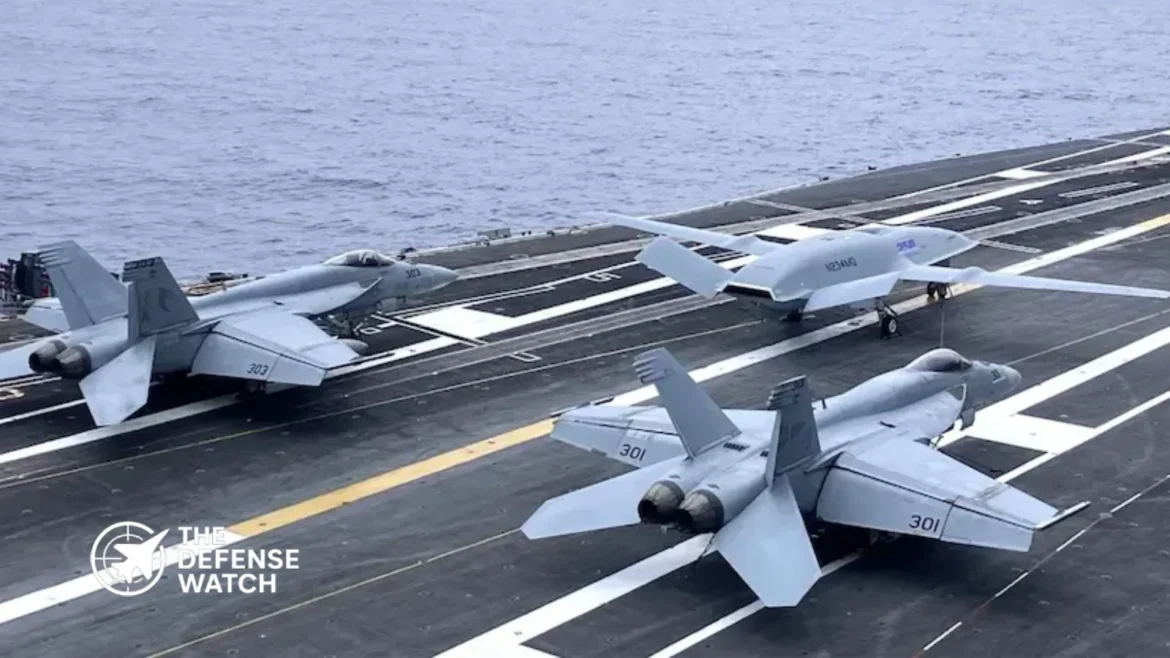
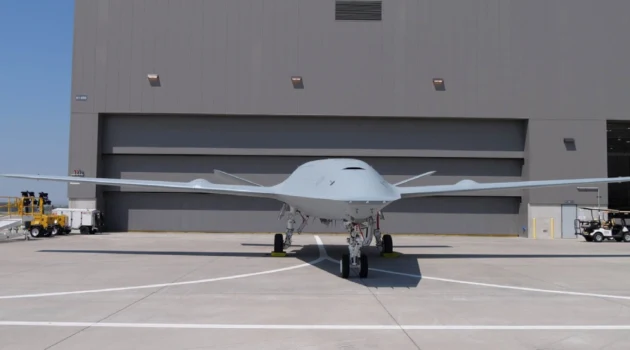
The MQ-25A Stingray is being developed primarily as an unmanned aerial tanker. Its central mission is to refuel carrier-based aircraft, allowing F/A-18E/F Super Hornets that currently perform tanker duties to remain available for combat missions.
The Navy’s stated requirement calls for the aircraft to deliver at least 14,000 pounds of fuel at a distance of 500 nautical miles from the carrier. Earlier Navy documentation has also described an objective of carrying as much as 16,000 pounds of fuel at that distance.
MQ-25 Program Element Current Information Primary mission Carrier-based aerial refueling Secondary mission ISR support Planned fleet 76 aircraft Operational aircraft 67 Test and development aircraft 9 Fuel delivery objective At least 14,000 pounds at 500 nautical miles Initial operational capability 2029, currently projected Engine Rolls-Royce AE 3007N Air vehicle manufacturer Boeing Mission-control software Lockheed Martin-developed systems The aircraft is also intended to support intelligence, surveillance and reconnaissance missions. Its larger significance, however, is its role as a foundation for integrating additional unmanned systems into future carrier air wings.
First Production Aircraft Has Already Flown
The schedule setback comes despite measurable progress.
A production-representative MQ-25A completed its first flight on April 25, 2026, from Boeing’s facility at MidAmerica Airport in Mascoutah, Illinois. The aircraft flew for approximately two hours while Navy and Boeing personnel controlled it from the Unmanned Carrier Aviation Mission Control System MD-5 ground control station.
The Navy subsequently approved Milestone C in May 2026, allowing the program to proceed into low-rate initial production.
That creates an important distinction between program progress and operational readiness. The aircraft has reached flight testing and production authorization, but the Navy still has to complete a substantial body of developmental, operational, cybersecurity and carrier-integration testing before the system can become an operational fleet capability.
Why Testing And Production Are Creating Concern
The central acquisition issue is concurrency.
GAO reported that the MQ-25 program is moving forward with low-rate production before all developmental testing is complete. If flight testing identifies design or manufacturing problems, aircraft already being produced may require modifications. That can increase costs and disrupt the production schedule.
The concern was not identified for the first time in 2026. A 2023 Department of Defense inspector general review also warned about the risks of beginning low-rate production before sufficient testing of the production-representative aircraft had been completed. The Navy responded by revising its risk assessment and delaying some program milestones, but ultimately authorized LRIP in May 2026.
GAO’s latest assessment also identified manufacturing difficulties involving wiring, vibration monitoring and parts qualification. Program officials reported intermediate solutions for those issues, but the problems contributed to schedule pressure.
This creates a difficult acquisition balance. Producing aircraft earlier can protect the industrial schedule and accelerate fleet introduction, but producing before testing is mature increases the possibility that production aircraft will have to be modified later.
Cybersecurity Has Become Another Schedule Risk
The MQ-25 is also dependent on a sophisticated control architecture rather than the aircraft alone.
The Unmanned Carrier Aviation Mission Control System, known as MD-5, provides mission planning, flight control and communications functions. The Navy is developing shipboard, shore-based and mobile versions of the system, creating an architecture intended to support the MQ-25 and potentially other unmanned aircraft in future carrier air wings.
GAO found that key cybersecurity testing remains incomplete. The program does not plan to finish certain cybersecurity tests until October 2028, more than two years after the production aircraft’s first flight. GAO warned that completing this work after production begins creates additional risk of cost growth.
For a carrier-based unmanned aircraft, cybersecurity is particularly important because the aircraft depends on digital communications and remote mission control. The system must operate reliably within a complex naval network while maintaining safe control of the aircraft during launch, recovery, refueling and other carrier operations.
MQ-25 Costs Continue To Increase
Cost growth is another issue attracting congressional attention.
The Pentagon’s current acquisition estimate is approximately $19.4 billion, including procurement, development, testing and military construction. The associated acquisition unit cost is approximately $255.8 million per aircraft under the Pentagon’s accounting methodology.
GAO uses a different accounting basis and estimates the program at approximately $16.6 billion, excluding military construction, with an acquisition unit cost of about $218 million. GAO said its unit-cost estimate increased 4% from the previous assessment.
The difference between the two figures does not represent a contradiction. Acquisition programs can produce different unit-cost figures depending on which development, infrastructure and support costs are included.
GAO also found that the Navy was working to obtain better production cost data. The fixed-price nature of the original development contract meant that the program office did not previously have complete visibility into Boeing’s actual aircraft-production costs.
That information becomes increasingly important as the MQ-25 moves from development into production.
Manufacturing Disruptions Added To Schedule Pressure
The program has also faced industrial-base challenges.
GAO reported that MQ-25 construction was affected by a machinists’ strike at Boeing’s St. Louis facility from August through November 2025. The program has also dealt with component qualification and obsolescence issues.
Boeing is building the MQ-25 at its production facility at MidAmerica St. Louis Airport in Mascoutah, Illinois. The company opened the approximately $200 million facility in 2024 as the dedicated production site for the aircraft.
The MQ-25 uses the Rolls-Royce AE 3007N turbofan, produced in Indianapolis, while the aircraft’s refueling system is based on the Cobham Aerial Refueling Store used by tanker-configured F/A-18E/F aircraft.
Why The Delay Matters To Carrier Aviation
The operational effect of the delay extends beyond the MQ-25 program itself.
Carrier air wings currently use modified F/A-18E/F Super Hornets for aerial refueling duties. Those aircraft provide valuable tanker capacity, but every fighter assigned to tanker missions is unavailable for other combat tasks.
The MQ-25 is intended to separate those functions. By assigning aerial refueling to an unmanned platform, the Navy can preserve more Super Hornets for strike and fighter missions while extending the reach of other carrier aircraft.
The operational requirement becomes more significant as the Navy plans for carrier operations at greater distances from potential adversaries. A dedicated carrier tanker can help reduce the range penalty imposed on fighters and other aircraft when they must operate farther from the carrier.
The 2029 IOC target therefore represents more than a procurement delay. It postpones the Navy’s ability to fully exploit a key change in carrier air-wing composition.
The MQ-25 Is Also A Test Of Future Unmanned Carrier Operations
The Stingray’s importance goes beyond aerial refueling.
The Navy has described the MQ-25 and its mission-control architecture as a path toward a future carrier air wing containing a larger number of unmanned aircraft. The experience gained in operating an unmanned aircraft from a carrier deck could influence future unmanned ISR, electronic warfare and other carrier-based missions.
That makes the current testing problems strategically relevant.
The Navy must demonstrate not only that the MQ-25 can fly, but that an unmanned aircraft can safely integrate with a carrier’s launch and recovery cycle, deck operations, communications architecture, maintenance system and manned aircraft.
The first production flight in April demonstrated an important milestone, but it did not by itself establish operational readiness. The remaining test program must validate the aircraft and its supporting systems under increasingly representative conditions.
Congress Faces A Key Acquisition Decision
The MQ-25 is now moving through the exact phase in which Congress and acquisition officials must balance schedule, cost and technical maturity.
The Navy requested $1.75 billion for the MQ-25 program in fiscal 2027, including funding for three aircraft and additional research, development, testing and evaluation work. Pending House and Senate defense bills would provide the requested amount, according to the latest reporting.
Congressional oversight is likely to focus on whether the Navy has sufficient visibility into production costs, whether remaining testing can be completed without major redesigns, and whether cybersecurity work is proceeding quickly enough.
The larger question is whether accelerating production now will ultimately shorten the path to operational service or create additional retrofit and testing costs.
For the MQ-25, that distinction matters because the program is intended to become the Navy’s first operational carrier-based unmanned aircraft. Its success or failure will provide the service with practical evidence about how quickly unmanned systems can be integrated into the carrier air wing at scale.
Bottom Line
The MQ-25 Stingray has made important technical progress in 2026, including the first flight of a production-representative aircraft and Milestone C approval for low-rate initial production. However, those milestones have not eliminated the program’s underlying schedule, testing, cybersecurity and cost risks.
With IOC now projected for 2029, the Navy faces several years of additional testing and integration before the MQ-25 can assume its intended operational role. The program’s performance during that period will be closely watched because it will help determine not only when the Navy receives its first unmanned tanker, but also how confidently it can expand unmanned operations across future carrier air wings.

Executive Summary: India has issued a major tender for 60 multirole transport aircraft for the Indian Air Force, in a program expected to be worth roughly ₹1 lakh crore, or about $10 billion. The procurement calls for 12 aircraft to be delivered in fly-away condition and 48 to be manufactured in India with more than 60 percent indigenous content, putting industrial participation alongside aircraft performance at the center of the competition.
India Opens 60-Aircraft Multirole Transport Competition
India has issued a tender for 60 multirole transport aircraft for the Indian Air Force as New Delhi moves to replace aging Soviet-origin transport aircraft and strengthen tactical and strategic airlift capacity. Indian defense officials cited in reports said the tender has been issued to Indian companies including Hindustan Aeronautics Limited, Tata and Mahindra, with Indian industry expected to play a leading role.
The program follows the Defence Acquisition Council’s March 2026 approval of the 60-aircraft Medium Transport Aircraft requirement. The acquisition is intended to address a long-standing requirement to modernize the IAF’s transport fleet and improve the ability to move troops, equipment and supplies across India’s geographically demanding operating environment.
The three aircraft most prominently associated with the competition are Embraer’s C-390 Millennium, Lockheed Martin’s C-130J Super Hercules and Airbus’ A400M Atlas. Technical evaluations of the competing proposals were reported as completed in July, bringing the program closer to the selection and contracting phase.
A Major Shift Toward Domestic Production
The structure of the tender is significant because India is not simply seeking an off-the-shelf transport aircraft purchase.
The reported requirement calls for 12 aircraft to arrive in fly-away condition, representing about 20 percent of the fleet. The remaining 48 aircraft are to be manufactured in India, with more than 60 percent indigenous content.
That arrangement creates a substantial industrial requirement for the winning manufacturer and its Indian partner. It also means the competition will involve production engineering, supplier development, maintenance and long-term sustainment, rather than aircraft price and performance alone.
For India, the potential industrial benefit is considerable. A domestic production line for a large military transport aircraft could support local component manufacturing, maintenance, repair and overhaul capabilities and skilled aerospace employment over several decades.
The program also follows India’s broader effort to increase domestic aerospace production. The Airbus-Tata C295 program has already established a precedent for manufacturing a foreign-designed military transport aircraft in India.
C-390, C-130J And A400M Bring Different Capabilities
The three aircraft occupy overlapping but distinct positions within the military airlift market.
Aircraft Manufacturer Propulsion Maximum Payload Key Characteristic C-390 Millennium Embraer Twin turbofan 26 metric tons High-speed tactical transport C-130J-30 Super Hercules Lockheed Martin Four turboprops 19.96 metric tons Mature tactical airlift platform A400M Atlas Airbus Four turboprops 37 metric tons Heavy tactical and strategic airlift Source: manufacturer and U.S. Air Force specifications.
Embraer C-390 Millennium
The C-390 is the newest aircraft in the competition and offers a combination of relatively high payload and jet speed.
Embraer’s published specifications give the aircraft a maximum concentrated payload of 26 metric tons, a maximum cruise speed of 470 knots, or Mach 0.80, and a cargo hold measuring approximately 18.5 meters long, 3.45 meters wide and 2.95 meters high.
The aircraft is designed for cargo and troop transport, airdrop operations, medical evacuation, search and rescue, firefighting and humanitarian missions. It can also operate from temporary and unpaved runways.
For the Indian competition, Embraer has already established an industrial partnership with Mahindra Group. The companies have announced plans to develop C-390 manufacturing and MRO capabilities in India if the aircraft is selected for the MTA program.
Lockheed Martin C-130J Super Hercules
The C-130J brings a different advantage: operational maturity and an established Indian user base.
India already operates C-130J aircraft, primarily for special operations and tactical airlift missions. Lockheed Martin also offers the stretched C-130J-30, which provides additional cargo space compared with the standard aircraft.
According to the U.S. Air Force, the C-130J has a maximum allowable payload of 19,090 kilograms, while the C-130J-30 is rated at 19,958 kilograms. The C-130J-30 can carry up to 128 combat troops or 92 paratroopers under the listed maximum-load configuration.
The platform’s existing presence in India could reduce some transition requirements, particularly in areas such as crew training, maintenance practices, logistics and operational familiarity.
However, the C-130J’s payload capacity is lower than the C-390 and substantially below the A400M. That makes payload requirements and the exact missions envisioned for the new fleet especially important in the eventual evaluation.
Airbus A400M Atlas
The A400M sits at the upper end of the competition.
Airbus lists a 37-ton maximum payload, a 340-cubic-meter cargo hold and a maximum cruise speed of Mach 0.72. It can carry significantly heavier and larger loads than conventional medium tactical airlifters and is designed to operate from short and unpaved runways.
The aircraft can carry 20 tons to about 3,400 nautical miles and has a maximum payload range of about 1,780 nautical miles, according to Airbus specifications.
Its larger cargo compartment gives the A400M a major advantage when transporting bulky equipment. The tradeoff is that India would be acquiring an aircraft considerably larger than the C-130J and C-390.
Why Payload And High-Altitude Operations Matter
India’s transport requirements are unusually demanding because the IAF must support operations across the Himalayas, deserts, plains and island territories.
The aircraft will need to provide more than conventional strategic cargo movement. Its value will depend heavily on its ability to operate from forward airfields, carry useful payloads in demanding environmental conditions and sustain repeated tactical missions.
High-altitude operations are particularly important. Aircraft performance at high elevations is affected by air density, temperature, runway length and payload, making nominal maximum payload figures insufficient for judging suitability.
This is one reason the final evaluation is likely to depend heavily on operational testing rather than brochure specifications.
The aircraft also needs to occupy the capability space between India’s smaller tactical transports and its heavier strategic airlifters. The objective is not simply to obtain another cargo aircraft, but to create a flexible fleet capable of supporting routine logistics as well as rapid military movement.
Industrial Competition Could Be As Important As Aircraft Performance
The 60 percent indigenous-content requirement changes the commercial equation for the three manufacturers.
A successful bidder would have to establish or expand an Indian production ecosystem capable of supporting the aircraft throughout its service life. That includes manufacturing, quality control, component sourcing, maintenance and potentially engine and systems support.
For Embraer, the Mahindra partnership gives the C-390 campaign a defined Indian industrial framework.
Lockheed Martin has an established relationship with Tata Advanced Systems, while the C-130J already operates within the IAF. That provides the U.S. manufacturer with an existing Indian industrial and operational foundation.
Airbus also has a significant Indian industrial presence through the C295 program, which could provide an existing base for further aerospace manufacturing cooperation.
The winner will therefore be judged not only on the aircraft delivered but also on the credibility of its proposed Indian production system.
Strategic Importance For The Indian Air Force
A 60-aircraft fleet would provide a major increase in India’s medium airlift capacity and improve the IAF’s ability to move personnel, equipment and supplies without relying entirely on its heavier transport fleet.
The program also has wider strategic significance.
For India, domestic production could reduce dependence on imported aircraft and create greater control over long-term sustainment. It could also give Indian aerospace companies experience with complex military aircraft production at a scale beyond individual components.
For the United States and its defense industry, the competition is significant because the C-130J represents another opportunity to expand the U.S.-India defense industrial relationship. India already operates several U.S.-origin platforms, including C-17 and C-130J aircraft, while Washington and New Delhi have increasingly emphasized interoperability and defense technology cooperation.
The C-390 offers a different industrial proposition, potentially strengthening India’s aerospace relationship with Brazil and expanding Embraer’s manufacturing footprint in Asia.
The A400M, meanwhile, would connect India’s military airlift fleet to a European multinational program with substantial existing experience in tactical and strategic transport.
The Decision Will Extend Beyond The Initial 60 Aircraft
The immediate requirement is 60 aircraft, but the industrial implications are likely to last much longer.
A domestic assembly line, supplier network and MRO infrastructure created for the program could support additional aircraft, upgrades and sustainment over the fleet’s service life. That makes the initial selection potentially more consequential than the number of aircraft in the current tender suggests.
The competition will ultimately test three different approaches to Indian airlift modernization.
The C-130J offers an established aircraft and an existing Indian operating base. The C-390 offers a newer jet-powered design with higher payload and speed than the C-130J. The A400M provides substantially greater payload and cargo volume, placing it closer to the heavy tactical airlift category.
The key question for India’s acquisition authorities will be which combination of payload, runway performance, high-altitude capability, operating cost, fleet commonality, industrial participation and long-term support provides the best value.
The tender therefore represents more than a competition for 60 aircraft. It is also a decision about how India intends to build and sustain its next generation of military airlift capability.

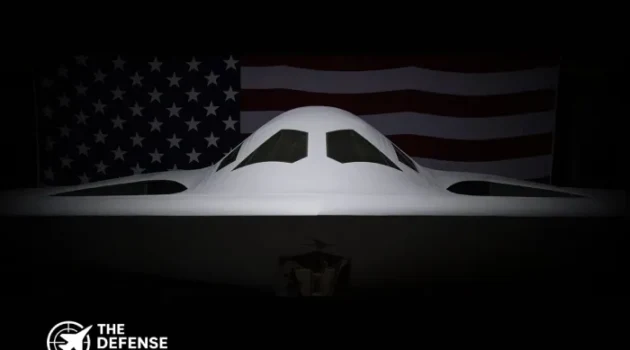
Executive Summary: Northrop Grumman has unveiled a new engineering facility intended to support next-generation aircraft development, adding infrastructure as the company competes for the U.S. Navy’s F/A-XX program. The move comes as the Navy prepares to advance its sixth-generation carrier fighter effort, which is intended to complement the F-35C and eventually replace the F/A-18E/F Super Hornet and EA-18G Growler.
Northrop Grumman Builds Capacity For Sixth-Generation Aircraft
Northrop Grumman’s sixth-generation aircraft effort is gaining an important industrial infrastructure component with the opening of a new engineering site designed to support advanced aircraft development.
The facility includes classified engineering and laboratory capabilities intended for work on highly sensitive aerospace programs. The development comes as Northrop Grumman competes with Boeing for the U.S. Navy’s F/A-XX next-generation carrier-based fighter.
FlightGlobal reported the facility’s opening in August 2026, highlighting its role in Northrop Grumman’s broader sixth-generation aircraft development activity.
Northrop Grumman has not publicly disclosed the full technical scope of classified work conducted at the site. That distinction is important because the facility’s existence does not by itself confirm specific F/A-XX design features, performance characteristics or program milestones.
New Facility Adds Classified Engineering Capacity
The new site is part of Northrop Grumman’s broader investment in advanced aircraft engineering and secure development infrastructure.
The company already operates a major aircraft engineering presence in Melbourne, Florida. Northrop Grumman says its Melbourne campus designs, develops and tests advanced manned aircraft and battle management systems. The campus contains 17 buildings across a 109-acre site near Orlando Melbourne International Airport.
Northrop Grumman has also described its Florida operations as supporting sixth-generation aircraft development. Its corporate material identifies Florida as an important center for advanced aerospace design and engineering, alongside work on the B-21 Raider and other military aircraft.
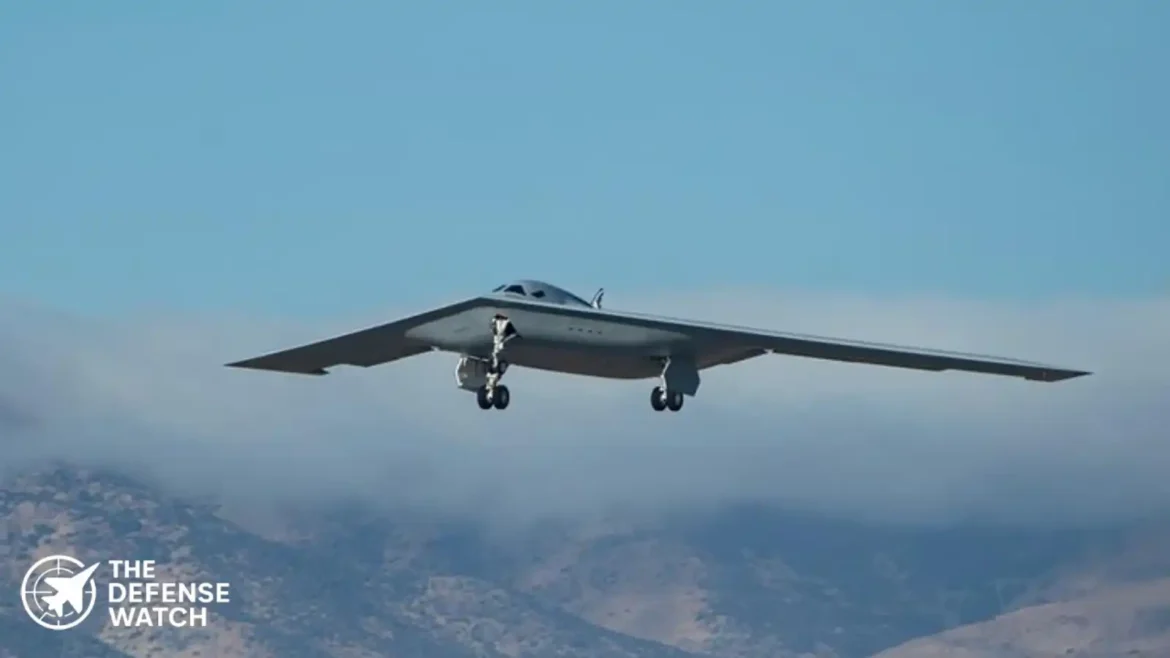
The company has significant experience with low-observable aircraft. Its B-21 Raider program has moved through flight testing, including aerial refueling testing in 2026, while Northrop Grumman continues to expand production capacity.
That background is relevant to F/A-XX because sixth-generation combat aircraft development requires expertise across low-observable design, advanced mission systems, digital engineering, sensors, communications and aircraft integration.
F/A-XX Remains A Major Navy Modernization Program
The U.S. Navy’s F/A-XX program is intended to provide the next generation of carrier-based tactical aviation.
The aircraft is expected to operate alongside the F-35C and other carrier air wing assets rather than function as a standalone replacement for every existing capability. The Navy has described its future carrier air wing as an integrated force in which crewed and uncrewed aircraft work together.
Recent Navy publications state that the service’s future sixth-generation strike fighter will augment and eventually replace the F/A-18E/F Super Hornet and EA-18G Growler in the carrier air wing. The Navy expects the transition to take place during the 2030s.
The broader direction is also consistent with the Navy’s work on collaborative combat aircraft. In January 2026, Naval Air Systems Command reported a demonstration involving autonomous systems and multi-platform coordination intended to advance future manned-unmanned teaming capabilities.
This means the value of F/A-XX will extend beyond the performance of the crewed aircraft itself. The fighter is being developed within a wider architecture involving sensors, networks, weapons, autonomous aircraft and other carrier air wing platforms.
Northrop Grumman’s Position In The F/A-XX Competition
Northrop Grumman and Boeing are the two remaining major competitors for the Navy’s F/A-XX program.
The competition has taken place against a complicated U.S. fighter development landscape. Boeing is already responsible for the Air Force’s F-47, which was selected in 2025 as the crewed component of the Air Force’s Next Generation Air Dominance effort. The Pentagon’s FY2026 budget briefing identified the F-47 as the Air Force’s first crewed sixth-generation fighter and said the Navy’s F/A-XX program would retain limited development funding.
The F/A-XX program has also faced funding and scheduling pressure. Reuters previously reported that the Navy’s next-generation fighter is intended to provide greater stealth, range and endurance while integrating with uncrewed systems and carrier-based defensive networks.
Against that backdrop, Northrop Grumman’s new engineering infrastructure has significance beyond the physical facility.
It provides additional secure workspace and engineering capacity at a time when the defense industry is competing for personnel with experience in advanced aircraft design. A modern facility can also support digital engineering, systems integration and classified program work without requiring every development activity to take place at an existing production location.
Why The Engineering Site Matters
The most important point is that the facility should be viewed as an industrial capability investment rather than proof that Northrop Grumman has won the F/A-XX competition.
That distinction matters.
A new engineering site can support multiple advanced aerospace programs, including classified projects whose details are not publicly available. Northrop Grumman’s established aircraft portfolio already includes the B-21, E-2D Advanced Hawkeye, F-35 center fuselage work and other specialized aircraft and mission systems.
The company has also demonstrated a willingness to invest in facilities and production capacity as major programs progress. In July 2026, Northrop Grumman reported that its Roy Innovation Center in Utah was expanding with a new building supporting continued growth of the site and its workforce.
For F/A-XX, however, the timing is notable.
A sixth-generation naval fighter will require a long development cycle, extensive ground testing, flight testing and systems integration before operational deployment. Secure engineering infrastructure therefore becomes part of the program’s industrial foundation.
The facility also illustrates a broader shift in U.S. military aviation development. Future combat aircraft programs increasingly depend on digital design, secure software development, advanced manufacturing, sensor integration and networked systems alongside conventional aerodynamic and structural engineering.
Sixth-Generation Aircraft Development Moves Beyond The Airframe
The term sixth-generation aircraft covers more than a new fighter shape or a reduction in radar signature.
The emerging U.S. approach emphasizes a family of connected capabilities. The crewed aircraft is expected to operate with uncrewed platforms, networked sensors and other assets that distribute sensing, targeting and weapons functions across the force.
Northrop Grumman’s B-21 program provides one example of this approach. The company describes the bomber as a sixth-generation aircraft built around advanced stealth, networking and an open systems architecture.
The Navy’s F/A-XX effort is developing within the same broad technological environment, although the requirements for a carrier-based fighter differ substantially from those of a long-range bomber.
For Northrop Grumman, experience from programs such as the B-21 could provide relevant engineering knowledge, particularly in low-observable aircraft design, systems integration and digital development. However, it would be premature to assume that technologies from one program will automatically transfer directly to F/A-XX.
What Comes Next For F/A-XX
The next major milestone is the Navy’s selection of an industrial partner for the F/A-XX development effort.
The decision will determine which company leads the next phase of engineering and manufacturing development and will establish the industrial architecture for a program expected to shape naval aviation for decades.
Northrop Grumman’s new engineering site places additional infrastructure behind its bid, but the facility itself does not determine the outcome of the competition.
For the U.S. Navy, the larger objective is to develop a carrier-based aircraft capable of operating in increasingly contested environments while remaining integrated with the broader carrier air wing.
That requirement explains why the F/A-XX competition is about more than the design of a single fighter. It is also a competition over engineering capacity, classified development infrastructure, advanced manufacturing expertise and the ability to sustain a complex combat aircraft program through several decades of modernization.
As the Navy moves toward its F/A-XX decision, Northrop Grumman’s expansion shows that the industrial base supporting sixth-generation aircraft development is already being built around the next generation of U.S. airpower.

Executive Summary: A U.S. Air Force B-2 Spirit completed a more than 16-hour direct flight from Missouri to RAAF Base Amberley, Australia, during a June 2026 Bomber Task Force deployment. The mission demonstrated the bomber’s ability to project long-range stealth strike power into the Indo-Pacific while integrating with Australian tankers, aircraft and ground personnel.
B-2 Spirit Demonstrates Long-Range Strike Capability In Australia
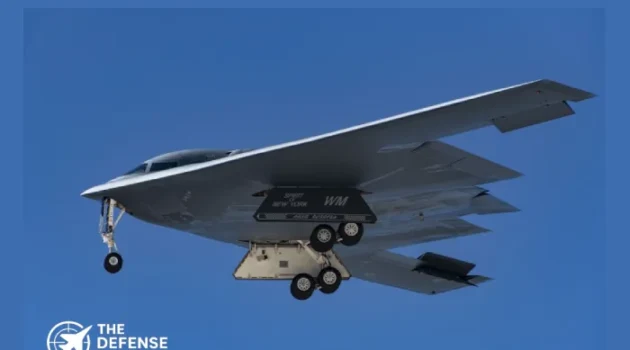
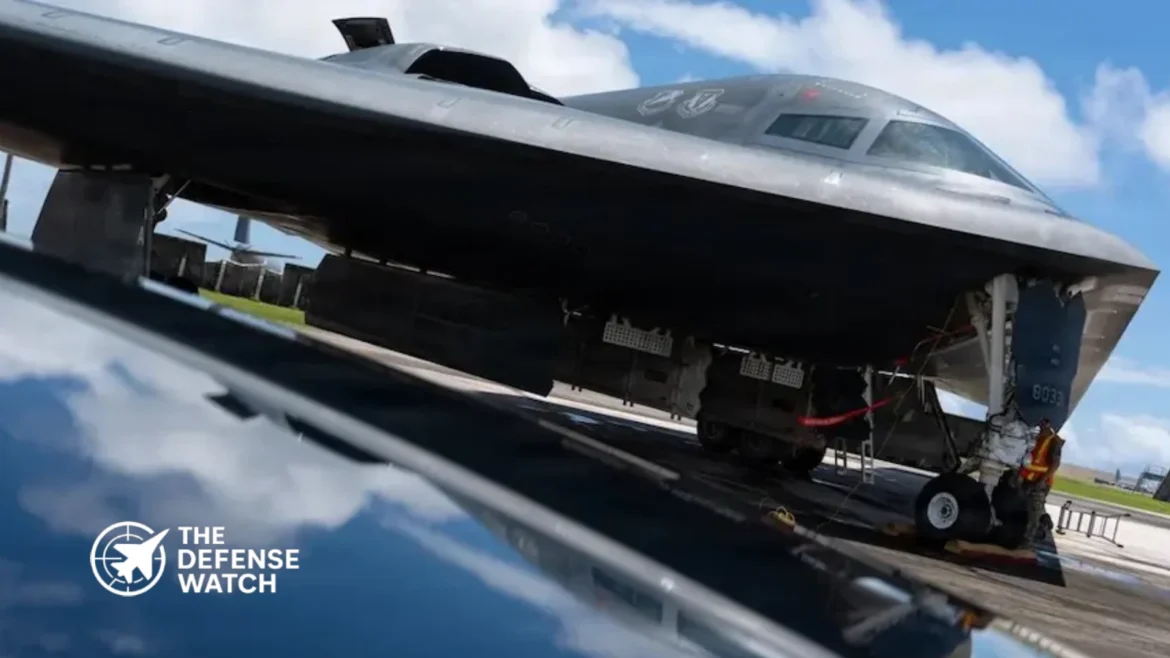
The B-2 Spirit’s more than 16-hour flight from the continental United States to Australia highlights a central feature of U.S. global strike doctrine: strategic bombers can operate across the Indo-Pacific without requiring the aircraft to begin their missions from a forward combat base. The June 2026 deployment to RAAF Base Amberley was conducted as part of Bomber Task Force operations and Exercise Diamond Storm.
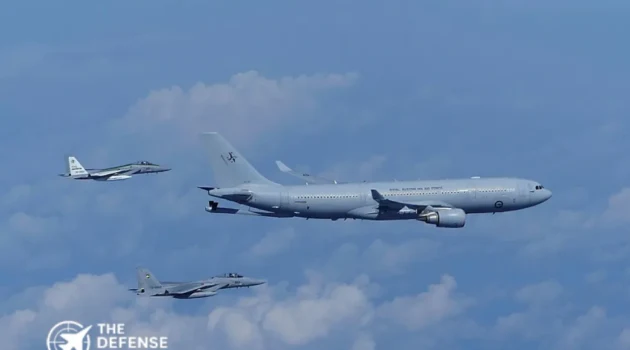
The aircraft, identified as Spirit of Texas and assigned to the 393rd Expeditionary Bomb Squadron of the 509th Bomb Wing at Whiteman Air Force Base, Missouri, reached Australia after an extended flight supported by aerial refueling. The deployment also involved Royal Australian Air Force KC-30A tanker aircraft and U.S. Air Force KC-135 Stratotankers.
The operation provides a useful example of how the United States and Australia are developing the ability to combine strategic strike aircraft, tanker support, fifth-generation fighters and expeditionary infrastructure across a very large operating area.
Why The 16-Hour Flight Matters
The significance of the mission goes beyond the distance covered.
The B-2 is designed to conduct penetrating strike missions against heavily defended targets. Its low-observable design reduces radar, infrared, acoustic, electromagnetic and visual signatures, allowing the aircraft to operate with a lower probability of detection than conventional aircraft. The U.S. Air Force lists an unrefueled range of approximately 6,000 nautical miles, or 9,600 kilometers.
The flight to Australia demonstrates how aerial refueling extends that basic range.
Instead of depending entirely on a forward airfield, the bomber can depart from Whiteman Air Force Base and receive fuel while in transit. This creates additional operational options for U.S. Strategic Command and theater commanders, particularly in regions where airfields, ports and other fixed military infrastructure could face long-range missile threats.
The distinction is important in the Indo-Pacific, where distances between major military bases can be measured in thousands of miles.
Australian KC-30A Adds A Key Allied Capability
One of the most significant elements of the deployment was the participation of Australia’s KC-30A Multi Role Tanker Transport aircraft.
U.S. Air Force imagery from June 11 shows a B-2 receiving fuel from a Royal Australian Air Force KC-30A over the South Pacific. The operation formed part of the Bomber Task Force deployment and demonstrated the ability of Australian and U.S. aircrews to support the same long-range mission.
Australian ground crews also supported the B-2 at RAAF Base Amberley, including hot-pit refueling operations. Hot-pit refueling allows an aircraft to receive fuel while remaining on the ground with its engines running, reducing some turnaround time between missions.
For the alliance, the practical value is significant. Tanker interoperability can extend the operating radius of combat aircraft while reducing the amount of dependence on a limited number of forward bases.
B-2 Integration With Australian Airpower
The 2026 deployment was not simply a long-distance bomber flight.
The B-2 operated with Australian aircraft as part of Exercise Diamond Storm, including integration with Royal Australian Air Force F-35A Lightning II fighters. Australian Defence said the activity included fifth-generation integration, air-to-air support, ground-based refueling and security and logistics support at Amberley.
That combination is important because modern air operations increasingly depend on networks rather than individual aircraft.
The B-2 supplies long-range penetrating strike capability. F-35A aircraft can contribute sensing, targeting and air combat capabilities. Tankers extend the endurance of the force, while ground personnel provide the maintenance, security and logistics infrastructure needed to sustain operations.
The result is a more complex force package than a bomber operating independently.
Key B-2 Spirit Capabilities
Capability B-2 Spirit Primary mission Multi-role strategic bomber Crew Two pilots Engines Four General Electric F118-GE-100 Unrefueled range Approximately 6,000 nautical miles Maximum payload 60,000 pounds Maximum takeoff weight 336,500 pounds Maximum altitude Approximately 50,000 feet Speed High subsonic Weapons Conventional and nuclear Operational base Whiteman Air Force Base, Missouri The U.S. Air Force lists 20 B-2 aircraft in the active inventory as of May 2026, including one test aircraft. The fleet remains a highly specialized component of the U.S. long-range strike force.
The B-2 Remains Relevant As The B-21 Enters The Force
The Australian mission also illustrates why the B-2 continues to receive significant attention while the Air Force transitions toward the B-21 Raider.
The B-2 is an aging aircraft, but its combination of stealth, range and payload remains valuable for penetrating strike missions. In July 2026, the Air Force reported that the B-2 Spirit of Ohio had returned to operational service after programmed depot maintenance, reinforcing the importance of keeping individual aircraft available for global missions.
At the same time, the B-21 is being developed as the future backbone of the Air Force’s bomber fleet alongside the B-52. The Department of the Air Force announced in July 2026 that the B-21 will operate with a two-pilot crew and is intended to conduct extended-duration, long-range missions in contested environments.
The B-2 therefore occupies an important transitional position. It provides an operationally proven penetrating stealth bomber capability while the United States develops a larger and more sustainable next-generation bomber force.
Indo-Pacific Operations Depend On More Than Range
The June mission also demonstrates a broader operational reality.
Long-range aircraft do not operate independently of logistics. Even an aircraft with intercontinental range depends on tanker aircraft, maintenance crews, weapons support, secure communications, airfield infrastructure and trained personnel.
The Australian deployment brought several of those elements together.
The U.S. Air Force described the Bomber Task Force deployment as an opportunity to demonstrate Agile Combat Employment and generate combat power in the Indo-Pacific. The Australian Defence Force similarly emphasized that the B-2’s participation in Diamond Storm strengthened interoperability and demonstrated Australia’s ability to provide security, logistics and operational support in a demanding environment.
This matters because the Indo-Pacific presents an unusually challenging geography for air operations. Forces may need to operate over enormous distances while maintaining enough flexibility to shift between bases and mission areas.
The ability to move a B-2 from Missouri to Australia, refuel it in flight, integrate it with allied aircraft and support it at an Australian airbase provides a practical demonstration of that flexibility.
B-2 Expands The U.S. Strategic Options In The Pacific
The B-2 deployment should not be viewed simply as a demonstration flight.
It tested several capabilities that would be relevant to a real contingency: long-distance movement from the continental United States, tanker integration, allied refueling, expeditionary support, stealth bomber operations and coordination with fifth-generation aircraft.
The United States has repeatedly used Bomber Task Force deployments to maintain bomber proficiency and strengthen interoperability with allies. Previous B-2 operations in Australia included a 2024 deployment involving three aircraft and extensive integration with Australian F-35s, F/A-18F Super Hornets, EA-18G Growlers and KC-30A tankers.
The 2026 deployment builds on that pattern.
It also comes as U.S. and allied forces expand the range of capabilities used for Indo-Pacific deterrence. In June 2026, Pacific Air Forces conducted a B-2 live-fire exercise involving the AGM-158C Long Range Anti-Ship Missile north of the Mariana Islands, demonstrating that the bomber can contribute to counter-maritime strike missions as well as traditional long-range strike roles.
Taken together, these activities show how the B-2 is being used as part of a broader network of U.S. and allied capabilities.
What The Mission Demonstrates
The most important lesson from the Australia deployment is not simply that the B-2 can fly for more than 16 hours.
It is that U.S. global strike capability depends on the ability to connect long-range aircraft with tankers, allied bases, combat aircraft and support personnel across vast distances.
For Australia, the deployment provides experience in supporting one of the U.S. military’s most specialized aircraft. For the United States, it provides an additional operating environment and strengthens the practical integration needed for high-end air operations in the Indo-Pacific.
As the B-21 gradually becomes part of the U.S. bomber force, the B-2 will remain an important operational bridge between the current bomber fleet and the next generation of penetrating strike aircraft.
The June 2026 flight to Australia therefore represents more than a long-distance transit. It demonstrates the continued ability of the United States to move a stealth strategic bomber from the continental homeland into the Indo-Pacific and integrate it with an ally’s airpower and support infrastructure.

Executive Summary: Northrop Grumman is increasing B-21 Raider production activity while the U.S. Air Force examines whether to accelerate deliveries and potentially expand the program beyond its current minimum fleet of 100 aircraft. The review is expected to be completed by the end of 2026 and comes as the Air Force continues replacing older bombers with a new penetrating strike platform.
B-21 Raider Production Moves Into A New Phase
The B-21 Raider production program is entering a potentially larger phase as the U.S. Air Force evaluates faster manufacturing and a fleet exceeding 100 aircraft, according to comments by Northrop Grumman CEO Kathy Warden during the company’s second-quarter 2026 earnings call. The company said an agreement with the Air Force allows the service to examine both accelerated production and a larger program of record.
Northrop Grumman expects the Air Force analysis to be completed by the end of 2026. Warden did not disclose a potential new fleet size or the production rates under consideration, meaning the current minimum requirement of 100 aircraft remains the established program baseline.
The development follows a February 2026 agreement between the Department of the Air Force and Northrop Grumman to expand B-21 production capacity. That agreement uses $4.5 billion already authorized and appropriated under fiscal 2025 legislation and increases annual production capacity by 25 percent.
What The Air Force Is Actually Considering
The distinction between production capacity and the size of the fleet is important.
The February agreement increases Northrop Grumman’s ability to manufacture B-21 aircraft at a faster rate. The later review goes a step further by examining whether the Air Force should actually order aircraft at an accelerated pace and potentially increase the total number planned.
Area Current Position Aircraft B-21 Raider Manufacturer Northrop Grumman Program baseline Minimum 100 aircraft Production action Annual capacity increased by 25% Additional funding cited by Air Force $4.5 billion Fleet expansion review Under consideration Expected review completion End of 2026 Mission Penetrating conventional and nuclear strike The Air Force describes the B-21 as a dual-capable penetrating strike bomber designed to deliver both conventional and nuclear weapons. It is intended to become a central element of the future bomber force alongside the B-52.
Why The B-21 Could Become Larger Than 100 Aircraft
The B-21’s planned fleet size is directly connected to the Air Force’s broader bomber modernization effort.
The service currently operates the B-1B, B-2 and B-52 fleets, but the B-21 is intended to replace the B-1 and B-2 while becoming the backbone of the future bomber force. The Air Force’s official B-21 fact sheet identifies a minimum inventory of 100 aircraft.
A larger B-21 fleet would therefore not simply represent additional aircraft. It would increase the number of penetrating aircraft available for global strike missions while reducing dependence on the relatively small B-2 fleet.
The Air Force currently lists 20 active B-2 aircraft, including one test aircraft, as of May 2026. The B-2 remains a nuclear-capable and conventional bomber, but its age and specialized maintenance requirements make the transition toward the B-21 increasingly important.
A larger B-21 fleet could also give planners greater flexibility to distribute aircraft among operational units, training organizations, test requirements and maintenance cycles. That matters for a bomber force expected to conduct operations over long distances while maintaining aircraft availability for deterrence and combat missions.
Flying-Wing Technology Remains Central To The B-21
Northrop Grumman’s discussion of the B-21 also highlighted a much longer technological lineage.
Warden specifically connected the B-21 with the company’s experience developing the B-2 and other flying-wing aircraft. The flying-wing configuration is not simply a visual characteristic. On the B-2, the configuration forms part of a broader low-observable design intended to reduce the aircraft’s radar signature while maintaining aerodynamic efficiency.
The Air Force says the B-2’s low observability results from a combination of reduced infrared, acoustic, electromagnetic, visual and radar signatures. Its composite materials, coatings and flying-wing configuration all contribute to that design.
Northrop Grumman describes the B-21 as the continuation of its stealth development, with company experience extending from earlier flying-wing work through the B-2 and into the new bomber.
The B-21, however, is not simply a redesigned B-2. The Air Force has emphasized that the Raider was developed around a digital architecture and an open systems approach intended to support technology upgrades as threats change.
That distinction is significant because the future value of the aircraft depends not only on its initial stealth characteristics but also on how effectively its systems can be upgraded during decades of service.
Production Capacity Is Becoming A Strategic Issue
The most important development may be the industrial side of the program.
Northrop Grumman reported that its Aeronautics Systems sales increased 13 percent in the second quarter of 2026, with higher B-21 volumes contributing to the increase. The company also raised its 2026 Aeronautics Systems sales outlook to approximately $14 billion.
The company expects capital expenditures to remain around 4.5 percent of sales in 2027 and 2028 while it continues investing in infrastructure supporting the B-21 production ramp.
This illustrates a central challenge in any potential fleet expansion. Increasing the number of aircraft in the program requires more than additional funding for airframes.
It requires sustained production capacity across manufacturing facilities, specialized components, tooling, suppliers, skilled labor, testing and sustainment infrastructure. Expanding too quickly can create bottlenecks if the broader industrial base cannot grow at the same pace.
The Air Force’s February decision to increase annual production capacity by 25 percent indicates that industrial preparation is already being treated as a major part of B-21 modernization.
B-21 Testing And Operational Development Continue
The production discussion comes as the B-21 continues to progress through flight testing.
In April 2026, the Air Force reported that a B-21 had demonstrated aerial refueling with a KC-135 Stratotanker. The service described the testing as an important step in maturing the systems required for survivable, long-range penetrating strike.
Northrop Grumman separately highlighted the aerial refueling milestone as part of the aircraft’s expanding flight-test campaign.
The Air Force also announced in July 2026 that the B-21 will operate with a two-pilot crew. The service said its analysis determined that a two-pilot configuration best supports the aircraft’s mission profile, while a transition program will allow selected weapons system officers and combat systems officers to receive pilot training for future B-21 assignments.
These developments show that the program is advancing across several areas at the same time, including flight testing, crew structure, production and operational preparation.
What A Larger B-21 Fleet Would Mean For U.S. Strategy
A fleet larger than 100 aircraft would strengthen the Air Force’s ability to generate penetrating long-range strike capacity while transitioning away from aging bomber fleets.
The B-21 is intended to provide both nuclear and conventional capabilities. That dual role gives the aircraft relevance to both the U.S. nuclear triad and conventional long-range strike planning.
The strategic value also comes from survivability. The Air Force describes the Raider as a highly survivable penetrating bomber designed to operate in contested environments. Unlike non-stealth bombers that can rely heavily on stand-off weapons, penetrating aircraft are intended to operate closer to defended target areas when required.
That capability becomes increasingly important as potential operating environments include sophisticated integrated air defense networks, long-range sensors and increasingly distributed targeting systems.
However, fleet size alone does not determine combat effectiveness. Aircraft availability, weapons inventories, trained crews, tanker support, maintenance capacity, basing infrastructure and secure communications will all influence how many B-21s can actually be generated for operations.
For that reason, any decision to expand the fleet would need to be matched by investment across the wider bomber enterprise.
The B-2 Remains An Important Bridge
The B-2 continues to provide the operational capability that the B-21 is being developed to sustain and eventually replace.
In July 2026, a B-2 Spirit returned to operational service after programmed depot maintenance. The Air Force said the work was important for maintaining the aircraft’s low-observable characteristics, structural condition and operational readiness.
The Air Force’s current B-2 inventory is small, making every available aircraft strategically significant. The B-2 therefore remains an important bridge while the B-21 moves through testing, production and introduction into operational units.
The transition is expected to be gradual rather than immediate. The B-21 will enter a force that still depends on existing bombers, while the Air Force builds the infrastructure, personnel and sustainment system required for the new aircraft.
A Decision Expected By The End Of 2026
Northrop Grumman’s latest comments do not establish that the Air Force will buy more than 100 B-21s. They confirm that the service is evaluating the option and that the existing agreement permits consideration of faster production and a larger program of record.
The expected completion of the analysis by the end of 2026 should provide a clearer indication of whether the current 100-aircraft baseline remains sufficient or whether the Air Force intends to expand the fleet.
For Northrop Grumman, the decision could have significant implications for production planning and investment in the company’s Aeronautics Systems business.
For the Air Force, the issue is broader than industrial output. It is about determining the scale of a bomber force designed to provide long-range penetrating strike and nuclear deterrence well into the future.
The B-21’s progression from flight testing toward larger-scale production therefore represents one of the most consequential elements of U.S. bomber modernization. Whether the program ultimately stops at 100 aircraft or expands beyond that figure will depend on the Air Force’s assessment of future operational requirements, acquisition priorities and industrial capacity.
Executive Summary: Boeing and Rheinmetall are positioning the MQ-28 Ghost Bat as a mature option for Germany’s planned Collaborative Combat Aircraft capability targeted for 2029. The German industry team has expanded to include Diehl Defence and Rohde & Schwarz, creating a framework for integrating German weapons, communications and mission systems into the Australian-developed aircraft.
MQ-28 Ghost Bat Emerges As A German CCA Contender
The MQ-28 Ghost Bat Germany proposal is gaining industrial depth as Boeing and Rheinmetall seek to provide the German Air Force with a Collaborative Combat Aircraft capability by 2029. The companies presented the Australian-developed uncrewed aircraft at ILA Berlin 2026 and are offering to adapt it to German operational and sovereignty requirements.
The partnership is important because Germany is seeking a CCA capability on a relatively compressed timeline. Rather than waiting for a completely new aircraft to mature, Boeing and Rheinmetall are emphasizing a platform that has already accumulated more than 150 test flights and has undergone development with the Royal Australian Air Force.
Rheinmetall would serve as the national system manager if the proposal is selected. Its responsibilities would include German-specific modifications, integration with Bundeswehr systems, and operational, maintenance and logistics support inside Germany.
German Industry Team Expands Around Ghost Bat
The proposal became more substantial in June when Boeing announced that Diehl Defence and Rohde & Schwarz had joined Rheinmetall on its German MQ-28 industry team.
Diehl Defence is focused on weapons integration. The company has identified the IRIS-T air-to-air missile as one possible German weapon for integration, although any operational weapon selection remains a matter for the German customer.
Rohde & Schwarz is expected to contribute communications and mission-system integration expertise. Its role is intended to help connect the aircraft with German command, control and weapons networks while meeting national requirements.
This approach changes the proposition from simply purchasing an Australian aircraft into a broader German systems-integration program.
That distinction matters for Berlin because control over software, communications, weapons integration, maintenance and future upgrades can be as important as ownership of the airframe itself.
What The MQ-28 Brings To The Competition
The MQ-28 was developed by Boeing Defence Australia for manned-unmanned teaming. Its intended role is to operate alongside crewed combat aircraft, extending sensing, electronic warfare, weapons or other mission capabilities without placing another pilot at risk.
Rheinmetall describes the aircraft’s architecture as modular, allowing it to be adapted for missions including reconnaissance, electronic warfare and use as an effector or weapons carrier.
At ILA Berlin, Boeing also presented the Block 3 configuration that is being offered to Germany. According to Janes, the version includes a larger wing, increased thrust, beyond-line-of-sight communications and internal weapons bays. The configuration has been described as capable of carrying two AIM-120 AMRAAMs or combinations of small precision weapons in its internal bays.
MQ-28 Ghost Bat At A Glance
Feature Reported Capability Platform Uncrewed Collaborative Combat Aircraft Developer Boeing Defence Australia Development customer Royal Australian Air Force German target CCA capability by 2029 Flight testing More than 150 test flights Block 3 wing About 25% larger Thrust Up to 12,000 pounds Communications Beyond-line-of-sight capability Weapons Internal bays for air-to-air and precision weapons German system manager proposal Rheinmetall German weapons integration Diehl Defence Communications integration Rohde & Schwarz The specifications above refer to the configuration presented for the German market and should not be interpreted as confirmation of a final German production standard.
Why Sovereign Integration Is Central To Germany’s Proposal
The strongest part of the Boeing-Rheinmetall offer is not simply the aircraft. It is the proposed division of responsibility around the aircraft.
Germany wants greater control over the systems that determine how autonomous aircraft communicate, receive mission instructions, share sensor information and interact with crewed platforms. Local integration could also reduce dependence on an external supplier for every software or configuration change.
Rheinmetall says engineers in Germany and Australia can use a digital engineering environment to develop and test software and hardware changes. This could provide a framework for adapting the aircraft to German requirements without creating an entirely separate aircraft design.
That model also addresses one of the major challenges of CCA procurement: the aircraft must function as part of a larger combat network rather than as an isolated drone.
A CCA connected to a Eurofighter, ground command center or other aircraft must exchange information reliably in a contested electromagnetic environment. Communications resilience, cybersecurity, autonomy behavior and rules for human control therefore become central engineering requirements.
Germany’s CCA Competition Is Not Settled
The MQ-28 is not the only option being developed for Germany.
Airbus is preparing two Kratos XQ-58A Valkyries in Germany and plans to equip them with its European MARS mission system. Airbus says the objective is to offer the German Air Force an operational uncrewed collaborative combat aircraft system by 2029.
Other concepts are also entering the broader European competition, including systems being developed by German and international companies.
This creates a key procurement tradeoff for Berlin.
A mature aircraft such as the Ghost Bat offers the advantage of an established flight-test program and an existing operational pathway in Australia. A newer European design could offer greater control over the aircraft’s technology and industrial base but would carry more development risk.
Germany therefore has to balance speed, technical maturity, industrial sovereignty and long-term upgrade control.
The Operational Question Goes Beyond The Airframe
The significance of the MQ-28 proposal extends beyond Germany’s drone inventory.
CCA programs are changing the traditional fighter force model by allowing one crewed aircraft to operate with additional uncrewed platforms. The concept can potentially increase the number of sensors, weapons and electronic warfare systems available to a formation without requiring an equivalent increase in pilots.
For Germany, this could become particularly relevant as the Luftwaffe modernizes its combat fleet around Eurofighter and F-35A aircraft while Europe works toward future sixth-generation combat-air capabilities.
The MQ-28’s value would therefore depend heavily on how effectively it can operate inside those existing and future networks.
The difficult part is not simply autonomous flight. It is making autonomy, communications, sensor fusion, electronic warfare and weapons employment work together under realistic operational conditions.
2029 Target Creates A Tight Development Window
Boeing and Rheinmetall are targeting 2029, but the proposal remains a bid rather than a confirmed German procurement contract.
That distinction is important.
The aircraft has demonstrated substantial development progress, but adapting an existing CCA for another nation’s weapons, communications architecture, cybersecurity standards and command-and-control systems still requires engineering, testing and qualification.
The addition of Diehl Defence and Rohde & Schwarz is intended to address exactly those areas. Their involvement gives the proposal a stronger German industrial component and potentially reduces the amount of national integration work that would otherwise have to be developed later.
For Germany, the central question will be whether the 2029 requirement is best served by a mature foreign-developed platform with extensive German integration or by a European system that offers greater technological sovereignty but requires more development.
Why The MQ-28 Matters To U.S. And Allied Airpower
The German competition also has implications beyond Europe.
The United States and its allies are increasingly examining CCA concepts as a way to expand combat-air capacity while managing the cost and risk associated with crewed aircraft. Australia’s MQ-28 program provides an allied example of how a CCA can progress from technology development toward operational service.
For the United States, Germany’s decision will also provide another indicator of how allied air forces approach autonomy, weapons integration and control of mission software.
A German MQ-28 fleet would not automatically create a common NATO CCA standard, but shared communications and weapons integration could improve interoperability if designed around alliance requirements.
The broader trend is clear: future air forces are increasingly treating uncrewed aircraft as part of the combat-air architecture rather than as separate drone fleets.
What Happens Next
Boeing and Rheinmetall have established a credible industrial proposal, but the final German decision remains the key milestone.
The next stages will likely focus on technical evaluation, German requirements, weapons and communications integration, industrial participation and the ability to meet the 2029 timeline.
For the MQ-28, the central advantage is maturity. For Germany, the central issue is whether that maturity can be combined with enough national control over the systems that make a CCA operationally useful.
The outcome will help determine not only which aircraft Germany operates, but also how Europe’s largest defense economies approach autonomous combat aircraft as a component of future airpower.
Executive Summary:
Canada is preparing to transfer 10 surplus CC-130H Hercules aircraft to Coulson Aviation, which plans to use the aircraft to expand its aerial firefighting fleet. The transaction follows Canada’s replacement of the legacy CC-130H search and rescue fleet with newer CC 295 aircraft and is subject to final arrangements and required regulatory approvals.
Coulson Aviation Set To Expand C-130 Hercules Firefighting Fleet
C-130 Hercules firefighting operations are set for a significant expansion after Canada agreed to sell 10 surplus CC-130H aircraft to Coulson Aviation, according to reporting by FlightGlobal. The aircraft were formerly operated by the Royal Canadian Air Force and are being made available after Canada transitioned its fixed wing search and rescue capability to the Airbus CC-295 Kingfisher.
The transaction is particularly significant because Coulson already operates a dedicated fleet of Hercules aircraft configured for aerial firefighting. The company uses its C-130 fleet with the proprietary RADS firefighting system, giving the former military transports a new role as large airtankers.
Why Canada Is Releasing The Aircraft
The Canadian aircraft became surplus as part of the country’s long running Fixed Wing Search and Rescue Aircraft Replacement program.
Canada acquired 16 CC-295 aircraft to replace the search and rescue functions previously performed by CC-115 Buffalo and CC-130H Hercules aircraft. The program was designed to provide sensor equipped aircraft with long term support for search and rescue missions throughout Canada’s large area of responsibility.
The RCAF continues to operate other Hercules variants. Its current fleet includes the CC-130J Hercules for transport missions, while the CC-130H has historically supported search and rescue and related duties.
The disposal of the older aircraft therefore represents a capability transition rather than a reduction in Canada’s primary tactical airlift fleet.
Canada is also continuing to invest heavily in its CC-130J fleet. In May 2026, the government announced two contract amendments with Lockheed Martin worth $462.5 million and an estimated $684.3 million respectively for continued support and upgrades to Canada’s 17 CC-130J aircraft.
Canadian C-130H Background
The CC-130H is a four engine turboprop transport aircraft derived from the Lockheed C-130 Hercules family.
The RCAF lists the aircraft at a maximum gross weight of 87,320 kilograms, a maximum speed of 556 kilometers per hour and a range of more than 7,200 kilometers without additional tanks. Its ability to operate from relatively short and unpaved runways was particularly valuable for Canadian search and rescue operations across remote regions.
Capability Canadian CC-130H Maximum gross weight 87,320 kg Maximum speed 556 km/h Range without tanks 7,222 km Primary former role Search and rescue Secondary capability Transport Powerplant Four turboprop engines These characteristics also explain why the platform is attractive for aerial firefighting.
Coulson Has Already Built A C-130 Firefighting Model
Coulson Aviation is not entering the C-130 airtanker market for the first time. The company has spent years converting military surplus Hercules aircraft into dedicated firefighting platforms.
Its current fleet page identifies the C-130 Hercules as one of its principal aerial firefighting aircraft. Coulson says its Hercules tankers are equipped with a 4,000 gallon RADS XX L system designed to deliver large quantities of retardant during wildfire suppression missions.
The company’s experience also includes former U.S. Navy EC-130Q aircraft and C-130H aircraft obtained from foreign military operators.
In April 2025, Coulson announced that it had acquired four former Royal New Zealand Air Force C-130H aircraft. The acquisition increased its planned C-130H firefighting fleet to 10 aircraft at that time. Coulson said those aircraft would undergo conversion and modernization before entering aerial firefighting service.
The Canadian acquisition therefore builds on an established conversion program rather than requiring the company to create a new firefighting aircraft concept.
RADS Technology Is Central To The Conversion
The main technical change is the conversion of a military transport into an aerial tanker.
Coulson’s RADS system is designed to carry and release water or fire retardant through a controlled delivery system. The company identifies its RADS XX L system as a 4,000 gallon firefighting system for its C-130 aircraft.
The underlying C-130 airframe is well suited to this mission because it was originally designed to carry substantial payloads and operate from austere airfields.
That combination matters during wildfire response. Large tankers must frequently operate from bases that are closer to fire zones but have less infrastructure than major airports.
Coulson’s use of a common firefighting system across multiple C-130 aircraft also has potential logistical advantages. A more standardized fleet can simplify crew training, maintenance procedures, spare parts planning and deployment between regions.
The C-130 Offers A Different Capability From Scooper Aircraft
The Hercules occupies a different part of the aerial firefighting market from amphibious aircraft such as the Canadair CL 415.
A water bomber can scoop water from suitable lakes and other bodies of water, potentially reducing the time required to return to a base. A C-130 airtanker instead normally loads retardant or water at an established air tanker base and delivers a large payload directly over the fire.
The advantage is flexibility.
The C-130 can operate from conventional airfields and austere locations, while its large internal payload allows it to establish long retardant lines during a single pass. Coulson specifically highlights the aircraft’s range, short field performance and ability to deliver large quantities of retardant as reasons for its continued use in firefighting.
Why The Acquisition Matters For North American Fire Response
The planned transfer comes as governments increasingly rely on a mix of military, government and commercial aircraft to respond to large wildfires.
In the United States, C-130 aircraft operated by Air National Guard units can also be equipped with the Modular Airborne Fire Fighting System. Lockheed Martin states that MAFFS II can deliver approximately 3,000 gallons of retardant using a roll on, roll off configuration.
Coulson’s dedicated tanker configuration takes a different approach, with aircraft permanently or semi permanently configured around aerial firefighting operations.
This distinction is important for fleet availability. Military aircraft equipped with modular firefighting systems retain their primary military missions and can be tasked for wildfire response when required. A commercial tanker fleet, by contrast, can be structured primarily around firefighting contracts and seasonal deployments.
The Canadian sale therefore has implications beyond aircraft disposal. It effectively transfers a proven military airframe into a specialized emergency response fleet.
Regulatory Approval Remains An Important Step
The aircraft cannot simply move directly from military service into commercial firefighting operations.
Former military aircraft require appropriate inspections, maintenance, configuration changes and civil certification before they can operate under commercial aviation rules.
The reported transaction remains conditional on final contractual arrangements and Transport Canada approvals. That means the number of aircraft ultimately entering commercial service, their timelines and their eventual registration status will depend on completion of those processes.
This is particularly important for older C-130H aircraft. The airframes have substantial structural histories, and conversion to firefighting service introduces a different operating profile involving repeated low altitude operations and heavy retardant loads.
Coulson already has experience addressing those requirements through its existing Hercules tanker program. The company says its C-130 fleet undergoes modernization and conversion work before entering firefighting service.
A New Life For Surplus Military Aircraft
The transfer also illustrates how military aircraft can retain operational value after leaving national service.
Canada’s C-130H fleet played an important role in search and rescue, transport and disaster response for decades. The RCAF’s own historical material describes the Hercules as a long serving platform used across Canada and internationally for missions ranging from transportation to humanitarian assistance.
Instead of being dismantled or stored indefinitely, the aircraft can now potentially support another form of emergency response.
For Coulson, the acquisition provides additional airframes that are closely related to aircraft the company already operates. For Canada, it offers a route to monetize surplus defense equipment while keeping the aircraft within the broader Canadian aerospace ecosystem.
The deal also reflects the continuing value of the C-130 family more than seven decades after the prototype’s first flight.
The Larger Defense And Aerospace Significance
The transaction is not a military procurement program, but it is relevant to defense aviation because it demonstrates the growing overlap between military airlift infrastructure and civilian emergency response.
Military transport aircraft are designed around demanding requirements for payload, range, ruggedness and operations from less developed airfields. Those same attributes can make them useful for disaster response, humanitarian missions and aerial firefighting after their military careers end.
The Canadian case also shows the importance of fleet replacement planning. The RCAF can retire an older C-130H search and rescue capability because its replacement architecture has been established, while its newer CC-130J fleet continues to provide military transport capacity.
For Coulson, the next challenge is converting the aircraft into safe, certified and economically sustainable airtankers.
If completed, the acquisition would give the company another substantial pool of Hercules airframes for a firefighting market in which large airtanker availability remains an important operational consideration.
The immediate focus will therefore be on the aircraft themselves, their inspection and conversion, and the regulatory approvals required before they can return to service in their new role.
Key Facts
Item Details Buyer Coulson Aviation Seller Government of Canada Aircraft 10 surplus CC-130H Hercules Former operator Royal Canadian Air Force Planned role Aerial firefighting Primary conversion Large airtanker configuration Existing Coulson system RADS XX L Reported RADS XX L capacity Up to 4,000 U.S. gallons Regulatory requirement Transport Canada approvals Canadian replacement CC 295 Kingfisher Related Canadian fleet CC-130J Hercules The planned sale represents a significant transition for 10 former Canadian military aircraft. Rather than ending their service lives after leaving the RCAF, the Hercules airframes are positioned to become specialized firefighting assets operated by a company with extensive experience converting and deploying C-130s as large airtankers.