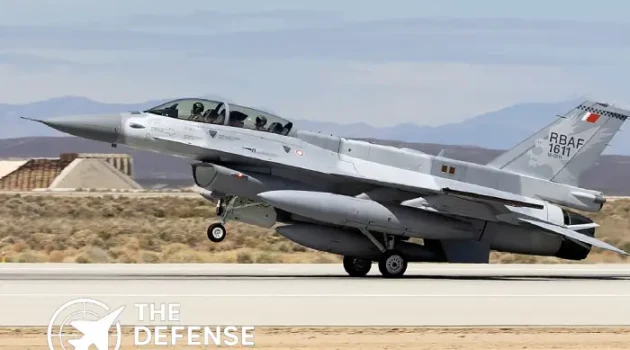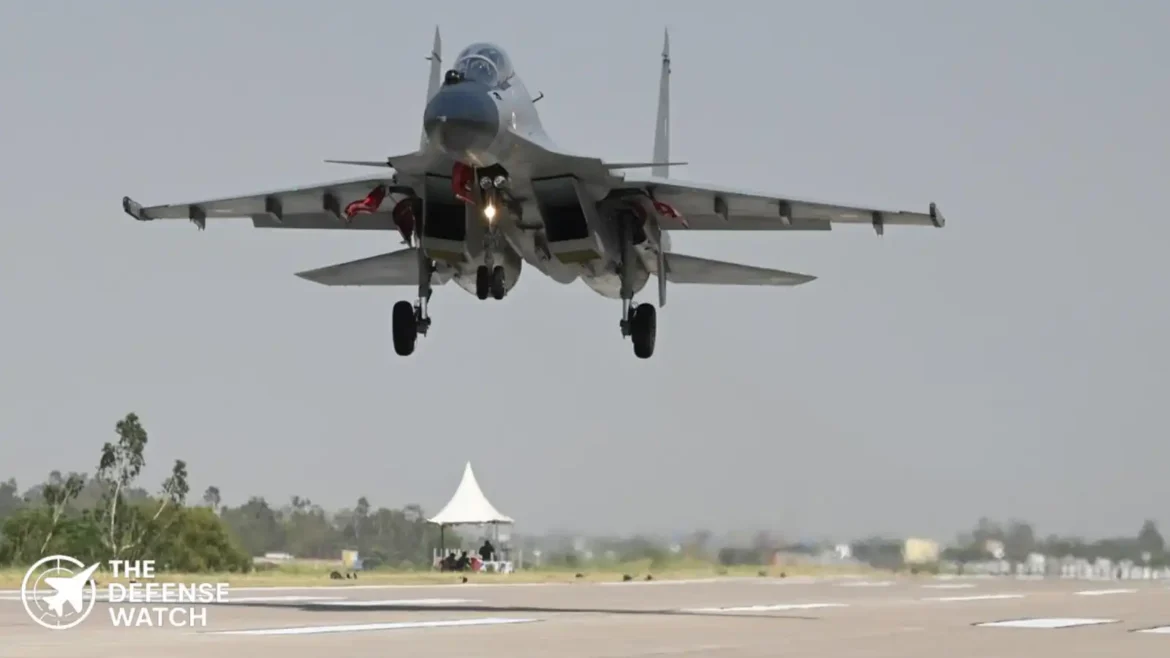
Exercise Tests Combat Readiness Under Time Constraints
The French Air and Space Force successfully executed Exercise Topaze on January 27, 2025, deploying five Dassault Rafale fighters from Air Base 118 Mont-de-Marsan to Air Base 106 Bordeaux-Mérignac under minimal advance warning. The drill evaluated the service’s capacity to rapidly disperse combat aircraft and maintain operational effectiveness under high-intensity warfare scenarios.
According to the French Ministry of Armed Forces, the exercise mobilized operational squadrons and support units in record time, testing the force’s ability to preserve assets through rapid deployment while sustaining combat operations. Commander Mathieu, deputy commander of Fighter Squadron 3/30 “Lorraine” based at Mont-de-Marsan, stated that units received orders to deploy the entire fleet before 15:00 hours with less than 24 hours’ notice.
High-Intensity Warfare Focus Drives Training Evolution
Exercise Topaze represents the French Air and Space Force’s ongoing emphasis on preparing for large-scale conventional conflict, particularly influenced by operational lessons from the war in Ukraine. The drill simulated scenarios requiring immediate asset preservation in response to potential threats against primary airbases.
The goal is to be taken by surprise,” explained a Rafale pilot participating in the exercise, according to media reports from Euronews. “The deployment at very short notice, followed by a huge team effort to configure the aircraft as quickly as possible and prepare ourselves for this mission under severe time constraints, was the hardest part.”
General Pierre Gaudillière, commander of the Fighter Aviation Air Brigade, emphasized the operational relevance of such training. “We never train for nothing and since high-intensity warfare is raging on all fronts, it is in response to this kind of operational requirement that we are doing this exercise,” he stated.
Rapid Deployment Tests Coordination Between Units
The five Rafale fighters arrived at Bordeaux-Mérignac despite challenging weather conditions, immediately proceeding to designated parking areas where maintenance crews and support personnel were positioned to receive them. Within two hours of arrival, aircraft were secured, crews debriefed, and coordination established between operational squadrons and support units.
Commander Mathieu described the exercise as testing the feasibility of deployments under constrained timelines while identifying potential obstacles and evaluating personnel responsiveness. Crisis cells were activated the day prior to deployment, requiring rapid mission planning and logistical coordination across multiple units.

The drill’s success hinged on seamless integration between combat squadrons and support elements. “Efficiency,” Commander Mathieu stated when asked to characterize the exercise. “By engaging both operational squadrons and support units, coordination proved optimal, almost spontaneous.”
Agile Combat Employment Concept Gains Prominence
Exercise Topaze aligns with the French Air and Space Force’s implementation of what it terms the “MORANE” operational concept, equivalent to NATO’s Agile Combat Employment (ACE) doctrine. This approach emphasizes distributing high-value air assets across geographically dispersed locations with minimal logistical infrastructure to enhance survivability against peer adversaries.
The French service has conducted multiple exercises testing rapid dispersal capabilities throughout 2024 and 2025. In April 2025, the service simultaneously executed Exercise JADE, involving Mirage 2000D and 2000B aircraft dispersing from Air Base 133 Nancy-Ochey to five locations across France, and Exercise Pégase 25, deploying Rafale fighters to Sweden alongside NATO allies.
In November 2024, French Rafale jets deployed to Germany, Croatia, and Poland, practicing ACE procedures at NATO bases with minimal logistical support. These deployments tested the ability to operate from forward locations using host nation infrastructure for refueling, mission planning, and rearming.
Strategic Context And European Defense Posture
The emphasis on rapid dispersal and distributed operations reflects broader European defense planning in response to potential large-scale conventional conflict. Fixed airbases represent primary targets in high-intensity scenarios, making the ability to quickly relocate combat aircraft critical for force preservation and sustained operations.
France operates approximately 108 Rafale fighters as of 2025, according to Ministry of Armed Forces data, distributed across multiple squadrons including nuclear-capable units assigned to the Strategic Air Forces Command. The Rafale serves as France’s primary multi-role combat aircraft, capable of air superiority, ground attack, and reconnaissance missions.
Exercise Topaze specifically involved assets from Fighter Squadron 3/30 “Lorraine,” one of three Rafale squadrons based at Mont-de-Marsan alongside squadrons 1/30 “Côte d’Argent” and 2/30 “Normandie-Niemen.” Mont-de-Marsan serves as a major Rafale operating base and houses the Centre d’expertise aérienne militaire (CEAM), the Military Air Expertise Centre responsible for operational evaluation and pilot conversion training.
Operational Implications For Allied Forces
The French Air and Space Force’s focus on distributed operations provides relevant lessons for allied services implementing similar concepts. NATO members have increasingly prioritized ACE as Russian military modernization and demonstrated willingness to employ force against neighbors has heightened concerns about large-scale conventional conflict in Europe.
The ability to rapidly deploy and sustain operations from austere or non-traditional locations complicates adversary targeting while maintaining operational tempo. Exercise Topaze demonstrated that even with minimal advance notice, coordinated action between operational and support elements can achieve rapid deployment objectives.
France’s independent nuclear deterrent adds strategic significance to these exercises. While Exercise Topaze involved conventional Rafale operations, the service regularly practices rapid dispersal with nuclear-capable variants, enhancing survivability of second-strike capabilities. The Rafale B variant equipped with ASMP-A nuclear missiles forms the airborne component of France’s nuclear triad.
Conclusion
Exercise Topaze confirmed the French Air and Space Force’s capability to execute rapid aircraft dispersal under demanding timelines. The successful deployment of five Rafale fighters from Mont-de-Marsan to Bordeaux-Mérignac with minimal notice validated training protocols and inter-unit coordination necessary for distributed operations.
As European defense planning increasingly accounts for potential large-scale conventional conflict, exercises like Topaze provide essential operational testing of concepts designed to enhance force survivability and operational effectiveness. The French service’s continued emphasis on such training reflects strategic assessments prioritizing readiness for high-intensity warfare scenarios.
Italy Commits Nearly $11 Billion to Trilateral Fighter Program
Italy’s parliament has approved approximately €8.77 billion in funding for the Global Combat Air Programme’s initial development phases, marking a significant commitment to the trilateral sixth-generation fighter initiative with the United Kingdom and Japan. The Thursday approval comes despite program costs more than tripling since initial 2021 estimates.
The defense committee of Italy’s lower house of parliament authorized the funding proposal, which will be disbursed through annual installments extending to 2037. Under Italian parliamentary procedures, the committee’s vote is final and does not require full chamber approval.
The GCAP funding approval represents one of the most expensive military aviation programs in Italian history, surpassing even the nation’s F-35 acquisition program in total projected development costs.
Program Costs Surge From Original Estimates
Italy now expects its total contribution to GCAP’s early development phases to reach €18.6 billion (approximately $21.8 billion), a dramatic increase from the roughly €6 billion estimated at 2021 prices when the program was initially proposed to parliament. The recently approved €8.77 billion represents the immediate funding authorization, with the remaining €7.8 billion to be arranged through future appropriations.
The Global Combat Air Programme was formally launched in December 2022 when Italy, the United Kingdom, and Japan merged their separate sixth-generation fighter development efforts into a unified program. The initiative aims to deliver an operational next-generation fighter aircraft by 2035, designed to integrate crewed and uncrewed platforms, advanced sensors, and networked data systems into a comprehensive “system of systems” architecture.
According to parliamentary documentation, the cost increases stem from updated estimates for technology maturation, expanded testing and development requirements, and enhanced design specifications. Defense analysts note that sixth-generation fighter programs inherently involve greater complexity and cost than previous aircraft generations due to their integration of artificial intelligence, loyal wingman drones, combat cloud networks, and advanced stealth capabilities.
Political Response and Strategic Context
The funding approval drew immediate criticism from Italy’s opposition Five Star Movement, which questioned the magnitude of the cost increase without detailed parliamentary explanation. Five Star parliamentarians noted that GCAP has become the most expensive program in Italian military history, exceeding the F-35 program’s €18 billion expenditure for 90 aircraft.
Despite domestic political scrutiny, Italian Prime Minister Giorgia Meloni’s governing coalition holds majorities in both parliamentary chambers, making final approval highly probable. The Italian government has consistently reaffirmed its commitment to GCAP at the international level, with Meloni and Japanese Prime Minister Takaichi Sanae expressing satisfaction with program progress during a January 2026 meeting in Tokyo.

GCAP Fighter. Industry Handout Image. Italian Defense Minister Guido Crosetto has publicly stated that GCAP represents a strategic investment in technological sovereignty and equal partnership, contrasting it with previous programs where Italy played a more subordinate role. During recent parliamentary testimony, Crosetto indicated that additional countries including Germany and Australia have expressed interest in joining the program.
GCAP vs FCAS: Competing European Visions
The Italian parliamentary approval occurs against the backdrop of significant tensions within the rival Franco-German-Spanish Future Combat Air System (FCAS) program. FCAS has experienced prolonged industrial disputes, particularly over workshare allocation and intellectual property rights between Dassault Aviation and Airbus, leading to schedule delays and political friction.
Multiple European defense publications have reported that Germany is actively considering abandoning FCAS in favor of joining GCAP, a development that would fundamentally reshape European combat air cooperation. During a January 2026 summit in Rome, German Chancellor Friedrich Merz reportedly discussed GCAP participation with Prime Minister Meloni, though no formal decisions have been announced.
The contrast between the two programs has become increasingly stark. GCAP partners established a formal international treaty in December 2023, created a joint business venture among BAE Systems, Japan Aircraft Industrial Enhancement Company, and Leonardo, and have maintained consistent program timelines. Meanwhile, FCAS continues to struggle with fundamental governance and industrial participation issues.

GCAP Fighter. Industry Handout Image. Italian Foreign Minister Antonio Tajani stated in early February 2026 that Italy remains open to expanding GCAP membership if additional nations wish to join, emphasizing that broader participation could reduce per-nation costs while increasing technological capacity and economic returns.
Technical Capabilities and Industrial Organization
GCAP is designed as a comprehensive sixth-generation combat air system, not merely a single aircraft platform. The program encompasses development of a next-generation manned fighter as the core platform, integration with Adjunct Combat Aircraft (loyal wingman drones), establishment of a combat cloud data exchange architecture connecting space-based, airborne, naval, and ground sensors, and incorporation of artificial intelligence for enhanced decision-making and autonomous operations.
The three-nation partnership operates under an explicitly equal framework, with each country holding one-third stakes in the joint industrial venture. BAE Systems serves as the UK industrial lead, responsible for airframe development and overall integration. Leonardo leads Italian participation, with specific responsibilities for flight system integration, weapons integration, and training systems. Mitsubishi Heavy Industries heads Japanese industrial involvement, managing airframe production and systems integration for Japan.
The program structure includes provisions for technology transfer and shared intellectual property rights, addressing concerns that arose in previous collaborative efforts where certain partners retained disproportionate control over critical technologies and capabilities.
Operational Requirements and Timeline
GCAP aims to replace the Eurofighter Typhoon in Royal Air Force and Italian Air Force service, and the Mitsubishi F-2 in Japan Air Self-Defense Force operations. The target in-service date of 2035 positions GCAP to address the obsolescence of current fourth-generation and early fifth-generation platforms as peer competitors field their own advanced systems.
Defense planners envision GCAP aircraft operating in contested environments where communication with traditional support assets may be restricted or denied. The platform’s design emphasizes extended range, potentially enabling transatlantic missions on internal fuel, internal weapons carriage exceeding current fifth-generation fighters to maintain stealth characteristics, and data processing capacity sufficient to coordinate multiple uncrewed wingman aircraft in real-time combat scenarios.
Flight testing of technology demonstrators is scheduled to commence in 2027-2028, with the UK’s Excalibur flight test aircraft program already underway using modified Boeing 757 airframes. Italy and Japan have announced plans to develop their own domestic flight test platforms to accelerate development and reduce risk.
Budget Implications and Future Funding
For fiscal year 2025, Italy has allocated over €600 million to GCAP, placing it among the nation’s largest defense expenditures alongside F-35 procurement and Eurofighter upgrade programs. The approved €8.77 billion will be disbursed in annual increments through 2037, requiring sustained budgetary commitment across multiple government administrations.
Italy currently operates 118 Eurofighter aircraft and plans to acquire 115 F-35s, with combined inventory projected to exceed 180 aircraft through the 2040s. GCAP is expected to initially supplement, then gradually replace the Eurofighter fleet as those aircraft reach end-of-service life.
The Italian government is leveraging defense spending provisions within the European Union’s Stability Pact framework, which allows military expenditures to be temporarily excluded from deficit calculations under certain circumstances. This mechanism provides financial flexibility to sustain major long-term defense programs without immediately impacting fiscal targets.
International Interest and Program Expansion
Beyond Germany’s potential participation, multiple nations have expressed varying levels of interest in GCAP. Australia received an informational briefing from the GCAP consortium during the March 2025 Avalon Airshow, though Royal Australian Air Force officials indicated that significant uncertainties remain before formal consideration.
Saudi Arabia has pursued GCAP membership since 2023, though Japan initially expressed reservations regarding export policy, technology security, and timeline concerns. Recent diplomatic discussions at the 2024 G20 Summit and subsequent ministerial meetings suggest that Saudi participation remains under active consideration, particularly regarding cost-sharing arrangements and technology transfer provisions.
Canada has also examined GCAP as a potential future acquisition to succeed its planned F-35A fleet, according to diplomatic sources. Portugal’s defense minister indicated in 2025 that the country would consider joining either GCAP or FCAS as an observer under broader Portuguese Air Force modernization plans.
The potential expansion of GCAP membership presents both opportunities and challenges. Additional participants would broaden the program’s financial base and industrial capacity while potentially complicating governance structures and technology sharing arrangements. The three founding nations have indicated they are developing formal criteria for new member admission to balance these considerations.
Strategic Implications for European Defense
The approval of major GCAP funding by Italy, combined with potential German participation, carries significant implications for European defense industrial consolidation. Defense market analysts have long argued that Europe cannot sustainably support multiple competing sixth-generation fighter programs given limited procurement budgets and industrial capacity.
If Germany formally joins GCAP, the program would unite four of Europe’s five largest defense economies (UK, Italy, Germany, and potentially Spain if it follows Germany), leaving France pursuing FCAS either independently or with significantly reduced European participation. Such an outcome would represent a fundamental realignment of European combat air development away from traditional Franco-German defense cooperation.
The United Kingdom’s departure from the European Union had initially raised questions about UK-EU defense industrial cooperation, but GCAP demonstrates that substantive partnerships can proceed outside formal EU frameworks. Italy’s full commitment despite being an EU member state and potential German interest suggest that operational requirements and industrial pragmatism may outweigh political preferences for EU-internal programs.
NATO interoperability considerations also favor GCAP expansion, as the program explicitly incorporates data-sharing standards and communications architectures designed for integration with other allied systems. The inclusion of Japan, a major non-NATO ally with increasing security cooperation with European nations, provides additional strategic value in an era of great power competition.
Conclusion
Italy’s parliamentary approval of €8.77 billion in immediate GCAP funding, despite a tripling of estimated total program costs to €18.6 billion, demonstrates the nation’s strategic commitment to sixth-generation combat air capabilities through equal international partnership. The program’s progress contrasts sharply with the troubled FCAS initiative, potentially attracting additional European participants and reshaping the continent’s future combat air landscape.
As GCAP advances toward technology demonstration flights in 2027-2028 and an operational aircraft by 2035, the program represents not merely a weapons acquisition but a comprehensive transformation in how allied nations develop, integrate, and employ air combat capabilities in an increasingly contested operational environment.
The balance of airpower continues to define global military superiority in 2026, with nations investing billions in advanced fighter aircraft to secure their skies and project force beyond borders. The top 10 largest modern fighter fleets represent a combination of technological innovation, strategic doctrine, and sheer numerical strength. From fifth-generation stealth platforms like the F-35 Lightning II to upgraded fourth-generation workhorses such as the Su-30 and F-15, these fleets shape geopolitical stability and deterrence strategies worldwide.
Understanding which nations operate the largest modern fighter fleets provides critical insight into current defense priorities, regional power dynamics, and the future trajectory of aerial warfare. This comprehensive analysis examines the composition, capabilities, and strategic implications of the world’s most formidable fighter jet inventories.
The United States: Unrivaled Air Superiority
Fleet Composition and Scale
The United States Air Force, Navy, and Marine Corps collectively operate the world’s largest and most advanced modern fighter fleet, with an estimated 2,700+ combat-ready aircraft as of early 2026. The backbone of American air dominance rests on the rapid expansion of the F-35 Lightning II program, which now fields over 630 operational aircraft across all variants (A, B, and C models).
Complementing the F-35 are approximately 180 F-22 Raptors, the world’s premier air superiority fighter, alongside significant numbers of F-15 Eagles (including the newest F-15EX variants), F-16 Fighting Falcons undergoing continuous upgrades, and F/A-18 Super Hornets serving naval aviation requirements.
Modernization and Future Trajectory
The Pentagon’s commitment to maintaining technological overmatch drives continuous modernization efforts. The F-35 production line remains active with orders extending through the 2030s, while legacy platforms receive advanced radar systems, electronic warfare suites, and precision munitions integration. The U.S. also leads development of sixth-generation fighters through the Next Generation Air Dominance (NGAD) program, ensuring future air superiority.
-
Russia: Rebuilding Soviet-Era Dominance
Current Inventory Analysis
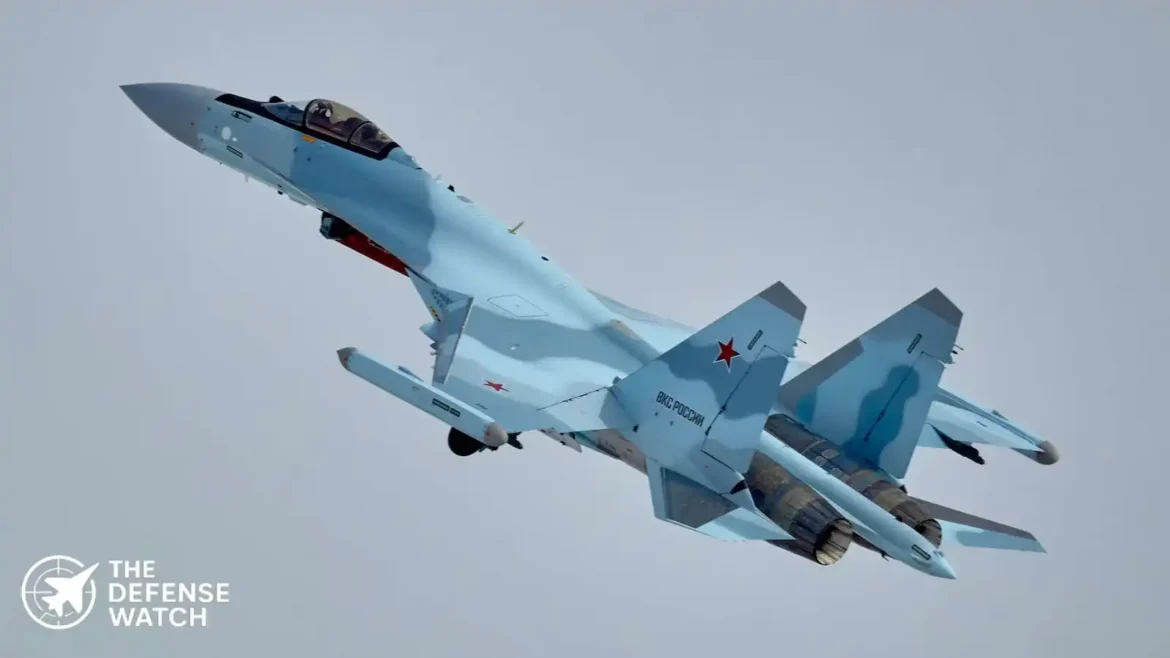
Russia operates the world’s second-largest fighter fleet with approximately 1,200-1,400 modern combat aircraft, though operational readiness rates vary significantly. The inventory centers on the multirole Su-27 Flanker family, including Su-30SM, Su-35S, and Su-34 variants that provide backbone capability across tactical and strategic missions.
The limited-production Su-57 Felon stealth fighter remains in low-rate production with fewer than 20 operational units, while substantial numbers of upgraded MiG-29 and MiG-31 interceptors supplement frontline strength. Russia’s aerospace industry continues producing Su-30 and Su-35 variants for both domestic use and export markets.
Operational Challenges
Ongoing military operations, international sanctions affecting component supplies, and budget constraints impact fleet availability. However, Russia maintains significant modernization programs focused on avionics upgrades, precision strike capabilities, and extending airframe service lives across legacy platforms.
China: Rapid Expansion and Indigenous Development
Numerical Growth and Technological Advancement
The People’s Liberation Army Air Force (PLAAF) and Naval Aviation operate an estimated 1,200+ fourth-generation and beyond fighters, representing dramatic expansion over the past decade. China’s fleet includes substantial numbers of domestically produced J-10 multirole fighters, J-11 (Su-27 derivatives), advanced J-16 strike fighters, and J-15 carrier-based aircraft.
Most significantly, China has rapidly fielded the J-20 stealth fighter with over 200 operational units by 2026, making it the world’s second-largest fifth-generation fleet. Production continues at an accelerated pace, supported by indigenous engine development overcoming previous reliance on Russian powerplants.
Strategic Implications
China’s fighter modernization directly supports anti-access/area-denial strategies in the Indo-Pacific region. The combination of numerical strength, advancing technology, and improving pilot training creates a formidable regional air force capable of contesting air superiority in potential conflict scenarios.
Top 10 Largest Modern Fighter Fleets 2026 🛩️ Top 10 Largest Modern Fighter Fleets
Global Air Power Rankings
2026 Data1🇺🇸United States2,700+ Aircraft2🇷🇺Russia1,200-1,400 Aircraft3🇨🇳China1,200+ Aircraft4🇮🇳India600-650 Aircraft5🇰🇷South Korea400-450 Aircraft6🇵🇰Pakistan350-400 Aircraft7🇯🇵Japan300-350 Aircraft8🇪🇬Egypt300+ Aircraft9🇸🇦Saudi Arabia250-280 Aircraft10🇮🇱Israel250-300 Aircraft📊 Key Insights
Total Aircraft: Includes operational 4th & 5th gen fighters5th Gen Leaders: USA (630+ F-35s), China (200+ J-20s)Modernization: All nations investing in upgrades & new platformsRegional Focus: Asia-Pacific dominates top rankingsIndia: Diversified Multinational Fleet
Varied Inventory Sources
India operates approximately 600-650 modern fighters drawn from multiple international sources, creating both capability advantages and logistical complexity. The fleet’s core comprises Russian-origin Su-30MKI aircraft (over 260 units), French Rafale multirole fighters (36 aircraft with potential additional orders), and indigenous Tejas light combat aircraft entering service in growing numbers.
-
Aging MiG-29 upgrades and Mirage 2000 variants supplement frontline strength, while India pursues the Advanced Medium Combat Aircraft (AMCA) stealth fighter program for indigenous fifth-generation capability by the 2030s.
Modernization and Procurement Challenges
India balances immediate operational needs against long-term indigenous production goals. Recent procurement includes additional Rafales under consideration and potential MiG-29 upgrades, while the Tejas program expands to replace aging MiG-21 variants still serving in diminishing numbers.
Japan: Advanced Defensive Capabilities
Quality Over Quantity Approach
Japan’s Air Self-Defense Force operates approximately 300-350 modern fighters emphasizing technological sophistication over numerical strength. The fleet centers on F-15J Eagles receiving comprehensive upgrades to “J-Kai” standards, F-2 multirole fighters (indigenous F-16 derivatives with superior capabilities), and growing F-35A and F-35B fleets approaching 100 aircraft.
Japan’s recent policy shifts toward more proactive defense postures drive fighter modernization, including F-15 upgrades enabling advanced standoff weapons and improved electronic warfare capabilities.
-
Future Fighter Development
Tokyo’s commitment to the Global Combat Air Programme (GCAP) with the United Kingdom and Italy aims to field a sixth-generation fighter by 2035, representing Japan’s most ambitious indigenous combat aircraft program since World War II.
South Korea: Technological Advancement in Action
Modern Fleet Composition
South Korea operates approximately 400-450 modern fighters through a combination of U.S. platforms and indigenous development. F-35A Lightning IIs (40 delivered with additional orders), upgraded F-15K Slam Eagles, and advanced F-16 variants provide multirole capabilities.
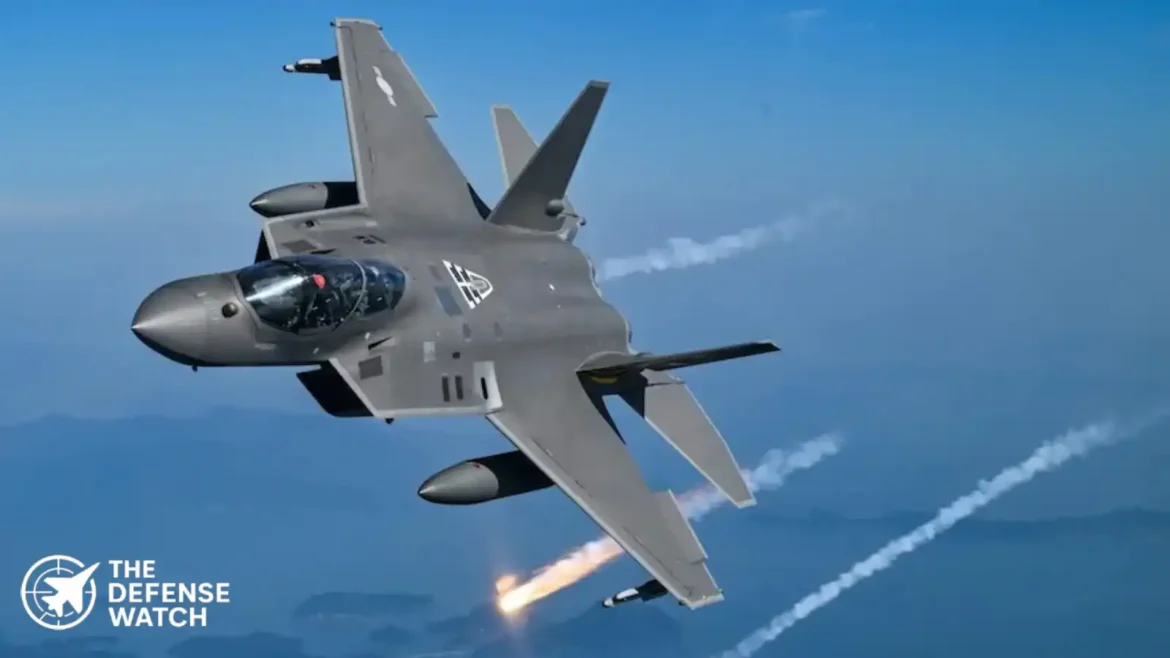
The domestically developed KF-21 Boramae fighter entered flight testing with production aircraft beginning delivery in 2025, representing South Korea’s emergence as a capable aerospace manufacturer. The KF-21 program aims to field 120 aircraft, eventually replacing aging F-4 and F-5 variants.
Regional Security Dynamics
South Korea’s fighter modernization directly responds to North Korean provocations and regional power competition. Advanced sensor integration, network-centric warfare capabilities, and precision strike munitions enhance deterrence value beyond simple numerical counts.
Pakistan: Strategic Parity Pursuit
Fleet Overview and Chinese Partnership
Pakistan operates approximately 350-400 modern combat aircraft with heavy reliance on Chinese-origin platforms balanced by legacy American F-16s. The JF-17 Thunder, jointly developed with China, forms the fleet’s backbone with over 130 operational units and continuing production.
-
F-16 Fighting Falcons (approximately 75 aircraft) provide high-end capabilities despite U.S. restrictions on advanced variants, while Mirage III/V aircraft receive life-extension upgrades for strike missions.
Indigenous Development Efforts
Pakistan’s Project Azm aims to develop a fifth-generation fighter through Chinese technological partnership, though timelines remain uncertain. The JF-17 Block III variant introduces AESA radar and enhanced avionics, improving capability against regional competitors.
Egypt: Diversification Strategy
Multi-Source Procurement
Egypt operates an estimated 300+ modern fighters representing unprecedented diversity across French, Russian, and American sources. Recent acquisitions include 24 Rafale fighters (with additional 30 on order), approximately 50 MiG-29M/M2 aircraft, and 24 Su-35 fighters (though U.S. sanctions complicate operational deployment).
Legacy F-16 fleets exceed 200 aircraft but face upgrade restrictions due to U.S. policy concerns, limiting advanced munitions integration.
Logistical Complexity
Operating fighters from multiple nations creates significant maintenance and training challenges, though Egypt benefits from technological access denied through single-source procurement. The strategy reflects Cairo’s non-aligned foreign policy and desire for operational independence.
Israel: Cutting-Edge Capabilities
Qualitative Superiority Focus
The Israeli Air Force operates approximately 250-300 modern fighters emphasizing technological superiority and pilot excellence over numerical advantage. Israel fields the largest F-35I (Adir) fleet outside the United States with 39 delivered and additional orders planned, extensively modified with indigenous systems.
Upgraded F-15I Ra’am and F-16I Sufa variants incorporate Israeli avionics, electronic warfare systems, and weapons integration, creating highly capable platforms distinct from export standards.
Operational Experience Edge
Israel’s fighter forces benefit from continuous combat experience across multiple operational environments, driving tactical innovation and rapid capability integration. Indigenous precision munitions, suppression of enemy air defense systems, and network-centric operations provide force multiplication beyond platform counts.
Saudi Arabia: Modernization Through Investment
Advanced Western Platforms
Saudi Arabia operates approximately 250-280 modern fighters centered on advanced Western platforms. The Royal Saudi Air Force fields Eurofighter Typhoons (72 aircraft), F-15SA advanced variants (84 aircraft representing the most capable Eagle variant in service), and upgraded Tornado strike aircraft.
Massive defense budgets enable cutting-edge munitions, sensors, and support systems integration, creating highly capable forces despite limited operational experience.
Regional Power Projection
Saudi fighter modernization supports regional security leadership and deterrence against Iranian threats. Ongoing Yemen operations provide combat experience, though sustainability concerns and pilot training remain development priorities.
Analysis: What the Rankings Reveal
Technological vs. Numerical Superiority
The top 10 largest modern fighter fleets demonstrate that raw numbers alone no longer determine airpower effectiveness. Advanced sensors, stealth characteristics, network integration, and precision munitions increasingly outweigh simple platform counts. The United States maintains dominance through technological superiority despite facing numerically competitive rivals.
Regional Power Dynamics
Fighter fleet compositions directly reflect regional security environments. Asian nations prioritize maritime strike capabilities and air superiority for disputed territory scenarios, while Middle Eastern forces emphasize ground attack and strategic deterrence. European members (not individually ranking in the top 10) increasingly pool capabilities through NATO integration rather than maintaining large independent inventories.
Future Trajectory
Sixth-generation fighter development, unmanned combat aerial vehicle integration, and artificial intelligence-enabled systems will reshape these rankings over the coming decade. Nations investing in indigenous development capabilities (United States, China, Japan, South Korea, Turkey) position themselves for long-term competitiveness, while those relying solely on foreign procurement face increasing technology access restrictions.
Conclusion
The top 10 largest modern fighter fleets in 2026 represent diverse approaches to airpower, ranging from America’s unmatched technological and numerical superiority to smaller forces emphasizing quality and specialized capabilities. As warfare evolves toward networked, multi-domain operations, simple aircraft counts provide incomplete pictures of combat potential. Nevertheless, these fleets remain central to national defense strategies, regional stability, and global power projection.
Understanding the composition, capabilities, and strategic context of these air forces offers essential insight into contemporary military affairs and future conflict dynamics. As nations continue modernizing their fighter inventories amid technological acceleration and shifting geopolitical alignments, the global airpower balance will remain fluid, contested, and critically important to international security.
FAQs
Which country has the largest modern fighter fleet in 2026?The United States operates the world’s largest modern fighter fleet with over 2,700 combat-ready aircraft, including the most extensive F-35 Lightning II inventory globally.
How many fifth-generation fighters does China operate?China operates approximately 200+ J-20 stealth fighters as of 2026, making it the second-largest fifth-generation fleet after the United States.
What defines a “modern” fighter aircraft?Modern fighters typically include fourth-generation platforms with advanced avionics upgrades (AESA radars, precision weapons integration) and all fifth-generation stealth aircraft. Aircraft like upgraded F-16s, Su-30s, and Rafales qualify as modern despite not being the newest designs.
Why doesn’t Russia have more Su-57 stealth fighters?Production challenges, economic sanctions affecting component supplies, budget constraints, and technical development issues have limited Su-57 production to fewer than 20 operational aircraft despite the program beginning in the early 2000s.
How do fighter fleet sizes impact regional security?Large modern fighter fleets provide deterrence value, power projection capabilities, and air superiority potential in regional conflicts. However, pilot training quality, maintenance readiness, and technological sophistication often matter more than raw numbers in determining actual combat effectiveness.
Canada Advances Multi-Billion Dollar F-35 Acquisition
Canada has officially begun making payments for 14 additional F-35 Lightning II fighter jets as part of its comprehensive military aviation modernization program, according to official procurement documents released this week. The payment marks a significant milestone in Canada’s $19 billion commitment to acquire 88 fifth-generation stealth fighters, despite an ongoing fleet review and heightened tensions surrounding cross-border defense procurement.
The Royal Canadian Air Force’s F-35 program continues to advance following the initial delivery of aircraft under the 2022 contract, which represented one of the largest defense acquisitions in Canadian history. Defense analysts view the payment authorization as a clear signal that Ottawa remains committed to the F-35 platform despite political pressures and calls for procurement diversification.
Payment Schedule Advances Despite Comprehensive Review
The Canadian government has authorized initial payments for the 14 additional F-35A aircraft as part of the second production lot under the existing framework agreement with Lockheed Martin. According to procurement officials, the payment follows established protocols within the U.S. Foreign Military Sales program and aligns with Canada’s projected fleet delivery schedule extending through 2032.
The timing of the payment authorization coincides with an ongoing comprehensive review of Canada’s fighter fleet requirements, initiated in response to evolving threats in the Arctic region and changing defense partnership dynamics. Despite the review, government officials have emphasized that contractual obligations for aircraft already ordered will proceed as planned.
Canada’s total F-35 acquisition encompasses 88 aircraft with an estimated program cost of CAD $19 billion over the aircraft’s lifecycle, including associated weapons systems, infrastructure upgrades, and sustainment packages. The Royal Canadian Air Force plans to achieve initial operational capability with the F-35A by 2026, replacing the aging CF-18 Hornet fleet that has served since the 1980s.
Strategic Rationale Behind Continued Procurement
Defense experts point to several strategic factors driving Canada’s continued F-35 investment despite the ongoing fleet review. The aircraft’s advanced capabilities directly address emerging threats in the Arctic region, where increased Russian and Chinese military activity has heightened security concerns among North American Aerospace Defense Command (NORAD) partners.
The F-35A’s sensor fusion technology, low-observable stealth characteristics, and network-centric warfare capabilities provide significant operational advantages in contested airspace. These features align with Canada’s defense priorities outlined in the 2024 Defense Policy Update, which emphasizes maintaining technological superiority and interoperability with allied forces.
“The F-35 represents a generational leap in air combat capability,” stated a senior Royal Canadian Air Force official speaking on background. “The aircraft’s ability to operate in high-threat environments while maintaining situational awareness across multiple domains is essential for defending Canadian sovereignty and fulfilling our NORAD commitments.”
Cross-Border Defense Dynamics And Procurement Concerns
The F-35 payment authorization comes amid broader tensions in U.S.-Canada defense relations, particularly surrounding procurement processes and industrial participation. Canadian defense industry stakeholders have expressed concerns about workshare arrangements and technology transfer limitations within the F-35 program’s international partnership structure.
Canada joined the Joint Strike Fighter program as a Level 3 partner in 1997, contributing approximately $150 million to development costs. This partnership status theoretically provides Canadian aerospace companies access to production contracts and technology sharing opportunities. However, recent trade disagreements and shifting procurement policies have complicated industrial participation expectations.
The ongoing fleet review, announced in late 2025, examines whether Canada should pursue a mixed fleet strategy incorporating different aircraft types or maintain a single-platform approach with the F-35A. Some defense policy analysts have advocated for acquiring a smaller number of F-35s supplemented by less expensive fourth-generation fighters to maximize fleet size within budget constraints.
Industrial Participation And Economic Considerations
Canadian aerospace manufacturers have secured significant contracts through F-35 industrial participation, with companies providing components including landing gear systems, wing structures, and advanced materials. According to government estimates, Canadian industry has received over CAD $2 billion in F-35-related contracts since joining the partnership program.
However, concerns persist about long-term industrial benefits and technology sovereignty, particularly regarding maintenance, repair, and overhaul capabilities. The centralized F-35 sustainment model, which concentrates major maintenance activities at designated regional facilities, has raised questions about Canada’s ability to maintain operational independence during potential conflicts or supply chain disruptions.
Defense procurement specialists note that the payment for additional aircraft represents a calculated decision balancing immediate capability requirements against longer-term strategic autonomy concerns. The Royal Canadian Air Force requires operational fighters to replace retiring CF-18 Hornets on schedule, limiting options for significant program delays or alterations.
Arctic Security And NORAD Integration
The F-35 acquisition directly supports Canada’s Arctic defense strategy and NORAD modernization initiatives. The aircraft’s advanced sensors and communications systems integrate seamlessly with upgraded North Warning System radar installations and other continental defense infrastructure currently under development.
Recent Russian bomber incursions near Canadian Arctic airspace and increased Chinese interest in Arctic shipping routes have elevated the strategic importance of maintaining advanced air superiority capabilities in the region. The F-35A’s range, payload capacity, and environmental operating specifications make it particularly well-suited for Arctic operations where extreme weather conditions and vast distances challenge conventional aircraft.
NORAD officials have emphasized the importance of capability alignment between U.S. and Canadian air forces to maintain effective integrated air defense across North America. The F-35 platform’s commonality with U.S. Air Force and Marine Corps variants facilitates joint training, shared logistics, and coordinated operational planning essential for continental defense missions.
Program Timeline And Delivery Schedule
Under the current acquisition schedule, Canada expects to receive F-35A aircraft at a rate of approximately 10-12 units annually beginning in 2026. The Royal Canadian Air Force has designated CFB Cold Lake in Alberta and CFB Bagotville in Quebec as primary operating bases for the new fighters, with extensive infrastructure modernization projects underway at both locations.
Initial operational capability, defined as having a minimum number of combat-ready aircraft with trained pilots and maintainers, is targeted for 2026. Full operational capability, achieved when all 88 aircraft are delivered and all operational requirements are met, is projected for approximately 2032-2034.
The payment for 14 additional aircraft represents production lots scheduled for delivery in the 2028-2029 timeframe, according to procurement planning documents. This advance payment structure aligns with Lockheed Martin’s production scheduling and allows the manufacturer to secure long-lead components and materials necessary for meeting delivery commitments.
Fleet Review Implications And Future Decisions
The ongoing fleet review, while not halting current procurement activities, could influence future orders beyond the initial 88-aircraft commitment. Some defense analysts have suggested Canada may ultimately require a larger fighter fleet to adequately cover its vast geography and diverse operational requirements, potentially necessitating additional aircraft purchases in future budget cycles.
Alternative scenarios under consideration include reducing the total F-35 acquisition to approximately 60-70 aircraft while supplementing with a different platform optimized for specific mission sets such as Arctic patrol or air policing. However, defense economists caution that operating multiple fighter types substantially increases lifecycle costs and training complexities.
The review process, expected to conclude in mid-2026, will examine threat assessments, technological developments, budgetary constraints, and alliance commitments before making recommendations on potential adjustments to the current acquisition plan. Government officials have stressed that any modifications would respect existing contractual obligations and avoid capability gaps during the CF-18 retirement process.
Budgetary Context And Fiscal Planning
Canada’s defense spending has faced renewed scrutiny following pressure from NATO allies to increase military expenditures toward the alliance’s two-percent GDP target. The F-35 program represents a substantial portion of planned defense capital investments over the next decade, competing with other modernization priorities including naval shipbuilding, ground force equipment renewal, and cyber capabilities development.
The Parliamentary Budget Officer has projected total F-35 program costs at CAD $77 billion over 40 years when including all acquisition, operations, sustainment, and infrastructure expenses. These figures significantly exceed initial government estimates, prompting ongoing debates about affordability and budget allocation priorities.
Defense budget analysts note that the payment authorization for additional aircraft indicates government confidence in securing necessary funding despite fiscal pressures. The multi-year procurement approach spreads costs across multiple budget cycles, making the program more politically sustainable while ensuring capability delivery remains on schedule.
International Context And Allied Procurement
Canada’s F-35 acquisition occurs within a broader context of allied nations modernizing fighter fleets with fifth-generation aircraft. European NATO members including Germany, Finland, and Switzerland have recently committed to F-35 purchases, while existing operators like the United Kingdom, Norway, and the Netherlands continue expanding their fleets.
This multinational procurement trend strengthens the F-35’s industrial base, potentially lowering unit costs through increased production volumes and extended manufacturing runs. Canadian defense officials view participation in this broader allied procurement movement as reinforcing interoperability and shared technological capabilities essential for coalition operations.
However, some defense policy experts question whether Canada’s delayed entry into full-scale F-35 procurement has resulted in missed opportunities for industrial participation and technology transfer compared to earlier adopting nations. The current payment for additional aircraft represents Canada’s effort to maintain its position within the international partnership despite these timing considerations.
Technological Capabilities And Operational Advantages
The F-35A variant selected by Canada incorporates advanced sensor systems, including the AN/APG-81 AESA radar, Distributed Aperture System providing 360-degree situational awareness, and Electro-Optical Targeting System for precision strike capabilities. These integrated systems provide pilots with unprecedented battlefield awareness and targeting precision unavailable in previous-generation fighters.
The aircraft’s stealth characteristics, achieved through careful shaping, specialized coatings, and internal weapons carriage, enable operations in contested airspace where conventional fighters would face unacceptable risk levels. This capability proves particularly valuable for missions requiring penetration of advanced integrated air defense systems or operations in electromagnetic warfare environments.
Network-centric warfare capabilities allow the F-35 to function as an information node, gathering and distributing tactical data across joint force elements. This sensor-to-shooter integration enhances overall force effectiveness beyond the individual aircraft’s direct combat contribution, multiplying the capabilities of legacy platforms operating in coordination with F-35s.
Supply Chain And Sustainment Considerations
The F-35’s global sustainment model, managed through the Autonomic Logistics Information System (ALIS) and its successor ODIN (Operational Data Integrated Network), provides centralized parts management, predictive maintenance, and fleet health monitoring. While offering efficiency advantages, this approach has raised concerns about operational sovereignty and dependency on U.S.-controlled logistics networks.
Canada is negotiating sustainment arrangements ensuring adequate spare parts inventory, maintenance capability, and technical support access to maintain operational availability rates required for defending Canadian airspace and fulfilling international commitments. These sustainment agreements represent a substantial portion of total lifecycle costs and require careful negotiation to balance cost efficiency with operational independence.
The payment for additional aircraft includes associated sustainment packages, ensuring newly delivered fighters have necessary support infrastructure from initial delivery. This integrated approach aims to avoid capability gaps and maintain fleet readiness throughout the operational lifecycle.
U.S. Deploys F-15E Strike Eagles To Undisclosed Middle East Base
U.S. Central Command says F-15E Strike Eagles have deployed to an undisclosed base in the Middle East to strengthen strike options against ISIS and support deterrence posture toward Iran, according to official statements and imagery released by U.S. military channels.
Short-range threats from militia drones, a persistent Islamic State insurgent footprint and rising pressure from Iranian proxy groups have shaped CENTCOM’s recent posture adjustments, officials said.
Deployment Details And Unit Involved
The aircraft involved are tied to the 494th Expeditionary Fighter Squadron, a Strike Eagle unit forward-deployed from RAF Lakenheath in the United Kingdom. Open-source flight tracking suggests a standard 12-aircraft detachment, supported by KC-135 aerial refueling assets to reach the CENTCOM area of responsibility without advanced notice.
CENTCOM framed the deployment as part of a readiness and stability measure, emphasizing that exact base locations and mission specifics remain restricted for operational security.
Why F-15E Strike Eagles
The F-15E Strike Eagle remains a mainstay for long-range multirole missions. Powered by twin Pratt & Whitney afterburning engines, the aircraft couples high speed and altitude capability with long range, especially when paired with aerial refueling. Its payload capacity and advanced sensors support both precision strike and air defense missions.
Strike Eagles carry a mix of air-to-air and air-to-ground munitions, including AIM-120 AMRAAM and AIM-9 Sidewinder missiles for air defense, guided bombs such as JDAM variants for precision strike, and targeting pods that support accurate delivery in complex environments.
-
The aircraft’s advanced electronic warfare suite (EPAWSS) helps detect and counter layered threats, a key factor in contested airspace where adversaries use surface-to-air systems and unmanned aerial systems.
Operational Context
This deployment aligns with a broader U.S. effort to reinforce airpower in the Middle East. The region has seen a mix of ISIS activity, militia threats and tensions tied to Iranian regional posture. U.S. air operations, including long-range precision strikes in Syria and Iraq against ISIS targets, remain ongoing.
In recent months, U.S. military activity has included aerial readiness exercises and deployments of other air assets, aiming to demonstrate rapid response capability and forward presence amid evolving security challenges.
Regional Deterrence And Strike Capability
Forward-deployed F-15Es enhance the U.S. ability to generate sorties quickly across sectors of the Middle East. Their presence signals that the Air Force can sustain both counterterrorism and high-end deterrence missions, bridging the gap between rotational forces and a larger permanent footprint.
-
These fighters offer commanders options from air defense to precision deep strike, complementing ISR and tanker support already operating in the region. Their range and payload help compress adversary decision cycles and support partner forces when stability threats rise.
Broader U.S. Airpower Posture
The deployment reflects the Pentagon’s continued emphasis on maintaining forward airpower in volatile environments. While exact operational details remain restricted by CENTCOM, the integration of F-15Es into Middle East operations underscores the role of tactical air assets in layered deterrence and counterterrorism efforts.
-
-
Top Aces Steps Up Asia Pacific Push With F-16, A-4N Adversary Air Services
Canadian adversary air services provider Top Aces is actively pursuing business across the Asia Pacific, showcasing its F-16 and A-4N based services to military delegations at the Singapore Airshow 2026 and exploring new contracts with regional air forces.
At the Singapore Airshow held early February in Singapore, Top Aces executives held discussions with defense representatives from Singapore, Japan, Thailand, Malaysia and Indonesia, pitching its contracted training services and aircraft fleet tailored to threat replication and tactical training needs.
What Top Aces Brings To The Table
Top Aces operates a fleet of more than 150 tactical aircraft configured for contracted adversary air (combat air training) missions. Central to its offering are Lockheed Martin F-16 fighters upgraded with the company’s proprietary Advanced Aggressor Mission System (AAMS), which equips the jets with sensors and avionics that can simulate advanced threats including fourth and fifth generation fighters.
The company also fields Douglas A-4N Skyhawks and Dassault/Dornier Alpha Jets in adversary roles, with AAMS integration enabling variable mission profiles at a range of cost and performance points.
Top Aces has a history of providing similar services in other markets. It previously delivered adversary air support to the Royal Australian Air Force from 2017 to 2019 and recently extended a 10 year, 420 million euro contract with Germany for operational training across the German air force, army and navy.
Asia Pacific Focus And Market Interest
At Singapore, Top Aces’ vice president of international business development James McGovern described the environment in the Asia Pacific as active and receptive, with high level defense leaders engaging with the company. Talks focused on how outsourced adversary air can augment internal training capacity and replicate realistic threat scenarios.
Top Aces sees potential for its services to support aircrew preparing for advanced platforms and contested operating environments, offering both high performance F-16 based scenarios and lower cost volume training with Skyhawks and Alpha Jets.
F-16 And A-4N Roles In Training
Top Aces’ F-16s are sourced second hand, often from former Israeli air force inventories and repurposed with modern avionics and sensor suites optimized for aggressor air tasks. These aircraft can replicate threat profiles that challenge fifth generation fighters such as the Lockheed Martin F-35, giving pilots realistic training opportunities.
The A-4N Skyhawk and Alpha Jet fleets provide flexibility for a wide range of training needs. The A-4Ns, also outfitted with AAMS, can act as credible adversaries in within visual range engagements, while the Alpha Jets can generate high sortie rates and simulate massed threat profiles at cost effective rates.
Safety, Experience And Global Footprint
Top Aces highlights its safety record and regulatory oversight as key competitive factors. The company has logged more than 150,000 flying hours without a serious safety incident and is certificated by Transport Canada under standards similar to commercial airline operations.
Beyond the Asia Pacific effort, Top Aces also maintains a presence in North American training contracts and in Europe through its extended German engagements, suggesting broader global demand for specialized adversary air services.
Outlook
Top Aces is positioning itself as a key third party provider of adversary air training in a region where many militaries balance modernization goals with training capacity constraints. Whether these discussions at the Singapore Airshow convert into formal contracts in the near term remains to be seen, but the company’s engagement with multiple defense delegations shows clear interest in its tailored solutions.
International Fighter Jets Challenge American Air Dominance
While best non-American fighter jets continue gaining global recognition, the United States maintains its position as the world’s foremost military aerospace designer. However, international competitors have fielded combat aircraft demonstrating exceptional capabilities across multiple domains. Five platforms stand out as particularly impressive: Russia’s Sukhoi Su-57 Felon, China’s Chengdu J-20 Mighty Dragon, France’s Dassault Rafale, the multinational Eurofighter Typhoon, and Sweden’s Saab JAS 39 Gripen.
These aircraft represent the pinnacle of non-American military aviation engineering, each bringing unique strengths to their respective air forces. From stealth technology to combat-proven versatility, these fighters have earned their place among the world’s elite combat platforms.
Russia’s Su-57 Felon: Fifth-Generation Stealth Fighter
The Sukhoi Su-57 Felon represents Russia’s first fifth-generation stealth fighter, designed for both air superiority and multirole missions. With a stealth-optimized airframe, supercruise capability, and thrust-vectoring engine nozzles, the Su-57 stands as arguably the most advanced non-American fighter currently operational.
Technical Specifications:
- Armament: Internal 30mm GSh-30-1 cannon
- Weapons Systems: R-77M long-range and R-37M extended-range air-to-air missiles
- Stealth Features: Internal weapons bay for reduced observability
- Advanced Capabilities: Hypersonic missile compatibility
The Su-57’s exceptional maneuverability stems from its thrust-vectoring nozzles and advanced aerodynamic design. According to defense analysts, the aircraft can deliver serious ordnance while maintaining low observability against modern radar systems.
-
However, production challenges have limited the Su-57’s operational deployment. Only a handful of aircraft have achieved operational readiness, with full-scale deployment still pending. Current production models utilize interim AL-41F1 engines, while the more advanced Izdeliye 30 engine remains under development.
Despite these constraints, the Su-57 continues supporting Russian operations, progressing from launching standoff cruise missiles to executing precision ground strikes. The platform demonstrates formidable capabilities in contested airspace environments.
China’s J-20 Mighty Dragon: Asian Stealth Power
China’s Chengdu J-20 Mighty Dragon represents Beijing’s emergence as a peer competitor in advanced aerospace technology. Entering service in 2017, the J-20 has been produced in significant numbers, with estimates suggesting over 200 aircraft operational by early 2026.
Key Features:
- Role: Long-range patrol and high-value target hunter
- Design: Large airframe with significant fuel reserves
- Weapons: Internal weapons bays plus external hardpoints
- Engines: Latest variants feature domestically-produced WS-15 engines
The J-20 regularly patrols contested airspace over the East and South China Seas, signaling China’s growing airpower capabilities. While speculation suggests the aircraft may have incorporated technology from the F-22 Raptor program, the J-20 demonstrates capabilities inferior to American fifth-generation platforms in stealth performance.
Defense experts note the J-20’s mission focuses on hunting high-value targets including USAF tanker aircraft and airborne command and control platforms. China’s lack of airborne tankers influenced the design toward a very large plane with substantial internal fuel capacity.
France’s Dassault Rafale: Combat-Proven Omnirole Fighter
The Dassault Rafale has emerged as one of the most successful fourth-generation-plus fighters globally, combining multirole versatility with proven combat effectiveness. France’s flagship fighter delivered record numbers in 2025, with 26 aircraft delivered—exceeding the company’s target.
Combat Record:
- First Deployment: Afghanistan (2007)
- Combat Operations: Iraq, Libya, Mali, Syria
- Recent Action: India-Pakistan operations (2025)
- Operational Nations: France, India, Egypt, Qatar, Greece, Croatia, Indonesia, UAE, Serbia
Dassault Aviation reported 220 Rafales in backlog as of December 31, 2025, with 175 aircraft destined for export customers. The company plans to increase production to four aircraft per month to meet growing international demand.
Technical Capabilities:
- Radar System: RBE2 AA active electronically scanned array (200 km detection range)
- Engines: Twin Snecma M88 (supercruise capable)
- Speed: Mach 1.6 (Mach 2+ with afterburners)
- Electronic Warfare: Advanced SPECTRA self-protection suite
The Rafale’s omnirole capability allows it to perform multiple missions in a single sortie, from air superiority to ground attack, reconnaissance, and nuclear deterrence. This versatility has proven particularly attractive to nations seeking alternatives to American or Russian platforms.
India’s selection of the Rafale over the F-35 and Su-57 demonstrates the aircraft’s international appeal. The Indian Air Force operates Rafales from strategically positioned bases at Ambala and Hasimara, with a reported proposal for 114 additional aircraft under consideration.
The carrier-capable Rafale M variant remains the only non-American fighter cleared for operation on U.S. aircraft carriers, highlighting the platform’s exceptional engineering and interoperability.
Eurofighter Typhoon: European Air Defense Backbone
Developed through a joint defense program among the United Kingdom, Germany, Italy, and Spain, the Eurofighter Typhoon represents multinational European aerospace cooperation at its finest. The fourth-generation-plus aircraft demonstrates excellent aerodynamics and maneuverability, achieving a top speed of Mach 2 (1,480 mph).
Key Specifications:
- Armament: 27mm Mauser BK-27 revolver cannon
- Hardpoints: 13 total (8 underwing, 5 under-fuselage)
- Payload Capacity: 9,000 kg (19,800 lb)
- Advanced Features: Modular architecture for technology integration
The Typhoon’s modular design allows for easy integration of new technology, keeping the platform continuously relevant and adaptable. Recent upgrades include the Captor-E AESA radar, updated mission systems, and next-generation air-to-air missile integrations.
Defense analysts note the Typhoon excels in both air-to-air and ground-attack missions. With upgrades planned into the 2040s, the aircraft is expected to remain crucial to European defense for another generation, bridging capabilities until sixth-generation platforms like FCAS and GCAP become operational.
Sweden’s Saab JAS 39 Gripen: Cost-Effective Multirole Platform
Sweden’s Saab JAS 39E Gripen represents a cost-effective multirole fighter with advanced capabilities that punch above its weight class. The latest E variant features significant upgrades over previous generations, offering capabilities that compete with larger, more expensive platforms.
Technical Advancements:
- Engine: GE F414 with increased fuel capacity
- Radar: Raven ES-05 AESA radar
- Sensors: Skyward-G infrared search and track (IRST)
- Electronic Warfare: Advanced survivability systems
- Armament: 27mm Mauser BK-27 cannon (omitted on two-seat variants)
The Gripen’s design emphasizes cost-effectiveness, versatility, and ease of maintenance. Defense experts highlight the aircraft’s highly survivable profile in contested airspace, achieved through its all-new avionics suite and electronic warfare capabilities.
Weapons Integration:
- Air-to-air: AIM-9 Sidewinder missiles
- Air-to-ground: AGM-65 Maverick missiles
- Anti-ship: RBS-15 missiles
The Gripen’s affordability and performance have attracted international customers seeking to democratize access to advanced fighter capabilities. Nations in Africa and Southeast Asia view the platform as an attractive alternative to more expensive American or European options.
Global Fighter Market Dynamics
The dominance of non-American platforms reflects changing geopolitical dynamics and technological proliferation. While U.S. fighters like the F-35 and F-22 maintain technological edges in certain domains, international competitors have successfully carved out market niches through different value propositions.
Export Success Factors:
- Technology Transfer: France’s willingness to include technology sharing
- Strategic Autonomy: ITAR-free supply chains (particularly Rafale)
- Cost Considerations: More affordable alternatives to fifth-generation platforms
- Combat Proven: Operational track records in real-world conflicts
- Versatility: Multirole capabilities reducing need for specialized platforms
The F-35’s sensor fusion and network-centric warfare capabilities remain unmatched, with over 1,000 units delivered by mid-2025. However, platforms like the Rafale have successfully positioned themselves as capable alternatives for nations seeking proven performance without full fifth-generation investment.
Future Developments and Sixth-Generation Programs
The global fighter landscape continues evolving rapidly. The United States awarded Boeing the Next-Generation Air Dominance (NGAD) contract in 2025, designating the future jet as the F-47. This sixth-generation platform will introduce collaborative combat aircraft, allowing crewed fighters to quarterback up to five unmanned wingmen.
European nations are developing the Future Combat Air System (FCAS) and Global Combat Air Programme (GCAP), both targeting operational capability in the 2030s. The upcoming Rafale F5 variant, scheduled for around 2030, will integrate AI-assisted mission systems, enhanced stealth coatings, and expanded sensor fusion.
China continues advancing its aviation sector, with the mysterious J-36 featuring a unique stealth design configuration. Russia faces production and industrial challenges limiting Su-57 deployment, though the platform continues evolving with improved engines and weapons integration.
Strategic Implications
The proliferation of capable non-American fighter platforms signals a multipolar aerospace industry landscape. Nations increasingly have options beyond traditional U.S. or Soviet/Russian suppliers, enabling strategic diversification and reduced dependence on single sources.
For U.S. defense planners, this reality demands continued innovation and competitive pricing. The F-35 program’s falling unit costs (approximately $80-90 million for the F-35A variant as of 2025) reflect market pressures from capable international competitors.
Mid-tier powers benefit from expanded choices, with collaborative programs and technology transfer arrangements enabling indigenous aerospace industry development. South Korea’s KF-21, Turkey’s TF-X (later renamed Kaan), and India’s AMCA represent this trend toward domestic fifth-generation fighter development.
Conclusion
The best non-American fighter jets demonstrate that while U.S. aerospace manufacturers lead in certain technological domains, international competitors field formidable platforms across multiple capability areas. From Russia’s Su-57 Felon to Sweden’s cost-effective Gripen, these aircraft represent diverse approaches to modern air combat requirements.
France’s Rafale stands out for combat-proven versatility and export success, delivering 26 aircraft in 2025 and maintaining a backlog of 220 orders. The Eurofighter Typhoon continues serving as Europe’s air defense backbone with planned upgrades through the 2040s. China’s J-20 Mighty Dragon demonstrates Beijing’s rapid advancement in stealth technology, while Sweden’s Gripen offers an attractive cost-effective alternative.
As sixth-generation programs advance globally, the competition for air superiority will intensify. Nations investing in advanced aerospace capabilities position themselves for strategic advantage in an increasingly contested environment. The integration of artificial intelligence, directed energy weapons, and unmanned systems will further transform air combat in the coming decades.
For defense analysts and military planners, understanding these platforms’ capabilities and limitations remains essential for assessing global military balance and future conflict dynamics.
Strategic Reconnaissance, Not Strategic Strike
The United States Air Force continues evaluating next-generation capabilities as peer competitors advance their military technologies. Among the most intriguing classified programs is Lockheed Martin’s SR-72 Darkstar, a hypersonic reconnaissance platform designed to operate at speeds exceeding Mach 6. While defense analysts and aviation enthusiasts speculate about the aircraft’s potential as a bomber, emerging strategic assessments suggest the SR-72 Darkstar hypersonic aircraft will likely remain focused on intelligence, surveillance, and reconnaissance missions rather than strike operations.
As of February 2026, the SR-72 exists primarily as a Skunk Works technology demonstrator rather than a formal acquisition program. Despite recurring speculation about weaponizing the platform, fundamental engineering constraints and evolving Air Force doctrine point toward a different operational role—one that leverages the aircraft’s unprecedented speed for targeting rather than delivering ordnance.
The Cold War Legacy That Shaped Hypersonic Development
The SR-72 concept draws its lineage directly from the legendary SR-71 Blackbird, which served as the Air Force’s premier strategic reconnaissance asset from the 1960s until its retirement in 1998. The SR-71 achieved survivability through raw performance, flying at altitudes above 85,000 feet and speeds exceeding Mach 3.2—capabilities that rendered it effectively untouchable by Cold War-era surface-to-air missiles.
However, the Blackbird never carried weapons. Its mission centered exclusively on penetrating denied airspace to gather intelligence through sophisticated sensor packages. As satellite technology matured and unmanned aerial vehicles proliferated, the SR-71’s unique capabilities became less essential, leading to its decommissioning.
The SR-72 Darkstar hypersonic aircraft represents an evolutionary leap beyond the SR-71’s capabilities, potentially reaching speeds between Mach 5 and Mach 6 through revolutionary combined-cycle propulsion systems. According to available information from Lockheed Martin’s Skunk Works division, the aircraft would employ both turbine and scramjet engines to achieve hypersonic flight while maintaining operational reusability—a critical advancement over expendable hypersonic missiles.
Engineering Realities of Hypersonic Flight
The physics of sustained hypersonic flight impose severe constraints that fundamentally limit the SR-72’s utility as a bomber platform. At speeds exceeding Mach 5, aircraft structures experience extreme thermal loads, with leading edges and control surfaces potentially reaching temperatures above 3,000 degrees Fahrenheit. These thermal management requirements demand specialized materials and cooling systems that consume significant internal volume and weight capacity.

Image Credit: Creative Commons. Moreover, the aerodynamic design optimized for hypersonic efficiency leaves minimal space for internal weapons bays. Unlike subsonic stealth bombers such as the B-2 Spirit or the emerging B-21 Raider, which can accommodate substantial ordnance loads within relatively spacious fuselages, the SR-72’s slender, streamlined configuration prioritizes fuel capacity and structural integrity over payload volume.
-
Industry analysts estimate the SR-72 could potentially carry only two to four internally-mounted weapons—likely air-to-ground missiles or small-diameter bombs. This limited magazine depth creates a fundamental mismatch between the platform’s operational costs and its strike capacity. Each sortie would require extraordinary logistical support, specialized maintenance, and likely cost tens of millions of dollars to deliver a weapons load comparable to what a single F-35 Lightning II can carry.
The Strategic Calculus Against Hypersonic Bombing
US Air Force bomber modernization strategy has consistently prioritized two complementary capabilities: mass and precision. The B-21 Raider program aims to deliver substantial payload capacity with next-generation stealth characteristics, enabling penetrating strikes against heavily defended targets. Simultaneously, the service is developing hypersonic weapons technology through programs like the AGM-183A Air-Launched Rapid Response Weapon (ARRW) and the Hypersonic Attack Cruise Missile (HACM).
This bifurcated approach reflects a fundamental strategic insight: hypersonic speed and large bomb loads represent competing requirements that rarely coexist efficiently within a single airframe. The B-21 can carry dozens of precision-guided munitions deep into contested airspace, loiter over target areas, and prosecute multiple aim points during extended missions. Hypersonic missiles, launched from standoff ranges, provide speed and survivability for time-critical strikes against mobile or fleeting targets.
Converting the SR-72 into a bomber would create an expensive hybrid that excels at neither mission. As a strike platform, it would be overqualified in speed but critically underarmed in capacity. The aircraft would essentially function as a reusable hypersonic missile truck—a role more efficiently filled by conventional aircraft launching expendable hypersonic weapons.
Anti-Access/Area Denial Environments and Targeting Nodes
The true strategic value of the SR-72 Darkstar hypersonic aircraft emerges when considering modern Anti-Access/Area Denial (A2/AD) operational environments. Near-peer adversaries have invested heavily in integrated air defense systems, advanced fighter aircraft, and long-range surface-to-air missiles designed to keep American airpower at bay. In contested regions like the Taiwan Strait or Baltic approaches, traditional reconnaissance assets face significant survivability challenges.
The SR-72’s hypersonic sprint capability offers a potential solution to this reconnaissance gap. Operating at Mach 6, the aircraft could penetrate heavily defended airspace on brief, high-speed incursions to locate and classify high-value targets—mobile missile launchers, naval surface action groups, or relocatable command posts. This targeting data could then cue lethal fires from standoff platforms including submarines, surface combatants, long-range bombers, or ground-based missile batteries.
This concept of the SR-72 as a “Targeting Node” represents a force-multiplier approach. Rather than carrying weapons itself, the platform’s sensors would compress kill chains by providing real-time, high-fidelity target coordinates to weapons already positioned for launch. A single SR-72 mission could enable multiple simultaneous strikes across a theater, potentially achieving strategic effects far exceeding what the aircraft could accomplish carrying its own limited ordnance.
Defense analysts note this mission concept aligns with emerging Air Force doctrine emphasizing multi-domain operations and Joint All-Domain Command and Control (JADC2). The SR-72 would function as a high-speed intelligence layer within a networked kill web, trading its own striking power for the ability to unleash massed fires from distributed platforms.
Program Status and Development Questions
Significant uncertainty surrounds the SR-72’s actual development status. Lockheed Martin publicly acknowledged the program in 2013, releasing concept artwork and general performance parameters. However, no confirmed prototype sightings, test flight announcements, or specific budget allocations have emerged in subsequent years.
Aviation observers have noted unusual sonic signatures and radar tracks in restricted military operating areas that some speculate could indicate SR-72 testing. Yet without official confirmation, the program’s maturity remains unclear. Several factors suggest the initiative may focus on technology demonstration rather than full-scale production:
First, no formal Air Force requirement for a hypersonic reconnaissance aircraft has been publicly articulated. Unlike the B-21 bomber or Next Generation Air Dominance fighter programs, which emerged from defined capability gaps, the SR-72 lacks an official operational need statement.
Second, repeatedly delayed timelines suggest technical challenges with combined-cycle propulsion integration. Early predictions suggested initial operational capability by the mid-2020s—a milestone clearly not achieved.

Image Credit: Creative Commons. Third, the extraordinary development and operating costs of hypersonic platforms may limit the SR-72 to small prototype fleets even if technical hurdles are overcome. The Air Force might prefer investing resources in quantities of conventional assets and expendable hypersonic weapons rather than maintaining a small fleet of exquisite reconnaissance aircraft.
Alternative Hypersonic Strike Capabilities
The Air Force’s hypersonic weapons portfolio demonstrates the service’s preferred approach to achieving prompt global strike capability. The HACM program, now entering advanced development phases, will provide air-launched hypersonic cruise missiles capable of Mach 5+ speeds with sufficient range to strike from standoff positions. These weapons can be carried by existing platforms including B-52 Stratofortress, B-1B Lancer, and potentially fighter aircraft.
This arsenal aircraft concept—loading conventional bombers and fighters with advanced standoff weapons—delivers hypersonic strike capacity without requiring entirely new airframes. A single B-52 could potentially carry multiple HACMs, creating distributed lethality across the bomber fleet rather than concentrating capability in a handful of specialized platforms.
Additionally, the Air Force continues developing ground-launched and potentially sea-launched hypersonic systems, creating multiple delivery options that complicate adversary defensive planning. This proliferation strategy makes more operational and economic sense than developing a limited number of hypersonic aircraft each costing potentially hundreds of millions of dollars.
The Reconnaissance Value Proposition
If the SR-72 program advances beyond technology demonstration, its most likely operational role centers on intelligence gathering in denied environments. Several mission sets would justify the platform’s development costs:
Strategic Early Warning: Rapid deployment to crisis regions for initial reconnaissance before adversaries implement full air defense postures.
Mobile Target Prosecution: Tracking relocatable threats including road-mobile ICBMs, theater ballistic missile launchers, and naval formations operating under emission control.
Battle Damage Assessment: Post-strike reconnaissance requiring penetration of activated air defense networks to confirm effects and identify follow-on targets.
Electronic Intelligence Collection: Gathering signals intelligence on advanced air defense radars and communications networks that might not activate for slower reconnaissance assets.
Each of these missions emphasizes the SR-72’s speed and sensor capabilities rather than weapons delivery. The aircraft would function as a high-speed intelligence platform enabling the joint force rather than as an independent strike asset.
Analyzing the Cost-Effectiveness Question
Pentagon acquisition strategies increasingly emphasize cost-effectiveness and force structure affordability. Even if technically feasible, converting the SR-72 into a bomber raises fundamental resource allocation questions. Each SR-72 sortie would likely cost several times more than conventional bomber operations while delivering a fraction of the weapons capacity.
For the price of developing, acquiring, and operating a small SR-72 bomber fleet, the Air Force could potentially procure dozens of additional stealthy long-range strike weapons, expand conventional bomber production, or enhance existing platforms with improved sensors and electronic warfare systems. These alternative investments would likely provide greater operational flexibility and sustained combat power.
Furthermore, hypersonic reconnaissance missions could be flown less frequently than sustained bombing campaigns, potentially justifying higher per-sortie costs. A bomber variant, however, would face direct cost comparisons with platforms like the B-21 that offer superior payload capacity and operational versatility.
FAQs
Does the SR-72 Darkstar actually exist as a flying aircraft?Lockheed Martin confirmed the SR-72 as a Skunk Works development program in 2013, but no official test flights or prototype reveals have occurred publicly. The aircraft likely exists as a technology demonstrator exploring combined-cycle propulsion systems rather than a production-ready platform.
What speeds can the SR-72 achieve compared to the SR-71 Blackbird?While the SR-71 reached speeds above Mach 3.2, the SR-72 is designed to operate between Mach 5 and Mach 6—nearly twice as fast. This hypersonic performance requires revolutionary propulsion technology combining turbine and scramjet engines.
Why wouldn’t the Air Force want a hypersonic bomber?Hypersonic aircraft face severe payload limitations due to thermal management requirements and aerodynamic constraints. The SR-72 would carry only a fraction of the weapons capacity of conventional bombers while costing substantially more per sortie, making it economically inefficient as a strike platform.
What missions would the SR-72 perform if not bombing?The most likely SR-72 mission focuses on rapid reconnaissance in heavily defended airspace, locating time-sensitive targets like mobile missile launchers and then cueing strikes by other platforms including submarines, bombers, or surface ships equipped with long-range weapons.
How does the SR-72 compare to China and Russia’s hypersonic weapons?The SR-72 represents a reusable hypersonic platform designed for multiple missions, whereas most adversary hypersonic systems are expendable weapons. This reusability offers potential economic advantages for reconnaissance roles but creates cost challenges for strike missions where single-use weapons may be more efficient.
When might the SR-72 enter operational service?No official timeline exists. Early projections suggested the mid-2020s for initial capability, but those milestones passed without public announcements. If the program continues, operational deployment likely remains years away pending resolution of technical challenges with hypersonic propulsion and thermal management systems.
French President Says FCAS Fighter Jet Program Is Not Dead
French President Emmanuel Macron said the FCAS fighter jet program is not dead and expressed hope for progress in talks with German leaders.
Macron made the comments in interviews with European media, including Le Monde and the Financial Times, following months of difficulty in the joint European defense initiative.
Macron Pushes Back On Reports Of Collapse
Macron dismissed recent reporting that the Future Combat Air System (FCAS) programme – a joint effort by France, Germany and Spain to build a next generation fighter aircraft – had stalled or was close to termination. He said the French view remains that the project is valuable, and noted he has not heard German officials say it is not worthwhile.
The president added that he planned to discuss the project soon with German Chancellor Friedrich Merz to seek a path forward.
Recent Setbacks and Diplomatic Deadlock
The FCAS programme has faced significant hurdles. In December, defence ministers from the three partner nations failed to reach an agreement on how to rescue the troubled initiative, leaving uncertainty over its future.
Those talks were intended to set a clear roadmap for joint development of a sixth generation fighter to replace France’s Rafale aircraft and the Eurofighter fleet used by Germany and Spain.
The programme’s estimated cost is more than 100 billion euros, and it includes not just a manned fighter but also a suite of drones and advanced systems designed to operate together.
Industrial Disputes Fueling Tensions
Industrial disagreements have compounded the diplomatic challenges. French aerospace firm Dassault Aviation has pushed for a stronger leadership role in the project, while partners represented by Airbus and Indra have resisted changes to the original work share.
German and French officials previously agreed to work toward a decision on the programme by the end of 2025, but that deadline passed without resolution.
Broader European Defense Context
The FCAS fight comes amid growing European interest in modernizing air forces in response to shifting security challenges. Cooperation on advanced fighters remains a key element of Europe’s long-term defence planning, even as member states explore alternate options if FCAS cannot move forward efficiently.
France’s stance underscores its commitment to maintaining a strong European aerospace industrial base and to ensuring future strategic autonomy in high-end military capabilities.
Su-57: From Fighter Jet to Tactical Aviation Complex
The Russian Su-57 has entered a new phase of operational capability, evolving from a traditional fighter aircraft into a comprehensive tactical aviation complex, according to Hero of Russia and Major General Sergey Lipovoy.
Lipovoy, head of the presidium of the All-Russian organization Officers of Russia, emphasized that the Su-57 now integrates advanced weaponry and onboard systems, making it capable of engaging land, air, and naval targets with unprecedented efficiency. He stated, “The Su-57 is no longer even classified as just an aircraft in official documents. It is an aviation tactical complex equipped with the most advanced and necessary weaponry.”
The Major General highlighted the Russian defense industry’s adaptability, noting that continuous upgrades and rapid modifications are applied to the Su-57 based on operational feedback. These enhancements ensure the platform remains flexible and highly responsive to evolving combat requirements.
Modernization and Operational Flexibility
The United Aircraft Corporation (UAC) recently delivered a batch of Su-57s featuring upgraded combat systems and weapon complexes. These updates reinforce the aircraft’s multi-role capabilities, improving both offensive and defensive performance. This modernization aligns with broader Russian military aviation objectives to maintain strategic air superiority.
Multi-Domain Combat Potential
With its new technical configuration, the Su-57 can perform precision strikes against ground installations, counter enemy aircraft, and engage surface vessels effectively. Lipovoy’s assessment underscores a shift in doctrine, positioning the Su-57 not just as a fighter but as an integrated combat tool capable of complex mission profiles.
The platform’s enhancements reflect lessons learned from testing and operational deployments, emphasizing the role of feedback-driven development in sustaining combat effectiveness.
Looking Ahead
The evolution of the Su-57 demonstrates Russia’s focus on producing aircraft that operate as full tactical complexes rather than standalone fighters. Analysts suggest this approach may influence future fifth-generation aircraft design globally, where multi-role adaptability and rapid system upgrades become increasingly important.
-
-
-
-
-