Executive Summary:
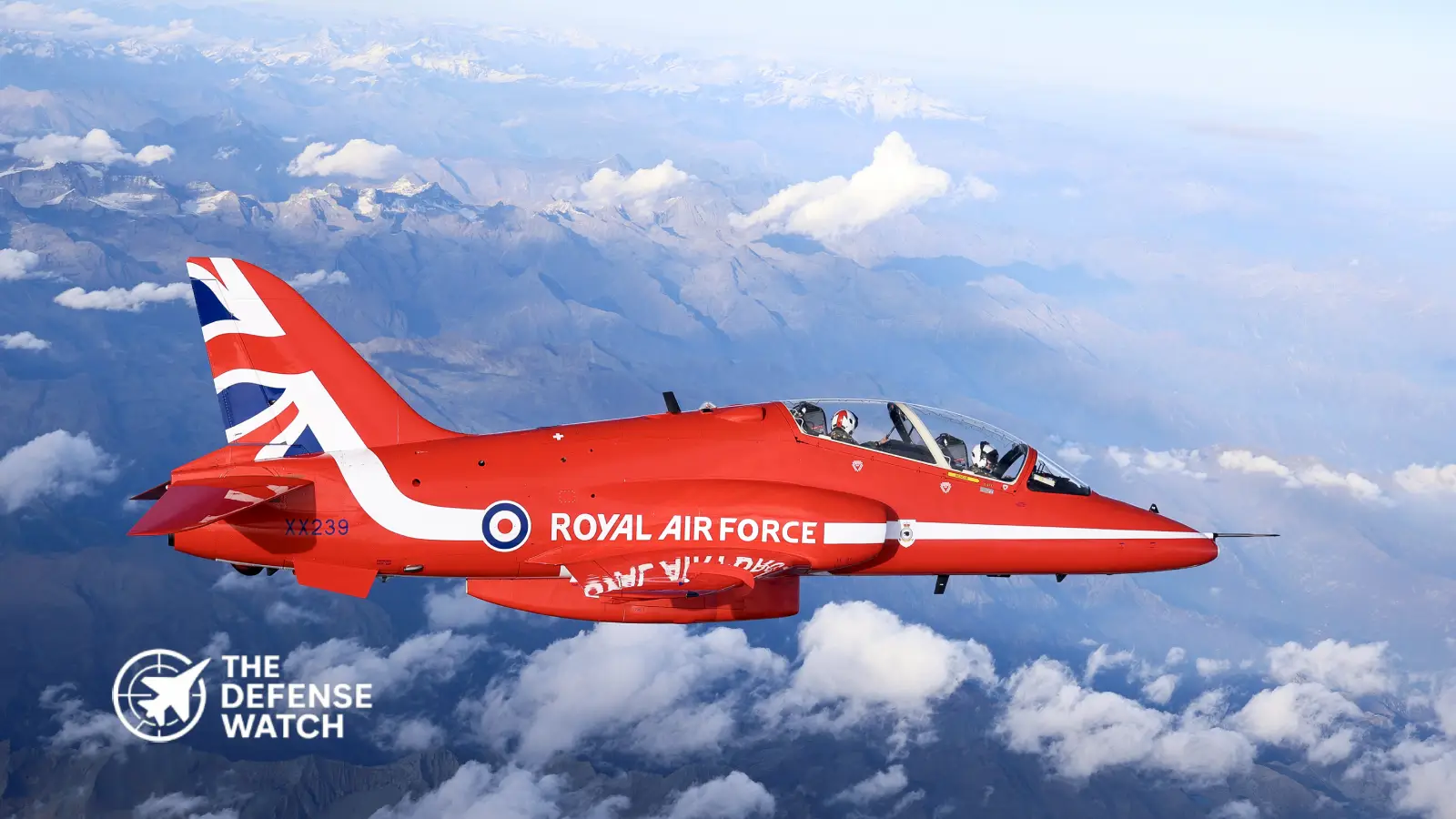
The UK government has confirmed that the Royal Air Force’s Red Arrows will receive new aircraft through a £360 million British Jet Trainer System program, replacing the aging Hawk fleet. The investment forms part of the Defence Investment Plan and is intended to modernize both advanced pilot training and one of Britain’s most recognizable military aviation assets while sustaining future RAF fast jet capabilities.
UK Confirms Red Arrows Hawk Replacement Program
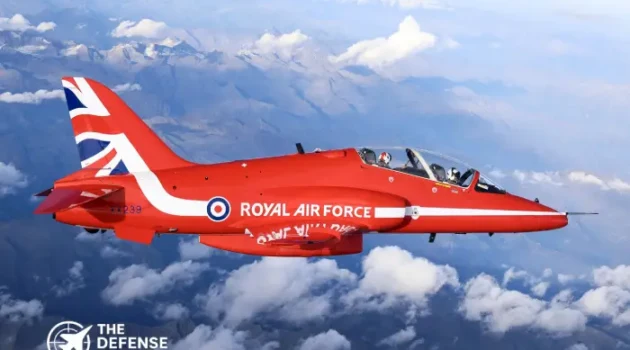
The Red Arrows Hawk replacement has officially moved beyond planning after the UK government confirmed funding for a new British Jet Trainer System. According to the Defence Investment Plan, the initiative includes new aircraft for the Royal Air Force Aerobatic Team, replacing the Hawk T1 fleet that has served the display team for decades.
The announcement allocates £360 million to recapitalize Britain’s military jet training enterprise, linking the Red Arrows replacement directly with the broader modernization of RAF fast jet pilot training. Rather than treating the aerobatic team as a standalone program, the Ministry of Defence is integrating the requirement into a wider overhaul of advanced training infrastructure.
Aging Hawk Fleet Has Reached Its Limits
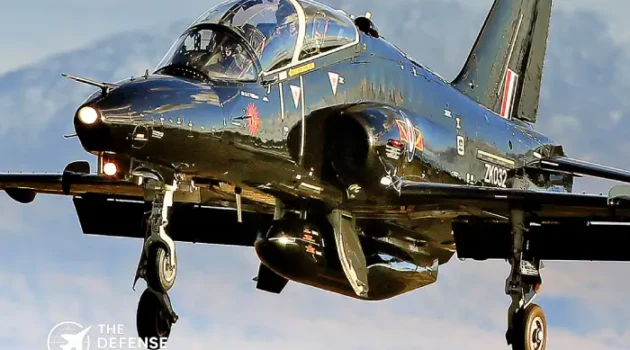
The Hawk T1 entered RAF service during the 1970s and has become increasingly difficult to sustain.
In recent years, the aircraft’s age has forced the RAF to carefully manage fleet availability. During the 2026 display season, the Red Arrows reduced many public displays from the traditional nine aircraft to seven in order to preserve airframe life and available spare parts.
Meanwhile, the newer Hawk T2 fleet, which supports advanced pilot training, has also experienced availability challenges, reinforcing the need for a comprehensive replacement rather than incremental upgrades.
British Jet Trainer System At A Glance
Program Element Details Investment £360 million Purpose Replace Hawk aircraft and modernize RAF jet training Includes New Red Arrows aircraft Managed by UK Ministry of Defence Strategic Goal Modernize fast jet training and preserve display capability More Than A New Display Aircraft
Although the Red Arrows are the public face of the program, the investment addresses a broader operational requirement.
The RAF must train pilots for increasingly sophisticated combat aircraft, including the Eurofighter Typhoon and the future Global Combat Air Programme (GCAP). Modern lead in fighter training demands aircraft capable of simulating digital cockpits, advanced sensors, electronic warfare environments, and networked operations that were not envisioned when the Hawk entered service.
A modern trainer also reduces the transition gap between classroom instruction and frontline fighters, potentially lowering training costs while improving pilot readiness.
No Aircraft Type Has Been Selected
The government confirmed that new aircraft will be acquired but did not identify which platform will replace the Hawk.
Several advanced jet trainers have been discussed publicly by industry analysts and defense observers, including:
- Boeing Saab T-7A Red Hawk
- Leonardo M-346
- Korea Aerospace Industries T-50 Golden Eagle
Each platform offers modern avionics, digital training environments, and growth potential for future fighter pilot instruction. However, the Ministry of Defence has not announced a preferred bidder or contract award.
Strategic Importance Beyond Air Shows
Replacing the Hawk fleet has implications well beyond the Red Arrows.
Military aerobatic teams serve as strategic communication tools, showcasing national aerospace capability while supporting recruiting, diplomacy, and defense exports. For the United Kingdom, the Red Arrows regularly participate in international events that reinforce defense relationships with allies.
At the same time, advanced trainer aircraft form a critical link in combat air readiness. Delays in pilot training can ripple across operational fighter squadrons, affecting force generation and long term modernization efforts.
Integrating the Red Arrows replacement into a national jet training strategy allows the Ministry of Defence to combine operational requirements with public engagement while potentially reducing lifecycle costs through common logistics, maintenance, and training.
The investment also aligns with the UK’s wider emphasis on rebuilding defense industrial capacity following the Defence Investment Plan and supports preparations for future sixth generation combat aviation programs.
What Comes Next
The funding announcement confirms government commitment but does not mark the beginning of aircraft deliveries.
Several major milestones remain before the Hawk leaves service:
- Selection of the replacement aircraft
- Competitive procurement process
- Contract award
- Pilot and maintenance training
- Infrastructure upgrades
- Transition of the Red Arrows display team
- Full operational introduction before Hawk retirement
The timeline will need to align with the planned withdrawal of the remaining Hawk fleets while maintaining uninterrupted RAF pilot training and preserving the Red Arrows’ international display schedule.
Outlook
The confirmation of new aircraft for the Red Arrows represents one of the clearest signals yet that the UK is moving ahead with replacing the Hawk after decades of service.
While the chosen aircraft remains undecided, the £360 million British Jet Trainer System establishes a framework that connects advanced pilot training, defense modernization, and one of Britain’s most recognizable military aviation organizations. For the RAF, the program is less about replacing an airshow aircraft than ensuring the long term sustainability of fast jet training as future combat aviation becomes increasingly complex.

Executive Summary:
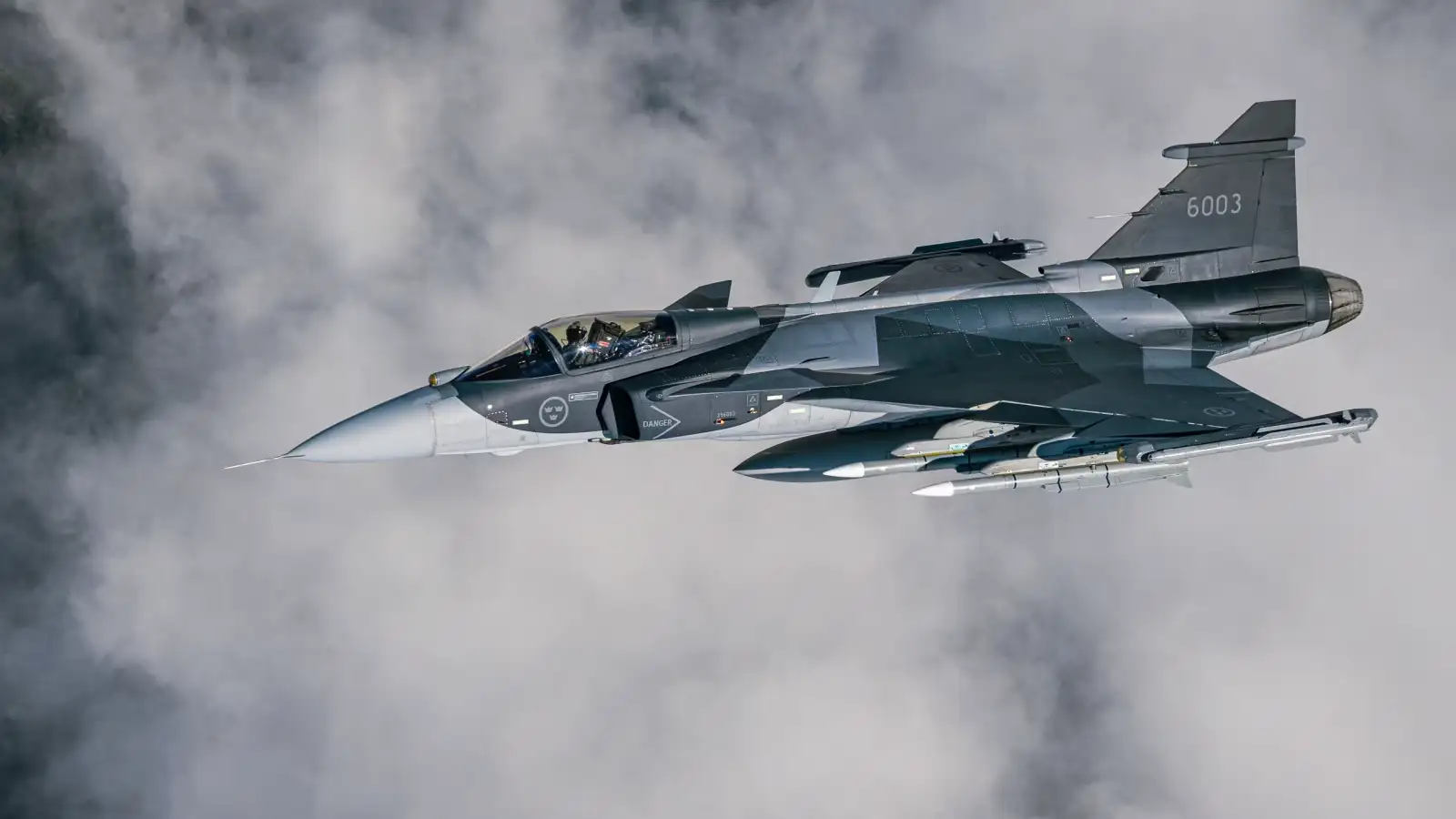
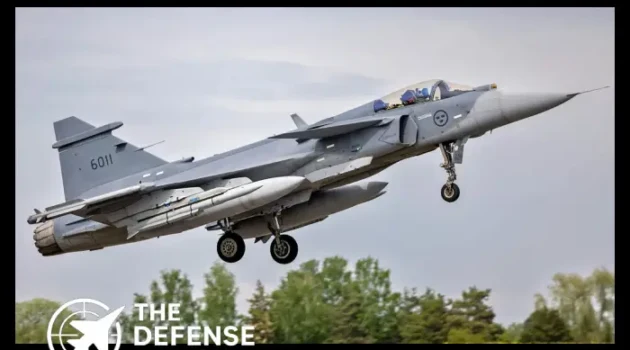
Sweden has placed an order with Saab for 16 Gripen E multirole fighter aircraft that will ultimately be transferred to Ukraine under a government backed procurement program valued at approximately SEK 24.6 billion (about US$2.6 billion). Deliveries are scheduled for 2029 through 2030, marking one of the most significant long term investments in rebuilding Ukraine’s future combat aviation capability.
Saab Gripen E Contract Marks Major Step In Ukraine’s Long Term Air Force Modernization
Saab has signed a contract with the Swedish Defence Materiel Administration (FMV) to supply 16 Gripen E fighter aircraft for Ukraine, representing one of the largest Western combat aircraft commitments announced for Kyiv since Russia’s full scale invasion. The agreement, valued at approximately SEK 24.6 billion (around US$2.6 billion), was announced by Saab and will be recorded in the company’s third quarter 2026 order intake.
According to Saab, deliveries to FMV are scheduled between 2029 and 2030, after which the aircraft will be transferred to Ukraine. The package includes the fighter aircraft, spare parts, associated equipment, and logistical support required to establish operational capability.
Saab President and CEO Micael Johansson said the agreement will provide Ukraine with a modern combat aircraft capable of significantly strengthening its air defense while supporting the country’s long term security.
I am deeply proud that Sweden and Saab can now enable the provision of Gripen E to Ukraine, bringing a world class fighter that will transform the Ukrainian Air Force’s capability, Johansson said in Saab’s official announcement.
Contract Includes Aircraft, Spare Parts And Support Equipment
The agreement covers substantially more than the aircraft themselves.
The procurement package includes:
Item Details Aircraft 16 Saab Gripen E fighters Contract Value Approximately SEK 24.6 billion (about US$2.6 billion) Customer Swedish Defence Materiel Administration (FMV) End User Ukrainian Air Force Deliveries 2029 to 2030 Included Items Spare parts, support equipment, associated systems The procurement through Sweden’s FMV allows Stockholm to manage acquisition and delivery before transferring the aircraft to Ukraine as part of its long term military assistance program.
Why The Gripen E Matters
The Gripen E represents Saab’s latest generation multirole fighter and incorporates numerous improvements over earlier Gripen C and D variants.
Among its principal characteristics are:
- Active Electronically Scanned Array (AESA) radar
- Advanced electronic warfare suite
- Extended combat range
- Increased payload capacity
- Modern sensor fusion architecture
- Software driven open mission system
- Network enabled operations
Unlike many heavier Western fighters, the Gripen was designed from the outset to operate under dispersed conditions.
According to Saab, the aircraft can conduct missions from short runways, highways, and temporary operating locations, enabling continued operations even if major air bases come under attack.
This concept aligns closely with Sweden’s long standing doctrine of dispersed air operations developed during the Cold War.
Designed For High Availability In Contested Environments
A distinguishing feature of the Gripen family is its emphasis on rapid turnaround and simplified maintenance.
Saab states that the aircraft requires comparatively small maintenance crews while enabling quick rearming and refueling between sorties.
These characteristics become particularly valuable during prolonged high intensity conflicts where infrastructure may be degraded and maintenance resources remain limited.
The Gripen E’s software centric architecture also enables continuous capability upgrades without requiring extensive redesign of core aircraft systems, allowing operators to integrate new weapons and sensors more efficiently over the aircraft’s service life.
Strategic Implications For Ukraine
Although deliveries will not begin until 2029, the contract reflects planning beyond Ukraine’s immediate wartime requirements.
Rather than addressing today’s operational needs alone, the agreement contributes to building the future structure of the Ukrainian Air Force around modern Western aircraft capable of integrating with NATO compatible command, communications, and weapons systems.
The timeline also provides an opportunity for Ukrainian pilots, maintenance personnel, and logistics specialists to complete extensive training before aircraft enter operational service.
Transitioning from Soviet designed fighters to advanced Western platforms requires not only pilot conversion but also entirely new maintenance procedures, spare parts supply chains, mission planning software, technical documentation, and weapons integration.
Broader Significance For European Defense
The agreement carries importance beyond Ukraine.
For Sweden, it represents another demonstration of Stockholm’s expanding role as a supplier of advanced military capability following its accession to NATO.
For Saab, the contract secures a major production commitment for the Gripen E program while reinforcing the aircraft’s relevance in Europe’s evolving defense landscape.
From a broader industrial perspective, sustained Gripen production helps preserve European combat aircraft manufacturing capacity alongside other major fighter programs. Maintaining multiple design and production lines across Europe supports resilience, competition, and technological innovation within the continent’s aerospace sector.
Operational Considerations
Even after delivery, integrating a new fighter fleet is a multi year undertaking.
Ukraine will need to establish:
- Maintenance facilities
- Ground support infrastructure
- Spare parts inventories
- Pilot conversion programs
- Weapons integration
- Mission planning systems
- Technical training pipelines
Because the Gripen E is designed for interoperability with a wide range of NATO compatible weapons and data links, it offers flexibility for future capability expansion as Ukraine continues modernizing its armed forces.
Its dispersed operating concept could also improve survivability by reducing reliance on a limited number of large air bases that remain vulnerable to long range missile attacks.
Looking Ahead
The Saab contract signals that Western support for Ukraine increasingly extends beyond immediate battlefield requirements toward long term force development.
While the first aircraft will not arrive until the end of the decade, the agreement establishes the framework for introducing a modern fighter capability designed for sustained operations in contested environments. Combined with pilot training, logistical preparation, and future weapons integration, the Gripen E program is expected to become a key element of Ukraine’s long term air power modernization strategy.
(adsbygoogle = window.adsbygoogle || []).push({});Executive Summary:
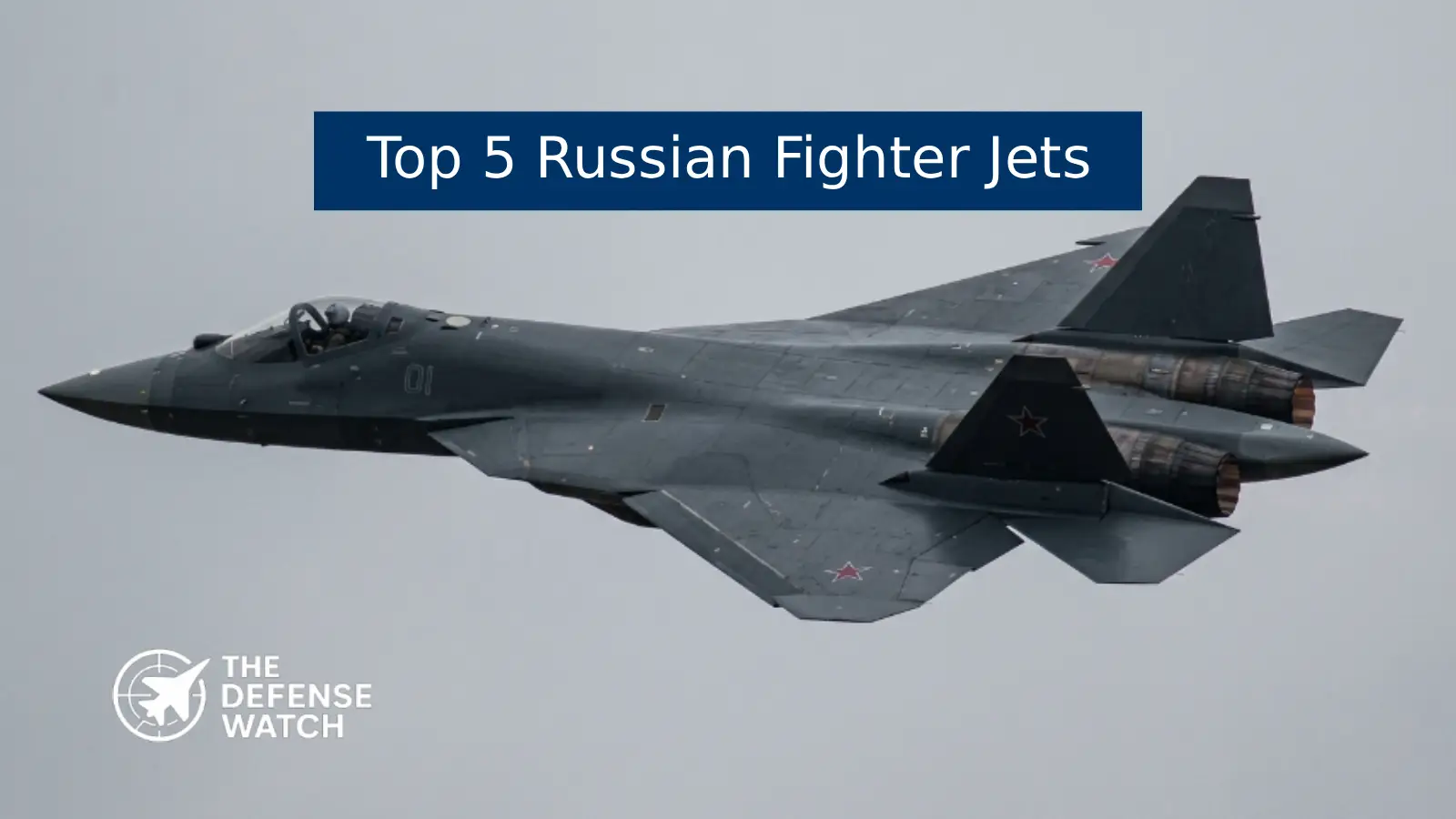
Russia fields one of the most diverse fighter inventories on earth — spanning a Mach 2.83 interceptor that predates the Berlin Wall’s fall to a fifth-generation stealth jet currently receiving AI-assisted upgrades. Understanding which platforms matter operationally in 2026 requires cutting through marketing claims and reading what actually flies, what actually kills, and what the Ukraine war has quietly validated.
Russia lost the propaganda war for its air force the moment its jets failed to establish early air superiority over Ukraine. But that narrative obscures something important: the specific aircraft doing the most damage in that conflict are not the ones struggling. They are performing exactly as designed — and they are worth understanding precisely because of it.
Here are the five Russian fighter jets that genuinely matter in 2026, ranked by operational impact and technical capability.
#1 — Sukhoi Su-35S “Flanker-E”: The War’s Actual Air Supremacy Workhorse
The Su-35S is Russia’s most combat-proven fighter of the current war. Classified as 4++ generation, it bridges the gap between Cold War Flanker doctrine and fifth-generation sensor integration — and it has delivered results.
- Max Speed: Mach 2.25 (~2,700 km/h)
- Combat Radius: ~1,600 km (unrefueled)
- Primary Radar: Irbis-E passive phased array, 400 km detection range
- Engines: 2× Saturn AL-41F1S with 3D thrust vectoring
- Payload: 8,000 kg across 12 hardpoints
- Unit Cost: ~$85 million (export estimate)
- Fleet Size (Russia): 130+ airframes, deliveries ongoing through 2026
According to Rostec, by early 2026 the Su-35S had downed more Ukrainian aircraft in air-to-air combat than any other Russian platform — a claimed total that includes Su-27s, MiG-29s, Su-24s, and Su-25s. In May 2026, reports emerged of a Ukrainian F-16 lost in a long-range engagement, though specific weapon details remain unconfirmed.
The Su-35S accomplishes this without stealth. Its edge is kinematic: twin AL-41F1S turbofans with full 3D thrust vectoring, generating roughly 64,000 lbf combined, make it arguably the most maneuverable production fighter in the world at high angles of attack. Paired with the Irbis-E radar — capable of detecting targets at 400 km — it holds BVR engagement range that most 4th-gen adversaries cannot match.
The strategic gaming parallel: Think of the Su-35S as a macro-dominant player in a real-time strategy game who wins not through a specific tech advantage but through raw mechanical execution and vision control. It does not need stealth if no adversary radar in its theater is good enough to matter at range.
#2 — Sukhoi Su-57 “Felon”: Russia’s Fifth-Gen Bet, Finally Paying Off
Russia’s only operational fifth-generation fighter spent years being dismissed for its production numbers. That critique is thinning. The Russian Aerospace Forces received a new batch in a “upgraded technical configuration” in early 2026, with the Su-57M1 variant expected to enter production before year-end.
⚡ Key Facts at a Glance — Su-57- Max Speed: Mach 2.0 (supercruise at Mach 1.3 without afterburner)
- Combat Radius: ~3,500 km
- Radar: N036 Byelka AESA + N036B-1-01 cheek arrays
- Engines: 2× AL-41F1 (pending full transition to AL-51F-1 / Izdeliye 30)
- Length / Wingspan: 20.1 m / 14.1 m
- Unit Cost: ~$35–50 million (domestic); ~$50–70 million (export)
- Fleet Size (Russia): ~30 airframes in service as of mid-2026
The Su-57’s defining feature is sensor architecture, not stealth alone. Its N036 Byelka AESA radar is supplemented by cheek-mounted arrays providing angular coverage that forward-facing radars cannot achieve — a design priority that reflects Russian doctrine: see broadly, engage first.
(adsbygoogle = window.adsbygoogle || []).push({});In May 2026, the Su-57 conducted at least ten cruise missile launches over Kursk Oblast, the Sea of Azov, and Crimea — its most significant confirmed combat deployment since the war began. Russia appears to be using it as a long-range strike platform from safe standoff positions, preserving airframes while extracting operational value.
The Su-57M1 upgrade cycle adds AI-assisted pilot aids, enlarged airframe sections for improved supersonic lift, and the long-delayed AL-51F-1 engine — the first clean-sheet Russian fighter engine in over 40 years. Algeria has already taken delivery of export units. Vietnam is in discussions.
The cost disruption angle is real. At $50 million per unit versus the F-35’s $110 million, the Su-57 is the rare fifth-generation platform that mid-tier air forces can actually budget for — even if the capability gap versus the F-35 in stealth fidelity and software integration remains significant.
#3 — MiG-31BM “Foxhound”: The Fastest Operational Fighter on Earth
No aircraft in active global service flies faster than the MiG-31. The BM variant, an extensive avionics-focused upgrade of the original 1981 design, remains a unique tool with no Western equivalent.
⚡ Key Facts at a Glance — MiG-31BM- Max Speed: Mach 2.83 (~3,000 km/h)
- Service Ceiling: 20,600 m
- Radar: Zaslon-AM passive phased array, 320 km detection range
- Primary Weapon (BM): R-37M ultra-long-range AAM (400 km range)
- Hypersonic Carrier: Kh-47M2 Kinzhal in MiG-31K variant
- Crew: 2 (pilot + weapons system officer)
- Russia Plans: Extend service life to mid-2030s
The MiG-31BM is not a dogfighter. It is an area denial platform — a tool for intercepting high-altitude threats across Russia’s vast northern territory, where geography demands something that can sprint 1,000 km in under 20 minutes. The R-37M missile it carries has a reported engagement range exceeding 400 km, meaning the MiG-31 can attack AWACS, tankers, and standoff aircraft before they come anywhere near Russian airspace.
The MiG-31K variant introduced a second role: hypersonic delivery. Carrying the Kh-47M2 Kinzhal — essentially an air-launched Iskander-M ballistic missile — the MiG-31K has been used operationally in Ukraine. The platform’s extreme speed and high-altitude cruise profile give Kinzhal an energy head-start that dramatically extends its own speed and penetration capability.
Russia has no replacement for this mission set. The MiG-31 will remain in service into the 2030s by necessity.
#4 — Sukhoi Su-30SM “Flanker-H”: The Export Champion That Fights at Home
The Su-30SM is the aircraft that funded Russian aerospace’s post-Cold War survival. It became the backbone of India’s Air Force, Algeria’s, and Vietnam’s — and then came home as a serious multirole platform for the Russian Aerospace Forces themselves.
⚡ Key Facts at a Glance — Su-30SM- Max Speed: Mach 2.0
- Combat Radius: ~1,500 km
- Crew: 2 (tandem cockpit)
- Engines: 2× AL-31FP with 2D thrust vectoring
- Hardpoints: 12, carrying up to 8,000 kg
- Radar: N011M Bars passive phased array
- Unit Cost: ~$50 million (domestic estimate)
The twin-seat configuration is the Su-30SM’s operational signature. The weapons system officer in the rear cockpit significantly enhances sensor management and weapons employment — particularly relevant during complex multi-target BVR engagements or strike profiles requiring precision targeting coordination.
Its 12 hardpoints accommodate an exceptionally diverse weapon load: R-77 and R-73 for air-to-air, Kh-59 and Kh-31 for ground attack, and P-800 Oniks for anti-ship. That cross-domain flexibility has made it the preferred export option for air forces that cannot afford separate airframes for each mission type.
Russia has operated it extensively in Syria, refining crew tactics for strike-coordination in contested environments.
#5 — Sukhoi Su-34 “Fullback”: The Strike Fighter That Rewrote the Mission Profile
The Su-34 looks like a fighter. It carries weapons like a fighter. But inside, it is configured like a light bomber — with a side-by-side cockpit, a galley for crew meals, and a relief tube for multi-hour missions. That unusual design reflects a precise operational requirement.
⚡ Key Facts at a Glance — Su-34- Max Speed: Mach 1.8
- Combat Radius: ~1,100 km (up to 4,000 km ferry range)
- Empty Weight: 22,500 kg (heaviest Russian fighter)
- Hardpoints: 12, up to 8,000 kg weapons load
- Engines: 2× AL-31FM1, ~30,000 lbf thrust each
- Key Weapons: Kh-59, Kh-35, P-800 Oniks, Kh-31 anti-radiation missiles
- Unit Cost: ~$36–50 million (domestic estimate)
Russia has used the Su-34 more than any other aircraft in Ukraine for deep strike missions. Its capacity to carry anti-radiation missiles (suppression of enemy air defenses) while retaining air-to-air missiles for self-defense makes it a critical SEAD/DEAD platform. The Su-34M modernization adds improved targeting systems and expanded guided munitions compatibility.
Its dual-engine redundancy and hardened cockpit give crews survivability margins that single-engine platforms cannot offer on deep penetration routes. In a conflict characterized by dense ground-based air defense systems, that margin matters.
Comparative Specifications Table
Platform Generation Max Speed Combat Radius Unit Cost (Est.) Key Strength Weakness Su-35S 4++ Mach 2.25 1,600 km ~$85M (export) Supermaneuverability, 400 km radar No stealth Su-57 5th Mach 2.0 3,500 km $35–70M Stealth, multi-sensor fusion Low fleet numbers, engine gap MiG-31BM 4th (interceptor) Mach 2.83 720 km ~$50M Speed, 400+ km AAM range, Kinzhal carriage No dogfight role, aging airframe Su-30SM 4+ Mach 2.0 1,500 km ~$50M Crew endurance, cross-domain payload Older radar vs. AESA peers Su-34 4+ strike Mach 1.8 1,100 km ~$36–50M Strike endurance, SEAD, crew comfort Not an air superiority platform The Real Lesson Ukraine Taught About Russian Air Power
“The aircraft that has killed the most Ukrainian jets is not Russia’s most advanced — it is Russia’s most ready.”
The Su-35S, not the Su-57, defined Russian air-to-air performance in this war. That is not a failure of Russian aerospace ambition. It is a confirmation of a doctrine that Western air planners have sometimes underestimated: mass, readiness, and kinematic performance at scale outperform limited quantities of technically superior hardware — at least in a prolonged attritional conflict.
The MiG-31BM reinforces the same point from a different angle. A 1981 airframe, properly upgraded and purpose-matched to a genuine mission need, has remained operationally relevant through multiple conflicts across four decades. Russia kept it because no available replacement does what it does. That is a product management decision as much as a military one.
The Su-57’s restricted deployment — used primarily as a missile truck firing from within Russian airspace — tells a parallel story familiar to competitive gaming: you do not commit your highest-value asset to a contested engagement when standoff range lets you achieve the same effect safely. The Su-57 is being preserved. Whether that reflects operational caution or genuine capability concern is a question the AL-51F-1 engine program and the Su-57M1 production ramp will eventually answer.
Why This Fleet Still Matters Globally in 2026
Russia’s fighter fleet — despite attrition, sanctions, and production constraints — remains a relevant force multiplier for any nation that aligns with or purchases from Moscow. Algeria now operates Su-57s. India is in active discussions for additional Flanker-family aircraft. Vietnam, Belarus, and several Gulf-adjacent states maintain Russian platforms as core air defense infrastructure.
The fleet’s export reach means that Western air forces — and F-35 operators in particular — will train and plan against these platforms for decades. Understanding what the Su-35S actually does in combat, what the MiG-31BM’s R-37M actually threatens, and what the Su-57’s real capability ceiling is matters not just for Russian adversaries but for every defense planner watching the Indo-Pacific and European theaters simultaneously.
Russia’s air force is not winning the war in Ukraine. But Russia’s fighters, at the individual platform level, are performing specific missions with measurable effectiveness — and that is the analysis that actually informs future procurement, doctrine, and allied air combat planning.

Executive Summary:
The Eurofighter Typhoon is Europe’s most operationally active multirole fighter, flown by nine air forces and now accumulating more than one million flying hours across combat, air policing, and NATO interoperability missions. With the Tranche 5 standard and ECRS Mk2 AESA radar in development, the platform is no longer a legacy 4th-gen holdout — it is being transformed into a 4.5+ generation electromagnetic warfare node with a service horizon extending past 2040. New orders placed in 2025 alone totalled over €15 billion across Germany, Italy, Spain, Turkey, and Bangladesh.
Forty-four Typhoons for Turkey. Twenty Tranche 5 jets for Germany approved at €3.75 billion. A Bangladesh letter of intent signed December 2025. An Italian order worth €7.5 billion finalized the same month. In a year when Europe’s defense procurement machine accelerated to a pace not seen since the Cold War, the Eurofighter Typhoon was the aircraft everyone wanted most.
That’s not a coincidence. The Typhoon has spent two decades quietly accumulating one of the most operationally diverse combat records of any Western fighter — and its upgrade roadmap is now threatening to make it more capable than several fifth-generation platforms in contested electromagnetic environments.
The Hard Numbers: What Makes the Typhoon Different
The Typhoon is a twin-engine, canard-delta multirole fighter designed from the start to be aerodynamically unstable — a deliberate engineering choice that gives it exceptional agility at the cost of requiring fly-by-wire computers to keep it airborne every millisecond. That instability is a feature.
At maximum performance, the aircraft hits Mach 2.35 at altitude — faster than the F-35A (Mach 1.6) and the Dassault Rafale (Mach 1.8). Its EJ200 engines enable supercruise: sustained supersonic flight without afterburner, extending both range and survivability by reducing the aircraft’s infrared signature during cruise. Engine health monitoring is rated at 1,200 flying hours between unscheduled maintenance events.
The airframe uses composite materials for roughly 85% of its surface area, reducing radar cross-section compared to conventional metal construction while cutting structural weight by approximately 30%. Only 15% of the aircraft’s outer mold line is traditional metal. That’s a stealth-adjacent design philosophy built into the bones of a platform that predates the modern stealth era.

Weapons carriage is genuinely multi-role. The Typhoon fields up to 13 external hardpoints, capable of simultaneously carrying Meteor BVR missiles (the longest-ranged Western air-to-air missile in service), Brimstone 2 precision strike munitions, Storm Shadow/SCALP cruise missiles, and Paveway IV GPS/laser-guided bombs — all in a single sortie when configured for swing-role operations.
Technical Data: Eurofighter Typhoon vs. Primary Competitors
Metric Eurofighter Typhoon (T4/T5) Dassault Rafale F4 F-35A Lightning II Max Speed Mach 2.35 Mach 1.8 Mach 1.6 Unit Cost (approx.) ~€140M (T5) ~€120M (F4, French AF) ~$82M (FY2024 LRIP) Engine 2× EJ200 (20,000 lbf each) 2× M88-4E (16,900 lbf each) 1× F135 (43,000 lbf with AB) Radar (current/future) Captor-M → ECRS Mk0/Mk1/Mk2 RBE2-AA AESA APG-81 AESA Supercruise Yes (Mach ~1.2–1.3) Limited No SEAD/EW Role Yes (EK/ECRS Mk2) Limited No dedicated variant Operators (2026) 9 nations, 700+ aircraft 9 nations, ~220 on order 20+ nations, ~1,000+ delivered Service Horizon 2040s+ (with upgrades) 2040s (Rafale F5 planned) 2070s (platform lifecycle) Combat Debut 2011 Libya 2015 Syria 2019 USAF Cost data: Germany Tranche 5 contract (Breaking Defense, Oct 2025); Rafale French AF estimate (2025 French parliamentary review); F-35 FY2024 Selected Acquisition Report.
The ECRS Mk2: Why This Radar Changes the Calculus
Radar defines the modern air combat kill chain. The Typhoon’s long-standing weakness — its legacy mechanical Captor-M radar — is being corrected in the most aggressive terms possible.
The ECRS Mk2 (European Common Radar System Mark 2), developed by Leonardo UK and integrated by BAE Systems, is not simply a better radar. It is a multi-function active electronically scanned array that combines air-to-air search, ground targeting, and offensive electronic jamming into a single aperture. Its field of regard extends to approximately 200 degrees — about 50% wider than a conventional fixed-plate AESA — enabled by a mechanical steering pivot behind the array.
The radar uses gallium nitride (GaN) transmitter/receiver modules rather than the older gallium arsenide (GaAs) technology. GaN delivers higher power density, wider bandwidth, and better thermal efficiency. In practical terms, this allows the Mk2 to simultaneously track multiple targets, jam enemy radar emitters, and conduct SEAD (Suppression of Enemy Air Defenses) missions — all in one weapon system integration.
The ECRS Mk2 completed its first flight on a UK test and evaluation Typhoon at BAE Systems’ Warton facility in late 2024. The RAF’s Tranche 5 aircraft will receive Mk2 as standard. For Germany and Spain, the ECRS Mk1 from Hensoldt/Indra fills the same generation slot with GaN modules and enhanced signal processing.
When fully fielded, a Mk2-equipped Typhoon will be able to enter contested airspace, blind enemy integrated air defense systems, designate targets for follow-on forces, and egress — without a dedicated electronic attack aircraft in the flight package. That is a capability currently unique to the EA-18G Growler in the Western inventory.
Combat Record: What the Typhoon Has Actually Done
The Typhoon’s combat history is longer than most people realize, and more varied.
In 2011, RAF Typhoons conducted their combat debut over Libya, dropping Paveway IV bombs on armored targets — a mission that required rapid capability integration to even happen. In January 2024, four RAF Typhoons struck Houthi military facilities in Yemen with Paveway IVs during Operation Shader’s Red Sea operations. In April 2024, RAF Typhoons based in Cyprus and Romania intercepted Iranian UAVs during the 2024 Iranian drone strikes on Israel, engaging targets in Iraqi and Syrian airspace — a live ADIZ defense mission over a third-party state.
Most recently, in March 2026, an RAF Typhoon from 12 Squadron operating out of Qatar shot down an Iranian UAV approaching Qatari airspace. That engagement is not a footnote. It is proof that the Typhoon is the primary Western fighter conducting live air defense intercepts in the Persian Gulf theater right now.
During NATO Steadfast Dart 26 in February 2026, German Typhoons conducted manned-unmanned teaming (MUM-T) exercises with Turkish Bayraktar TB3 drones — the UAV provided ISTAR data to Typhoon pilots who then prosecuted precision strikes. It was the first public validation of the Typhoon’s MUM-T architecture in a NATO exercise context.
The Strategic Insight: Adaptability as the Core Doctrine
Here’s the angle that separates Typhoon operators from operators of most other fourth-generation platforms: the aircraft was designed to be upgraded in layers, not replaced in blocks.
In competitive gaming, the teams that win championships over consecutive seasons rarely do so on mechanical skill alone. They win on meta-adaptation — reading the evolving threat environment faster than opponents and restructuring their composition before the enemy can counter. Organizations like Team Liquid or FaZe Clan maintain longevity not by sticking to a single playstyle, but by systematically expanding their toolkit while preserving core strengths.
The Typhoon operates on exactly this doctrine. Its Tranche upgrade system — from Tranche 1’s basic air defense configuration through Tranche 3’s full swing-role capability to Tranche 5’s open software architecture and MUM-T integration — has kept a single airframe relevant across three decades of threat evolution. The avionics computing power in the Tranche 5/ECRS Mk2 configuration is reported to represent a 200-fold increase over Tranche 1 standard. Same aircraft. Completely different brain.
Germany’s decision in October 2025 to approve 20 Tranche 5 Typhoons at €3.75 billion — with deliveries running 2031 to 2034 — and simultaneously fund a €1.13 billion electronic warfare upgrade for 15 existing Typhoon EK aircraft illustrates this doctrine in budget form. The platform is not being retired. It is being restructured as an electromagnetic warfare node while the sixth-generation GCAP/Tempest program matures.
“The Eurofighter Typhoon is predestined to become a bridge for the next generation combat air system.” — Eurofighter GmbH Programme Directorate
That statement is no longer aspirational. With GCAP (the UK-Italy-Japan sixth-generation program) unlikely to reach initial operational capability before the mid-2030s, the Typhoon will carry NATO’s European air superiority burden for at least another 15 years. Every upgrade invested now — ECRS Mk2, Meteor integration, Striker II helmet, AREXIS EW suite — extends that bridge.
The Export Story: Why Nine Nations Have Said Yes
The Typhoon’s export trajectory tells a story that pure capability numbers cannot. Austria, Saudi Arabia, Oman, Qatar, and Kuwait all operate the platform. Turkey signed a £5.4 billion deal with the UK in October 2025 for 20 aircraft — Britain’s largest fighter export deal in nearly two decades, and Turkey’s first combat aircraft purchase from a non-American supplier.
Bangladesh signed a letter of intent with Leonardo in December 2025. The Philippines is evaluating a 32-aircraft Tranche 5 package. Egypt and Italy are negotiating 24 aircraft for approximately $3 billion.
The common thread across these customers is not price — at roughly €140 million per Tranche 5 unit, the Typhoon is not cheap. The common thread is industrial partnership. Every Typhoon sale comes with technology transfer agreements, local maintenance training, national workshare arrangements, and access to a supply chain that supports over 100,000 skilled jobs across Europe. For nations building sovereign defense industries, that package is worth the premium.
Conclusion: The Typhoon in 2026
The Eurofighter Typhoon arrived at its 2026 position through a combination of genuine capability and relentless adaptation. Its combat record spans Libya, Syria, Iraq, Yemen, and the Persian Gulf. Its order books are fuller now than they were five years ago. Its radar is being rebuilt from first principles with GaN AESA technology that puts it ahead of most competitors in the electromagnetic domain.
The narrative that the Typhoon is a transitional platform waiting to be replaced by GCAP or F-35 misses the operational reality. NATO’s European air forces cannot wait for sixth-generation fighters. The Typhoon is what they have, and the Tranche 5 program is ensuring it remains worth having.
One million flying hours logged. Hundreds of live intercepts completed. More than €15 billion in new orders signed in a single calendar year.
The storm isn’t passing. It’s intensifying.
Frequently Asked Questions
How much does a Eurofighter Typhoon cost in 2026?A Tranche 5 Eurofighter Typhoon costs approximately €140 million per unit, based on reported figures from late 2025 program reviews. Germany’s October 2025 contract for 20 Tranche 5 jets was valued at €3.75 billion (~€187 million per aircraft when including associated simulators and support equipment). Export unit pricing varies significantly by contract structure and offset agreements.
How fast is the Eurofighter Typhoon?The Typhoon reaches a maximum speed of Mach 2.35 at altitude. It also has supercruise capability — sustained supersonic flight without afterburner — which reduces the aircraft’s infrared signature during transit and extends operational range compared to non-supercruising platforms.
Has the Eurofighter Typhoon been used in combat?Yes. The Typhoon has a confirmed combat record spanning Libya (2011), Syria and Iraq (2015–present), Yemen (2024), and the Persian Gulf (2024–2026). RAF Typhoons conducted live intercepts of Iranian drones during the April 2024 Israeli strikes and shot down an Iranian UAV over Qatar in March 2026.
What is the ECRS Mk2 radar on the Typhoon?The ECRS Mk2 (European Common Radar System Mark 2) is a next-generation AESA radar developed by Leonardo UK and integrated by BAE Systems. It combines air-to-air targeting, air-to-surface modes, and offensive electronic jamming in a single system. The radar uses gallium nitride modules and has a 200-degree field of regard, making it one of the most capable radar/EW systems fitted to any 4th or 4.5th generation fighter.
How many countries operate the Eurofighter Typhoon?As of 2026, nine countries operate the Typhoon: the United Kingdom, Germany, Italy, Spain, Saudi Arabia, Oman, Qatar, Kuwait, and Austria. Turkey, Bangladesh, and the Philippines are in various stages of procurement discussions or signed agreements.
Will the Eurofighter Typhoon be replaced by GCAP?The UK and Italy plan to replace their Typhoons with the sixth-generation GCAP (Global Combat Air Programme), developed jointly with Japan. However, GCAP is not expected to reach operational service before the mid-2030s at the earliest. Tranche 5 Typhoons being ordered now will bridge that gap, with a projected service life extending into the 2040s.
Executive Summary:
Italy has signaled that additional countries could join the Global Combat Air Programme (GCAP), the multinational effort to develop a next generation fighter aircraft by 2035. Canadian interest appears to be the most advanced, while Germany and Saudi Arabia have also been mentioned as potential future participants. Expansion could spread development costs and strengthen the program’s industrial base.
GCAP Fighter Program Gains New International Interest
The GCAP fighter program could soon attract additional international partners as Italy pushes for broader participation in one of the world’s most ambitious military aviation projects.
Speaking in Rome on June 23, Italian Defense Minister Guido Crosetto said several countries have expressed interest in the Global Combat Air Programme, which is jointly led by the United Kingdom, Italy, and Japan. According to Crosetto, Canada currently appears to be the most interested nation, initially seeking observer status within the program.
Crosetto added that Italy would also welcome participation from Germany, Saudi Arabia, or other interested nations, arguing that a larger partnership would increase industrial cooperation while reducing financial burdens on existing members.
What Is The Global Combat Air Programme?
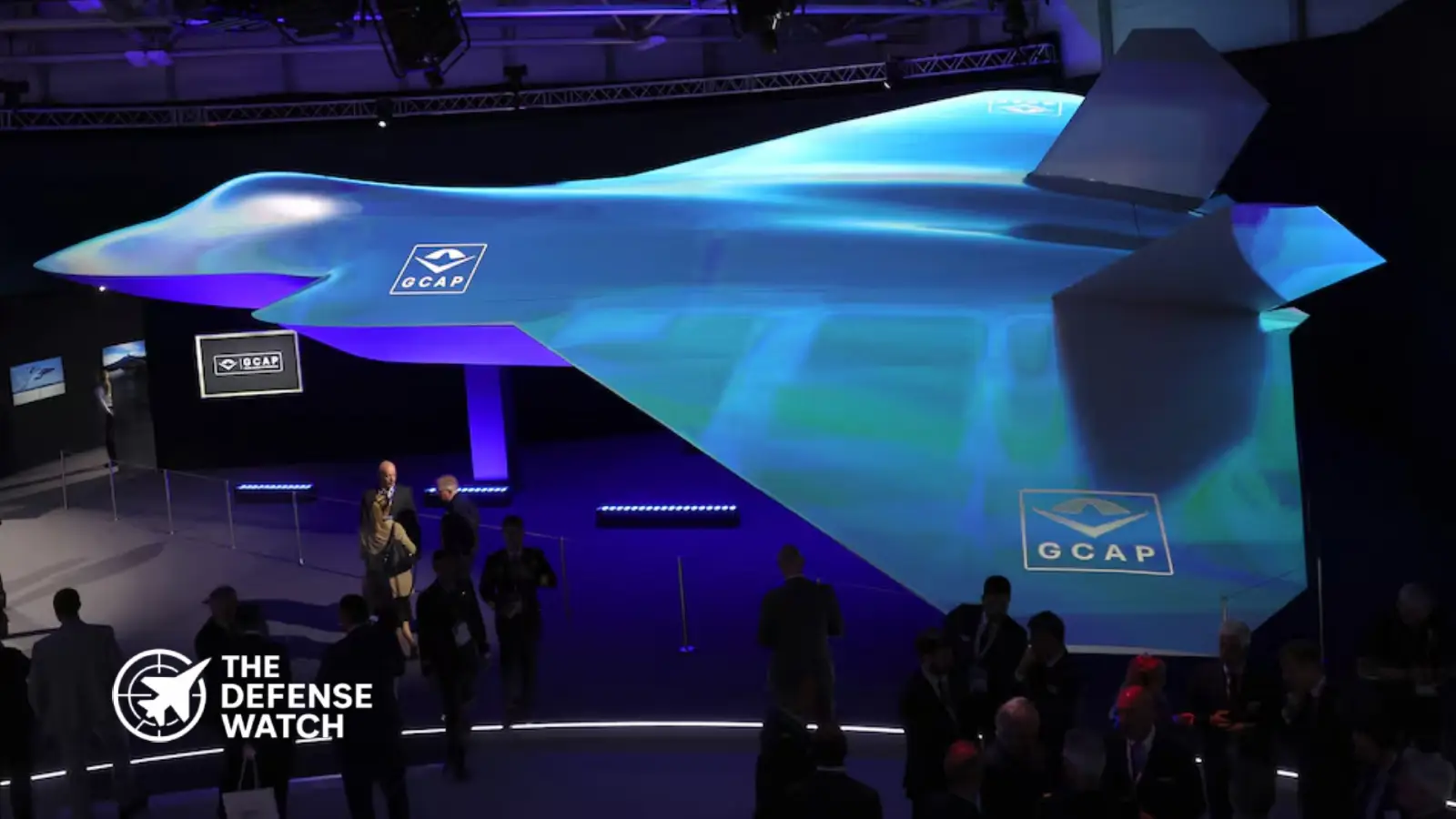
The Global Combat Air Programme (GCAP) was launched in 2022 through a partnership between the United Kingdom, Italy, and Japan. The initiative aims to deliver a sixth generation fighter aircraft by 2035, integrating advanced sensors, networking technologies, artificial intelligence, and unmanned teaming capabilities.
The industrial team behind the aircraft includes:
- BAE Systems
- Leonardo
- Mitsubishi Heavy Industries through the Japan Aircraft Industrial Enhancement Corporation (JAIEC) consortium.
Program partners intend to field the aircraft by 2035, positioning it as a successor to current fourth and fifth generation combat aircraft.
Germany Emerges As A Potential Partner
Interest in Germany joining GCAP has intensified following the collapse of the rival Future Combat Air System (FCAS) effort involving Germany, France, and Spain.
Earlier this month, Germany and France reportedly agreed to abandon the long troubled FCAS project after failing to resolve industrial disagreements among participating companies.
Leonardo CEO Lorenzo Mariani recently described Germany as a particularly valuable potential partner because of its industrial expertise and manufacturing capabilities. He noted that German participation could strengthen the program’s long term prospects, although integrating a new full partner at this stage could require adjustments to existing agreements.
Analysis: Why Germany Matters
Germany’s potential involvement carries significance beyond additional funding.
The country remains one of Europe’s largest defense markets and possesses a substantial aerospace industrial base. Bringing Germany into GCAP could increase production scale, improve export opportunities, and strengthen European defense cooperation at a time when many NATO members are accelerating military modernization.
However, adding a major new partner could also complicate governance, workshare arrangements, and development timelines. Current members have already spent years negotiating industrial responsibilities and technology sharing frameworks. Any expansion would need to balance new contributions against existing commitments.
Rising Costs Drive Interest In Expansion
Cost sharing remains one of the strongest arguments for expanding the program.
In February 2026, Italy’s parliament approved approximately €8.77 billion for the initial phases of GCAP. Updated estimates indicate early phase costs have risen significantly compared with original projections, reflecting increasing technology development, testing, and design requirements.
For participating governments, attracting additional partners could help distribute these costs across a broader group of nations while expanding the program’s industrial and technological resources.
Canada’s Observer Role Could Be First Step
Among prospective participants, Canada appears to be the closest to formal involvement.
Italian officials identified Canada as the most interested country at present, potentially joining initially as an observer. Such a role would allow Ottawa to evaluate the program while gaining insight into technology development and future procurement options.
Canadian participation would also align with broader efforts by Ottawa to diversify defense partnerships and strengthen cooperation with key allies beyond traditional procurement channels.
Strategic Implications
The growing interest surrounding the GCAP fighter program highlights a wider trend across allied nations: the rising cost and complexity of developing next generation combat aircraft increasingly require multinational collaboration.
Unlike previous fighter programs that were often led by a single nation, sixth generation systems demand investments in artificial intelligence, advanced propulsion, secure networking, electronic warfare, and autonomous capabilities. These requirements make international partnerships more attractive and, in many cases, financially necessary.
If additional countries ultimately join GCAP, the program could emerge as one of the largest multinational aerospace initiatives outside the United States, strengthening its position in the increasingly competitive future combat aircraft market.
(adsbygoogle = window.adsbygoogle || []).push({});Executive Summary:
China has quietly become the only nation besides the United States to field two operational fifth-generation stealth fighter families simultaneously — the J-20 and J-35 — while a third prototype family, the sixth-generation J-36, completed its third test flight on Christmas Day 2025. Production rates, aerial intercept incidents, and satellite imagery of factory expansion all point to the same conclusion: China’s fighter fleet is no longer a future threat. It is a present one.
On February 18, 2026, roughly ten U.S. F-16s flying a training sortie over the Yellow Sea from Osan Air Base in South Korea found themselves facing an unknown number of Chinese fighters scrambled in response to their approach toward China’s Air Defense Identification Zone. Neither side crossed into the other’s airspace. Both forces disengaged quietly. South Korea’s Ministry of National Defense still lodged a formal complaint with U.S. Forces Korea.
That encounter — tense, wordless, contained — is a precise snapshot of where China’s air power story now sits. Not yet a shooting war. But a contest where the hardware margins are closing faster than most Western planners publicly admit.
The Fleet Today: Two Stealth Families, One Industrial Machine
China’s fighter inventory sat at roughly 1,800 aircraft as of early 2026, with approximately 700 of those being older third-generation platforms slated for retirement by 2030. The leading edge of the fleet is where the strategic picture shifts dramatically.
J-20 “Mighty Dragon”: The Vanguard
The Chengdu J-20 entered service in March 2017 as China’s first operational fifth-generation fighter. Nine years later, the aircraft is no longer a novelty — it is a maturing platform being fielded at industrial scale.
By September 2025, the J-20 fleet had officially crossed 300 aircraft, distributed across more than thirteen PLAAF regiments and all five theater commands. Jane’s Defence estimated annual production at between 70 and 80 aircraft as recently as mid-2024, but RUSI analyst Justin Bronk reported that a single recent year saw nearly 120 aircraft delivered. If that pace holds, the J-20 fleet could approach 1,000 aircraft by 2030.
The aircraft is not standing still. Ongoing upgrades include integration of the domestic WS-15 turbofan (replacing early WS-10 powerplants), refined aerodynamics, AI-enabled beyond-visual-range decision support, and full adoption of the twin-seat J-20S variant — the world’s first twin-cockpit stealth fighter — which is assessed as a future command node for manned-unmanned teaming with combat drones.
A U.S. Air Force general confirmed in March 2022 that USAF F-35s had already encountered J-20s over the East China Sea. These were not hypothetical training scenarios. They were real intercepts, in contested airspace, between fifth-generation jets.
(adsbygoogle = window.adsbygoogle || []).push({});J-35 “Blue Shark”: The Naval Dimension
On September 3, 2025, Chinese state media confirmed what analysts had expected: the Shenyang J-35 and its land-based sibling, the J-35A, were formally inducted into the PLA Navy and PLAAF respectively, making China the second country — after the United States — to simultaneously operate two types of fifth-generation stealth fighters.
The J-35’s headline achievement came weeks later. On September 22, 2025, the PLAN announced that the J-35 had been certified for CATOBAR operations from the Fujian carrier, making it the first stealth fighter in history to complete electromagnetic catapult-assisted launch and arrested recovery at sea — a milestone the U.S. Navy’s F-35C had not yet matched aboard Gerald R. Ford-class carriers at the time.
The naval J-35 features folding wings, reinforced landing gear, a catapult bar, and an arresting hook. The land-based J-35A uses a single nose wheel and revised wing for conventional runway operations. On May 1, 2026, AVIC unveiled the J-35AE export variant, with Pakistan moving toward an order of up to 40 aircraft — which would make Islamabad the first international customer.
The Shenyang production complex supporting J-35 output covers more than 370,000 square metres, with its own 3,660-metre dedicated flight test runway. Low-rate initial production is already shifting toward full-scale manufacturing.
Data Block: China’s Fighter Fleet vs. U.S. and Allied Airpower (2026)
Aircraft Generation Operator Fleet Size (2026 Est.) Annual Production Unit Cost (Est.) Key Role Chengdu J-20 5th Gen PLAAF ~320–350 100–120/yr ~$110M USD Air superiority, precision strike Shenyang J-35 / J-35A 5th Gen PLAN / PLAAF ~50–80 (early production) Ramping ~$80–90M USD Carrier ops, multirole Shenyang J-16 4.5th Gen PLAAF ~450 (cumulative) ~100/yr ~$70M USD Strike, EW, backbone platform F-22 Raptor 5th Gen USAF 187 0 (out of production) ~$143M USD (2009) Air superiority F-35A/B/C 5th Gen USAF / USN / USMC + Allies 1,000+ (global) ~156–190/yr ~$80–110M USD Multirole, strike, stealth Chengdu J-36 6th Gen (prototype) PLAAF (development) 3 prototypes flying N/A Classified Air superiority, strike, C2 Boeing F-47 (NGAD) 6th Gen USAF (development) 0 (first flight 2028) N/A Classified Air dominance successor to F-22 Sources: Jane’s Defence, RUSI, Mitchell Institute, CASI, open-source satellite analysis.
(adsbygoogle = window.adsbygoogle || []).push({});The Sixth-Generation Sprint: J-36 and J-50
This is where China’s air power story moves from impressive to genuinely unprecedented.
On December 26, 2024, a massive tailless aircraft with the number “36” stenciled on its nose lifted off from Chengdu Aircraft Corporation’s test field, escorted by a twin-seat J-20S chase plane. It was the first public sighting of what analysts designated the J-36 — China’s sixth-generation fighter prototype.
In the twelve months that followed, the pace was relentless. A second prototype with redesigned 2D thrust-vectoring exhaust nozzles, revised DSI side intakes, and an overhauled landing gear layout flew in October 2025. A third prototype — minus the pitot tube from the radome, indicating increased flight envelope confidence — flew on Christmas Day 2025, escorted this time by a J-10. Multiple prototypes were simultaneously in the air. That is not a technology demonstrator program. That is a production engineering schedule.
The J-36’s confirmed characteristics are significant. It is a trijet — three engines, an extremely rare configuration providing both maximum internal volume for weapons bays and redundancy in contested environments. The aircraft features a tailless flying-wing design, side-by-side two-seat cockpit arrangement (each with a dedicated HUD), a broad nose with large electro-optical aperture windows, and three internal weapons bays. The second prototype’s 2D thrust-vectoring nozzles drew immediate comparisons to the F-22 Raptor’s exhaust system.
atOptions = { ‘key’ : ‘3d48d603f906e3fe9f205be3c4433835’, ‘format’ : ‘iframe’, ‘height’ : 250, ‘width’ : 300, ‘params’ : {} };USAF officials have quietly acknowledged that the J-36 could achieve initial operational capability before American sixth-generation programs, specifically before the Boeing F-47’s projected first flight in 2028.
Shenyang’s parallel sixth-generation design, designated J-50, is a smaller, twin-engine tailless platform assessed as a future carrier-based asset. While less visually documented than the J-36, the J-50 appeared in the September 3, 2025 Beijing military parade alongside confirmed sixth-generation designations, and new imagery from early 2026 suggests active flight testing has begun.
China is running two sixth-generation programs simultaneously, at two separate facilities, on compressed timelines. No other nation is doing this.
The Tactical Encounter Pattern: What Intercepts Actually Tell Us
The February 2026 Yellow Sea standoff was not an isolated incident. It sits in a pattern that stretches back years.
A U.S. Air Force B-52 flying international airspace over the South China Sea in October 2023 was intercepted by a Chinese fighter that flew within ten feet of the bomber. In April 2025, Chinese state media released footage from a PLAN documentary showing a J-15 in dangerously close proximity to what analysts identified as a U.S. Navy F/A-18. In mid-2025, Japanese patrol aircraft were intercepted by Chinese fighters launched from the eastern side of the First Island Chain — Beijing accused Tokyo of “dangerous actions” that interfered with PLA carrier training.
The pattern is not accidental. It is doctrine.
China’s PLAAF has been exercising what strategists call “gray zone air operations” — coercive proximity without crossing the legal threshold of hostile action. The intent is to condition adversaries to Chinese presence, test response protocols, gather electronic intelligence on radar and communications signatures, and establish behavioral norms in contested airspace that favor Beijing.
The Crossover Angle: How China Plays the Meta
In competitive esports — specifically real-time strategy and tactical shooters — there is a concept called “industrial advantage”: the team that produces resources faster does not need to win every engagement. They only need to not lose them, while their opponent’s attrition accumulates.
China’s PLAAF strategy maps to this template almost exactly.
The J-20 does not need to defeat the F-22 in a one-on-one engagement to be strategically relevant. With a potential fleet of 1,000 by 2030 against 187 permanently capped F-22s, China forces the U.S. to fight a numbers battle on a platform the U.S. chose to stop producing in 2011. The F-35 remains the numerical counterweight, with over 1,000 delivered globally and 156+ annual production, but the F-35 program is multi-nation, multi-mission — not a China-specific tool.
Meanwhile, China’s AVIC production infrastructure has expanded past 743,000 square metres across major aerospace facilities — larger than Lockheed Martin’s F-35 complex in Fort Worth, Texas. Analyst J. Michael Dahm, presenting at the 2026 Air & Space Forces Association Warfare Symposium, assessed that AVIC could achieve annual output of 300 to 400 fighter aircraft including fourth- and fifth-generation models.
That is not matching the U.S. qualitatively. That is building around it quantitatively — the same approach China used to outbuild the U.S. Navy in surface combatants over the past decade.
“In a great-power conflict, networked mass and reach could trump boutique capability. The key unknowns are how fast J-35 scales, whether J-36 and J-50 are early prototypes or near-operational, and whether Beijing can outbuild the U.S. F-47 before it enters service.” — National Security Journal, November 2025
The Honest Ledger: Where China Still Falls Short
Lockheed Martin CEO James Taiclet stated that the J-20 is not equivalent to the F-35 in overall capability. Western analysts largely concur — though they note the gap has narrowed.
The qualitative deficits are real. China’s stealth coatings and materials remain less mature than U.S. equivalents. The WS-15 engine, while improved, has not yet demonstrated the reliability and thrust-specific fuel consumption of the F135. China’s pilot corps, while growing in quality, lacks the decades of adversarial dissimilar air combat training that U.S. and allied aviators accumulate through Red Flag, exercises with F-22 aggressors, and sustained combat deployments.
The U.S. also retains deep advantages in the broader network: Link 16, MADL, satellite-fed targeting, and the F-35’s role as a flying sensor node across allied fleets. Japan, South Korea, Australia, and Singapore are all F-35 operators, training alongside U.S. forces. That is an alliance datalink China cannot replicate.
But here is the counterpoint that rarely appears in reassuring Washington briefings: the U.S. has 187 F-22s. China will have over 400 J-20s by the time the F-47 flies for the first time. The qualitative edge is real. The quantitative math is uncomfortable.
Conclusion: The Race Is No Longer Theoretical
In 2017, China had roughly 50 J-20s and no carrier-capable stealth aircraft. By the end of 2026, it will have 350+ J-20s, an operational dual-variant J-35 family, a carrier-certified electromagnetic catapult stealth fighter, and three sixth-generation prototypes actively flying — the most advanced of which is already into its second major hardware iteration.
The U.S. retains the most capable individual platforms and the deepest alliance network in history. But the window in which American air power could operate in the Indo-Pacific with low attrition assumptions is closing. The Davidson Window — the 2027 timeline named after Admiral Philip Davidson, by which China was expected to be ready for a Taiwan contingency — was never just about amphibious landing craft. It was always about whether China could contest the air above them.
The answer, in 2026, is that China is building toward exactly that capability at a pace no defense planner in 2010 would have found credible.
The J-36 did not appear over Chengdu by accident on December 26, 2024 — the birthday of Mao Zedong. In Beijing, timing is always a message. The question is whether the intended audience is listening.

Russian Strategic Bombers Expand Arctic Presence With 16 Hour Flight Over Barents And Norwegian Seas
Executive Summary:
Russia’s long range aviation forces conducted a 16 hour patrol mission over the Barents and Norwegian Seas involving strategic bombers capable of carrying long range cruise missiles. The flight underscores Moscow’s continued emphasis on maintaining strategic bomber readiness and demonstrating military presence in the Arctic and North Atlantic regions.
Russian Strategic Bombers Conduct Extended Arctic Patrol
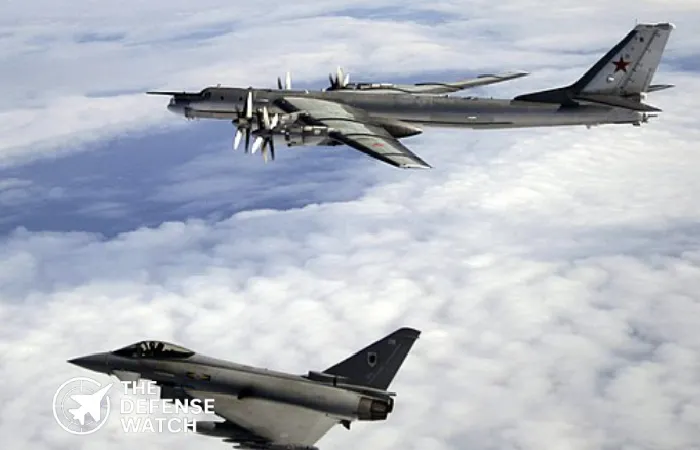
Russian strategic bombers completed a 16 hour flight over the Barents and Norwegian Seas, according to Russian state media reports.. The mission represents one of the longest publicly disclosed patrols by Russia’s long range aviation force this year and highlights the continued operational activity of Moscow’s strategic bomber fleet in the Arctic region.
The aircraft reportedly operated in international airspace over neutral waters, following a pattern regularly employed by Russian long range aviation units. Russian officials stated that the mission complied with international aviation regulations governing flights over international waters. Similar patrols have been conducted in previous years across the Arctic, North Atlantic, Pacific Ocean, Baltic Sea, and Black Sea.
Strategic Significance Of The Mission
Russia’s strategic bomber force remains a central component of the country’s nuclear triad, alongside land based intercontinental ballistic missiles and submarine launched ballistic missiles.
While Moscow routinely describes such missions as training and readiness exercises, these flights also serve a broader strategic purpose. Long duration patrols allow crews to practice navigation, command and control procedures, aerial refueling, and long range mission planning under operational conditions. Previous Russian bomber patrols over the same region have included both daytime and nighttime refueling operations, extending mission endurance and demonstrating global reach.
The Barents and Norwegian Seas occupy a particularly important position in Russian military planning. The region provides access from Russia’s Northern Fleet bases to the North Atlantic and forms part of the country’s strategic deterrence architecture.
Increased Focus On The Arctic
The latest flight comes amid heightened military activity across the Arctic and High North. Since Finland joined NATO and Sweden became a full alliance member, the alliance’s northern flank has gained increased strategic importance.
Russia has responded by maintaining a steady operational tempo for its Northern Fleet and long range aviation forces. Strategic bomber patrols in the Barents and Norwegian Seas have become a recurring feature of Russian military activity, often attracting monitoring missions by NATO air forces operating in the region. Previous Russian statements have acknowledged that foreign fighter aircraft occasionally shadow bomber formations during portions of these flights.
From a military perspective, the Arctic offers Russia several advantages. The region provides relatively direct approaches toward North Atlantic operating areas and remains a key corridor for strategic aviation missions. Maintaining a visible bomber presence also reinforces Moscow’s claims of continued military relevance in an increasingly contested Arctic security environment.
Aircraft And Operational Context
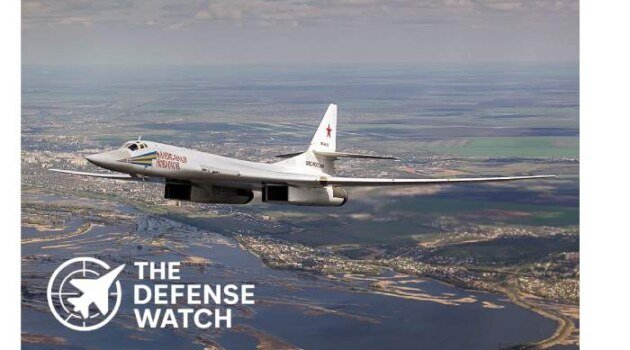
Although Reuters reported the flight through Russian sources, Russian long range aviation typically employs aircraft such as the Tupolev Tu-95MS and Tupolev Tu-160 for these patrol missions. Both aircraft are capable of carrying long range cruise missiles and form the backbone of Russia’s airborne strategic deterrent. Previous flights over the Barents and Norwegian Seas have involved both bomber types.
The extended duration of the latest mission suggests the use of aerial refueling and highlights the continued operational capability of Russia’s long range aviation fleet despite the demands imposed by the ongoing war in Ukraine and broader military modernization efforts.
Analysis: Why The Flight Matters
Beyond routine training, the mission demonstrates three important trends.
First, Russia continues to prioritize strategic deterrence operations despite ongoing military commitments elsewhere.
Second, the Arctic remains one of the few regions where Russian forces can routinely project strategic air power near NATO territory without entering allied airspace.
Third, long duration bomber patrols provide valuable readiness training for crews while sending a visible strategic message to regional competitors.
For NATO, such flights are neither unusual nor unexpected. However, they remain closely monitored because strategic bombers represent a key element of Russia’s long range strike capability. As competition in the Arctic continues to grow, similar patrols are likely to remain a regular feature of the region’s security landscape.
(adsbygoogle = window.adsbygoogle || []).push({});Executive Summary:
Bangladesh is expected to advance plans to acquire 24 Chinese J-10CE multirole fighter aircraft during Prime Minister Tarique Rahman’s official visit to China beginning Monday. The potential deal would represent one of Dhaka’s most significant combat aviation procurements in decades and could deepen defense cooperation between Bangladesh and China amid broader economic and strategic engagement.
Bangladesh Advances J-10CE Fighter Acquisition During China Visit
Bangladesh’s reported plan to acquire 24 Chinese J-10CE fighter jets is expected to be a key defense topic during Prime Minister Tarique Rahman’s visit to China, where both countries are also expected to discuss infrastructure, trade, investment, and broader strategic cooperation.
If finalized, the acquisition would provide the Bangladesh Air Force (BAF) with a modern fourth-generation-plus multirole combat aircraft capable of conducting air superiority, strike, and precision attack missions. The deal would also represent a major step in the country’s long-running effort to modernize an aging combat fleet.
The reported negotiations come as regional air forces continue investing in advanced fighter aircraft, long-range precision weapons, and networked combat capabilities to address evolving security requirements across South Asia and the Indo-Pacific.
Why The J-10CE Matters For Bangladesh
The J-10CE is the export variant of China’s J-10C fighter, developed by the state-owned aerospace manufacturer China Aviation Industry Corporation (AVIC).
The aircraft is designed as a multirole platform capable of performing both air-to-air and air-to-ground missions while integrating modern avionics, sensors, and weapons.
(adsbygoogle = window.adsbygoogle || []).push({});Key J-10CE Capabilities
Capability Details Role Multirole fighter Generation 4.5-generation Radar Active Electronically Scanned Array (AESA) radar Engine WS-10 or export-configured turbofan Air-to-Air Weapons PL-10, PL-15 missiles Air-to-Ground Weapons Precision-guided bombs and missiles Flight Control Digital fly-by-wire Combat Radius Approximately 1,000+ km depending on mission profile One of the aircraft’s most notable features is its compatibility with the PL-15 beyond-visual-range air-to-air missile, a weapon widely regarded as one of China’s most capable long-range air combat systems.
The combination of AESA radar technology, modern electronic warfare systems, and advanced missile integration gives the J-10CE capabilities that significantly exceed those of many legacy fighter platforms still operating in regional inventories.
(adsbygoogle = window.adsbygoogle || []).push({});Bangladesh Air Force Modernization Efforts
The Bangladesh Air Force has pursued modernization initiatives under the country’s long-term military development plans, seeking to replace older combat aircraft while improving air defense and strike capabilities.
Current fighter assets include Chinese-origin aircraft such as the F-7BGI and other legacy platforms that face increasing challenges against modern threats.
Acquiring 24 J-10CE fighters would provide several advantages:
- Improved air defense coverage
- Enhanced beyond-visual-range engagement capability
- Better precision strike capacity
- Increased interoperability with existing Chinese-origin systems
- Reduced maintenance complexity compared with operating multiple fighter types
The size of the reported acquisition suggests Bangladesh may be seeking to establish at least one operational fighter wing equipped with the new aircraft while creating capacity for training and maintenance support.
atOptions = { ‘key’ : ‘e7d18db8b7513fb2a224cf4c3f18bbf0’, ‘format’ : ‘iframe’, ‘height’ : 90, ‘width’ : 728, ‘params’ : {} };Expanding China-Bangladesh Defense Cooperation
Defense ties between Dhaka and Beijing have expanded steadily over the past two decades.
China has become one of Bangladesh’s principal defense suppliers, providing military equipment across multiple domains, including aircraft, naval platforms, armored vehicles, missile systems, and training support.
The potential J-10CE acquisition would further strengthen that relationship and could be accompanied by additional agreements covering:
- Pilot training
- Maintenance and logistics support
- Spare parts supply
- Technical assistance
- Infrastructure development for aircraft operations
For China, a successful J-10CE sale would add another export customer for one of its premier fighter aircraft and reinforce Beijing’s position as a major defense supplier in South Asia.
Regional Strategic Implications
The potential acquisition carries implications beyond Bangladesh’s immediate military requirements.
South Asia is experiencing a period of accelerated air power modernization. Regional air forces are introducing advanced fighters equipped with AESA radars, network-enabled weapons, and electronic warfare systems designed to improve survivability in contested environments.
A Bangladesh Air Force fleet of 24 J-10CE fighters would significantly enhance the country’s ability to conduct air sovereignty missions and maintain credible deterrence capabilities.
While Bangladesh traditionally pursues a balanced foreign policy focused on strategic autonomy, major defense acquisitions often reflect broader defense-industrial relationships and long-term support arrangements.
The deal would also underscore China’s growing influence in regional defense markets, where Beijing increasingly competes with Western, Russian, and other international suppliers for advanced combat aircraft contracts.
Technical And Operational Considerations
Introducing a new fighter aircraft involves more than purchasing airframes.
Bangladesh would need to develop the supporting ecosystem necessary for sustained operations, including maintenance facilities, simulator infrastructure, pilot conversion training, and supply chain management.
Key implementation factors include:
Training Requirements
- Pilot transition programs
- Ground crew certification
- Weapons integration training
- Tactical doctrine development
Infrastructure Investments
- Hangars and maintenance facilities
- Mission planning systems
- Simulator centers
- Spare parts storage and logistics networks
Long-Term Sustainment
- Engine support agreements
- Software updates
- Radar maintenance
- Weapons inventory management
These factors often represent a substantial portion of the overall lifecycle cost of a fighter acquisition program.
Original Analysis: What The Deal Means For Regional Air Power
The reported J-10CE acquisition is significant because it reflects a broader shift occurring across developing air forces. Rather than purchasing large numbers of lower-cost legacy fighters, many countries are increasingly seeking smaller fleets of more capable aircraft equipped with advanced sensors and long-range weapons.
For Bangladesh, the J-10CE offers a pathway to modern air combat capabilities without the acquisition costs associated with fifth-generation fighters. The platform’s AESA radar, digital architecture, and modern missile suite could provide a meaningful leap in operational effectiveness compared with older aircraft currently in service.
From a strategic perspective, the deal also illustrates how China is increasingly using defense exports to expand long-term security relationships. Fighter aircraft purchases create decades-long dependencies involving maintenance, upgrades, training, and weapons procurement. As a result, such agreements often carry significance that extends well beyond the aircraft themselves.
For the United States and other regional stakeholders, the reported procurement highlights the continued growth of China’s defense-industrial footprint across Asia. The success of the J-10CE in export markets could influence future fighter competitions in regions where affordability and capability are both major procurement considerations.
Outlook
No official contract announcement has yet been made regarding the reported acquisition of 24 J-10CE fighters. However, the issue is expected to feature prominently during high-level discussions in Beijing.
If negotiations progress toward a formal agreement, the procurement would mark one of the most important military aviation developments in Bangladesh’s recent history and further strengthen the defense relationship between Dhaka and Beijing.
Executive Summary:
The U.S. Marine Corps has conducted its first-ever F-35B highway landing and takeoff operations in Finland during NATO’s Ramstein Flag 2026 exercise. The event demonstrates NATO’s increasing emphasis on dispersed air operations, enhancing survivability and combat readiness across the alliance’s northern flank near Russia.
U.S. Marine Corps F-35Bs Conduct Historic Highway Operations In Finland
The U.S. Marine Corps F-35B has completed its first highway landing and takeoff operations in Finland, marking a significant milestone in NATO’s evolving approach to dispersed air warfare and operational resilience.
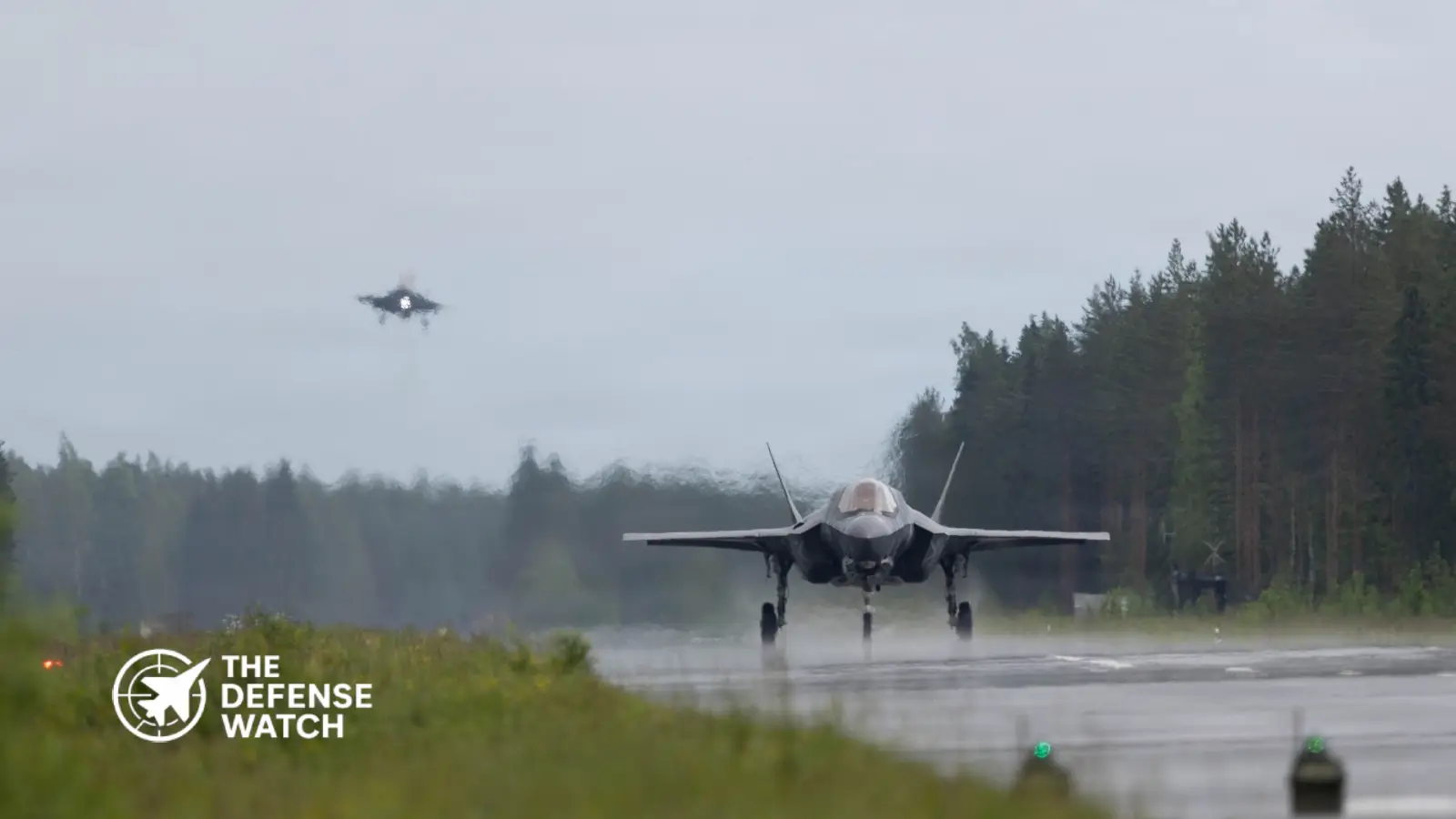
The operations took place from June 8 to 12 near Tervo, Finland, during Exercise Ramstein Flag 2026, NATO’s premier large-scale airpower exercise involving 19 allied nations and more than a dozen operating locations across Europe. According to U.S. Marine Corps Forces Europe and Africa, F-35B Lightning II aircraft assigned to Marine Fighter Attack Squadron 224 (VMFA-224) successfully operated from a Finnish roadway alongside Polish F-16s and Spanish EF-18 Hornets.
The event also marked the first deployment of U.S. Marine Corps F-35Bs to Finland and the first time Marine Corps aircraft conducted highway operations in the Nordic nation.
Ramstein Flag 2026 Highlights NATO’s Distributed Airpower Strategy
The highway operations were designed to test NATO’s ability to sustain combat air operations from dispersed and nontraditional locations rather than relying solely on fixed air bases.
This concept aligns closely with NATO’s adoption of Agile Combat Employment (ACE), a strategy intended to complicate adversary targeting by distributing aircraft across multiple operating sites. By using highways and temporary operating locations, allied air forces can maintain combat effectiveness even if major airfields come under attack.
During the exercise, U.S. Marines from Marine Wing Support Squadron 272 provided forward arming and refueling support, enabling the F-35Bs to conduct realistic expeditionary operations away from traditional infrastructure.
NATO Allied Air Command described Ramstein Flag 2026 as a demonstration of the alliance’s ability to conduct distributed operations across a wide geographic area stretching from northern Norway to southern Europe.
Why Finland’s Highway Network Matters
Finland has long maintained a unique road-base doctrine designed to keep its air force operational during wartime. Sections of highways across the country can be rapidly converted into temporary airstrips, allowing aircraft to disperse and continue operations if conventional air bases become unavailable.
Since joining NATO in 2023, Finland’s dispersed operations model has become increasingly valuable to alliance planning. The country’s extensive experience operating combat aircraft from highways offers a practical framework for NATO’s northern defense posture.
The latest Marine Corps deployment builds on a series of previous allied highway operations in Finland. Norwegian F-35As, U.S. Air Force F-35As, Dutch F-35As, and Italian F-35Bs have all participated in similar exercises over the past several years.
The F-35B’s Unique Role In Dispersed Warfare
Unlike conventional fighter aircraft, the F-35B incorporates short takeoff and vertical landing (STOVL) capabilities. This allows the aircraft to operate from shorter and less developed surfaces, including highways, expeditionary airfields, and amphibious assault ships.
For the Marine Corps, the ability to deploy fifth-generation stealth fighters from austere locations supports expeditionary warfare concepts that have become central to U.S. military planning. The F-35B combines advanced stealth characteristics, sensor fusion, electronic warfare systems, and networked battlefield awareness while maintaining the flexibility to operate far from major bases.
The Marine Corps plans to operate more than 200 F-35B aircraft by the end of 2026, making the platform the backbone of its future tactical aviation force.
Strategic Implications For NATO’s Northern Flank
The significance of the Finnish highway operations extends beyond a training milestone.
As Russia continues to invest heavily in long-range precision strike capabilities, NATO air forces are increasingly focused on reducing dependence on fixed airfields that could become targets during a conflict. Dispersed operations force adversaries to monitor and potentially strike a much larger network of locations, complicating operational planning and increasing uncertainty.
The participation of U.S. Marine Corps F-35Bs demonstrates how NATO is integrating advanced fifth-generation aircraft into distributed operating concepts across Europe. The exercise also underscores growing interoperability among alliance members and the increasing importance of Finland as a key contributor to NATO’s northern defense architecture.
Analysis
The first U.S. Marine Corps F-35B highway operations in Finland represent more than a symbolic aviation achievement. They reflect a broader shift in NATO air doctrine toward survivability, mobility, and operational flexibility in contested environments.
Finland’s established road-base network provides NATO with a proven model for maintaining airpower under wartime conditions, while the F-35B’s STOVL capability offers unique advantages for dispersed operations. As alliance exercises increasingly emphasize distributed combat operations, highway-based deployments are likely to become a routine element of NATO airpower planning rather than an exception.
For the United States Marine Corps, the successful deployment validates expeditionary aviation concepts that could prove critical in future high-intensity conflicts where traditional airfields may face sustained missile and drone threats.
Executive Summary:
The U.S. Air Force is continuing major sustainment and modernization efforts for the B-1B Lancer to ensure sufficient bomber capacity during the transition to the next-generation B-21 Raider. Upgrades, aircraft regeneration programs, and new weapons integration initiatives are intended to preserve long-range conventional strike capability while the B-21 gradually enters operational service.
U.S. Air Force Maintains B-1B Lancer Readiness During B-21 Transition
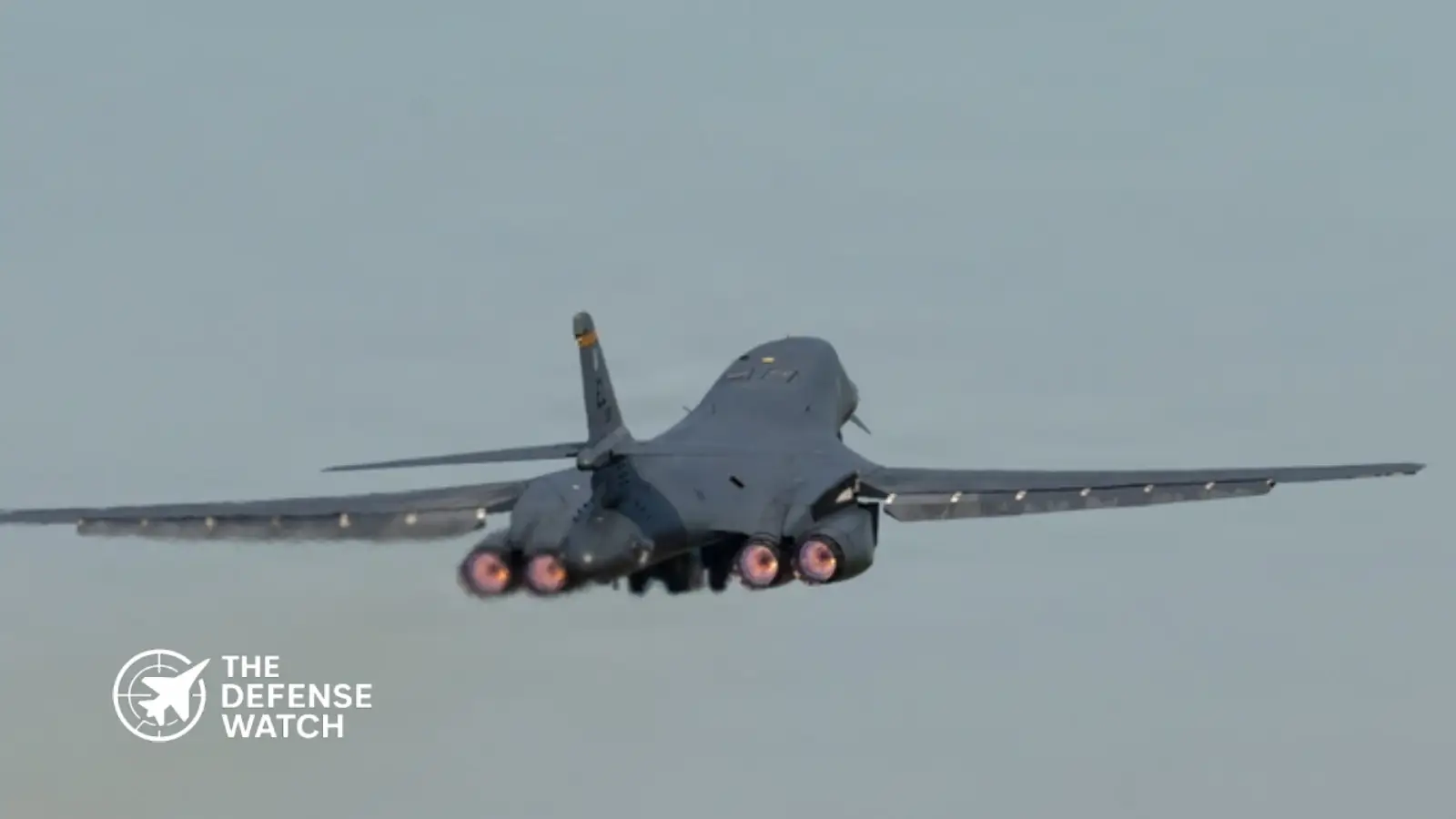
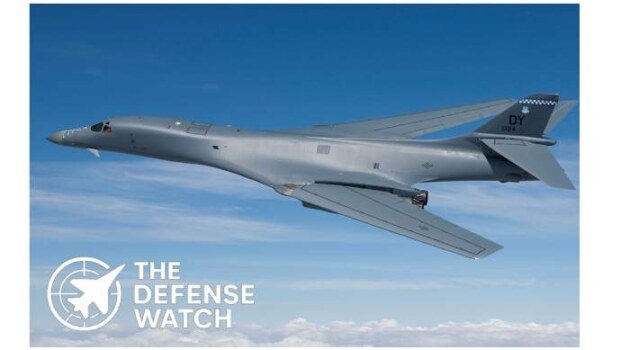
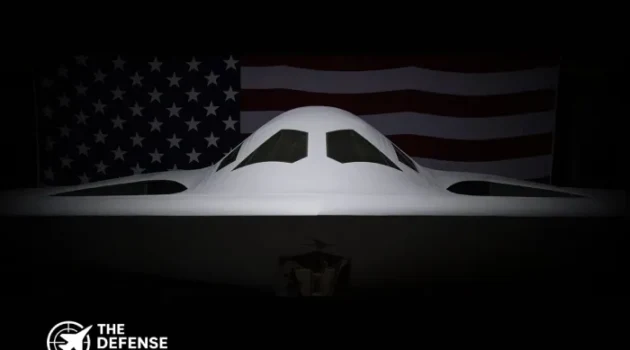
The B-1B Lancer remains a critical element of America’s long-range strike force as the U.S. Air Force manages the transition to the Northrop Grumman B-21 Raider. While the Raider represents the future of the U.S. bomber fleet, service leaders continue investing in the B-1B to prevent a capability gap during the coming decade.
Recent Air Force and industry efforts demonstrate a clear strategy: maintain operational bomber capacity while introducing a new generation of stealth aircraft. Rather than rapidly retiring legacy bombers, the service is extending the usefulness of the B-1B through structural restoration, sustainment programs, and expanded weapons integration.
The approach reflects broader concerns about maintaining sufficient bomber inventory amid increasing global security challenges and growing demands for long-range conventional strike options.
Why The B-1B Still Matters
Originally designed as a supersonic strategic bomber, the B-1B evolved into one of the Air Force’s primary conventional strike platforms after its nuclear mission ended.
(adsbygoogle = window.adsbygoogle || []).push({});Key B-1B characteristics include:
Capability B-1B Lancer Maximum Payload Approximately 75,000 pounds Maximum Speed Mach 1.2 Combat Role Long-range conventional strike Crew Four Range Intercontinental with aerial refueling Weapons Carriage Internal bays, expanding external carriage options The aircraft’s combination of speed, range, and payload capacity makes it particularly valuable for delivering large volumes of precision-guided weapons over long distances.
Although the B-21 will eventually assume many strategic strike missions, production and fielding timelines mean the Air Force must maintain existing bomber capacity for years to come.
Sustainment Efforts Extend Fleet Availability
One of the clearest examples of the Air Force’s commitment to the B-1B is the restoration of aircraft previously removed from operational service.
In May 2026, a B-1B known as “Rage,” later renamed “Apocalypse II,” returned to operational status after an extensive regeneration effort involving the Oklahoma City Air Logistics Complex. The aircraft had previously been retired and placed in long-term storage before undergoing a multi-year restoration program.
The restoration highlights the Air Force’s determination to preserve bomber numbers while awaiting the arrival of sufficient B-21 aircraft.
Such regeneration efforts are significant because bomber fleets are relatively small, making every operational aircraft important for maintaining global strike capacity.
Expanding The B-1B’s Future Weapons Capability
The Air Force is also working to enhance the B-1B’s combat relevance through new weapons integration initiatives.
A major development involves the Load Adaptable Modular (LAM) pylon program, which seeks to restore and modernize the aircraft’s external weapons carriage capability. Boeing completed a preliminary design review for the effort in 2026, advancing plans to enable the B-1B to carry larger standoff weapons externally.
The initiative could allow the bomber to employ:
- Future hypersonic weapons
- Long-range standoff missiles
- Large precision-guided strike systems
- Emerging conventional prompt-strike capabilities
The Air Force has also publicly displayed a B-1B carrying the AGM-183A Air-Launched Rapid Response Weapon (ARRW), highlighting the aircraft’s potential role in future hypersonic strike operations.
These efforts indicate that the B-1B is being positioned not merely as a legacy platform, but as a viable launch platform for advanced weapons during the transition period.
(adsbygoogle = window.adsbygoogle || []).push({});Strategic Importance Of The Bomber Transition
The decision to sustain the B-1B reflects a broader challenge facing U.S. military planners.
The Air Force is simultaneously:
- Modernizing the nuclear triad
- Introducing the B-21 Raider
- Upgrading the B-52 fleet
- Maintaining global bomber deployments
- Developing hypersonic strike capabilities
Retiring large numbers of B-1Bs before sufficient B-21 aircraft become operational could reduce available bomber capacity at a time when strategic competition is increasing across multiple theaters.
The B-21 is expected to provide significant advantages in survivability and penetration against advanced air defense systems. However, the aircraft remains in the testing and fielding phase, with operational expansion occurring gradually. Recent testing milestones show the Raider progressing into more advanced operational evaluation activities as the Air Force prepares for future deployment.
Until production reaches higher volumes, existing bomber fleets remain essential to maintaining credible deterrence and conventional strike options.
Analysis: Preserving Capacity While Modernizing Capability
The Air Force’s B-1B strategy demonstrates a practical approach to force modernization.
Historically, modernization programs often create temporary capability gaps when older systems retire before replacements are available in meaningful numbers. The bomber force appears determined to avoid that outcome.
Maintaining the B-1B provides several advantages:
First, it preserves operational mass. Long-range strike campaigns require sufficient aircraft numbers to generate sustained sortie rates.
Second, it allows the Air Force to distribute modernization risk. If B-21 production or integration timelines shift, the service retains an effective conventional strike platform.
Third, new weapons integration programs could significantly increase the B-1B’s value in future conflicts. External carriage upgrades and hypersonic weapon compatibility may allow the bomber to perform missions that complement stealth-focused B-21 operations.
This suggests the Air Force increasingly views bomber modernization as an overlapping transition rather than a simple replacement process.
Looking Ahead
The B-1B Lancer remains a cornerstone of U.S. conventional bomber capability despite its age. Through sustainment investments, aircraft regeneration efforts, and advanced weapons integration programs, the Air Force is ensuring the platform remains relevant during the transition to the B-21 Raider.
As the Raider gradually enters operational service, the B-1B is expected to continue providing critical long-range strike capacity, helping preserve the size and flexibility of America’s bomber force during one of the most significant modernization periods in its history.