

Executive Summary
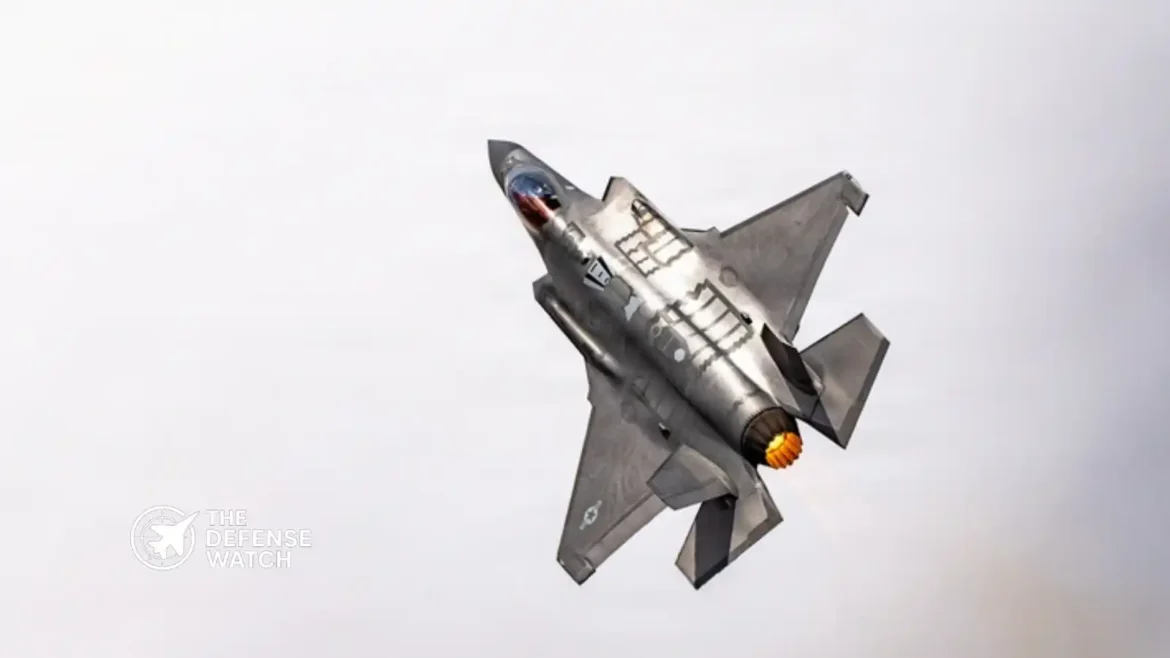
NATO’s Ramstein Flag 26 exercise demonstrated the ability of U.S. Air Force F-35A fighters and allied fifth-generation aircraft to conduct distributed combat operations across Europe. The exercise involved more than 200 aircraft from 18 nations and tested critical capabilities including integrated air and missile defense, intelligence sharing, and Agile Combat Employment across NATO’s northern and southern regions.
F-35A Demonstrates Long-Range NATO Combat Reach Across Europe
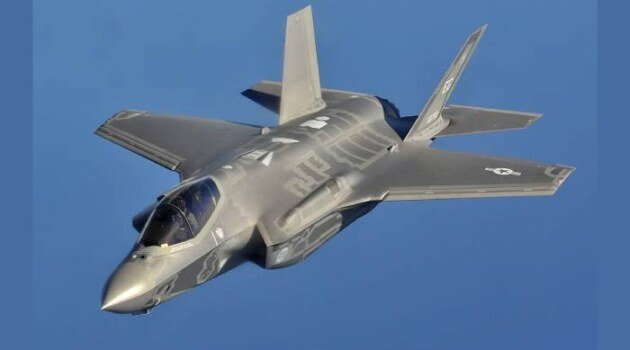
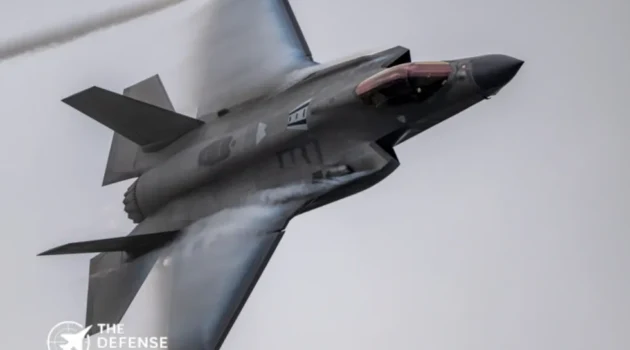
The F-35A Lightning II took center stage during NATO’s Ramstein Flag 26 exercise as aircraft from the U.S. Air Force’s 48th Fighter Wing operated alongside allied fifth-generation fighter fleets across a vast European battlespace.
According to NATO Allied Air Command and U.S. Air Force officials, the exercise ran from June 8 to June 19 and involved more than 200 aircraft operating from over 20 locations across 12 countries, stretching from Norway to Spain. The large-scale event was designed to validate NATO’s ability to generate combat airpower across dispersed locations while maintaining operational coordination in a high-threat environment.
At Pirkkala Air Base in Finland, more than 200 personnel from the 48th Fighter Wing’s 493rd Fighter Squadron deployed with F-35A aircraft to participate in the exercise. The deployment formed part of NATO’s broader effort to integrate advanced airpower capabilities across the alliance’s northern flank.
Ramstein Flag 26 Tests NATO’s Distributed Airpower Model
Ramstein Flag has evolved into one of NATO’s premier operational air exercises. In 2026, it became the first edition planned and executed under direct leadership of NATO Allied Air Command, reflecting the alliance’s growing emphasis on integrated multinational operations.
The exercise brought together F-35 operators from the United States, Denmark, Italy, and Norway. Additional allied aircraft, airborne surveillance platforms, and remotely piloted systems participated in complex missions focused on collective defense.
Key exercise objectives included:
Mission Area Operational Purpose Integrated Air and Missile Defense (IAMD) Coordinating air and missile defense across allied forces Intelligence and Data Sharing Enhancing real-time information exchange Counter Anti-Access/Area Denial (C-A2AD) Defeating enemy air defense networks Agile Combat Employment (ACE) Sustaining combat operations from dispersed locations Multinational Interoperability Integrating aircraft and command systems across NATO During peak operations, NATO reported more than 120 aircraft flying simultaneously and generating over 150 sorties daily.
Why The F-35A Was Central To The Exercise
The F-35’s role extended beyond traditional fighter missions.
NATO officials emphasized that the aircraft’s advanced sensors, secure data-sharing capabilities, and survivability features allow it to function as a critical node within a larger allied combat network. Rather than operating independently, F-35s distribute targeting and threat information to other aircraft, commanders, and air defense systems.
This network-centric approach is increasingly important as NATO prepares for potential high-intensity conflicts involving advanced air defense systems and long-range precision weapons.
The exercise specifically evaluated how F-35 formations could support the alliance’s 360-degree Integrated Air and Missile Defense architecture. NATO views this capability as essential for protecting allied territory, military forces, and civilian populations against evolving threats.
Agile Combat Employment Takes Center Stage
One of the most significant aspects of Ramstein Flag 26 was the validation of Agile Combat Employment concepts.
ACE is a U.S. Air Force and NATO operational model that disperses aircraft, personnel, and support equipment across multiple locations rather than concentrating forces at a few major air bases. The approach seeks to complicate enemy targeting and increase survivability during conflict.
For the 48th Fighter Wing, the exercise tested the ability to sustain F-35 combat operations from geographically separated sites while maintaining high sortie generation rates.
The concept has become increasingly relevant as NATO studies lessons from recent conflicts where fixed airfields and logistics hubs have become vulnerable to long-range missile attacks and drone strikes. Ramstein Flag provided an opportunity to evaluate how dispersed operations could maintain combat effectiveness across large distances.
Strategic Importance For NATO’s Northern Flank
The deployment of U.S. and allied F-35 aircraft to Finland highlights the growing strategic importance of Northern Europe following Finland’s accession to NATO.
Operating from Finnish territory provides the alliance with additional options for force dispersal and rapid response in the Baltic and Arctic regions. The country’s longstanding expertise in dispersed aviation operations, including highway strip operations, offers valuable lessons for NATO air forces adapting to modern threats.
The exercise also demonstrated the increasing density of F-35 operators within NATO. As more member states field fifth-generation aircraft, the alliance gains the ability to create multinational formations that share common systems, tactics, and data networks.
This growing interoperability represents one of the most significant shifts in NATO airpower since the alliance’s post-Cold War transformation.
Analysis: What Ramstein Flag 26 Reveals About Future Air Warfare
Beyond routine training, Ramstein Flag 26 offered insight into how NATO expects future air campaigns to be conducted.
The exercise’s focus on distributed operations, integrated air and missile defense, and counter-A2AD missions reflects concerns about operating against sophisticated adversaries equipped with layered air defense systems, electronic warfare capabilities, and long-range precision weapons.
The F-35’s value in this environment is increasingly tied to its ability to connect allied forces rather than solely its stealth characteristics. By serving as a sensor and data-sharing platform, the aircraft enables NATO commanders to create a more comprehensive operational picture across multiple domains.
Ramstein Flag also highlighted the alliance’s effort to move beyond national air operations toward a more integrated multinational force structure. As European F-35 fleets continue to expand, NATO’s ability to conduct coordinated fifth-generation operations across large geographic areas is expected to become a central pillar of allied deterrence strategy.
For the United States, the participation of the 48th Fighter Wing reinforces the role of forward-based F-35 units in Europe as a critical component of NATO’s rapid response and collective defense posture. The exercise demonstrated that these forces can quickly integrate with allied aircraft and operate across dispersed locations while sustaining combat effectiveness under demanding conditions.

(adsbygoogle = window.adsbygoogle || []).push({});Executive Summary:
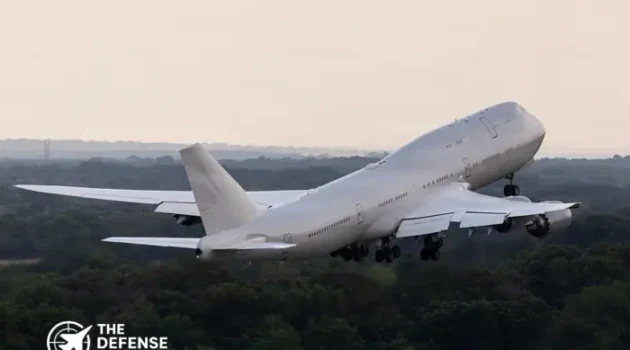
The U.S. Air Force has delivered its first operational VC-25B Bridge aircraft to the Presidential Airlift Group at Joint Base Andrews. The modified Boeing 747-8 provides an interim presidential transport and airborne command platform while the delayed next generation Air Force One fleet continues development, helping sustain continuity of government and executive airlift readiness.
U.S. Air Force Fields VC-25B Bridge Aircraft To Expand Presidential Airlift Capability
The VC-25B Bridge aircraft has officially entered operational service with the U.S. Air Force, marking a significant milestone in efforts to maintain presidential airlift capability while the long delayed Air Force One replacement program remains under development.
According to the U.S. Air Force, the modified Boeing 747-8 aircraft has been delivered to the Presidential Airlift Group at Joint Base Andrews, Maryland, where it has begun commissioning flights ahead of full operational employment. The platform is intended to support presidential transportation missions and continuity of government requirements until Boeing completes delivery of the future VC-25B Air Force One fleet.
(adsbygoogle = window.adsbygoogle || []).push({});Interim Solution For An Aging Presidential Fleet
The arrival of the VC-25B Bridge aircraft addresses a growing capability challenge facing the executive airlift mission.
The current presidential fleet consists of two VC-25A aircraft that entered service in the early 1990s. While those aircraft continue to perform the Air Force One mission, increasing maintenance demands and age-related sustainment requirements have placed pressure on fleet availability. At the same time, Boeing’s next generation VC-25B replacement program has experienced repeated delays, with initial delivery now expected around 2028.
To mitigate that gap, the Air Force accelerated the acquisition and conversion of a Boeing 747-8i into what is now designated the VC-25B Bridge aircraft. The platform was modified and integrated with government communications and mission systems to support executive transport requirements.
The aircraft recently arrived at Joint Base Andrews after completing modification and testing activities, enabling the Air Force to begin operational evaluation and commissioning flights.
(adsbygoogle = window.adsbygoogle || []).push({});Strategic Importance Beyond Transportation
Although often viewed primarily as a presidential transport aircraft, the Air Force One mission extends far beyond passenger movement.
The VC-25B Bridge aircraft is designed to preserve secure communications and command connectivity for the president during domestic and international travel. In crisis scenarios, presidential airlift platforms function as airborne command centers capable of supporting continuity of government operations and strategic decision making.
This mission becomes increasingly important as military planners place greater emphasis on resilience against cyber threats, long range missile attacks, and disruptions to fixed command infrastructure.
From an operational perspective, the Bridge aircraft provides additional flexibility to the Presidential Airlift Group while reducing dependence on the aging VC-25A fleet. It also allows aircrews, maintenance personnel, and support teams to gain experience with the Boeing 747-8 platform ahead of the arrival of the full VC-25B fleet.
atOptions = { ‘key’ : ‘e7d18db8b7513fb2a224cf4c3f18bbf0’, ‘format’ : ‘iframe’, ‘height’ : 90, ‘width’ : 728, ‘params’ : {} };Accelerated Delivery Demonstrates Rapid Acquisition Potential
One notable aspect of the program is the speed at which the aircraft was converted and delivered.
L3Harris, working with the U.S. Air Force, completed transformation of the 747-8 platform into the VC-25B Bridge aircraft within approximately ten months, significantly faster than traditional acquisition timelines associated with specialized government aircraft. The project involved integrating secure communications, executive transport systems, and mission equipment necessary for presidential operations.
The rapid fielding effort highlights a growing Pentagon focus on accelerated procurement and capability delivery, particularly for missions where operational readiness cannot wait for lengthy development cycles.
While the Bridge aircraft does not replace the full scope of capabilities planned for Boeing’s purpose-built VC-25B fleet, it provides an important stopgap that preserves mission continuity and reduces operational risk.
(adsbygoogle = window.adsbygoogle || []).push({});What Comes Next
The aircraft will continue commissioning flights and operational validation activities before assuming a larger role within presidential transport operations. According to Air Force officials, the platform enters service at a critical period as the military prepares for the eventual transition from the legacy VC-25A fleet to the Boeing 747-8 based presidential aircraft architecture.
The fielding of the VC-25B Bridge aircraft underscores a broader reality facing U.S. defense aviation programs: maintaining readiness often requires interim solutions when major modernization efforts encounter delays.
For the Air Force, the aircraft represents more than a temporary presidential jet. It serves as a bridge between generations of executive airlift capability while ensuring the United States retains a secure and resilient airborne command platform for its commander in chief.
Executive Summary:
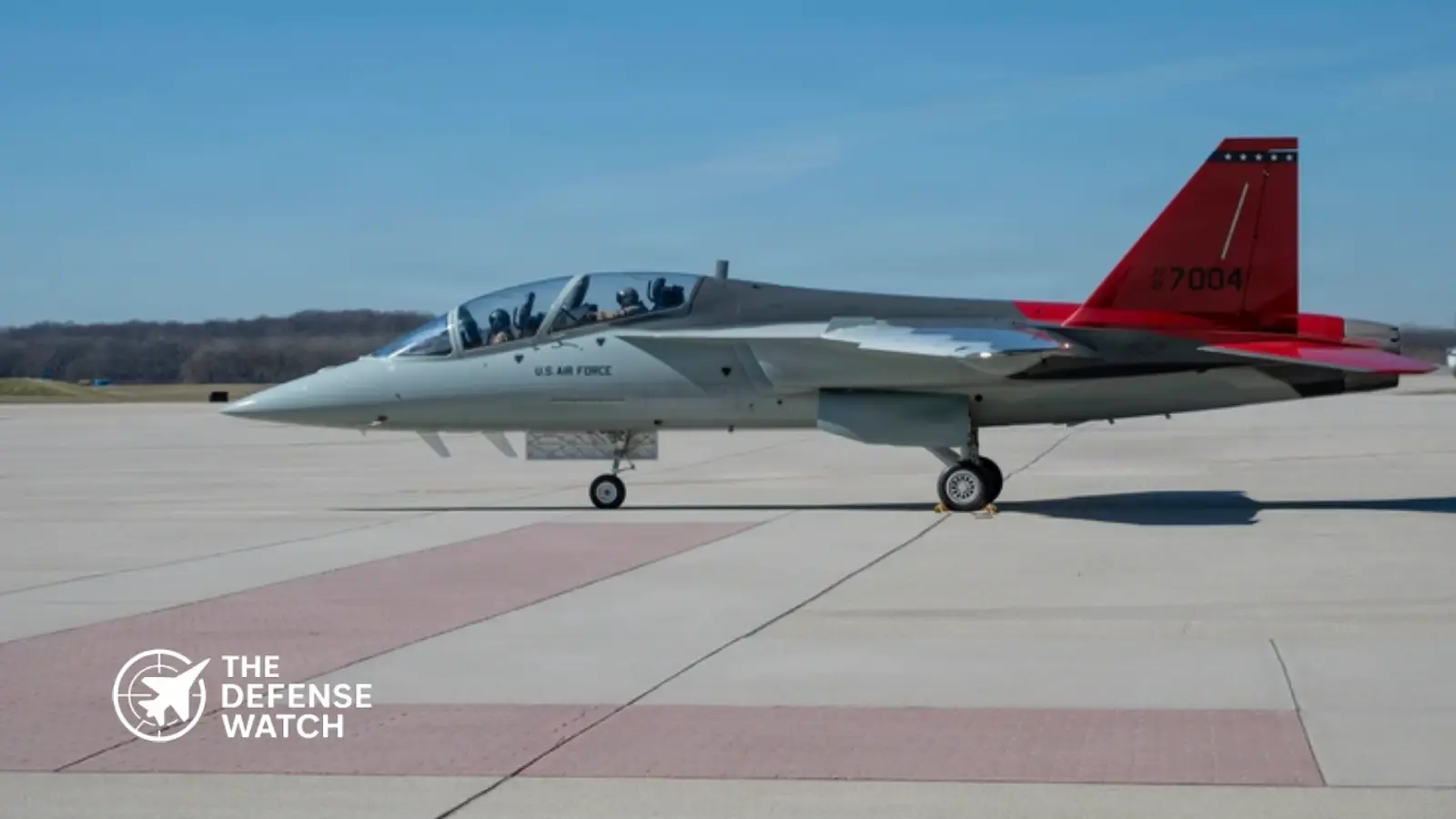
BAE Systems says the T-7 Red Hawk offers a fundamentally different approach to Royal Air Force pilot training by combining advanced aircraft capabilities with extensive synthetic training environments. The proposal comes as the RAF prepares to replace its aging Hawk trainer fleet and adapt pilot training for future fourth, fifth, and sixth-generation combat aircraft.
T-7 Red Hawk Positioned For RAF Training Modernization
The T-7 Red Hawk is being presented as a new approach to Royal Air Force pilot training as the UK considers options to replace its aging Hawk trainer fleet. BAE Systems, working alongside Boeing and Saab, argues that future pilot preparation must move beyond traditional training aircraft and incorporate advanced digital technologies that mirror modern combat environments.
The proposal follows the UK’s Strategic Defence Review, which identified the need for a successor to the Hawk advanced jet trainer. The T-7 would serve as the centerpiece of a broader training ecosystem that combines live flying with virtual and synthetic training environments.
According to the industry team, the goal is to prepare pilots for increasingly complex operational environments and future combat aircraft, including fourth, fifth, and eventually sixth generation platforms.
Why The T-7 Red Hawk Matters
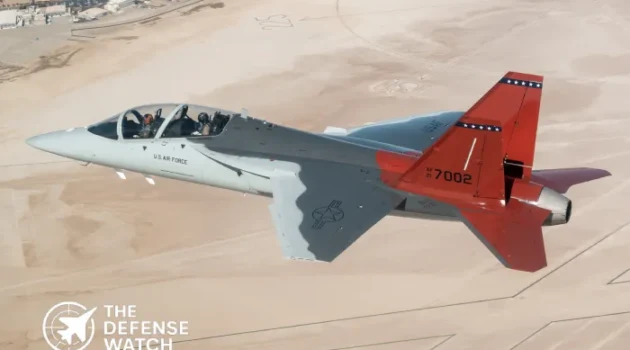
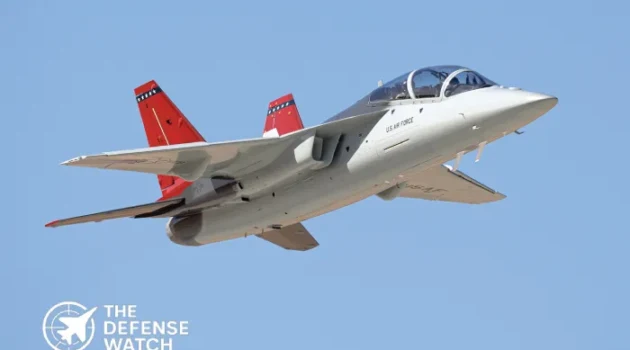
Developed by Boeing and Saab, the T-7A Red Hawk was originally selected by the U.S. Air Force to replace the decades old T-38 Talon trainer. The aircraft features a digital cockpit, large area displays, hands on throttle and stick controls, and an open architecture designed to support future upgrades.
The aircraft is powered by a General Electric F414 engine, the same engine family used on several modern fighter aircraft. Its design philosophy focuses on providing student pilots with an experience that more closely resembles frontline combat aircraft than legacy trainers.
An important aspect of the T-7 program is its use of digital engineering techniques during development. This approach has been promoted as a way to accelerate design changes, improve manufacturing efficiency, and simplify future modernization efforts.
BAE Systems Highlights Integrated Training Approach
Rather than marketing the T-7 solely as a replacement aircraft, BAE Systems is emphasizing a complete training system built around live, virtual, and constructive training methods. The concept combines flight hours in the aircraft with high fidelity simulators and networked mission environments.
This reflects a broader trend across NATO air forces, where rising operating costs and increasingly sophisticated threats are driving greater use of simulation and synthetic training. Such systems allow pilots to train against complex scenarios that would be difficult or expensive to replicate in live flying exercises.
From an operational perspective, this shift is particularly relevant as air forces prepare crews for aircraft such as the F-35 and future platforms associated with the Global Combat Air Programme (GCAP). Training systems must now support multi domain operations, data intensive missions, and interactions with autonomous systems.
UK Industrial Benefits Part Of The Proposal
BAE Systems would lead the UK effort under the proposed arrangement. The companies have indicated that final assembly could take place in the United Kingdom, while additional opportunities would be explored for British suppliers across the aircraft’s production and support network.
This industrial element is likely to be an important factor in any future RAF competition. The UK government has increasingly sought defense programs that deliver domestic manufacturing, technology development, and skilled employment alongside military capability.
Analysis: More Than A Hawk Replacement
The significance of the T-7 proposal extends beyond replacing an aging trainer aircraft. The RAF’s future challenge is ensuring pilots can transition efficiently into highly advanced combat systems while managing budget pressures and training demands
.
The T-7’s strongest selling point may not be the aircraft itself, but the integrated training architecture surrounding it. Modern fighter pilots require exposure to electronic warfare scenarios, networked operations, and complex threat environments long before reaching operational squadrons. Traditional training methods alone are increasingly insufficient.
For the UK, the decision will likely involve balancing operational requirements, industrial benefits, affordability, and alignment with future programs such as GCAP. The T-7 enters that discussion as a mature platform already selected by the U.S. Air Force and designed specifically for next generation pilot training.
Whether the RAF ultimately selects the T-7 or another solution, the competition highlights a broader shift in military aviation: future pilot training is becoming as much about digital ecosystems and synthetic environments as it is about the aircraft itself.
Executive Summary:
The U.S. State Department has approved a potential $1.5 billion Foreign Military Sales package for UH-60M Black Hawk helicopters and associated support equipment for Austria. The proposed acquisition strengthens Austria’s air mobility capabilities, supports its Armed Forces 2032+ modernization program, and deepens interoperability with U.S. and NATO partner forces.
US Approves Austria Black Hawk Helicopter Sale
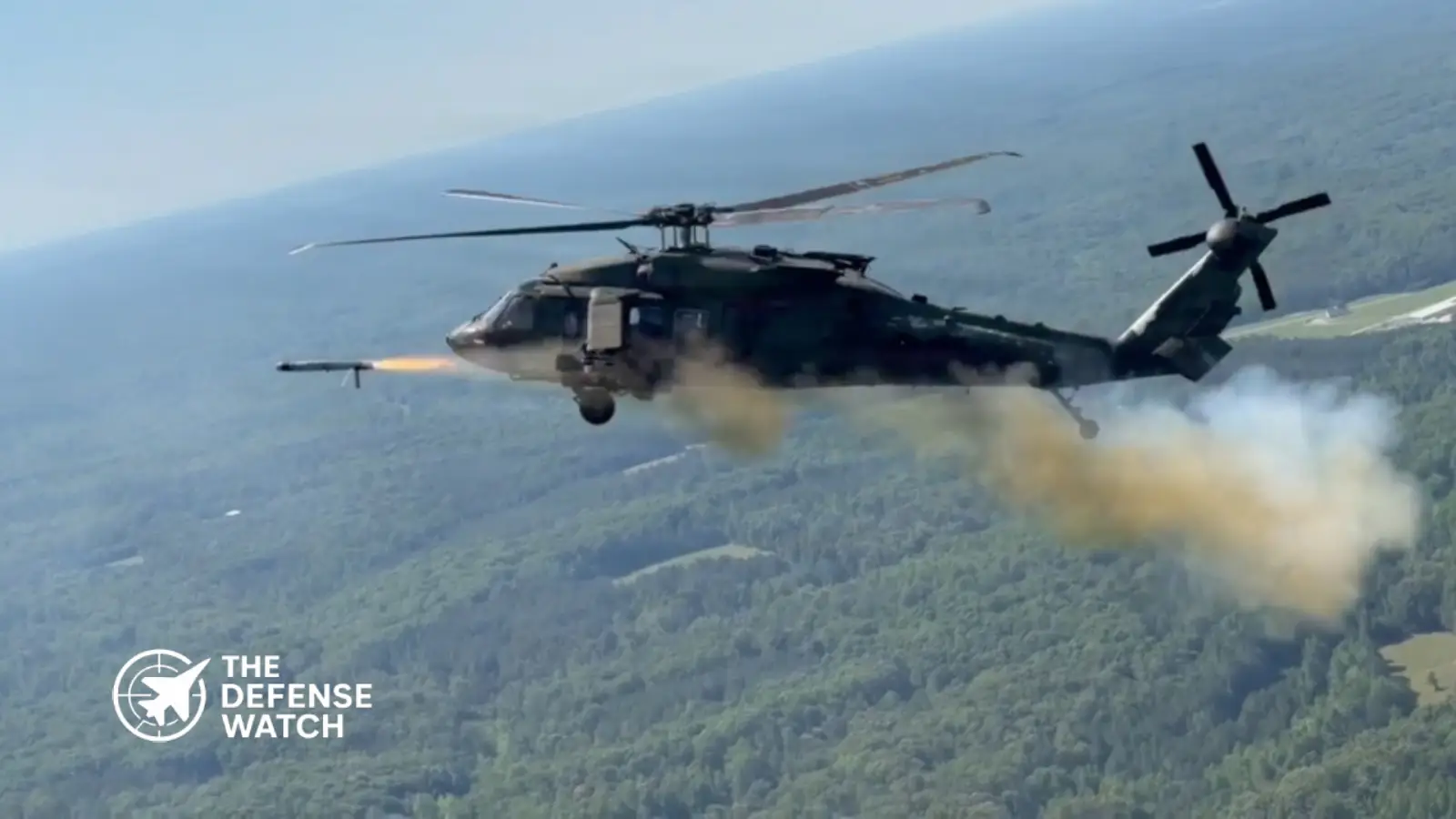
The United States has approved a potential Foreign Military Sales (FMS) package for Austria centered on additional UH-60M Black Hawk helicopters, with an estimated value of $1.5 billion. The approval was announced by the U.S. State Department and notified through established FMS channels, with Sikorsky, a subsidiary of Lockheed Martin, identified as the principal contractor.
The decision reflects continued demand among European partners for proven rotary-wing platforms capable of supporting military transport, disaster response, search-and-rescue operations, and coalition missions. The Black Hawk remains one of the most widely operated military utility helicopters globally, with more than 4,000 aircraft in service worldwide.
Austria’s Expanding Black Hawk Fleet
Austria has already committed to acquiring 12 UH-60M Black Hawk helicopters as part of a major modernization effort intended to replace aging Agusta-Bell AB212 helicopters. Deliveries of these aircraft are expected to begin in 2028 under the country’s Armed Forces 2032+ modernization initiative.
-
The Austrian Armed Forces currently operate legacy S-70A Black Hawk helicopters. The introduction of the newer UH-60M variant will significantly improve operational capability through enhanced avionics, improved survivability systems, and greater mission flexibility.
Recent milestones indicate the program is progressing. In May 2026, Austria’s first UH-60M entered the final U.S. Army outfitting and certification phase ahead of eventual delivery.
What Is Included In The UH-60M Package?
Previous U.S. notifications for Austria’s UH-60M procurement outlined a comprehensive package that extends far beyond the helicopters themselves. The acquisition includes engines, self-protection systems, navigation equipment, training, logistics support, spare parts, and sustainment services.
Key systems associated with Austria’s UH-60M fleet include:
Capability System Engines T700-GE-701D turboshaft engines Missile Warning AN/AAR-57 Common Missile Warning System Radar Warning AN/APR-39C(V) receivers Laser Threat Detection AN/AVR-2B laser warning sets Navigation H-764U Embedded GPS/INS systems Tactical Navigation TACAN and instrument landing systems These systems improve survivability, situational awareness, and operational effectiveness in both military and humanitarian missions.
Why The UH-60M Matters
The UH-60M represents the most advanced production version of the Black Hawk family currently available through U.S. Foreign Military Sales channels.
Compared with earlier variants, the UH-60M incorporates:
- More powerful and reliable T700-GE-701D engines
- Enhanced wide-chord rotor blades
- Digital glass cockpit architecture
- Improved navigation and mission systems
- Greater operational reliability and maintainability
These improvements increase payload capacity, mission endurance, and performance in challenging environments such as mountainous terrain, a critical consideration for Austrian operations.
Strategic Significance For Europe
The approval carries importance beyond Austria’s national requirements.
European governments have accelerated military modernization programs following years of heightened security concerns across the continent. Rotary-wing mobility remains a critical capability for rapid troop movement, disaster response, logistics support, and special operations.
The Black Hawk’s widespread use among NATO members and partner nations provides significant interoperability advantages. Shared platforms simplify multinational training, maintenance, logistics support, and coalition operations. The Defense Security Cooperation Agency has repeatedly highlighted interoperability as a central objective of these sales.
From a U.S. perspective, Foreign Military Sales programs help strengthen allied capabilities while supporting a common operational framework across partner forces. Aircraft such as the UH-60M can integrate more easily into joint exercises and multinational deployments than unique national platforms.
Analysis: What This Means For Austria’s Future Force Structure
Austria’s helicopter modernization effort represents one of the country’s most significant military aviation investments in decades.
The combination of UH-60M Black Hawks and recently ordered Leonardo AW169M helicopters points to a broader restructuring of Austria’s rotary-wing fleet. Rather than maintaining several aging helicopter types with growing sustainment costs, Austria is transitioning toward a modern fleet capable of serving for decades.
Operationally, the UH-60M offers Austria a substantial increase in transport capacity and readiness. The aircraft’s ability to conduct troop transport, medical evacuation, humanitarian assistance, disaster relief, and international deployments provides flexibility that is increasingly valued by European militaries.
The procurement also reflects a broader trend across Europe toward acquiring mature, combat-proven platforms rather than pursuing higher-risk developmental programs. In an increasingly uncertain security environment, governments are prioritizing systems that can be fielded quickly, supported reliably, and integrated with allied forces from day one.
For Sikorsky and the broader U.S. defense industrial base, continued international Black Hawk demand reinforces the platform’s long-term relevance despite ongoing next-generation rotorcraft development efforts. The aircraft remains one of the most successful military helicopter export programs in the world.
Outlook
Congressional review remains part of the U.S. arms transfer process before any sale can proceed to final implementation. However, State Department approval represents a major step toward expanding Austria’s future Black Hawk fleet and strengthening its military air mobility capabilities.
As Austria advances its Armed Forces 2032+ modernization strategy, the UH-60M Black Hawk is expected to become a cornerstone of the country’s rotary-wing aviation capability for decades to come.

(adsbygoogle = window.adsbygoogle || []).push({});Executive Summary:
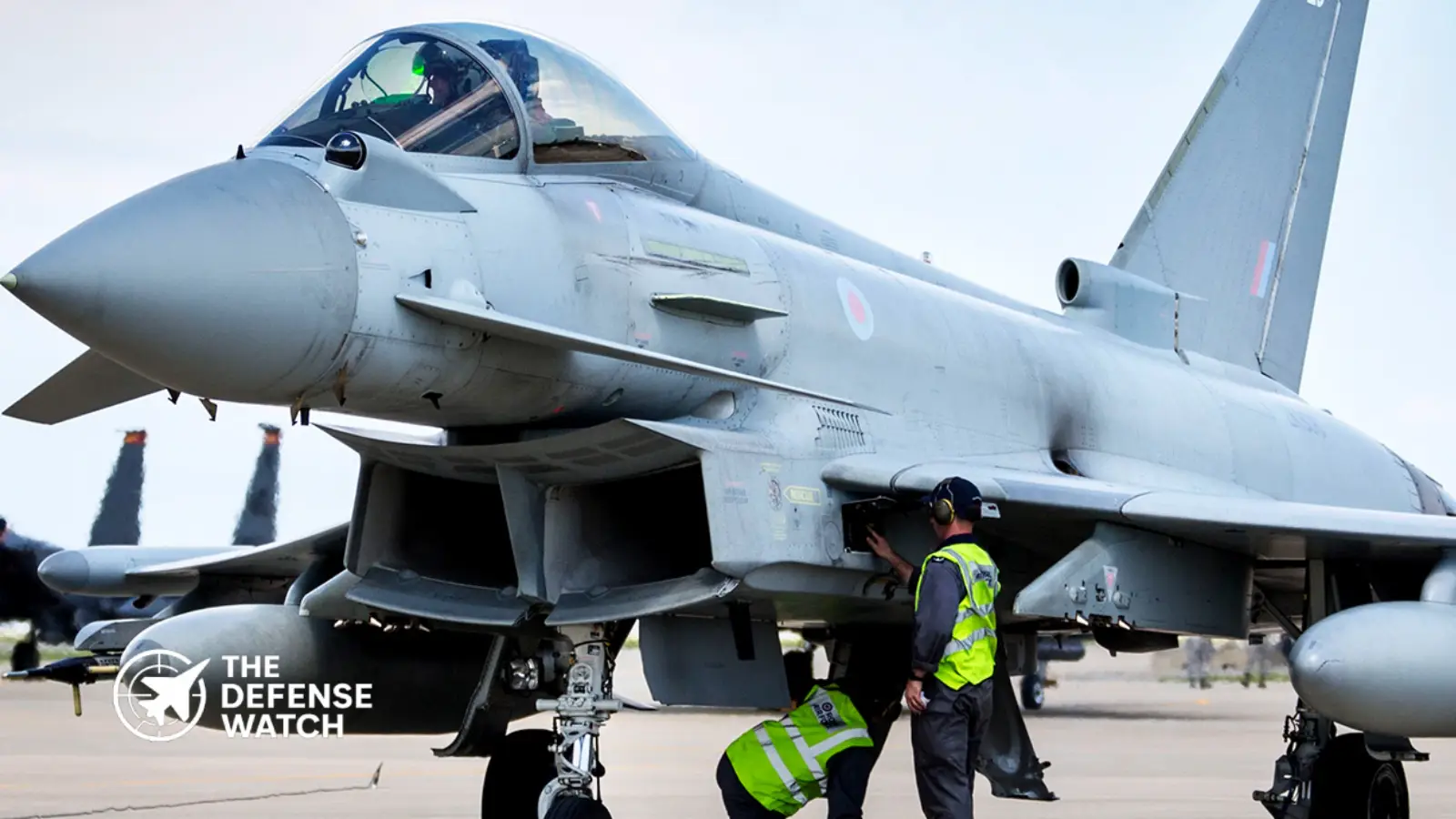
Britain’s frontline fighter fleet stands at 158 aircraft in mid-2026 — 111 Eurofighter Typhoons and 47 F-35B Lightning IIs — down from a peak Typhoon order of 137 jets as older Tranche 1 airframes get scrapped. The RAF’s next decade hinges on how fast a stalled second F-35 order and the 2035 Tempest program can replace that shrinking number.
Britain’s entire frontline fighter force could fit inside two and a half US Air Force fighter wings. As of mid-2026, the Royal Air Force fields 158 fast jets — 111 Eurofighter Typhoons and 47 F-35B Lightning IIs. That’s the real number behind a question that gets asked constantly and answered inconsistently.
The confusion is understandable. Older figures still circulating online cite 137 Typhoons, which was the total fleet size before the Ministry of Defence began scrapping early-model aircraft in 2025. The current, accurate count is lower — and shrinking further before it grows again.
The Deep Dive: Typhoon and F-35B, By the Numbers
The Typhoon force was built across three procurement “tranches,” each representing a capability jump over the last. The original order totaled 160 aircraft for the UK, of which 137 were ultimately delivered and entered service: 30 Tranche 1, 67 Tranche 2, and 40 Tranche 3 airframes.
That number is now smaller. In September 2025, Defence Minister Maria Eagle told Parliament that 26 of the 30 Tranche 1 Typhoon aircraft have been scrapped as of that July, with the remaining four held back purely for Quick Reaction Alert duty defending the Falkland Islands until 2027. That leaves the RAF’s active Typhoon count at 111: four aging QRA jets, plus 67 Tranche 2 and 40 Tranche 3 aircraft slated to keep flying until 2040.
(adsbygoogle = window.adsbygoogle || []).push({});The F-35B side of the ledger is more straightforward. The UK’s first procurement batch of 48 Lightning IIs finished delivery in March 2026, eight years after the type first arrived at RAF Marham. One aircraft, BK18, was lost off HMS Queen Elizabeth in 2021, leaving an active fleet of 47. Those jets fly with 617 “Dambusters” Squadron, the Royal Navy’s 809 Naval Air Squadron, and the 207 Squadron training unit — all based at Marham.
A second F-35 order remains stuck in procurement limbo. London’s 2025 Strategic Defence Review confirmed plans for 27 more jets — 15 F-35Bs and, notably, 12 F-35As to restore Britain’s air-delivered nuclear strike role for the first time since the Cold War. None of those 27 have been contracted yet; they’re waiting on the long-delayed Defence Investment Plan.
UK Fast Jet Fleet at a Glance — Mid-2026
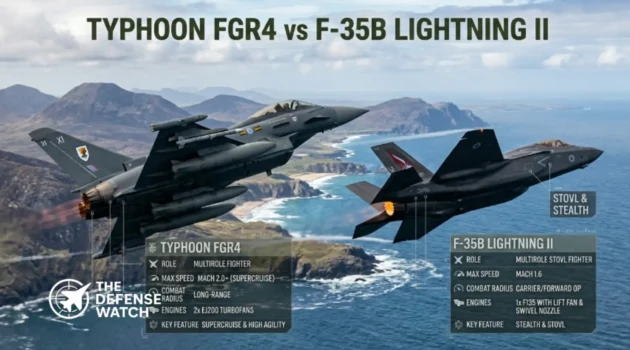
(adsbygoogle = window.adsbygoogle || []).push({});Metric Eurofighter Typhoon FGR4 F-35B Lightning II Active RAF fleet 111 aircraft 47 aircraft Generation 4.5 (non-stealth) 5th-gen, stealth Unit flyaway cost ~$90M–$120M (tranche-dependent) ~$109M (UK pays ~$115M incl. premiums) Top speed Mach 2.0 Mach 1.6 Flight-hour cost ~$20,000–$25,000 ~$33,000–$38,000 Primary role Air defense, QRA, strike Carrier strike, stealth ISR/strike Squadrons 7 frontline + OCU/OEU 617 Sqn, 809 NAS, 207 Sqn (OCU) Planned retirement 2040 Active into the 2040s/50s (Block 4 upgrades pending) Total UK programme costs put this in perspective. Defence Equipment & Support lists the Typhoon’s approved production and in-service support bill at £31.1 billion, with the UK covering roughly 37% of the four-nation Eurofighter consortium’s shared costs. The F-35B side has already cost the UK over $4 billion just for the first 35 jets, before sustainment.
The Crossover Angle: Why Numbers, Not Just Tech, Win Fights
Competitive shooter teams don’t win on raw aim alone — they win on role balance. An entry player pushes first, gathers information, and creates chaos before the enemy team can react. An anchor holds the position, absorbs the counterattack, and closes out the round with firepower the entry role was never built to carry.
That’s almost exactly how the RAF talks about its own fleet. Pilots nickname the F-35B the “Assassin” and the Typhoon the “Thug.” The F-35B goes in first — stealthy, sensor-fused, mapping the battlespace and taking the first quiet shot. The Typhoon follows with the missile capacity, the cannon, and the raw speed to finish what the F-35B started.
The parallel breaks down at scale, though, and that’s the real lesson. A five-person esports roster can field one entry and one anchor and still field a full team. An air force needs dozens of each role available simultaneously — for homeland QRA, NATO air policing, and two active carrier strike groups — or the doctrine collapses under its own math. Britain’s 158 jets are stretched thin precisely because there’s no bench depth behind them.
(adsbygoogle = window.adsbygoogle || []).push({});A fighter fleet’s real strength isn’t which single jet wins a one-on-one dogfight. It’s whether a country can sustain QRA, NATO commitments, and carrier strike group coverage at the same time, for months, without running out of available airframes.
Where the UK’s Jets Rank Globally
The “best fighter jet in the world” debate in 2026 usually comes down to four aircraft: the F-22 Raptor, F-35 Lightning II, J-20 Mighty Dragon, and Su-57 Felon. The UK operates none of the first and exactly one of the second — and that’s not an accident.
Aircraft Operator Est. Active Units (2026) Generation Export Status F-35 (all variants) US-led coalition, 20+ nations ~1,300 5th, stealth Widely exported F-22 Raptor United States ~185–195 5th, stealth Export banned J-20 Mighty Dragon China ~250–300 5th, stealth Export banned Su-57 Felon Russia ~30 5th (debated stealth) Limited interest Eurofighter Typhoon UK, Germany, Italy, Spain + export 600+ worldwide 4.5, non-stealth Widely exported The F-22 is generally judged the superior pure air-superiority dogfighter, but the United States has never sold a single one abroad. That makes the F-35 the practical ceiling for any US ally, the UK included — and explains why London bet its entire fifth-generation strategy on the Lightning II rather than waiting on a jet it could never legally buy.
(adsbygoogle = window.adsbygoogle || []).push({});China’s J-20 outnumbers Russia’s entire Su-57 program roughly tenfold, a gap that says more about industrial capacity than airframe design. Moscow’s struggles to scale Su-57 production past 30 aircraft despite years of development is the same constraint that shapes the UK’s own Typhoon-to-F-35 transition: building a great jet on paper means little if you can’t build enough of them.
The Takeaway
The UK’s fighter fleet sits at 158 jets today, with 111 Typhoons drawing down toward 2040 and 47 F-35Bs waiting on a stalled second order to bring real fifth-generation depth. The aircraft themselves are credible — the F-35B ranks among the world’s most capable fighters by most 2026 assessments, and the upgraded Typhoon still holds its own in regional air defense.
The open question isn’t capability. It’s whether Britain can field enough airframes to use that capability when it actually matters — across home defense, NATO commitments, and two aircraft carriers, all at once, with no real reserve left to call on.

(adsbygoogle = window.adsbygoogle || []).push({});Executive Summary:
Finland announced on June 18 that it will procure U.S.-made GBU-53 Small Diameter Bomb II (SDB II) glide bombs for its future fleet of F-35A fighter aircraft. The acquisition expands Finland’s precision strike capabilities, strengthens NATO’s northern flank, and deepens defense cooperation between Helsinki and Washington as the Nordic nation continues to modernize its armed forces following its accession to NATO.
Finland Adds GBU-53 Glide Bombs To F-35 Arsenal
Finland is moving to expand its F-35 strike capability through the purchase of U.S.-made GBU-53 Small Diameter Bomb II glide bombs, according to a statement from the Finnish Ministry of Defence released on June 18. The procurement will provide Finland’s future fleet of Lockheed Martin F-35A fighters with a highly advanced precision-guided air-to-ground weapon designed to engage moving and stationary targets in contested environments.
The decision marks another step in Finland’s ongoing military modernization effort following its entry into NATO in 2023. The Nordic nation previously committed approximately $9.4 billion to acquire 64 F-35A fighters, replacing its aging fleet of F/A-18 Hornets.
According to the ministry, the GBU-53 acquisition will provide an additional air-to-ground capability for Finland’s future F-35 force and complement other weapons already being integrated into the country’s next-generation fighter program.
- (adsbygoogle = window.adsbygoogle || []).push({});
What Is The GBU-53 Small Diameter Bomb II?
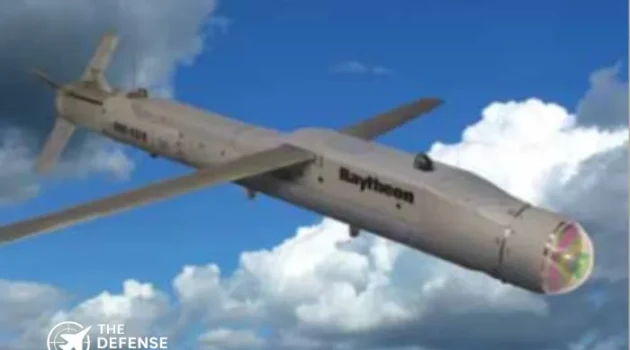
The GBU-53/B StormBreaker, formerly known as Small Diameter Bomb II (SDB II), is one of the most advanced precision-guided glide bombs currently fielded by the United States and its allies.
Unlike earlier precision-guided bombs that rely primarily on GPS guidance, the weapon combines multiple targeting systems, allowing it to engage targets under adverse weather conditions and against moving objectives.
Key Characteristics
Capability GBU-53 SDB II Weapon Type Precision-guided glide bomb Target Types Moving and stationary targets Guidance Multi-mode seeker Platform Compatibility F-35, F-15E, F/A-18E/F and others Operational Role Precision strike, close air support, interdiction Stand-off Capability Allows aircraft to engage targets from significant distance Its compact size allows aircraft to carry larger quantities of weapons internally while preserving the F-35’s low-observable characteristics.
(adsbygoogle = window.adsbygoogle || []).push({});Part Of A Broader Finnish F-35 Weapons Package
The latest procurement follows several other weapons acquisitions linked to Finland’s F-35 program.
In 2024, Helsinki approved procurement of Joint Direct Attack Munition (JDAM) kits and Small Diameter Bomb I weapons for integration with the future F-35 fleet. The package included training systems, support equipment, spare parts, and logistics services extending through 2030.
Finland has also moved to acquire advanced AIM-120D AMRAAM air-to-air missiles for the aircraft. Government officials previously stated that the missile purchases would support the operational deployment of the incoming F-35 force.
Additional reported acquisitions for Finland’s F-35 inventory include AGM-158 JASSM-ER long-range cruise missiles and AGM-88G AARGM-ER anti-radiation missiles, creating a broad portfolio of strike and suppression capabilities.
Why The Purchase Matters
The GBU-53 acquisition carries significance beyond the addition of another guided weapon.
Finland shares a border of more than 1,300 kilometers with Russia, making long-range precision strike capability a critical component of its defense strategy. Since joining NATO, Helsinki has accelerated efforts to strengthen deterrence and improve interoperability with allied forces.
For the F-35, advanced weapons integration is central to the aircraft’s operational value. The platform’s stealth characteristics, sensor fusion, and networking capabilities are designed to work alongside precision-guided munitions capable of striking targets while minimizing exposure to enemy air defenses.
The GBU-53 is particularly relevant in modern combat environments because it allows pilots to engage mobile targets while operating at stand-off ranges. This capability has become increasingly important as advanced surface-to-air missile systems proliferate across Europe and other regions.
Implications For NATO’s Northern Flank
Finland’s procurement reflects a broader trend among NATO members investing heavily in fifth-generation airpower and precision-guided weapons.
The alliance’s northern region has gained strategic importance following Finland’s and Sweden’s accession to NATO. Together, the two nations significantly expand NATO’s operational reach across the Baltic Sea region and the High North.
From an alliance perspective, Finland’s growing F-35 fleet will eventually contribute to a wider network of F-35 operators across Europe that includes Norway, Denmark, the Netherlands, Belgium, Poland, Germany, Italy, and the United Kingdom.
The addition of advanced stand-off weapons such as the GBU-53 enhances the collective ability of NATO air forces to conduct precision strikes, suppress enemy air defenses, and support joint operations in contested environments.
Operational Challenges And Considerations
While the acquisition strengthens Finland’s future capabilities, integrating advanced weapons into a new fighter fleet requires extensive training, logistics support, and sustainment planning.
Finland has already emphasized a comprehensive procurement approach that includes training systems, spare parts inventories, maintenance infrastructure, and long-term support agreements. Previous Finnish F-35 weapons procurements have followed this model, indicating a focus on ensuring operational readiness rather than simply acquiring hardware.
The move also comes as several European nations continue to monitor defense supply chain pressures affecting some U.S. weapons deliveries. Finnish officials have previously acknowledged that certain defense deliveries to Europe have experienced delays due to broader global demand and operational requirements.
Strategic Outlook
Finland’s decision to acquire GBU-53 glide bombs represents another incremental but important enhancement of its future F-35 force.
Rather than focusing solely on aircraft procurement, Helsinki continues to build a comprehensive weapons ecosystem around its next-generation fighters. The combination of stealth aircraft, advanced air-to-air missiles, stand-off cruise missiles, anti-radiation weapons, and precision-guided glide bombs will provide the Finnish Air Force with a significantly broader set of operational options than its current fleet possesses.
As F-35 deliveries begin and weapons integration progresses through the coming years, Finland is positioning itself as one of NATO’s most capable airpower contributors along the alliance’s northeastern frontier.
(adsbygoogle = window.adsbygoogle || []).push({});Executive Summary:
U.S. Air Force fighters, bombers, and support aircraft recently conducted large-scale operations in British airspace alongside Royal Air Force assets. The training highlights growing NATO emphasis on combat readiness, long-range strike integration, and allied interoperability amid increasing security challenges across Europe.
American Jets And Bombers Conduct Training Over Britain
American jets and bombers operating over Britain have demonstrated the growing integration between U.S. and UK air forces as NATO continues to emphasize readiness across the Euro-Atlantic region.
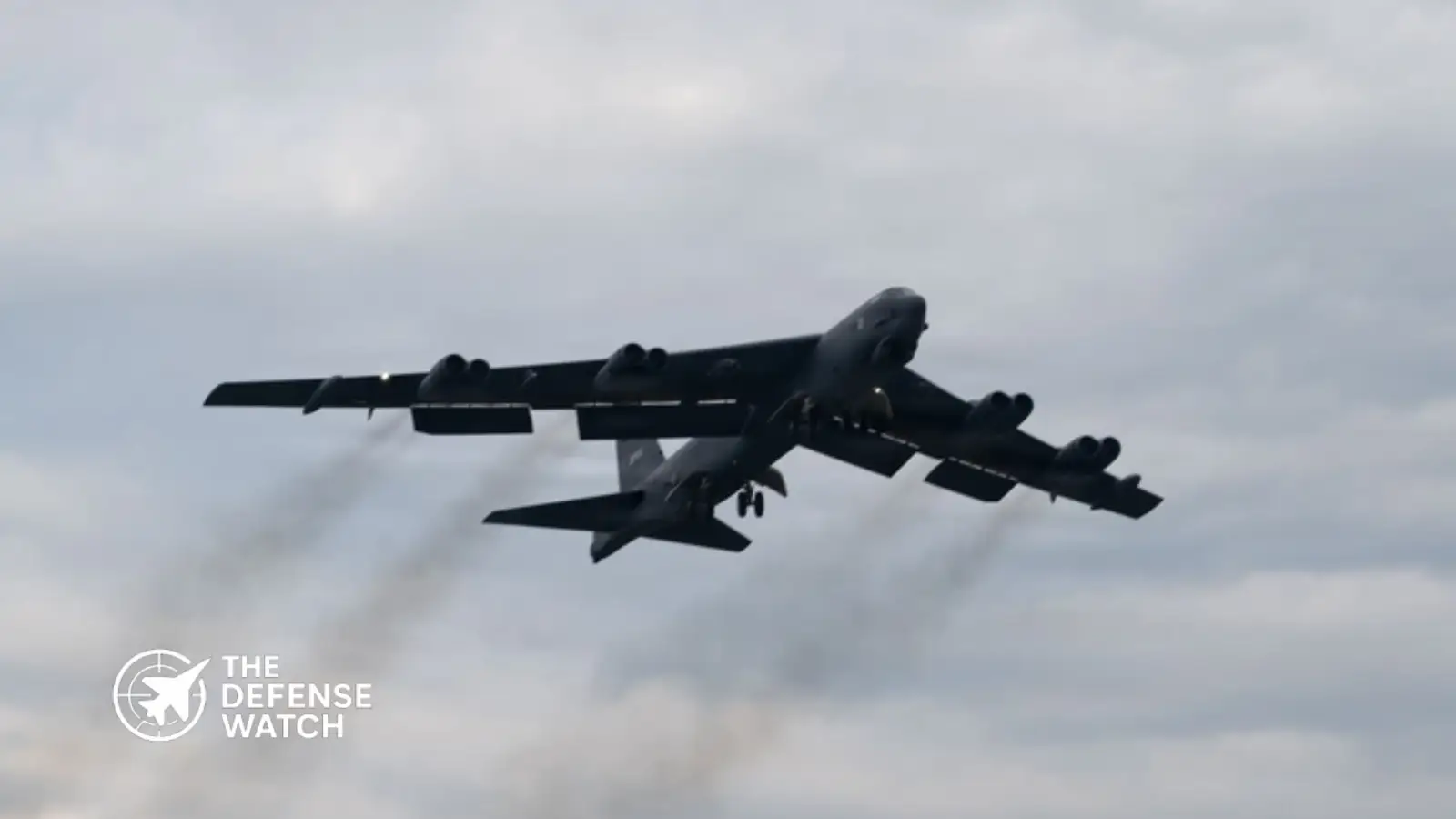
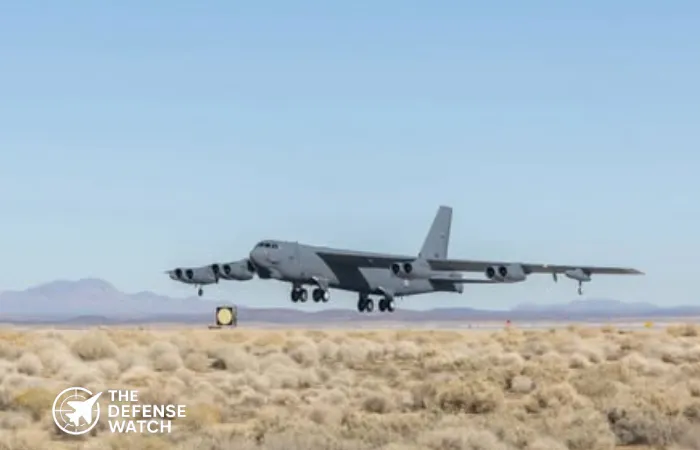
Multiple U.S. military aircraft, including strategic bombers, fighters, and aerial refueling platforms, participated in coordinated operations in British airspace. The activity involved complex air combat scenarios designed to sharpen operational coordination between allied forces.
The exercises took place against a backdrop of heightened NATO focus on deterrence, rapid response capabilities, and large-scale air operations. While such missions are routine elements of alliance training, their scale and visibility underscore the importance both nations place on maintaining a credible airpower posture.
Strategic Bomber Presence Remains Key
A notable aspect of the training was the participation of U.S. strategic bomber aircraft.
Long-range bombers remain among the most flexible tools available to U.S. military planners. They can rapidly deploy across continents, carry a wide range of conventional weapons, and integrate with allied air forces during multinational operations.
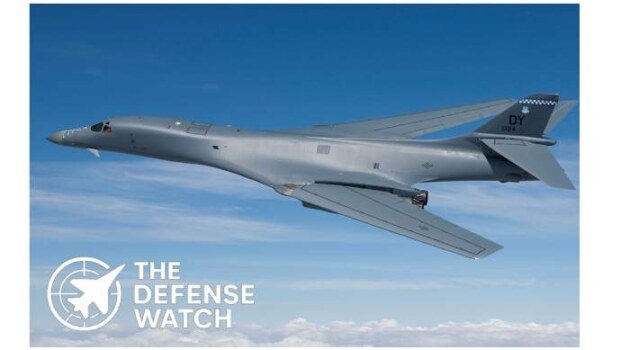
RAF Fairford continues to serve as an important hub for visiting U.S. bomber deployments in Europe. The base has supported multiple rotations involving American bomber aircraft in recent years and remains a critical location for transatlantic airpower operations. Earlier this year, U.S. B-1B Lancer bombers were deployed to Britain as part of broader regional security operations.
(adsbygoogle = window.adsbygoogle || []).push({});The ability to operate strategic bombers from British bases provides operational flexibility while reinforcing NATO’s collective defense posture.
Strengthening U.S.-UK Air Force Integration
The latest activity also highlights the increasingly integrated relationship between the U.S. Air Force and the Royal Air Force.
Modern air operations require seamless coordination among fighters, bombers, surveillance aircraft, electronic warfare platforms, and aerial refueling assets. Joint training allows crews to practice command-and-control procedures, communications, targeting processes, and mission planning under realistic conditions.
For NATO, interoperability is not simply a training objective. It is a core requirement for coalition combat operations. Aircraft from multiple nations must be able to operate together effectively during crises or conflicts.
The United Kingdom remains one of Washington’s closest military partners, and the two nations regularly conduct combined air operations across Europe, the Middle East, and other strategic regions.
Why The Training Matters
The appearance of American jets and bombers over Britain comes as European security planners continue to monitor evolving threats across the continent.
Recent statements from senior British military officials indicate a rise in Russian long-range military aviation activity near NATO’s northern approaches. The Royal Air Force routinely conducts interception and monitoring missions when foreign military aircraft approach areas of interest near UK airspace.
In parallel, NATO members have increased the frequency and complexity of joint exercises aimed at improving readiness and deterrence.
Training missions involving bombers are particularly valuable because they simulate the coordination required for long-range strike operations, air superiority missions, and integrated coalition warfare. These exercises also provide opportunities to validate logistics networks, refueling procedures, and command structures that would be critical during a major contingency.
Airpower As A Deterrence Tool
The strategic value of American jets and bombers extends beyond training alone.
Visible airpower deployments serve as a signal of allied capability and commitment. Strategic bombers can deploy rapidly, operate across vast distances, and integrate with regional forces without requiring permanent forward basing.
For NATO, this flexibility provides an important deterrent advantage. It allows the alliance to demonstrate readiness while maintaining the ability to scale military presence according to evolving security requirements.
The United Kingdom’s geographic position and established military infrastructure continue to make it a central platform for allied air operations across Europe and the North Atlantic.
Analysis: A Broader Trend In NATO Air Operations
Beyond the immediate exercise, the mission reflects a broader shift toward more integrated and distributed air operations among NATO members.
Modern conflicts increasingly require coordination across multiple domains, including air, space, cyber, and electronic warfare. Large-scale training events help allied forces test these capabilities before they are needed in real-world operations.
The presence of American jets and bombers over Britain also demonstrates how NATO is leveraging existing infrastructure and long-standing partnerships to improve readiness without establishing large new permanent force structures.
As European security challenges continue to evolve, such exercises are likely to remain a regular feature of alliance operations, providing both practical training value and strategic reassurance to NATO members.
Conclusion
The latest operations involving American jets and bombers over Britain highlight the enduring strength of U.S.-UK defense cooperation and NATO airpower integration.
While primarily a training event, the mission showcased capabilities that are central to alliance deterrence, including strategic bomber operations, multinational coordination, and rapid-response airpower. As NATO continues adapting to a changing security environment, exercises of this type remain essential for maintaining combat readiness and collective defense effectiveness.
(adsbygoogle = window.adsbygoogle || []).push({});Executive Summary:
A U.S. Air Force B-52 Stratofortress crashed shortly after takeoff from Edwards Air Force Base in California on June 15, killing all eight personnel aboard. The aircraft was conducting a test mission linked to ongoing radar modernization efforts, highlighting the risks associated with developmental flight testing and the continued reliance on the aging bomber fleet.
B-52 Bomber Crash Raises Questions About Strategic Test Operations
A B-52 bomber crash at Edwards Air Force Base has claimed the lives of eight personnel and resulted in the loss of one of the U.S. Air Force’s most important strategic aircraft during a test mission in California.
According to statements from Edwards Air Force Base and multiple media reports, the Boeing B-52 Stratofortress crashed shortly after takeoff at approximately 11:20 a.m. local time on June 15. Emergency responders immediately deployed to the scene, but officials later determined the accident was not survivable.
The aircraft was assigned to the Air Force’s 412th Test Wing and was participating in a mission associated with ongoing radar modernization efforts. Initial reports indicate the crew included military personnel, government civilians, and defense industry contractors.
Air Force officials confirmed that all eight people aboard were killed in the crash.
(adsbygoogle = window.adsbygoogle || []).push({});Crash Occurred During Radar Modernization Testing
The aircraft was reportedly supporting a program focused on upgrading the B-52 fleet with a new Active Electronically Scanned Array (AESA) radar system, one of several major modernization initiatives intended to keep the bomber operational well into future decades.
While investigators have not identified a cause, the crash occurred during a phase of flight historically associated with elevated risk. Officials have emphasized that no conclusions should be drawn until a formal investigation is completed.

Smoke rises from a blackened part of Edwards Air Force Base after the crash of a U.S. Air Force B-52 bomber aircraft in Edwards The destroyed aircraft was part of a small group of test assets used to validate upgrades before they are integrated across the broader B-52 force.
For the Air Force, the loss extends beyond a single airframe. Test aircraft play a unique role in evaluating new systems and reducing technical risk before fleet-wide implementation.
(adsbygoogle = window.adsbygoogle || []).push({});Why The Incident Matters
The B-52 remains one of the three pillars of America’s nuclear-capable bomber force alongside the B-2 Spirit and the emerging B-21 Raider.
Although the aircraft first entered service in the 1950s, it continues to perform long-range strike, deterrence, and conventional bombing missions worldwide. The Air Force plans to operate modernized B-52J variants into the 2050s, making current upgrade programs strategically important.
The crash comes at a time when the service is investing heavily in extending the aircraft’s relevance through new engines, radar systems, communications equipment, and digital architecture improvements.
From a defense modernization perspective, the accident highlights a recurring reality of military aviation development. Even proven aircraft can encounter significant risks when testing new technologies, flight configurations, or mission systems.
(adsbygoogle = window.adsbygoogle || []).push({});Edwards Air Force Base’s Role In Aerospace Development
Edwards Air Force Base has long served as the center of U.S. military flight testing.
Located in California’s Mojave Desert, the installation has supported generations of aerospace milestones, including experimental aircraft programs, fighter development, bomber testing, and advanced weapons integration.
Many of the Air Force’s most significant aviation programs have passed through Edwards before entering operational service.
As a result, accidents involving test aircraft at the base attract particular attention across the defense and aerospace communities because of the critical role Edwards plays in validating future military capabilities.
Following the crash, base officials temporarily suspended flight operations while emergency teams secured the area and investigators began examining the wreckage.
(adsbygoogle = window.adsbygoogle || []).push({});Investigation Now Underway
The U.S. Air Force has launched a formal investigation into the accident. Investigators will examine maintenance records, flight data, mission objectives, environmental conditions, and potential technical factors that may have contributed to the crash.
Officials have not released the identities of the victims pending notification of next of kin.
The investigation is expected to take months, a standard timeline for major military aviation accidents involving strategic aircraft.
Until preliminary findings are released, Air Force leaders are expected to focus on supporting affected families while preserving evidence needed to determine the cause.
(adsbygoogle = window.adsbygoogle || []).push({});Strategic Implications For The B-52 Fleet
The B-52 bomber crash is unlikely to alter the Air Force’s long-term commitment to the Stratofortress modernization program. However, it may lead to additional reviews of ongoing test activities and flight safety procedures connected to upgrade efforts.
The incident also underscores the continued importance of maintaining aging strategic aircraft while transitioning toward next-generation platforms such as the B-21 Raider.
As the Air Force balances modernization with operational readiness, the loss of a test aircraft and eight experienced personnel represents both a human tragedy and a significant setback for ongoing aerospace development efforts.


Executive Summary:
NASA’s X-59 experimental aircraft has successfully reached Mach 1.4 and 55,000 feet during a June 12 test flight, achieving the exact operating conditions required for future community overflight campaigns. The milestone advances NASA’s Quesst mission, which seeks to demonstrate that supersonic aircraft can fly over land while generating a quiet sonic thump rather than a disruptive sonic boom, potentially reshaping future civil aviation regulations.
NASA’s X-59 Reaches Critical Mission Conditions Flight Milestone
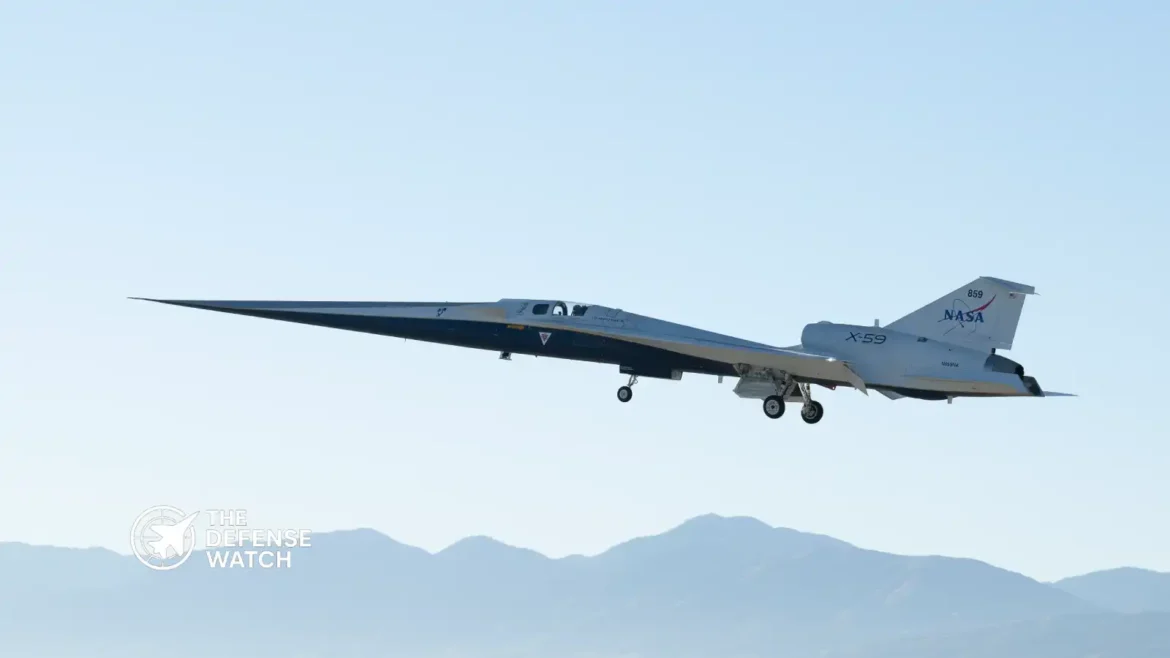
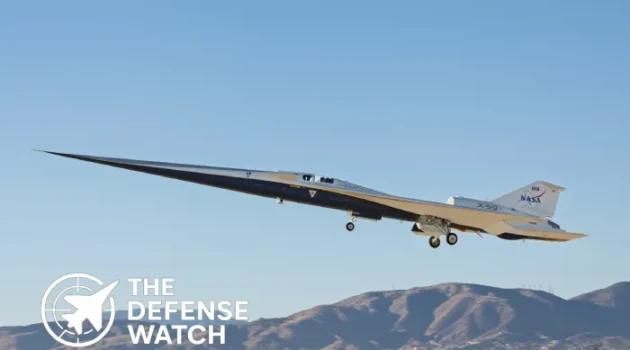
NASA’s X-59 quiet supersonic research aircraft has achieved a major program milestone by flying at Mach 1.4 and an altitude of 55,000 feet, the exact conditions planned for future community response testing under the agency’s Quesst mission. According to NASA, the achievement occurred during a June 12 flight test and represents the first time the aircraft has operated at its intended mission profile.
The milestone comes only days after the X-59 completed its first supersonic flight on June 5, when the aircraft exceeded the speed of sound for the first time by reaching approximately Mach 1.1 at 43,400 feet.
NASA officials describe the latest flight as more significant because it validates the aircraft’s ability to operate at the altitude and speed necessary for future community overflight demonstrations. Those demonstrations form the core objective of the Quesst program.
What Makes the X-59 Different?
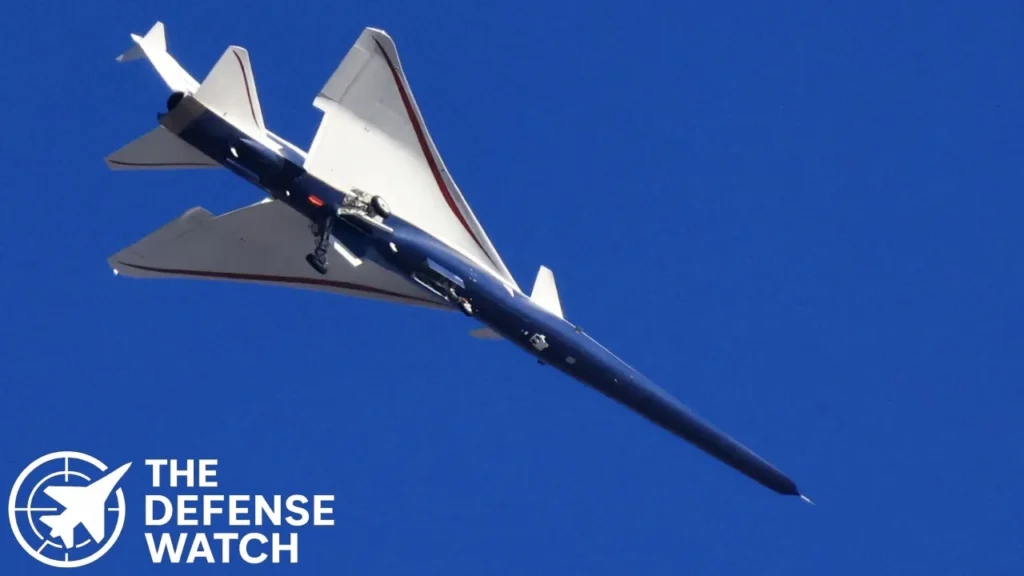
Unlike traditional supersonic aircraft such as the Concorde or military fighters, the X-59 was specifically engineered to minimize the shock waves that create loud sonic booms.
The aircraft features an unusually long and narrow nose, optimized fuselage shaping, and aerodynamic design elements intended to distribute pressure waves more evenly as the aircraft travels faster than sound. NASA’s objective is to transform the traditional sonic boom into a significantly quieter “sonic thump.”
Key X-59 specifications include:
Specification X-59 Maximum Test Speed Mach 1.4 Cruise Altitude 55,000 ft Length Nearly 100 ft Mission Quiet Supersonic Demonstrator Program NASA Quesst Prime Contractor Lockheed Martin Skunk Works The aircraft was developed by NASA in partnership with Lockheed Martin and serves as a flying laboratory rather than a prototype airliner. Its primary purpose is to collect scientific and acoustic data that regulators can use when evaluating future supersonic flight rules.
Community Overflights Are the Next Major Phase
NASA’s testing campaign remains focused on expanding the aircraft’s flight envelope and validating performance before acoustic testing begins.
The agency plans to conduct flights over multiple U.S. communities after the aircraft completes additional performance evaluations. During those flights, researchers will gather data on how people on the ground perceive the sound generated by the aircraft while operating at Mach 1.4 and 55,000 feet.
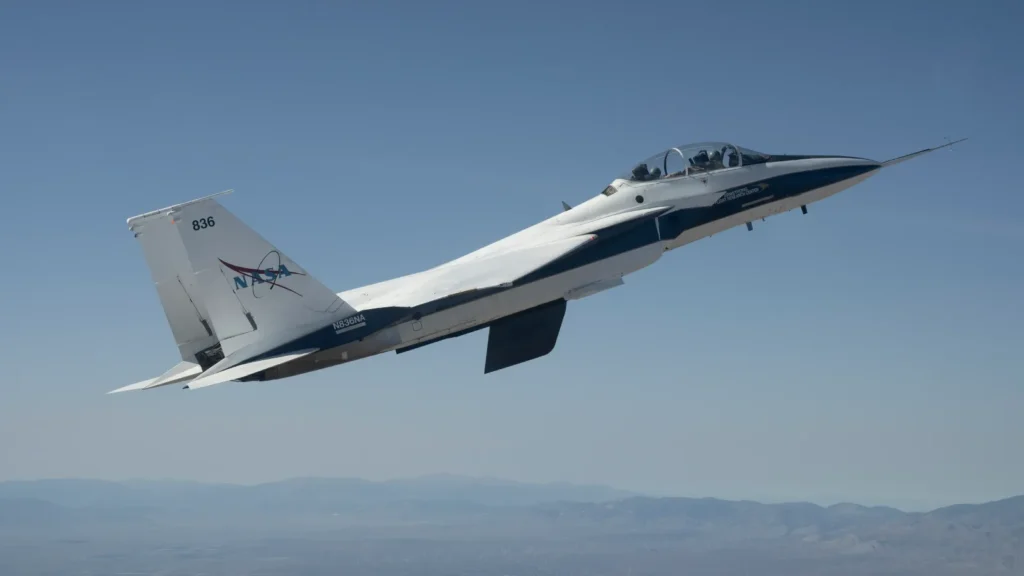
Interestingly, NASA has not yet verified the aircraft’s actual low-boom performance during recent supersonic flights. The X-59 has been accompanied by a NASA F-15 chase aircraft whose conventional sonic booms intentionally mask any sound generated by the experimental jet during early flight testing. Acoustic validation will occur during later testing phases.
Why the Program Matters for Future Aviation
The X-59 is attempting to address a regulatory challenge that has limited commercial supersonic travel for decades.
In 1973, U.S. regulators effectively prohibited routine civilian supersonic flight over land because traditional sonic booms created significant noise disturbances for communities below. That restriction remains a major barrier to the development of next-generation supersonic passenger aircraft.

Image : NASA NASA’s strategy is not to build a commercial airliner itself. Instead, the agency aims to generate scientifically validated acoustic data that could help regulators establish future noise-based standards for overland supersonic operations. The collected information will be shared with U.S. and international aviation authorities.
If successful, the effort could enable a new generation of commercial aircraft capable of dramatically reducing travel times on domestic and international routes while remaining acceptable to communities beneath flight paths.
Defense and Aerospace Implications
While the Quesst mission is fundamentally a civil aviation research effort, the technologies being evaluated have broader aerospace significance.
Low-boom aerodynamic shaping, advanced computational modeling, and high-speed flight control techniques could inform future military aircraft design. Reduced acoustic signatures during supersonic operations may offer operational advantages for reconnaissance, rapid response, and long-range strike platforms where minimizing detectability remains important.
-
The program also demonstrates continued U.S. leadership in experimental aerospace development through the use of X-plane research aircraft. Historically, X-plane programs have served as technology incubators for capabilities that later transitioned into operational military and civilian aviation systems.
From a strategic perspective, the X-59 represents one of the most ambitious efforts since the retirement of the Concorde to address the fundamental noise challenge that has constrained supersonic transportation for more than half a century.
Technical Challenges Still Ahead
Despite the recent milestone, the program remains in a test and validation phase.
NASA officials note that months of additional performance testing remain before the aircraft begins its community overflight campaign. Engineers must continue validating handling qualities, flight stability, and acoustic performance across a range of operating conditions.
The next critical objective will be confirming that the aircraft’s unique design consistently produces the predicted low-noise signature under real-world atmospheric conditions. Success in that phase will determine whether the collected data can support future regulatory changes governing overland supersonic flight.
-
(adsbygoogle = window.adsbygoogle || []).push({});Executive Summary:
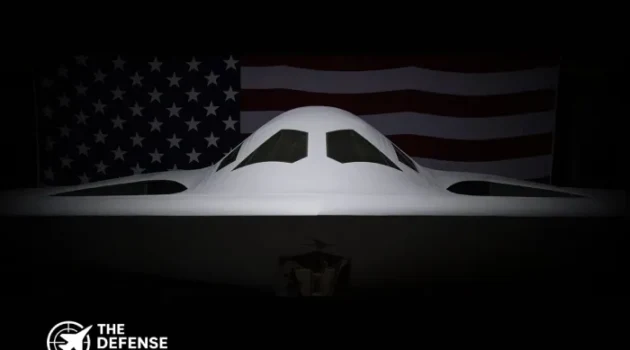
The U.S. Air Force has begun a new phase of B-21 Raider testing by integrating operational test pilots into the flight test program at Edwards Air Force Base, California. The milestone moves the stealth bomber beyond pure developmental testing and toward evaluation of real-world combat effectiveness, weapons integration, and operational utility. The transition is a critical step as the Air Force prepares the B-21 for future deployment as the backbone of America’s long-range strike force.
U.S. Air Force Begins Combat-Focused B-21 Raider Testing
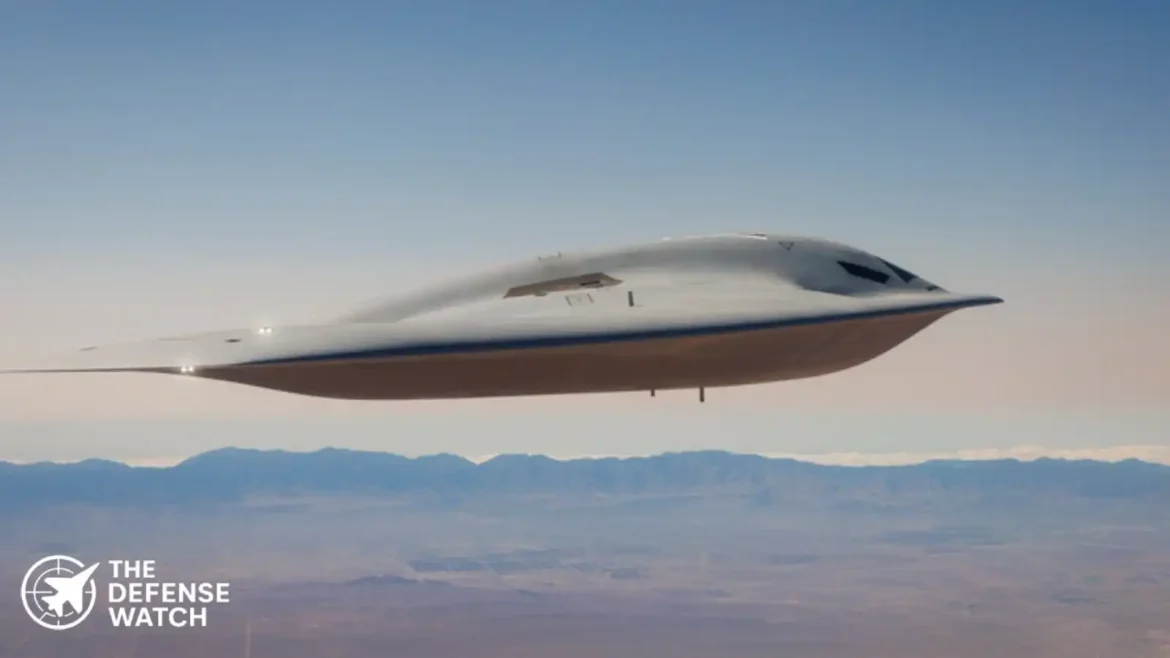
The U.S. Air Force has initiated combat-focused testing of the B-21 Raider after an operational test pilot completed a flight alongside a developmental test pilot at Edwards Air Force Base, California. The flight marks the first publicly acknowledged integration of operational testers into the Raider program, signaling a shift toward evaluating how the aircraft will perform in actual combat scenarios rather than solely assessing flight characteristics.
According to Air Force officials, the addition of operational testers enables the service to assess the bomber’s combat utility earlier in the development process. This combined developmental and operational testing approach is intended to accelerate capability validation while reducing risk before the aircraft enters operational service.
The milestone comes as the B-21 program continues to expand its flight test campaign with multiple aircraft and increasingly complex mission evaluations. The second B-21 test aircraft joined the program in 2025, enabling parallel testing activities focused on mission systems and weapons integration.
- (adsbygoogle = window.adsbygoogle || []).push({});
Why Operational Testing Matters
Developmental testing determines whether an aircraft can safely fly and whether its systems perform according to design specifications. Operational testing answers a different question: can the platform successfully accomplish combat missions under realistic conditions?
The inclusion of operational test pilots allows the Air Force to evaluate:
Testing Area Purpose Mission Systems Assess sensor, communications, and battle management performance Weapons Integration Validate employment of conventional and strategic weapons Crew Operations Examine workload, mission planning, and decision-making Combat Effectiveness Measure performance against realistic operational scenarios Sustainment Evaluate maintenance and deployment requirements This phase is particularly important because the B-21 is expected to operate inside heavily defended airspace where advanced integrated air defense systems, electronic warfare assets, and long-range missile networks pose significant challenges.
B-21 Raider’s Role in U.S. Strategic Deterrence
Developed by Northrop Grumman, the B-21 Raider is designed to become the centerpiece of the U.S. Air Force’s future bomber fleet.
The aircraft will gradually replace portions of the aging B-1B Lancer and B-2 Spirit fleets while complementing upgraded B-52 Stratofortress bombers. The Raider is also expected to serve as a key component of the U.S. nuclear triad, providing both conventional and nuclear strike capabilities.
Air Force plans currently call for a minimum procurement of 100 aircraft, although some defense analysts and military leaders have argued that a larger fleet may ultimately be required to meet global operational demands.
- (adsbygoogle = window.adsbygoogle || []).push({});
Program Momentum Continues to Build
The operational test flight follows a series of major milestones achieved during the past year.
- Arrival of the second flight test aircraft at Edwards Air Force Base.
- Expansion of testing into mission systems and weapons integration.
- Successful aerial refueling evaluations with KC-135 Stratotankers.
- Continued progress toward initial operational deployment later this decade.
The aerial refueling campaign is especially significant because it validates one of the bomber’s most important operational requirements: the ability to conduct long-duration global strike missions without relying on forward basing.
Analysis: A Shift Toward Warfighting Capability
The integration of operational testers reflects a broader trend across major U.S. defense acquisition programs. Rather than waiting until late-stage development, the Air Force is increasingly blending developmental and operational testing to identify deficiencies earlier and speed fielding timelines.
For the B-21, this approach carries strategic significance.
The aircraft is expected to operate in environments shaped by rapidly modernizing Chinese and Russian air defense networks. As a result, survivability, sensor fusion, electronic warfare performance, and weapons employment are as important as basic flight performance.
Moving operational testers into the cockpit at this stage allows the Air Force to evaluate these combat-relevant capabilities before production ramps further. It also helps ensure that future bomber crews receive an aircraft optimized not only for engineering requirements but also for operational realities.
The timing is notable as the Pentagon continues to emphasize long-range strike capabilities as a core element of deterrence in the Indo-Pacific. The B-21’s combination of stealth, range, payload capacity, and open-systems architecture is intended to provide adaptability against evolving threats for decades.
(adsbygoogle = window.adsbygoogle || []).push({});Unlike earlier stealth bombers, the Raider was designed from the outset with digital engineering methods and a modular architecture that allows future upgrades without extensive redesigns. This approach aims to shorten modernization cycles and maintain relevance against rapidly changing technologies.
Outlook
The first operational test pilot flight represents more than a symbolic milestone. It marks the beginning of the Air Force’s effort to determine whether the B-21 can deliver the combat capability expected of America’s first new strategic bomber in more than three decades.
As testing expands to include mission systems, weapons integration, aerial refueling, and operational employment scenarios, the Raider is moving steadily from a developmental aircraft toward an operational weapon system. If current progress continues, the B-21 is expected to become a central element of U.S. long-range strike and strategic deterrence capabilities throughout the coming decades.
- (adsbygoogle = window.adsbygoogle || []).push({});