

C-130J Super Hercules Tests Austere Airlift In Iceland
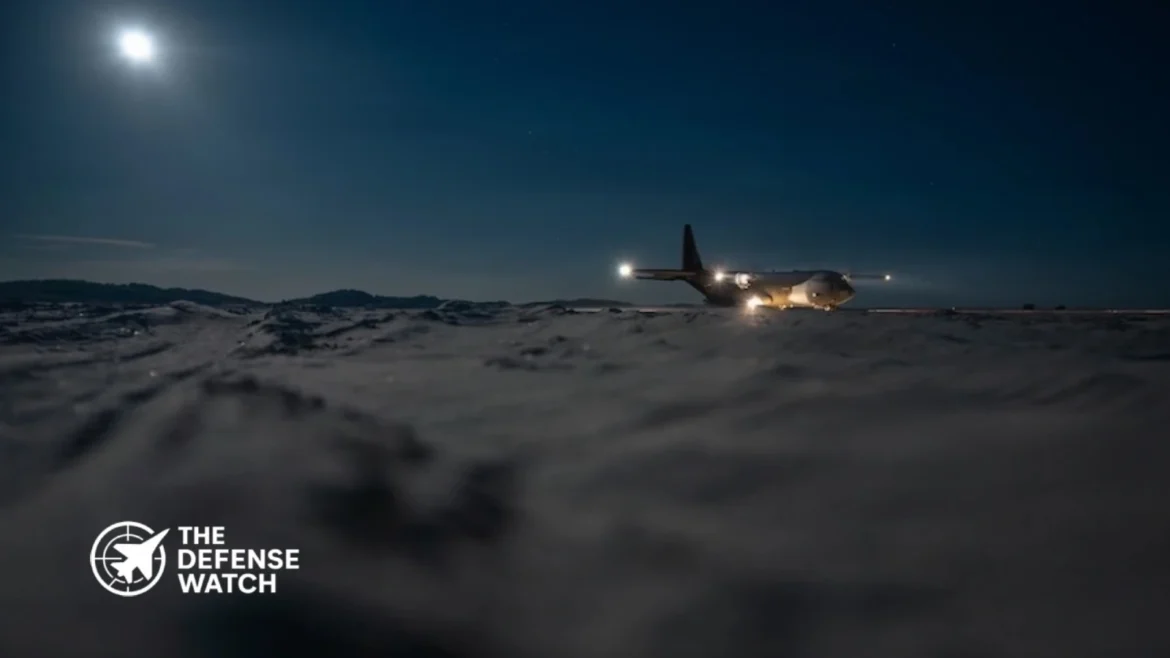
The U.S. Air Force is testing the C-130J Super Hercules at unconventional landing sites in Iceland, including grass fields and beaches, during Exercise Northern Viking 26. The 37th Airlift Squadron, based at Ramstein Air Base in Germany, arrived in Iceland on Aug. 21 and is using the exercise to test airlift operations in the High North’s austere environment.
Takeaways
The U.S. Air Force is using Northern Viking 26 to test C-130J Super Hercules operations from austere landing zones in Iceland, reducing reliance on conventional runways.
The U.S. Air Force said the C-130J crews practiced landing at locations that differed from conventional airports. Capt. Jill Ruane, a C-130J pilot, said the squadron landed on both a beach and a grass field during the exercise.
The training is significant because it tests more than the aircraft itself. It combines the C-130J’s short-field capabilities with the ability of contingency response personnel to identify, survey and prepare temporary landing zones.
Northern Viking 26 Puts High North Airlift Under Test
Northern Viking 26 is a biennial exercise hosted by Iceland and led by U.S. Naval Forces Europe and U.S. Sixth Fleet. The 2026 iteration brings together the United States, Iceland and NATO allies including Belgium, Canada, Denmark, Finland, France, Germany, Lithuania, Norway and Poland.
The exercise runs from Aug. 22 to Sept. 3 and is designed to improve interoperability, readiness and command and control across the air, maritime and land domains. U.S. officials have specifically linked the exercise to the defense of Iceland and sea lines of communication through the Greenland-Iceland-United Kingdom, or GIUK, gap.
Iceland’s location gives it an important position between North America and Europe. For U.S. and NATO forces, the ability to move personnel and supplies through the country is therefore closely connected to broader North Atlantic mobility.
The exercise also marks 75 years of the U.S.-Iceland defense relationship established by the 1951 Bilateral Defense Agreement.
Why The C-130J Is Suited To Austere Operations
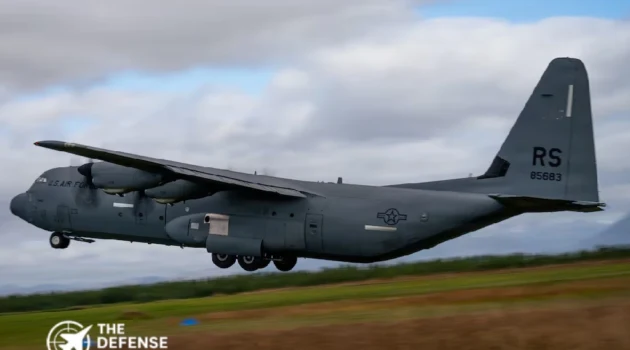
The C-130J is designed as a tactical airlifter rather than simply a point-to-point cargo aircraft. Its four turboprop engines, high-wing configuration and landing gear arrangement support operations from relatively short and austere airfields.
Lockheed Martin lists a maximum allowable payload of about 44,000 pounds for the C-130J-30 and a maximum normal-payload range of approximately 2,417 miles. The company also lists capacity for combinations of pallets, litters, combat troops and paratroopers.
C-130J-30 characteristic Published figure Maximum allowable payload 44,000 lb Maximum normal-payload range 2,417 miles Speed 410 mph at 22,000 ft Maximum listed load 8 pallets, or up to 128 combat troops Engines Four AE2100D3 turboprops These figures describe the aircraft’s published capabilities under specified conditions. Actual operations from an unimproved surface depend on factors including aircraft weight, surface condition, weather, runway dimensions and other operational restrictions.
That distinction matters in Iceland. A published aircraft capability does not automatically mean that any beach or grass field can be used as a runway. The landing zone must first be evaluated and prepared for the specific aircraft and mission.
Contingency Response Teams Prepare The Landing Zones
The exercise therefore places considerable emphasis on personnel operating on the ground.
U.S. Air Force personnel from the 435th Contingency Response Group surveyed and marked the grass landing zone used by the C-130J in Iceland. The Air Force’s official imagery shows the aircraft approaching the prepared strip on Aug. 23.
This is an important part of expeditionary air mobility. A transport aircraft cannot simply arrive at an unknown field and assume that it is suitable for landing.
Personnel must assess the surface and operating area, establish markings and coordinate aircraft movements. These activities connect airlift operations with the broader concept of distributed and expeditionary operations.
The training also provides an opportunity to practice the coordination required to establish temporary access points without relying exclusively on permanent aviation infrastructure.
Reducing Dependence On Fixed Airfields
The operational value of this capability becomes clearer when considered from a resilience perspective.
Permanent military and civilian airfields provide significant advantages, including established runways, fuel systems, maintenance infrastructure, communications and air traffic services. They are also predictable locations that can become critical nodes for military mobility.
A C-130J that can use suitable austere landing zones gives commanders additional options for moving personnel and supplies. The U.S. Air Force explicitly described the training as a way to expand operational access and reduce dependence on permanent runways.
That does not mean conventional airfields become unnecessary. Instead, austere operations provide another layer of access that can complement established bases.
For North Atlantic operations, this can matter when forces need to support dispersed locations or reach personnel operating away from major bases.
Air Mobility And Personnel Recovery
The training also has applications beyond routine logistics.
According to the U.S. Air Force, the ability to operate independently of established infrastructure is relevant to both combat and personnel recovery missions. The same C-130J operating flexibility can support the movement of personnel, equipment and supplies to locations where conventional airport infrastructure is limited.
The exercise also involves specialized airlift and recovery capabilities. Separately, the 352nd Special Operations Wing is using an MC-130J Commando II during Northern Viking 26 to train long-range resupply missions in contested environments. The unit said it plans to demonstrate delivery of supplies to personnel operating beyond friendly supply lines.
This broader activity shows that Northern Viking 26 is not simply an aircraft exercise. It is testing different methods for sustaining forces across difficult terrain and large distances.
Iceland Adds A Demanding Operating Environment
Iceland provides a particularly relevant environment for this type of training.
The country combines mountainous terrain, exposed coastal areas and rapidly changing weather conditions. U.S. Air Force personnel involved in Northern Viking 26 have highlighted the challenges posed by Icelandic weather, while the exercise is intended to improve readiness in the High North.
The Air Force has also deployed other aircraft to Iceland during the exercise. A U.S. MQ-9 Reaper from the Texas Air National Guard’s 147th Attack Wing arrived at Keflavík, while Belgian F-16s conducted formation operations with the C-130J over Icelandic terrain.
The combination of airlift, surveillance and fighter activity provides a broader test of Allied operations in the region.
C-130J Operations Extend Beyond Iceland
The austere-airfield training is not confined to Iceland.
On Aug. 25, a 37th Airlift Squadron C-130J landed on a sand landing zone at Rømø in Denmark during Northern Viking 26. U.S. Air Force officials said the use of austere landing zones gives Allied forces additional access points for moving personnel, equipment and supplies across the region.
This demonstrates the wider objective of the training. The goal is not simply to prove that a C-130J can land on grass or sand, but to train aircrews and ground teams to operate as a coordinated system across nontraditional locations.
That distinction is important for expeditionary air mobility. Aircraft performance, landing-zone preparation, aircrew procedures and command coordination all have to work together.
What The Exercise Demonstrates For U.S. Air Mobility
The Iceland training highlights a broader shift in how air mobility forces prepare for operations in geographically demanding theaters.
For decades, the C-130 family has provided the U.S. military with an ability to move personnel and cargo into locations that are inaccessible to larger strategic transports. The C-130J builds on that role with modern avionics, propulsion and improved performance.
Lockheed Martin describes the C-130J as capable of operating from austere strips, with the aircraft’s design supporting tactical airlift missions where runway infrastructure is limited.
Northern Viking 26 puts that capability into a specific operational setting. Rather than testing the aircraft only at a prepared military airfield, U.S. forces are combining the aircraft with expeditionary ground teams and Allied forces across Iceland and Denmark.
The result is a more realistic assessment of how tactical airlift can contribute to distributed operations in the North Atlantic.
A Practical Test Of Allied Mobility
The C-130J activity in Iceland is therefore best understood as a test of the complete air mobility chain.
The aircraft provides the lift. Contingency response personnel prepare and manage the landing zone. Aircrews execute operations from surfaces that differ substantially from conventional runways. Allied forces provide the wider operational framework.
For the United States and NATO, that combination can provide greater flexibility when operating across the High North.
Northern Viking 26 continues through Sept. 3, with participating forces conducting activities across Iceland and the surrounding region. The exercise is part of the broader effort by the United States and its NATO allies to strengthen readiness, interoperability and access around the North Atlantic and Arctic approaches.

Executive Summary:
Rolls-Royce has signed a propulsion support agreement with Sabena technics to sustain the French-German fleet of C-130J Super Hercules aircraft through December 2030. The agreement covers the Rolls-Royce AE 2100D3 turboprop engines powering the 10-aircraft binational fleet and forms part of France’s 10-year CAROLUS aircraft maintenance and operational readiness program.
Rolls-Royce Expands C-130J Engine Support For France And Germany
Rolls-Royce will provide propulsion support for the French-German C-130J Super Hercules fleet through December 2030 under a new agreement with Sabena technics, strengthening the long-term sustainment structure behind the binational airlift force. Rolls-Royce announced the agreement on July 23, 2026.
The arrangement places Rolls-Royce inside the broader CAROLUS program, a 10-year operational readiness and maintenance contract awarded to Sabena technics by France’s Directorate of Aeronautical Maintenance, known as DMAé. The French ministry said the CAROLUS contract was notified to Sabena technics on December 24, 2025.
The propulsion agreement is significant because the C-130J fleet depends on the AE 2100D3 turboprop engine, making engine availability directly relevant to the aircraft’s ability to perform tactical airlift, airdrop, medical evacuation, logistics and tanker missions.
What The New Rolls-Royce Agreement Covers
Under the agreement, Rolls-Royce will provide flight-hour-based sustainment services for the fleet’s AE 2100D3 engines.
The company will also place Field Service Representatives at Évreux-Fauville Air Base in France, alongside Sabena technics personnel. Additional support will be provided from Sabena technics’ maintenance, repair and overhaul facility in Bordeaux.
The support structure includes integrated logistics and spare-parts assistance, with the objective of keeping engines within established mission-readiness thresholds.
Program Element Details Aircraft C-130J Super Hercules Fleet 5 C-130J transport aircraft and 5 KC-130J tankers Engine Rolls-Royce AE 2100D3 Prime aircraft-support contractor Sabena technics Propulsion partner Rolls-Royce Main operating base Évreux-Fauville Air Base, France Broader support program CAROLUS CAROLUS duration 10 years Rolls-Royce propulsion support Through December 2030 Rolls-Royce describes its role as a strategic propulsion partnership rather than a conventional off-site engine maintenance arrangement. The company will integrate engineering, technical assistance and logistics support with the aircraft maintenance organization.
A 10-Aircraft Binational Hercules Fleet
The French-German C-130J force is operated by the Binational Air Transport Squadron at Évreux-Fauville Air Base 105.
Germany’s Bundeswehr identifies the planned fleet as five C-130J-30 aircraft and five KC-130J tanker aircraft. France contributes two C-130J-30 aircraft and two KC-130J aircraft, while Germany provides three C-130J-30s and three KC-130Js.
The C-130J-30 is the stretched version of the Super Hercules, while the KC-130J provides aerial refueling capability. The tanker configuration is particularly important for extending the operating flexibility of helicopters and other aircraft that can receive fuel from the platform.
France’s Ministry of the Armed Forces also describes the C-130J as a medium airlift capability that complements the larger Airbus A400M fleet. In July 2026, the French ministry highlighted the C-130J as part of the country’s tactical and strategic projection capability alongside French and German A400Ms.
Why Engine Availability Matters
For a military transport aircraft, propulsion support is closely linked to operational availability.
The C-130J uses four AE 2100D3 engines. The French Ministry of the Armed Forces lists each engine at 4,760 horsepower and gives the aircraft a maximum payload of approximately 18.7 metric tons. It also lists a maximum cruise speed of 355 knots and a maximum takeoff weight of 74.4 metric tons.
The aircraft is designed for a wide range of missions, including personnel transport, logistics, parachute operations, cargo delivery, search and rescue, medical evacuation and personnel recovery. The KC-130J adds aerial refueling capabilities.
That mission range makes propulsion readiness more than a maintenance metric. A grounded aircraft represents a reduction in available lift, tanker capacity or tactical mobility.
The new arrangement therefore focuses on sustaining the entire propulsion support chain rather than treating engine maintenance as an isolated repair activity.
The AE 2100D3 And C-130J
The AE 2100D3 is the established powerplant of the C-130J family.
Lockheed Martin has previously described the AE 2100D3 as the C-130J’s sole powerplant, with four engines installed on each aircraft. The engine is a modular turboprop designed to provide the power required by the Super Hercules across a broad range of operating conditions.
The propulsion system is paired with six-bladed Dowty Aerospace R391 propellers on the C-130J. Lockheed Martin’s published C-130J data identifies the aircraft’s propulsion configuration as four Rolls-Royce AE 2100D3 engines.
For France and Germany, maintaining this common engine configuration has an additional logistical advantage. A shared propulsion support model can allow technical knowledge, spares management and maintenance practices to be coordinated across the two national operators.
CAROLUS Creates A Broader Sustainment Framework
The Rolls-Royce agreement should be viewed as one part of the larger CAROLUS program.
France awarded Sabena technics the 10-year CAROLUS contract to support the joint fleet. The French Ministry of the Armed Forces said the program increases performance requirements in areas including aircraft availability, onboard capabilities, turnaround times for scheduled maintenance and logistics services.
That structure is important because military aircraft readiness depends on more than the condition of an engine.
An aircraft can be mechanically sound but unavailable because of missing spare parts, maintenance capacity, technical inspections or other support constraints. Integrating the propulsion manufacturer into the maintenance ecosystem gives the operator direct access to original equipment manufacturer engineering expertise while the prime contractor manages the wider aircraft-support requirement.
Implications For European Air Mobility
The agreement also illustrates the increasingly integrated nature of European military aviation support.
France and Germany already operate the C-130J fleet as a binational capability rather than maintaining completely separate national fleets. That arrangement reduces duplication and creates a common operating structure for a relatively small number of specialized aircraft.
The C-130J also fills a different role from the A400M.
The A400M provides substantially greater payload and strategic reach, while the C-130J offers a smaller tactical airlift platform suited to missions where a large transport aircraft may not be required. France’s defense ministry specifically describes the C-130J as a complementary medium transport capability.
For European forces, sustaining both aircraft classes provides a layered airlift structure. Larger transports can handle heavy strategic movement, while C-130Js can support tactical distribution, specialized missions and aerial refueling requirements.
What The Deal Means For The United States
The agreement is primarily a French-German European defense program, but it has relevance for U.S. military planners because the C-130J is one of the world’s most widely operated tactical airlift platforms.
The aircraft family is used extensively by the U.S. Air Force, Air National Guard, Air Force Reserve and U.S. Marine Corps, as well as numerous allied and partner nations. The commonality of the platform and its AE 2100D3 propulsion system creates a broad international support ecosystem.
For NATO operations, common platforms can simplify interoperability in areas such as aircrew procedures, logistics and mission planning. However, national maintenance arrangements and regulatory requirements still determine how much practical support can be shared between operators.
The French-German model demonstrates another approach: rather than simply operating the same aircraft independently, two countries are combining their fleets and organizing support around a shared operational structure.
A Focus On Availability Rather Than New Aircraft
The Rolls-Royce agreement does not involve the purchase of new C-130J aircraft or an upgrade to the aircraft’s core propulsion design.
Its purpose is sustainment.
That distinction matters because military aviation readiness increasingly depends on how effectively existing fleets can be maintained as well as how quickly new platforms can be procured.
For the French-German C-130J force, the immediate objective is to keep the 10 aircraft available for missions while providing predictable engine support through the end of the decade. Rolls-Royce’s embedded support model is designed to address maintenance requirements, technical information and spare-parts logistics as part of a single readiness framework.
The arrangement also gives the two countries a defined propulsion support pathway as the binational squadron continues operating alongside France and Germany’s larger airlift fleets.
Bottom Line
Rolls-Royce’s agreement with Sabena technics adds dedicated OEM propulsion support to the 10-aircraft French-German C-130J Super Hercules fleet through December 2030.
The deal sits within France’s 10-year CAROLUS sustainment program and is designed to improve engine availability through embedded technical personnel, integrated logistics and flight-hour-based support.
For France and Germany, the immediate benefit is greater predictability in sustaining a relatively small but operationally important tactical airlift fleet. More broadly, the arrangement shows how European operators are increasingly using joint fleet structures and integrated industrial support to maintain military aviation readiness.
