L3Harris Demonstrates AI-Enabled Multi-Domain Defense Network in Taiwan
L3Harris Technologies and a group of international defense and technology partners have demonstrated an integrated military and civilian command network in Taiwan, combining artificial intelligence, tactical communications, surveillance systems, counter-drone capabilities and satellite connectivity.
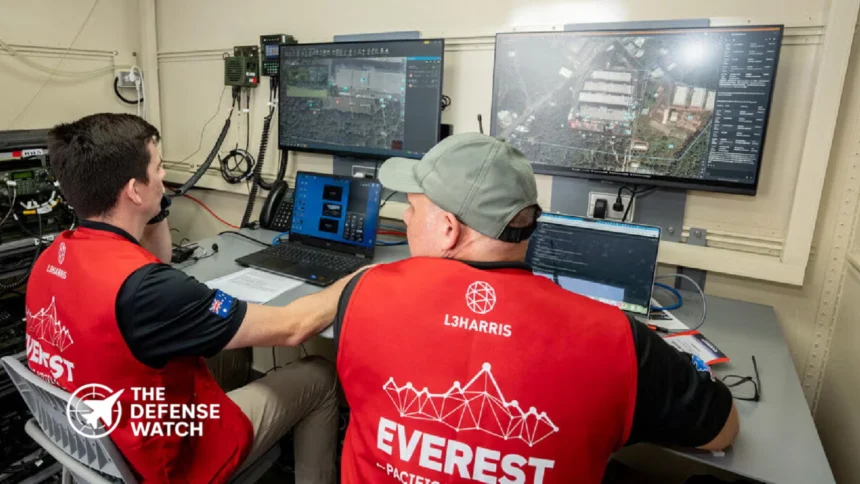
The demonstration, called EVEREST: Pacific Vigilance, took place from November 11 to 13, 2026, at partner facilities in Taiwan. It focused on connecting sensors, intelligence systems, command centers and military response elements within a common operational network.
The event addressed a central challenge facing modern military forces: maintaining situational awareness and coordinating responses when threats emerge across multiple domains, particularly when communications infrastructure is exposed to electronic warfare, cyberattacks or physical disruption.
L3Harris announced the demonstration on November 17, describing scenarios involving persistent surveillance, early-warning detection, coordinated fires, whole-of-society defense and civil-military resilience. Several dozen international companies and local businesses participated, according to the company.
Connecting Sensors, Intelligence and Military Response
Rather than demonstrating individual platforms in isolation, EVEREST focused on how different technologies could exchange information and support a coordinated operational response.
According to L3Harris, its software-defined communications systems provided the networking foundation, while Palantir’s AI-enabled Maven Smart System fused intelligence and sensor information across tactical networks.
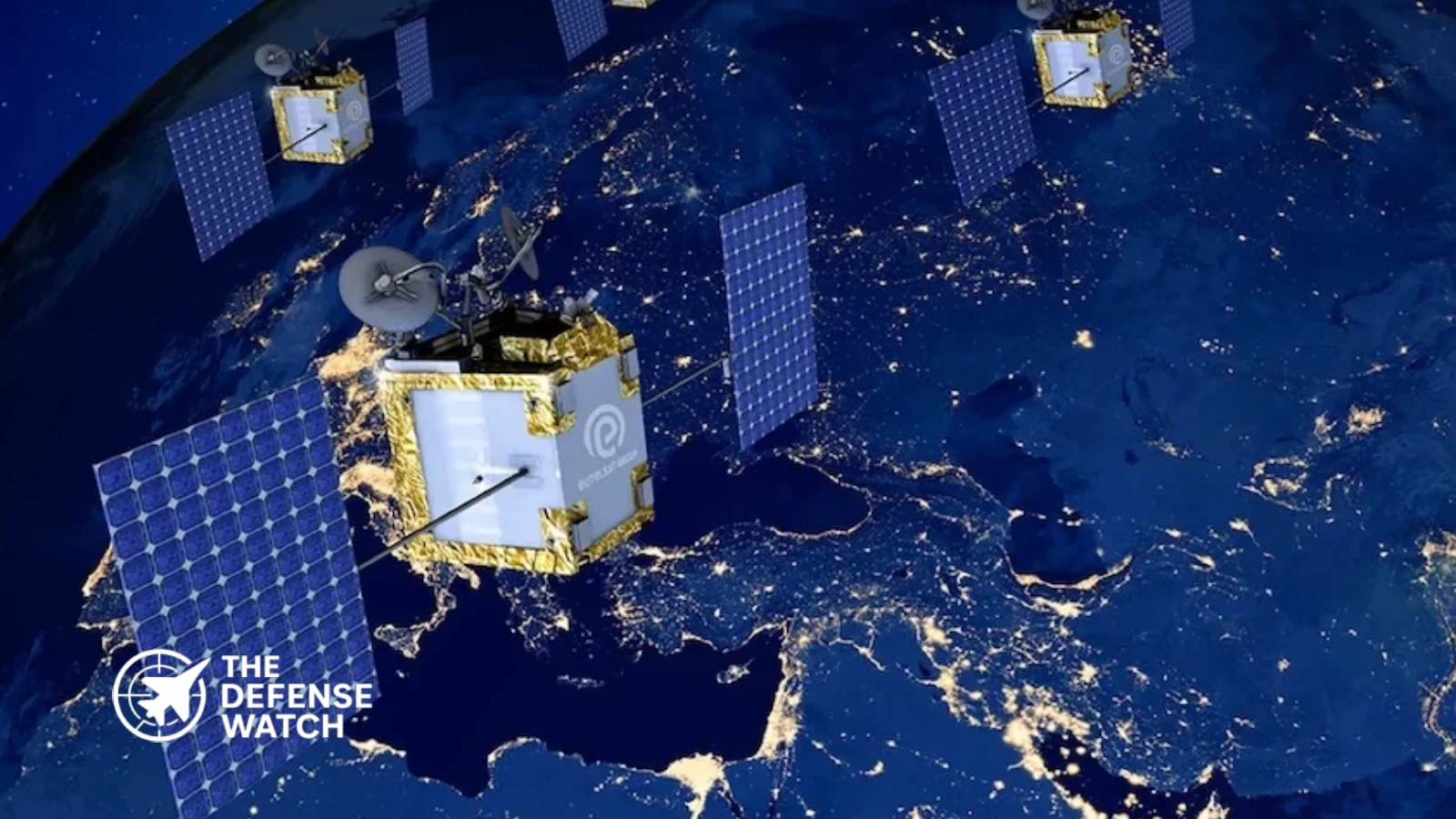
The architecture also incorporated Amazon’s low-Earth-orbit satellite connectivity and Link 16 tactical data links. These technologies were intended to provide communications across different operational levels and military domains.
The demonstration included several capability areas:
- Persistent surveillance and early warning: Electronic warfare systems, airborne surveillance capabilities and other intelligence, surveillance and reconnaissance assets were used to identify potential threats.
- Counter-drone operations: L3Harris VAMPIRE and Drone Guardian systems, alongside electro-optical and infrared sensors, featured in scenarios involving unmanned aerial threats.
- Command and control: AI-assisted information fusion was intended to accelerate the movement of information from detection to operational decision-making.
- Coordinated fires: Tactical communications and command systems connected operational headquarters with precision-fire coordination capabilities.
- Civil-military coordination: Military communications were linked with civilian emergency-response infrastructure to support coordinated responses involving police, medical and other public services.
These were demonstration scenarios, not evidence that all participating technologies have been deployed together in an operational Taiwanese military network.
The Technology Behind the Demonstration
One of the central elements was the integration of L3Harris communications equipment with Palantir’s Maven Smart System.
Maven is designed to process and combine information from different intelligence and sensor sources. In the EVEREST scenario, it was presented as a tool for helping military personnel assess incoming information and shorten the time required to make operational decisions.
This is particularly relevant to distributed military operations, where sensors, command centers and response units may operate across geographically separated locations.
The demonstration also incorporated L3Harris’ Wraith mobile ad hoc networking waveform. The company describes the technology as providing anti-jamming voice and data communications, an important requirement when forces operate in contested electromagnetic environments.
RTX Sentry was included in the precision-fire coordination portion of the demonstration, while a deployable Tactical Operations Center-Light supplied by Booz Allen was used to connect tactical military communications with civilian P25 networks.
The architecture also featured a next-generation communications shelter supplied by Champion Auto, extending the network between radio systems.
The combination illustrates an important distinction between having advanced military equipment and being able to use it as part of a coordinated force. An effective multi-domain network requires compatible communications, data formats, command procedures and reliable connections between systems operated by different organizations.
Counter-Drone Defense and the Tactical Edge
Counter-unmanned aerial systems formed another important part of the EVEREST scenarios.
L3Harris identified its VAMPIRE precision-strike and ISR system, Drone Guardian and electro-optical and infrared sensors among the technologies used to address simulated drone threats.
The demonstration also featured Wraith Shield software, which the company describes as extending software-defined radio capabilities into spectrum sensing and protection functions.
A Rayvatek electric vertical takeoff and landing unmanned aircraft was included to demonstrate how L3Harris embedded communications equipment could be integrated into different unmanned platforms.
The emphasis on the tactical edge is significant. Modern counter-drone operations often require more than detecting an aircraft. Military personnel must identify the threat, distribute relevant information, determine an appropriate response and coordinate available defensive systems.
Connecting these functions through a shared network can help reduce delays between detection and response. However, the actual performance of such an architecture depends on sensor quality, communications availability, data accuracy, operator workload and the ability to function when individual network components are disrupted.
L3Harris did not publish independently verified performance measurements for the demonstration, including detection times, engagement timelines or effectiveness against specific electronic-warfare threats.
Why Taiwan Is a Relevant Demonstration Environment
Taiwan provides a relevant setting for testing distributed command, communications resilience and multi-domain defense concepts.
Its defense planning places considerable emphasis on asymmetric capabilities, decentralized operations, early warning and maintaining command functions under attack.
Taiwan’s 2025 Quadrennial Defense Review identifies multi-domain denial and resilient defense as central elements of its military strategy. It also emphasizes integrating surveillance, reconnaissance, command systems and weapons to support faster battlefield information-sharing and operational responses.
The Taiwanese Ministry of National Defense has separately described requirements for communications networks that can operate under complex electromagnetic conditions, including jamming and cyber-electronic attacks.
Its published communications priorities include redundant satellite links, tactical data links, software-defined radios, mobile communications and distributed command architectures.
EVEREST addresses several of these requirements through an industry-led demonstration. It does not establish that Taiwan has selected or purchased the complete architecture.
International and Taiwanese Industry Participation
The event also demonstrated the role of industrial partnerships in assembling multi-domain defense networks.
L3Harris said several dozen international companies and local small businesses participated. Its November 11 technical overview identified contributions from Palantir, Amazon, Booz Allen, RTX, Champion Auto and Rayvatek, among others.
Taiwanese reporting also identified TiSPACE and local industrial participation, including the use of partner facilities in Miaoli County.
The presence of local suppliers is relevant because integrated defense networks require more than imported communications equipment. Vehicle integration, engineering support, maintenance, infrastructure and the ability to adapt systems to local operational requirements can influence whether an architecture can be sustained.
The demonstration also attracted attention from the United States’ representative office in Taiwan. The American Institute in Taiwan confirmed that its director attended the November 13 event, which included equipment displays and live demonstrations involving unmanned platforms, communications and command systems.
Demonstration Does Not Equal Operational Deployment
The main question following EVEREST is whether the demonstrated architecture can move beyond controlled scenarios into sustained military use.
Integrating technologies from multiple manufacturers is technically demanding. Different systems must exchange information reliably, maintain secure communications and continue operating when parts of the network become unavailable.
AI-assisted decision support introduces additional considerations, including data quality, false detections, human oversight and the need to maintain effective command authority.
Electronic warfare presents another challenge. Satellite communications, tactical data links and radio networks may face interference or disruption during a high-intensity conflict. A network that works during a demonstration must still prove its ability to operate under realistic contested conditions.
L3Harris has not disclosed a procurement award, Taiwanese military acquisition decision, operational deployment schedule or independently verified performance results arising from EVEREST: Pacific Vigilance.
The company also described the event as its third EVEREST demonstration in four years, following earlier events in the United Kingdom in 2023 and the Netherlands in 2025.
For Taiwan and other Indo-Pacific partners, the demonstration offers an illustration of how commercial satellite services, military communications, AI-assisted intelligence processing and counter-drone systems could contribute to a more connected defense architecture. Whether that approach delivers lasting operational advantages will depend on integration, resilience, procurement decisions and performance under contested conditions.