

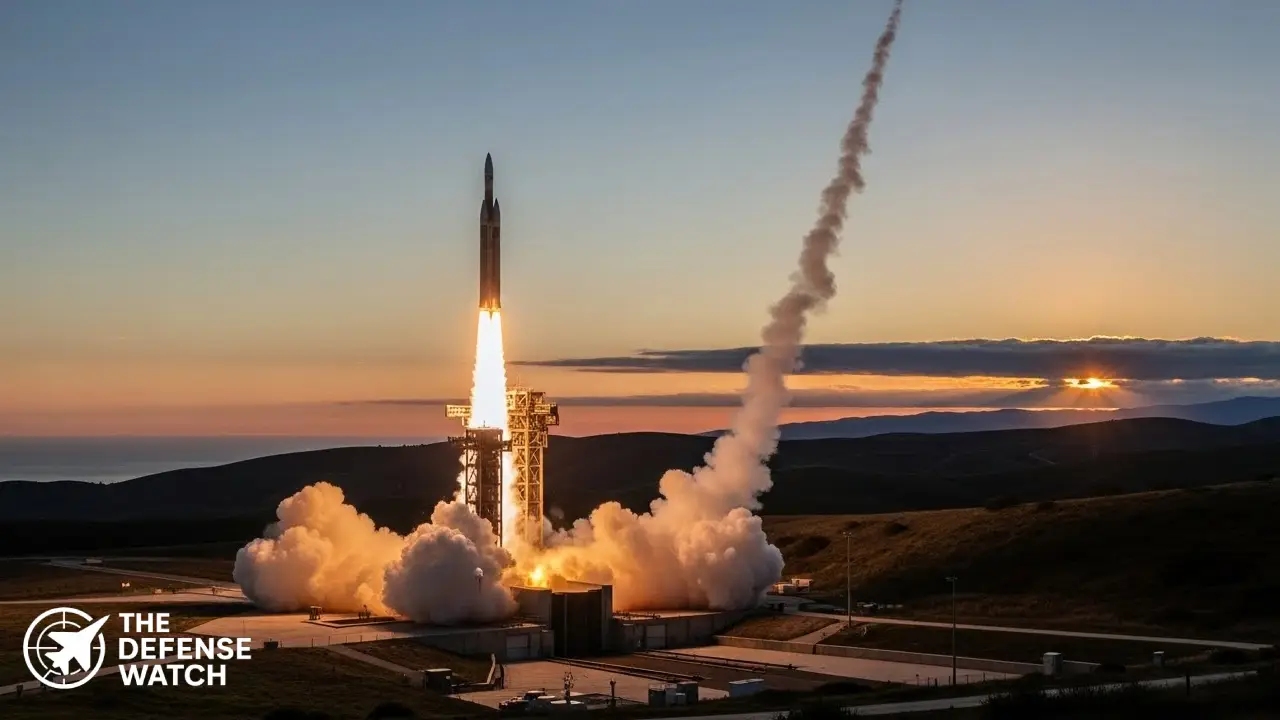
Understanding America’s Primary ICBM Defense Shield
The Ground-Based Midcourse Defense system stands as the United States’ sole ground-based defense capability against intercontinental ballistic missile threats targeting the homeland. As of current deployments, the system comprises 44 ground-based interceptors, with 40 stationed at Fort Greely, Alaska, and four at Vandenberg Space Force Base in California.
GMD operates by detecting, intercepting, and destroying long-range ballistic missiles during their midcourse phase of flight, when targets travel through space before re-entering Earth’s atmosphere. The system represents a critical component of U.S. strategic defense architecture, designed specifically to counter limited ICBM attacks from nations such as North Korea and Iran rather than large-scale arsenals possessed by Russia or China.
Core System Components and Architecture
The GMD system integrates multiple sophisticated elements working in concert. Ground-Based Interceptors consist of three-stage solid-fuel boost vehicles paired with Exo-atmospheric Kill Vehicles that employ hit-to-kill technology to destroy incoming warheads. These interceptors physically collide with targets at speeds exceeding Mach 33, eliminating threats through kinetic energy rather than explosive warheads.
The system requires Ground-Based Interceptors to reach escape velocity of more than 6.9 miles per second to position the kill vehicle outside Earth’s atmosphere, where it then uses multi-color sensors, advanced onboard computers, and independent steering rockets to home in on targets with pinpoint accuracy.
Sensor and Command Networks
GMD ties into existing U.S. missile warning infrastructure alongside purpose-built radar sites. The architecture includes:
Space-based sensors utilizing Defense Support Program and Space-Based Infrared System satellites that detect missile launch heat signatures. Sea-based platforms including Aegis Ballistic Missile Defense ships and the Sea-Based X-Band Radar provide crucial tracking and discrimination data. Ground-based radar stations at multiple locations including Upgraded Early Warning Radars at Beale Air Force Base, California; RAF Fylingdales, United Kingdom; and Thule Air Base, Greenland.
Command and control operations occur through dual-node, human-in-control interfaces located at Fort Greely, Alaska, and Colorado Springs, Colorado, staffed by warfighters from the 49th Missile Defense Battalion and 100th Missile Defense Brigade.
Recent Testing and Operational Enhancements
FTG-12 Successful Demonstration
In December 2023, the Missile Defense Agency conducted Flight Test Ground-Based Midcourse Defense-12, successfully intercepting an intermediate-range ballistic missile using an upgraded Ground-Based Interceptor with a Capability Enhanced-II Block 1 Exo-Atmospheric Kill Vehicle.
This test marked the first demonstration of a three-stage GBI operating in two-stage mode, where the third stage was commanded not to ignite, allowing earlier release of the kill vehicle and providing closer-range engagement capabilities. This advancement expands the system’s engagement envelope and provides warfighters greater flexibility in defending the homeland.
Following FTG-12, the GMD system has achieved successful intercepts in 12 of 21 hit-to-kill tests, representing a 57 percent success rate. While critics note reliability concerns, operational teams continue refining tactics and procedures through rigorous testing.
Long Range Discrimination Radar Milestone
In June 2025, the Long Range Discrimination Radar at Clear Space Force Station, Alaska, successfully tracked an ICBM-representative target for the first time in Flight Test Other-26a. The radar acquired, tracked, and reported missile target data to Command and Control Battle Management and Communications systems, with sensor data passed to GMD to support a simulated engagement.
LRDR provides a 2,500-mile tracking range with superior discrimination capabilities, addressing gaps in previous systems and enabling early ICBM detection. The radar’s successful test performance represents a significant advancement in the system’s ability to distinguish between actual warheads and decoys or debris.
Next Generation Interceptor Development
Program Status and Timeline
In April 2024, the Missile Defense Agency selected Lockheed Martin to develop the Next Generation Interceptor, transitioning the program from technology development to product development phase. The program currently faces an 18-month schedule delay, with officials citing solid rocket motor development as the primary risk factor.
NGI fielding is targeted for 2027 or 2028, with the Pentagon’s Office of Cost and Program Evaluation estimating total development, deployment, and maintenance costs at $17.7 billion. Each interceptor is projected to cost at least $74 million.
Advanced Capabilities
NGI features modular, open-system architecture designed to be flexible and upgradable, with the capability to carry multiple-kill payloads to counter more sophisticated threats. The system was “born digital,” enabling rapid evolution through software updates and sensor additions without requiring physical removal and replacement of missiles.
The next-generation system aims to address projected threats from North Korea and potentially Iran into the 2030s and beyond, with enhanced performance against multiple re-entry vehicles, swarm attacks, and faster incoming targets.
Current Fleet and Expansion Plans
As of 2019, the Missile Defense Review requested 20 additional interceptors to be based at Fort Greely, Alaska. Boeing completed construction of 20 additional silos at Fort Greely earlier in 2025, an expansion that began during the previous Trump administrations.
A Service Life Extension Programme is underway to guarantee viability of current GBI arsenal past 2030, with 11 deployed missiles receiving upgraded boosters, electronics, and kill vehicles. This modernization effort ensures existing interceptors remain operationally effective while next-generation systems complete development.
Integration with Golden Dome Initiative
President Trump announced the Golden Dome initiative in May 2025, proposing a multilayered missile defense system incorporating space-based sensors and interceptors to protect the United States from ballistic, hypersonic, and cruise missile threats . Trump stated the project would cost approximately $175 billion and be completed within three years, though independent estimates suggest significantly higher costs and longer timelines.
LRDR serves as a foundational element for Golden Dome, providing critical tracking and discrimination capabilities that would enable the broader defense architecture. The current GMD system would function as a key layer within this expanded homeland defense concept.
Operational Reality and Limitations
Effectiveness Against Limited Threats
The GMD system is designed to protect the United States from ballistic missiles from “rogue nations” like North Korea and Iran rather than large-scale attacks from near-peer adversaries. With 44 GMD interceptors deployed, if the military designated up to four interceptors per incoming warhead, the system could theoretically destroy up to 14 warheads.
This capacity might prove sufficient against accidental launches or small-scale attacks but would not provide comprehensive defense against an all-out nuclear exchange with Russia or China, which possess arsenals numbering in the thousands of warheads.
Ongoing Challenges
The system has undergone controversy, with critics arguing that any country capable of deploying long-range missiles could also deploy countermeasures including decoys, cooling systems to reduce infrared signatures, and bomblets containing chemical or biological agents.
The Union of Concerned Scientists maintains that GMD remains “unproven, unaccountable, and unhelpful for reducing the nuclear threat.” Questions persist about the Pentagon’s characterization of certain tests as successes when technical faults occurred, highlighting the challenge of developing reliable intercept capabilities against sophisticated threats.
Analysis: Strategic Value and Future Trajectory
The Ground-Based Midcourse Defense system represents America’s insurance policy against catastrophic ICBM attack from rogue states. Despite technical challenges and reliability concerns, the system provides a defensive capability that did not exist two decades ago.
The successful December 2023 test of two-stage GBI operation and June 2025 LRDR tracking demonstration indicate steady progress in system capabilities. These advancements address previous shortcomings in discrimination and engagement flexibility. The integration of LRDR particularly strengthens the system’s ability to differentiate between actual threats and countermeasures, a persistent vulnerability.
Next Generation Interceptor development, despite schedule delays, positions the United States to counter evolving threats through the 2030s. The modular architecture philosophy represents lessons learned from earlier programs, enabling technology insertion without wholesale system replacement.
However, fundamental questions remain about cost-effectiveness and strategic stability. Each interceptor costs approximately $75 million, while offensive missiles cost far less. This economic imbalance creates incentives for adversaries to simply expand offensive arsenals rather than develop advanced countermeasures. The arms race dynamic inherent in missile defense could ultimately undermine rather than enhance security.
The Golden Dome initiative amplifies these concerns on a much larger scale. While current GMD focuses on limited threats, Golden Dome’s ambition to provide comprehensive homeland defense against peer adversaries risks triggering aggressive responses from Russia and China. Both nations view such capabilities as undermining nuclear deterrence stability that has prevented great power conflict for seven decades.
From a purely technical standpoint, GMD has demonstrated improving reliability and expanding capabilities. Operationally, it provides combatant commanders with options to defend critical homeland infrastructure against limited attacks. Strategically, its value depends on whether one prioritizes insurance against small-scale threats or concern about provoking larger-scale arms competition.
The system continues fulfilling its designed mission: providing a defense layer against limited ICBM threats from nations like North Korea. Whether it expands into the comprehensive shield envisioned by Golden Dome advocates, or remains a focused capability against specific threats, will shape U.S. defense posture and strategic stability for decades to come.
FAQs
How many Ground-Based Interceptors does the United States currently have deployed?The United States has 44 Ground-Based Interceptors deployed, with 40 at Fort Greely, Alaska, and four at Vandenberg Space Force Base, California. An additional 20 silos have been constructed at Fort Greely for future expansion.
What is the success rate of GMD intercept tests?As of December 2023, GMD has achieved successful intercepts in 12 of 21 hit-to-kill tests, representing approximately a 57 percent success rate. The system continues undergoing testing and refinement to improve reliability.
Can GMD defend against attacks from Russia or China?No. GMD is specifically designed to counter limited ICBM attacks from rogue nations like North Korea and Iran, not large-scale arsenals possessed by Russia or China. The system lacks sufficient interceptor inventory and could be overwhelmed by sophisticated countermeasures and multiple warheads.
When will the Next Generation Interceptor be operational?The Next Generation Interceptor is currently targeted for fielding in 2027-2028, though the program faces an 18-month schedule delay primarily due to solid rocket motor development challenges. Initial operational capability may occur in the late 2020s.
What is the Long Range Discrimination Radar and why is it important?LRDR is an advanced S-band radar located at Clear Space Force Station, Alaska, that provides enhanced capability to track and discriminate between actual missile threats and decoys or debris. It successfully tracked an ICBM-representative target for the first time in June 2025, strengthening GMD’s ability to identify genuine threats at extended ranges.

1 comment
[…] for naval vessels and ground-based systems, with the SM-3 variants specifically designed for ballistic missile intercept […]