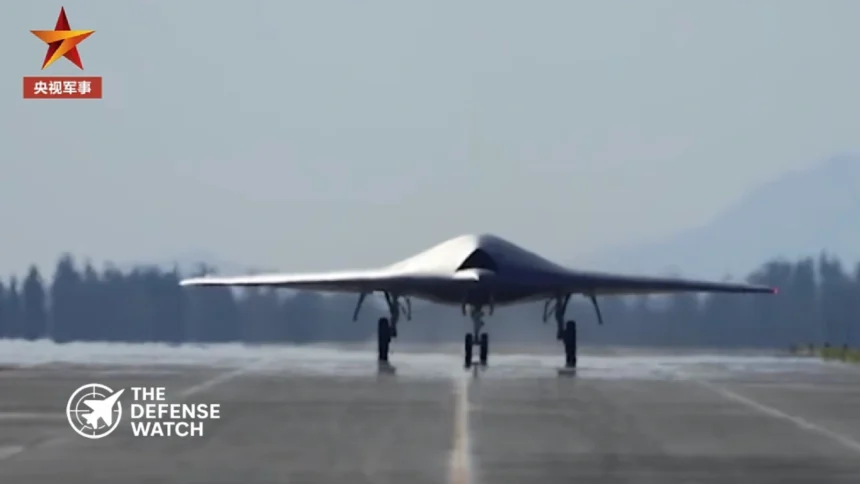
China is providing a clearer picture of the operational role of its GJ-11 stealth unmanned combat aerial vehicle (UCAV), with new military television coverage describing its strike capabilities, internal weapons storage and potential use against ground and maritime targets.
The latest information, reported by China’s state-run Global Times on November 17, 2026, follows a series of public appearances and official video releases involving the People’s Liberation Army Air Force (PLAAF). The coverage suggests that the GJ-11 is being developed and operated as more than a conventional strike drone, with reconnaissance, air-defense suppression and cooperation with crewed combat aircraft forming part of its reported mission set.
The reporting also provides an indication of how China intends to integrate stealth unmanned aircraft into a wider combat aviation network. However, several performance claims remain based on Chinese military commentary rather than independently verified technical data.
GJ-11 moves beyond its original strike-drone profile
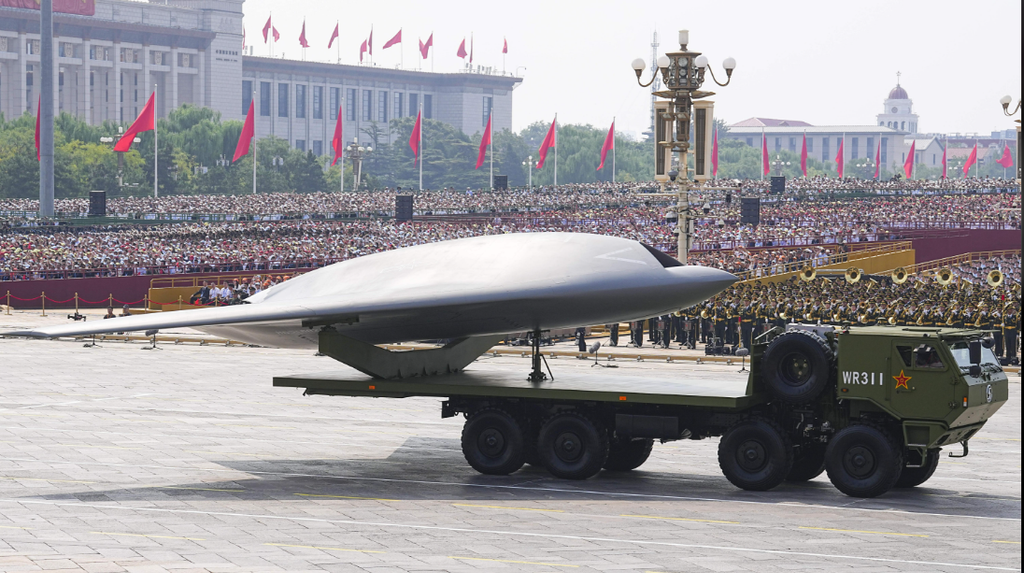
The GJ-11, also known as Xuanlong, is a domestically developed, tailless flying-wing unmanned aircraft. Its low-observable configuration is intended to reduce its detectability, while internal weapons storage helps avoid the external carriage arrangements that can increase an aircraft’s radar signature.
China first publicly displayed the aircraft during the October 2019 National Day military parade. Its appearance indicated that the program had progressed beyond the experimental stage, although the precise operational maturity of the platform was not established by that display.
Newer CCTV footage has offered closer views of the aircraft’s air intake, exhaust arrangement, landing gear and internal weapons bays. Reporting by defense publication Janes on November 2026 footage also identified two internal weapons compartments and described the aircraft’s planned role in air strikes and suppression of enemy air defenses.
These features point to a platform intended to combine penetration, weapons delivery and information-gathering functions rather than operate solely as a remotely controlled attack aircraft.
Live-fire reporting provides a glimpse of its operational development
One of the more important claims in the latest Chinese coverage concerns the GJ-11’s live-fire training.
According to CCTV reporting cited by Global Times, two operators from an initial group of PLAAF-trained female drone operators achieved a hit during the aircraft’s first live-fire strike mission.
Military commentator Zhang Xuefeng also said the drone had scored a first-round hit during training. He argued that the successful weapons impact demonstrated that the aircraft had attained combat capability.
This remains an official Chinese assessment. The publicly available reporting does not provide enough information to establish the target type, weapon designation, engagement distance, test conditions or independent evaluation of the result.
The distinction matters. A successful training strike demonstrates that an aircraft can conduct at least a particular weapons-delivery task. It does not, by itself, establish operational effectiveness against a defended target, sustained mission availability or performance in a contested electronic warfare environment.
Internal weapons and sensor systems support multiple missions
The GJ-11’s internal weapons bays are central to its reported operational flexibility.
According to Zhang’s explanation on CCTV, the aircraft can carry different air-to-surface munitions and potentially attack ground and maritime targets. Chinese military commentary has also identified anti-ship weapons as a possible part of its payload.
The aircraft reportedly features an electro-optical and infrared sensor installation beneath its nose. Such equipment can support target identification, imaging and laser designation, potentially allowing the drone to employ laser-guided weapons.
However, China has not publicly released a comprehensive weapons integration list or independently verified details of its sensor performance. The types of anti-ship weapons, their integration status and the aircraft’s actual targeting capabilities remain unclear.
Another reported mission is suppression of enemy air defenses (SEAD).
Chinese military commentary suggests that the GJ-11 could carry loitering munitions in its internal weapons compartments. These weapons could potentially extend the distance from which it engages hostile air-defense positions, reducing the need for the drone to approach defended locations directly.
This approach would give the aircraft a role in supporting wider air operations, particularly where ground-based radar systems and missile batteries create risks for conventional combat aircraft.
Nevertheless, the effectiveness of this concept would depend on the drone’s ability to identify targets, maintain communications and coordinate weapons employment in environments where adversaries use radar deception, electronic jamming and mobile air-defense systems.
GJ-11 and GJ-21 extend China’s unmanned aviation ambitions