F-47 Fighter May Fly With Interim Engine as XA102 and XA103 Development Continues
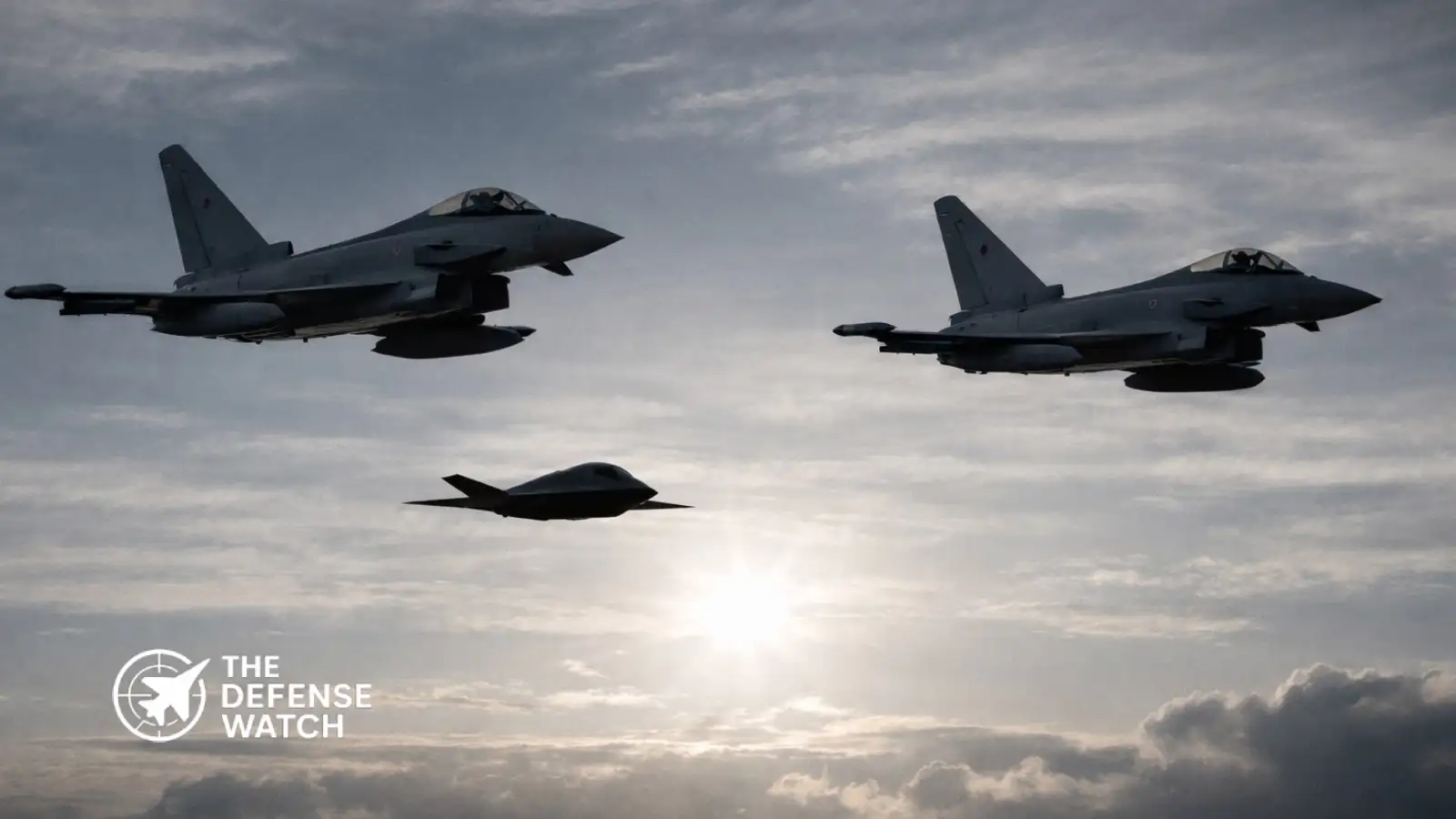
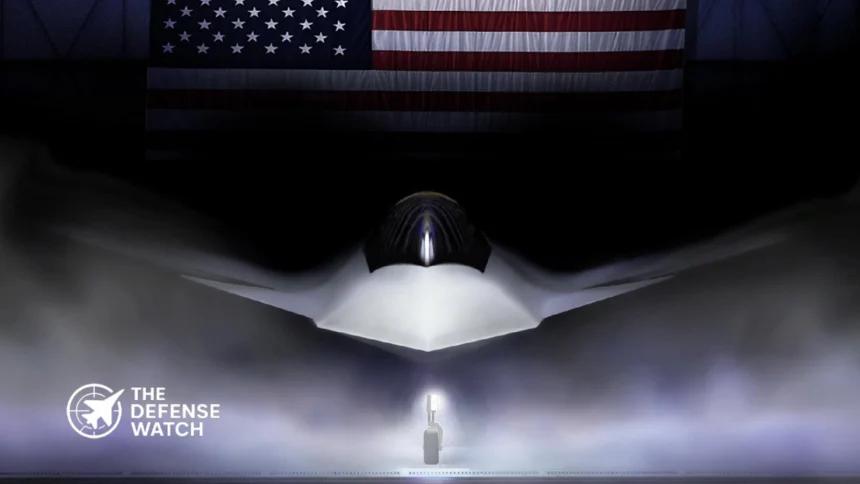
The U.S. Air Force’s planned 2028 first flight for the Boeing F-47 is creating a timing challenge for its next-generation propulsion program. The fighter is expected to begin flight testing before the advanced adaptive-cycle engines being developed for future combat aircraft are ready for potential aircraft integration.
The gap puts the F-47’s initial propulsion configuration in focus. Rather than waiting for the Next Generation Adaptive Propulsion (NGAP) program to mature, the Air Force may use an interim engine for early flight testing before introducing a more advanced powerplant at a later stage.
The Air Force has not publicly identified the engine expected to power the first F-47 flight. However, service officials have confirmed that NGAP integration activities are being prepared for around 2030, while the fighter remains on track for a first flight in 2028.
Two engine manufacturers advance competing designs

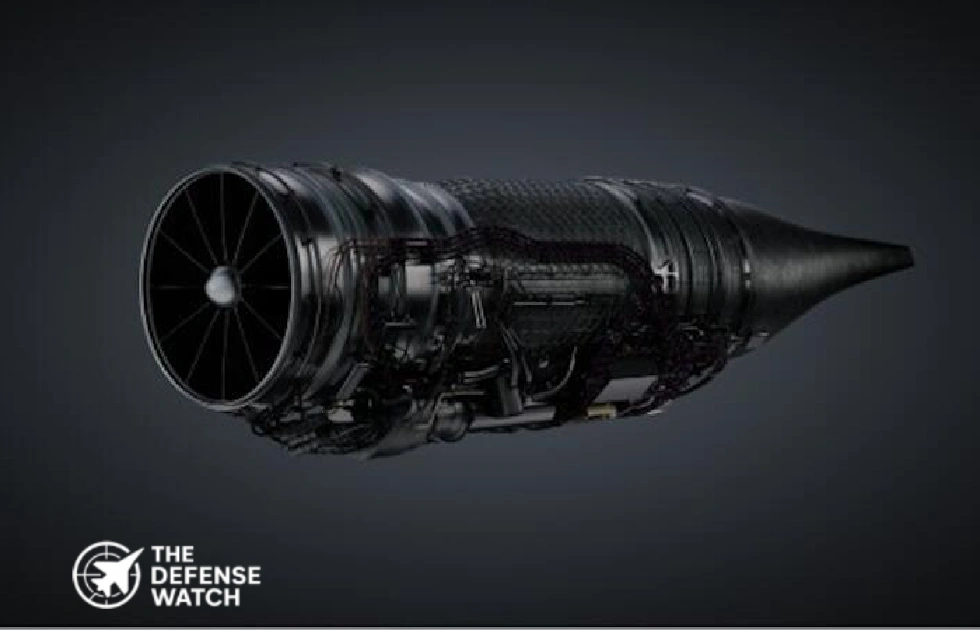
GE Aerospace XA102
GE Aerospace completed its Assembly Readiness Review on May 11, 2026, clearing an important development milestone under NGAP.
Manufacturer: GE Aerospace
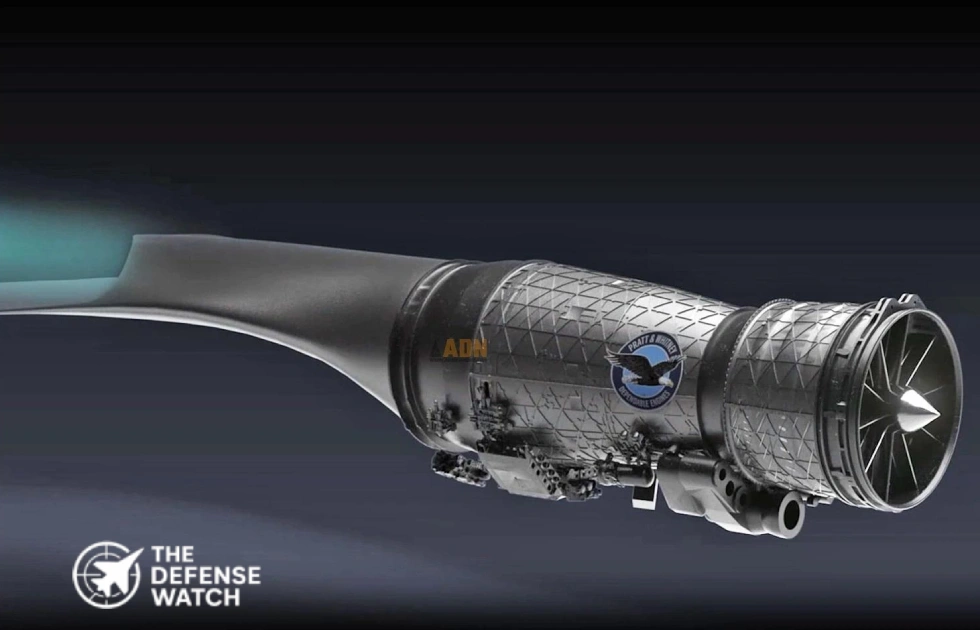
Pratt & Whitney XA103
Pratt & Whitney completed its Assembly Readiness Review on May 8, 2026, moving its competing design toward physical hardware development.
Manufacturer: Pratt & Whitney, RTX
The two companies are developing their engines under the Air Force’s NGAP program, which is intended to advance adaptive propulsion technology for future military aircraft.
The Assembly Readiness Review is an important engineering and manufacturing milestone. It assesses whether the engine design, manufacturing processes and supporting supply chain are sufficiently mature to proceed toward hardware fabrication and testing.
GE said its XA102 review validated the maturity of its digital engine model, manufacturing approach and supply chain. The company also reported completing demonstrations associated with the first phase of its model-based development work.
The reviews do not mean either engine has completed full-scale testing, received flight certification or been selected for the F-47.
Why the F-47 may need a different engine initially
The central issue is the difference between the aircraft and engine development schedules.
The Air Force has repeatedly targeted 2028 for the F-47’s first flight. However, John Sneden, the service’s portfolio acquisition executive for propulsion, said in July 2026 that NGAP was preparing for potential aircraft integration activities around 2030.
That timeline creates a gap of roughly two years between the fighter’s planned first flight and the anticipated window for NGAP integration.
During a July 27 industry conference in Dayton, Ohio, Sneden also explained that the Air Force had not yet decided which aircraft would receive the NGAP engine first. The F-47 is one possibility, but the program is being developed with a platform-agnostic approach.
Separately, Col. Timothy Helfrich, the Air Force’s acquisition executive for fighters and advanced aircraft, confirmed that the F-47 remained on track to fly during the current administration. He declined to discuss the aircraft’s propulsion arrangements, citing classification restrictions.
This distinction is important. An interim engine is a reasonable inference from the published schedules, but the Air Force has not publicly confirmed the specific propulsion configuration for the initial F-47 aircraft.
What adaptive-cycle propulsion is designed to deliver
The XA102 and XA103 are intended to provide capabilities beyond those of conventional fighter engines through an adaptive architecture that can change how airflow moves through the engine.
Traditional fighter engines must balance competing requirements. High thrust is essential during acceleration and combat manoeuvres, while fuel efficiency becomes increasingly important during long-range cruise missions.
Adaptive-cycle technology is designed to manage this trade-off by changing engine operating characteristics according to flight conditions.
Potential benefits include:
- Greater fuel efficiency: Improved fuel management during cruise could support longer missions.
- Increased thrust flexibility: Different operating configurations could provide greater thrust when required.
- Thermal management: Improved heat-management capacity could help support advanced sensors, electronic warfare equipment and other power-intensive systems.
- Extended operational reach: Better propulsion efficiency could contribute to the longer-range missions expected of future air-superiority aircraft.
These are intended capabilities of the technology, not independently demonstrated performance figures for the F-47. The Air Force has not publicly released comparative performance specifications for the XA102 and XA103.
The technology builds on research conducted under the earlier Adaptive Engine Transition Program (AETP), which developed competing adaptive-cycle engine demonstrators for the F-35.
However, the Air Force ultimately chose to upgrade the F-35’s existing propulsion system rather than adopt an AETP engine. Some of the technical work from that earlier program has informed NGAP development.
NGAP faces a longer development timeline
The propulsion program has already experienced schedule changes.
According to reporting by Breaking Defense in May 2026, the Air Force’s fiscal 2027 budget documents projected completion of NGAP prototype fabrication and engine assessment work in 2031. That represented a cumulative delay of approximately three years compared with earlier projections.
The service attributed the revised schedule to expanded testing and evaluation, including additional time to investigate findings from prototype testing.
The Air Force requested approximately $514 million for NGAP in fiscal 2027. Its projected funding profile showed spending rising to approximately $906 million in fiscal 2028 and $865 million in fiscal 2029.
John Sneden said maintaining competition between GE Aerospace and Pratt & Whitney was a deliberate decision. Splitting available resources between two manufacturers requires additional investment, but the Air Force considers competition important for innovation, manufacturing readiness and maintaining the domestic advanced-propulsion industrial base.
This approach also preserves options before the Air Force commits to a single engine design. Neither the XA102 nor the XA103 has been publicly selected as the F-47’s definitive production engine.
An interim engine would not necessarily indicate a failed fighter program
Using an interim powerplant during early flight testing would not be unprecedented in aircraft development.
The Lockheed XF-104 Starfighter, for example, initially flew with Wright J65 engines because its intended General Electric J79 engine was not ready. The J79 was subsequently incorporated as development progressed.
A similar approach could allow the F-47 program to begin evaluating aircraft handling, flight characteristics and other systems without waiting for the final adaptive-cycle propulsion technology.
However, this would introduce additional engineering work. Integrating a different engine later can require changes to aircraft systems, structural interfaces, software, cooling arrangements and flight-test procedures.
The actual scale of that work would depend on the interim engine selected and how closely the aircraft’s initial configuration matches its eventual production design.
There is also an important distinction between the first flight and operational readiness. A successful initial flight would demonstrate that the aircraft can begin its flight-test campaign. It would not establish that the final propulsion system, mission equipment or operational capabilities are ready for service.
The propulsion decision remains open
The Air Force now faces two related development challenges: keeping the F-47 aircraft program on its flight-test schedule and ensuring that adaptive propulsion technology reaches sufficient maturity for eventual integration.
The competition between GE Aerospace and Pratt & Whitney gives the service two potential technology paths, but it also requires funding and testing resources to be divided between competing designs.
For Boeing, the immediate priority is to advance the F-47 toward its planned first flight. For the engine manufacturers, the challenge is to demonstrate that their adaptive-cycle designs can deliver the required performance, reliability and manufacturing readiness.
The first F-47 flight may therefore take place without the engine technology expected to define its eventual propulsion capability. Until the Air Force releases more information, however, the identity of the interim powerplant and the timing of any subsequent engine change remain undisclosed.