The Defense Intelligence Agency released the 2026 edition of its unclassified Challenges to Security in Space report on Monday, October 26. Its most consequential judgment, as relayed by SpaceNews and other outlets, is that China may field space-based directed-energy systems, along with higher-powered ground-based ones, capable of threatening satellites in higher orbits by the late 2020s.
The DIA describes the report as the third in its series, after editions in 2019 and 2022. It covers the space and military goals of China and Russia and, as emerging space powers, Iran and North Korea. It also looks at dual-use space inventories, growing cooperation among adversaries, and hazards such as orbital debris.
The laser warning has moved to orbit
Directed-energy weapons are not new to this series. The 2019 edition judged that China would likely field a ground-based laser able to counter low-orbit sensors by 2020. The 2022 edition said China had multiple ground-based lasers of varying power to disrupt, degrade or damage satellites, and that higher-power systems might reach the structures of non-optical satellites by the mid-to-late 2020s.
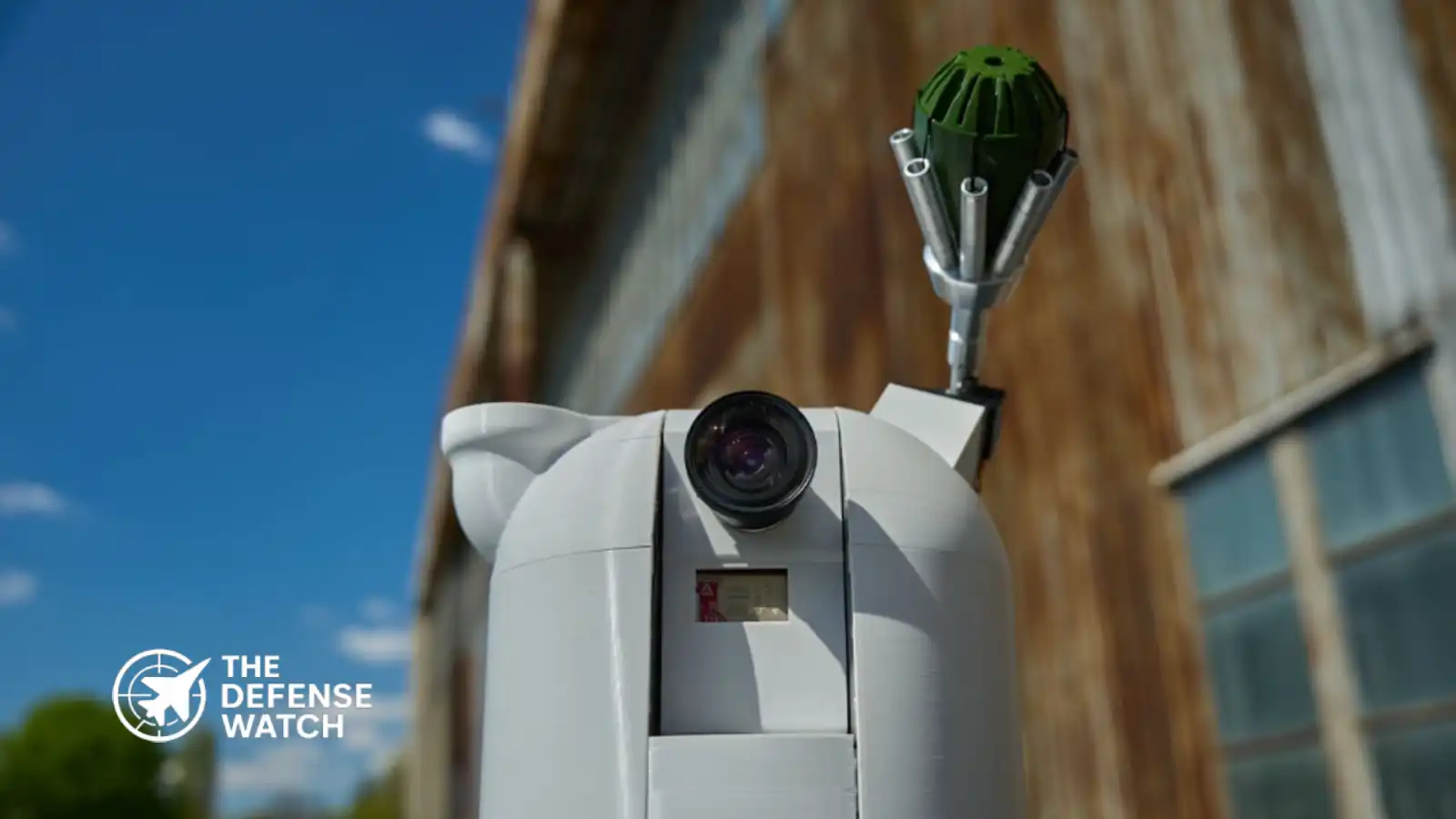
Per SpaceNews, the 2026 edition says China already has multiple ground-based laser systems that can disrupt, degrade or damage satellites in low Earth orbit. The new element is the projection of space-based directed-energy systems on a late-2020s timeline. The report is also quoted as saying such weapons can temporarily or permanently blind imaging satellites and interfere with weather and missile-warning sensors. It assesses that China’s military probably views them as attractive counterspace tools because their effects can be reversible or permanent.
The wording is “may,” not “will.” The public summaries do not say which orbits, what power levels, or what evidence supports the projection, and the underlying intelligence is classified.
Three Chinese spaceplane missions, and a fourth
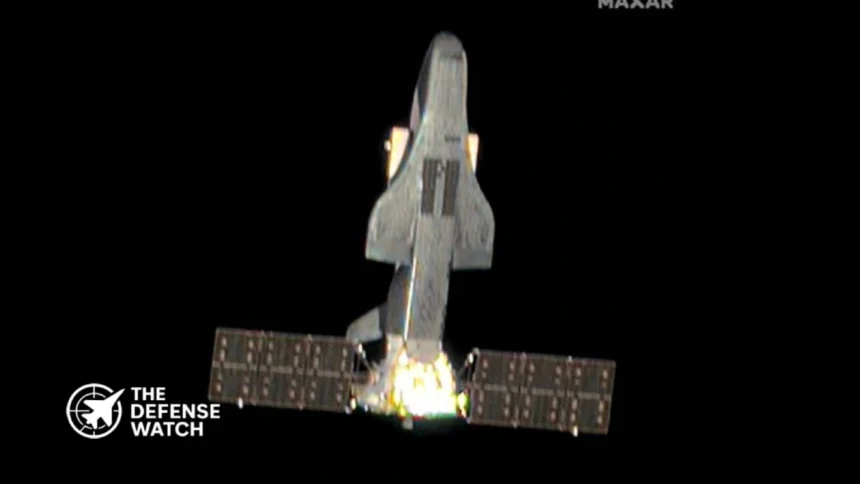
The report’s image of a Chinese spaceplane, taken by a Maxar spacecraft, drew early attention. According to Leonard David’s summary of the report, the DIA reviews two Chinese spaceplane lines, Shenlong and Tengyun, and lays out a flight history:
| Mission | Time on orbit | Reported behavior |
|---|---|---|
| First (2020) | 2 days | First orbital flight of a Chinese spaceplane prototype |
| Second (August 2022) | 276 days | Appeared to maneuver with a companion satellite in November 2022; the two came within about 100 meters; the satellite was possibly re-released after a rendezvous |
| Third (December 2023) | 268 days | Released and interacted with an object |
Leonard David separately reports a fourth launch from Jiuquan on February 7, 2026, and describes that flight as under way when he wrote. That detail is his reporting, not a finding attributed to the DIA, and the current mission status has not been independently confirmed here.
The behaviors described are rendezvous and proximity operations, which are used for inspection and servicing as well as for counterspace. The summaries available do not say the DIA concluded the missions are weapons tests. China has not publicly detailed the vehicle’s purpose in the sources reviewed. Readers looking for a U.S. comparison can look to the Space Force’s X-37B, whose eighth mission launched on a Falcon 9 on August 21, 2025, according to the same Leonard David piece. Both are reusable orbital vehicles, but little public information on payloads or objectives exists for either.
Scale: launches, satellites, money
A Cabeus Explorer newsletter, citing the report, relays several figures: China launched 22 rockets in 2016 and 93 in 2025, and its fleet of intelligence and surveillance satellites topped 510 as of July, more than triple the 2018 total. The report is also said to call China second only to the United States in private investment in space companies, and to state a Chinese goal of a cislunar space economy by 2045. These numbers come from a secondary summary, not from the report text, which this article’s author could not open.
For context, the 2022 edition reported that the combined operational space fleets of China and Russia grew about 70 percent between 2019 and 2021, per the DIA’s 2022 coverage and press reporting.
Russia: anti-satellite programs, with some inconsistency in the record
Per SpaceNews as relayed by Global Times, the 2026 report highlights Russia’s kinetic anti-satellite work, including a system called Burevestnik, and repeats the U.S. assessment that Moscow is developing a satellite designed to carry a nuclear weapon. The public description of Burevestnik is not consistent. The relayed summary calls it a developmental co-orbital weapon launched from a modified MiG-31, while 2022 coverage described an air-launched missile fired from a MiG-31. Without the report text, this article cannot say which description the DIA used, or whether its characterization changed.
Moscow has said the satellite linked by U.S. intelligence to the nuclear program, Cosmos 2553, was meant to test electronics under radiation conditions, according to Global Times. U.S. officials have not publicly released evidence resolving the dispute in the sources reviewed.
Beijing’s response
Chinese state-linked outlet Global Times, in an October 27 article, called the report an exercise in hyping threats. It quoted analyst Song Zhongping saying Washington was justifying its own space buildup, and pointed to the U.S. Air Force Secretary’s September 14 acknowledgment of on-orbit space control weapons and the Golden Dome space-based interceptor effort. Those details are the outlet’s characterization of U.S. Space Force releases and were not independently verified here. The article also cited a Chinese Foreign Ministry position paper on outer space governance released October 23, which warned against an arms race in space.
The exchange is a reminder that the DIA series is explicitly intended to inform public debate, and that its readers include governments that dispute its conclusions.
Why the debris section matters
The DIA says the report also examines the space environment, including debris. A congressional hearing document from April 2026 put the number of objects the United States tracks at roughly 50,000, including more than 15,000 satellites. Any kinetic or destructive counterspace use would add to that population, which is part of why debris sits inside a threat report and not apart from it.
What remains unanswered
The public record does not yet show whether the DIA has evidence of a Chinese space-based laser in development or is extrapolating from technology trends. It does not establish the purpose of China’s spaceplane missions, or whether the fourth flight changes the assessment. And it does not resolve the Burevestnik description. The full report text, which is the primary document, is the next place to check for each of these, and this article’s figures drawn from secondary summaries should be verified against it.