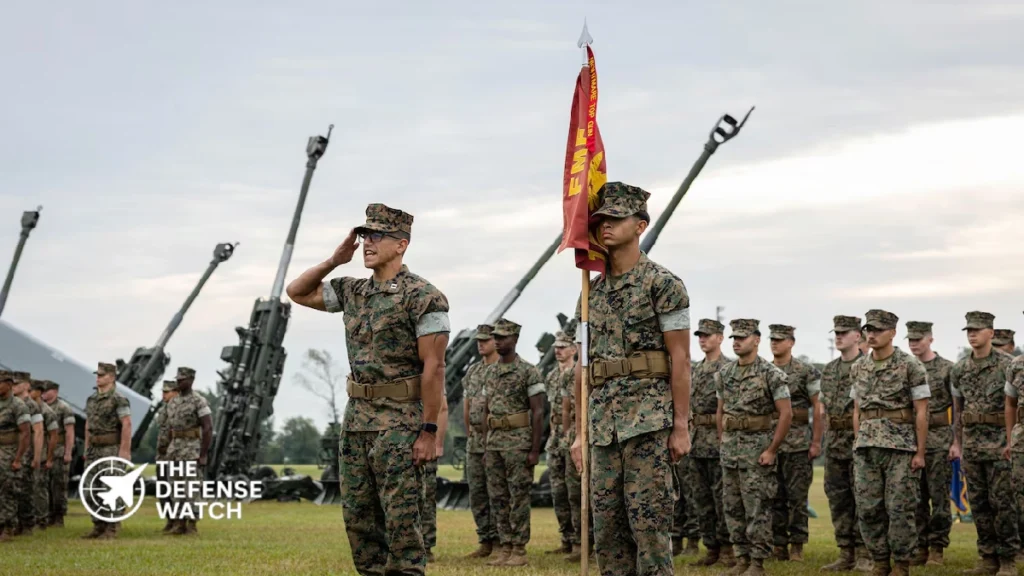
The U.S. Marine Corps has redesignated 1st Battalion, 10th Marine Regiment, from an artillery battalion to a medium missile battalion, introducing a new organizational model for combining land-based anti-ship missiles with existing cannon artillery capabilities.
The ceremony took place Oct. 9, 2026, at Camp Lejeune, North Carolina. The unit, part of the 2nd Marine Division, will employ the Navy-Marine Corps Expeditionary Ship Interdiction System (NMESIS), which launches Naval Strike Missiles against maritime targets. The Marine Corps describes the new designation as the first of its kind within the service.
The change reflects the Marine Corps’ effort to adapt its ground forces for operations in contested coastal regions, where mobile missile launchers can support naval operations without relying exclusively on ships or aircraft to deliver anti-ship fires.
Importantly, the redesignation does not mean the battalion is abandoning cannon artillery. Marine Corps leaders say the new missile capability will complement existing fires, while the regiment retains artillery capabilities elsewhere.
From cannon artillery to maritime strike
The battalion’s new mission follows the Marine Corps’ Force Design 2030 modernization effort, which seeks to improve the service’s ability to operate alongside the Navy in contested maritime environments.
Under this concept, Marines can deploy mobile missile launchers to strategically important coastal areas and islands. From those positions, they can threaten hostile surface vessels, complicate an adversary’s freedom of movement and support friendly naval forces operating nearby.
Lt. Col. Joseph Mozzi, the battalion commander, described NMESIS as both an emerging ground-based anti-ship capability and a platform for long-range precision fires.
Col. William Soucie, commander of the 10th Marine Regiment, said the system would allow Marines to support maneuver by forces already ashore as well as operations at sea.
That dual role is central to the redesignation. Rather than treating artillery and maritime strike as entirely separate missions, the Marine Corps is bringing a new missile capability into a formation with established experience in supporting ground operations.
What NMESIS brings to the battalion
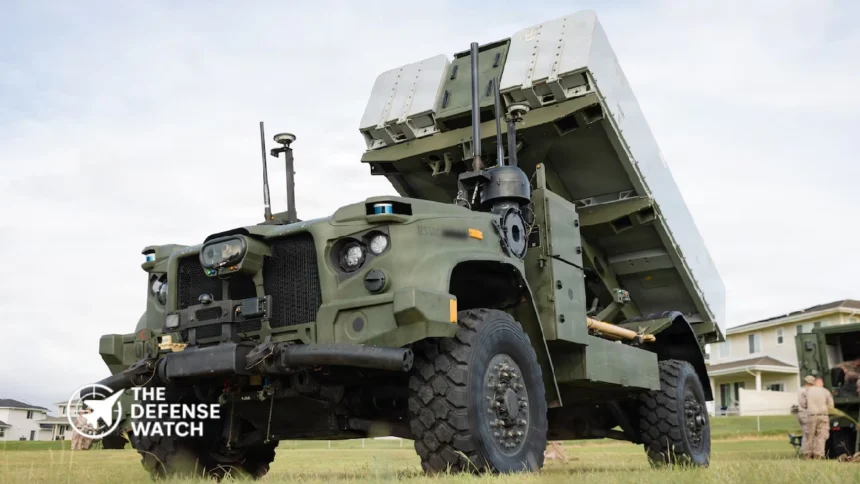
NMESIS combines a remotely operated ground vehicle, known as the Remotely Operated Ground Unit for Expeditionary Fires, with a launcher carrying two Naval Strike Missiles. The vehicle-based design supports mobile operations and reduces the need to expose a crew directly at the launcher during firing operations.
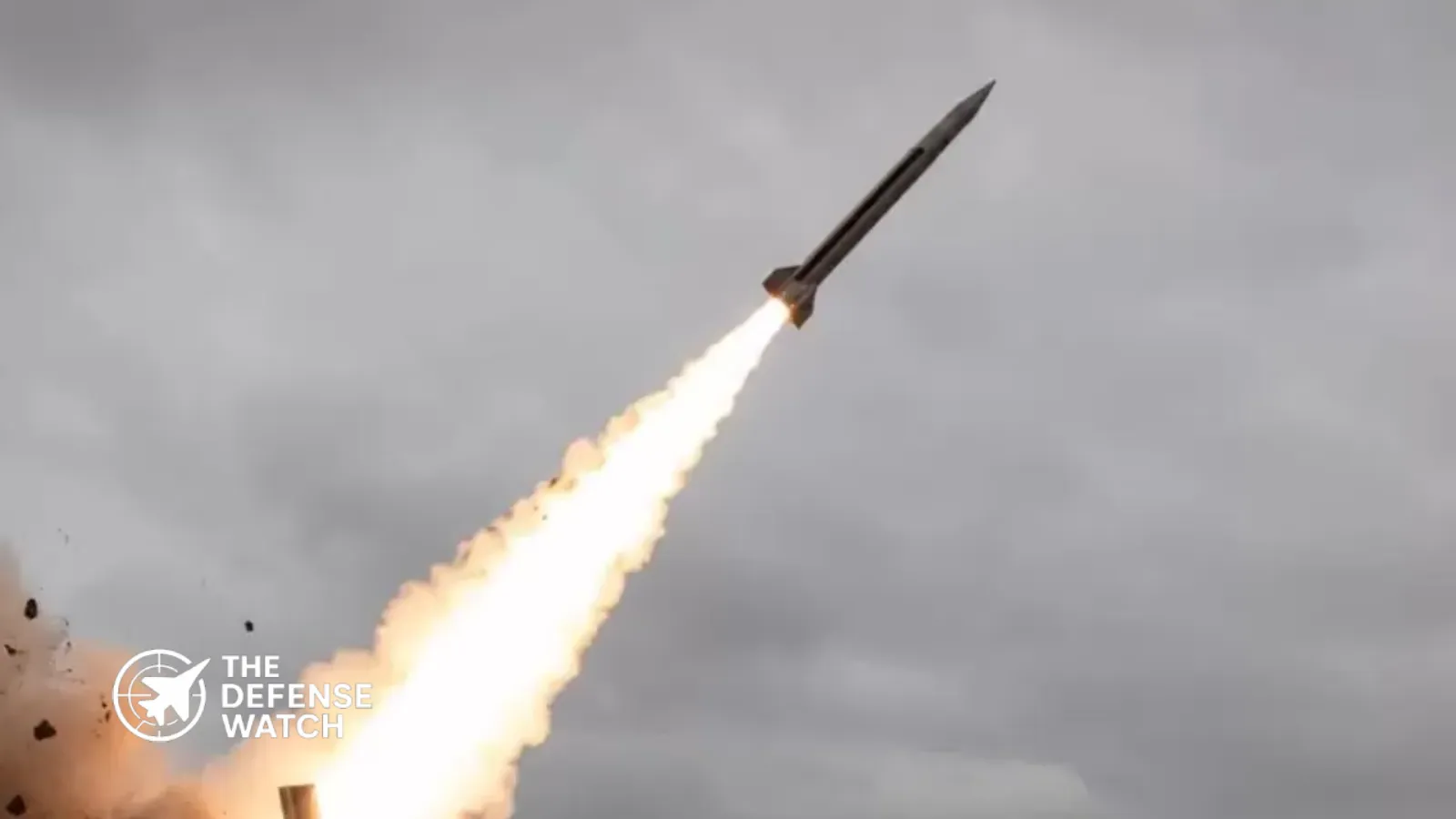
The Naval Strike Missile is designed to attack surface ships using a guidance system that includes an imaging infrared seeker. U.S. defense budget documentation lists its range as exceeding 100 nautical miles, or approximately 115 miles (185 kilometers). Some Marine Corps reporting has cited engagements or system capabilities extending to approximately 130 nautical miles, so the higher figure should not be treated as a universal guaranteed engagement distance.
The launcher carries two missiles, giving a firing unit the ability to engage more than one target or allocate weapons according to a mission plan. Actual engagement effectiveness depends on factors including target location, targeting data, command-and-control links, missile availability and the tactical situation.
The system’s principal operational contribution is the ability to position anti-ship weapons on land. This gives commanders another way to threaten maritime approaches and support sea-denial operations without requiring a missile-equipped warship to remain in every relevant area.
NMESIS is not an independent targeting network. To engage moving ships effectively, the force must detect and identify targets, develop a usable firing solution and transmit the necessary information to the missile unit. Communications resilience, surveillance coverage and coordination with naval and joint forces therefore remain important parts of the capability.
A capability tested before fielding
The Marine Corps has been developing NMESIS for several years. During Large Scale Exercise 2021, Marines successfully fired Naval Strike Missiles from the system against a surface target off Hawaii. The exercise demonstrated how an expeditionary ground force could identify a maritime target, develop a firing solution and conduct a live-fire engagement while supporting broader naval operations.
The system subsequently moved into operational fielding. On Nov. 26, 2024, the 3rd Marine Littoral Regiment formally received NMESIS, becoming the first Marine Corps unit to field the system. That milestone established an initial operational foundation before the service expanded its organizational approach to missile forces.
In June 2025, Marines with the 3rd Marine Littoral Regiment conducted simulated maritime interdiction activities with NMESIS during Exercise KAMANDAG 9 in the Philippines. The exercise involved positioning the system on Batanes Island, near the Luzon Strait, illustrating how the launcher can support operations around strategically important maritime routes.
These activities provide context for the Camp Lejeune redesignation. The Marine Corps is moving beyond introducing a new weapon to adapting its force structure around the operational requirements of missile-based maritime warfare.
Why the organizational change matters
The redesignation offers the 2nd Marine Division a way to add a maritime strike mission without removing the regiment’s established artillery role.
For the Marine Corps, that distinction matters because precision missiles and cannon artillery serve different purposes. NMESIS provides a means of attacking surface vessels at extended distances, while howitzers remain relevant to supporting ground forces with artillery fires. Maintaining both capabilities gives commanders additional options for assigning weapons to different missions.
The arrangement also fits the Marine Corps’ broader emphasis on expeditionary operations. Small, mobile missile units can potentially operate from dispersed positions along coastlines and island chains, supporting sea denial and complicating an adversary’s maritime planning.
However, the effectiveness of this approach depends on more than the missile’s stated range. Units need reliable intelligence, surveillance and reconnaissance, secure communications, suitable resupply arrangements and the ability to move or reposition launchers when the threat changes.
A launcher deployed to a remote island may offer a useful firing position, but that advantage can diminish if the unit cannot maintain situational awareness, communicate with the wider force or sustain its ammunition supply. The Marine Corps must therefore integrate NMESIS with its wider command-and-control and targeting architecture.
The service’s published Force Design information describes a goal of building toward 18 launchers per medium-range missile battery by fiscal 2033. That is a longer-term force-development objective, not evidence that every planned battery or launcher is already fielded.
Artillery remains part of the plan
The Camp Lejeune ceremony signals a change in how the Marine Corps organizes certain ground fires units, rather than a wholesale replacement of traditional artillery.
According to the service’s statements quoted in the reporting, the 1st Battalion’s personnel will retain their experience and professional roles while transitioning to a formation that includes a different weapons platform. The 10th Marine Regiment will continue to maintain artillery capabilities through another battalion.
The service has not publicly established in the available reporting the full organizational structure, total launcher allocation or fielding schedule for the newly redesignated battalion. Those details will be important in determining how quickly the unit can translate its new designation into an expanded operational capability.
For now, the change provides a concrete example of how Force Design 2030 is reshaping Marine Corps ground fires. By combining an established artillery organization with a dedicated medium-range missile mission, the service is building more options for supporting forces on land and at sea.