Nepal’s army is set to receive SPIRIT small unmanned aircraft systems from U.S. manufacturer Robinson Unmanned under a Foreign Military Sales (FMS) contract announced on October 13, 2026. The award covers aircraft kits, mission payloads, spare parts, extended warranty coverage, operator training and support, according to the company.
The contract was issued through the U.S. Naval Air Systems Command (NAVAIR) at Naval Air Station Patuxent River, Maryland. Robinson Unmanned said Ascent AeroSystems, its contracting entity for U.S. defense programs, received the firm-fixed-price award. The company did not disclose the contract value, number of aircraft or delivery schedule in its announcement.
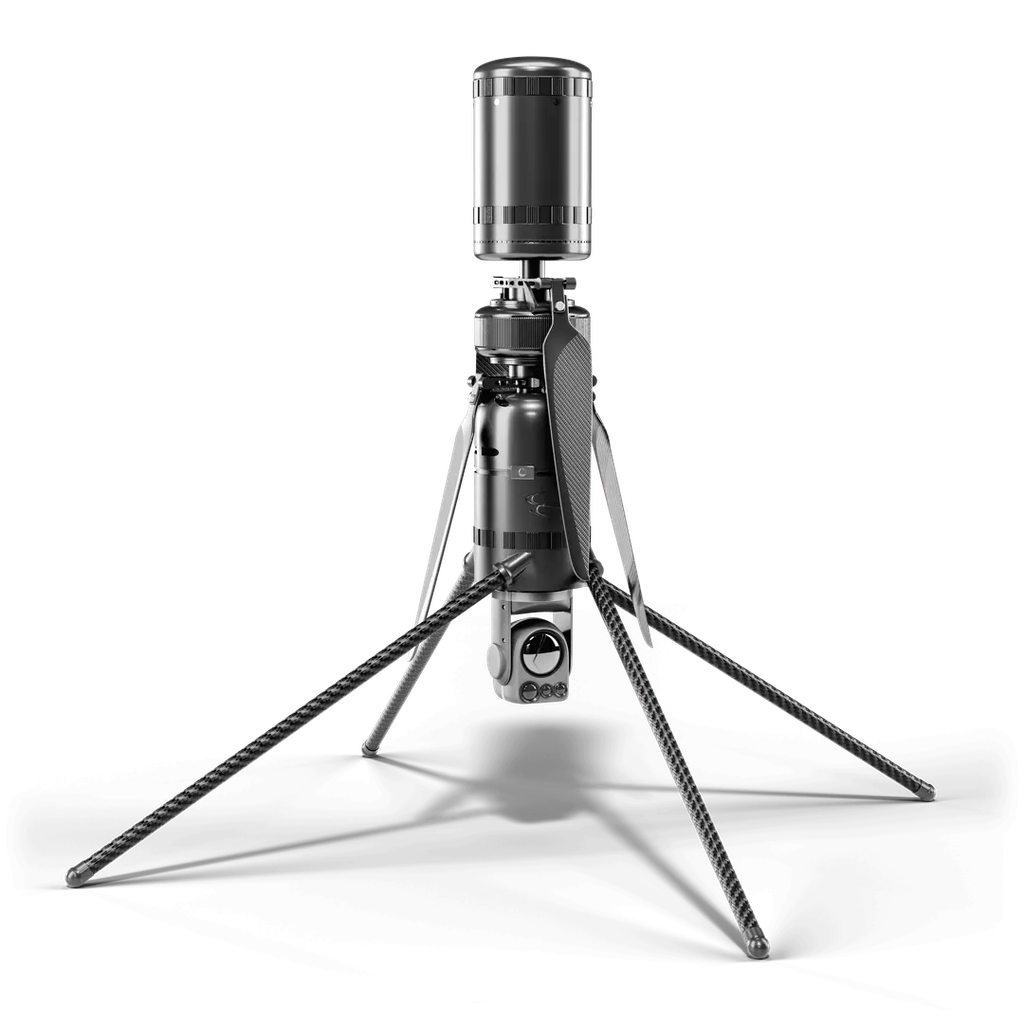
For Nepal, the purchase adds a compact vertical takeoff and landing drone to the army’s available equipment options. The system is designed to support intelligence, surveillance and reconnaissance (ISR), mapping and other missions using interchangeable payloads.
A compact drone designed for difficult terrain
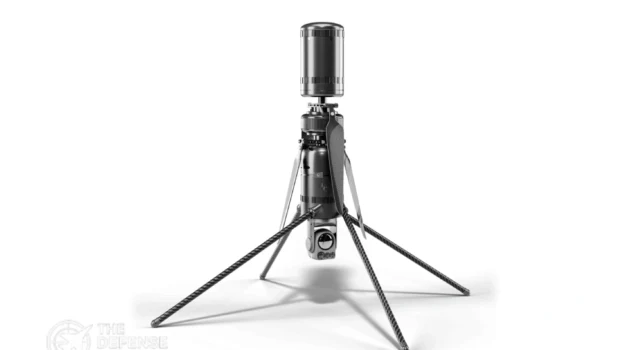
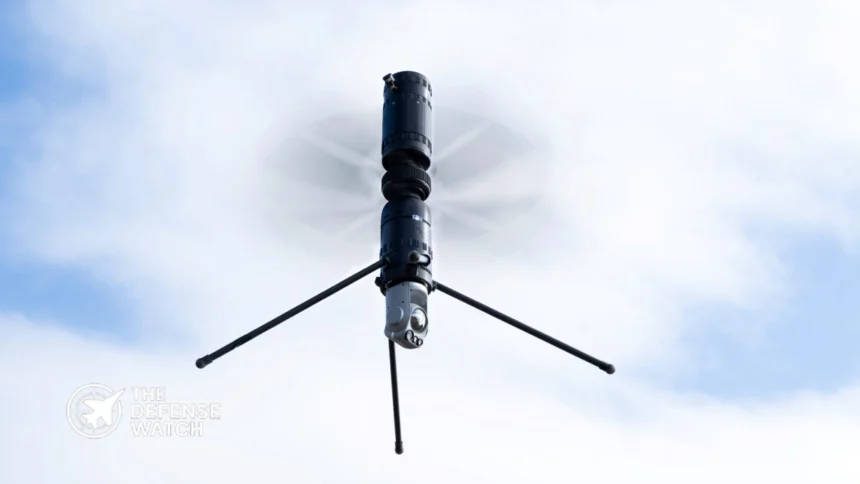
The SPIRIT is a small unmanned aircraft with two coaxial rotors mounted on a compact, cylindrical airframe. Its rotor arrangement allows vertical takeoff, hovering and landing without a conventional runway, making the aircraft suitable for operations from locations where larger unmanned systems may be impractical.
Robinson Unmanned’s published specifications list a maximum takeoff weight of 13.5 pounds (6.1 kilograms) and a payload capacity of up to 6.5 pounds (3 kilograms). The company lists a maximum operating altitude of 14,600 feet above mean sea level, a specification that may be relevant to operations in Nepal’s mountainous regions.
These figures describe the manufacturer’s stated capabilities, not verified performance under every operational condition. Actual endurance and payload performance depend on configuration, weather and mission requirements.
The company lists flight endurance of up to 53 minutes with two batteries and no payload. With the maximum payload, its published figure falls to 32 minutes with two batteries. That difference matters when planning surveillance sorties, because carrying additional equipment can reduce the time available for observation.
What Nepal could use the SPIRIT for
Nepal’s mountainous geography presents practical challenges for moving personnel and equipment, maintaining observation across remote areas and responding to emergencies. A small drone that can launch and land vertically could help army personnel gather aerial information without relying on a runway or a larger aviation detachment.
Potential applications include:
- Reconnaissance: Observing terrain and routes ahead of ground patrols.
- Border-area monitoring: Supporting authorized surveillance activities in remote locations.
- Disaster response: Providing aerial views of landslides, damaged infrastructure and areas affected by flooding.
- Search and rescue: Helping teams assess difficult-to-reach locations.
- Mapping: Collecting aerial imagery for route planning and terrain assessment.
These are potential uses based on the platform’s advertised capabilities. The contract announcement does not specify which missions Nepal intends to prioritize, whether the aircraft will be assigned to particular units or which sensor configurations the army will receive.
The distinction is important. Buying an aircraft capable of carrying surveillance equipment does not establish that a customer has ordered a particular camera, thermal imager or communications package.
Payload flexibility and environmental performance
Robinson Unmanned describes SPIRIT as a modular system built around a modular open systems approach (MOSA). Its interchangeable payload interface is intended to let operators change mission equipment without redesigning the aircraft.
That approach can be useful for a small military operating across varied terrain. One aircraft type may support several tasks through different payload configurations, potentially reducing the need to maintain separate airframes for every mission.
However, modularity alone does not guarantee lower operating costs. Training, battery replacement, spare-parts availability, software integration and the availability of compatible sensors will affect the overall cost of operating the fleet.
The manufacturer also advertises an IP56 environmental rating, an operating temperature range from minus 40 to 130 degrees Fahrenheit, and resistance to winds exceeding 40 mph. These are company-published specifications, and they should not be interpreted as proof that every mission can be conducted safely in such conditions.
For Nepal, altitude performance is only one consideration. Mountain winds, rapidly changing weather, battery performance in cold conditions and the availability of suitable launch sites could all affect operational effectiveness.
Why the U.S. Foreign Military Sales route matters
The award was made through the U.S. Foreign Military Sales framework, a government-to-government mechanism for transferring defense equipment to eligible international partners. In this case, NAVAIR is identified as the contracting channel, while Ascent AeroSystems is the contracting entity named in the announcement.
Robinson Unmanned also identifies SPIRIT as compliant with the U.S. National Defense Authorization Act (NDAA) and cleared under the Blue UAS program. Those designations concern supply-chain and acquisition requirements within the relevant U.S. government procurement framework. They do not, by themselves, establish superior flight performance or immunity to electronic warfare.
The contract extends the platform’s international reach, but the public announcement provides limited information about the scale of the purchase. Without the aircraft quantity, total value and delivery timetable, it is not possible to assess the size of Nepal’s investment or determine how quickly the system will enter service.
The inclusion of training, spares and warranty coverage is nevertheless relevant. Small military drones require more than airframes to become useful operational assets. Crews need to learn flight procedures, payload operation, maintenance and data handling, while units need a supply of replacement components to sustain regular use.
What remains unknown
Several details will be needed to assess the purchase’s practical impact on the Nepali Army.
The number of aircraft, delivery dates, selected payloads and planned unit assignments have not been disclosed in the available contract announcement. Public information also does not establish whether the package includes specialized communications equipment or additional mission software.
There is similarly no public basis for concluding that the order is part of a larger Nepalese drone modernization program or that it will replace an existing system.
The purchase is best understood as a specific procurement of small unmanned aircraft and associated support, rather than evidence of a wider shift in Nepal’s military doctrine. Its eventual value will depend on how the army configures the drones, trains operators and integrates the resulting aerial information into ground operations.