Indian Air Force Needs 36 to 40 Fighters a Year
India needs to induct between 36 and 40 new fighter aircraft every year for the next several years if the Indian Air Force is to stop the decline in its fighter fleet and begin rebuilding its combat strength, Air Chief Marshal Amar Preet Singh said on October 3.
The figure represents roughly two fighter squadrons a year. Singh made the assessment during his annual media briefing ahead of Indian Air Force Day, while warning that prolonged delays in bringing new aircraft into service are already affecting the force.
The IAF chief said the requirement is not simply about reaching the service’s authorized strength. The immediate objective is to prevent further deterioration while replacing aircraft being retired and eventually moving the force back toward its authorized level.
The numbers behind the requirement
The IAF currently has about 29 fighter squadrons, according to reporting from Singh’s briefing, compared with an authorized strength of roughly 42 squadrons.
That gap has existed for years, but the retirement of older aircraft has made the replacement problem more pressing. Singh specifically linked the latest decline to delays in the induction of new combat aircraft, including the Tejas Mk1A.
The Air Chief said the IAF needs to induct two fighter squadrons every year, translating to approximately 36 to 40 aircraft. He also indicated that the service ultimately needs more than that rate if it is to rebuild its strength rather than merely arrest the decline.
The requirement therefore should not be interpreted as a single procurement target. It is an annual force-generation requirement covering replacement aircraft and additional capacity.
Tejas Mk1A is central to the near-term plan
Hindustan Aeronautics Limited’s Tejas Mk1A is expected to provide an important part of the IAF’s future fighter inventory.
India signed a contract with HAL in 2021 for 83 Tejas aircraft, including 73 Mk1A fighters and 10 trainers. The contract called for the first three aircraft to be delivered in the third year, followed by a higher annual delivery rate.
A second contract, signed in September 2025, covers another 97 LCA Mk1A aircraft, including 68 fighters and 29 twin-seat aircraft. The Ministry of Defence said deliveries under that contract are scheduled to begin in 2027-28 and continue for six years.
The problem is timing. Singh said the delays in Tejas deliveries are hurting the IAF because aircraft that were expected to strengthen the fleet have not entered service at the required pace.
This creates a difficult transition. The IAF has existing aircraft that must eventually be retired, while replacement production has not yet reached a level capable of compensating for those withdrawals.
MRFA could provide another production stream
The IAF is also relying on the Multi-Role Fighter Aircraft programme to increase the number of modern combat aircraft entering the force.
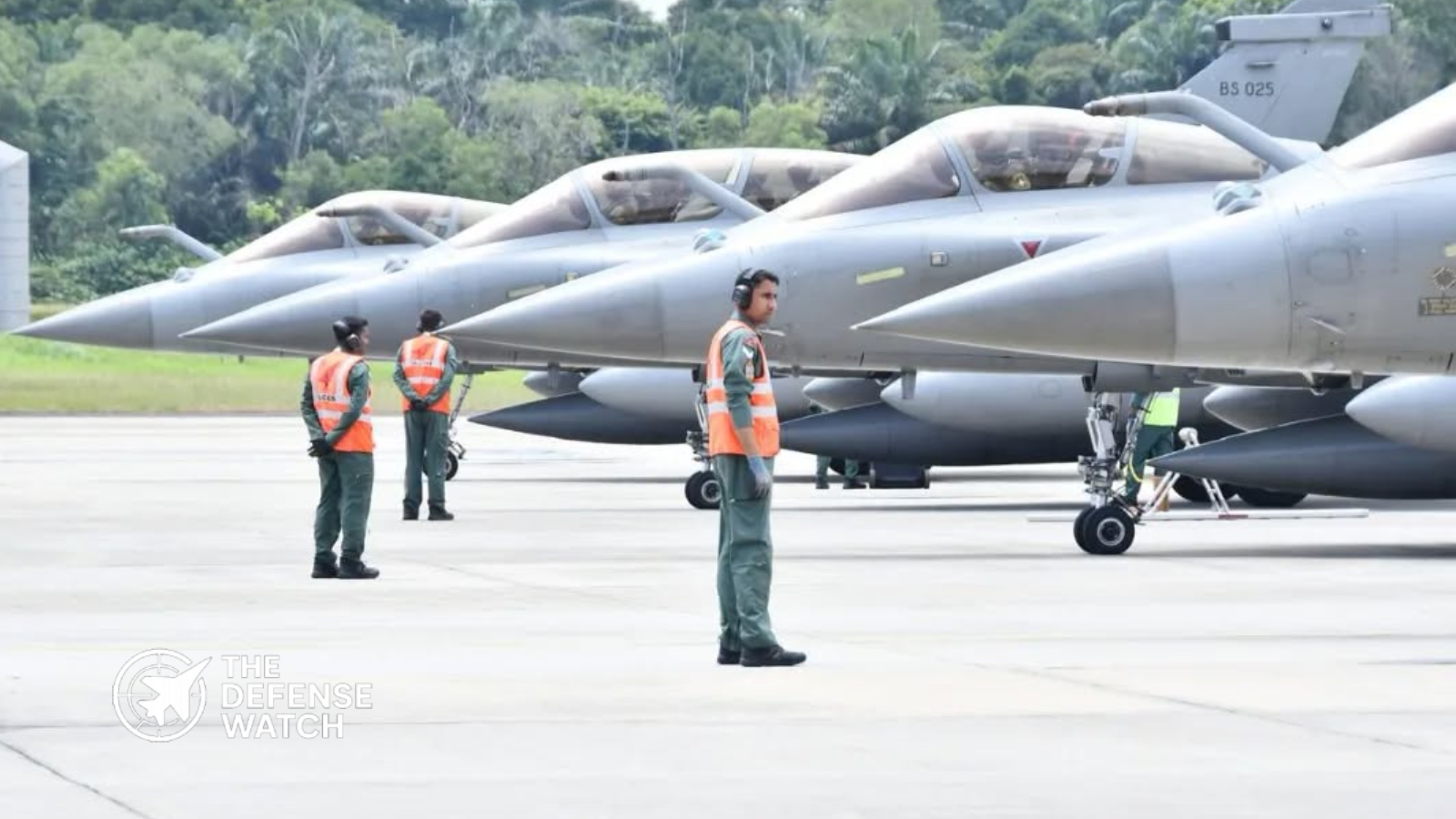
The proposed MRFA programme involves 114 fighters, with the Rafale being pursued under a government-to-government framework with France. In February 2026, India’s Defence Acquisition Council granted Acceptance of Necessity for the MRFA requirement and stated that most of the aircraft would be manufactured in India.
Singh said the MRFA agreement could potentially be finalized during the current Indian financial year if negotiations progress as planned.
The significance of MRFA extends beyond the number of aircraft eventually ordered. A successful programme would provide another production channel alongside Tejas and could help India increase its annual fighter output.
That matters because the IAF’s stated requirement of 36 to 40 aircraft annually cannot be met simply by approving individual procurement programmes. Aircraft must be produced, tested, accepted and delivered at a sustained rate.
A production problem as much as a procurement problem
The current situation exposes a distinction that is sometimes lost in discussions about India’s fighter fleet.
India has placed substantial orders for new combat aircraft. The 2025 Tejas Mk1A contract alone covers 97 aircraft, while the MRFA programme could eventually add another 114 fighters. Yet orders on paper do not immediately translate into operational squadrons.
Production capacity, engine availability, component supply, aircraft integration, testing and certification all affect the pace at which aircraft reach operational units.
The Tejas programme illustrates this problem particularly clearly. The Ministry of Defence’s 2025 contract for 97 aircraft specified more than 64 percent indigenous content and involved a large Indian industrial supplier base. The government also said engine deliveries supporting that programme would run from 2027 through 2032.
For the IAF, however, the relevant measure is not the industrial potential of the programme. It is how quickly completed aircraft can be accepted and introduced into operational service.
Fifth-generation capability creates a second deadline
The fighter shortage is occurring at the same time that India is attempting to develop a fifth-generation combat aircraft through the Advanced Medium Combat Aircraft programme.
AMCA is intended to provide an indigenous fifth-generation fighter capability, but it is not an immediate solution to the current squadron shortfall. The programme must pass through development, prototype construction, flight testing, certification and eventual production before it can contribute significant numbers to the operational fleet.
India approved an industry-partnership execution model for AMCA in 2025, allowing Indian companies to compete for participation in prototype development and production.
Singh has also indicated that India could consider other fighter options if AMCA or other programmes face significant delays. Russia has offered the Su-57, but Singh said no decision had been made on that proposal.
That distinction is important. An offer of an alternative aircraft does not amount to an Indian decision to procure it.
Regional fighter developments add pressure
The IAF’s concern is also shaped by developments involving China and Pakistan.
Singh described reported cooperation between Pakistan and China on fifth-generation fighter capabilities as a concern. At the same time, he emphasized that the effectiveness of a fighter depends on more than the aircraft itself.
Sensors, weapons, electronic warfare, command and control, data links, airborne early warning, ground-based systems, pilot training and logistics all influence combat effectiveness.
That makes India’s fighter requirement a force-structure issue rather than a simple race to acquire a particular aircraft.
A larger fleet without adequate support systems would not automatically translate into a proportionally larger combat capability. Conversely, advanced aircraft can provide greater operational value when integrated into a wider network of sensors, weapons and command systems.
The immediate challenge is delivery
The IAF now faces two separate modernization timelines.
The first is immediate: stop the decline in fighter squadron strength through faster delivery of aircraft already ordered or being negotiated.
The second is longer term: develop and field increasingly capable aircraft such as Tejas Mk2 and AMCA while expanding India’s domestic aerospace manufacturing capacity.
The 36 to 40 aircraft figure highlights the scale of the first problem. India does not simply need another fighter contract. It needs a sustained annual flow of operational aircraft capable of replacing retiring platforms while adding new capacity.
For the IAF, the difference between an approved programme and an aircraft on an operational squadron is measured in years. Singh’s warning puts that schedule problem at the center of India’s fighter modernization debate.