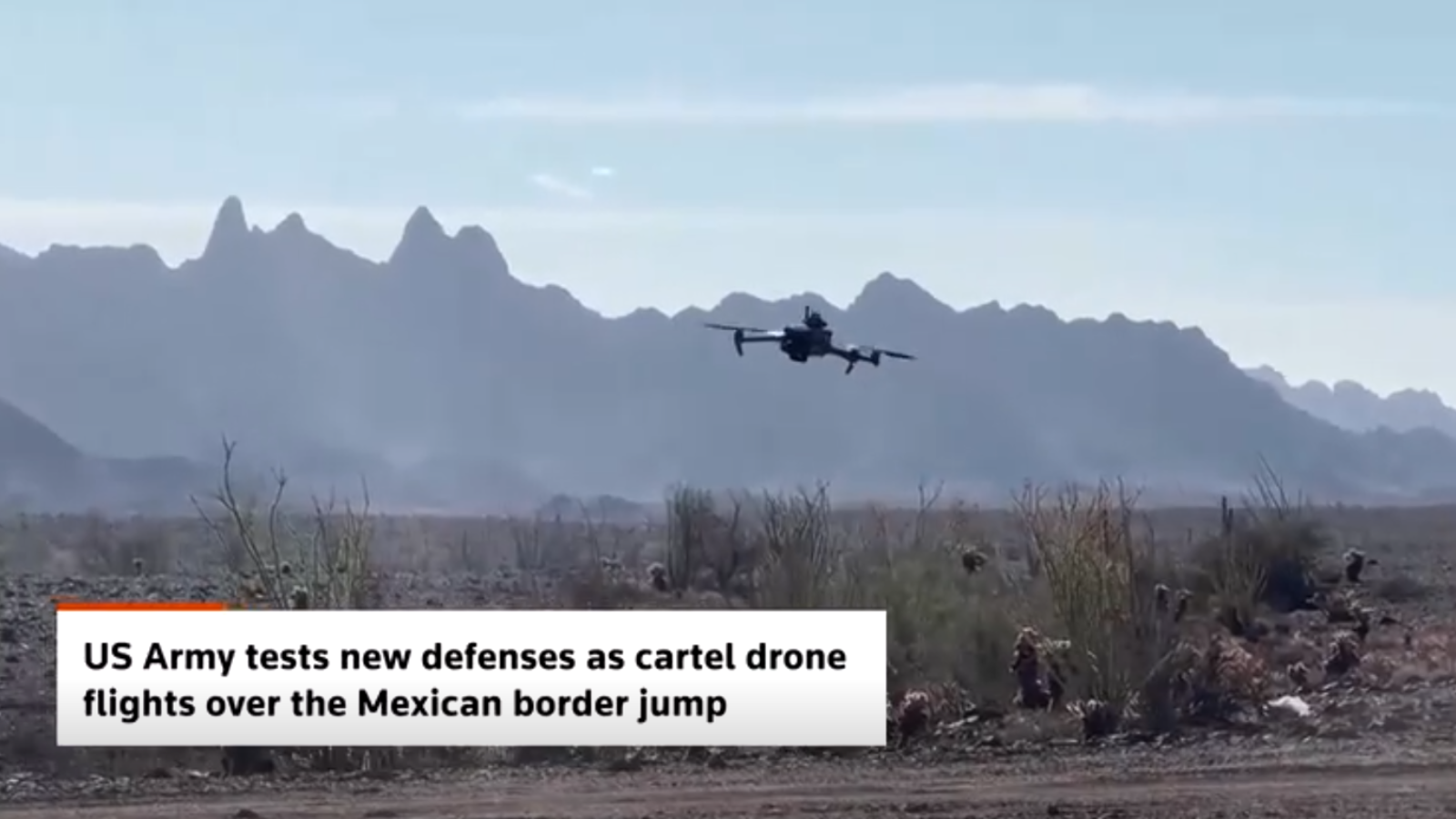
U.S. Army Tests Counter-Drone Tech at Mexico Border
The U.S. Army is using the U.S.-Mexico border as an operational test environment for counter-drone technology, assessing how sensors, command-and-control networks and defeat systems perform against small unmanned aircraft in conditions that resemble the southern border mission.
The testing centered on Falcon Peak 26.2, a U.S. Northern Command and Joint Interagency Task Force 401 counter-small unmanned aircraft systems experiment held at Yuma Proving Ground in Arizona from August 31 through September 25, 2026.
Unlike a conventional laboratory evaluation, the exercise was designed around the specific problems presented by the southern border. U.S. Northern Command said the event would examine new technologies, place greater emphasis on low-collateral defeat options and provide industry with feedback intended to accelerate the development of counter-UAS capabilities.
The border is becoming a practical counter-UAS test environment
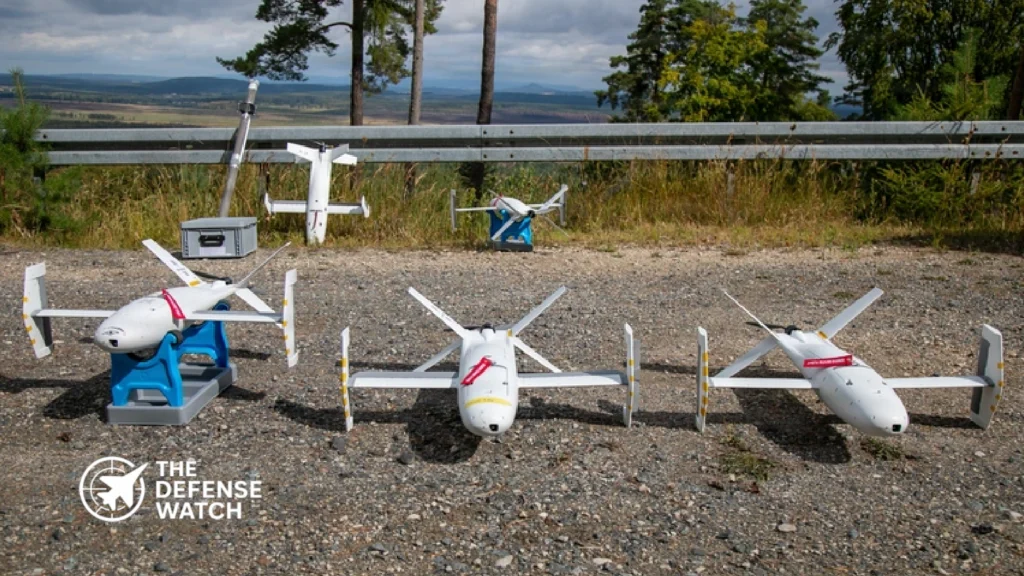
The immediate problem is relatively small commercial drones rather than the larger military unmanned systems encountered in Ukraine and other conflict zones.
Reuters reported that Brig. Gen. Brian Filler, deputy commander for operations at Joint Task Force Southern Border, said the military had detected 378 drone incursions during the previous 30 days. He said the systems were generally commercially available drones carrying surveillance cameras and were frequently observed in connection with cross-border movements.
That figure is not independently established in the public Army and USNORTHCOM material reviewed for this report. USNORTHCOM has separately reported more than 300 UAS defeats during 2026, including more than 100 in August, and said the aircraft were assessed as being associated with illicit activity along the border.
The distinction matters because detecting a drone and determining that it presents a threat are different tasks. A counter-UAS network has to identify an aircraft, establish its track, determine whether intervention is justified and select an appropriate response.
That makes the border environment useful for testing more than individual weapons.
Falcon Peak tested the complete detection-to-defeat chain
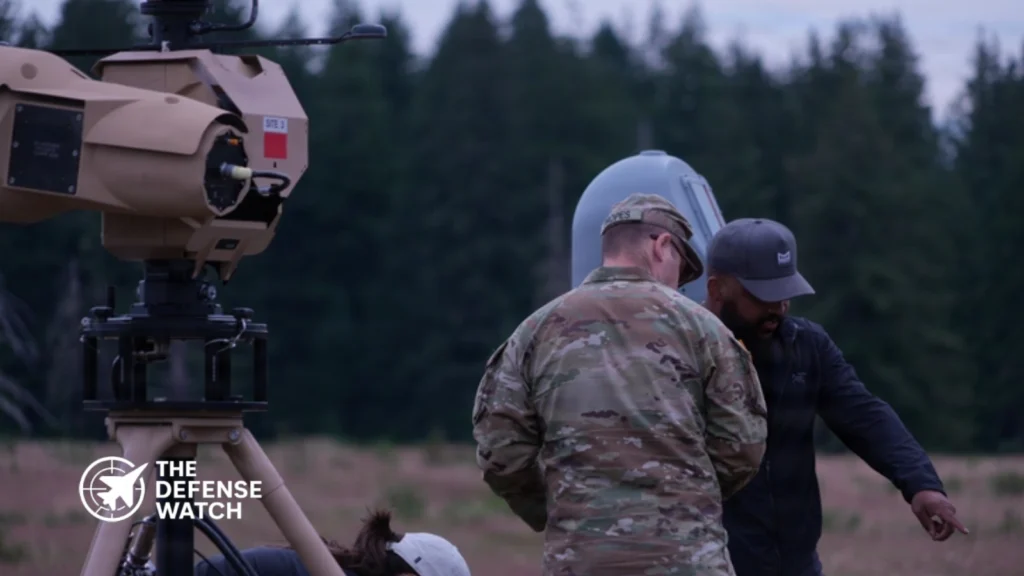
Falcon Peak 26.2 brought multiple commercial and military technologies into the same evaluation environment. The systems demonstrated during the exercise included radar and optical sensors, interceptor drones and automated kinetic systems.
The Army said Yuma Proving Ground established permanent counter-UAS test and evaluation lanes as part of the event. The lanes are intended to provide standardized conditions for measuring different technologies and can potentially be replicated at other test facilities.
One of the more important elements was the use of Anduril’s Lattice autonomous command-and-control software as a baseline for evaluating commercial sensor-to-shooter counter-UAS capabilities.
This points to a central problem in modern drone defense. The effectiveness of a counter-UAS system depends not only on the performance of its sensor or interceptor, but also on how quickly information moves from detection to identification, tracking and engagement.
An architecture that can integrate different sensors and effectors gives military planners more flexibility than a system tied to a single proprietary component.
Directed energy has already moved beyond testing
The Falcon Peak exercise is part of a broader southern-border counter-drone effort that has already included operational use of directed energy.
USNORTHCOM said Joint Task Force Southern Border first employed the Army Multipurpose High-Energy Laser system in border protection operations on August 24. By September 4, the command said personnel had used the system to defeat 11 cartel-linked UAS.
The Army separately reported that three hostile UAS assessed as linked to drug cartels were defeated with the laser system during an August operation.
The significance is less about the individual engagements than about the transition from technology demonstration to operational experimentation. The Army is now gaining experience in how directed energy, sensors and other countermeasures function as part of an actual homeland-security mission.
The approach also reflects the constraints of operating near populated areas and civilian infrastructure. USNORTHCOM specifically identified low-collateral defeat options as an objective for Falcon Peak 26.2.
Why small commercial drones present a different problem
Cartel-linked drones do not necessarily require the same countermeasures used against sophisticated military UAS.
A commercially available quadcopter can be relatively inexpensive, difficult to distinguish from legitimate civilian drone activity and useful for surveillance without carrying a weapon. The challenge therefore includes classification and rules for engagement as much as physical interception.
The military also has to account for the possibility of multiple aircraft, changing flight patterns and operations close to civilians or sensitive infrastructure.
This creates a layered counter-UAS requirement.
Detection systems need to find small aircraft. Command-and-control systems need to correlate information from different sensors. Electronic or kinetic systems may then provide the appropriate response, depending on the circumstances.
The Army’s test architecture reflects this layered approach rather than treating counter-drone defense as a single weapon problem.
Ukraine offers lessons, but the missions are not identical
Army officials have pointed to Ukraine as an important source of lessons for accelerating counter-drone development.
The comparison needs to be qualified. The drone threat along the U.S.-Mexico border is not equivalent to the large-scale military drone warfare occurring in Ukraine. Ukrainian forces operate in a contested battlefield involving reconnaissance drones, one-way attack systems, electronic warfare and increasingly sophisticated autonomous capabilities.
The southern-border mission involves a different threat set and a different operating environment.
The more relevant lesson is therefore the speed of adaptation.
Brig. Gen. Matthew Ross, director of JIATF 401, told reporters that the U.S. military should seek to replicate Ukraine’s ability to adapt equipment and tactics rapidly rather than simply attempting to copy battlefield systems.
That objective is reflected in the Army’s broader counter-UAS acquisition effort. In September, JIATF 401 announced additional contracts supporting its Domestic Shield initiative, covering technologies ranging from compact radars and tracking cameras to automated weapon stations and systems intended to help individual soldiers engage drones.
The effort is also designed around multiple vendors rather than a single counter-drone architecture.
The procurement question is becoming as important as the technology
The southern-border experiments could influence how the Pentagon evaluates commercially developed counter-UAS systems for homeland and military applications.
The Army has established Yuma as a dedicated interagency counter-small UAS test and training location. That creates a repeatable environment where different systems can be assessed against common standards instead of being judged solely through demonstrations conducted by individual manufacturers.
That approach could help address one of the recurring problems in the counter-drone market: rapidly changing technology combined with uncertain operational requirements.
A system that performs well against a particular drone in a demonstration does not automatically solve the wider problem. Military users need reliable detection, manageable operator workload, integration with existing networks and a defeat mechanism appropriate to the environment.
Falcon Peak 26.2 is therefore significant primarily as a test of the process for finding and fielding counter-UAS capabilities.
The U.S. military is not facing a battlefield equivalent to Ukraine on the southern border. It is facing a different problem that nevertheless exposes the same basic challenge: inexpensive unmanned aircraft can create security problems faster than traditional acquisition cycles can respond.
The Army’s answer is increasingly to shorten that cycle, test multiple technologies in realistic conditions and determine which systems can function as part of a layered defense rather than in isolation.