Executive Summary
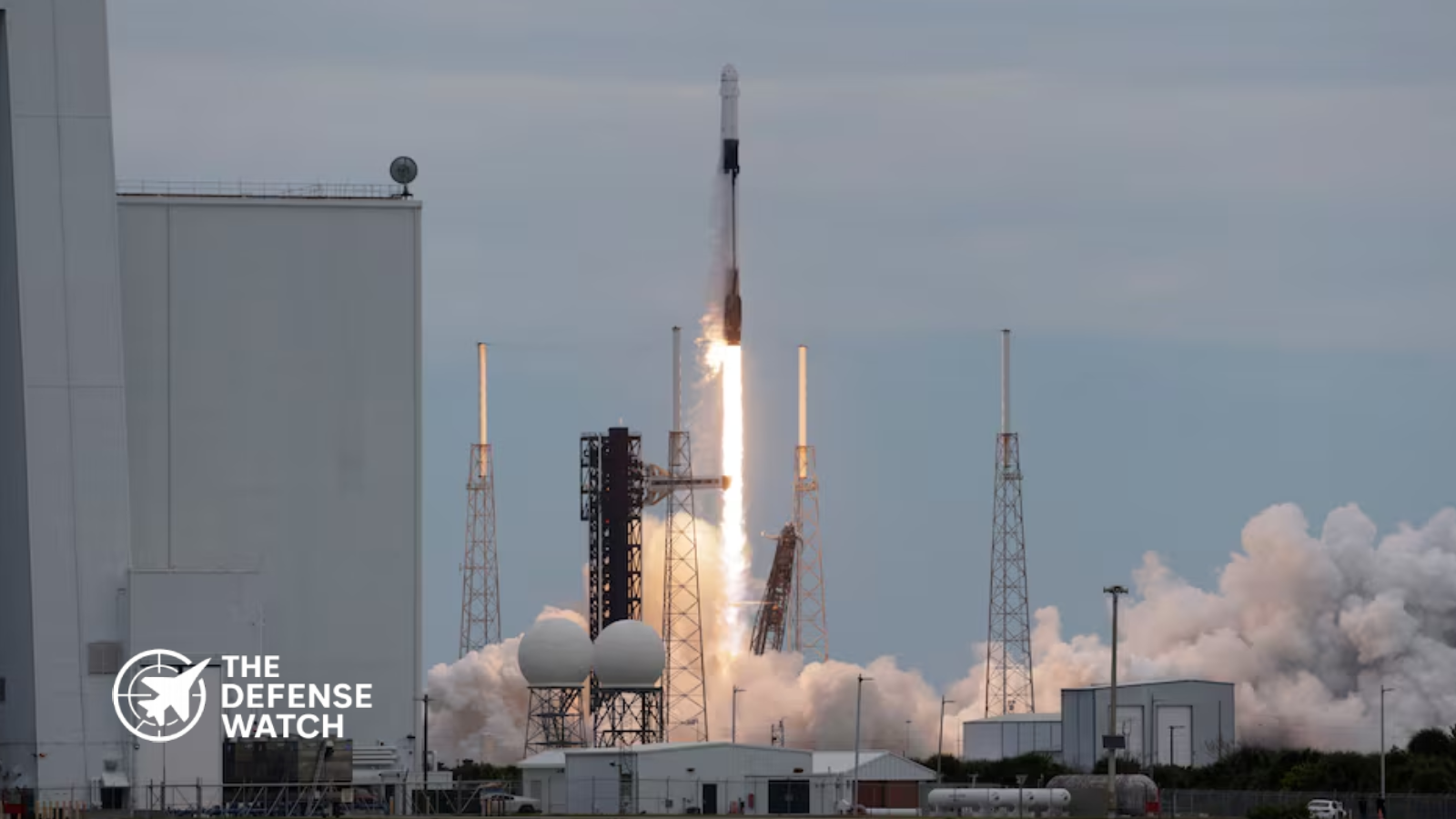
- SpaceX launched NASA’s Crew-13 mission from Space Launch Complex 40 at Cape Canaveral Space Force Station on Oct. 1, carrying NASA astronauts Jessica Watkins and Luke Delaney, Canadian astronaut Joshua Kutryk and Russian cosmonaut Sergey Teteryatnikov to the International Space Station.
- The Falcon 9’s first stage separated after launch and returned for a landing, while the Dragon spacecraft continued toward the station. NASA reported that Dragon reached orbit after launch.
- Crew-13 reinforces the operational role of commercial crew systems in maintaining U.S. access to low Earth orbit as NASA prepares for the eventual transition from the ISS to commercial space stations.
SpaceX launched NASA’s Crew-13 mission to the International Space Station on Oct. 1, sending four astronauts into orbit aboard a Crew Dragon spacecraft launched by a Falcon 9 from Cape Canaveral Space Force Station in Florida.
Liftoff occurred at 11:10 a.m. EDT from Space Launch Complex 40. The crew consists of NASA astronauts Jessica Watkins and Luke Delaney, Canadian Space Agency astronaut Joshua Kutryk and Roscosmos cosmonaut Sergey Teteryatnikov. NASA planned docking with the International Space Station for approximately 7 p.m. EDT.
The mission is significant beyond another routine station rotation. Crew-13 demonstrates how NASA’s Commercial Crew Program has evolved from a development effort into a recurring transportation system supporting sustained U.S. human spaceflight operations in low Earth orbit.
Falcon 9 and Crew Dragon Extend Commercial Crew Operations
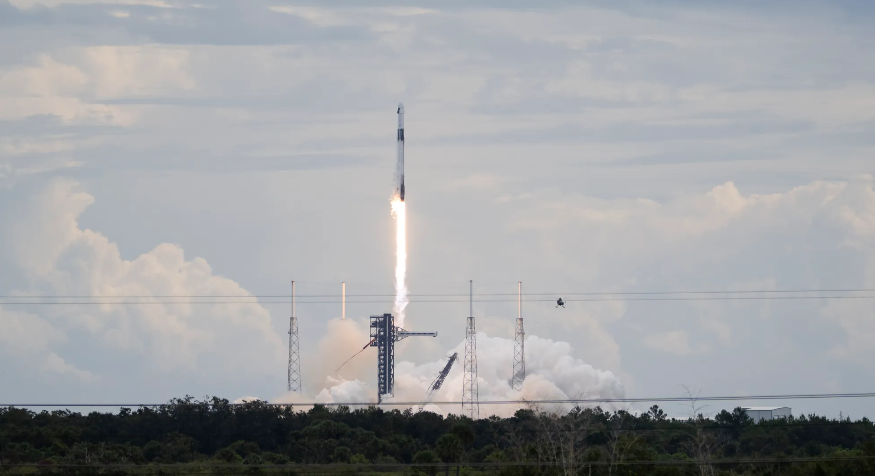
The Crew-13 launch continues the operational sequence that began after SpaceX’s Demo-2 mission in 2020. NASA subsequently certified Crew Dragon for regular crew transportation, with the system becoming a recurring means of transporting astronauts between the United States and the ISS.
NASA identifies Crew-13 as the 13th crew rotation mission conducted by SpaceX and the 14th Dragon flight carrying people under the Commercial Crew Program when Demo-2 is included.
| Mission element | Crew-13 status |
|---|---|
| Launch vehicle | SpaceX Falcon 9 |
| Crew spacecraft | SpaceX Crew Dragon |
| Launch location | SLC-40, Cape Canaveral Space Force Station, Florida |
| Launch date | Oct. 1, 2026 |
| Crew | 4 |
| Destination | International Space Station |
| Mission type | Long-duration ISS expedition |
| NASA program | Commercial Crew Program |
NASA describes Dragon as an autonomous spacecraft designed to transport crew and critical cargo to orbital destinations. The spacecraft can be monitored and controlled by both onboard astronauts and SpaceX mission control.
That architecture matters because the launch vehicle and spacecraft are no longer being used as one-off demonstration systems. They form part of an established transportation service that NASA can schedule around the station’s expedition requirements.
Reusable Launch Hardware Changes the Crew Transportation Model
One of the most important operational features of Crew-13 was the recovery of the Falcon 9 first stage.
Reuters reported that the booster separated from the vehicle within roughly three minutes of launch and returned to Earth for a landing. The second stage continued the ascent before releasing Crew Dragon into orbit.
NASA’s Commercial Crew framework was designed around commercially provided transportation rather than government ownership of every element of the launch system. SpaceX’s use of reusable Falcon 9 hardware adds another layer to that model by allowing launch infrastructure and flight hardware to support repeated missions.
For national space strategy, the significance is less about one booster landing and more about the operational rhythm that repeated launches can create.
A sustained crew transportation architecture gives NASA greater flexibility in maintaining station staffing, scheduling research expeditions and planning the transition toward future low Earth orbit destinations.
Crew-13 Also Highlights International Cooperation
Crew-13 carries a multinational crew from the United States, Canada and Russia.
NASA’s crew includes Watkins and Delaney, while Kutryk represents the Canadian Space Agency and Teteryatnikov represents Roscosmos.
That composition is notable because the ISS remains one of the most important examples of long-term international cooperation in human spaceflight. NASA says the station has supported continuous human presence since November 2000 and has hosted more than 290 people from 26 countries.
The continued participation of Russian and Western astronauts aboard the same orbital platform also preserves a practical level of cooperation in space operations despite wider geopolitical tensions.
Crew-13 therefore has both a transportation function and an international coordination role.
Research Focus Extends Beyond Routine Station Operations
The mission’s scientific work will include research into human health and performance during extended exposure to microgravity.
Reuters reported that Crew-13’s research program includes studies of blood circulation and clotting, together with the collection of health data relevant to future missions.
NASA describes the ISS as a long-duration research environment that supports investigations across multiple scientific fields. The station also provides a test environment for technologies and operational methods needed for future human missions.
This creates a direct connection between routine ISS operations and longer-term exploration objectives. Data gathered from astronauts living and working in microgravity can inform spacecraft design, crew health management and mission planning for destinations farther from Earth.
NASA Is Increasingly Dependent on Commercial Crew Services
Crew-13 arrives at an important point in NASA’s commercial transportation strategy.
On Sept. 18, NASA announced three additional SpaceX crew missions, Crew-15, Crew-16 and Crew-17. The contract modification brought the total number of SpaceX missions under NASA’s Commercial Crew Transportation Capability contract to 17. NASA said the additional missions are intended to maintain regular crew transportation to the ISS while preserving access through two commercial crew industry partners.
NASA’s approach is significant for future force and space infrastructure planning because the agency is shifting toward buying transportation services while concentrating government-owned systems on missions beyond low Earth orbit.
NASA’s Commercial Crew Program explicitly separates routine transportation to low Earth orbit from the agency’s longer-term exploration objectives. The model allows NASA to use commercial providers for crew transportation while focusing government resources on deep-space systems.
Commercial Crew Competition Remains a Strategic Issue
NASA originally selected Boeing and SpaceX under Commercial Crew Transportation Capability contracts to develop U.S. systems capable of transporting astronauts to the ISS.
SpaceX’s Crew Dragon entered regular operational service in 2020. NASA’s Office of Inspector General reported in June 2026 that Crew Dragon had completed 12 crewed missions to and from the station, while Boeing’s Starliner remained uncertified following issues identified during its flight tests.
That difference affects NASA’s transportation architecture because the agency’s original commercial crew concept was based on having more than one certified provider.
NASA has continued to describe maintaining two commercial crew industry partners as an objective. The additional SpaceX missions announced in September therefore provide near-term transportation continuity while NASA continues working toward a broader provider base.
The ISS Is Moving Toward Its Next Phase
NASA has committed to operating the International Space Station through 2030 while preparing for a transition to commercially owned and operated low Earth orbit destinations.
That transition changes the strategic meaning of missions such as Crew-13.
The immediate objective remains straightforward: transport astronauts safely to the ISS and maintain the station’s research workforce. The larger objective is to preserve a continuous U.S. human presence in low Earth orbit while the infrastructure supporting that presence gradually shifts from a government-led international station toward commercial platforms.
For NASA, reliable crew transportation is therefore an enabling capability for the entire transition.
If commercial stations are to become viable destinations after the ISS, NASA will still require dependable launch vehicles and crew spacecraft capable of transporting astronauts, researchers and potentially other customers between Earth and orbit.
What Crew-13 Means for U.S. Space Operations
Crew-13 does not introduce a new launch vehicle or a new crew spacecraft. Its importance comes from the maturity of an existing transportation architecture.
Three developments are particularly relevant:
- Routine access to orbit: Crew Dragon provides NASA with an operational crew transportation system based in the United States.
- Reusable launch operations: Falcon 9’s first-stage recovery supports repeated launch operations and forms part of SpaceX’s broader reusable launch architecture.
- Transition planning: NASA is continuing to use commercial transportation as part of its broader strategy for sustaining human activity in low Earth orbit after the ISS era.
The defense relevance is indirect but important. The same U.S. launch ecosystem that supports civil and commercial missions also contributes to national launch infrastructure, workforce capacity, range operations and industrial experience in high-cadence orbital missions.
Crew-13 therefore represents more than another ISS crew rotation. It is another operational data point in the shift toward commercially provided access to low Earth orbit, while NASA concentrates its government-owned exploration systems on missions beyond it.