Netherlands Moves Toward A Dedicated GlobalEye Capability
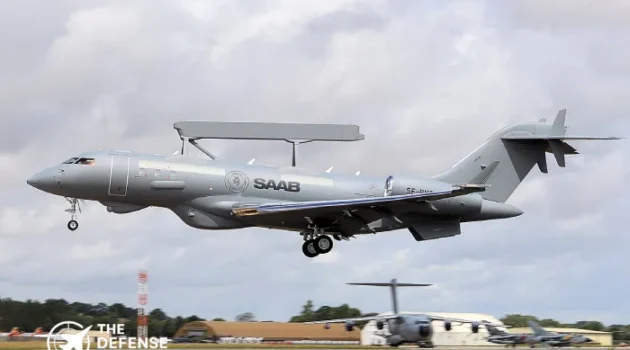
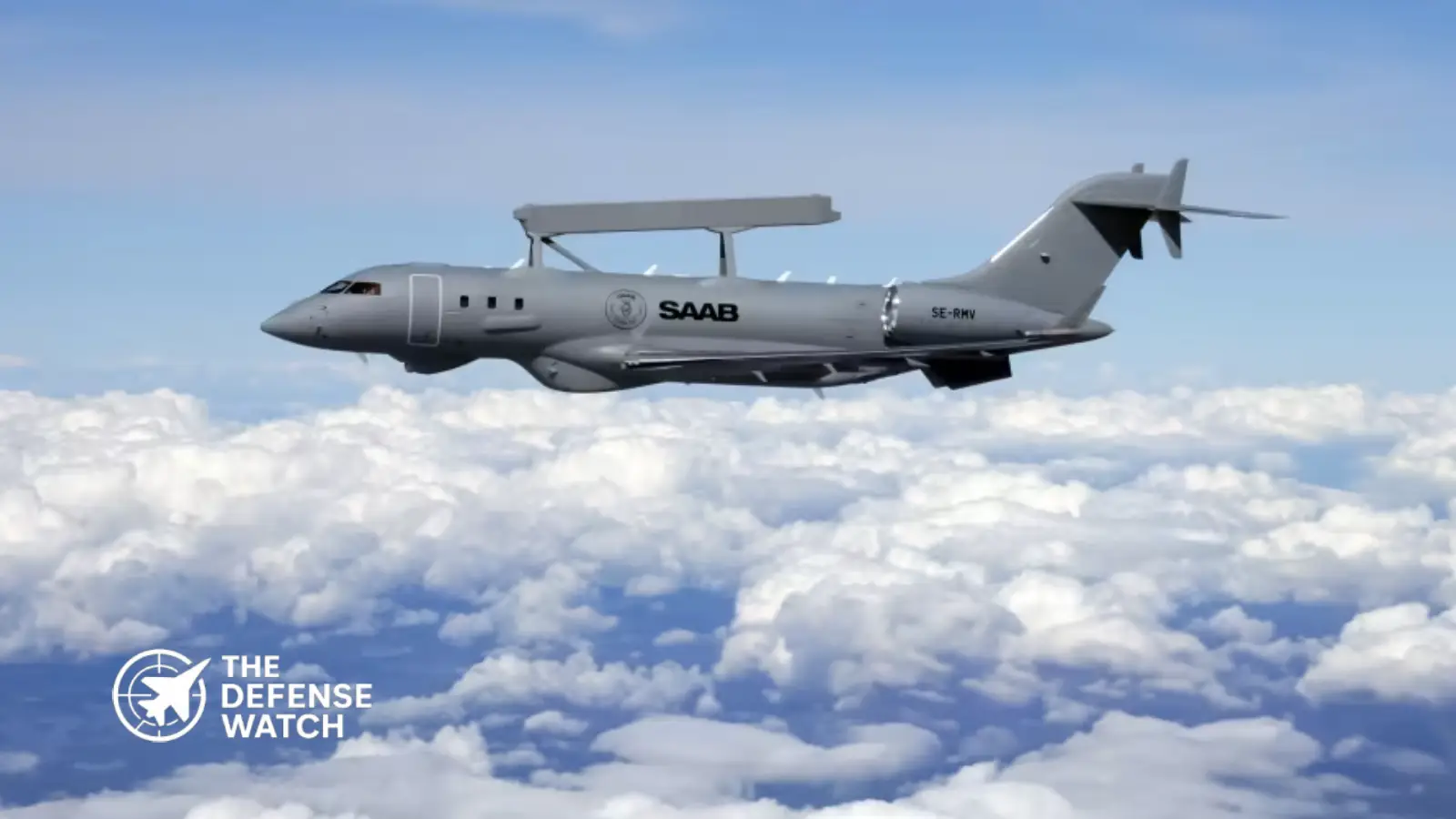
The Netherlands has signed a Letter of Intent with Sweden to acquire one Saab GlobalEye airborne early warning and control aircraft, marking a move toward a dedicated national capability for long-range airborne surveillance and command and control. The Dutch Ministry of Defence said the aircraft is expected to be delivered in 2031, although Saab has emphasized that the Letter of Intent is not yet a contract and that the company has not received an order from the Netherlands.
Takeaways
The Netherlands intends to acquire one Saab GlobalEye, giving the country a dedicated airborne early warning and control capability while integrating closely with Sweden and NATO.
The decision is part of a broader European and NATO effort to replace aging airborne surveillance infrastructure. The Netherlands is simultaneously participating with 10 other NATO members in a multinational program for up to 10 GlobalEye aircraft intended to succeed part of NATO’s Boeing E-3A AWACS fleet.
What The Dutch GlobalEye Acquisition Means
The Dutch government currently does not operate its own aircraft dedicated to the airborne early warning and control mission. It has instead relied in part on NATO’s AWACS capability, based at Geilenkirchen, Germany.
A national GlobalEye would give the Netherlands greater control over when and where an AEW&C aircraft is assigned to Dutch missions, exercises and international operations. That distinction matters because airborne early warning aircraft are not simply surveillance platforms. They can provide a common operating picture and distribute information to aircraft, ships and ground units.
The Dutch Ministry of Defence describes GlobalEye as capable of monitoring air, maritime and land activity while processing and distributing information in real time. The aircraft can also perform airborne command functions, allowing it to contribute to the coordination of military operations.
The Netherlands therefore gains more than another aircraft. It is acquiring a node that can connect multiple elements of a force through airborne sensing, communications and command and control.
GlobalEye’s Multi-Domain Sensor Architecture
GlobalEye is based on Bombardier’s Global 6000/6500 business jet platform and integrates Saab’s Erieye Extended Range radar with additional sensors and a multi-domain command and control architecture. Saab says the system is designed to support surveillance across air, land and maritime environments.
Capability GlobalEye Primary mission Airborne Early Warning and Control Aircraft platform Bombardier Global 6000/6500 family Primary radar Saab Erieye Extended Range Surveillance domains Air, land and maritime Instrumented range 350 nautical miles, according to Saab Operational endurance Up to 12 hours, according to Saab Command and control Multi-domain C2 National Dutch delivery Expected 2031 Dutch access to Swedish aircraft From 2028 Saab states that GlobalEye has an instrumented range of 350 nautical miles and an operational endurance of up to 12 hours. The company also highlights the system’s ability to detect and track air and maritime targets and conduct ground surveillance.
The combination of sensors is important because modern surveillance requirements extend beyond conventional aircraft detection. NATO identifies drones, ballistic missiles, cruise missiles and other complex threats as part of the environment in which its next-generation airborne warning capability must operate.
Netherlands And Sweden Plan A Shared Operating Model
The Dutch acquisition is also notable for its operating arrangement with Sweden.
According to the Dutch Ministry of Defence, the future Dutch GlobalEye will be placed into a joint pool with three Swedish GlobalEye aircraft. Dutch and Swedish crews will therefore have access to the available aircraft, creating opportunities for common training, operational experience and support arrangements.
Dutch personnel are expected to gain access to Swedish aircraft beginning in 2028, several years before delivery of the Netherlands’ own aircraft. This provides a pathway for crews and support personnel to develop experience with the platform and associated operating procedures before the national aircraft arrives.
The arrangement also creates a practical form of defense cooperation. Rather than treating the Dutch aircraft as a completely independent national asset, the two countries are building a framework around shared access and future development.
GlobalEye Is Becoming A Key NATO AWACS Replacement
The Dutch decision cannot be separated from NATO’s broader airborne surveillance modernization.
At the NATO Summit Defence Industry Forum in Ankara on July 7, 2026, 11 Allies announced the joint procurement of up to 10 Saab GlobalEye aircraft. The participating countries are Belgium, Canada, Denmark, Germany, Latvia, Lithuania, Luxembourg, the Netherlands, Norway, Romania and Sweden.
The program is intended to replace part of NATO’s aging Boeing E-3 AWACS capability. NATO says its existing E-3 fleet provides air surveillance, command and control, battlespace management and communications, but the aircraft are approaching the end of their practical service life.
NATO has stated that the current E-3 fleet is being sustained until 2035, after which further life extensions are no longer considered practical.
The transition is strategically significant because airborne warning and control aircraft remain central to NATO’s ability to detect, track and coordinate responses to air threats across large geographic areas.
Why The GlobalEye Architecture Matters
The main advantage of an AEW&C aircraft is not simply the radar itself. Its value comes from putting sensors at altitude and combining their information with communications and command systems.
A high-altitude surveillance aircraft can observe a much larger area than many ground-based sensors, while also moving with the force it supports. That creates an airborne layer for detecting, tracking and distributing information about targets that may otherwise be difficult for individual fighters, ships or ground units to see.
GlobalEye’s multi-domain design is particularly relevant to European operations because air and maritime threats increasingly overlap. An aircraft capable of supporting surveillance across air, land and sea can contribute to a common operating picture instead of forcing separate platforms to maintain isolated views of the battlespace.
For the Netherlands, that has direct relevance to both national defense and NATO operations. The country’s geographic position gives it an important role in the security of the North Sea, European airspace and NATO’s northern and central operating areas.
The Netherlands Is Building A Layered Surveillance Network
The GlobalEye acquisition should also be viewed alongside other surveillance capabilities rather than as a standalone replacement for every existing sensor.
NATO’s future surveillance architecture is moving toward a system-of-systems approach that links airborne, maritime, ground and space-based sensors. NATO says its Alliance Federated Surveillance and Control effort is intended to integrate NATO-owned and national assets into a broader collaborative surveillance and control network.
That approach reduces dependence on any single sensor or platform.
A GlobalEye aircraft can provide a mobile airborne sensor and command node, while ground-based radars, fighter aircraft, naval sensors, uncrewed systems and space-based capabilities provide complementary information. The operational objective is therefore a more connected surveillance architecture rather than simply replacing one radar aircraft with another.
Procurement Status Remains At The Letter Of Intent Stage
The distinction between an announced intention and a signed procurement contract is important.
Saab explicitly states that the Netherlands and Sweden have not yet entered into a contract for the Dutch aircraft and that Saab has not received an order from the Netherlands. The company said it is prepared to support the next stages of the procurement process.
No contract value for the Dutch aircraft was disclosed in the announcement.
This means the September announcement establishes the intended capability and framework, but it should not yet be treated as a completed Saab sale. The subsequent procurement process will determine the final contractual terms, configuration, schedule and associated support arrangements.
What Comes Next
The immediate next step is the continuation of the Dutch procurement process toward a formal contract.
In parallel, the Netherlands and Sweden are expected to deepen cooperation around operation and future development of GlobalEye. The Dutch Ministry of Defence says the two countries will work together on further development of the system as part of the wider cooperation agreement.
The planned 2028 access to Swedish aircraft gives the Netherlands an earlier entry point into the GlobalEye operating community, while the expected 2031 delivery would establish the country’s dedicated national aircraft.
The larger significance extends beyond the Netherlands. With NATO and multiple European nations moving toward GlobalEye, the platform is becoming part of a broader transition from the aging E-3 AWACS architecture toward a more distributed, multi-domain surveillance network.
For the Netherlands, the acquisition would provide a national airborne early warning and control asset while allowing the country to remain integrated into a multinational European and NATO surveillance structure.
Bottom Line
The Netherlands’ GlobalEye decision represents a move from relying primarily on shared NATO airborne warning capacity toward maintaining a national AEW&C capability within a multinational operating framework.
The aircraft will give Dutch forces an airborne platform for long-range surveillance, information sharing and command and control across air, maritime and land environments. At the same time, the planned integration with Sweden and participation in NATO’s larger GlobalEye program could give the Netherlands a more connected role in Europe’s emerging airborne surveillance architecture.
The key qualification is that the procurement remains at the Letter of Intent stage. Saab has not yet received a Dutch order, and the formal contract remains the next major milestone.