North Korea Launches Ballistic Missiles During Joint Drills
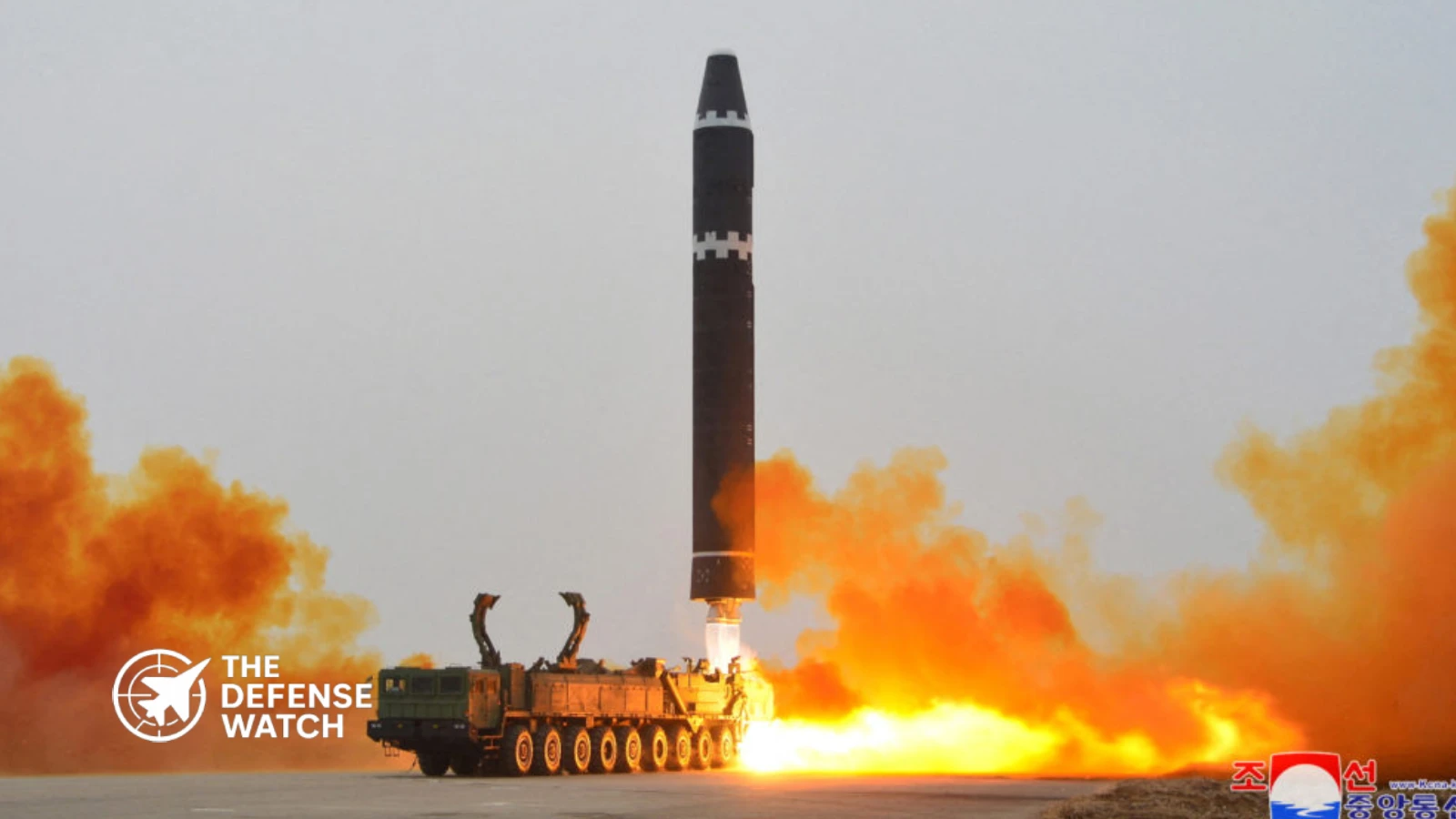
North Korea launched about 10 short range ballistic missiles toward the East Sea on August 20, according to South Korean military authorities, in the latest missile activity on the Korean Peninsula. The launches occurred while U.S. and South Korean forces were conducting the annual Ulchi Freedom Shield exercise.
Takeaways
North Korea launched a new barrage of short range ballistic missiles toward the East Sea on August 20.
1. About 10 Short Range Missiles
South Korea said North Korea launched about 10 short range ballistic missiles from the capital region toward waters off the country’s east coast.
2. Missiles Flew About 300 Kilometers
South Korean authorities reported that the missiles traveled approximately 300 kilometers before falling into the East Sea, also known as the Sea of Japan.
3. Japan Detected the Launch
Japan’s government and coast guard also reported the launch. The projectile was assessed as a ballistic missile and was reported to have fallen outside Japan’s exclusive economic zone.
4. Launch Came During U.S. South Korea Drills
The launch occurred while the annual Ulchi Freedom Shield exercise was underway. The exercise was shortened following a U.S. decision to reduce its participation.
5. Seoul Maintains Military Readiness
South Korea’s presidential security council held an emergency meeting and ordered continued military readiness while authorities coordinated information with the United States and Japan.
South Korea’s Joint Chiefs of Staff said the launches were detected from the Pyongyang area at approximately 5 p.m. local time. The missiles traveled about 300 kilometers toward North Korea’s eastern waters, according to reporting by Reuters and other international news organizations.
Japan also detected the activity. Japanese authorities said at least one projectile appeared to be a ballistic missile and had already fallen. Reporting cited by Reuters said the projectile landed outside Japan’s exclusive economic zone.
The launch did not result in any immediate reports of damage to aircraft or vessels.
Launch Comes During U.S. South Korea Military Exercise
The North Korea ballistic missile launch came during Ulchi Freedom Shield, the major annual combined exercise involving U.S. and South Korean forces.
The timing is significant because Pyongyang has repeatedly criticized U.S. South Korea military exercises, describing them as preparations for conflict. The latest launch also followed a decision by the Trump administration to substantially reduce U.S. participation in the current exercise.
The exercise was scheduled to end earlier than originally planned. North Korea’s leadership had rejected the reduction as insufficient to change what it considers a hostile U.S. policy.
Reuters reported that Kim Yo Jong, the sister of North Korean leader Kim Jong Un, criticized the U.S. and South Korean military activity even after Washington moved to reduce its participation.
The sequence highlights the difficulty of separating military readiness from diplomatic signaling on the Korean Peninsula. Washington has indicated interest in renewed engagement with Pyongyang, while North Korea continues to maintain and demonstrate its conventional and nuclear capabilities.
South Korea Orders Continued Readiness
Following the launches, South Korea’s presidential office condemned the missile activity and directed the military to maintain full readiness.
South Korean authorities also coordinated information on the launches with the United States and Japan. The three countries routinely exchange missile warning information as part of their efforts to monitor North Korean weapons activity.
The latest launch was North Korea’s third reported missile launch of August, following ballistic missile activity earlier in the month. On August 12, Japan’s Defense Ministry assessed that North Korea had launched at least one ballistic missile that traveled approximately 690 kilometers before falling outside Japan’s exclusive economic zone.
That earlier launch demonstrated the continued pace of North Korean missile activity around the period of the U.S. South Korean exercise.
What The Missile Launches Show
The North Korea ballistic missile launches demonstrate the continuing importance of short range missile forces to Pyongyang’s military posture.
Short range ballistic missiles can provide North Korea with a means of threatening military facilities, logistics hubs and other targets across South Korea. The systems are also relevant to the broader evolution of North Korea’s conventional strike capabilities.
Previous North Korean tests have included systems that South Korean authorities and defense analysts have associated with maneuverable short range ballistic missile technology. Yonhap has reported that North Korea operates the KN-23 family, a short range system commonly compared with Russia’s Iskander missile because of its general role and flight characteristics.
However, the available reporting on the August 20 launch does not establish the specific missile type used. It is therefore important not to identify the missiles as KN-23 systems without additional official confirmation.
The reported flight distance of roughly 300 kilometers is consistent with the short range category, but range alone is not enough to determine the exact missile model or configuration.
Regional Security Implications
The latest North Korea ballistic missile activity adds another layer of tension to an already complicated security environment in Northeast Asia.
For South Korea, the immediate concern is maintaining sufficient warning and response capability against short range missile attacks. For Japan, launches toward the East Sea require continued monitoring because North Korean missiles can potentially pass through or approach areas near Japanese air and maritime routes.
Japan’s Defense Ministry has repeatedly emphasized cooperation with the United States and South Korea in gathering and analyzing information on North Korean missile launches. Following an August 12 launch, Tokyo said its forces would continue surveillance and coordination with Washington and Seoul.
The United Nations has also maintained that North Korean ballistic missile launches violate relevant Security Council resolutions. Japan has similarly described repeated ballistic missile activity as a threat to regional and international security.
For the United States, the launches underscore the continuing requirement for missile warning, intelligence sharing and integrated air and missile defense cooperation with South Korea and Japan.
Diplomacy And Military Pressure Continue At The Same Time
The missile launches also illustrate the difficult balance between diplomacy and deterrence.
Washington’s decision to reduce participation in the U.S. South Korea exercise was followed by North Korean criticism rather than an immediate reduction in military signaling. At the same time, U.S. policy has included efforts to keep channels for engagement with Kim Jong Un open.
That combination creates a complex environment for regional defense planners. Lowering the scale of military exercises may support diplomatic objectives, but the allies still need to preserve the ability to detect and respond to a fast moving missile threat.
For South Korea and Japan, the latest launch therefore remains primarily a military readiness issue even as diplomatic discussions remain possible.
What Happens Next
The immediate focus will be on technical analysis of the missiles, including their launch location, trajectory, flight characteristics and precise impact areas.
South Korean, U.S. and Japanese authorities are expected to continue sharing information as they assess the launch. The specific missile types involved may become clearer if additional military data or imagery is released.
The broader pattern is also likely to remain under close observation. North Korea has continued to conduct missile tests around major allied military exercises, while Washington, Seoul and Tokyo maintain efforts to strengthen coordinated warning and defense capabilities.
The latest North Korea ballistic missile launch does not by itself establish a change in Pyongyang’s broader strategy. It does, however, reinforce the continuing military challenge posed by North Korea’s expanding missile forces and the need for close coordination among the United States, South Korea and Japan.
Enjoying our coverage?
Make The Defense Watch a preferred source on Google to see more of our geopolitical and defense insights when relevant to you.