Takeaways
Lockheed Martin receives a $29.6 million order for F-35 pilot flight equipment.
1. $29.6 Million F-35 Order
Lockheed Martin Aeronautics has received a $29.6 million firm-fixed-price order for F-35 pilot flight equipment under NAVAIR order N0001926F0236.
2. Supports Lot 18-19 Aircraft
The equipment will support Lot 18 and Lot 19 F-35 aircraft deliveries as well as operational aircraft already entering service.
3. Covers U.S. and International Users
The order supports the Air Force, Marine Corps, Navy, Foreign Military Sales customers and non-U.S. Department of War participants.
4. Work Runs Through July 2029
Work will be performed primarily in London, United Kingdom, with additional work in Greenville, Texas, and Grand Rapids, Michigan, and is scheduled for completion in July 2029.
5. International Funding Is Significant
The award includes $4.04 million in FMS funding and $5.29 million from non-U.S. Department of War participants, highlighting the international scale of the F-35 fleet.
Lockheed Martin Wins $29.6 Million F-35 Pilot Equipment Order
Lockheed Martin has received a $29.6 million U.S. Navy order to procure F-35 pilot flight equipment supporting Lot 18 and Lot 19 aircraft deliveries and operational aircraft across the U.S. military and international F-35 community.
The firm-fixed-price order, N0001926F0236, was issued against basic ordering agreement N0001924G0010. Naval Air Systems Command, Patuxent River, Maryland, is the contracting activity. The order was not competed.
The award provides another example of how F-35 procurement extends beyond the aircraft itself. Pilot equipment is a necessary part of bringing new fighters into operational service and maintaining the equipment needed by pilots already flying the aircraft.
Contract Details And Funding
The $29.6 million award is funded through several procurement accounts, reflecting the multinational customer base supported by the F-35 program.
Contract element Details Contractor Lockheed Martin Aeronautics Co. Award value $29.6 million Contract type Firm-fixed-price Order number N0001926F0236 Basic ordering agreement N0001924G0010 Aircraft supported F-35 Lot 18-19 and operational aircraft Contracting activity Naval Air Systems Command Completion July 2029 Competition Not competed 
The largest funding share comes from U.S. aircraft procurement accounts. The Air Force contribution is $11.20 million, while Navy aircraft procurement provides approximately $9.07 million.
FMS customers are providing $4.04 million, while non-U.S. Department of War participants account for approximately $5.29 million.
The combined international funding represents about 31.5 percent of the total order. That distribution underscores the extent to which F-35 equipment procurement is tied to a multinational fleet rather than exclusively to U.S. aircraft.
London Accounts For Most Of The Work
The contract has a notably international workshare profile.
Approximately 96.15 percent of the work will be performed in London, United Kingdom. Greenville, Texas, accounts for 3.81 percent, while Grand Rapids, Michigan, represents the remaining 0.04 percent.
The concentration of work in the United Kingdom is consistent with the broader industrial structure of the F-35 program, which relies on partner-country industrial participation alongside U.S. production and support activities.
NAVAIR’s F-35 program overview identifies Lockheed Martin as the F-35 prime contractor and notes the participation of major international and U.S. industrial partners in manufacturing the aircraft.
Why Pilot Equipment Matters To F-35 Readiness
Pilot flight equipment can appear secondary compared with major aircraft components, engines, weapons or sensors. Operationally, however, it is directly connected to the ability to put trained pilots into aircraft and conduct missions safely.
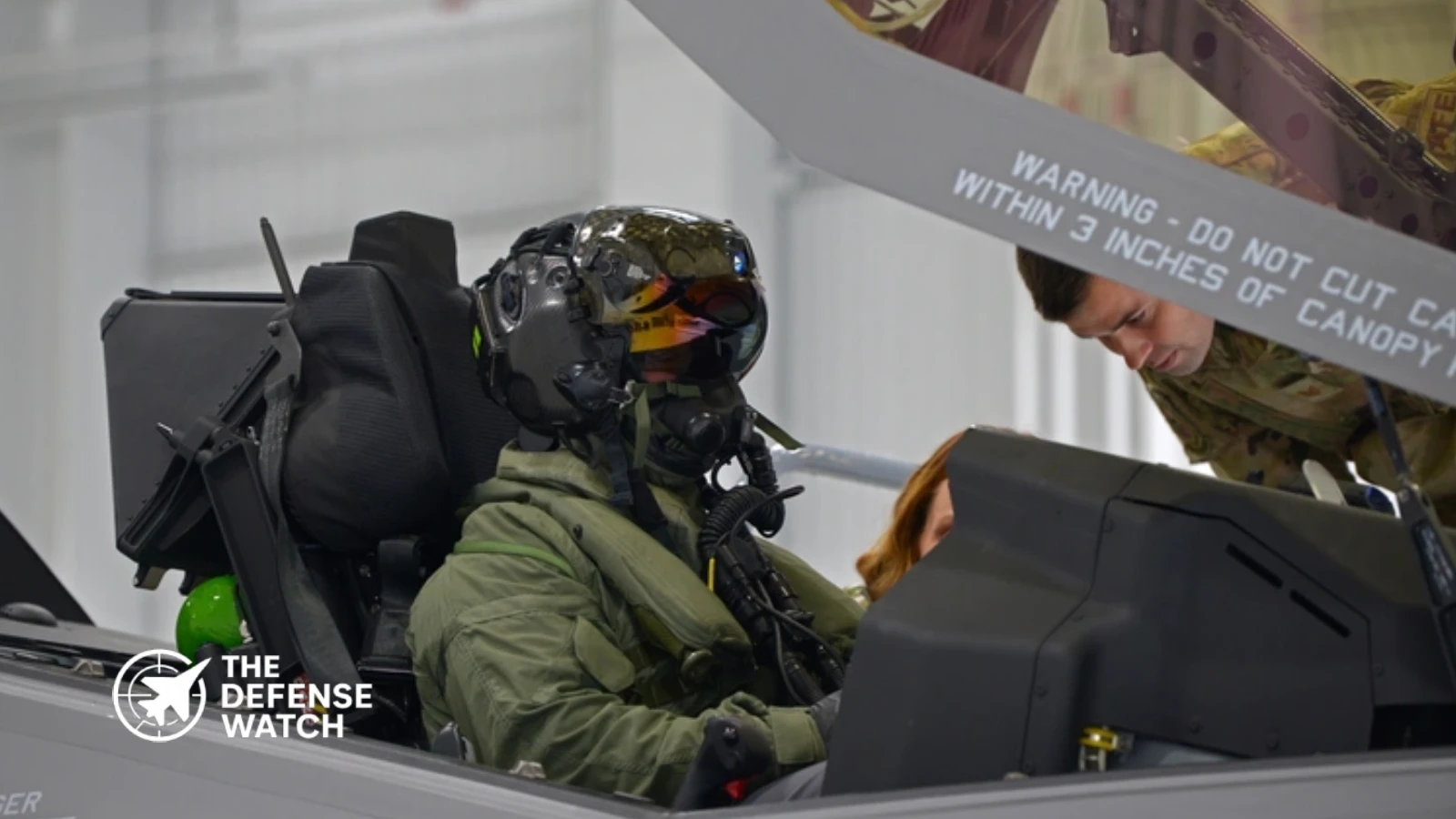
The F-35 is designed around a tightly integrated pilot-machine interface. Its helmet-mounted display system provides flight and tactical information while integrating imagery from the aircraft’s sensors.
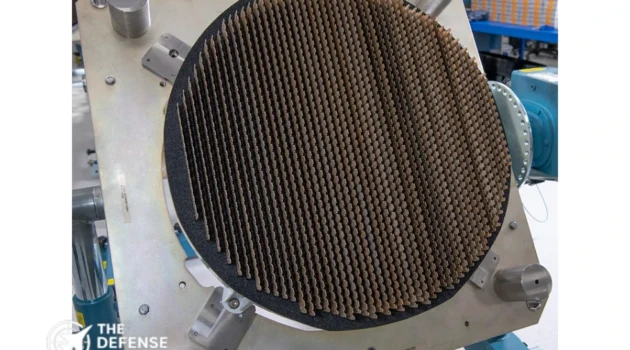
The F-35 program’s official technical overview states that the aircraft’s sensor suite includes the AN/APG-81 active electronically scanned array radar, Distributed Aperture System, Electro-Optical Targeting System and electronic warfare capabilities. The helmet-mounted display forms an important part of how that information reaches the pilot.
The Distributed Aperture System uses infrared cameras positioned around the aircraft to generate imagery that can be displayed through the pilot’s helmet. This allows the pilot to access information that would traditionally require separate aircraft displays or visual references.
That makes pilot equipment more than conventional protective clothing. It is part of the operational interface between the pilot and the F-35’s mission systems.

The Helmet Is Part Of The Aircraft’s Sensor Interface
The F-35’s Gen III Helmet Mounted Display System is particularly important to this relationship.
Lockheed Martin’s F-35 partner information identifies Collins Aerospace as the provider of the Gen III Helmet Mounted Display System. The system is designed to provide pilots with information from the aircraft’s sensors while supporting situational awareness during flight.
The system also removes some of the traditional separation between cockpit displays and the pilot’s direct view of the battlespace.
That matters because the F-35 was designed around sensor fusion rather than simply giving the pilot access to individual sensors. Information from radar, electro-optical systems, infrared cameras and electronic warfare systems is processed into a common operational picture.
As a result, maintaining the availability and compatibility of pilot equipment is part of maintaining the aircraft’s intended mission capability.
Lot 18 And Lot 19 Support A Continuing Production Pipeline
The new order is tied specifically to Lot 18 and Lot 19 aircraft deliveries.
F-35 production is organized through successive procurement lots, with equipment and support contracts covering the systems needed to deliver and operate aircraft in each production group. Pilot equipment therefore has to remain synchronized with aircraft deliveries, training pipelines and operational fleet requirements.
The contract also covers operational aircraft, meaning the requirement is not limited to newly delivered fighters.
This distinction is important for a growing fleet. As more F-35s enter service, demand for pilot equipment expands beyond initial aircraft deliveries to include replacements, additional equipment and support for active operational units.
Lockheed Martin’s published F-35 data has previously highlighted the scale of the training and operational enterprise surrounding the aircraft. In June 2024, the company reported more than 2,460 trained maintainers, more than 16,290 trained pilots and more than 860,000 F-35 flight hours at that point in the program.
Those figures illustrate why equipment procurement must scale alongside aircraft production.
International Fleet Growth Increases Equipment Requirements
The award also demonstrates the multinational character of the F-35 fleet.
The order supports FMS customers and non-U.S. participants in addition to U.S. Air Force, Marine Corps and Navy requirements. The F-35 program’s official data lists numerous international operators and program participants, creating a large and geographically distributed user base.
For the United States, this has operational implications beyond aircraft sales.
A common aircraft platform operated by multiple allied countries creates opportunities for shared training, logistics, maintenance knowledge and interoperability. Standardized pilot equipment can contribute to that common operating framework by ensuring personnel operating the same aircraft family use equipment designed around the same cockpit and mission-system architecture.
The multinational structure also places greater importance on supply-chain coordination. Equipment must be available where aircraft and pilots are based, while replacement and support requirements must be managed across different national procurement systems.

Production And Support Extend Into 2029
The contract is scheduled for completion in July 2029, giving Lockheed Martin several years to deliver the equipment associated with the order.
The extended performance period reflects the continuing nature of the F-35 production and sustainment cycle. Aircraft delivered during the period will require trained pilots, operational equipment and support infrastructure to reach and maintain mission readiness.
The order therefore fits into a broader series of F-35 procurement actions involving aircraft equipment, spares, modifications and sustainment.
Recent F-35 procurement activity has included large orders for aircraft spares and other equipment under the same N0001924G0010 basic ordering agreement. For example, a July 2026 order valued at more than $1.6 billion procured initial spares for F-35 production aircraft supporting U.S., FMS and program-partner fleets.
The pattern shows that aircraft procurement is increasingly accompanied by a large supporting ecosystem of components, equipment and sustainment resources.
What The Award Means For F-35 Readiness
The immediate purpose of the $29.6 million order is straightforward: provide pilot flight equipment for aircraft entering delivery pipelines and for operational F-35 fleets.
Its broader significance lies in the relationship between aircraft availability and the personnel and equipment required to use those aircraft.
An F-35 cannot generate operational capacity simply because an airframe has been delivered. Pilots must be trained, equipped and supported, while maintenance personnel, spare parts, software and mission systems must also be available.
The Navy has separately emphasized the importance of F-35 component readiness as part of keeping aircraft available for training and operational missions. NAVAIR has described efforts to establish repair capabilities for an expanding range of F-35 components and to reduce dependence on outside sources for selected maintenance workloads.
The new pilot equipment order fits within that same readiness equation.
For the U.S. services and F-35 international community, ensuring that pilots have the required flight equipment as aircraft deliveries accelerate helps prevent a gap between receiving aircraft and having the personnel and equipment needed to operate them.
Bottom Line
Lockheed Martin’s $29.6 million F-35 pilot flight equipment order is a relatively small contract compared with major aircraft procurement awards, but it addresses a requirement directly connected to operational readiness.
The order supports Lot 18 and Lot 19 aircraft as well as operational F-35 fleets, with funding from U.S. services, FMS customers and non-U.S. Department of War participants.
With most of the work centered in London and completion scheduled for July 2029, the award also highlights the international industrial and operational structure behind the F-35 program.
As F-35 fleets continue to expand, procurement of pilot equipment, spares and other support items will remain an essential part of converting aircraft production into usable combat capability.
Enjoying our coverage?
Make The Defense Watch a preferred source on Google to see more of our geopolitical and defense insights when relevant to you.