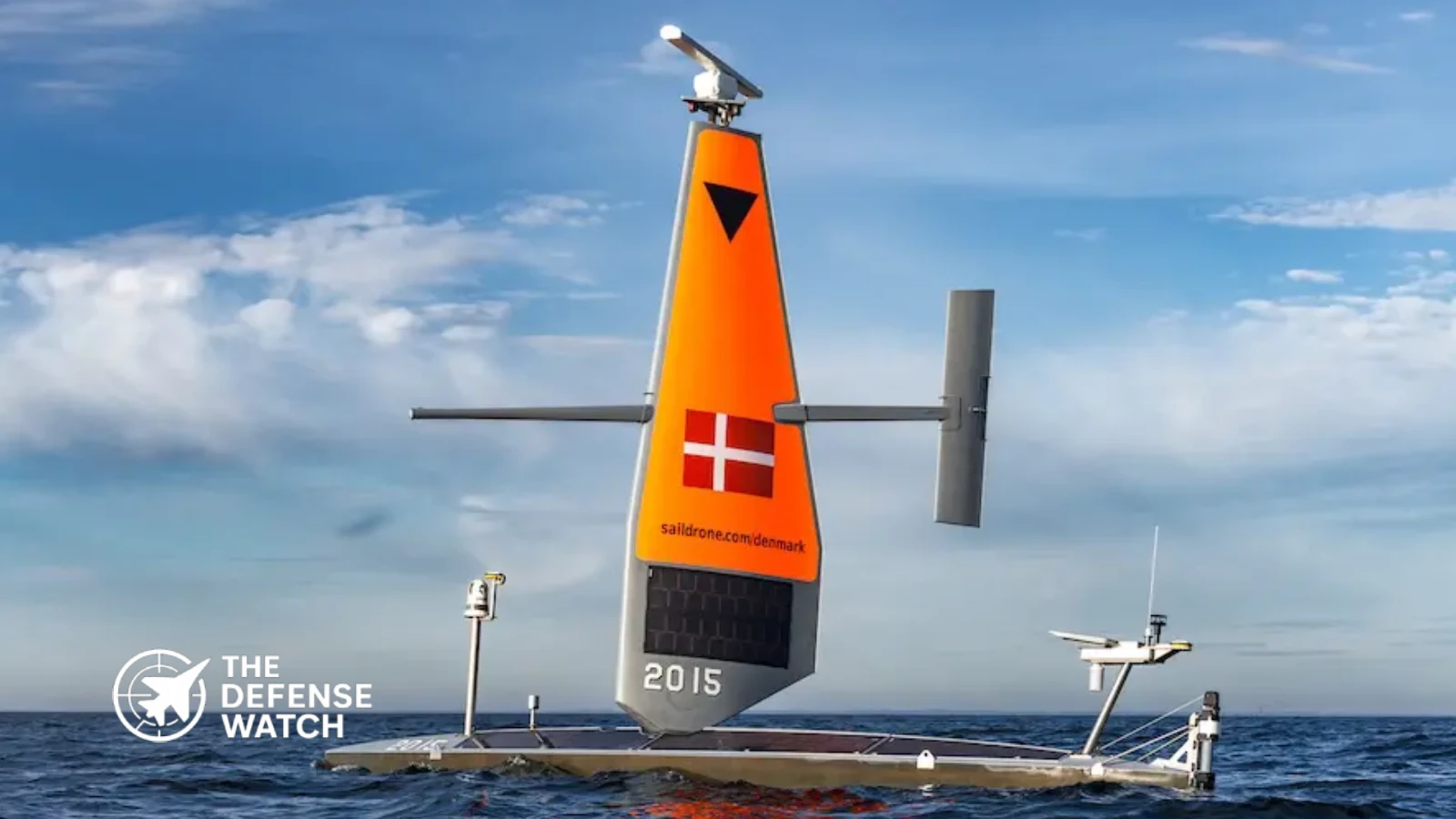
Saildrone Expands European Unmanned Surface Vessel Production
Saildrone is expanding its unmanned surface vessel production footprint across Europe with new manufacturing activity in the Netherlands, Norway and Poland, while establishing Copenhagen as its permanent European operational headquarters. The company announced the expansion as European governments and NATO customers increase their focus on persistent maritime surveillance and protection of critical infrastructure.
Takeaways
Saildrone is establishing a European manufacturing and operations network for autonomous maritime systems.
1. Three European Production Sites
Saildrone plans to build different parts of its unmanned surface vessel portfolio in the Netherlands, Norway and Poland.
2. 52-Meter Spectre For The Netherlands
Van Der Valk Shipyard in the Netherlands will build the first 52-meter Saildrone Spectre, a larger USV designed for missions including anti-submarine warfare and ISR.
3. Surveyor Production Moves Into Norway
Umoe Mandal will manufacture the next generation of the 20-meter Saildrone Surveyor, while Southern Spars in Poland will produce Surveyor wings.
4. Copenhagen Becomes The European Hub
Saildrone’s permanent European headquarters in Copenhagen will support mission management, maintenance, assembly, technical operations and remote piloting.
5. Baltic Operations Provide An Operational Baseline
Four Saildrone Voyager USVs previously operated in Danish waters for six months, achieving 92% fleet uptime and detecting more than 170,000 unique contacts.
The industrial plan divides production among three countries. Van Der Valk Shipyard in the Netherlands will build the first 52-meter Saildrone Spectre, Umoe Mandal in Norway will manufacture the next generation of the 20-meter Surveyor, and Southern Spars in Poland will produce Surveyor wings.
Saildrone’s Copenhagen headquarters, formally opened on August 17, will provide the regional base for mission management, vehicle assembly, servicing, technical operations and remote piloting. The company says local teams will be able to deploy and support vessels directly from Denmark.
A Distributed European Production Model
The significance of the expansion extends beyond simply adding shipbuilding capacity. Saildrone is creating a geographically distributed European industrial network in which hull construction, composite production and operational support are located close to the maritime theaters where the systems are expected to operate.
That model can reduce the logistical burden associated with deploying and sustaining autonomous vessels from facilities outside Europe. It also gives European customers a larger role in the local manufacture, maintenance and support of platforms intended for persistent maritime missions.
Saildrone Europe managing director Robert Kleist described the move as creating an enduring regional capability for European customers. The company has emphasized local manufacturing and sustainment as part of its broader European strategy.
The approach also fits a broader defense-industry trend toward distributed production. For unmanned systems, proximity between manufacturing, mission control, maintenance and operational areas can be particularly important because relatively small fleets may be expected to remain deployed for extended periods.
Saildrone Spectre Adds A Larger Naval USV To The European Portfolio
The most significant platform associated with the European expansion is Saildrone Spectre. The 52-meter USV was unveiled in April 2026 as the company’s largest and fastest platform, designed around missions including anti-submarine warfare, intelligence, surveillance and reconnaissance, electronic warfare and kinetic effects.
Saildrone says Spectre can reach 27 knots with a 25-ton payload and has a maximum payload capacity exceeding 70 metric tons in its current published specifications. The platform uses a combination of wind, solar, electric and diesel propulsion, with the Silent Endurance configuration designed for extended and comparatively quiet operations.
| Capability | Saildrone Spectre |
|---|---|
| Length | 52 meters |
| Wing height | 43 meters |
| Draft | 3.2 meters |
| Maximum payload | More than 70 metric tons |
| Maximum speed | 27 knots with 25-ton payload |
| Range | 3,280 nautical miles at 25 knots with 25-ton payload |
| Low-speed propulsion | Near-silent electric propulsion up to 12 knots |
| Payload configuration | Up to two 40-foot containers or five 20-foot containers |
Spectre’s containerized payload architecture is particularly relevant to naval users because it allows the vessel to be configured around different mission packages rather than being tied to a single sensor or effect.
Saildrone says the platform has undergone physical tow-tank testing in Copenhagen, including testing of a 1/7-scale model for propulsion and seakeeping. The company has also stated that the design has received Approval in Principle from the American Bureau of Shipping under its High Speed Naval Craft framework.
Surveyor Provides The Blue-Water Surveillance Layer
The second major platform in the European manufacturing plan is Saildrone Surveyor. At 20 meters long, Surveyor is intended for persistent blue-water operations, including maritime ISR, deep-ocean mapping and undersea surveillance.
The platform can carry a combination of radar, electro-optical and infrared cameras, AIS, satellite communications, passive acoustic systems and oceanographic sensors. Its design is intended to support operations lasting months rather than the shorter patrol periods associated with many crewed maritime platforms.
Putting Surveyor manufacturing in Norway is strategically relevant to Northern European maritime operations. Norway has an established maritime industrial base and direct exposure to the North Atlantic, Norwegian Sea and Arctic operating environment.
The Polish component of the production network is also important. Southern Spars will produce Surveyor wings, creating a specialized manufacturing role within the wider European supply chain rather than concentrating every component in one country.
Copenhagen Connects Manufacturing With Operations
Saildrone’s decision to establish its European headquarters in Copenhagen gives the production network an operational center.
The company says the site will support mission management, servicing, technical operations and remote piloting. That means European customers will not necessarily have to rely on a distant support organization for every stage of deployment and maintenance.
Copenhagen also has a geographic advantage. Denmark sits between the North Sea and Baltic Sea operating environments and is closely connected to the maritime infrastructure of Northern Europe.
The company’s European presence began taking shape in 2025, when Saildrone established its Danish subsidiary following a $60 million funding round led by Denmark’s Export and Investment Fund. Four Voyager USVs subsequently conducted a six-month deployment supporting the Danish Ministry of Defence Acquisition and Logistics Organisation.
Saildrone reported 92% fleet uptime during that deployment despite challenging weather and sea conditions. The four vessels also detected more than 170,000 unique contacts, providing an operational data point for the company’s persistent surveillance model.
Baltic Sea Operations Highlight The Role Of Autonomous Surveillance
The Baltic Sea is one of the clearest examples of why European militaries are examining autonomous maritime systems.
The region contains dense commercial shipping, energy infrastructure, telecommunications cables and other subsea assets. Monitoring such a large and busy maritime environment continuously with crewed ships and aircraft is expensive and places additional demands on already limited military resources.
Saildrone has already used its Voyager platform in the Baltic Sea for surface and subsurface surveillance. In March 2026, the company announced the successful integration of an Innomar sub-bottom profiler on Voyager during operations supporting the Danish defense organization.
That system allowed the USV to collect acoustic data about the seabed and sub-seabed. Such capabilities can complement conventional maritime surveillance by extending monitoring below the waterline, where cables, pipelines and other critical infrastructure are located.
The operational value is therefore not limited to detecting ships. Autonomous platforms can also provide persistent data collection that helps establish a baseline of normal maritime activity, making unusual movements or changes easier for operators to identify.
Why The European Production Strategy Matters
For NATO countries, persistent maritime surveillance presents a difficult resource-allocation problem. Crewed frigates, patrol aircraft and helicopters provide capabilities that autonomous vessels cannot fully replace, but using those high-value platforms for routine monitoring can reduce their availability for missions that require human crews and more sophisticated combat systems.
Unmanned surface vessels offer another layer.
A USV can remain at sea for extended periods, carry sensors into areas that require continuous observation and transmit collected information back to shore-based operators. The system can therefore function as a persistent sensing node rather than as a direct substitute for a conventional warship.
This distinction is important. The value of systems such as Surveyor and Spectre lies in expanding the number of sensors that a maritime force can distribute across a large area.
For NATO’s northern flank, that could support broader maritime-domain-awareness architectures covering the Baltic Sea, North Sea, Norwegian Sea and approaches to the North Atlantic. Saildrone has specifically identified the Greenland-Iceland-United Kingdom gap as an area where autonomous systems could contribute to persistent surveillance and anti-submarine warfare coverage.
Industrial Capacity Is Becoming Part Of Maritime Capability
The European expansion also illustrates how manufacturing capacity is becoming increasingly important to unmanned warfare.
A platform that can remain at sea for months still requires maintenance, software support, spare parts, payload integration and trained operators. Establishing those capabilities within the operating region can shorten support chains and provide customers with greater control over availability.
Saildrone’s distributed European approach places shipbuilding, composite production and operational support in several countries rather than relying on one centralized facility.
That structure could also provide a foundation for future fleet expansion if European demand increases. However, production announcements should not be confused with fielded military capacity. The operational value of the new network will ultimately depend on completed vessels, qualified crews and remote operators, mission-system integration, reliable communications and actual customer deployments.
The current expansion therefore represents an industrial and operational step rather than evidence that European maritime forces have already established large autonomous fleets.
A Broader Shift Toward Persistent Maritime Autonomy
Saildrone’s European expansion comes as unmanned maritime systems are moving from technology demonstrations toward more sustained operational roles.
The company’s existing fleet has accumulated extensive at-sea experience, while its newer platforms are being designed around higher-end naval requirements. Saildrone reports more than two million nautical miles sailed and more than 60,000 days at sea across its operations.
The progression from the smaller Explorer and Voyager platforms toward Surveyor and Spectre reflects a widening mission set. Smaller USVs can provide cost-effective maritime surveillance, while larger vessels can carry more substantial sensor packages and potentially support undersea warfare, electronic warfare and other naval missions.
For Europe, the immediate question is how these platforms integrate with existing NATO surveillance networks rather than operate independently.
Autonomous vessels become more useful when their sensor data can be correlated with information from crewed ships, patrol aircraft, satellites, fixed sensors and other unmanned systems. That requires reliable communications, common data standards, secure command-and-control systems and clear rules governing autonomous navigation and mission execution.
Those integration challenges will be as important as the vessels themselves.
What Comes Next
Saildrone’s European industrial expansion establishes three manufacturing locations and a Copenhagen-based operational headquarters at a time when European governments are placing greater emphasis on maritime-domain awareness and protection of critical infrastructure.
The first 52-meter Spectre planned for construction in the Netherlands will be a significant test of the company’s ability to move its larger naval USV designs into European production. Norway’s Surveyor manufacturing role and Poland’s wing production will add further regional capacity.
For NATO, the broader importance is the creation of another source of persistent maritime sensing capacity. Autonomous vessels will not replace frigates, submarines, maritime patrol aircraft or other crewed systems, but they can provide additional coverage and help reserve those platforms for missions where human crews and greater combat capability are essential.
Saildrone’s Copenhagen hub, combined with production in three European countries, gives the company a regional industrial and operational structure from which that model can be tested at greater scale.