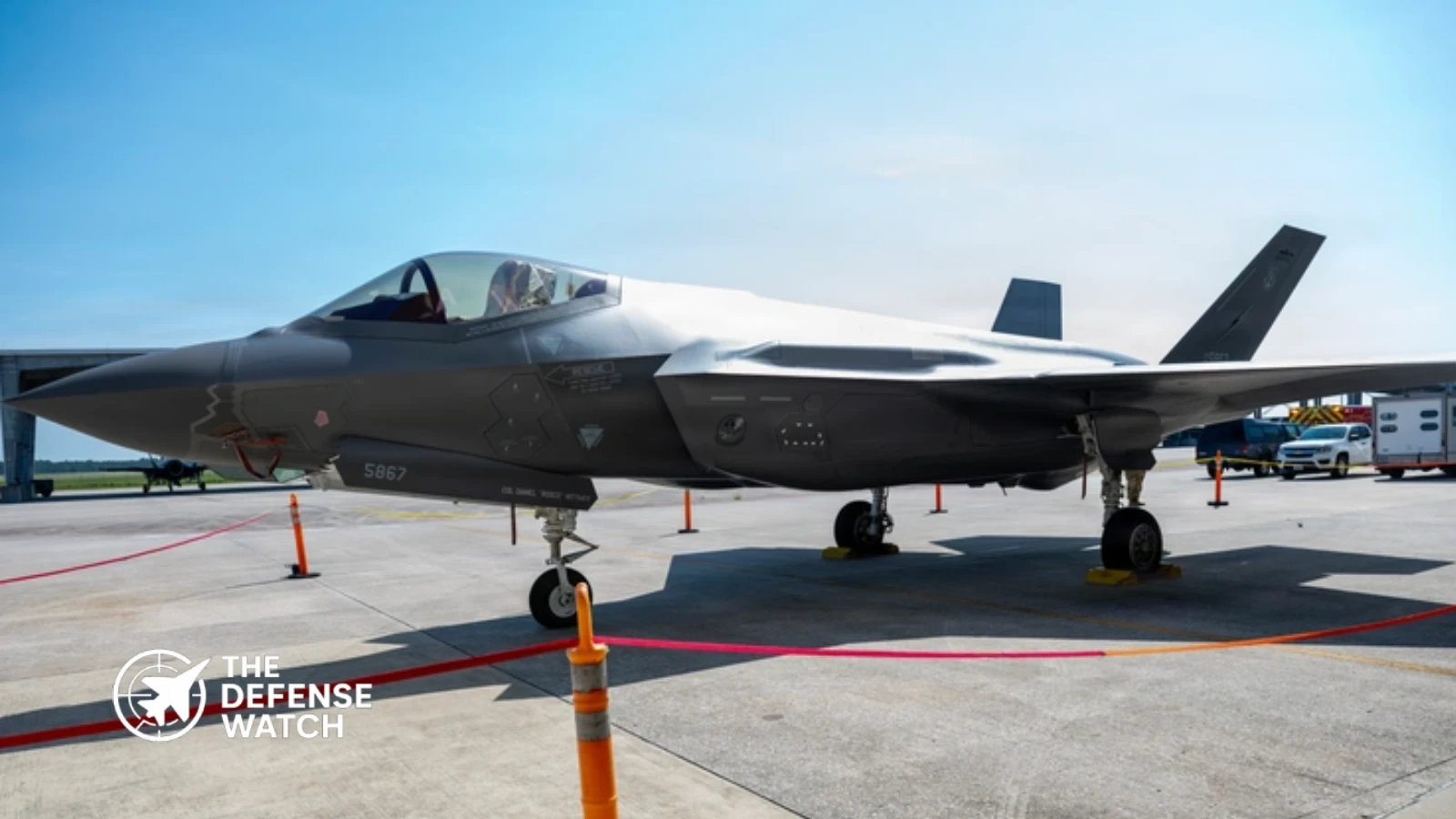
U.S. Air Force Awards $920 Million Contract For Next-Generation Aerospace Ground Equipment
The U.S. Air Force has awarded a multiple-award indefinite-delivery, indefinite-quantity contract with a ceiling of $920 million to 24 companies for next-generation aerospace and ground equipment and vehicles. The award is being managed by the Air Force Materiel Command’s Air Force Life Cycle Management Center, Support Equipment and Vehicles organization at Robins Air Force Base, Georgia, with work expected to continue through 2036.
Takeaways
U.S. Air Force expands access to next-generation aerospace and ground support equipment
1. $920 Million Contract Ceiling
The U.S. Air Force has established a $920 million ceiling for modern aerospace and ground support equipment and vehicles under a multiple-award IDIQ contract.
2. 24 Companies Selected
Twenty-four contractors, including Lockheed Martin, Booz Allen and Oshkosh, received awards under the competitive acquisition, which attracted 66 offers.
3. Equipment Supports Aircraft Generation
The program is intended to modernize the equipment used to generate and sustain aircraft sorties, spanning aerospace ground equipment, vehicles and related support capabilities.
4. Work Runs Through 2036
The contract has an expected completion date in 2036, providing the Air Force with a long-term vehicle for acquiring and modernizing support equipment.
5. Supports Agile Combat Operations
The award aligns with Air Force efforts to improve combat support and aircraft generation capacity as distributed operations place greater demands on mobile, adaptable ground equipment.
The award includes Aero Specialties, ATAP, ATEC, Aviation Ground Equipment, Booz Allen, Chase Defense, Coherent Technical, CVI, Defense Engineering Services, DEVAL, ES3, GS Engineering, HDT, Intuitive, Knight Aerospace, Lockheed Martin, MCT Industries, Newton Corp., Oshkosh, P2 Mission Solutions, PCI Aviation, Suntest Systems, TLD and Torch Technologies.
The competitive acquisition drew 66 offers, giving the Air Force a broad industrial base from which to place future orders. The initial award obligates only $15,000 in fiscal 2026 research, development, test and evaluation funding, meaning the $920 million figure represents the contract ceiling rather than money committed to the contractors at award.
Why Aerospace Ground Equipment Matters To Airpower
Aerospace ground equipment is often less visible than aircraft, weapons and sensors, but it is fundamental to sortie generation. Aircraft require specialized equipment for towing, power generation, maintenance, servicing, loading, handling and other activities before they can return to flight.
The Air Force’s Support Equipment and Vehicles organization identifies its mission as acquiring and sustaining war-ready support equipment and vehicles. Its portfolio includes vehicles, materiel handling equipment and expeditionary airfield resources.
That role becomes more important as the Air Force prepares for operations in which aircraft may need to operate from dispersed or austere locations. A modern fighter, bomber, tanker, transport aircraft or unmanned system cannot generate combat power simply because the aircraft itself is available. The supporting equipment has to move with the force, operate reliably and be compatible with the aircraft and maintenance architecture.
The broader acquisition effort behind this award is the Next Generation Aerospace Ground Equipment, or NGAGE, program. The Air Force solicitation describes a 10-year multiple-award IDIQ designed to modernize and acquire aerospace ground equipment for the warfighter. The program is intended to cover both commercial and non-commercial requirements and to maintain a diverse industrial base of large and small businesses.
The NGAGE objectives also emphasize innovative and multi-capable equipment, digital engineering and Model-Based Systems Engineering. That approach is significant because it moves ground equipment away from being treated solely as a collection of individual support items and toward a more adaptable support architecture.
Contract Breakdown & Financial Allocation
$920 Million Ceiling
- Contract ceiling: $920 million
- Contract type: Indefinite-delivery, indefinite-quantity, multiple-award contract
- Expected completion: 2036
- Competition: 66 offers received
- Initial obligation: $15,000 in FY2026 RDT&E funding
- Contracting activity: Air Force Materiel Command, Air Force Life Cycle Management Center, Support Equipment and Vehicles, Robins Air Force Base, Georgia
An IDIQ contract does not mean that the government immediately spends the full ceiling. Instead, it establishes a contracting vehicle through which individual delivery orders or task orders can be placed as specific requirements emerge.
This structure gives the Air Force a pool of prequalified suppliers rather than requiring a completely new competition for every future requirement. The NGAGE solicitation called for a two-year base period followed by four two-year options, producing a potential 10-year ordering period.
24 Awardees
The awardee base covers a wide range of industrial capabilities:
- Aerospace equipment: Aero Specialties, Aviation Ground Equipment, TLD and PCI Aviation
- Engineering and technical services: ATEC, Coherent Technical, Defense Engineering Services, DEVAL, GS Engineering and Torch Technologies
- Defense and systems integration: Lockheed Martin, Knight Aerospace, Intuitive and HDT
- Vehicles and specialized equipment: Oshkosh and MCT Industries
- Technical and mission support: Booz Allen, Chase Defense, ES3, P2 Mission Solutions and others
The presence of both large defense companies and specialized smaller firms is consistent with the Air Force’s stated objective of maintaining a diverse awardee base capable of addressing commercial and non-commercial requirements.
Geographic Work Allocation
The contract announcement states that performance will occur at various locations. It does not provide a dollar allocation by state or contractor.
Accordingly, no reliable percentage of the $920 million ceiling can be assigned to Idaho, Alabama, Texas, Florida or other states based on the award announcement alone. The listed locations are contractor headquarters or principal locations associated with the awards, not necessarily the eventual distribution of contract obligations.
Initial Funding
The Air Force is obligating $15,000 in FY2026 RDT&E funds at award.
That amount is only about 0.0016% of the $920 million ceiling, underscoring the distinction between an IDIQ ceiling and actual obligations. Future orders can carry their own funding based on the equipment, development, integration or support requirement being procured.
No foreign military sales funding stream is identified in the award information provided.
Industry Impact & Acquisition Insight
The acquisition gives the Air Force a long-duration mechanism for refreshing equipment that directly affects aircraft availability and sortie generation. AFLCMC is responsible for life-cycle management across Air Force weapon systems and supporting capabilities, while its Combat Readiness organization specifically oversees Support Equipment and Vehicles.
The multiple-award structure also distributes future opportunities across a competitive industrial base. Rather than committing the entire ceiling to one supplier, the Air Force can select among 24 awardees as individual requirements arise. That can shorten procurement timelines, encourage competition at the order level and give the service access to specialized capabilities.
The strategic value is particularly relevant to distributed operations. Air Force planning increasingly requires support systems that can function across multiple locations instead of relying exclusively on large, fixed installations. Ground equipment that can be rapidly transported, adapted and integrated with different aircraft and mission sets can therefore become an important part of operational resilience.
The acquisition also illustrates why sustainment modernization extends beyond aircraft upgrades. Advanced aircraft can still face sortie-generation constraints if the supporting power, handling, maintenance, servicing and transportation equipment remains outdated or difficult to deploy. AFLCMC’s Support Equipment and Vehicles organization has explicitly framed its mission around providing common support equipment and vehicles to the warfighter.