• Home
  • About
  • Defense Systems
  • Manufacturer
  • Comparisons
  • Compare 
  • Tools
TheDefenseWatch.com
  • Aerospace & Aviation
  • Military & Ordnance
  • Naval & Maritime
  • Cyber & Space Defense
  • Policy & Strategy
  • Global News
  • Tools Library
    • Smart Calculator
    • Drone Flight Time Calculator
    • Drone Range Calculator
    • Counter-Drone Jammer Effective Range Calculator
    • Counter-Battery Radar Detection Calculator
    • Artillery Fire Correction Calculator
    • Thermal Camera Detection Range Calculator
    • Missile Range & Time-of-Flight Calculator
    • Radar Detection Range Calculator
    • FPV Strike Drone Payload vs Range Calculator
    • Loitering Munition Endurance Calculator
    • Sniper Ballistic Drop & Windage Calculator
    • Bullet Drop Calculator
    • U.S. Army Combat Fitness Test (ACFT) Calculator
    • Military Pension Calculator
    • Military Retirement Calculator
    • Military Pension Calculator
    • Large Number Calculator
Font ResizerAa

TheDefenseWatch.com

The Defense Watch | U.S. & Global Defense News, Analysis & Military Updates

Search
  • Home
  • About
  • Defense Systems
  • Manufacturer
  • Comparisons
  • Compare 
  • Tools

Stay Updated

Get the latest update

Subscribe

Explore

  • Drone
  • Fighter Jets & Military Aircraft
  • Hypersonic Weapons
  • Aircraft Carriers
  • Strategic History & Missions
  • Tools Library
Home » F-35A Expands NATO Airpower Reach Across Europe During Ramstein Flag 26 Exercise
Aerospace & AviationFighter Jets & Military Aircraft

F-35A Expands NATO Airpower Reach Across Europe During Ramstein Flag 26 Exercise

Daniel Mercer / Defense & Aerospace Analyst
Last updated: September 7, 2026 5:50 am
Daniel Mercer / Defense & Aerospace Analyst
Share
3 Min Read
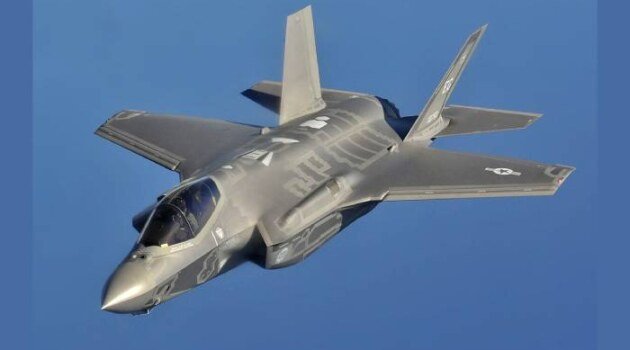
F-35A fighter jet 2027 budget
Image : U.S. Air Force
SHARE

Executive Summary

NATO’s Ramstein Flag 26 exercise demonstrated the ability of U.S. Air Force F-35A fighters and allied fifth-generation aircraft to conduct distributed combat operations across Europe. The exercise involved more than 200 aircraft from 18 nations and tested critical capabilities including integrated air and missile defense, intelligence sharing, and Agile Combat Employment across NATO’s northern and southern regions.

F-35A Demonstrates Long-Range NATO Combat Reach Across Europe

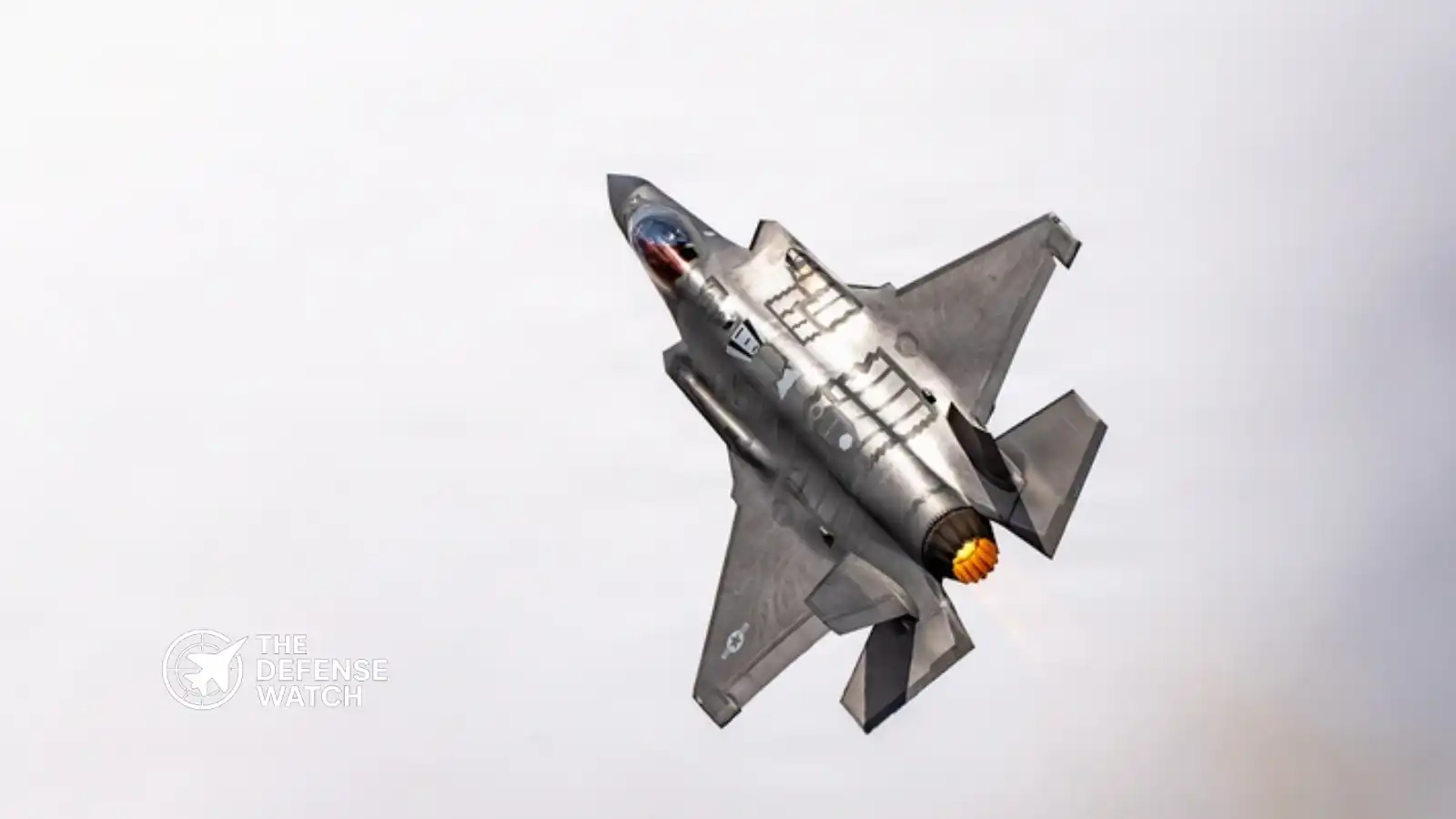
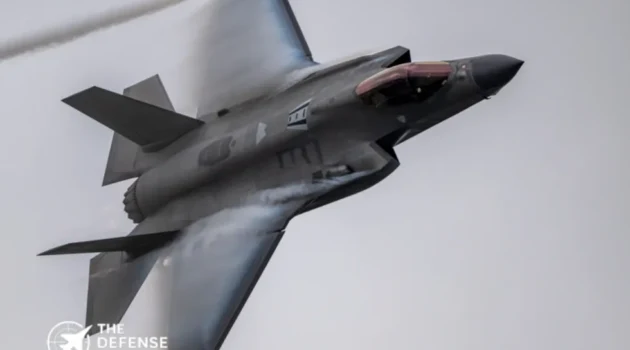
The F-35A Lightning II took center stage during NATO’s Ramstein Flag 26 exercise as aircraft from the U.S. Air Force’s 48th Fighter Wing operated alongside allied fifth-generation fighter fleets across a vast European battlespace.

Contents
F-35A Demonstrates Long-Range NATO Combat Reach Across EuropeRamstein Flag 26 Tests NATO’s Distributed Airpower ModelWhy The F-35A Was Central To The ExerciseAgile Combat Employment Takes Center StageStrategic Importance For NATO’s Northern FlankAnalysis: What Ramstein Flag 26 Reveals About Future Air Warfare

According to NATO Allied Air Command and U.S. Air Force officials, the exercise ran from June 8 to June 19 and involved more than 200 aircraft operating from over 20 locations across 12 countries, stretching from Norway to Spain. The large-scale event was designed to validate NATO’s ability to generate combat airpower across dispersed locations while maintaining operational coordination in a high-threat environment.

At Pirkkala Air Base in Finland, more than 200 personnel from the 48th Fighter Wing’s 493rd Fighter Squadron deployed with F-35A aircraft to participate in the exercise. The deployment formed part of NATO’s broader effort to integrate advanced airpower capabilities across the alliance’s northern flank.

  • F-35A Lightning II Fighter Jet

    F-35A Lightning II Fighter Jet

    • Generation: 5th
    • Maximum Speed: Mach 1.6 (1,200 mph)
    • No. of Engines: 1
    • Radar Range: 150+ miles
    • View Details →
    8.0

    Ramstein Flag 26 Tests NATO’s Distributed Airpower Model

    Ramstein Flag has evolved into one of NATO’s premier operational air exercises. In 2026, it became the first edition planned and executed under direct leadership of NATO Allied Air Command, reflecting the alliance’s growing emphasis on integrated multinational operations.

    The exercise brought together F-35 operators from the United States, Denmark, Italy, and Norway. Additional allied aircraft, airborne surveillance platforms, and remotely piloted systems participated in complex missions focused on collective defense.

    Key exercise objectives included:

    Mission AreaOperational Purpose
    Integrated Air and Missile Defense (IAMD)Coordinating air and missile defense across allied forces
    Intelligence and Data SharingEnhancing real-time information exchange
    Counter Anti-Access/Area Denial (C-A2AD)Defeating enemy air defense networks
    Agile Combat Employment (ACE)Sustaining combat operations from dispersed locations
    Multinational InteroperabilityIntegrating aircraft and command systems across NATO

    During peak operations, NATO reported more than 120 aircraft flying simultaneously and generating over 150 sorties daily.

    Why The F-35A Was Central To The Exercise

    The F-35’s role extended beyond traditional fighter missions.

    NATO officials emphasized that the aircraft’s advanced sensors, secure data-sharing capabilities, and survivability features allow it to function as a critical node within a larger allied combat network. Rather than operating independently, F-35s distribute targeting and threat information to other aircraft, commanders, and air defense systems.

    This network-centric approach is increasingly important as NATO prepares for potential high-intensity conflicts involving advanced air defense systems and long-range precision weapons.

    The exercise specifically evaluated how F-35 formations could support the alliance’s 360-degree Integrated Air and Missile Defense architecture. NATO views this capability as essential for protecting allied territory, military forces, and civilian populations against evolving threats.

    Agile Combat Employment Takes Center Stage

    One of the most significant aspects of Ramstein Flag 26 was the validation of Agile Combat Employment concepts.

    ACE is a U.S. Air Force and NATO operational model that disperses aircraft, personnel, and support equipment across multiple locations rather than concentrating forces at a few major air bases. The approach seeks to complicate enemy targeting and increase survivability during conflict.

    For the 48th Fighter Wing, the exercise tested the ability to sustain F-35 combat operations from geographically separated sites while maintaining high sortie generation rates.

    • F-35 Lightning II Fighter Jet

      F-35 Lightning II Fighter Jet

      • Generation: 5th
      • Maximum Speed: Mach 1.6 (1,200 mph / 1,930 km/h)
      • No. of Engines: 1
      • Radar Range: ~150+ km (AN/APG-81 AESA)
      • View Details →
      8.8

      The concept has become increasingly relevant as NATO studies lessons from recent conflicts where fixed airfields and logistics hubs have become vulnerable to long-range missile attacks and drone strikes. Ramstein Flag provided an opportunity to evaluate how dispersed operations could maintain combat effectiveness across large distances.

      Strategic Importance For NATO’s Northern Flank

      The deployment of U.S. and allied F-35 aircraft to Finland highlights the growing strategic importance of Northern Europe following Finland’s accession to NATO.

      Operating from Finnish territory provides the alliance with additional options for force dispersal and rapid response in the Baltic and Arctic regions. The country’s longstanding expertise in dispersed aviation operations, including highway strip operations, offers valuable lessons for NATO air forces adapting to modern threats.

      The exercise also demonstrated the increasing density of F-35 operators within NATO. As more member states field fifth-generation aircraft, the alliance gains the ability to create multinational formations that share common systems, tactics, and data networks.

      This growing interoperability represents one of the most significant shifts in NATO airpower since the alliance’s post-Cold War transformation.

      Analysis: What Ramstein Flag 26 Reveals About Future Air Warfare

      Beyond routine training, Ramstein Flag 26 offered insight into how NATO expects future air campaigns to be conducted.

      The exercise’s focus on distributed operations, integrated air and missile defense, and counter-A2AD missions reflects concerns about operating against sophisticated adversaries equipped with layered air defense systems, electronic warfare capabilities, and long-range precision weapons.

      The F-35’s value in this environment is increasingly tied to its ability to connect allied forces rather than solely its stealth characteristics. By serving as a sensor and data-sharing platform, the aircraft enables NATO commanders to create a more comprehensive operational picture across multiple domains.

      Ramstein Flag also highlighted the alliance’s effort to move beyond national air operations toward a more integrated multinational force structure. As European F-35 fleets continue to expand, NATO’s ability to conduct coordinated fifth-generation operations across large geographic areas is expected to become a central pillar of allied deterrence strategy.

      For the United States, the participation of the 48th Fighter Wing reinforces the role of forward-based F-35 units in Europe as a critical component of NATO’s rapid response and collective defense posture. The exercise demonstrated that these forces can quickly integrate with allied aircraft and operate across dispersed locations while sustaining combat effectiveness under demanding conditions.
TAGGED:F-35ARamstein Flag 26
Share This Article
Facebook Copy Link Print
ByDaniel Mercer / Defense & Aerospace Analyst
Follow:
Daniel Mercer is a defense and aerospace analyst at TheDefenseWatch.com covering military aviation, aerospace technology, unmanned systems, air warfare, and defense procurement. His reporting uses official documents, government and military statements, company announcements, and other public sources.
Leave a Comment

Leave a Reply Cancel reply

Your email address will not be published. Required fields are marked *

Search Defense Systems

Latest Defense Systems

  • F-47A Fighter Jet F-47A Fighter Jet
  • China DF-61 Missile China DF-61 Missile
  • B61 Nuclear Bomb B61 Nuclear Bomb
  • Japan E-767 Airborne Japan E-767 Airborne
  • Remington 870 Shotgun Remington 870 Shotgun
  • RUTA B1 Cruise Missile RUTA B1 Cruise Missile
  • XQ-67A Drone XQ-67A Drone
  • B-25 Mitchell Bomber B-25 Mitchell Bomber
  • F-100 Super Sabre F-100 Super Sabre

Recent Compares

  • J-10C vs JF-17 Thunder: Which Fighter Is More Capable? J-10C vs JF-17 Thunder: Which Fighter Is More Capable? View Comparison →
  • Tejas vs Gripen: Key Differences and Capabilities Tejas vs Gripen: Key Differences and Capabilities View Comparison →
  • Tejas vs MiG-21 Bison: How India Replaced Its Iconic Supersonic Fighter Tejas vs MiG-21 Bison: How India Replaced Its Iconic Supersonic Fighter View Comparison →
  • F-35 vs F-16: Stealth, Sensors and Combat Roles F-35 vs F-16: Stealth, Sensors and Combat Roles View Comparison →
  • Tejas Fighter Jet vs F-16 Fighting Falcon: Capability Compared Tejas Fighter Jet vs F-16 Fighting Falcon: Capability Compared View Comparison →
  • Rafale Fighter Jet vs F-16 Fighting Falcon : Which Fighter Has the Edge? Rafale Fighter Jet vs F-16 Fighting Falcon : Which Fighter Has the Edge? View Comparison →
  • Su-57 Fighter Jet vs J-20 Fighter Jet: Stealth and Air Combat Compared Su-57 Fighter Jet vs J-20 Fighter Jet: Stealth and Air Combat Compared View Comparison →
  • Mirage 2000 vs Tejas Mk1A: Legacy Combat Power vs Indigenous Modernization Mirage 2000 vs Tejas Mk1A: Legacy Combat Power vs Indigenous Modernization View Comparison →
  • Rafale Fighter Jet vs F-22 Raptor: Which Air Dominance Fighter Has the Edge? Rafale Fighter Jet vs F-22 Raptor: Which Air Dominance Fighter Has the Edge? View Comparison →
  • Tejas Fighter Jet vs. Rafale Fighter Jet: India’s Indigenous Fighter Meets France’s Proven Multirole Combat Aircraft Tejas Fighter Jet vs. Rafale Fighter Jet: India’s Indigenous Fighter Meets France’s Proven Multirole Combat Aircraft View Comparison →

Recent Posts

  • Marine One Explained: The Presidential Helicopter, Its Fleet and the VH-92A Transition
  • Sikorsky Wins South Korea Contract for Four S-92A+ Presidential Helicopters
  • Saudi Arabia Intercepts Missiles Targeting Riyadh as Aramco Building Is Damaged
  • US Approves Potential $1.08 Billion Black Hawk Helicopter Sale to Mexico
  • NASA Completes Final ISS Solar Array Installation, Raising Station Power Capacity by 30%

You Might Also Like

NORAD F-16 Arctic deployment
Aerospace & AviationFighter Jets & Military Aircraft

NORAD F-16s Deploy From Alaska to High North Under Arctic Vanguard

September 18, 2026
M-346 F Block 20
Aerospace & AviationFighter Jets & Military Aircraft

Indonesia, Leonardo Sign Letter of Intent for M-346 F Block 20 for Air Force Training and Light Combat

September 9, 2026
MV-75 Tiltrotor Aircraft
Aerospace & AviationFighter Jets & Military Aircraft

US Army Moves Up Bell MV-75 Tiltrotor Fielding, Targets First Delivery by Late 2026

September 9, 2026
NASA X-59 test flights
Aerospace & AviationFighter Jets & Military Aircraft

NASA X-59 Test Flights Signal New Era Of Quiet Supersonic Aviation

September 7, 2026

Logo

Copyright © 2026 TheDefenseWatch.com

Helpful Links

  • Home
  • About Us
  • Privacy Policy
  • Terms of Use / Disclaimer
  • U.S. Privacy Notice – CCPA Compliance

Defense Systems

  • Defense Systems
  • Comparisons 
  • Manufacturer
  • Tactical Calculators

Popuplar

Which 5 Air Forces Possess the Costliest Fighter Jet Fleets in the World
Evolving Strategic Value: Carrier Strike Groups in the Indo-Pacific’s Future Security Architecture
Autonomous Weapon Systems Spark U.S. Ethics Debate Amid Rapid Military AI Integration

We report on developments involving military forces, governments, defense companies, research organizations, and security institutions around the world. 

Welcome Back!

Sign in to your account

Username or Email Address
Password

Lost your password?