• Home
  • About
  • Defense Systems
  • Manufacturer
  • Comparisons
  • Compare 
  • Tools
TheDefenseWatch.com
  • Aerospace & Aviation
  • Military & Ordnance
  • Naval & Maritime
  • Cyber & Space Defense
  • Policy & Strategy
  • Global News
  • Tools Library
    • Smart Calculator
    • Drone Flight Time Calculator
    • Drone Range Calculator
    • Counter-Drone Jammer Effective Range Calculator
    • Counter-Battery Radar Detection Calculator
    • Artillery Fire Correction Calculator
    • Thermal Camera Detection Range Calculator
    • Missile Range & Time-of-Flight Calculator
    • Radar Detection Range Calculator
    • FPV Strike Drone Payload vs Range Calculator
    • Loitering Munition Endurance Calculator
    • Sniper Ballistic Drop & Windage Calculator
    • Bullet Drop Calculator
    • U.S. Army Combat Fitness Test (ACFT) Calculator
    • Military Pension Calculator
    • Military Retirement Calculator
    • Military Pension Calculator
    • Large Number Calculator
Font ResizerAa

TheDefenseWatch.com

The Defense Watch | U.S. & Global Defense News, Analysis & Military Updates

Search
  • Home
  • About
  • Defense Systems
  • Manufacturer
  • Comparisons
  • Compare 
  • Tools

Stay Updated

Get the latest update

Subscribe

Explore

  • Drone
  • Fighter Jets & Military Aircraft
  • Hypersonic Weapons
  • Aircraft Carriers
  • Strategic History & Missions
  • Tools Library
Home » U.S. Army Unveils XM30 AI Infantry Fighting Vehicle Designs To Replace Bradley
Military & OrdnanceTanks & Armored Vehicles

U.S. Army Unveils XM30 AI Infantry Fighting Vehicle Designs To Replace Bradley

Samuel Drake | Defense Analyst
Last updated: September 12, 2026 5:10 pm
Samuel Drake | Defense Analyst
Share
2 Min Read
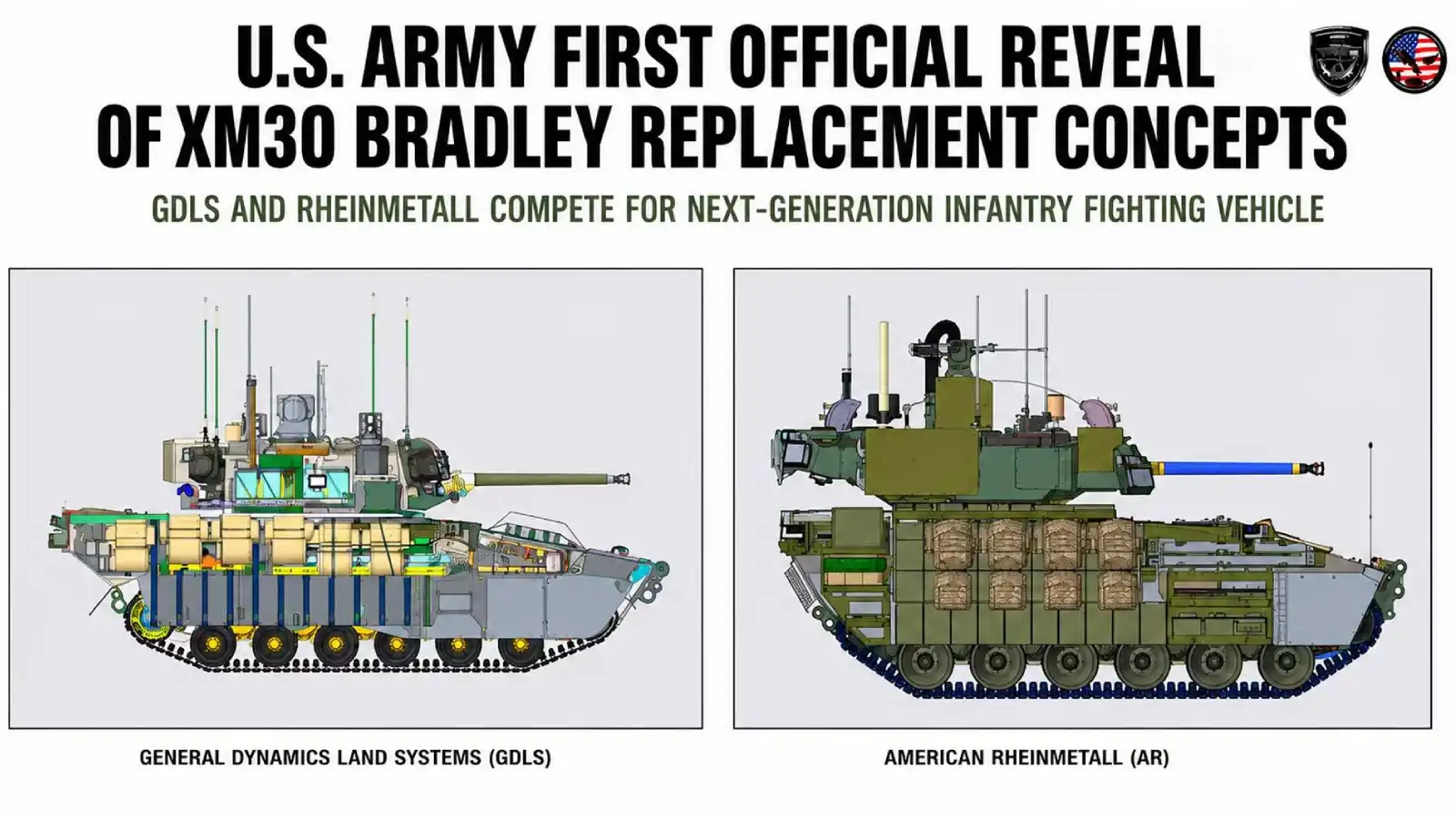
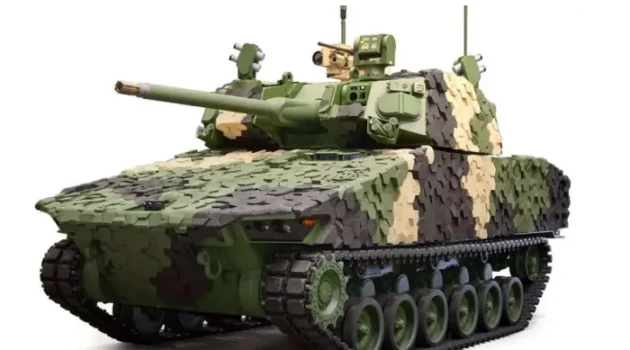
Artist rendering of the U.S. Army XM30 mechanized infantry combat vehicle replacing the Bradley fighting vehicle.
SHARE
Follow The Defense Watch on Google:

The U.S. Army has released the first official designs of its XM30 mechanized infantry combat vehicle contenders, marking a major step in replacing the aging Bradley fleet.

Contents
U.S. Army Reveals First XM30 Infantry Fighting Vehicle DesignsFocus On AI Integration And Battlefield NetworkingCompeting Designs Reflect Different Operational ApproachesLessons From Ukraine Continue To Shape RequirementsIndustrial Competition And Strategic ImportanceProgram Timeline And Next Steps

Executive Summary:
The U.S. Army has unveiled the first official designs of two XM30 infantry fighting vehicle candidates competing to replace the M2 Bradley. The program focuses on AI integration, survivability, and future battlefield networking as the Army accelerates armored modernization efforts.

(adsbygoogle = window.adsbygoogle || []).push({});

U.S. Army Reveals First XM30 Infantry Fighting Vehicle Designs

The U.S. Army’s XM30 infantry fighting vehicle program has entered a new phase after officials revealed the first designs of two competing armored vehicle concepts intended to replace the long serving M2 Bradley infantry fighting vehicle.

The two competing teams are led by General Dynamics Land Systems and American Rheinmetall Vehicles. Both companies are developing advanced mechanized infantry platforms designed for future multidomain combat operations.

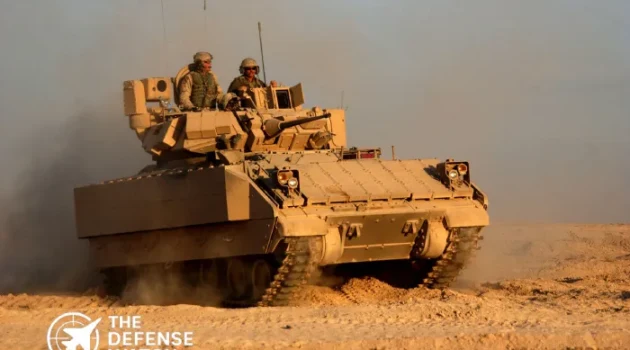
  • M2A3 Bradley Infantry Fighting Vehicle

    M2A3 Bradley Infantry Fighting Vehicle

    • Main Gun Caliber: 25 mm
    • Engine Power: 600 hp
    • Maximum Speed: 66 kmh
    • Armor Type: Aluminum with optional ERA
    • View Details →
    8.0

    The XM30 program, previously known as the Optionally Manned Fighting Vehicle initiative, represents one of the Army’s most important armored modernization projects. The new vehicle is intended to replace thousands of Bradley fighting vehicles that have served since the early 1980s.

    Focus On AI Integration And Battlefield Networking

    A defining feature of the XM30 infantry fighting vehicle program is its emphasis on artificial intelligence enabled battlefield capabilities.

    The Army is seeking a platform capable of integrating autonomous systems, advanced targeting technologies, predictive maintenance tools, and sensor fusion networks. The goal is to reduce crew workload while improving battlefield awareness and operational survivability.

    The two XM30 concepts feature modular architectures that could support future software upgrades and autonomous operations. Army planners have repeatedly stressed that future armored combat vehicles must operate within highly connected combat environments where electronic warfare, drone threats, and rapid sensor sharing play critical roles.

    • XM30 Infantry Fighting Vehicle

      XM30 Infantry Fighting Vehicle

      • Main Gun Caliber: 30 mm autocannon
      • Engine Power: 1,000 hp diesel
      • Maximum Speed: 70 km/h (road), 45 km/h (off-road)
      • Armor Type: Modular composite armor
      • View Details →
      8.0

      This marks a broader doctrinal shift in U.S. armored warfare. Instead of relying solely on heavier armor protection, future infantry fighting vehicles are increasingly expected to survive through networked awareness, active protection systems, mobility, and AI assisted decision making.

      Competing Designs Reflect Different Operational Approaches

      The two competing XM30 infantry fighting vehicle concepts appear to reflect different engineering priorities.

      The General Dynamics Land Systems proposal reportedly emphasizes survivability and integrated digital architecture. Meanwhile, the American Rheinmetall Vehicles design appears influenced by modern European infantry fighting vehicle trends, including unmanned turret concepts and advanced mission systems.

      Both vehicles are expected to include hybrid propulsion technologies aimed at reducing fuel consumption while increasing onboard electrical power generation for future systems.

      The Army has also prioritized reduced logistical burden. That includes easier maintenance access, improved operational readiness rates, and greater adaptability across combat scenarios.

      The XM30 infantry fighting vehicle will likely serve as a central component of future U.S. Army mechanized formations for decades, making the program strategically significant beyond simple fleet replacement.

      Lessons From Ukraine Continue To Shape Requirements

      Combat operations in Ukraine continue to influence global armored vehicle development, including U.S. Army modernization priorities.

      Recent battlefield experience has demonstrated the growing vulnerability of armored vehicles to loitering munitions, armed drones, top attack missiles, and long range precision fires. As a result, survivability requirements for next generation infantry fighting vehicles have expanded beyond traditional armor thickness.

      The XM30 infantry fighting vehicle program reflects those evolving realities. Future vehicles are expected to operate in highly contested electromagnetic environments while maintaining communications resilience and situational awareness.

      The Army’s emphasis on optional manning capability also highlights increasing interest in reducing soldier exposure during high risk operations. While the XM30 is expected to remain crewed in most operational scenarios, future autonomous capabilities could support remote operations in contested areas.

      Industrial Competition And Strategic Importance

      The competition between major defense manufacturers underscores the long term industrial importance of the XM30 program.

      Replacing the Bradley fleet represents a multibillion dollar opportunity likely to shape the future of the U.S. armored vehicle industrial base. The eventual production winner could secure decades of manufacturing work, sustainment contracts, and export opportunities.

      The program also demonstrates continued Pentagon investment in conventional land warfare modernization despite growing focus on Indo Pacific competition and emerging technologies.

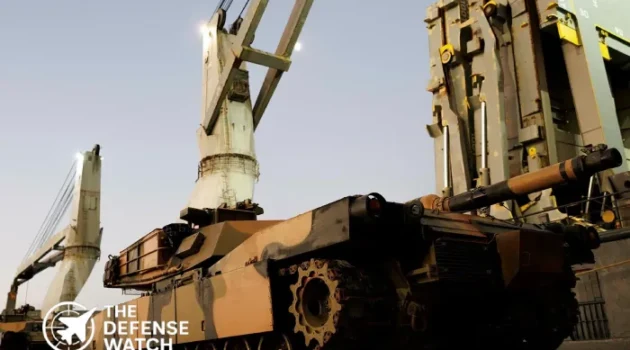
      Army modernization officials have repeatedly stated that armored maneuver forces remain essential for deterrence and large scale combat operations. The XM30 infantry fighting vehicle is therefore expected to play a key role in future combined arms doctrine alongside the M1 Abrams and future robotic combat systems.

      • M1 Abrams Tank

        M1 Abrams Tank

        • Main Gun Caliber: 120 mm
        • Engine Power: 1,500 hp
        • Maximum Speed: 67 km/h
        • Armor Type: Chobham Composite / Depleted Uranium
        • View Details →
        8.0

        Program Timeline And Next Steps

        The U.S. Army is expected to continue detailed design evaluations before selecting prototypes for further testing phases.

        Future testing will likely examine mobility, survivability, digital integration, operational reliability, and interoperability with existing Army combat systems.

        If development remains on schedule, the XM30 infantry fighting vehicle could begin gradually replacing Bradley vehicles during the next decade.

        The modernization effort reflects the Army’s broader push to prepare for future high intensity conflicts where speed, data integration, autonomous support systems, and survivability will define battlefield effectiveness.
Enjoying our coverage?

Make The Defense Watch a preferred source on Google to see more of our geopolitical and defense insights when relevant to you.


TAGGED:Conventional Weapons & ModernizationTanks & Armored Vehicles
Share This Article
Facebook Copy Link Print
BySamuel Drake | Defense Analyst
Follow:
Samuel Drake is a defense analyst at TheDefenseWatch.com covering naval warfare, military ordnance, maritime technology, fleet modernization, and defense procurement. His reporting focuses on documented capabilities, procurement programs, and military technology.
Leave a Comment

Leave a Reply Cancel reply

Your email address will not be published. Required fields are marked *

Search Defense Systems

Latest Defense Systems

  • F-104 Starfighter F-104 Starfighter
  • F-15J Eagle Fighter Jet F-15J Eagle Fighter Jet
  • China’s GJ-21 Stealth Drone China’s GJ-21 Stealth Drone
  • China’s GJ-11 Stealth Drone China’s GJ-11 Stealth Drone
  • F-15EX Eagle Fighter Jet F-15EX Eagle Fighter Jet
  • TRML-4D Radar TRML-4D Radar
  • F-47A Fighter Jet F-47A Fighter Jet
  • China DF-61 Missile China DF-61 Missile
  • B61 Nuclear Bomb B61 Nuclear Bomb

Recent Compares

  • J-10C vs JF-17 Thunder: Which Fighter Is More Capable? J-10C vs JF-17 Thunder: Which Fighter Is More Capable? View Comparison →
  • Tejas vs Gripen: Key Differences and Capabilities Tejas vs Gripen: Key Differences and Capabilities View Comparison →
  • Tejas vs MiG-21 Bison: How India Replaced Its Iconic Supersonic Fighter Tejas vs MiG-21 Bison: How India Replaced Its Iconic Supersonic Fighter View Comparison →
  • F-35 vs F-16: Stealth, Sensors and Combat Roles F-35 vs F-16: Stealth, Sensors and Combat Roles View Comparison →
  • Tejas Fighter Jet vs F-16 Fighting Falcon: Capability Compared Tejas Fighter Jet vs F-16 Fighting Falcon: Capability Compared View Comparison →
  • Rafale Fighter Jet vs F-16 Fighting Falcon : Which Fighter Has the Edge? Rafale Fighter Jet vs F-16 Fighting Falcon : Which Fighter Has the Edge? View Comparison →
  • Su-57 Fighter Jet vs J-20 Fighter Jet: Stealth and Air Combat Compared Su-57 Fighter Jet vs J-20 Fighter Jet: Stealth and Air Combat Compared View Comparison →
  • Mirage 2000 vs Tejas Mk1A: Legacy Combat Power vs Indigenous Modernization Mirage 2000 vs Tejas Mk1A: Legacy Combat Power vs Indigenous Modernization View Comparison →
  • Rafale Fighter Jet vs F-22 Raptor: Which Air Dominance Fighter Has the Edge? Rafale Fighter Jet vs F-22 Raptor: Which Air Dominance Fighter Has the Edge? View Comparison →
  • Tejas Fighter Jet vs. Rafale Fighter Jet: India’s Indigenous Fighter Meets France’s Proven Multirole Combat Aircraft Tejas Fighter Jet vs. Rafale Fighter Jet: India’s Indigenous Fighter Meets France’s Proven Multirole Combat Aircraft View Comparison →

Recent Posts

  • NASA’s Voyager 1 Reaches One Light-Day From Earth After 49 Years in Space
  • Russian Missiles Enter Polish Airspace During European Military Exercises
  • L3Harris Wins $28 Million Australian Defence Contract for Advanced Capability System
  • F-35C Completes First Launch and Recovery Trials Aboard Ford-Class Carrier
  • Northrop Grumman Declares $2.47 Per-Share Dividend for Fourth Quarter 2026

You Might Also Like

Russia 48-missile Pantsir loadout
Artillery & Missile SystemsMilitary & Ordnance

Russia Deploys 48-Missile Pantsir Loadout To Counter Drone Swarm Battlefield Saturation

September 7, 2026
captured Russian T-72 tanks
Military & OrdnanceTanks & Armored Vehicles

Ukraine Moves Captured Russian T-72 Tanks To European Museums

August 17, 2026
Russia Sarma rocket system
Artillery & Missile SystemsMilitary & Ordnance

Rostec Unveils Sarma Rocket System As Russia HIMARS Competitor

September 7, 2026
Trophy active protection system
Military & OrdnanceTanks & Armored Vehicles

EuroTrophy Unveils Trophy APS Upgrade To Counter Drone Threats On Leopard 2 A-RC 3.0 Tank

September 8, 2026

Logo

Copyright © 2026 TheDefenseWatch.com

Helpful Links

  • Home
  • About Us
  • Privacy Policy
  • Terms of Use / Disclaimer
  • U.S. Privacy Notice – CCPA Compliance

Defense Systems

  • Defense Systems
  • Comparisons 
  • Manufacturer
  • Tactical Calculators

Popuplar

Which 5 Air Forces Possess the Costliest Fighter Jet Fleets in the World
Evolving Strategic Value: Carrier Strike Groups in the Indo-Pacific’s Future Security Architecture
Autonomous Weapon Systems Spark U.S. Ethics Debate Amid Rapid Military AI Integration

We report on developments involving military forces, governments, defense companies, research organizations, and security institutions around the world. 

Welcome Back!

Sign in to your account

Username or Email Address
Password

Lost your password?

Enjoying our coverage?

Make The Defense Watch a preferred source on Google to see more insights.