• Home
  • About
  • Defense Systems
  • Manufacturer
  • Comparisons
  • Compare 
  • Tools
TheDefenseWatch.com
  • Aerospace & Aviation
  • Military & Ordnance
  • Naval & Maritime
  • Cyber & Space Defense
  • Policy & Strategy
  • Global News
  • Tools Library
    • Smart Calculator
    • Drone Flight Time Calculator
    • Drone Range Calculator
    • Counter-Drone Jammer Effective Range Calculator
    • Counter-Battery Radar Detection Calculator
    • Artillery Fire Correction Calculator
    • Thermal Camera Detection Range Calculator
    • Missile Range & Time-of-Flight Calculator
    • Radar Detection Range Calculator
    • FPV Strike Drone Payload vs Range Calculator
    • Loitering Munition Endurance Calculator
    • Sniper Ballistic Drop & Windage Calculator
    • Bullet Drop Calculator
    • U.S. Army Combat Fitness Test (ACFT) Calculator
    • Military Pension Calculator
    • Military Retirement Calculator
    • Military Pension Calculator
    • Large Number Calculator
Font ResizerAa

TheDefenseWatch.com

The Defense Watch | U.S. & Global Defense News, Analysis & Military Updates

Search
  • Home
  • About
  • Defense Systems
  • Manufacturer
  • Comparisons
  • Compare 
  • Tools

Stay Updated

Get the latest update

Subscribe

Explore

  • Drone
  • Fighter Jets & Military Aircraft
  • Hypersonic Weapons
  • Aircraft Carriers
  • Strategic History & Missions
  • Tools Library
Home » Congress Moves To Preserve F-14 Tomcats As Push Grows For Return To Flight
Defense Budgets & PolicyPolicy & Strategy

Congress Moves To Preserve F-14 Tomcats As Push Grows For Return To Flight

Samuel Drake | Defense Analyst
Last updated: September 12, 2026 5:50 pm
Samuel Drake | Defense Analyst
Share
2 Min Read
F-14 Tomcat restoration
SHARE

Executive Summary:
The U.S. Congress is advancing legislation that could preserve three retired F-14D Tomcat fighters and potentially return one aircraft to flying condition. The Maverick Act would transfer the jets from Navy storage to the U.S. Space & Rocket Center in Alabama for heritage and educational use.

Congress Advances F-14 Tomcat Preservation Effort

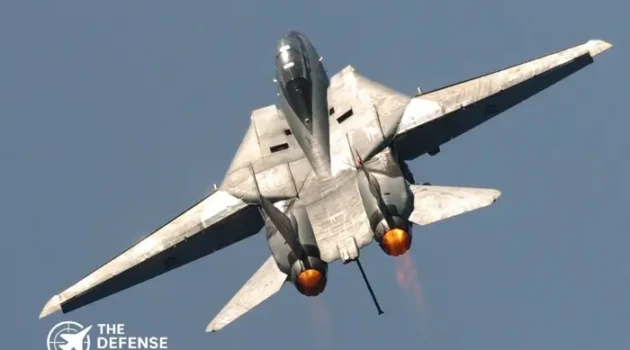
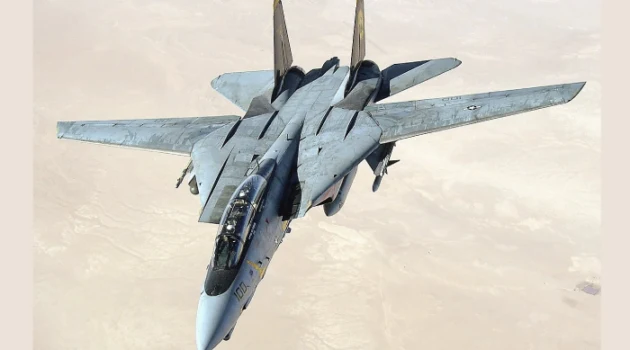
The future of the iconic Grumman F-14 Tomcat may be changing after nearly two decades in retirement, as U.S. lawmakers move forward with legislation aimed at preserving three remaining aircraft and potentially restoring one to flight status.

Contents
Congress Advances F-14 Tomcat Preservation EffortOne F-14 Could Potentially Fly AgainWhy The F-14 Was Previously DestroyedTechnical And Financial Challenges RemainStrategic Symbolism Beyond Heritage

The proposed legislation, known as the Maverick Act, has already passed the U.S. Senate by unanimous consent and is now under consideration in the House of Representatives. The bill would authorize the transfer of three retired F-14D Tomcats from storage at Davis-Monthan Air Force Base in Arizona to the U.S. Space & Rocket Center Commission in Huntsville, Alabama.

The legislation was introduced in the Senate by Tim Sheehy and co-sponsored by Mark Kelly. In the House, companion legislation was introduced by Abe Hamadeh.

  • F-14D Tomcat Fighter Jet

    F-14D Tomcat Fighter Jet

    • Generation: 4th
    • Maximum Speed: Mach 2.34
    • No. of Engines: 2
    • Radar Range: Approx. 200+ km
    • View Details →
    7.6

    One F-14 Could Potentially Fly Again

    The most significant provision in the Maverick Act allows the Secretary of the Navy to provide excess spare parts needed to make one of the aircraft either flyable or suitable for static display.

    If approved and technically feasible, the restored aircraft could appear at public airshows, commemorative events, and naval aviation heritage demonstrations. The three aircraft identified in the legislation carry Bureau Numbers 164341, 164602, and 159437.

    The proposed transfer would come with strict limitations. The aircraft would be fully demilitarized and stripped of any combat capability or weapons release functionality before transfer. Lawmakers also emphasized that the legislation does not reopen foreign transfer pathways for the aircraft.

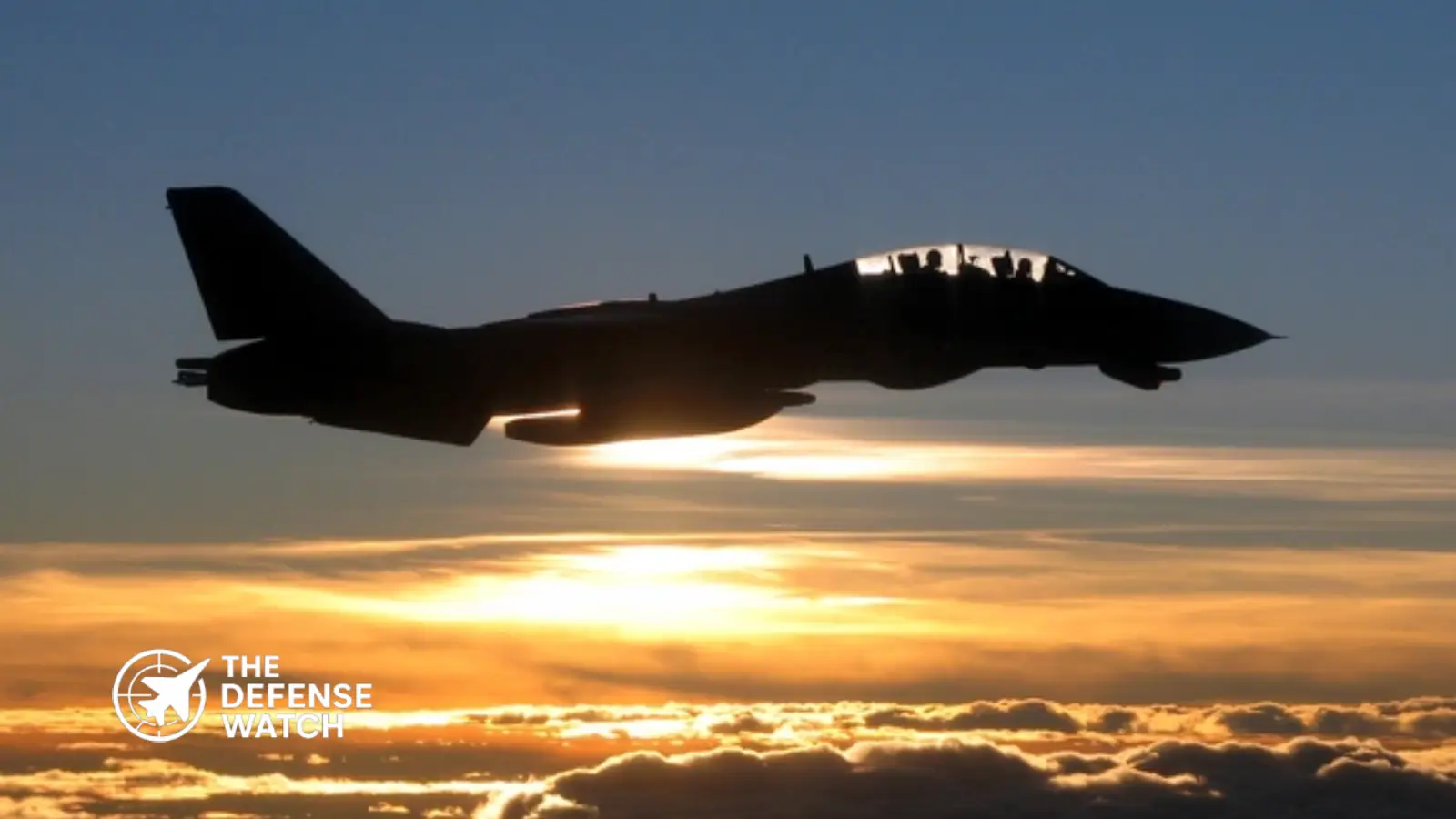
    The F-14 Tomcat was retired by the U.S. Navy in 2006 after more than three decades of service. The aircraft gained worldwide recognition for its variable-sweep wing design, long-range interception capability, and operational role aboard U.S. aircraft carriers during the Cold War and post-Cold War era.

    Why The F-14 Was Previously Destroyed

    The congressional effort marks a major shift in long-standing U.S. policy toward retired F-14 airframes.

    After the Tomcat left Navy service, the Pentagon ordered most surviving aircraft dismantled or destroyed to prevent spare parts from reaching Iran, the only foreign operator of the aircraft. Iran acquired F-14s before the 1979 Islamic Revolution and continued operating portions of the fleet for decades despite sanctions.

    That policy led to the scrapping of nearly all retired U.S. Navy F-14s. Many aviation experts believed the aircraft would never fly again in the United States because of severe parts shortages and structural modifications made during retirement processing.

    Online aviation communities and former maintainers have debated whether surviving airframes remain structurally recoverable. Some observers claim critical wing box structures were intentionally cut during demilitarization, while others argue a limited number of preserved aircraft may still be viable for restoration.

    Technical And Financial Challenges Remain

    Even if the Maverick Act becomes law, returning an F-14 Tomcat to flight would remain a highly complex undertaking.

    • F-14 Tomcat Fighter Jet

      F-14 Tomcat Fighter Jet

      • Generation: 3rd/4th generation hybrid
      • Maximum Speed: Mach 2.34
      • No. of Engines: 2
      • Radar Range: Up to 200+ miles (AWG-9)
      • View Details →
      8.2

      The F-14 was one of the most maintenance-intensive fighter aircraft ever operated by the U.S. Navy. Maintaining the swing-wing fighter required extensive logistics support, specialized tooling, and a large supply chain that no longer exists.

      Unlike legacy warbirds such as the P-51 Mustang or F-4 Phantom, the Tomcat fleet was deliberately removed from long-term civilian restoration pipelines. Many spare parts were destroyed, and no commercial production network remains active for critical systems.

      Still, the legislation reflects growing interest in preserving Cold War aviation history as public demand for historic military aircraft demonstrations continues to expand. The F-14 also remains one of the most recognizable U.S. naval aircraft ever built, partly due to its continued cultural visibility through films and aviation media.

      Strategic Symbolism Beyond Heritage

      While the Maverick Act is primarily framed as a heritage preservation initiative, the proposal also carries symbolic value for U.S. naval aviation history.

      The Tomcat represented the peak of Cold War carrier-based fleet defense and served as a central component of Navy air superiority strategy for decades. Restoring even one aircraft to flying condition would provide the United States with a highly visible heritage platform linked to naval aviation history and carrier warfare evolution.

      The move also comes during a broader period of renewed interest in preserving legacy American combat aircraft as museums, private organizations, and veterans groups seek to maintain public engagement with military aviation history.

      Whether one of the aircraft ultimately returns to the skies will depend on engineering feasibility, funding, regulatory approvals, and long-term maintenance support. However, the fact that Congress is now openly considering the possibility marks a major reversal from the post-retirement policy that once ensured the F-14 would never fly again.
TAGGED:F-14 TomcatMaverick ActMilitary AviationUS CongressUS Navy
Share This Article
Facebook Copy Link Print
BySamuel Drake | Defense Analyst
Follow:
Samuel Drake is a defense analyst at TheDefenseWatch.com covering naval warfare, military ordnance, maritime technology, fleet modernization, and defense procurement. His reporting focuses on documented capabilities, procurement programs, and military technology.
Leave a Comment

Leave a Reply Cancel reply

Your email address will not be published. Required fields are marked *

Search Defense Systems

Latest Defense Systems

  • F-47A Fighter Jet F-47A Fighter Jet
  • China DF-61 Missile China DF-61 Missile
  • B61 Nuclear Bomb B61 Nuclear Bomb
  • Japan E-767 Airborne Japan E-767 Airborne
  • Remington 870 Shotgun Remington 870 Shotgun
  • RUTA B1 Cruise Missile RUTA B1 Cruise Missile
  • XQ-67A Drone XQ-67A Drone
  • B-25 Mitchell Bomber B-25 Mitchell Bomber
  • F-100 Super Sabre F-100 Super Sabre

Recent Compares

  • J-10C vs JF-17 Thunder: Which Fighter Is More Capable? J-10C vs JF-17 Thunder: Which Fighter Is More Capable? View Comparison →
  • Tejas vs Gripen: Key Differences and Capabilities Tejas vs Gripen: Key Differences and Capabilities View Comparison →
  • Tejas vs MiG-21 Bison: How India Replaced Its Iconic Supersonic Fighter Tejas vs MiG-21 Bison: How India Replaced Its Iconic Supersonic Fighter View Comparison →
  • F-35 vs F-16: Stealth, Sensors and Combat Roles F-35 vs F-16: Stealth, Sensors and Combat Roles View Comparison →
  • Tejas Fighter Jet vs F-16 Fighting Falcon: Capability Compared Tejas Fighter Jet vs F-16 Fighting Falcon: Capability Compared View Comparison →
  • Rafale Fighter Jet vs F-16 Fighting Falcon : Which Fighter Has the Edge? Rafale Fighter Jet vs F-16 Fighting Falcon : Which Fighter Has the Edge? View Comparison →
  • Su-57 Fighter Jet vs J-20 Fighter Jet: Stealth and Air Combat Compared Su-57 Fighter Jet vs J-20 Fighter Jet: Stealth and Air Combat Compared View Comparison →
  • Mirage 2000 vs Tejas Mk1A: Legacy Combat Power vs Indigenous Modernization Mirage 2000 vs Tejas Mk1A: Legacy Combat Power vs Indigenous Modernization View Comparison →
  • Rafale Fighter Jet vs F-22 Raptor: Which Air Dominance Fighter Has the Edge? Rafale Fighter Jet vs F-22 Raptor: Which Air Dominance Fighter Has the Edge? View Comparison →
  • Tejas Fighter Jet vs. Rafale Fighter Jet: India’s Indigenous Fighter Meets France’s Proven Multirole Combat Aircraft Tejas Fighter Jet vs. Rafale Fighter Jet: India’s Indigenous Fighter Meets France’s Proven Multirole Combat Aircraft View Comparison →

Recent Posts

  • Saab Wins SEK 2 Billion Contract to Equip Sweden’s Four New FDI Frigates
  • F-47 Fighter May Fly With Interim Engine as Next-Generation Propulsion Program Falls Behind Schedule
  • UK Says F-35 Agreement Guarantees Access to U.S. Support System
  • Pakistan and Tajikistan Conclude Dosti-III Counterterrorism Exercise at Cherat
  • Lockheed Martin Self-Funds Five Vectis Collaborative Combat Aircraft

You Might Also Like

Russian delivery of six Mi-28NE helicopters
Middle East Defense & Security

Russian Delivery Of Six Mi-28NE Helicopters Strengthens Iran Rotary Strike Capability

September 13, 2026
Greenland mineral resources sovereignty
Geopolitical & Strategic DoctrinesPolicy & Strategy

Greenland Rejects Trump-NATO Mineral Control Deal, Defends Sovereignty

January 26, 2026
Defense Production Act munitions
Defense Budgets & PolicyPolicy & Strategy

Trump Moves To Expand Munitions Production As Defense Supply Chain Pressures Grow

June 17, 2026
South Korea Poland strategic partnership
Alliances & DoctrinesPolicy & Strategy

South Korea Moves To Deepen Defense Cooperation As Poland Elevates Strategic Ties

April 13, 2026

Logo

Copyright © 2026 TheDefenseWatch.com

Helpful Links

  • Home
  • About Us
  • Privacy Policy
  • Terms of Use / Disclaimer
  • U.S. Privacy Notice – CCPA Compliance

Defense Systems

  • Defense Systems
  • Comparisons 
  • Manufacturer
  • Tactical Calculators

Popuplar

Which 5 Air Forces Possess the Costliest Fighter Jet Fleets in the World
Evolving Strategic Value: Carrier Strike Groups in the Indo-Pacific’s Future Security Architecture
Autonomous Weapon Systems Spark U.S. Ethics Debate Amid Rapid Military AI Integration

We report on developments involving military forces, governments, defense companies, research organizations, and security institutions around the world. 

Welcome Back!

Sign in to your account

Username or Email Address
Password

Lost your password?