• Home
  • About
  • Defense Systems
  • Manufacturer
  • Comparisons
  • Compare 
  • Tools
TheDefenseWatch.com
  • Aerospace & Aviation
  • Military & Ordnance
  • Naval & Maritime
  • Cyber & Space Defense
  • Policy & Strategy
  • Global News
  • Tools Library
    • Smart Calculator
    • Drone Flight Time Calculator
    • Drone Range Calculator
    • Counter-Drone Jammer Effective Range Calculator
    • Counter-Battery Radar Detection Calculator
    • Artillery Fire Correction Calculator
    • Thermal Camera Detection Range Calculator
    • Missile Range & Time-of-Flight Calculator
    • Radar Detection Range Calculator
    • FPV Strike Drone Payload vs Range Calculator
    • Loitering Munition Endurance Calculator
    • Sniper Ballistic Drop & Windage Calculator
    • Bullet Drop Calculator
    • U.S. Army Combat Fitness Test (ACFT) Calculator
    • Military Pension Calculator
    • Military Retirement Calculator
    • Military Pension Calculator
    • Large Number Calculator
Font ResizerAa

TheDefenseWatch.com

The Defense Watch | U.S. & Global Defense News, Analysis & Military Updates

Search
  • Home
  • About
  • Defense Systems
  • Manufacturer
  • Comparisons
  • Compare 
  • Tools

Stay Updated

Get the latest update

Subscribe

Explore

  • Drone
  • Fighter Jets & Military Aircraft
  • Hypersonic Weapons
  • Aircraft Carriers
  • Strategic History & Missions
  • Tools Library
Home » Lockheed Martin Secures $14.5M Deal To Close F-35 Carrier Testing Gap
Defense Contracts

Lockheed Martin Secures $14.5M Deal To Close F-35 Carrier Testing Gap

Daniel Mercer / Defense & Aerospace Analyst
Last updated: September 12, 2026 5:51 pm
Daniel Mercer / Defense & Aerospace Analyst
Share
2 Min Read
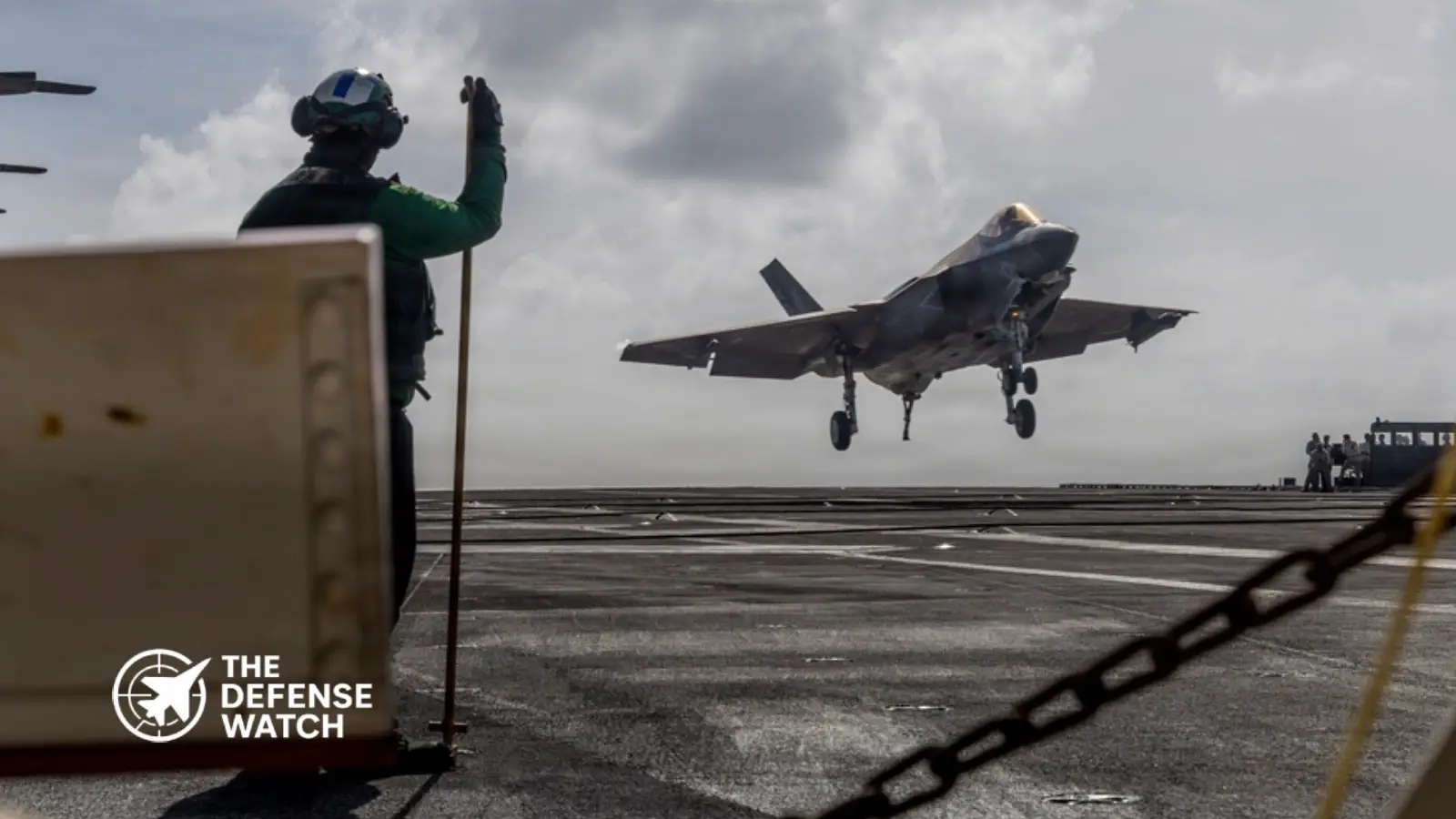
F-35C fighter jet undergoing carrier suitability testing with advanced flight instrumentation systems installed
Image : U.S. Navy
SHARE
Follow The Defense Watch on Google:

Executive Summary:
Lockheed Martin has been awarded a $14.5 million U.S. Navy contract to install flight test instrumentation on CF-5 aircraft supporting F-35C testing.
The effort aims to bridge a critical testing gap in carrier suitability trials until dedicated flight sciences aircraft become available.

Lockheed Martin F-35 Contract Targets Testing Gap In Carrier Operations

The Lockheed Martin F-35 contract represents a targeted effort by the U.S. Navy to sustain critical flight testing capacity for the carrier-based F-35C variant. Valued at $14.5 million, the contract focuses on integrating advanced flight test instrumentation onto CF-5 aircraft to support ongoing ship suitability testing.

Contents
Lockheed Martin F-35 Contract Targets Testing Gap In Carrier OperationsBridging The F-35C Ship Suitability Testing GapContract Scope And Industrial FootprintFunding Structure And TimelineWhy This Matters For The F-35 ProgramStrategic Context: Carrier Air Wing ModernizationProgrammatic Insight: Interim Solutions In Defense AcquisitionConclusion
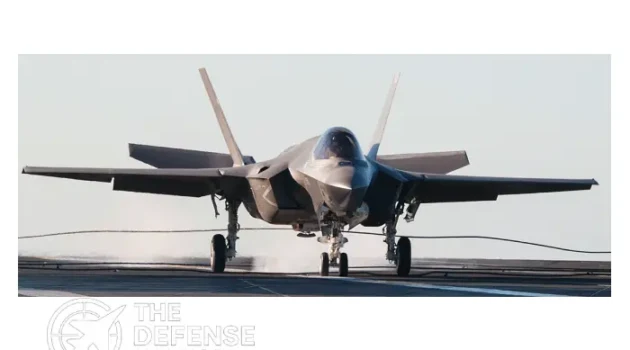
  • F-35C Lightning II Fighter Jet

    F-35C Lightning II Fighter Jet

    • Generation: 5th
    • Maximum Speed: Mach 1.6
    • No. of Engines: 1
    • Radar Range: 150+ miles
    • View Details →
    8.0

    Awarded as a cost-plus-incentive-fee order under an existing agreement, the work addresses a near-term shortfall in specialized flight sciences aircraft used for high-risk and complex testing scenarios. The Naval Air Systems Command (NAVAIR), based in Patuxent River, Maryland, is overseeing the effort.

    This move reflects a broader pattern in U.S. defense acquisition, where interim solutions are deployed to maintain program momentum amid platform delays or capability gaps.

    Bridging The F-35C Ship Suitability Testing Gap

    Carrier suitability testing is one of the most demanding phases in naval aviation development. It evaluates how aircraft perform during catapult launches, arrested landings, and deck operations under real-world conditions.

    The F-35C, the carrier variant of the Joint Strike Fighter, requires extensive instrumentation to capture aerodynamic data, structural loads, and system performance during these tests. However, delays in delivering dedicated flight sciences aircraft created a bottleneck.

    By modifying CF-5 aircraft with flight test instrumentation, the Navy is effectively creating a stopgap platform. This ensures continuity in testing without slowing the broader F-35C operational timeline.

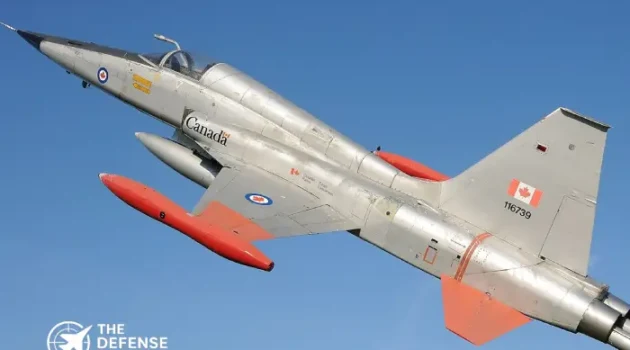
    • CF-5 Fighter Jet

      CF-5 Fighter Jet

      • Generation: 2nd
      • Maximum Speed: Mach 1.6
      • No. of Engines: 2
      • Radar Range: Limited (~30–50 km)
      • View Details →
      7.6

      From an operational standpoint, this is a pragmatic decision. Testing delays in carrier aviation can ripple across deployment schedules, pilot training pipelines, and carrier air wing readiness.

      Contract Scope And Industrial Footprint

      Under the Lockheed Martin F-35 contract, work will be distributed across multiple locations:

      • Fort Worth, Texas (primary workshare)
      • Orlando, Florida
      • Linthicum, Maryland
      • Nashua, New Hampshire
      • San Diego and El Segundo, California
      • Samlesbury, United Kingdom
      • Additional CONUS and international locations

      The geographic spread highlights the complexity of modern defense programs, which rely on a distributed industrial base spanning avionics, sensors, software, and integration expertise.

      Fort Worth remains the center of gravity, consistent with its role as the primary F-35 production hub.

      Funding Structure And Timeline

      The Navy has obligated $4 million in Fiscal Year 2025 research, development, test, and evaluation (RDT&E) funds at the time of award. Notably, these funds will not expire at the end of the fiscal year, providing flexibility for execution.

      The contract runs through May 2028, aligning with expected timelines for the delivery and operational readiness of dedicated flight sciences aircraft.

      The use of a cost-plus-incentive-fee structure suggests technical complexity and evolving requirements. It allows the government to incentivize performance while accommodating uncertainties inherent in test instrumentation integration.

      Why This Matters For The F-35 Program

      The Lockheed Martin F-35 contract underscores a key reality of large-scale defense programs: testing infrastructure can be as critical as the platform itself.

      The F-35 program, one of the most complex and expensive in history, depends heavily on continuous testing to validate upgrades, software blocks, and operational capabilities. Any disruption in testing capacity can delay capability delivery across the fleet.

      By addressing the testing gap proactively, the Navy is:

      • Preserving schedule integrity for F-35C deployment cycles
      • Maintaining data continuity for certification and upgrades
      • Reducing risk in carrier integration operations

      This also reflects lessons learned from earlier phases of the program, where bottlenecks in testing and integration contributed to delays.

      Strategic Context: Carrier Air Wing Modernization

      The F-35C is central to the future of U.S. Navy carrier air wings. Designed for longer range, enhanced survivability, and advanced sensor fusion, it significantly expands the operational reach of carrier strike groups.

      Ensuring uninterrupted testing is essential as the Navy transitions from legacy platforms like the F/A-18C/D to a more networked, fifth-generation force.

      In this context, the contract is not just a technical fix. It is part of a broader effort to sustain momentum in carrier aviation modernization amid evolving global threats and operational demands.

      Programmatic Insight: Interim Solutions In Defense Acquisition

      The reliance on modified CF-5 aircraft highlights a recurring theme in defense programs: the need for interim capability solutions.

      Rather than waiting for purpose-built platforms, the Navy is leveraging existing assets to maintain operational tempo. This approach:

      • Reduces downtime in critical testing phases
      • Maximizes use of available resources
      • Mitigates risk associated with single-point failures in acquisition timelines

      Such strategies are increasingly common as defense programs grow more complex and timelines extend.

      Conclusion

      The Lockheed Martin F-35 contract for flight test instrumentation may appear modest in value, but its impact is significant. By bridging a critical testing gap, it ensures continuity in one of the most demanding phases of naval aviation development.

      As the F-35C continues to mature into a cornerstone of U.S. carrier operations, maintaining testing capacity remains essential. This contract demonstrates how targeted investments can safeguard broader program objectives and operational readiness.
Enjoying our coverage?

Make The Defense Watch a preferred source on Google to see more of our geopolitical and defense insights when relevant to you.

TAGGED:Defense contractsF-35Lockheed MartinMilitary AviationUS Navy
Share This Article
Facebook Copy Link Print
ByDaniel Mercer / Defense & Aerospace Analyst
Follow:
Daniel Mercer is a defense and aerospace analyst at TheDefenseWatch.com covering military aviation, aerospace technology, unmanned systems, air warfare, and defense procurement. His reporting uses official documents, government and military statements, company announcements, and other public sources.
Leave a Comment

Leave a Reply Cancel reply

Your email address will not be published. Required fields are marked *

Search Defense Systems

Latest Defense Systems

  • F-104 Starfighter F-104 Starfighter
  • F-15J Eagle Fighter Jet F-15J Eagle Fighter Jet
  • China’s GJ-21 Stealth Drone China’s GJ-21 Stealth Drone
  • China’s GJ-11 Stealth Drone China’s GJ-11 Stealth Drone
  • F-15EX Eagle Fighter Jet F-15EX Eagle Fighter Jet
  • TRML-4D Radar TRML-4D Radar
  • F-47A Fighter Jet F-47A Fighter Jet
  • China DF-61 Missile China DF-61 Missile
  • B61 Nuclear Bomb B61 Nuclear Bomb

Recent Compares

  • J-10C vs JF-17 Thunder: Which Fighter Is More Capable? J-10C vs JF-17 Thunder: Which Fighter Is More Capable? View Comparison →
  • Tejas vs Gripen: Key Differences and Capabilities Tejas vs Gripen: Key Differences and Capabilities View Comparison →
  • Tejas vs MiG-21 Bison: How India Replaced Its Iconic Supersonic Fighter Tejas vs MiG-21 Bison: How India Replaced Its Iconic Supersonic Fighter View Comparison →
  • F-35 vs F-16: Stealth, Sensors and Combat Roles F-35 vs F-16: Stealth, Sensors and Combat Roles View Comparison →
  • Tejas Fighter Jet vs F-16 Fighting Falcon: Capability Compared Tejas Fighter Jet vs F-16 Fighting Falcon: Capability Compared View Comparison →
  • Rafale Fighter Jet vs F-16 Fighting Falcon : Which Fighter Has the Edge? Rafale Fighter Jet vs F-16 Fighting Falcon : Which Fighter Has the Edge? View Comparison →
  • Su-57 Fighter Jet vs J-20 Fighter Jet: Stealth and Air Combat Compared Su-57 Fighter Jet vs J-20 Fighter Jet: Stealth and Air Combat Compared View Comparison →
  • Mirage 2000 vs Tejas Mk1A: Legacy Combat Power vs Indigenous Modernization Mirage 2000 vs Tejas Mk1A: Legacy Combat Power vs Indigenous Modernization View Comparison →
  • Rafale Fighter Jet vs F-22 Raptor: Which Air Dominance Fighter Has the Edge? Rafale Fighter Jet vs F-22 Raptor: Which Air Dominance Fighter Has the Edge? View Comparison →
  • Tejas Fighter Jet vs. Rafale Fighter Jet: India’s Indigenous Fighter Meets France’s Proven Multirole Combat Aircraft Tejas Fighter Jet vs. Rafale Fighter Jet: India’s Indigenous Fighter Meets France’s Proven Multirole Combat Aircraft View Comparison →

Recent Posts

  • NASA’s Voyager 1 Reaches One Light-Day From Earth After 49 Years in Space
  • Russian Missiles Enter Polish Airspace During European Military Exercises
  • L3Harris Wins $28 Million Australian Defence Contract for Advanced Capability System
  • F-35C Completes First Launch and Recovery Trials Aboard Ford-Class Carrier
  • Northrop Grumman Declares $2.47 Per-Share Dividend for Fourth Quarter 2026

You Might Also Like

Flying Tactical AI integration
AI & Electronic WarfareCyber & Space Defense

Lockheed Martin Advances Flying Tactical AI From Classroom To Cockpit In U.S. Combat Aircraft

February 25, 2026
Rolls-Royce C-130J support
Defense Contracts

Rolls-Royce Secures Propulsion Support Deal For French-German C-130J Fleet

August 10, 2026
MK 41 VLS engineering contract
Defense Contracts

General Dynamics Wins $22.4M MK 41 VLS Engineering Contract

September 22, 2026
Project Overmatch contract
Defense Contracts

Prescient Edge Secures $11.3 Million Deal For Navy Project Overmatch Autonomous Systems Support

September 7, 2026

Logo

Copyright © 2026 TheDefenseWatch.com

Helpful Links

  • Home
  • About Us
  • Privacy Policy
  • Terms of Use / Disclaimer
  • U.S. Privacy Notice – CCPA Compliance

Defense Systems

  • Defense Systems
  • Comparisons 
  • Manufacturer
  • Tactical Calculators

Popuplar

Which 5 Air Forces Possess the Costliest Fighter Jet Fleets in the World
Evolving Strategic Value: Carrier Strike Groups in the Indo-Pacific’s Future Security Architecture
Autonomous Weapon Systems Spark U.S. Ethics Debate Amid Rapid Military AI Integration

We report on developments involving military forces, governments, defense companies, research organizations, and security institutions around the world. 

Welcome Back!

Sign in to your account

Username or Email Address
Password

Lost your password?

Enjoying our coverage?

Make The Defense Watch a preferred source on Google to see more insights.