• Home
  • About
  • Defense Systems
  • Manufacturer
  • Comparisons
  • Compare 
  • Tools
TheDefenseWatch.com
  • Aerospace & Aviation
  • Military & Ordnance
  • Naval & Maritime
  • Cyber & Space Defense
  • Policy & Strategy
  • Global News
  • Tools Library
    • Smart Calculator
    • Drone Flight Time Calculator
    • Drone Range Calculator
    • Counter-Drone Jammer Effective Range Calculator
    • Counter-Battery Radar Detection Calculator
    • Artillery Fire Correction Calculator
    • Thermal Camera Detection Range Calculator
    • Missile Range & Time-of-Flight Calculator
    • Radar Detection Range Calculator
    • FPV Strike Drone Payload vs Range Calculator
    • Loitering Munition Endurance Calculator
    • Sniper Ballistic Drop & Windage Calculator
    • Bullet Drop Calculator
    • U.S. Army Combat Fitness Test (ACFT) Calculator
    • Military Pension Calculator
    • Military Retirement Calculator
    • Military Pension Calculator
    • Large Number Calculator
Font ResizerAa

TheDefenseWatch.com

The Defense Watch | U.S. & Global Defense News, Analysis & Military Updates

Search
  • Home
  • About
  • Defense Systems
  • Manufacturer
  • Comparisons
  • Compare 
  • Tools

Stay Updated

Get the latest update

Subscribe

Explore

  • Drone
  • Fighter Jets & Military Aircraft
  • Hypersonic Weapons
  • Aircraft Carriers
  • Strategic History & Missions
  • Tools Library
Home » U.S. and U.K. Forces Use Flytrap 5.0 to Advance NATO Counter-Drone Doctrine
Alliances & DoctrinesPolicy & Strategy

U.S. and U.K. Forces Use Flytrap 5.0 to Advance NATO Counter-Drone Doctrine

Samuel Drake | Defense Analyst
Last updated: September 7, 2026 12:30 pm
Samuel Drake | Defense Analyst
Share
2 Min Read
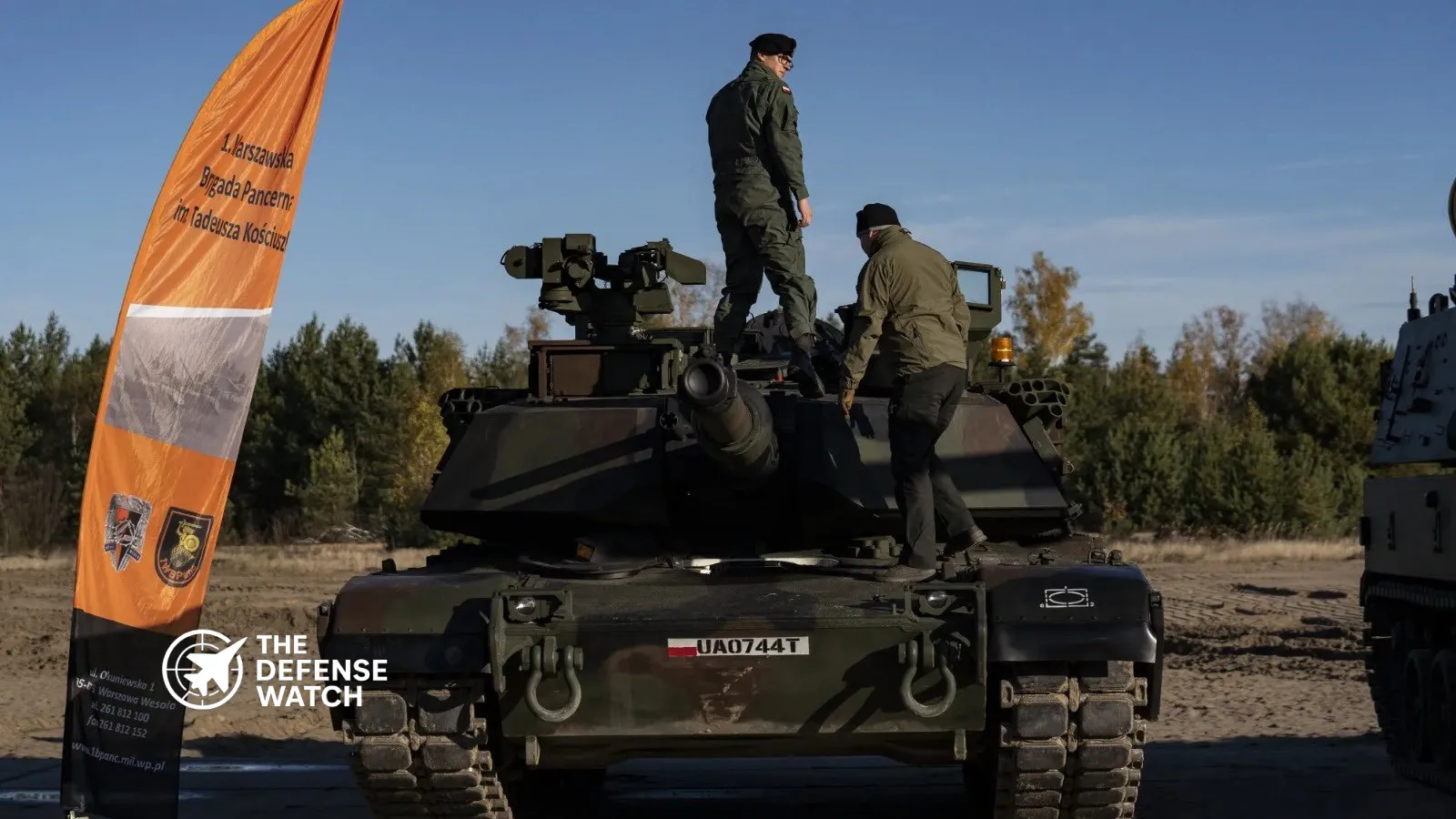
NATO forces testing counter-drone system during Flytrap 5.0 exercise
Image Source: U.S. Army
SHARE

Executive Summary:
U.S. and U.K. forces conducted the Flytrap 5.0 counter-drone exercise to test and refine integrated air defense concepts against unmanned aerial threats. The drills aim to strengthen NATO’s eastern flank by improving detection, tracking, and neutralization of low-cost drones. The exercise reflects a growing need to counter massed UAV attacks observed in recent conflicts.

Overview of Flytrap 5.0 Counter-Drone Exercise

The Flytrap 5.0 exercise, held in 2026, brought together U.S. and U.K. military units to evaluate advanced counter-UAS (C-UAS) systems under realistic operational conditions. Conducted along NATO’s eastern flank, the exercise focused on defending forward-deployed forces against increasingly sophisticated and low-cost drone threats.

Contents
Overview of Flytrap 5.0 Counter-Drone ExerciseKey Objectives and Operational FocusEnhancing Detection and Tracking CapabilitiesIntegrating Electronic Warfare SolutionsValidating Kinetic Interception SystemsComparison: Modern C-UAS vs Legacy Air Defense SystemsTechnical Advantages DemonstratedStrategic Context: NATO’s Eastern Flank and Drone WarfareImplications for Future Air Defense Doctrine

The drills emphasized integration across multiple domains, combining radar, electronic warfare, and kinetic interceptors into a unified defensive network. This layered approach reflects NATO’s shift toward adaptable, scalable air defense systems capable of addressing both high-end and asymmetric threats.

Key Objectives and Operational Focus

Enhancing Detection and Tracking Capabilities

Modern drones often operate at low altitude with small radar signatures. Flytrap 5.0 tested:

  • Advanced short-range radar systems for low-observable UAV detection
  • Passive sensors and RF detection tools for non-emitting targets
  • AI-assisted tracking for improved target classification

Integrating Electronic Warfare Solutions

Electronic warfare (EW) played a central role in neutralizing drone swarms:

- Advertisement -
  • Jamming of GPS and communication links
  • Cyber intrusion techniques to disrupt UAV control systems
  • Soft-kill options to reduce reliance on costly interceptors

Validating Kinetic Interception Systems

While EW is effective, kinetic solutions remain essential:

  • Short-range air defense (SHORAD) missiles
  • Rapid-fire gun systems with programmable ammunition
  • Directed energy weapons under evaluation

Comparison: Modern C-UAS vs Legacy Air Defense Systems

System TypeRangePayload CapabilityStatusKey Technology
Legacy SHORAD Systems5–15 kmLimited vs small UAVsOperationalRadar-guided missiles
Modern C-UAS (Flytrap 5.0)0–10 km (layered)Optimized for small dronesActive TestingAI tracking, EW jamming, sensor fusion
Directed Energy Systems<5 kmEffective vs swarmsEmergingHigh-energy lasers

Technical Advantages Demonstrated

Flytrap 5.0 highlighted several improvements over legacy systems:

  • Layered defense architecture combining soft and hard kill options
  • Reduced cost per engagement against low-value drone threats
  • Faster response times through automated detection and tracking
  • Greater interoperability between allied forces
  • Scalability to counter swarm attacks

Strategic Context: NATO’s Eastern Flank and Drone Warfare

The exercise reflects lessons learned from recent conflicts where drones have played a decisive role. Low-cost UAVs have proven capable of:

  • Overwhelming traditional air defenses
  • Conducting reconnaissance and precision strikes
  • Disrupting logistics and command networks

For NATO, the eastern flank represents a critical area where such threats could emerge rapidly. Flytrap 5.0 supports the alliance’s broader effort to modernize air defense doctrine, shifting from platform-centric systems to networked, adaptive defense ecosystems.

The integration of U.S. and U.K. capabilities also underscores the importance of interoperability in coalition operations. Standardized procedures and shared technologies are essential for rapid response in contested environments.

Implications for Future Air Defense Doctrine

Flytrap 5.0 is expected to influence NATO doctrine in several ways:

  • Greater emphasis on counter-UAS specialization within air defense units
  • Increased investment in electronic warfare and AI-enabled systems
  • Development of cost-effective interception strategies
  • Expansion of joint training exercises across allied nations

As drone technology continues to evolve, NATO’s ability to adapt its defensive posture will be critical to maintaining operational superiority.


TAGGED:Air DefenseCounter-UASDrone WarfareMilitary ExercisesNATO
Share This Article
Facebook Copy Link Print
BySamuel Drake | Defense Analyst
Follow:
Samuel Drake is a defense analyst at TheDefenseWatch.com covering naval warfare, military ordnance, maritime technology, fleet modernization, and defense procurement. His reporting focuses on documented capabilities, procurement programs, and military technology.
Leave a Comment

Leave a Reply Cancel reply

Your email address will not be published. Required fields are marked *

Search Defense Systems

Latest Defense Systems

  • B61 Nuclear Bomb B61 Nuclear Bomb
  • Japan E-767 Airborne Japan E-767 Airborne
  • Remington 870 Shotgun Remington 870 Shotgun
  • RUTA B1 Cruise Missile RUTA B1 Cruise Missile
  • XQ-67A Drone XQ-67A Drone
  • B-25 Mitchell Bomber B-25 Mitchell Bomber
  • F-100 Super Sabre F-100 Super Sabre
  • North American F-86 Sabre North American F-86 Sabre
  • North American XB-70 Valkyrie North American XB-70 Valkyrie

Recent Compares

  • J-10C vs JF-17 Thunder: Which Fighter Is More Capable? J-10C vs JF-17 Thunder: Which Fighter Is More Capable? View Comparison →
  • Tejas vs Gripen: Key Differences and Capabilities Tejas vs Gripen: Key Differences and Capabilities View Comparison →
  • Tejas vs MiG-21 Bison: How India Replaced Its Iconic Supersonic Fighter Tejas vs MiG-21 Bison: How India Replaced Its Iconic Supersonic Fighter View Comparison →
  • F-35 vs F-16: Stealth, Sensors and Combat Roles F-35 vs F-16: Stealth, Sensors and Combat Roles View Comparison →
  • Tejas Fighter Jet vs F-16 Fighting Falcon: Capability Compared Tejas Fighter Jet vs F-16 Fighting Falcon: Capability Compared View Comparison →
  • Rafale Fighter Jet vs F-16 Fighting Falcon : Which Fighter Has the Edge? Rafale Fighter Jet vs F-16 Fighting Falcon : Which Fighter Has the Edge? View Comparison →
  • Su-57 Fighter Jet vs J-20 Fighter Jet: Stealth and Air Combat Compared Su-57 Fighter Jet vs J-20 Fighter Jet: Stealth and Air Combat Compared View Comparison →
  • Mirage 2000 vs Tejas Mk1A: Legacy Combat Power vs Indigenous Modernization Mirage 2000 vs Tejas Mk1A: Legacy Combat Power vs Indigenous Modernization View Comparison →
  • Rafale Fighter Jet vs F-22 Raptor: Which Air Dominance Fighter Has the Edge? Rafale Fighter Jet vs F-22 Raptor: Which Air Dominance Fighter Has the Edge? View Comparison →
  • Tejas Fighter Jet vs. Rafale Fighter Jet: India’s Indigenous Fighter Meets France’s Proven Multirole Combat Aircraft Tejas Fighter Jet vs. Rafale Fighter Jet: India’s Indigenous Fighter Meets France’s Proven Multirole Combat Aircraft View Comparison →

Recent Posts

  • General Atomics to Supply Components for U.S. Army and Navy Hypersonic Weapons
  • Lockheed Martin Tests Mk21A Reentry Vehicle for Sentinel ICBM
  • Lockheed Martin Wins $122.4 Million Trident II Navigation Contract
  • Pentagon Prepares Review of Military Legal System and JAG Corps
  • U.S. and Colombia Launch Southern Vanguard 2027 Exercise

You Might Also Like

Top 5 strongest armies in the world
Geopolitical & Strategic DoctrinesPolicy & Strategy

World’s Top 5 Strongest Armies in 2025: Global Military Power Ranking

December 22, 2025
F-35A fighter jet 2027 budget
Aerospace & AviationDefense Budgets & PolicyFighter Jets & Military Aircraft

Pentagon Moves To Fund 38 F-35A Fighters As Air Force Battles Its Worst Fighter Shortfall In History

September 7, 2026
Rheinmetall CEO security threats
Geopolitical & Strategic DoctrinesPolicy & Strategy

Rheinmetall CEO Stays On Despite Security Threats As Europe Expands Defense Production

August 9, 2026
Poland bans Chinese vehicles
Defense Budgets & PolicyPolicy & Strategy

Poland Bans Chinese Made Vehicles From Military Facilities Over Security Concerns

February 18, 2026

Logo

Copyright © 2026 TheDefenseWatch.com

Helpful Links

  • Home
  • About Us
  • Privacy Policy
  • Terms of Use / Disclaimer
  • U.S. Privacy Notice – CCPA Compliance

Defense Systems

  • Defense Systems
  • Comparisons 
  • Manufacturer
  • Tactical Calculators

Popuplar

Which 5 Air Forces Possess the Costliest Fighter Jet Fleets in the World
Evolving Strategic Value: Carrier Strike Groups in the Indo-Pacific’s Future Security Architecture
Autonomous Weapon Systems Spark U.S. Ethics Debate Amid Rapid Military AI Integration

We report on developments involving military forces, governments, defense companies, research organizations, and security institutions around the world. 

Welcome Back!

Sign in to your account

Username or Email Address
Password

Lost your password?