The Night the Press Dinner Became a National Security Crisis
The April 25, 2026, attack on the White House Correspondents’ Dinner marks one of the most serious security breaches at a presidential public event in modern American history — and a stark demonstration of the security stakes that now accompany the Trump administration’s every public appearance. Armed with a shotgun, a handgun, and multiple knives, a 31-year-old California man identified as Cole Tomas Allen rushed a Secret Service screening checkpoint just outside the Washington Hilton’s main ballroom, exchanging gunfire with agents while President Donald Trump, the First Lady, the Vice President, and the full Cabinet sat inside the venue.
- The Night the Press Dinner Became a National Security Crisis
- What Happened: A Timeline of the April 25 Attack
- Who Is Cole Tomas Allen?
- The Intelligence Failure Question
- A Venue Concentration Risk Unlike Any Other
- Trump’s Response and the Political Fallout
- Global Reaction: Allies and Adversaries Respond
- Analysis: What This Means for Presidential Security Going Forward
- FAQs
- The attack occurred on the evening of April 25, 2026, at the Washington Hilton during the annual White House Correspondents’ Dinner — the first Trump attended as a sitting president.
- Suspect Cole Tomas Allen, 31, of Torrance, California, stormed a Secret Service checkpoint armed with a shotgun, a handgun, and multiple knives.
- President Trump, First Lady Melania Trump, Vice President JD Vance, and all Cabinet members were safely evacuated. No attendees were seriously injured.
- One Secret Service officer was struck in a bulletproof vest and is expected to make a full recovery. The suspect was not injured.
- Allen is expected to face multiple federal charges including use of a firearm during a crime of violence and assault on a federal officer with a dangerous weapon.
The suspect was subdued within seconds, but the incident is already prompting hard questions about presidential security protocols, the vulnerability of high-density political gatherings, and the broader trajectory of politically motivated violence in the United States.
What Happened: A Timeline of the April 25 Attack
At approximately 8:36 p.m. on April 25, the suspect, working alone and armed with a shotgun, handgun, and multiple knives, charged into the hotel lobby area and attempted to breach a Secret Service checkpoint. A member of the uniformed division of the Secret Service fired on Allen just before he was apprehended but did not strike him amid the chaos, according to a law enforcement source familiar with the investigation. Preliminary witness statements suggest Allen fired one to two rounds, followed by the Secret Service officer returning three to four rounds.
Trump was rushed offstage at the Washington Hilton hotel after gunfire broke out outside the ballroom. A Secret Service officer was shot in the attack, but he was saved by his bulletproof vest and was reported to be doing well.
Secret Service Director Sean Curran said his agents “performed admirably,” crediting their rapid response in stopping the suspect at the checkpoint. FBI Director Kash Patel said investigators are examining ballistics, a recovered long gun, and shell casings while conducting witness interviews.
Who Is Cole Tomas Allen?
Allen, 31, was an educator from Torrance, California, with an engineering degree from a prestigious university. He earned a degree in mechanical engineering from Caltech in 2017, before going on to receive a master’s degree in computer science from California State University, Dominguez Hills, in 2025.
Allen was armed with a shotgun, handgun, and knives when he rushed the security checkpoint and ran toward the ballroom. He is believed to have checked into the Washington Hilton the day before the event, and is thought to have traveled from Los Angeles to Chicago by train, then onward to Washington, D.C.
Allen identified himself in a missive sent to family members moments before the attack as a “friendly federal assassin” and railed against Trump administration policies. Authorities found anti-Trump and anti-Christian rhetoric on the suspect’s social media accounts. Allen will be charged with one count each of using a firearm during a crime of violence, and assault on a federal officer using a dangerous weapon, U.S. Attorney for D.C. Jeanine Pirro announced Saturday night. Pirro said she expects him to face more charges as the investigation unfolds.
Family members who were interviewed by investigators said that Allen “made radical statements and that he constantly referenced a plan to do ‘something’ to fix the issues with today’s world,” that he was part of a group called “The Wide Awakes,” attended No Kings protests in California, and would regularly go to a shooting range to train with firearms.
The Intelligence Failure Question
One dimension of this incident that demands serious scrutiny is whether the attack could have been prevented. The White House originally indicated that Allen’s brother notified the New London Police Department of an alleged “manifesto” Allen had sent to family members minutes before the incident. However, one source said the family did not read or report the writings to local law enforcement until after the event, though the FBI was still actively investigating the precise timeline.
Allen purchased the shotgun used in Saturday’s shooting in August 2025, according to two law enforcement sources. He also owned another semiautomatic pistol, purchased in 2023.
This gap — a legally purchased firearm, a pre-attack manifesto sent to family, and known radical tendencies — represents the exact threat profile that federal threat assessment programs are designed to detect. That Allen was able to book a room at the very hotel hosting the event, travel cross-country by train, and reach the outer perimeter of a checkpoint protecting the president and his entire Cabinet is a significant operational question that the Secret Service and FBI will need to answer publicly.
A Venue Concentration Risk Unlike Any Other
The 2026 dinner attracted approximately 2,600 attendees, including senior administration officials such as Vice President Vance, FBI director Kash Patel, Health and Human Services Secretary Robert F. Kennedy Jr., Secretary of State Marco Rubio, and Environmental Protection Agency administrator Lee Zeldin. Security at the event was described by former FBI deputy director Andrew McCabe as “almost on the level of a national security event,” given the concentration of senior government officials in one location.
From a defense and security standpoint, this event represents what analysts call a “high-value target concentration” scenario — the kind of scenario that military planners and counterterrorism officials spend considerable resources trying to prevent. Having the President, Vice President, and full Cabinet in a single civilian hotel ballroom is, by any security assessment standard, an extraordinary aggregation of risk. That the security perimeter held is a testament to Secret Service preparation; that someone reached that perimeter armed and ready to breach it is equally a signal that this format of event needs a fundamental reassessment.
Trump’s Response and the Political Fallout
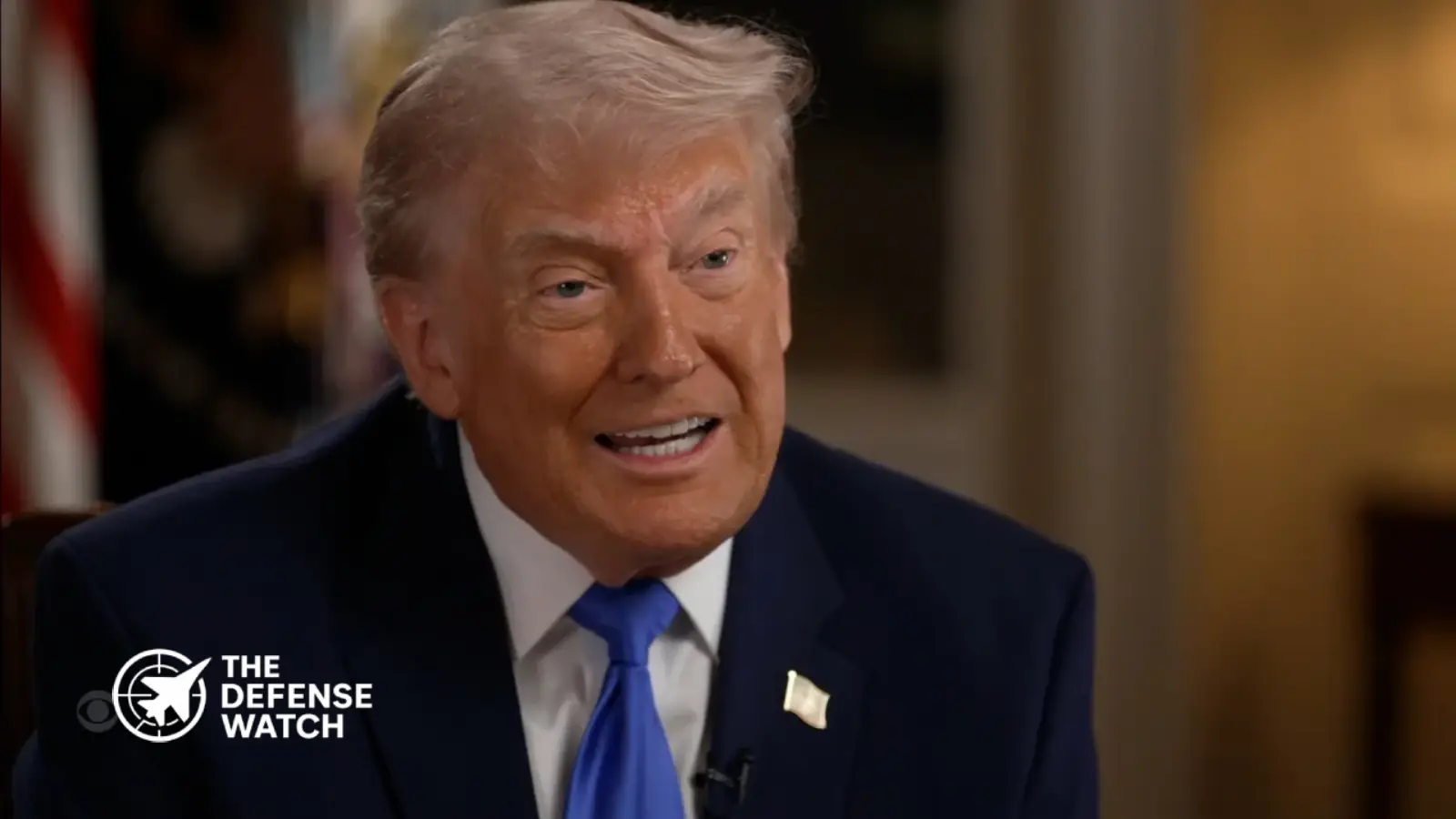
At a news conference held after the incident, Trump described the suspect as a “very sick person” and a “thug” who had attacked the U.S. Constitution. He pledged to reschedule the press dinner and stated, “Today, we need levels of security that probably nobody has ever seen before.”
Trump also used the occasion to advocate for the construction of a new White House ballroom, arguing that the attack “would never have happened” with the planned security measures he intends to include. He called for the dinner to be rescheduled within 30 days with enhanced perimeter security.
The last couple of years have seen a spate of political violence, including two assassination attempts against Trump, an arson attack at the Pennsylvania governor’s mansion, the killing of a Minnesota lawmaker, and the assassination of Charlie Kirk. Against this backdrop, Saturday’s incident is not an isolated event — it is the latest data point in a deeply alarming trend.
Global Reaction: Allies and Adversaries Respond
World leaders including Indian Prime Minister Narendra Modi, Japanese Prime Minister Sanae Takaichi, and Mexican President Claudia Sheinbaum condemned the attack and expressed their relief that Trump was unharmed. “Violence has no place in a democracy and must be unequivocally condemned,” Modi said.
U.K. Prime Minister Keir Starmer said he was “shocked by the scenes” of violence and denounced the attack, stating that “any attack on democratic institutions or on the freedom of the press must be condemned in the strongest possible terms.” Canadian Prime Minister Mark Carney also expressed relief and condemned political violence in any form.
The international reaction underscores how closely allied governments are watching the security environment surrounding the U.S. executive branch — particularly at a moment when the Trump administration is engaged in an active military confrontation with Iran.
Analysis: What This Means for Presidential Security Going Forward
The April 25 attack is going to accelerate conversations that were already underway within the Secret Service and the broader U.S. security apparatus. The Washington Hilton, while a longtime host of the Correspondents’ Dinner, is a commercially operated hotel — its lobbies and stairwells remain accessible to ordinary guests during the event. The Associated Press noted that the lobby of the Washington Hilton regularly remains open to other guests during the dinner, and that security and screening is typically located closer to the ballroom itself.
Allen reportedly used an internal stairwell to position himself near the screening area. This means the outer buffer — the transition zone between the public hotel and the secured ballroom corridor — was the point of failure. It’s a reminder that Secret Service protection is only as strong as the physical environment it is asked to work within.
Expect significant policy adjustments: stricter vetting of hotel guests in the days preceding any presidential event, expanded perimeter security at all future high-density gatherings involving senior officials, and possibly a formal review of whether the Correspondents’ Dinner format — a civilian gala attended by the entire executive chain of command — remains compatible with the current threat environment.
FAQs
No. President Trump, First Lady Melania Trump, Vice President JD Vance, and all Cabinet members were safely evacuated and unharmed. One Secret Service officer was struck in a bulletproof vest and is expected to make a full recovery.
The suspect has been identified by multiple law enforcement sources as Cole Tomas Allen, 31, of Torrance, California — an educator and mechanical engineer. He is expected to face federal charges including use of a firearm during a crime of violence and assault on a federal officer.
Allen was armed with a shotgun, a handgun, and multiple knives when he charged the Secret Service checkpoint outside the Washington Hilton ballroom.
Acting Attorney General Todd Blanche stated that authorities believe the suspect set out to target members of the Trump administration, “likely including the president.” Trump himself referred to Allen as a “would-be assassin.”
Secret Service agents subdued Allen at the checkpoint. Secret Service Director Sean Curran credited the agency’s multi-layered protection protocols, saying the response demonstrated exactly what those systems are designed to do.
President Trump called for the dinner to be rescheduled within 30 days with significantly enhanced security measures, including expanded perimeter controls.