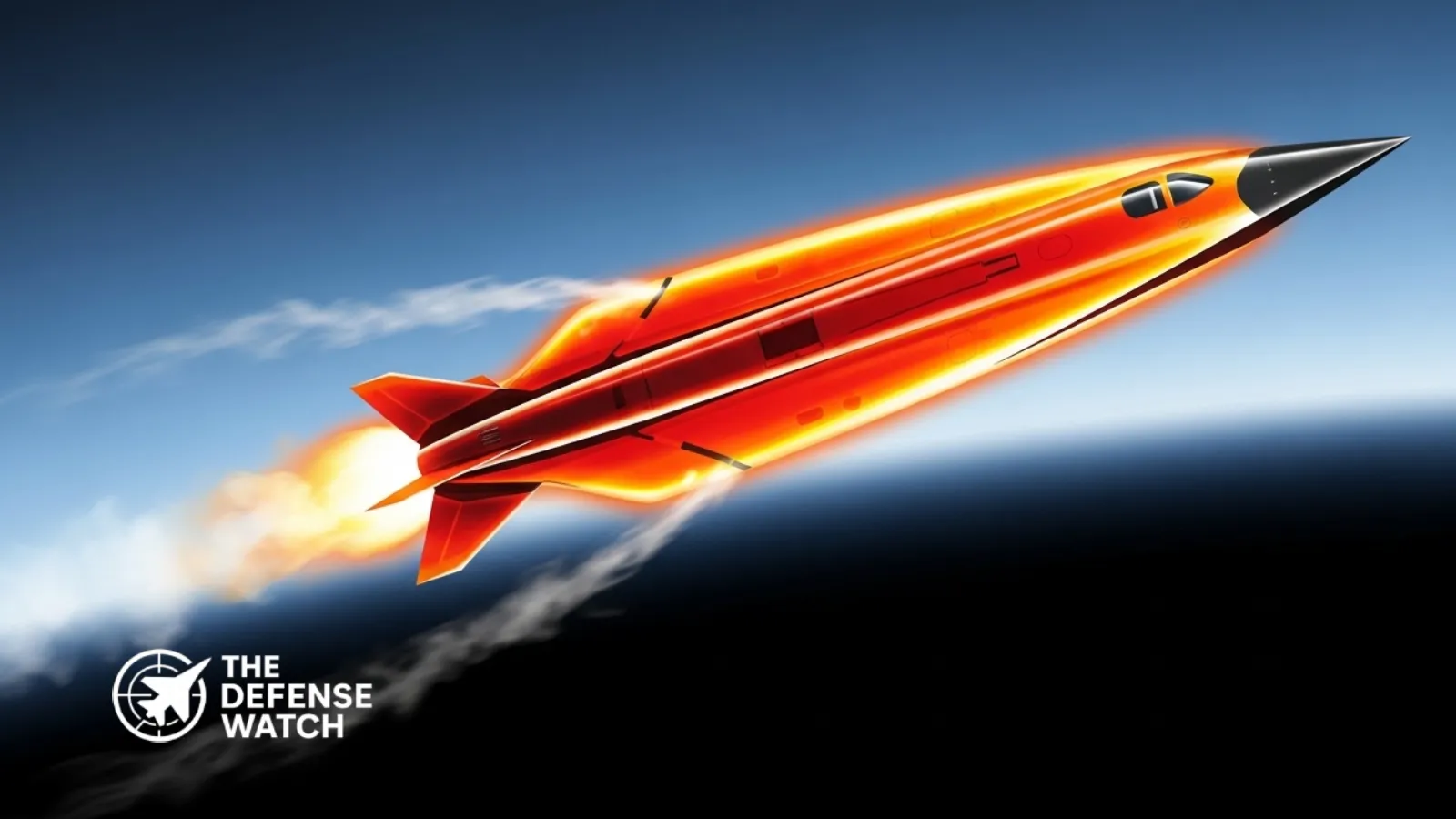
- UK and Germany launched a joint program to develop a stealth hypersonic cruise missile.
- The system is expected to combine high speed, low observability, and precision strike capability.
- The initiative aims to strengthen NATO deterrence and long-range strike capacity in Europe.
- Development follows growing concerns over Russian and Chinese hypersonic weapon advances.
- The program reflects deeper UK-Germany defense cooperation and European strategic autonomy efforts.
UK Germany Hypersonic Cruise Missile Program Advances European Strike Capability
The UK Germany hypersonic cruise missile program marks a significant step in European defense modernization, with both nations agreeing to jointly develop a stealthy, high-speed strike weapon designed for future conflict environments.
The initiative reflects growing urgency among NATO allies to field advanced long-range strike systems capable of penetrating contested air defenses.
The Big Picture
NATO faces a widening capability gap in hypersonic weapons as competitors accelerate development and deployment.
Russia has already fielded systems such as the Kinzhal and Zircon, while China continues to expand its hypersonic arsenal with systems like the DF-17. These weapons challenge existing missile defenses due to their speed, maneuverability, and unpredictable flight paths.
European allies have historically relied on U.S. capabilities for advanced strike systems. However, recent geopolitical tensions and the need for operational independence have pushed European powers to invest in indigenous solutions.
The UK Germany hypersonic cruise missile program fits into a broader effort to strengthen NATO’s conventional deterrence and reduce reliance on external suppliers.
What’s Happening
The United Kingdom and Germany have agreed to collaborate on the development of a new stealth hypersonic cruise missile.
According to reporting from UK Defence Journal, the program aims to produce a weapon capable of traveling at hypersonic speeds while maintaining a low observable profile, making it harder to detect and intercept.
The missile is expected to integrate advanced propulsion systems, likely involving scramjet technology, alongside precision guidance and survivability features tailored for high-threat environments.
Both governments have framed the initiative as part of a wider defense cooperation effort, building on existing bilateral agreements and NATO commitments.
While specific timelines and contract values remain undisclosed, the program signals early-stage development with long-term operational goals.
Why It Matters
Hypersonic weapons redefine the timeline of modern warfare.
A stealth hypersonic cruise missile compresses decision-making cycles for adversaries. It can strike targets with minimal warning, bypass traditional radar systems, and penetrate layered air defenses.
For NATO, this capability strengthens conventional deterrence without relying on nuclear escalation.
The UK Germany hypersonic cruise missile also enhances flexibility in joint operations. Air-launched or ground-based deployment options could allow rapid response across multiple theaters, including Eastern Europe and the North Atlantic.
The program addresses a clear operational need: credible deep-strike capability against heavily defended targets.
Strategic Implications
The development of a European hypersonic strike capability strengthens NATO’s overall deterrence posture.
A credible hypersonic system complicates adversary planning by increasing the survivability and effectiveness of allied strike forces. It also signals that European powers are willing to invest in high-end capabilities traditionally dominated by the United States.
The program may also accelerate defense industrial cooperation across Europe.
Joint development reduces costs, spreads technological risk, and fosters interoperability. It could serve as a model for future multinational weapons programs.
At the same time, integrating such systems into NATO command structures will require careful planning to ensure coordination and avoid escalation risks.
Competitor View
Russia is likely to interpret the UK Germany hypersonic cruise missile program as a direct response to its own hypersonic deployments.
Moscow has emphasized hypersonic weapons as a key component of its strategic deterrent. A comparable European capability could reduce Russia’s perceived advantage in this domain.
China may view the development as part of a broader Western effort to counter its technological rise.
While Europe is not the primary theater for U.S.-China competition, increased hypersonic capabilities among NATO allies contribute to a wider global balance of power.
Regional actors may also reassess their air defense investments, particularly in systems designed to counter low-observable, high-speed threats.
What To Watch Next
Testing milestones will be a key indicator of program progress.
Observers should monitor announcements related to propulsion breakthroughs, flight testing, and prototype development.
Procurement decisions and funding allocations from both governments will also provide insight into the program’s scale and priority.
Integration with existing platforms, such as fighter aircraft or ground launch systems, will determine operational flexibility.
NATO’s evolving doctrine on hypersonic weapons will further shape how this capability is deployed.
Capability Gap
European forces currently lack an indigenous hypersonic strike capability.
Most existing systems rely on subsonic or supersonic cruise missiles, which face increasing vulnerability against modern air defense networks.
The UK Germany hypersonic cruise missile aims to close this gap by offering speed, survivability, and precision in contested environments.
However, technical challenges remain.
Hypersonic propulsion, thermal management, and guidance at extreme speeds present significant engineering hurdles. Costs are also likely to be high, potentially limiting production scale.
The Bottom Line
The UK Germany hypersonic cruise missile program marks a decisive move to restore European long-range strike credibility in an era defined by high-speed, hard-to-intercept weapons.