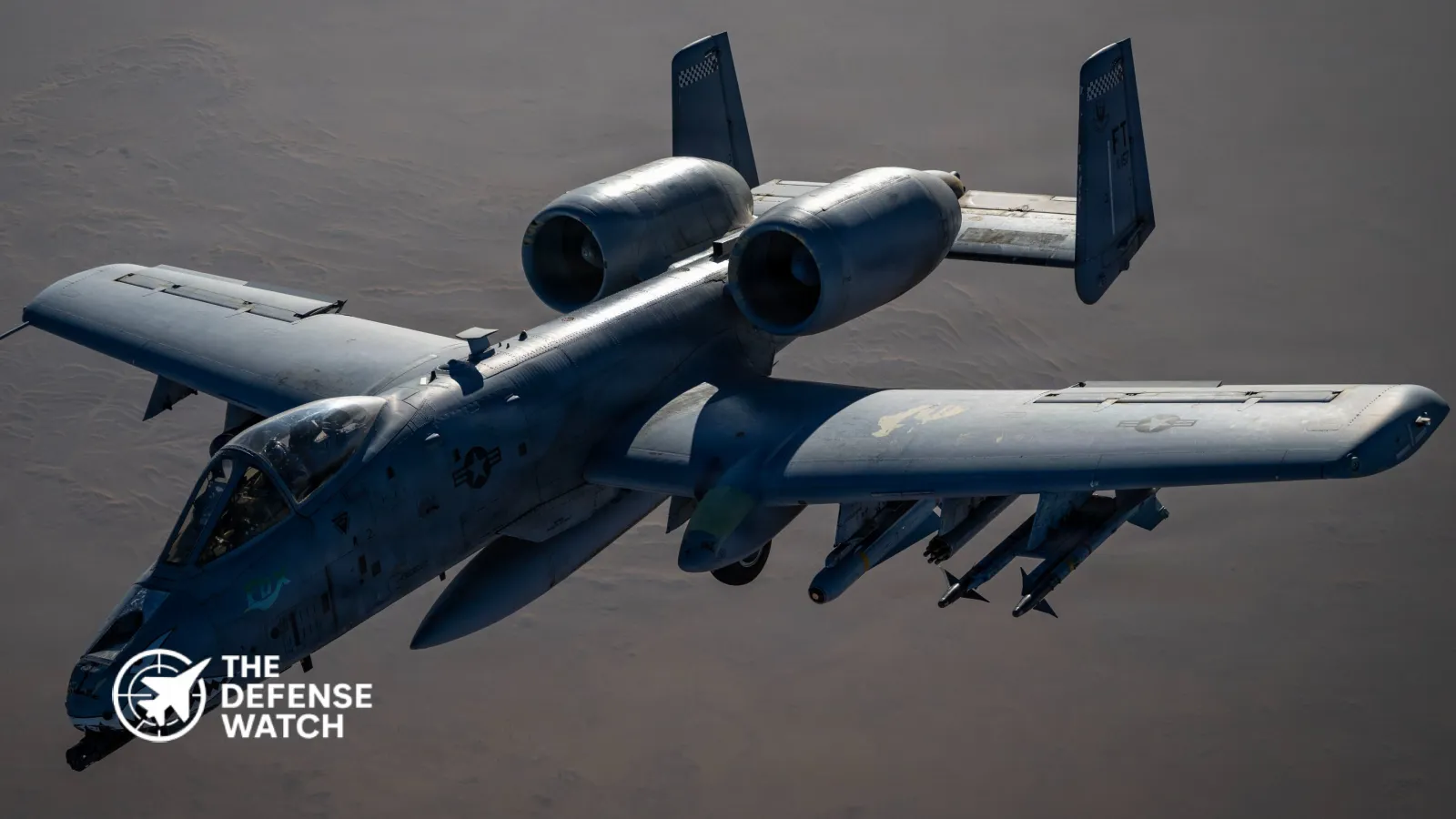
- U.S. Central Command released imagery showing armed A-10 Warthog aircraft supporting Operation Epic Fury.
- The aircraft were observed carrying air-to-ground weapons including AGM-65 Maverick missiles and guided rockets.
- The deployment highlights the role of persistent close air support platforms in the campaign against Iranian military targets.
- Operation Epic Fury began February 28, 2026 and involves extensive U.S. and allied air and naval assets.
- The operation targets Iran’s missile infrastructure, command centers, and naval forces.
A-10 Warthog Supports Operation Epic Fury Against Iran
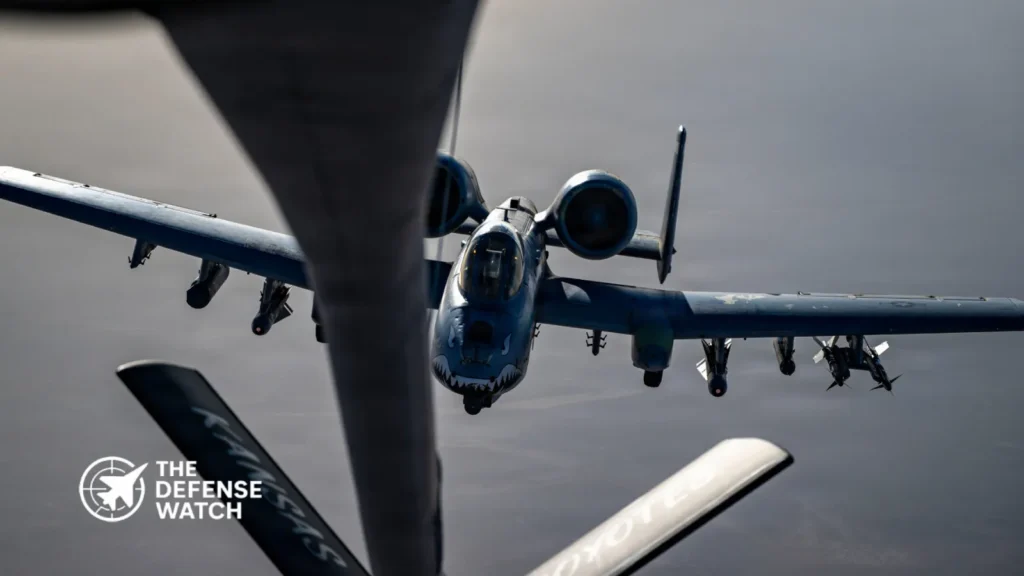
The A-10 Warthog Operation Epic Fury mission has entered public view after U.S. Central Command released imagery showing armed A-10 Thunderbolt II attack aircraft operating in support of the ongoing campaign against Iran. The aircraft were photographed refueling in flight while carrying combat loadouts, underscoring their role in sustained air operations over the region.
CENTCOM published the imagery on its official social media channels, highlighting the aircraft’s ability to remain on station for extended periods while providing rapid-response strike capability. The disclosure confirms that the U.S. Air Force’s iconic close air support platform continues to play a role in the expanding military operation launched in late February.
Operation Epic Fury began on February 28, 2026, as a large-scale U.S. led campaign targeting Iranian military infrastructure considered to pose an imminent threat to regional security. The operation combines air strikes, maritime operations, electronic warfare, and missile defense activities across the broader Middle East theater.
The Big Picture
Operation Epic Fury represents one of the most complex U.S. military campaigns in the Middle East in recent years. The operation integrates stealth bombers, advanced fighter aircraft, electronic warfare platforms, drones, and naval strike assets in a coordinated effort to degrade Iran’s military capabilities.
U.S. Central Command has confirmed the use of a broad range of systems including B-2 and B-1 bombers, F-22 and F-35 stealth fighters, F-15 and F-16 tactical aircraft, A-10 attack jets, and MQ-9 Reaper drones. Naval forces and missile defense systems such as Patriot and THAAD are also involved in the broader operational architecture.
This combination reflects a layered approach to modern air warfare. Stealth aircraft and electronic attack platforms suppress air defenses, while conventional fighters and attack aircraft sustain pressure on targets once the most dangerous defenses are neutralized.
Within that structure, the A-10 Warthog fills a specialized but still important operational niche.
What’s Happening
CENTCOM imagery released in March 2026 shows an armed A-10 Thunderbolt II operating in support of Operation Epic Fury. The aircraft was photographed during an aerial refueling sequence, a routine procedure that extends its endurance during combat operations.
The visible loadout suggests a multi role configuration. Weapons reportedly include AGM-65 Maverick air to ground missiles and precision guided rockets, along with short range air to air missiles for self defense. This configuration allows the aircraft to engage a range of targets including vehicles, mobile missile launchers, and lightly defended infrastructure.
The A-10’s presence in the campaign highlights its ability to remain over a battlefield for extended periods. Unlike high performance fighters designed primarily for short strike missions, the Warthog can loiter for hours while providing armed overwatch for ground forces or strike opportunities.
The broader campaign has already targeted Iranian command centers, ballistic missile facilities, air defense systems, and naval assets. Early phases of the operation reportedly struck multiple vessels and key elements of Iran’s military command structure.
Why It Matters
The use of the A-10 Warthog in Operation Epic Fury illustrates the continued relevance of specialized close air support aircraft in modern conflicts.
Despite decades of technological evolution in stealth aviation and precision strike capabilities, many combat scenarios still require persistent air presence rather than high speed strike missions. The A-10 was designed precisely for that mission profile.
Its ability to fly slowly at low altitude, identify targets visually, and deliver precise firepower makes it particularly effective against dispersed or mobile targets. These include vehicle convoys, missile launchers, or irregular ground units that may not be easily engaged by long range precision weapons.
In the context of the Iran campaign, such capabilities are especially valuable for targeting mobile missile systems or logistics movements after the initial wave of strategic strikes has degraded major infrastructure.
The aircraft also carries the GAU-8 Avenger 30 mm cannon, one of the most powerful aircraft mounted guns ever fielded, designed to destroy armored vehicles and hardened targets.
Strategic Implications
The A-10 Warthog Operation Epic Fury deployment demonstrates how the United States continues to combine legacy platforms with advanced systems in modern combat operations.
Stealth bombers and fifth generation fighters open access to heavily defended airspace. Once those defenses are suppressed, aircraft such as the A-10 provide sustained pressure against remaining targets.
This layered strategy maximizes operational efficiency. High end stealth aircraft focus on the most heavily defended or strategically important targets, while lower cost platforms conduct follow on missions and battlefield persistence.
For the United States, this approach also reduces operational costs. Using an A-10 for certain strike missions can be significantly cheaper than deploying a stealth fighter for the same target set.
Competitor View
Iran and other potential adversaries closely watch the composition of U.S. air operations in campaigns such as Operation Epic Fury.
From a strategic perspective, the presence of A-10 aircraft signals that the United States believes it has achieved at least partial air superiority in portions of the battlespace. The A-10 is most effective when advanced surface to air threats are limited or suppressed.
For Iran’s military planners, this development likely indicates that key elements of their integrated air defense network have been degraded by earlier strikes from stealth aircraft, cruise missiles, and electronic warfare systems.
Other strategic competitors, including Russia and China, analyze such operations for lessons in how the United States integrates different aircraft types in large scale air campaigns.
What To Watch Next
The next phase of Operation Epic Fury will likely focus on sustained strike operations against remaining Iranian military capabilities.
Key indicators to monitor include:
• Expanded use of unmanned systems for persistent surveillance and strike
• Follow on strikes targeting mobile missile launchers
• Additional carrier air wing operations in the region
• Continued aerial refueling operations supporting long duration missionsAs the campaign evolves, the U.S. military may adjust the mix of aircraft involved depending on threat levels and mission requirements.
Capability Gap
The deployment of A-10 aircraft also highlights a persistent capability gap in many modern air forces: affordable, long endurance close air support platforms.
While fifth generation fighters offer unmatched stealth and sensor capabilities, they are expensive to operate and not optimized for extended loiter missions over ground battlefields.
The A-10 was specifically designed to fill that role. Its survivability features, including armor around the cockpit and redundant systems, allow it to operate in contested environments where other aircraft might face greater risk.
However, the platform also has limitations. It lacks stealth characteristics and remains vulnerable to advanced air defense systems if those systems are fully operational.
For this reason, the aircraft typically operates only after the most dangerous threats have been suppressed.
The Bottom Line
The A-10 Warthog Operation Epic Fury deployment highlights how the United States continues to rely on a layered mix of advanced and legacy aircraft to sustain air dominance and precision strike capability in modern conflicts.