• Home
  • About
  • Defense Systems
  • Manufacturer
  • Comparisons
  • Compare 
  • Tools
TheDefenseWatch.com
  • Aerospace & Aviation
  • Military & Ordnance
  • Naval & Maritime
  • Cyber & Space Defense
  • Policy & Strategy
  • Global News
  • Tools Library
    • Smart Calculator
    • Drone Flight Time Calculator
    • Drone Range Calculator
    • Counter-Drone Jammer Effective Range Calculator
    • Counter-Battery Radar Detection Calculator
    • Artillery Fire Correction Calculator
    • Thermal Camera Detection Range Calculator
    • Missile Range & Time-of-Flight Calculator
    • Radar Detection Range Calculator
    • FPV Strike Drone Payload vs Range Calculator
    • Loitering Munition Endurance Calculator
    • Sniper Ballistic Drop & Windage Calculator
    • Bullet Drop Calculator
    • U.S. Army Combat Fitness Test (ACFT) Calculator
    • Military Pension Calculator
    • Military Retirement Calculator
    • Military Pension Calculator
    • Large Number Calculator
Font ResizerAa

TheDefenseWatch.com

The Defense Watch | U.S. & Global Defense News, Analysis & Military Updates

Search
  • Home
  • About
  • Defense Systems
  • Manufacturer
  • Comparisons
  • Compare 
  • Tools

Stay Updated

Get the latest update

Subscribe

Explore

  • Drone
  • Fighter Jets & Military Aircraft
  • Hypersonic Weapons
  • Aircraft Carriers
  • Strategic History & Missions
  • Tools Library
Home » NASA Completes First Flight Of Laminar Flow Scaled Wing Design In Aerodynamic Breakthrough
Aerospace & AviationStealth Technology

NASA Completes First Flight Of Laminar Flow Scaled Wing Design In Aerodynamic Breakthrough

Daniel Mercer / Defense & Aerospace Analyst
Last updated: February 27, 2026 4:57 am
Daniel Mercer / Defense & Aerospace Analyst
Share
6 Min Read
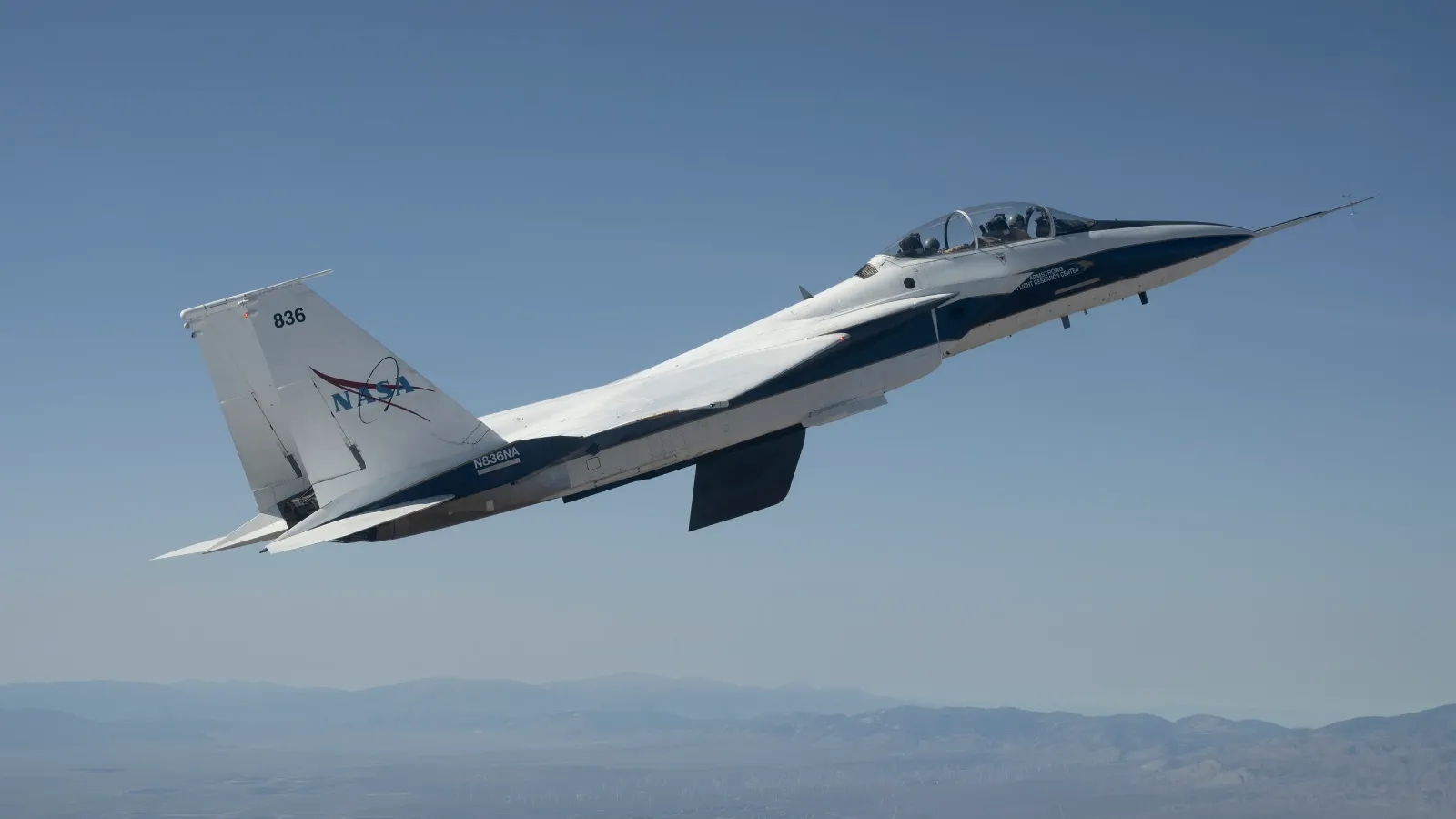
NASA laminar flow wing
Image : NASA
SHARE
■ KEY FACTS AT A GLANCE
  • ► NASA completed the first flight of its laminar flow scaled wing design demonstrator.
  • ► The test evaluated aerodynamic performance aimed at reducing drag and fuel consumption.
  • ► Laminar flow technology keeps airflow smooth over the wing surface to improve efficiency.
  • ► The research supports long term goals for quieter, lower emission commercial aircraft.
  • ► Data from the flight will guide future aircraft design and potential industry adoption.

NASA Completes First Flight Of Laminar Flow Scaled Wing Design

NASA’s laminar flow wing test reached a new milestone with the first flight of a scale model built to sustain smoother airflow over a wing surface, known in industry circles as laminar flow. That smoother airflow yields lower aerodynamic drag, which translates directly to reduced fuel use and operating costs for aircraft. This flight test matters because drag reduction is a long‑standing goal in aeronautics that affects both commercial and military aviation design competitiveness.

Contents
  • NASA Completes First Flight Of Laminar Flow Scaled Wing Design
  • What NASA Tested
  • Operational Impact
  • Strategic Implications
  • Challenges and Next Steps
  • Strategic Assessment

What NASA Tested

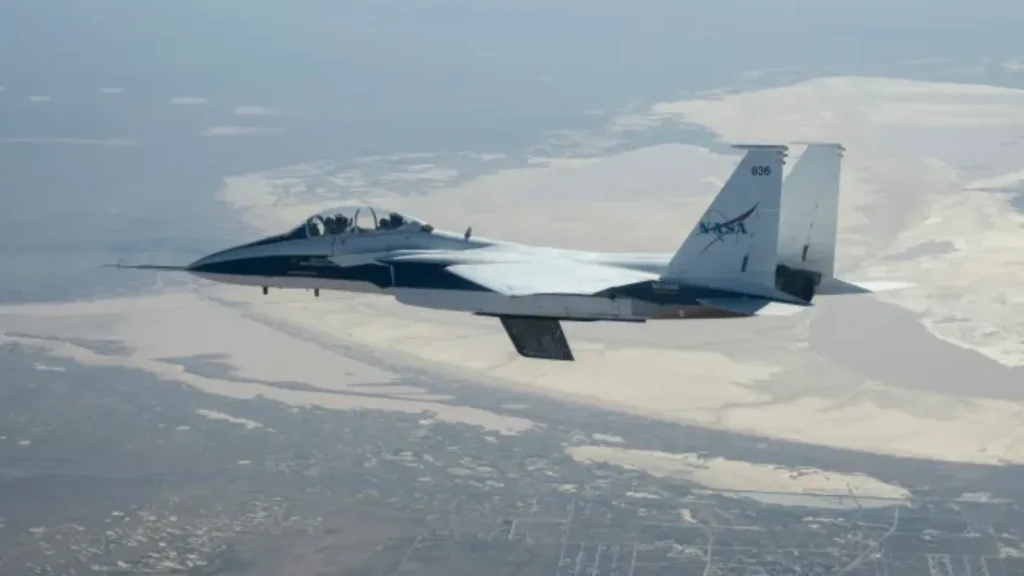
The experiment focused on a Crossflow Attenuated Natural Laminar Flow concept mounted beneath a NASA F‑15 research aircraft. While the test did not involve a full‑size wing on a large transport aircraft, the scaled model’s first flight showed that the CATNLF geometry could be carried in the air and subjected to flight conditions relevant to future designs.
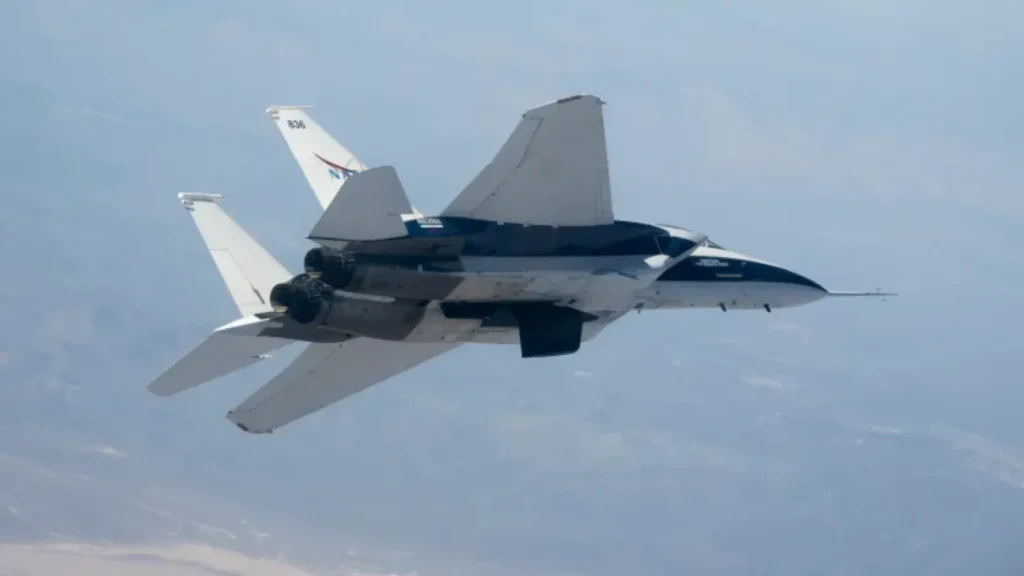
NASA laminar flow wing
Image : NASA

NASA and aerospace researchers have worked on laminar flow technologies for years because the drag created by turbulent flow across a wing surface still accounts for a major share of total aerodynamic resistance. Reducing that drag even a few percent can save millions in fuel for large operators.

Operational Impact

For commercial aviation, laminar flow wings promise tangible fuel efficiency gains. Independent analyses suggest laminar flow treatments on swept wings could reduce drag and fuel burn by about 7 to 10 percent versus conventional wings at cruise. That matters to airlines in a market where fuel remains one of the largest variable costs on long‑haul routes.

- Advertisement -

From a military perspective, the relevance depends on platform and mission. Transport and tanker aircraft used by the U.S. Air Force could benefit from efficiency gains in range and loiter time. For fighter and bomber fleets, the design challenges are different, but drag reduction still influences range and payload margins. No official U.S. defense program is publicly known to be adopting CATNLF directly, but the broader research can inform aerodynamic refinement in future tactical aircraft.

Strategic Implications

NASA’s aerodynamic research has historically fed into industry and defense innovations. Technologies that enable better fuel efficiency can influence aircraft lifecycle costs, emissions profiles, and logistics planning. In an era of constrained defense and airline budgets, even incremental performance improvements attract attention from program managers.

Comparatively, Airbus and other European aerospace entities have tested laminar flow wings on demonstrator aircraft in the past. Those efforts showed sustainable laminar flow can reduce overall drag, although industrializing such designs remains a challenge given sensitivity to surface imperfections and operational conditions.

Challenges and Next Steps

Laminar flow designs are sensitive to surface contamination, manufacturing tolerances, and environmental effects, such as ice or insect accumulation, which can disrupt the smooth flow and negate benefits. The technologies being tested aim to counter crossflow instabilities that typically force a transition to turbulent air early along the wing.
NASA laminar flow wing
Image : NASA

Future tests will need to demonstrate performance under a broader range of speeds and flight conditions. A scaled model test is a necessary early step but is not sufficient by itself to prove readiness for integration into operational aircraft.

Strategic Assessment

Military Balance: The direct effect on the military balance is limited at this stage. This is fundamental aerodynamic research rather than a new weapons system. However, improved efficiency in large military transports and tankers could subtly enhance operational reach and sustainment.

Defense Logistics: Fuel efficiency affects lifeline platforms such as cargo aircraft and air refueling tankers. Innovations in drag reduction may factor into future U.S. Air Force recapitalization choices if they mature into deployable systems.

Industrial Dimension: NASA’s work could inform U.S. aerospace industry competitiveness against European laminar flow programs. Early adoption of such technologies in commercial airframes strengthens the industrial base and provides a technological edge.

- Advertisement -

Budget Signals: Funding continued aeronautics research suggests ongoing investment in long‑term efficiency goals even as NASA balances other priorities. Results from CATNLF will shape decisions on scaling and potential partnerships with industry.


TAGGED:aerospace researchaircraft efficiencylaminar flow wingsNASA aerospace
Share This Article
Facebook Copy Link Print
ByDaniel Mercer / Defense & Aerospace Analyst
Follow:
Daniel Mercer is a defense and aerospace analyst at TheDefenseWatch.com covering military aviation, aerospace technology, unmanned systems, air warfare, and defense procurement. His reporting uses official documents, government and military statements, company announcements, and other public sources.
Leave a Comment

Leave a Reply Cancel reply

Your email address will not be published. Required fields are marked *

Latest Defense Systems

  • John F. Kennedy Aircraft Carrier John F. Kennedy Aircraft Carrier
  • Voyager Tanker Voyager Tanker
  • YU-20 Tanker YU-20 Tanker
  • China KJ-500 Aircraft China KJ-500 Aircraft
  • SPY-6 Radar SPY-6 Radar
  • Boeing VC-25B Presidential Aircraft Boeing VC-25B Presidential Aircraft
  • SM-3 Block IB Missile SM-3 Block IB Missile
  • USS Abraham Lincoln Aircraft Carrier USS Abraham Lincoln Aircraft Carrier
  • M142 HIMARS M142 HIMARS

Recent Compares

  • Tejas vs Gripen: Key Differences and Capabilities Tejas vs Gripen: Key Differences and Capabilities View Comparison →
  • Tejas vs MiG-21 Bison: How India Replaced Its Iconic Supersonic Fighter Tejas vs MiG-21 Bison: How India Replaced Its Iconic Supersonic Fighter View Comparison →
  • F-35 vs F-16: Stealth, Sensors and Combat Roles F-35 vs F-16: Stealth, Sensors and Combat Roles View Comparison →
  • Tejas Fighter Jet vs F-16 Fighting Falcon: Capability Compared Tejas Fighter Jet vs F-16 Fighting Falcon: Capability Compared View Comparison →
  • Rafale Fighter Jet vs F-16 Fighting Falcon : Which Fighter Has the Edge? Rafale Fighter Jet vs F-16 Fighting Falcon : Which Fighter Has the Edge? View Comparison →
  • Su-57 Fighter Jet vs J-20 Fighter Jet: Stealth and Air Combat Compared Su-57 Fighter Jet vs J-20 Fighter Jet: Stealth and Air Combat Compared View Comparison →
  • Mirage 2000 vs Tejas Mk1A: Legacy Combat Power vs Indigenous Modernization Mirage 2000 vs Tejas Mk1A: Legacy Combat Power vs Indigenous Modernization View Comparison →
  • Rafale Fighter Jet vs F-22 Raptor: Which Air Dominance Fighter Has the Edge? Rafale Fighter Jet vs F-22 Raptor: Which Air Dominance Fighter Has the Edge? View Comparison →
  • Tejas Fighter Jet vs. Rafale Fighter Jet: India’s Indigenous Fighter Meets France’s Proven Multirole Combat Aircraft Tejas Fighter Jet vs. Rafale Fighter Jet: India’s Indigenous Fighter Meets France’s Proven Multirole Combat Aircraft View Comparison →
  • F-22 Raptor vs. F-35 Joint Strike Fighter: Which Fifth Generation Fighter Has the Edge? F-22 Raptor vs. F-35 Joint Strike Fighter: Which Fifth Generation Fighter Has the Edge? View Comparison →

Recent Posts

  • US Rejects Automatic Body Camera Activation for ICE Officers
  • Iron Dome Architect Develops New Counter-Swarm Drone Defense System
  • U.S. Navy Conducts First F-35C Landing on USS John F. Kennedy
  • Huntington Ingalls Wins $56.2 Million Contract for Foreign Nuclear Submarine Support
  • US Forces Disable Cargo Ship Attempting to Evade Iran Blockade

You Might Also Like

KAAN fighter stealth prototype
Aerospace & AviationFighter Jets & Military Aircraft

Spain Evaluating Turkish KAAN Fighter Jet, Israeli Media Reports Growing European Interest

September 13, 2026
NATO GlobalEye AEW&C
Aerospace & AviationFighter Jets & Military Aircraft

Netherlands Moves To Acquire Saab GlobalEye As NATO Replaces Aging AWAC

September 14, 2026
China Novasky KC300 counter-drone interceptor
Aerospace & AviationDrones & UAVs

China’s Novasky Unveils KC300 Counter-Drone Interceptor At DSA 2026 To Stop Low-Altitude UAV Threats

April 21, 2026
Australia Hawk trainer replacement
Aerospace & AviationFighter Jets & Military Aircraft

Australia Moves To Replace Hawk Trainer Fleet As Pilot Training Demands Grow

September 7, 2026

Logo

Copyright © 2026 TheDefenseWatch.com

Helpful Links

  • Home
  • About Us
  • Privacy Policy
  • Terms of Use / Disclaimer
  • U.S. Privacy Notice – CCPA Compliance

Defense Systems

  • Defense Systems
  • Comparisons 
  • Manufacturer
  • Tactical Calculators

Popuplar

Which 5 Air Forces Possess the Costliest Fighter Jet Fleets in the World
Evolving Strategic Value: Carrier Strike Groups in the Indo-Pacific’s Future Security Architecture
Autonomous Weapon Systems Spark U.S. Ethics Debate Amid Rapid Military AI Integration

We report on developments involving military forces, governments, defense companies, research organizations, and security institutions around the world. 

Welcome Back!

Sign in to your account

Username or Email Address
Password

Lost your password?