• Home
  • About
  • Defense Systems
  • Manufacturer
  • Comparisons
  • Compare 
  • Tools
TheDefenseWatch.com
  • Aerospace & Aviation
  • Military & Ordnance
  • Naval & Maritime
  • Cyber & Space Defense
  • Policy & Strategy
  • Global News
  • Tools Library
    • Smart Calculator
    • Drone Flight Time Calculator
    • Drone Range Calculator
    • Counter-Drone Jammer Effective Range Calculator
    • Counter-Battery Radar Detection Calculator
    • Artillery Fire Correction Calculator
    • Thermal Camera Detection Range Calculator
    • Missile Range & Time-of-Flight Calculator
    • Radar Detection Range Calculator
    • FPV Strike Drone Payload vs Range Calculator
    • Loitering Munition Endurance Calculator
    • Sniper Ballistic Drop & Windage Calculator
    • Bullet Drop Calculator
    • U.S. Army Combat Fitness Test (ACFT) Calculator
    • Military Pension Calculator
    • Military Retirement Calculator
    • Military Pension Calculator
    • Large Number Calculator
Font ResizerAa

TheDefenseWatch.com

The Defense Watch | U.S. & Global Defense News, Analysis & Military Updates

Search
  • Home
  • About
  • Defense Systems
  • Manufacturer
  • Comparisons
  • Compare 
  • Tools

Stay Updated

Get the latest update

Subscribe

Explore

  • Drone
  • Fighter Jets & Military Aircraft
  • Hypersonic Weapons
  • Aircraft Carriers
  • Strategic History & Missions
  • Tools Library
Home » Poland Bans Chinese Made Vehicles From Military Facilities Over Security Concerns
Defense Budgets & PolicyPolicy & Strategy

Poland Bans Chinese Made Vehicles From Military Facilities Over Security Concerns

Daniel Mercer / Defense & Aerospace Analyst
Last updated: February 18, 2026 10:56 am
Daniel Mercer / Defense & Aerospace Analyst
Share
3 Min Read
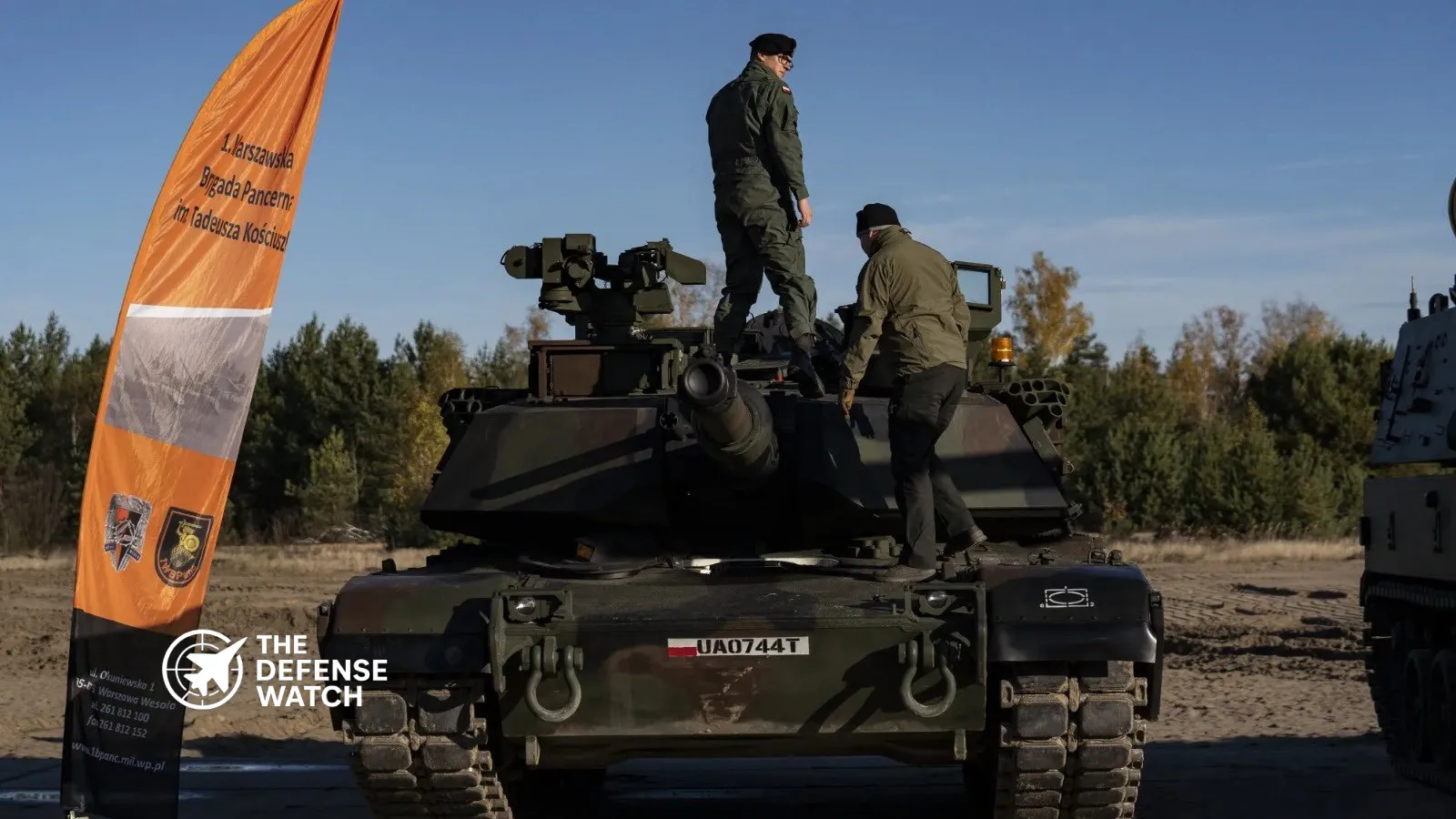
Poland bans Chinese vehicles
SHARE
Follow The Defense Watch on Google:
■ KEY FACTS AT A GLANCE
  • ► Poland has banned Chinese made vehicles from entering military facilities.
  • ► The Polish Army cited concerns that onboard sensors could collect sensitive data.
  • ► Limited access may be granted if certain vehicle functions are disabled.
  • ► Security protocols at military facilities will apply in all approved cases.
  • ► Warsaw described the move as a precaution consistent with NATO members and allies.

Poland Bans Chinese Made Vehicles From Military Facilities

Poland bans Chinese made vehicles from military facilities over concerns that onboard sensors could collect sensitive data, according to statements from the Polish Army and government officials.

Contents
Poland Bans Chinese Made Vehicles From Military FacilitiesData Security At The Center Of The DecisionConditional Access Under Strict ControlsBroader NATO ContextGrowing Focus On Connected Vehicle RisksStrategic Significance For PolandIndustry And Diplomatic ImplicationsWhat Comes Next

The restriction applies to Chinese manufactured civilian vehicles seeking access to military bases and other restricted defense sites. Authorities said the decision is precautionary and focused on protecting classified information and operational security.

The Polish Army stated that modern vehicles often contain advanced sensors, cameras, GPS systems, and wireless connectivity modules. Officials warned that such systems could potentially record or transmit sensitive information if not properly controlled.

Warsaw emphasized that the measure is consistent with security practices adopted by NATO members and close allies.

- Advertisement -

Data Security At The Center Of The Decision

The Polish Army said its primary concern involves data collection capabilities embedded in modern vehicles. Many electric and connected cars rely on multiple cameras, radar systems, microphones, and telematics units to support driver assistance and remote diagnostics.

Defense officials expressed concern that these components could gather imagery or geolocation data from inside military facilities.

While no specific incident was cited publicly, the decision reflects broader European and transatlantic debates about supply chain security and foreign manufactured connected technologies.

Poland is a frontline NATO state bordering Belarus and the Russian exclave of Kaliningrad. It hosts allied forces and serves as a major logistics hub for NATO operations in Eastern Europe.

Given that role, protection of sensitive sites has become a priority within the Ministry of National Defence.

Conditional Access Under Strict Controls

According to the Polish Army, limited access to military facilities may still be granted in certain cases. However, this would require specific vehicle functions to be disabled and additional security procedures to be applied.

Officials did not detail which systems must be deactivated. Such measures could involve disabling cameras, wireless connectivity, or remote access functions before entering restricted zones.

Security personnel would oversee compliance at entry points.

- Advertisement -

The Polish government described the policy as a preventive step rather than a response to a specific intelligence finding.

Broader NATO Context

Poland’s decision comes amid wider scrutiny of Chinese manufactured technology across NATO countries. Several allies have introduced tighter rules on telecommunications infrastructure, critical infrastructure equipment, and connected systems.

The issue often centers on concerns about data sovereignty and potential remote access risks.

Under NATO security doctrine, member states are responsible for protecting classified information and sensitive facilities. National policies can vary, but alignment on threat perception has increased since Russia’s full scale invasion of Ukraine in 2022.

Poland has significantly expanded its defense posture in recent years. It has increased defense spending, accelerated modernization programs, and strengthened cooperation with the United States and other allies.

Growing Focus On Connected Vehicle Risks

The Polish Army’s move highlights a growing focus on the cybersecurity risks of connected vehicles.

Modern vehicles function as mobile data platforms. They generate large volumes of telemetry data, including location history, video recordings, and system diagnostics. In a military environment, even routine background data collection could expose patterns of movement or infrastructure layouts.

Western security agencies have increasingly warned about risks linked to internet connected devices in sensitive environments.

While Chinese automotive brands have expanded rapidly in European markets, particularly in the electric vehicle segment, Poland’s restriction applies specifically to access to military facilities rather than a nationwide consumer ban.

Strategic Significance For Poland

Poland plays a central role in NATO’s eastern defense architecture. The country hosts rotational US forces, prepositioned equipment, and multinational battlegroups.

Military bases in Poland support logistics flows to Ukraine and allied exercises across the region.

As a result, protection of base perimeters and internal data environments is considered critical.

The Warsaw administration said the decision reflects standard risk mitigation practices.

Officials stressed that the policy is not directed at private consumers or commercial use outside restricted military areas.

Industry And Diplomatic Implications

The move could add to tensions between European governments and Beijing over technology access and trade policy.

European Union institutions have also examined the role of Chinese electric vehicles in the European market, particularly regarding subsidies and market competition.

However, Poland’s measure is framed narrowly around defense security rather than trade policy.

No immediate response from Chinese authorities was reported at the time of publication.

What Comes Next

It remains unclear whether other NATO members will adopt similar restrictions specific to vehicle access at military sites.

Some countries already enforce strict electronic device controls in sensitive areas, including limits on smartphones and personal electronics.

Poland’s decision signals that connected vehicle systems are now part of that broader security conversation.

As modern vehicles integrate more autonomous and networked features, defense planners are increasingly assessing how civilian technologies intersect with military security.

For Poland, the ban on Chinese made vehicles from military facilities represents a preventive step aimed at reducing potential vulnerabilities in an evolving threat environment.

Enjoying our coverage?

Make The Defense Watch a preferred source on Google to see more of our geopolitical and defense insights when relevant to you.


TAGGED:Chinese vehiclesDefense Policymilitary facilitiesNATO securityPoland
Share This Article
Facebook Copy Link Print
ByDaniel Mercer / Defense & Aerospace Analyst
Follow:
Daniel Mercer is a defense and aerospace analyst at TheDefenseWatch.com covering military aviation, aerospace technology, unmanned systems, air warfare, and defense procurement. His reporting uses official documents, government and military statements, company announcements, and other public sources.
Leave a Comment

Leave a Reply Cancel reply

Your email address will not be published. Required fields are marked *

Search Defense Systems

Latest Defense Systems

  • F-104 Starfighter F-104 Starfighter
  • F-15J Eagle Fighter Jet F-15J Eagle Fighter Jet
  • China’s GJ-21 Stealth Drone China’s GJ-21 Stealth Drone
  • China’s GJ-11 Stealth Drone China’s GJ-11 Stealth Drone
  • F-15EX Eagle Fighter Jet F-15EX Eagle Fighter Jet
  • TRML-4D Radar TRML-4D Radar
  • F-47A Fighter Jet F-47A Fighter Jet
  • China DF-61 Missile China DF-61 Missile
  • B61 Nuclear Bomb B61 Nuclear Bomb

Recent Compares

  • J-10C vs JF-17 Thunder: Which Fighter Is More Capable? J-10C vs JF-17 Thunder: Which Fighter Is More Capable? View Comparison →
  • Tejas vs Gripen: Key Differences and Capabilities Tejas vs Gripen: Key Differences and Capabilities View Comparison →
  • Tejas vs MiG-21 Bison: How India Replaced Its Iconic Supersonic Fighter Tejas vs MiG-21 Bison: How India Replaced Its Iconic Supersonic Fighter View Comparison →
  • F-35 vs F-16: Stealth, Sensors and Combat Roles F-35 vs F-16: Stealth, Sensors and Combat Roles View Comparison →
  • Tejas Fighter Jet vs F-16 Fighting Falcon: Capability Compared Tejas Fighter Jet vs F-16 Fighting Falcon: Capability Compared View Comparison →
  • Rafale Fighter Jet vs F-16 Fighting Falcon : Which Fighter Has the Edge? Rafale Fighter Jet vs F-16 Fighting Falcon : Which Fighter Has the Edge? View Comparison →
  • Su-57 Fighter Jet vs J-20 Fighter Jet: Stealth and Air Combat Compared Su-57 Fighter Jet vs J-20 Fighter Jet: Stealth and Air Combat Compared View Comparison →
  • Mirage 2000 vs Tejas Mk1A: Legacy Combat Power vs Indigenous Modernization Mirage 2000 vs Tejas Mk1A: Legacy Combat Power vs Indigenous Modernization View Comparison →
  • Rafale Fighter Jet vs F-22 Raptor: Which Air Dominance Fighter Has the Edge? Rafale Fighter Jet vs F-22 Raptor: Which Air Dominance Fighter Has the Edge? View Comparison →
  • Tejas Fighter Jet vs. Rafale Fighter Jet: India’s Indigenous Fighter Meets France’s Proven Multirole Combat Aircraft Tejas Fighter Jet vs. Rafale Fighter Jet: India’s Indigenous Fighter Meets France’s Proven Multirole Combat Aircraft View Comparison →

Recent Posts

  • NASA’s Voyager 1 Reaches One Light-Day From Earth After 49 Years in Space
  • Russian Missiles Enter Polish Airspace During European Military Exercises
  • L3Harris Wins $28 Million Australian Defence Contract for Advanced Capability System
  • F-35C Completes First Launch and Recovery Trials Aboard Ford-Class Carrier
  • Northrop Grumman Declares $2.47 Per-Share Dividend for Fourth Quarter 2026

You Might Also Like

UK NATO capability burden
Alliances & DoctrinesPolicy & Strategy

UK Rising NATO Burden, London Eyes Larger Role in Alliance Capability Plans

September 7, 2026
Strait of Hormuz security
Geopolitical & Strategic DoctrinesPolicy & Strategy

U.K. And France Move To Lead Hormuz Security Without U.S. After Trump Blockade Push

September 7, 2026
Pentagon audit failure
Global News

Trump Executive Order Restricts Defense Contractor Dividends and CEO Pay, Sparking Investor Concerns

February 7, 2026
South Korea AIM-120C-8 procurement
Alliances & DoctrinesPolicy & Strategy

South Korea Moves To Expand AMRAAM Arsenal As Regional Air Threats Grow

September 13, 2026

Logo

Copyright © 2026 TheDefenseWatch.com

Helpful Links

  • Home
  • About Us
  • Privacy Policy
  • Terms of Use / Disclaimer
  • U.S. Privacy Notice – CCPA Compliance

Defense Systems

  • Defense Systems
  • Comparisons 
  • Manufacturer
  • Tactical Calculators

Popuplar

Which 5 Air Forces Possess the Costliest Fighter Jet Fleets in the World
Evolving Strategic Value: Carrier Strike Groups in the Indo-Pacific’s Future Security Architecture
Autonomous Weapon Systems Spark U.S. Ethics Debate Amid Rapid Military AI Integration

We report on developments involving military forces, governments, defense companies, research organizations, and security institutions around the world. 

Welcome Back!

Sign in to your account

Username or Email Address
Password

Lost your password?

Enjoying our coverage?

Make The Defense Watch a preferred source on Google to see more insights.