U.S. Army Validates Extended-Range Precision Strike Capability
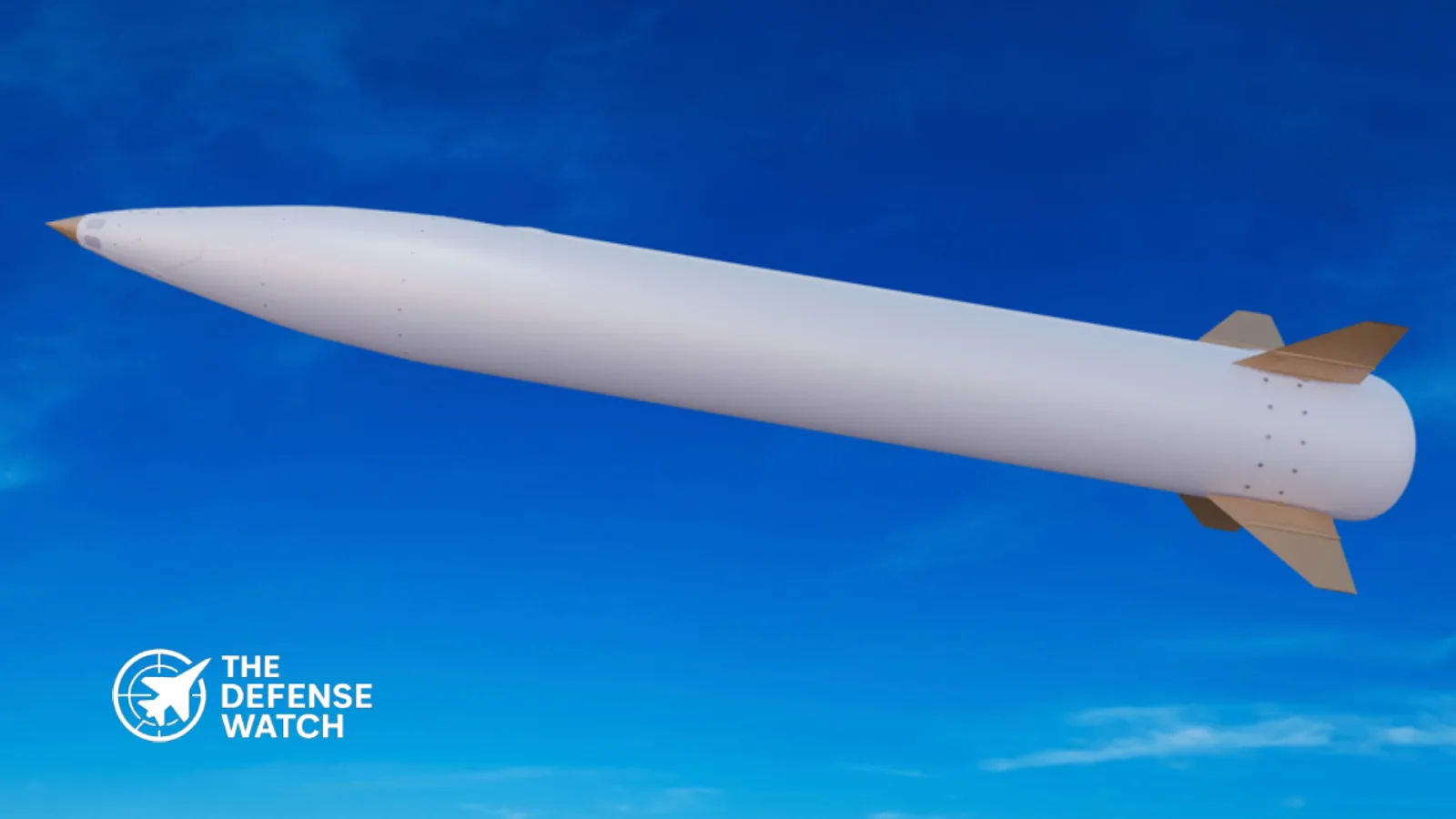
The U.S. Army has completed system qualification testing for the Extended-Range GMLRS Alternative Warhead variant after successfully firing the munition from an M270A2 launcher for the first time, marking a significant expansion of American rocket artillery capabilities. The test, conducted at White Sands Missile Range in New Mexico on January 30, 2026, validated the weapon’s precision, lethality, and seamless integration with existing launcher platforms.
The Extended-Range GMLRS reaches 150 kilometers, more than twice the 70-kilometer range of the standard GMLRS, according to Lockheed Martin, which developed the system. The milestone represents the culmination of a development program that began in 2017 as an engineering change proposal, designed to expand strike depth without requiring new launch vehicles or organizational changes.
The February 12 announcement by Lockheed Martin follows the successful January test and positions the weapon system for operational testing with U.S. Army soldiers during the first half of 2026, prior to fielding.
Alternative Warhead Variant Expands Target Set
The GMLRS Alternative Warhead contains approximately 182,000 pre-formed tungsten fragments, designed to defeat personnel and lightly protected targets while avoiding unexploded ordnance hazards associated with legacy submunition rounds. This design choice addresses coalition operational requirements and post-conflict stabilization concerns that have grown increasingly important in modern warfare.
The Alternative Warhead provides commanders with wide-area fragmentation effects against dispersed formations, soft vehicle parks, air defense support elements, and logistics nodes that are too spread out for unitary blast warheads to service efficiently. The weapon offers three detonation modes: height-of-burst above ground, point detonation on impact, or delayed detonation after impact for the Unitary variant.
(adsbygoogle = window.adsbygoogle || []).push({});“Extended Range GMLRS demonstrates how the Army and industry are working together to deliver meaningful capability at the pace of relevance,” said Lt. Gen. Frank Lozano, Portfolio Acquisition Executive Fires. The general emphasized that by building on a proven system and expanding range while maintaining precision, ER GMLRS gives commanders greater operational flexibility without introducing unnecessary complexity.
M270A2 Platform Integration Preserves Force Structure
The successful M270A2 launch demonstrates critical backward compatibility with upgraded launcher systems already in Army service. The M270A2 is a comprehensive recapitalization that adds a Common Fire Control System, improved crew protection, and a new 600-horsepower powerpack, modernizing a tracked platform built to keep pace with armored formations.
The successful launch from the M270A2 shows we can give warfighters a longer-range weapon on the rocket platform they already trust, extending strike capability without adding new logistics burdens,” said Dave Griser, vice president of Precision Fires Rockets at Lockheed Martin.
-
(adsbygoogle = window.adsbygoogle || []).push({});
The M270A2 carries two six-rocket pods, enabling up to twelve rockets to be delivered in a rapid salvo before the vehicle displaces. The system’s compatibility with both M270A2 and M142 HIMARS launchers provides flexibility across different operational environments, with the tracked M270A2 designed to accompany armored formations while the lighter HIMARS offers road-mobile deployment options.
Strategic Implications For Deep Fires
The 112-kilometer flight test validated the system’s precision, launcher integration, and lethality, according to Lockheed Martin. The extended range allows warfighters to engage high-value, time-critical targets with broader battlespace coverage, supporting counterair defense suppression and delivering effects on demand against both point and area targets.
The weapon system fills a critical gap between standard GMLRS and theater-range strike weapons such as the Army Tactical Missile System (ATACMS) and the emerging Precision Strike Missile (PrSM). In an operational environment where high-volume fires consumption has moved from theoretical to actual, a 150-kilometer precision rocket represents a cost-effective middle tier that doesn’t require ballistic missiles for every deep target.
(adsbygoogle = window.adsbygoogle || []).push({});For HIMARS, the advantage is even sharper, as a lighter, road-mobile launcher can now hold deep targets at risk while operating from more permissive movement corridors. This capability proves particularly relevant in contested environments where counter-battery threats force rapid displacement after firing.
Combat-Proven Foundation
The GMLRS family has accumulated extensive operational experience since its introduction in 2005. By December 2021, more than 50,000 GMLRS rockets had been produced, with annual production exceeding 9,000 units. The system has demonstrated exceptional performance in Ukraine, where long-range rocket artillery has been employed to strike command posts, ammunition depots, and bridges far behind front lines.
The weapon’s GPS-aided inertial navigation system and flight control accomplished through four forward-mounted canards driven by electromechanical actuators have established a reputation for precision and reliability. The Extended-Range variant maintains these characteristics while doubling effective range through rocket motor improvements and aerodynamic refinements.
Development Timeline And Production Status
The Extended-Range GMLRS program faced several challenges during development, including design obstacles, temporary facility closures due to COVID-19 restrictions, and production line disruptions. The Department of Operational Test & Evaluation approved the Test and Evaluation Master Plan annex in August 2020, establishing the framework for qualification testing.
In October 2024, Lockheed Martin Missiles and Fire Control secured a contract worth up to $4.1 billion for production of extended-range GMLRS rockets and associated hardware. This contract positions the company to begin full-rate production following successful completion of operational testing by Army soldiers in 2026.
International Partnership Opportunities
Rising demand across Europe and the Indo-Pacific will drive multinational fires training and sustainment initiatives, reinforcing U.S. and partner security networks according to Lockheed Martin. Multiple NATO allies already operate M270 launchers and GMLRS systems, creating a built-in customer base for the extended-range variant.
(adsbygoogle = window.adsbygoogle || []).push({});The United Kingdom is currently conducting live-fire testing of its first M270A2 launchers as part of a £2 billion Land Deep Fires Programme. Britain plans to field 76 upgraded launchers and 9 recovery vehicles, incorporating British-specific modifications including composite rubber tracks and advanced sensor suites. Other NATO members including Germany, France, Italy, and Finland operate earlier M270 variants that could be upgraded to fire Extended-Range GMLRS.
The system’s compatibility with existing launchers significantly reduces the barriers to international adoption, as partner nations can upgrade munitions without replacing launch platforms or retraining crews on new systems.
Next Steps Toward Fielding
U.S. Army soldiers will conduct operational testing of the Extended-Range GMLRS Alternative Warhead variant during the first half of 2026. These soldier-conducted evaluations will assess the weapon’s performance in tactically realistic scenarios and validate procedures for employment by operational units.
(adsbygoogle = window.adsbygoogle || []).push({});Following successful operational testing, the system is expected to enter fielding to Army rocket artillery battalions. The Army has not announced specific unit assignments or fielding timelines, though the urgent operational requirement for extended-range precision fires suggests an accelerated deployment schedule.
The completion of Alternative Warhead qualification also advances development of the Unitary variant, which employs a single high-explosive warhead for precision strikes against hardened point targets. Both variants share common guidance systems and aerodynamic characteristics, streamlining qualification testing and production.


Enjoying our coverage?
Make The Defense Watch a preferred source on Google to see more of our geopolitical and defense insights when relevant to you.