• Home
  • About
  • Defense Systems
  • Manufacturer
  • Comparisons
  • Compare 
  • Tools
TheDefenseWatch.com
  • Aerospace & Aviation
  • Military & Ordnance
  • Naval & Maritime
  • Cyber & Space Defense
  • Policy & Strategy
  • Global News
  • Tools Library
    • Smart Calculator
    • Drone Flight Time Calculator
    • Drone Range Calculator
    • Counter-Drone Jammer Effective Range Calculator
    • Counter-Battery Radar Detection Calculator
    • Artillery Fire Correction Calculator
    • Thermal Camera Detection Range Calculator
    • Missile Range & Time-of-Flight Calculator
    • Radar Detection Range Calculator
    • FPV Strike Drone Payload vs Range Calculator
    • Loitering Munition Endurance Calculator
    • Sniper Ballistic Drop & Windage Calculator
    • Bullet Drop Calculator
    • U.S. Army Combat Fitness Test (ACFT) Calculator
    • Military Pension Calculator
    • Military Retirement Calculator
    • Military Pension Calculator
    • Large Number Calculator
Font ResizerAa

TheDefenseWatch.com

The Defense Watch | U.S. & Global Defense News, Analysis & Military Updates

Search
  • Home
  • About
  • Defense Systems
  • Manufacturer
  • Comparisons
  • Compare 
  • Tools

Stay Updated

Get the latest update

Subscribe

Explore

  • Drone
  • Fighter Jets & Military Aircraft
  • Hypersonic Weapons
  • Aircraft Carriers
  • Strategic History & Missions
  • Tools Library
Home » US Air Force to Keep Retired F-117 Nighthawk Stealth Jets Flying Until 2034
Aerospace & AviationFighter Jets & Military Aircraft

US Air Force to Keep Retired F-117 Nighthawk Stealth Jets Flying Until 2034

Daniel Mercer / Defense & Aerospace Analyst
Last updated: September 7, 2026 11:30 pm
Daniel Mercer / Defense & Aerospace Analyst
Share
7 Min Read
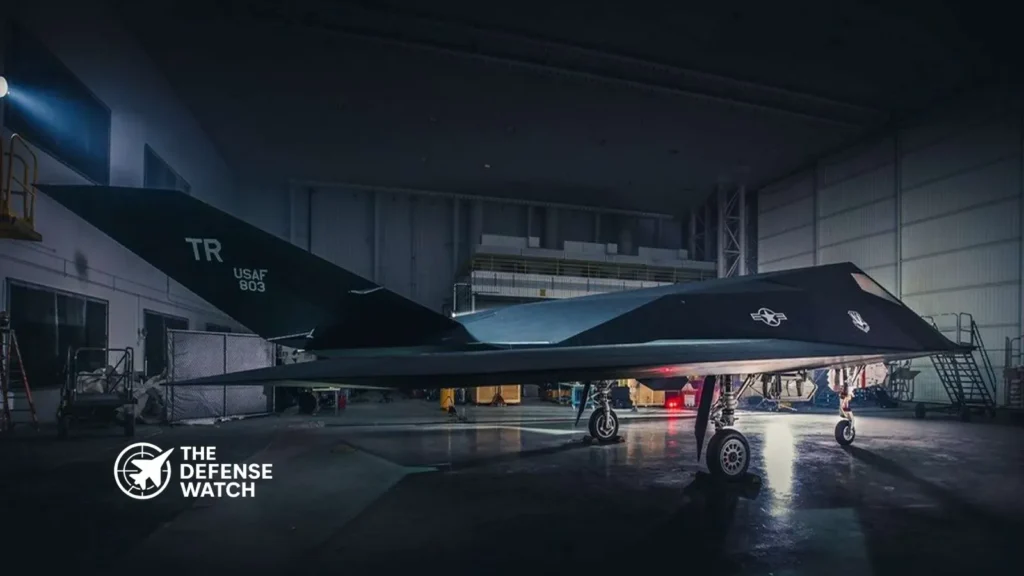
F-117 Nighthawk
F-117. Image Credit: Creative Commons
SHARE

US Air Force Extends F-117 Nighthawk Operations to 2034

The United States Air Force plans to keep its retired F-117 Nighthawk stealth aircraft flying through at least 2034, extending the operational life of the iconic jet more than 25 years after it was officially withdrawn from frontline service. The decision reflects the aircraft’s continued value in testing, training, and threat replication roles, particularly as the US military prepares for future high end conflicts involving advanced air defenses.

Contents
  • US Air Force Extends F-117 Nighthawk Operations to 2034
  • Background of the F-117 Nighthawk Program
  • Why Retired F-117 Jets Are Still Flying
  • Budget Signals Confirm Long Term Sustainment
  • Role in Preparing for Future Conflicts
  • What Comes Next for the F-117 Fleet

According to budget and planning documents referenced in recent defense reporting, the Air Force intends to fund sustainment and limited operations of a small fleet of F-117 aircraft stored at Tonopah Test Range in Nevada. These aircraft, though no longer considered combat assets, continue to fly regularly under a classified program that supports both US and allied training needs.

  • F-117 Nighthawk Stealth Jet

    F-117 Nighthawk Stealth Jet

    • Maximum Speed: Mach 0.92 (617 mph)
    • Range: 1,070 km (670 mi)
    • Payload Capacity: 4,600 lb
    • Crew: 1
    • View Details →
    8.4

    The move underscores how legacy stealth platforms remain relevant as the Pentagon works to prepare pilots and systems for encounters with increasingly capable adversary air defense networks.

    Background of the F-117 Nighthawk Program

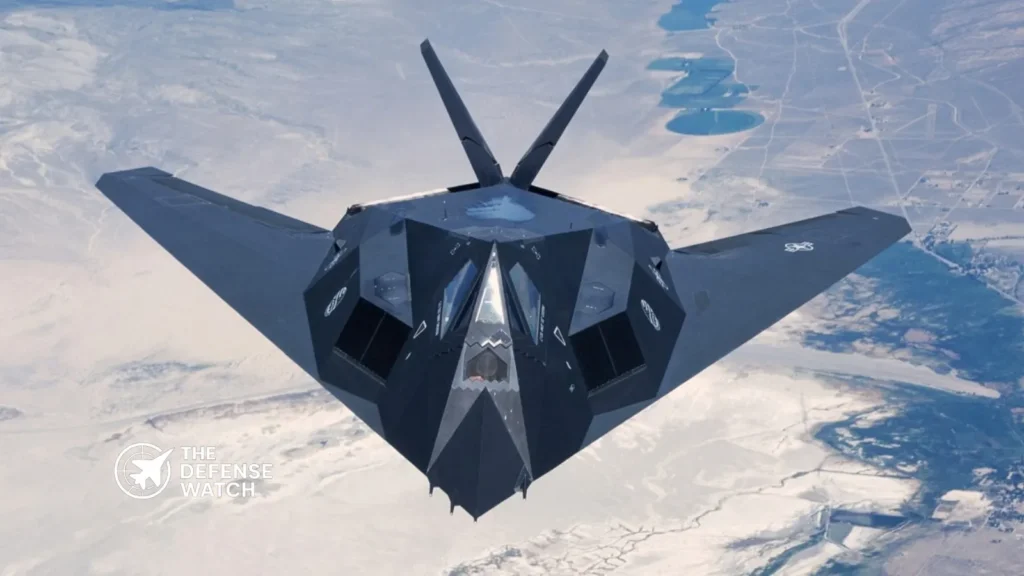
    The F-117 Nighthawk holds a unique place in aviation history. Developed in secrecy during the Cold War, it was the world’s first operational stealth combat aircraft. Designed by Lockheed’s Skunk Works, the jet relied on faceted surfaces and radar absorbing materials to minimize its radar signature, allowing it to penetrate heavily defended airspace.

    The aircraft entered operational service in the early 1980s and achieved global attention during the 1991 Gulf War, where it flew precision strike missions against heavily defended targets in Iraq. The F-117 later saw combat use in the Balkans and during early operations in Afghanistan.

    Despite its success, the aircraft was officially retired in 2008 as newer stealth platforms such as the B-2 Spirit and later the F-22 Raptor became available. Advances in stealth shaping and materials also made the angular F-117 design less efficient compared to newer aircraft.

    However, retirement did not mean the end of flight operations.

    Why Retired F-117 Jets Are Still Flying

    Since its official retirement, the US Air Force has maintained a small number of F-117 Nighthawk aircraft in a condition that allows limited flight operations. These aircraft are not part of combat squadrons and are not deployable in wartime strike roles.

    Instead, they are used primarily for training and testing. One of the key missions involves acting as realistic adversary or surrogate stealth targets. Modern US and allied air defense systems, fighter radars, and infrared sensors need real world exposure to low observable aircraft to validate detection and tracking performance.

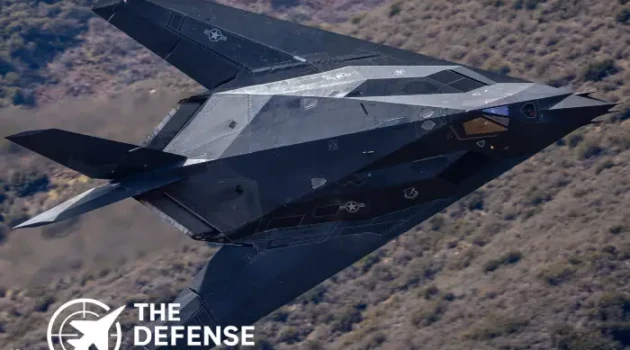
    F-117 Nighthawk
    F-117. Image Credit: Creative Commons

    The F-117 Nighthawk offers a cost effective way to provide that experience without risking newer and more expensive stealth assets such as the F-35 or B-21 Raider. Its unique radar and infrared signature differs from modern stealth designs, giving sensor operators valuable data across a wider range of scenarios.

    In addition, the aircraft supports development and evaluation of next generation sensors, radars, and command and control systems. By flying against these systems in controlled environments, engineers can refine detection algorithms and improve integration across air and missile defense networks.

    Budget Signals Confirm Long Term Sustainment

    The plan to keep the F-117 fleet active until 2034 is supported by funding allocations within Air Force budget documents. These include line items for sustainment, spare parts, and contractor support associated with the aircraft.

    While the Air Force has not publicly detailed the size of the active fleet, estimates suggest that around a dozen airframes remain in flyable condition. The aircraft operate from secure locations, primarily Tonopah Test Range Airport, a facility long associated with classified aviation programs.

    The continued funding indicates that the Air Force sees enduring value in the platform, particularly during a period of rapid modernization and shifting threat environments. As near peer competitors invest heavily in advanced surface to air missile systems and counter stealth technologies, realistic training becomes increasingly critical.

    Role in Preparing for Future Conflicts

    The decision to extend F-117 operations aligns with broader US Air Force efforts to prepare for contested airspace in future conflicts. Potential adversaries are deploying layered air defense systems that combine long range radars, infrared sensors, electronic warfare, and networked command systems.

    Training against stealth aircraft helps air defense units, fighter pilots, and joint forces understand both the strengths and limitations of low observable technology. It also supports development of tactics designed to counter stealth threats, knowledge that is essential for US forces operating alongside allies.

    F-117 Nighthawk
    F-117. Image Credit: Creative Commons

    From a policy perspective, maintaining the F-117 fleet provides flexibility. It allows the Air Force to preserve newer stealth aircraft for frontline missions while still meeting demanding training and test requirements.

    Defense analysts have also noted that the F-117 offers insights into how older stealth designs interact with modern sensors, information that could prove valuable in assessing the survivability of both legacy and emerging platforms.

    What Comes Next for the F-117 Fleet

    Under current plans, the F-117 Nighthawk will continue flying in limited roles through at least 2034. Beyond that date, the Air Force has not indicated whether operations will end or transition to alternative platforms.

    Future systems, including uncrewed stealth aircraft and advanced digital simulators, may eventually reduce the need for manned legacy jets. However, real world flight data remains difficult to replicate fully in virtual environments.

    For now, the continued presence of the F-117 in the skies serves as a reminder that even retired aircraft can play a meaningful role in shaping modern military readiness.
TAGGED:F-117 NighthawkMilitary Aviationstealth aircraftus air force
Share This Article
Facebook Copy Link Print
ByDaniel Mercer / Defense & Aerospace Analyst
Follow:
Daniel Mercer is a defense and aerospace analyst at TheDefenseWatch.com covering military aviation, aerospace technology, unmanned systems, air warfare, and defense procurement. His reporting uses official documents, government and military statements, company announcements, and other public sources.
Leave a Comment

Leave a Reply Cancel reply

Your email address will not be published. Required fields are marked *

Latest Defense Systems

  • SU-57 Felon Stealth Fighter SU-57 Felon Stealth Fighter
  • Boeing F/A-XX Fighter Boeing F/A-XX Fighter
  • JF-17 Thunder Fighter Jet JF-17 Thunder Fighter Jet
  • Gaurav Glide Bomb Gaurav Glide Bomb
  • F-47 Fighter Jet F-47 Fighter Jet
  • Spirit UAS Spirit UAS
  • GBU-43/B MOAB Bomb GBU-43/B MOAB Bomb
  • John F. Kennedy Aircraft Carrier John F. Kennedy Aircraft Carrier
  • Voyager Tanker Voyager Tanker

Recent Compares

  • J-10C vs JF-17 Thunder: Which Fighter Is More Capable? J-10C vs JF-17 Thunder: Which Fighter Is More Capable? View Comparison →
  • Tejas vs Gripen: Key Differences and Capabilities Tejas vs Gripen: Key Differences and Capabilities View Comparison →
  • Tejas vs MiG-21 Bison: How India Replaced Its Iconic Supersonic Fighter Tejas vs MiG-21 Bison: How India Replaced Its Iconic Supersonic Fighter View Comparison →
  • F-35 vs F-16: Stealth, Sensors and Combat Roles F-35 vs F-16: Stealth, Sensors and Combat Roles View Comparison →
  • Tejas Fighter Jet vs F-16 Fighting Falcon: Capability Compared Tejas Fighter Jet vs F-16 Fighting Falcon: Capability Compared View Comparison →
  • Rafale Fighter Jet vs F-16 Fighting Falcon : Which Fighter Has the Edge? Rafale Fighter Jet vs F-16 Fighting Falcon : Which Fighter Has the Edge? View Comparison →
  • Su-57 Fighter Jet vs J-20 Fighter Jet: Stealth and Air Combat Compared Su-57 Fighter Jet vs J-20 Fighter Jet: Stealth and Air Combat Compared View Comparison →
  • Mirage 2000 vs Tejas Mk1A: Legacy Combat Power vs Indigenous Modernization Mirage 2000 vs Tejas Mk1A: Legacy Combat Power vs Indigenous Modernization View Comparison →
  • Rafale Fighter Jet vs F-22 Raptor: Which Air Dominance Fighter Has the Edge? Rafale Fighter Jet vs F-22 Raptor: Which Air Dominance Fighter Has the Edge? View Comparison →
  • Tejas Fighter Jet vs. Rafale Fighter Jet: India’s Indigenous Fighter Meets France’s Proven Multirole Combat Aircraft Tejas Fighter Jet vs. Rafale Fighter Jet: India’s Indigenous Fighter Meets France’s Proven Multirole Combat Aircraft View Comparison →

Recent Posts

  • Britain to Deploy RAF Chinooks and A400M Aircraft Against Wildfires
  • China-Pakistan Military Drills Feature Drone-Resistant Type 08 Infantry Fighting Vehicle
  • Department of War and Lockheed Martin Sign 10-Year F-35 Agreement With $7 Billion Investment Commitment
  • Pentagon Approves Active Denial System for Potential U.S. Southern Border Use
  • U.S. Air Force Plans Larger F-35 Role in 1,509-Aircraft Fighter Fleet

You Might Also Like

Brazilian-built Gripen E maiden flight
Aerospace & AviationFighter Jets & Military Aircraft

First Brazilian-Built Gripen E Completes Maiden Flight

October 7, 2026
aerospace engineering salary
Aerospace & Aviation

Aerospace vs Aeronautical Engineering Salaries in 2025: Global Benchmarks & U.S. Trend

September 8, 2026
F-35 drone control training
Aerospace & AviationDrones & UAVs

Navy F-35 Pilots Now Control Drones via Cockpit TabletsNavy F-35 Pilots Train to Control Drones with Tablets

September 12, 2026
AeroVironment Halo_Shield C-UAS system
Aerospace & AviationDrones & UAVs

AeroVironment Unveils Halo_Shield™ To Counter Drone Swarms And Cruise Missile Threats

April 29, 2026

Logo

Copyright © 2026 TheDefenseWatch.com

Helpful Links

  • Home
  • About Us
  • Privacy Policy
  • Terms of Use / Disclaimer
  • U.S. Privacy Notice – CCPA Compliance

Defense Systems

  • Defense Systems
  • Comparisons 
  • Manufacturer
  • Tactical Calculators

Popuplar

Which 5 Air Forces Possess the Costliest Fighter Jet Fleets in the World
Evolving Strategic Value: Carrier Strike Groups in the Indo-Pacific’s Future Security Architecture
Autonomous Weapon Systems Spark U.S. Ethics Debate Amid Rapid Military AI Integration

We report on developments involving military forces, governments, defense companies, research organizations, and security institutions around the world. 

Welcome Back!

Sign in to your account

Username or Email Address
Password

Lost your password?