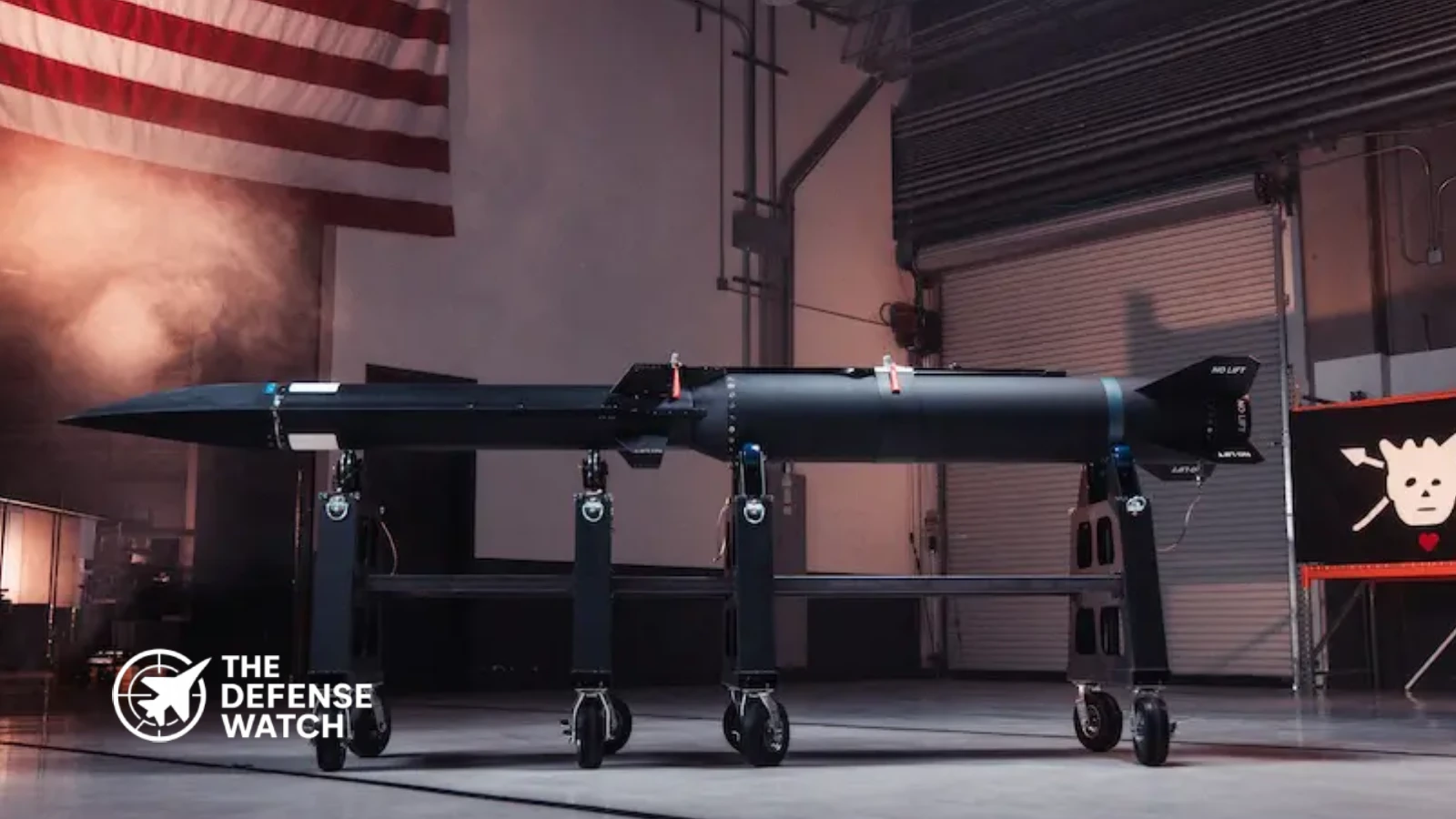
Castelion Expands Blackbeard Hypersonic Missile Production
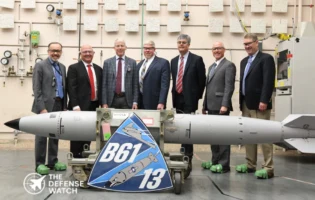
The Blackbeard hypersonic missile program is entering a new phase as Castelion raises about $1 billion in Series C financing to expand production, increase manufacturing capacity and develop additional strike and defensive weapons. The financing values the U.S. defense technology company at approximately $13 billion, according to Defence Industry Europe.
Takeaways
Castelion is putting private capital behind higher-rate U.S. hypersonic weapons production.
1. About $1 Billion Series C
Castelion has raised about $1 billion in Series C financing, combining $800 million in equity with $250 million in committed revolving credit financing.
2. Blackbeard Production Expansion
A substantial portion of the funding will support increased Blackbeard production capacity at Project Ranger in New Mexico.
3. Minimum 500 Missiles Annually
A May 2026 Department of War framework provides a pathway to a minimum procurement of 500 Blackbeard missiles per year after testing and validation.
4. Navy Integration Underway
The U.S. Navy has awarded Castelion contracts covering Blackbeard integration and production, including a $23.4 million order for 50 pre-production prototypes.
5. Broader Weapon Portfolio
The new financing will also support a longer-range precision strike weapon and defensive systems intended to use technologies and manufacturing methods developed for Blackbeard.
The financing consists of $800 million in equity and $250 million in committed financing for a revolving credit facility. JPMorganChase’s Strategic Investment Group, Andreessen Horowitz and funds managed by Carlyle co-led the equity round. Lightspeed Venture Partners, Lavrock Ventures, Altimeter, General Catalyst and Interlagos also participated, while T. Rowe Price Associates joined as a new investor.
The scale of the investment is significant because Castelion is attempting to address one of the most difficult parts of hypersonic weapons development: moving from successful testing and limited production to repeatable, high-volume manufacturing.
Private Capital Targets U.S. Weapons Production
Castelion said hundreds of millions of dollars from the financing will be committed to expanding Blackbeard production capacity. Much of that investment is expected to support Project Ranger, the company’s 1,000-acre manufacturing campus in Sandoval County, New Mexico. Castelion previously committed more than $250 million in private infrastructure spending at the site.
The company describes Project Ranger as a dedicated hypersonic missile manufacturing facility designed to support higher production rates.
That focus reflects a wider change in U.S. defense acquisition. For years, hypersonic weapons have been heavily associated with expensive development programs and limited numbers of test articles. The emerging requirement is different: the military increasingly wants weapons that can be produced in meaningful quantities without making each round prohibitively expensive.
The Department of War’s May 2026 framework agreement with Castelion established a pathway for a two-year, multi-year procurement contract covering at least 500 Blackbeard missiles annually once testing and validation are completed. The department also said it was seeking authorizations and appropriations for a potential purchase of more than 12,000 Blackbeard missiles over five years.
Those figures represent planned procurement pathways, not a completed purchase of 12,000 missiles.
Blackbeard Moves Toward Operational Fielding
The Blackbeard hypersonic missile has progressed through development, flight testing and integration work with U.S. military platforms.
In June, Castelion announced a $23.4 million U.S. Navy delivery order for 50 Blackbeard early operational capability pre-production prototypes and 50 associated storage and shipping containers. The company said the order would support production at Project Ranger and help move the weapon toward operationally relevant production.
The Navy also awarded Castelion a $105 million contract in April to continue integration of Blackbeard with the F/A-18 Super Hornet and support a planned Early Operational Capability in 2027. The work includes system safety and certification testing, flight testing and carrier-related integration activities.
In February, the Navy separately awarded nearly $50 million to advance Blackbeard from prototype development toward integrated early operational capability.
Together, these awards show that the program is moving beyond basic technology demonstrations. The remaining challenge is to prove that the weapon can meet military requirements while production expands.
Why Production Capacity Matters
Hypersonic weapons generally operate at speeds above Mach 5 and can maneuver during flight, making them difficult to track and intercept. U.S. congressional research has identified hypersonic weapons as an important area of competition involving the United States, China and Russia.
The United States has several major hypersonic programs, including the Army’s Long-Range Hypersonic Weapon and the Navy’s Conventional Prompt Strike system. However, the industrial challenge extends beyond developing a weapon that can fly at hypersonic speed.
Materials, propulsion, thermal protection, precision manufacturing, testing infrastructure and specialized labor can all constrain production. A 2026 congressional report specifically highlighted manufacturing bottlenecks involving carbon-carbon composites, precision machining, materials fabrication and system assembly.
This makes Castelion’s manufacturing approach particularly relevant. The company has positioned Blackbeard around manufacturability from the beginning rather than treating mass production as a later stage of the program.
That approach could matter if the Pentagon’s requirement shifts from a small number of highly capable weapons toward larger inventories that can be replenished quickly.
Longer-Range Strike Weapon Under Development
The new financing is not limited to Blackbeard.
Castelion said it will accelerate development and testing of a longer-range precision-strike weapon that has been under development for several years. The company said the weapon uses core technologies, components and manufacturing methods developed through Blackbeard, with the objective of providing another lower-cost strike option capable of higher production rates.
Castelion is also developing defensive systems based on technologies and manufacturing processes established for Blackbeard. The company said the objective is to reduce costs and increase production rates for air and missile defense missions, potentially allowing larger inventories of interceptors.
This is an important industrial-base development. Rather than building separate manufacturing ecosystems for every weapon, Castelion is seeking to reuse components, processes and production infrastructure across multiple weapon families.
U.S. Hypersonic Competition Adds Pressure
The push comes as the United States continues to close a gap with China and Russia in operational hypersonic weapons.
A Congressional Research Service assessment published in 2025 noted that Russia and China had reportedly fielded operational hypersonic glide and cruise missile capabilities, while U.S. programs remained largely in development. The report also highlighted the technical difficulty of conventionally armed U.S. hypersonic weapons, which require high accuracy rather than relying on nuclear warhead effects.
Congress has also raised concerns about whether some U.S. hypersonic programs can transition into sustained production. The House Armed Services Committee said in its FY2026 defense authorization report that the emerging U.S. hypersonic industrial base faces a risk if programs do not establish clear paths toward tactically relevant quantities.
Castelion’s model directly addresses that production problem by combining government procurement commitments with private investment.
The company said it has secured more than $500 million in U.S. military contracts over the previous 18 months. It now plans to use the Series C capital to expand Blackbeard production, develop longer-range strike capabilities and build defensive systems.
What The Funding Means For Blackbeard
The most important development is not simply the size of Castelion’s funding round. It is the combination of private capital, government procurement commitments and an existing production facility.
The Blackbeard hypersonic missile program still faces the normal testing, integration and validation requirements associated with a new weapon. The Navy’s planned 2027 early operational capability and the Department of War’s production framework depend on successful completion of those steps.
If those milestones are achieved, the program could provide the U.S. military with another path toward producing hypersonic strike weapons at higher rates.
For Castelion, the immediate task is therefore straightforward but demanding: convert investment into manufacturing capacity, complete military testing and demonstrate that a hypersonic weapon designed for production can be delivered in quantities relevant to operational planning.
The $1 billion financing round gives the company substantially more capital to pursue that objective, while the existing Navy contracts and Department of War framework provide a government pathway for eventual procurement.
Enjoying our coverage?
Make The Defense Watch a preferred source on Google to see more of our geopolitical and defense insights when relevant to you.