Swedish defense and aerospace company Saab reported a sharp increase in orders, revenue and operating profit for the third quarter of 2026, supported by major contracts for Gripen E fighter aircraft, GlobalEye airborne surveillance systems and equipment for German frigates.
- Saab’s financial performance in Q3 2026
- Three major contracts drove the order surge
- Why the Gripen E order matters for Ukraine
- GlobalEye strengthens Saab’s airborne surveillance business
- German frigate systems broaden the company’s growth base
- A record-scale backlog creates both opportunity and pressure
- What the results indicate for the defense industry
The company recorded SEK 65.825 billion in order bookings during the quarter, compared with SEK 20.861 billion in the same period of 2025. Sales reached SEK 20.553 billion, up from SEK 15.871 billion, while organic sales growth accelerated to 30.6%.
The results, published October 23, show how demand for European defense equipment is translating into new business for Saab. However, the scale of the order intake also raises a practical question: how quickly can the company convert its expanding backlog into completed systems and recognized revenue?
According to Saab President and CEO Micael Johansson, the quarter combined strong sales growth with higher cash flow and major contract awards. The company said it would continue investing in production capacity and future capabilities to support customer demand.
Saab’s financial performance in Q3 2026
The third-quarter figures show improvement across several major financial measures, with operating profit increasing faster than sales.
| Financial measure | Q3 2026 | Q3 2025 |
|---|---|---|
| Order bookings | SEK 65.825 billion | SEK 20.861 billion |
| Sales | SEK 20.553 billion | SEK 15.871 billion |
| Organic sales growth | 30.6% | 18.3% |
| EBITDA | SEK 2.833 billion | SEK 2.173 billion |
| EBITDA margin | 13.8% | 13.7% |
| Operating profit (EBIT) | SEK 1.945 billion | SEK 1.374 billion |
| EBIT margin | 9.5% | 8.7% |
| Net income | SEK 1.432 billion | SEK 975 million |
| Earnings per share | SEK 2.57 | SEK 1.77 |
| Operational cash flow | SEK 6.785 billion | SEK 142 million |
Source: Saab’s Q3 2026 results. Figures in parentheses in the company’s release refer to the comparable period in 2025.
Operating profit increased by approximately 42%, exceeding the rate of sales growth. The EBIT margin rose from 8.7% to 9.5%, indicating that Saab generated more operating profit for each krona of sales.
Net income increased by approximately 47%, while earnings per share rose from SEK 1.77 to SEK 2.57. These figures point to improved profitability during the quarter, although a single reporting period does not establish how margins will develop as production expands.
Operational cash flow increased to SEK 6.785 billion from SEK 142 million a year earlier. Cash flow can fluctuate substantially between quarters in defense manufacturing because of customer payments, milestone billing, inventory requirements and the timing of supplier payments. The reported improvement is significant, but its durability needs to be assessed against subsequent periods and the company’s full-year performance.
Saab also reported net liquidity of SEK 8.679 billion, compared with SEK 3.989 billion at the end of 2025. The stronger position provides additional financial flexibility for investment, working capital and industrial expansion.
Three major contracts drove the order surge
The most prominent feature of Saab’s Q3 results was the value of new business recorded during the quarter. Three large contracts accounted for a substantial share of the total.
Three large contracts accounted for a substantial share of the total
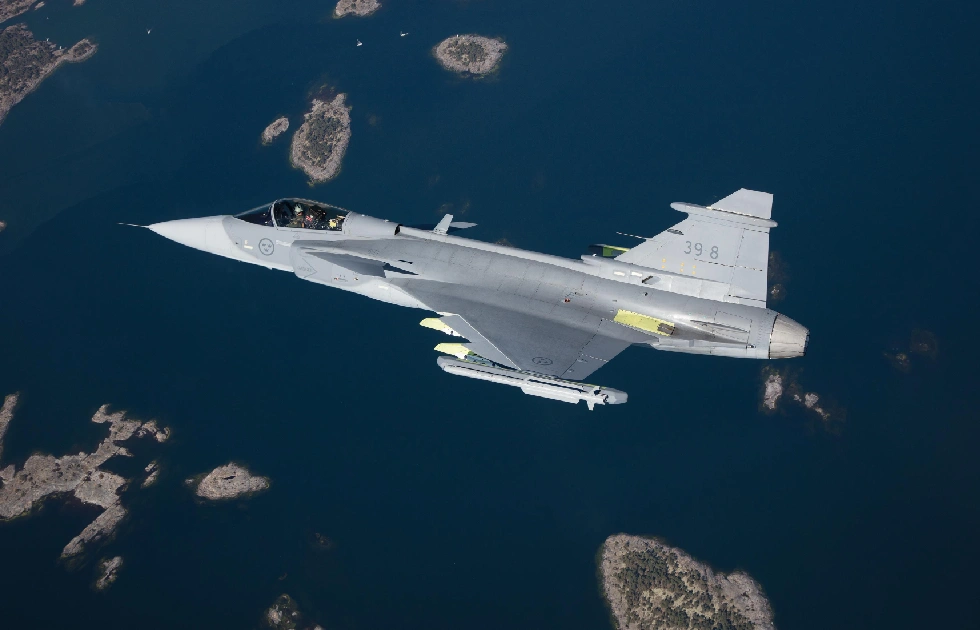
Gripen E for Ukraine
Saab booked an order for Gripen E fighter aircraft for Ukraine. The contract was the largest of the three highlighted awards and is expected to be a major contributor to the company’s aeronautics business. The reported contract value alone does not establish the delivery schedule or when the aircraft will enter Ukrainian service.
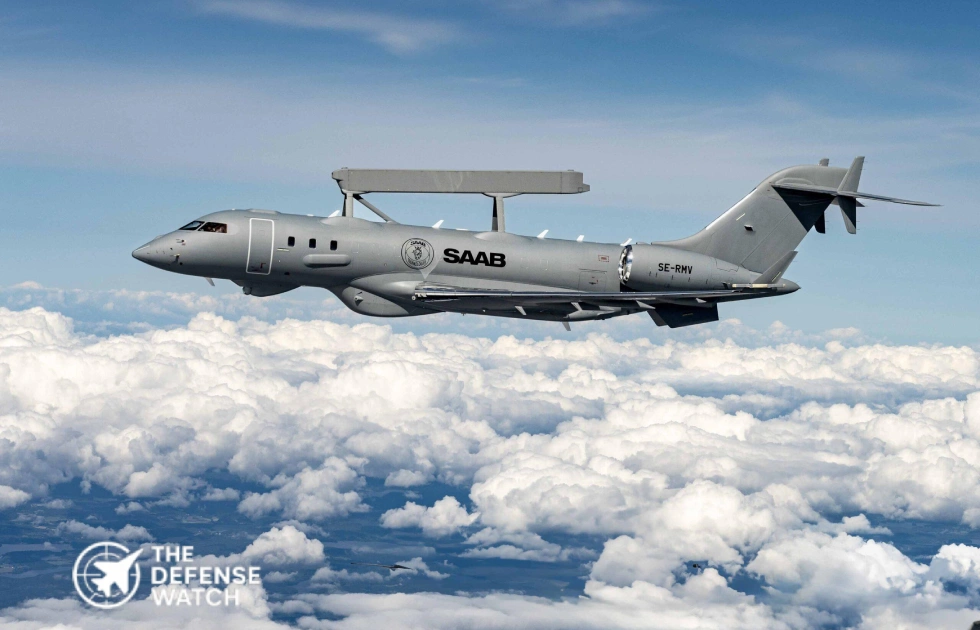
GlobalEye airborne early warning system
Saab recorded an order for GlobalEye from an undisclosed customer. The system combines airborne surveillance and command capabilities to support the monitoring of air and maritime activity. Saab did not identify the customer in the supplied results announcement.
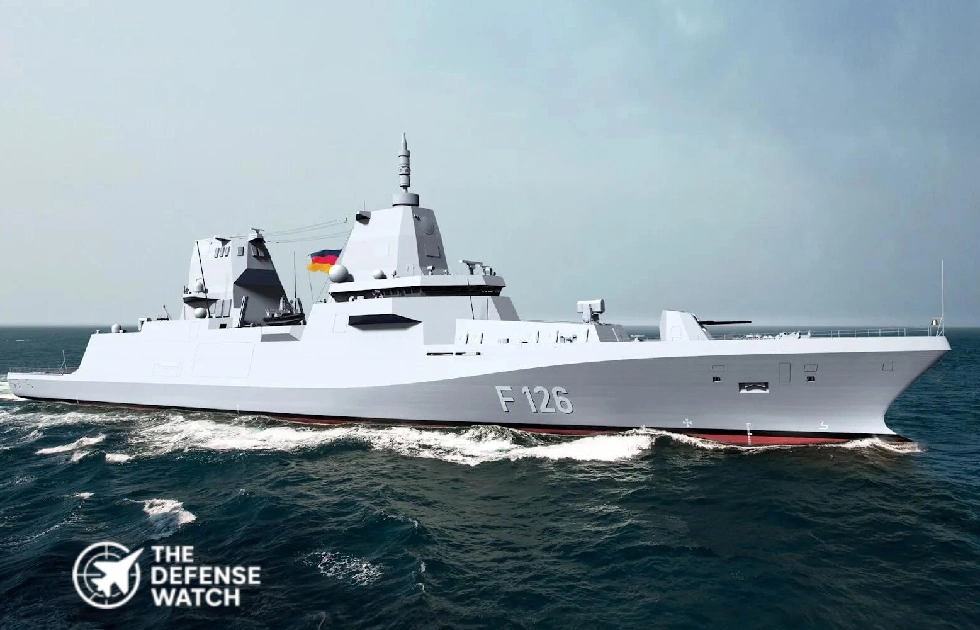
Systems for German frigates
The third major award covers systems for Germany’s new frigates. The contract reinforces Saab’s position in naval combat and sensor-related equipment, although the supplied announcement does not detail the full equipment list or delivery milestones.
Together, the three awards total SEK 43.4 billion, approximately 66% of Saab’s reported quarterly order bookings. This concentration shows why a small number of large defense contracts can materially change a manufacturer’s quarterly results.
The remaining SEK 22.425 billion came from other bookings during the period. Saab’s total order intake therefore reflects a broader stream of business beyond the three headline awards, even though the supplied summary does not break down all remaining orders by customer or product.
The Gripen and GlobalEye contracts are particularly relevant to European and allied airpower planning. The German frigate order adds a separate naval dimension, showing that Saab’s growth is not dependent on fighter aircraft alone.
Why the Gripen E order matters for Ukraine
The SEK 24.6 billion Gripen E order is a major element of Saab’s quarterly performance, but its importance extends beyond the company’s financial statements.
The Saab JAS 39 Gripen E is a single-engine multirole fighter designed for air defense and other combat missions. Its addition to Ukraine’s future force structure would raise questions about pilot conversion, maintenance infrastructure, weapons integration, spare parts and the availability of trained ground crews.
Operating another fighter type alongside Ukraine’s existing aircraft would require resources and planning. The potential military value of the aircraft would depend not only on their individual capabilities, but also on how they could be integrated into Ukraine’s wider air defense and combat aviation network.
The order’s booking in Saab’s third-quarter accounts should also be distinguished from aircraft deliveries. Order bookings measure new business entered into the company’s order intake, while sales are recognized under applicable accounting rules as work and contractual obligations progress. The two figures therefore represent different stages of a defense procurement program.
The available results summary does not establish a complete delivery timetable for the Ukrainian aircraft. Readers should not interpret the contract value as evidence that the aircraft have already been delivered or are operational.
GlobalEye strengthens Saab’s airborne surveillance business
The SEK 10.1 billion GlobalEye order adds to Saab’s business in airborne early warning and control, a segment that has gained importance as militaries seek better awareness of activity across large areas.
GlobalEye uses a modified business jet platform equipped with surveillance systems intended to detect, track and help manage air and maritime activity. Such aircraft can support command and control by providing information that ground-based sensors or individual combat aircraft may not be able to gather as effectively across a broad operating area.
For military planners, the system’s value lies in its role within a wider network. Airborne surveillance can help commanders build a more complete operational picture, coordinate aircraft and monitor maritime approaches. Actual effectiveness depends on sensor performance, communications, crew training, mission planning and integration with other military assets.
Saab’s announcement identified the customer as undisclosed. The contract should therefore not be attributed to a particular country without further confirmation.
The order also comes amid continued international interest in airborne early warning capabilities. Saab announced in September 2026 that it had signed a nonbinding term sheet with Canada’s Defence Investment Agency to establish the basis for detailed negotiations over a possible GlobalEye acquisition for the Royal Canadian Air Force. That announcement concerned negotiations, not a confirmed purchase contract.
German frigate systems broaden the company’s growth base
The SEK 8.7 billion German frigate-related order adds another substantial contract to Saab’s naval business.
Modern frigates rely on integrated systems to manage sensor information, coordinate weapons and support decision-making during operations. The exact scope of Saab’s award matters because a contract for combat management equipment, sensors or other onboard systems can have different technical and financial implications from a broader shipbuilding contract.
The supplied Q3 summary does not specify all the equipment included in the German award. It would therefore be premature to assign the full value to a particular subsystem or to claim that Saab is responsible for building the frigates themselves.
For Saab, the order provides evidence that naval programs are contributing to its business alongside aeronautics and airborne surveillance. This spread across several defense markets can reduce dependence on any single product category, although the company remains exposed to procurement schedules, contract execution risks and customer budget decisions.
A record-scale backlog creates both opportunity and pressure
Saab entered the final quarter of 2026 with a substantial volume of contracted work to execute. The company’s investor relations page reported an order backlog of approximately SEK 364 billion as of September 30, 2026, compared with SEK 202.4 billion a year earlier.
That backlog provides revenue visibility, but it is not equivalent to cash on hand or guaranteed profit. Orders may extend across multiple years, and their contribution to earnings depends on production schedules, delivery milestones, contract terms, costs and the ability to meet customer requirements.
The central industrial challenge is converting demand into completed equipment at the required pace. Fighter aircraft, airborne surveillance platforms and naval systems involve different supply chains, engineering teams, production processes and acceptance requirements. Increasing output across these product lines requires more than expanding factory space.
Saab said it would continue investing in future capabilities and production capacity. The results summary, however, does not quantify how much additional capacity will become available, how much investment will be required to fulfill the new contracts, or how quickly the backlog will translate into sales.
This distinction matters for evaluating the company’s longer-term performance. Strong order intake demonstrates customer demand, while sustained revenue growth, healthy margins and cash generation will depend on execution.
What the results indicate for the defense industry
Saab’s third-quarter results provide a clear example of how European defense demand is affecting manufacturers across several military domains. Aircraft procurement, airborne surveillance and naval modernization are contributing to the same company’s order growth, reflecting the range of capabilities governments are seeking.
The figures also show that the value of new contracts can move sharply from one quarter to another. Saab’s order bookings more than tripled compared with the third quarter of 2025, but this does not mean that annual sales or production will rise at the same rate. Large awards can create unusually high quarterly order intake while revenue is spread over several years.
For customers, the key issue is delivery. For Saab, the challenge is to maintain quality, control costs and expand industrial capacity without allowing a growing backlog to create delays.
The next useful indicators will be the company’s subsequent sales and margin performance, cash flow over a longer period, and any disclosed milestones for the major aircraft, surveillance and naval contracts. These measures will help establish whether the exceptional order intake is translating into sustained operating growth.