Mexican Air Force Begins F-5 Replacement Push At Tulum Air Show 2026
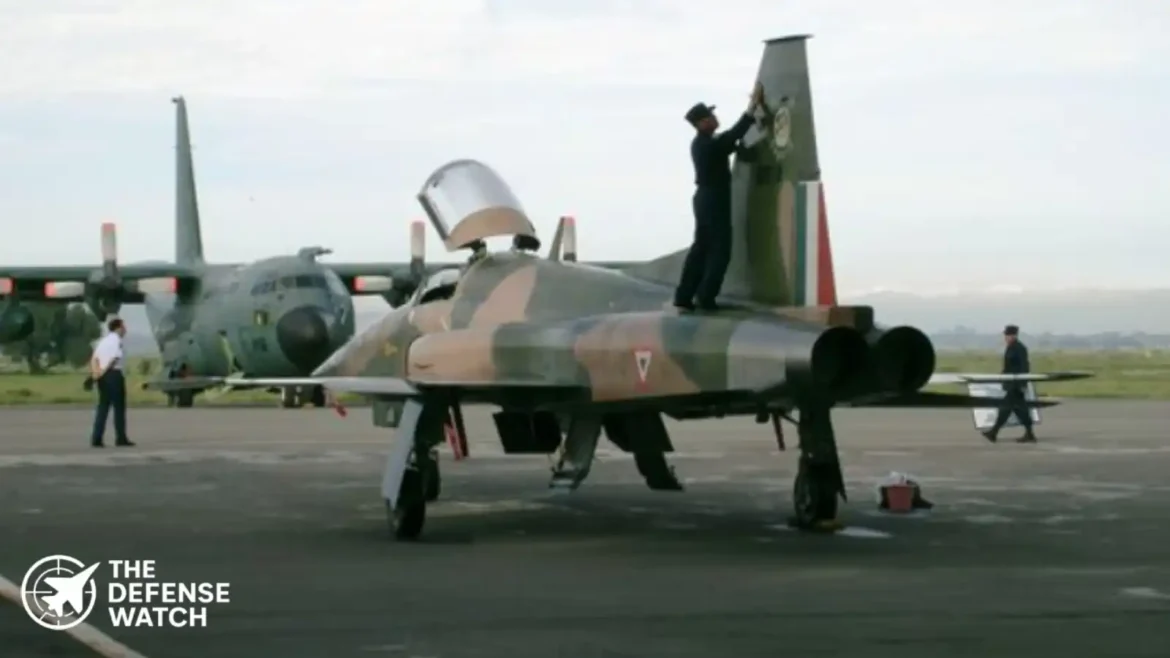
The Mexican Air Force (Fuerza Aérea Mexicana, FAM) has formally launched a plan to retire its legacy Northrop F-5E/F Tiger II fighters and acquire a new fleet of combat aircraft by 2028, officials said at the Tulum Air Show 2026.
FAM commander General Román Carmona Landa told Janes that the F-5s, long the service’s primary supersonic fighters, represent the air arm’s highest capability but are based on dated technology. In response, the service is pursuing 12 new fighters to restore and enhance its air defence, reconnaissance and ground attack capacity.
- The Mexican Air Force has begun replacing its Northrop F-5E/F Tiger II fighters and is seeking 12 new combat aircraft by 2028.
- FAM commander Gen Roman Carmona Landa said the F-5 is outdated and replacements must handle air defence, reconnaissance and ground attack missions.
- Aircraft under review include the F-16, Gripen, FA-50 and M-346.
- Mexico is also acquiring C-130J-30 transports, UH-60M helicopters and King Air 360 aircraft as part of wider modernization.
- The Tulum Air Show 2026 highlighted Mexico growing aerospace and defence engagement.
Short, aging platforms such as the F-5 have limited sensor and weapons capacity compared with fourth-generation and advanced light combat jets in production today. The planned replacement is a key step in modernising Mexico’s air combat force and aligning its capabilities with regional defence demands.
Options Under Consideration
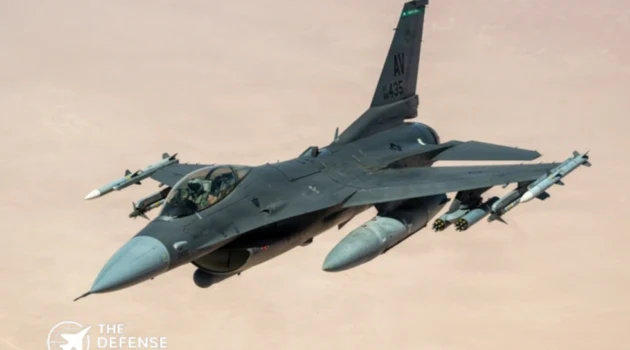
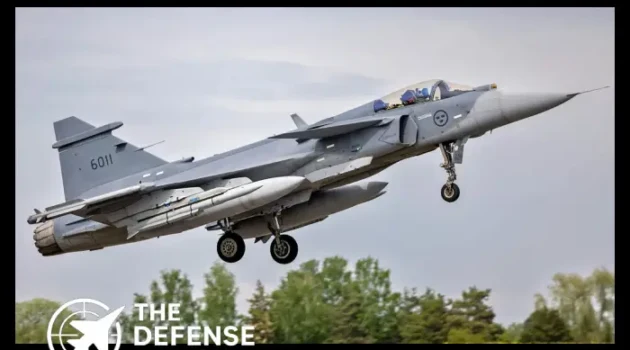
At Tulum Air Show 2026, FAM officials outlined a broad set of candidates under review for the new fighter fleet. These include established fourth-generation types such as the Lockheed Martin F-16 and Saab Gripen and lighter combat aircraft like Korea Aerospace Industries FA-50 and the Italian Leonardo M-346 fighter-attack variant.
The F-16 is widely operated globally and features modern avionics and weapons systems. The Gripen offers networked sensor fusion and multi-role capability tailored to versatile missions. Light multirole jets such as the FA-50 and M-346 combine pilot training tasks with combat roles, though typically with more constrained performance.
FAM has not publicly detailed selection criteria or a preferred platform, but emphasised the need for a balanced mix of air defence and strike capability. Procurement decisions are expected in the coming months as Mexico advances its modernisation roadmap.
Broader Modernisation Plans
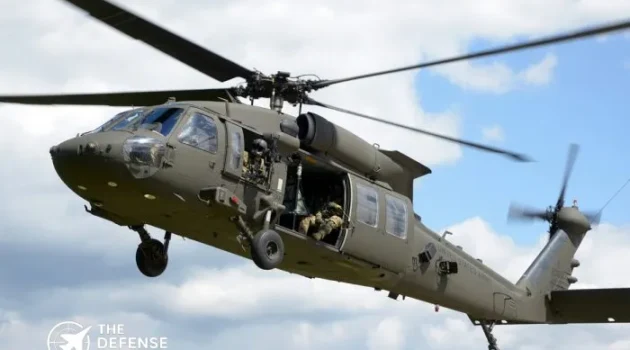
Alongside the fighter initiative, Mexico is progressing other key defence acquisitions. FAM is acquiring two Lockheed Martin C-130J-30 transport aircraft, which will bolster strategic airlift capacity, and 11 Sikorsky UH-60M utility helicopters to enhance mobility and support operations. The service also plans to field three Beechcraft King Air 360 platforms and new remotely piloted aircraft systems alongside ground-based air surveillance radars.
These moves follow a series of recapitalisation efforts since 2013, including Beechcraft T-6C+ Texan II tactical support aircraft and UH-60M helicopters to replace older support assets.
Strategic And Regional Context
The Tulum Air Show 2026 has drawn attention as both a public aerospace showcase and a defence policy forum, bringing civilian and military stakeholders together to discuss technology trends and procurement strategies. Organisers emphasised the event’s role in growing Mexico’s aerospace sector and strengthening engagement with industry and international partners ahead of the next major aerospace fair in 2027.
Analysts note that modern multi-role fighters could improve Mexico’s ability to coordinate airspace defence with regional partners, including the United States and Canada, and provide more credible deterrence against evolving threats. While Mexico’s defence budget remains constrained relative to larger air forces, targeted purchases of capable, widely supported platforms could deliver measurable improvements.


Hungary Gripen Fighters Delivery Strengthens Air Force Fleet
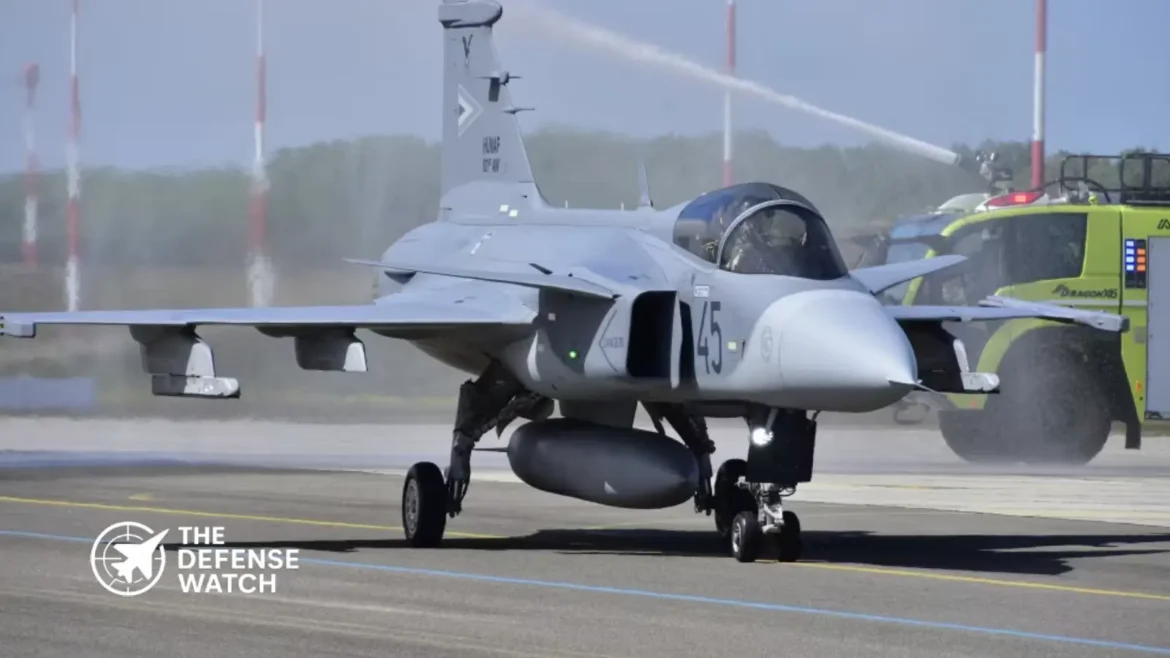
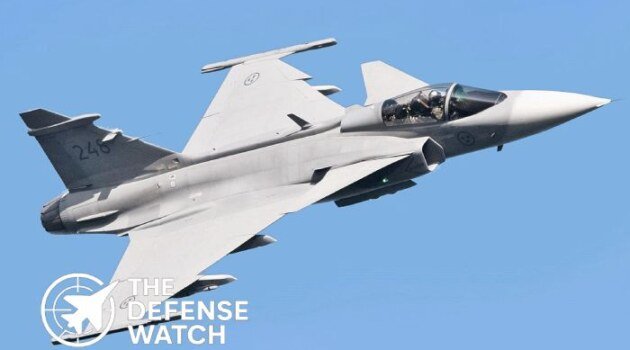
The Hungary Gripen fighters delivery marks a key step in Budapest’s ongoing air force modernization, as two new Gripen C aircraft formally entered service with the Hungarian Defence Forces.
The jets will be operated by the 101st Aviation Wing based at Kecskemét Air Base, reinforcing Hungary’s ability to maintain air policing and NATO interoperability missions across Central Europe.
The delivery follows a contract signed in February 2024 between Hungary’s Ministry of Defence and Swedish Defence Materiel Administration, covering four additional aircraft. The two newly delivered fighters represent the first tranche of that agreement.
- Hungary received two new Gripen C fighter jets for the 101st Aviation Wing at Kecskemét Air Base.
- The delivery follows a February 2024 contract between Hungary’s Ministry of Defence and Sweden’s FMV.
- These are the first two of four additional aircraft ordered under the agreement.
- Hungary will expand its fleet to 18 Gripen C D fighters with upgraded capabilities.
- Saab reaffirmed its commitment to delivery timelines and long term partnership with Hungary.
According to Saab, the timeline underscores its ability to meet customer delivery commitments while supporting long term capability development.
Fleet Expansion And Capability Upgrades
Hungary has operated the Gripen platform since 2006, making it one of the early European adopters of the Swedish-built multirole fighter. With this latest expansion, the country will field a total of 18 Gripen C/D aircraft, all expected to receive incremental upgrades.
The Gripen C/D variant is designed for multirole missions, including air defense, ground attack, and reconnaissance. It is optimized for high sortie rates, dispersed operations, and relatively low lifecycle costs compared to heavier Western fighters.
While the current delivery focuses on fleet size, the broader program includes system upgrades aimed at improving avionics, communications, and weapons integration. These enhancements are critical for maintaining compatibility with NATO standards and evolving operational requirements.
Saab has also indicated plans to invest in an Aviation Development Centre in Hungary. This initiative is expected to deepen local industrial participation and allow Hungary to play a more active role in future Gripen system development.
Strategic Context: NATO Readiness And Regional Security
The Hungary Gripen fighters delivery comes amid heightened focus on air defense readiness across Europe, particularly following Russia’s ongoing military activity in Eastern Europe.
For Hungary, expanding its Gripen fleet is less about numerical advantage and more about ensuring sustained operational availability. A larger fleet allows for better rotation cycles, maintenance flexibility, and readiness for both national and NATO missions.
Hungary contributes to NATO’s Integrated Air and Missile Defence System, including Baltic Air Policing rotations in the past. Maintaining a modern and reliable fighter fleet is central to fulfilling these commitments.
Compared to larger air forces in the alliance, Hungary’s approach emphasizes efficiency and interoperability. The Gripen platform supports this model by offering advanced capabilities without the logistical burden associated with heavier aircraft such as the F-35 or Eurofighter Typhoon.
Saab Partnership And Long Term Industrial Cooperation
The agreement highlights the deepening defense relationship between Hungary and Sweden. Beyond aircraft delivery, the partnership includes training, logistics support, and technology collaboration.
Lars Tossman, head of Saab’s Aeronautics business area, emphasized that Hungary’s long term modernization program and Saab’s local investment plans will enable the country to influence future Gripen development.
This level of industrial cooperation reflects a broader trend in European defense procurement, where countries seek not only platforms but also participation in development and sustainment ecosystems.
For Saab, Hungary remains a key Gripen operator alongside countries such as the Czech Republic and Brazil, reinforcing the platform’s global footprint.
Operational Impact And Future Outlook
The Hungary Gripen fighters delivery will enhance operational resilience for the Hungarian Air Force, particularly in maintaining continuous air policing coverage.
Looking ahead, the remaining two aircraft under the 2024 contract are expected to be delivered on schedule, completing the planned fleet expansion.
While the Gripen C/D remains a capable platform, future decisions may involve transitioning to more advanced variants or integrating next generation systems. For now, Hungary’s focus remains on maximizing the effectiveness of its existing fleet through upgrades and partnerships.
In a European security environment defined by rapid change, incremental capability improvements such as this delivery play a crucial role in sustaining readiness and alliance cohesion.

Lockheed Martin E-130J Phoenix II Training Systems Expand Strategic Readiness
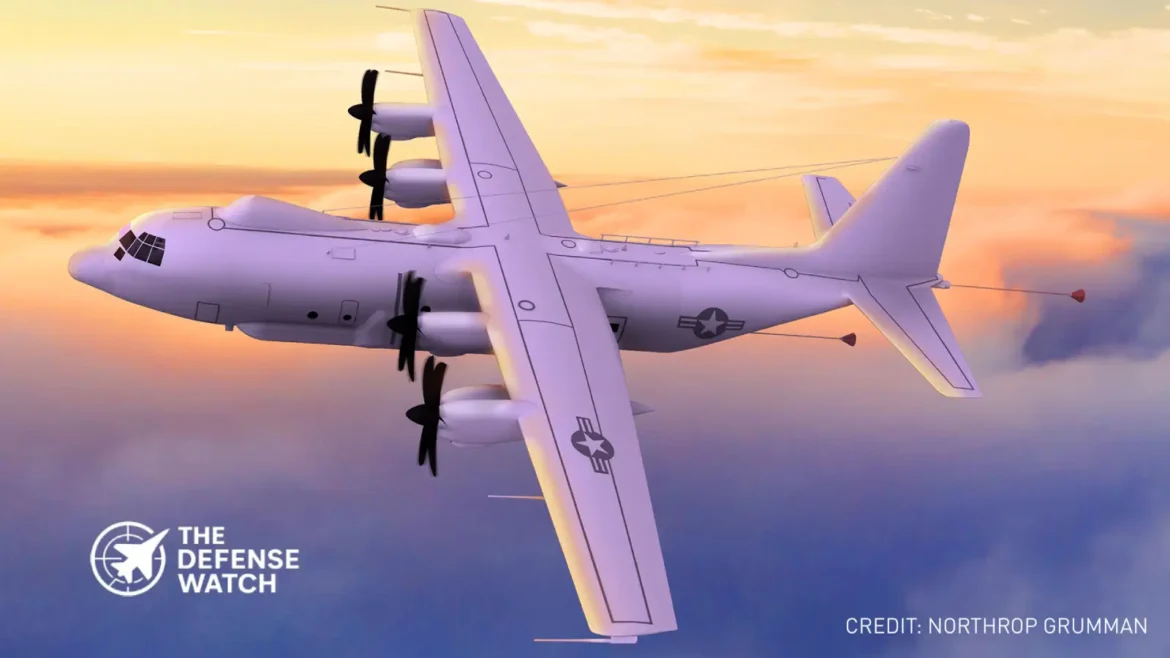
The E-130J Phoenix II training systems program is advancing U.S. military readiness as Lockheed Martin moves forward with delivering specialized training devices and services for the next generation airborne nuclear command and control fleet.
- Lockheed Martin will provide training devices and services for the E-130J Phoenix II aircraft program.
- The effort supports U.S. nuclear command, control, and communications mission readiness.
- Training systems include advanced simulators and integrated mission training environments.
- The E-130J is expected to replace aging TACAMO aircraft supporting strategic communications.
- The program reflects ongoing modernization of U.S. airborne nuclear command infrastructure.
According to an official company release dated April 29, 2026, the effort will provide comprehensive training infrastructure to support operators and maintainers of the E-130J Phoenix II aircraft. The platform is widely viewed as a critical successor to the U.S. Navy’s existing TACAMO fleet, which ensures survivable communications between national leadership and strategic nuclear forces.
The introduction of dedicated E-130J Phoenix II training systems marks a key step in ensuring that crews can operate effectively in high stress, contested environments where uninterrupted communication is essential.
Modern Training For A High-Stakes Mission
The contract focuses on delivering advanced simulators, mission rehearsal systems, and integrated training services tailored to the E-130J’s unique operational role. These systems are designed to replicate real world mission conditions, including degraded communications environments and electronic warfare scenarios.
Unlike legacy training approaches, the new E-130J Phoenix II training systems emphasize realism and integration. Crews will train across multiple domains, including airborne operations, ground support coordination, and secure communications management.
This reflects a broader Pentagon shift toward synthetic training environments that reduce costs while increasing operational readiness. By combining live, virtual, and constructive training elements, the U.S. military aims to prepare crews for increasingly complex mission sets without relying solely on flight hours.
Strategic Importance Of The E-130J Phoenix II
The E-130J Phoenix II aircraft is expected to play a central role in the U.S. nuclear command, control, and communications architecture. Often referred to as NC3, this network ensures that presidential orders can be transmitted to nuclear forces under any conditions.
The current TACAMO aircraft, based on older airframes, face growing sustainment challenges. The transition to the E-130J platform represents not just a hardware upgrade, but a broader modernization of mission capability.
In this context, the E-130J Phoenix II training systems are not a secondary component. They are essential to ensuring that personnel can operate the aircraft effectively from day one. Training gaps in strategic systems carry significant operational risk, particularly in missions where failure is not an option.
Analysis: Training As A Core Capability, Not A Support Function
The decision to invest early in advanced E-130J Phoenix II training systems highlights a shift in how the U.S. Department of Defense approaches modernization. Training is no longer treated as a follow-on activity. Instead, it is integrated into the program from the outset.
This approach addresses a long standing issue in defense acquisition, where new platforms are fielded before crews are fully prepared to use them. By aligning training development with aircraft production, the Pentagon reduces the time required to achieve operational capability.
It also reflects lessons learned from recent conflicts and exercises, where communication resilience and crew proficiency have proven decisive. In a contested environment, particularly against near peer adversaries, the ability to maintain secure and reliable communications can determine mission success.
Furthermore, the E-130J program underscores the growing importance of airborne nodes in the U.S. command structure. As ground based infrastructure becomes more vulnerable to cyber and kinetic attacks, airborne systems provide a survivable alternative.
Broader Implications For U.S. Military Modernization
The E-130J Phoenix II training systems initiative fits within a wider modernization effort across the U.S. military. Programs focused on nuclear deterrence, including next generation bombers, submarines, and command systems, are receiving increased funding and attention.
Training systems are becoming more sophisticated, leveraging digital engineering, artificial intelligence, and networked simulation environments. These tools allow for rapid updates as threats evolve, ensuring that training remains relevant over the life of the platform.
For Lockheed Martin, the contract reinforces its position not only as a manufacturer of defense systems, but also as a provider of integrated training and sustainment solutions. This aligns with industry trends where lifecycle support is becoming as important as platform development.
B-1B Lancer Hypersonic Loadout Signals Shift In U.S. Strike Capability
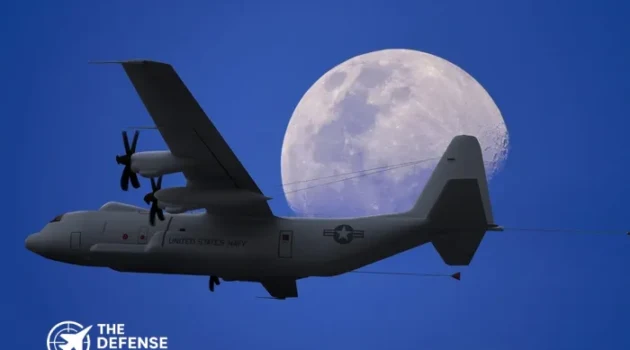
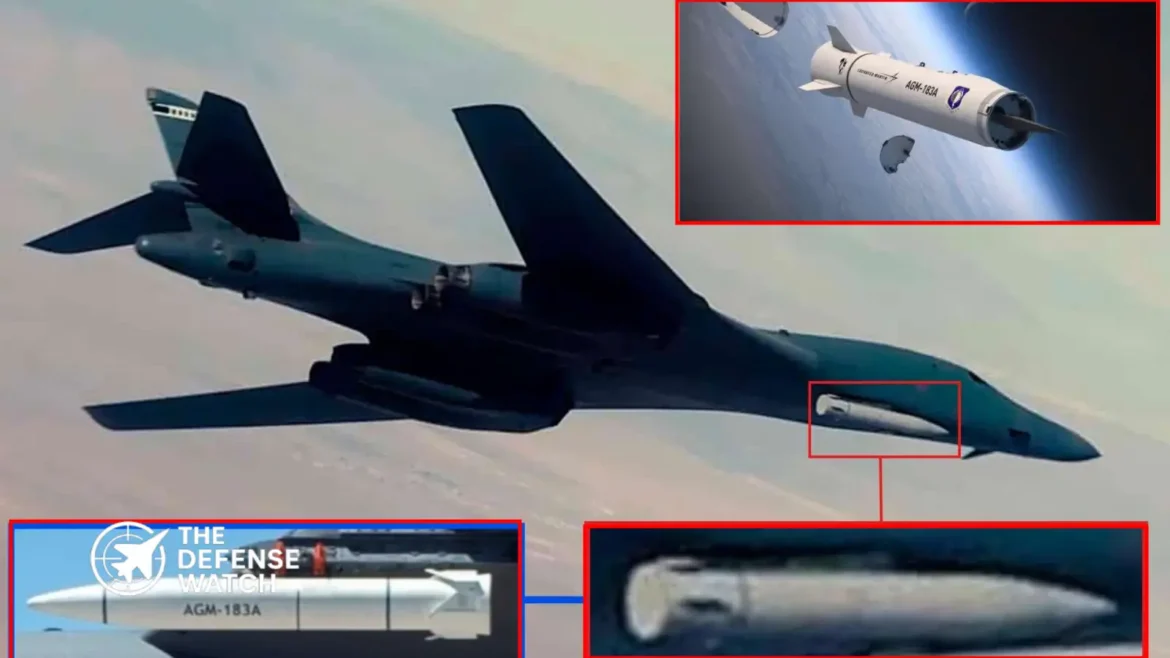
The B-1B Lancer hypersonic loadout revealed by the U.S. Air Force marks a notable step in integrating next-generation weapons into legacy bomber platforms. The configuration, featuring the AGM-183 ARRW, highlights a renewed focus on rapid, long-range strike options designed to penetrate advanced air defenses.
- Iran and Russia reportedly signed a secret 500 million missile deal in December 2025, according to the Financial Times.
- The pact covers delivery of 500 Verba man portable air defense launch units and 2,500 9M336 missiles through 2027 to 2029.
- The Verba systems are infrared guided MANPADS designed to target low altitude threats including drones and cruise missiles.
- The deal follows damage to Iran s air defense network during the 2025 conflict with Israel.
- The agreement reflects deepening military cooperation between Tehran and Moscow.
The updated loadout demonstrates how the B-1B Lancer could carry multiple hypersonic missiles externally, significantly expanding its operational flexibility. The ARRW is designed to reach speeds above Mach 5, enabling it to strike high-value targets with minimal warning.
From Conventional Bomber To Hypersonic Carrier
The B-1B has long served as a conventional strike bomber, optimized for carrying large payloads of guided and unguided munitions. This new B-1B Lancer hypersonic loadout represents a shift toward high-speed precision strike missions.
Unlike stealth bombers such as the B-2, the B-1B relies on speed, payload, and stand-off weapons. Integrating ARRW allows the aircraft to launch from outside heavily defended zones, reducing exposure to modern air defense systems.
This evolution aligns with broader U.S. efforts to adapt existing platforms for hypersonic warfare, rather than waiting for next-generation systems like the B-21 to fully mature.
AGM-183 ARRW: Capability And Challenges
The AGM-183 ARRW program has faced technical hurdles in recent years, including test inconsistencies. However, its core concept remains central to U.S. hypersonic strategy.
The missile uses a boost-glide vehicle, launched by a rocket booster before gliding at hypersonic speeds toward its target. This flight profile complicates interception by traditional missile defense systems.
The introduction of the B-1B Lancer hypersonic loadout suggests continued confidence in ARRW or at least in the broader concept of air-launched hypersonic weapons.
From an operational standpoint, pairing ARRW with the B-1B offers several advantages:
- Rapid deployment from forward bases
- Large payload capacity
- Flexibility in targeting across multiple theaters
Strategic Context: Why It Matters Now
The timing of this reveal is significant. The United States is accelerating efforts to counter hypersonic developments by near-peer competitors, particularly China and Russia.
Both countries have already fielded or tested hypersonic systems, raising concerns about gaps in U.S. strike and deterrence capabilities. The B-1B Lancer hypersonic loadout directly addresses this gap by providing a near-term delivery platform.
This approach reflects a broader Pentagon strategy of incremental modernization. Instead of relying solely on future platforms, the U.S. is upgrading existing assets to maintain operational readiness.
Operational Impact And Future Outlook
If fully operational, the B-1B Lancer hypersonic loadout could reshape how the U.S. conducts long-range strike missions. The ability to launch hypersonic weapons from a proven bomber platform adds a layer of unpredictability and speed to U.S. military planning.
However, several factors will determine its effectiveness:
- Successful maturation of ARRW technology
- Integration with targeting and command systems
- Availability of sufficient missile inventory
There is also the question of survivability. While the B-1B can launch from stand-off distances, it lacks stealth characteristics, which may limit its use in highly contested environments.
Analysis: Bridging The Capability Gap
The decision to equip the B-1B with hypersonic weapons is less about transforming the aircraft and more about bridging a capability gap.
It reflects a pragmatic approach. Instead of waiting for next-generation systems, the U.S. is leveraging what it already has. This reduces risk and accelerates deployment timelines.
At the same time, it underscores the urgency of the hypersonic race. The B-1B Lancer hypersonic loadout is not just a technical upgrade. It is a signal that the U.S. is adapting its force structure to keep pace with evolving threats.
Bell and KAI Sign MOU to Explore MV-75 Cheyenne II for South Korea’s Next-Generation Helicopter Requirement
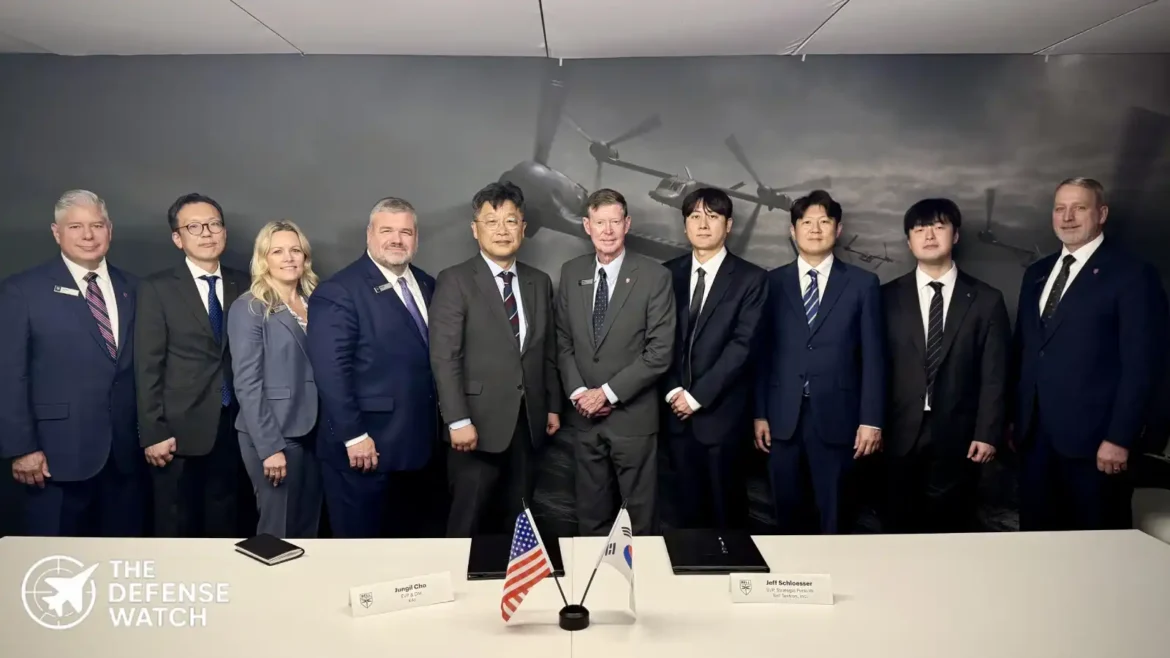
Bell Textron and Korea Aerospace Industries signed a Memorandum of Understanding to explore solutions based on the MV-75 Cheyenne II tiltrotor for South Korea’s High Speed Medium Utility Helicopter (HSMUH) program, the two companies announced April 28, 2026. The agreement — signed at Bell’s Fort Worth, Texas, headquarters — marks the first publicly disclosed international cooperation effort tied to the MV-75 since the U.S. Army formally named the aircraft the Cheyenne II earlier in April.
- Bell Textron and Korea Aerospace Industries (KAI) signed an MOU on April 27–28, 2026, at Bell’s headquarters in Fort Worth, Texas, to explore MV-75 Cheyenne II solutions for South Korea’s High Speed Medium Utility Helicopter (HSMUH) program.
- The MV-75 Cheyenne II is the U.S. Army’s selected Future Long-Range Assault Aircraft (FLRAA), offering more than twice the speed and range of the UH-60 Black Hawk it is designed to replace.
- This is the first publicly disclosed international cooperation effort tied to the MV-75, signaling Washington’s intent to extend next-generation tiltrotor capability to allied forces in the Indo-Pacific.
- The exploratory work is supported under U.S. Army Contracting Command Contract No. W58RGZ-23-C-0001, tying any potential South Korean variant directly to the Army’s program of record and future U.S. export policy decisions.
- Both companies will evaluate a Modular Open Systems Approach (MOSA) to allow South Korean forces to modify and upgrade the platform affordably over time, reducing long-term dependency on a single supplier.
The Big Picture
The United States is actively working to extend its most advanced defense platforms to close allies, and vertical-lift aviation represents one of the clearest examples of this effort. As Washington deepens its focus on Indo-Pacific deterrence, ensuring that allies like South Korea operate compatible, interoperable platforms becomes strategically essential.
South Korea sits at the crossroads of one of the world’s most volatile security environments. The Korean Peninsula borders a nuclear-armed North Korea, exists within striking range of Chinese military assets, and demands a defense posture that can respond rapidly across difficult terrain — mountainous, coastal, and urban. The Republic of Korea Army relies heavily on rotary-wing aviation for troop transport, logistics, and close support, making the HSMUH program a high-priority modernization effort.
Simultaneously, the U.S. Army’s own FLRAA program is maturing rapidly. Rolls-Royce began ground testing the AE 1107F turboshaft engines that will power the MV-75 in December 2025. Collins Aerospace received contracts in April 2026 to supply five onboard systems including main power generation, the interconnect drive system, and the SmartProbe air data system. Bell opened a dedicated Wichita Assembly Center for MV-75 fuselage production on April 27, 2026 — one day before the KAI MOU was announced. The domestic program’s accelerating pace creates the conditions necessary for international offers to become credible.
What’s Happening
Bell Textron and KAI signed the MOU on April 27 (local time) at Bell’s Fort Worth headquarters. The signing was attended by KAI Rotary Wing Business Division Head Jo Jung-il and Bell Senior Vice President of Strategic Pursuits Jeff Schloesser.
Under the agreement, the two companies will assess MV-75-based solutions for South Korea’s HSMUH requirement. The scope includes evaluating a Modular Open Systems Approach (MOSA) framework to allow the Republic of Korea Armed Forces to modify the platform’s weapons systems rapidly and affordably as operational needs evolve.
Bell and KAI will also explore areas for industrial cooperation as the program matures. The press release notes the effort is “aligned with U.S. Government priorities and policies,” language that signals the partnership’s scope is bounded by Washington’s export authorization framework. Critically, the work is supported under U.S. Army Contracting Command Contract No. W58RGZ-23-C-0001 — the same FLRAA development contract that funds the domestic MV-75 program. That structure directly ties any future South Korean variant to U.S. policy decisions on technology transfer.
The MV-75 Cheyenne II is derived from Bell’s V-280 Valor demonstrator, which the U.S. Army selected for FLRAA in December 2022. The platform offers more than twice the speed and range of the UH-60 Black Hawk it is designed to replace, using tiltrotor technology to combine vertical-takeoff-and-landing capability with fixed-wing cruise efficiency.
Why It Matters
The Bell-KAI MOU carries significance on multiple levels — industrial, operational, and geopolitical.
For the ROK military, the HSMUH requirement represents a generational leap. South Korea’s current utility helicopter fleet, including aging UH-60 variants and domestically produced Surion helicopters, operates at conventional speeds and ranges. A tiltrotor-based replacement would dramatically expand the operational reach of ROK ground forces, enabling faster troop insertion, logistics support, and medical evacuation across a broader area of operations.
For Bell, the MOU represents the first concrete step toward internationalizing the MV-75 platform. Defense contractors rarely recoup development costs from a single-nation program of record. Export sales extend production runs, reduce per-unit costs, and generate revenue streams that sustain long-term program health. Establishing a partnership with KAI early — before the domestic program reaches initial operational capability — positions Bell to shape the HSMUH competition on its terms.
For the U.S.-ROK alliance, interoperability is the key operational dividend. If South Korea fields a variant of the same tiltrotor platform the U.S. Army operates, combined arms planning, logistics, and maintenance support become significantly simpler in a conflict scenario. That alignment has tangible value in a theater where American and South Korean forces train together under the Combined Forces Command structure.
Strategic Implications
The MOU carries strategic weight beyond its immediate industrial scope.
Tiltrotor technology represents a genuine capability gap relative to China’s current rotary-wing aviation inventory. The People’s Liberation Army Ground Force operates conventional helicopters — the Z-8, Z-9, and Z-20 families — none of which match the projected speed and range envelope of the MV-75. A South Korea operating tiltrotors alongside U.S. forces would widen that advantage and complicate Chinese planning assumptions about the pace at which allied forces could maneuver in a Peninsula contingency or Taiwan Strait escalation scenario.
The MOSA requirement embedded in the MOU also reflects a deliberate strategic choice. By designing a framework that allows South Korea to modify weapons systems without relying on a single supplier, the arrangement hedges against potential export control friction in a future crisis. This approach mirrors the philosophy Washington has applied to the F-35 program — providing advanced platforms while retaining control over the most sensitive subsystems through strict access agreements.
The fact that this cooperation is explicitly tied to a U.S. Army contract rather than structured as a pure foreign military sale adds another dimension. It keeps the program within the oversight architecture of U.S. defense acquisition law, ensuring Washington retains visibility and approval authority over how MV-75 technology flows to a third party — even a close treaty ally.
Competitor View
China will note this MOU as part of a broader pattern of the United States extending advanced military aviation to Indo-Pacific allies. Beijing has watched the U.S. deepen defense industrial cooperation with Japan, Australia, and South Korea through multiple channels, and the prospect of a tiltrotor-equipped ROK Army adds another layer to the military balance on the Peninsula and in the broader region.
North Korea’s military planners face a more immediate concern. The Korean People’s Army relies on a mix of Soviet-era helicopters for assault and logistics missions. A South Korean fleet equipped with tiltrotors capable of faster infiltration speeds, longer operational radii, and greater payload flexibility would significantly complicate DPRK air defense planning, particularly for high-value targets deeper inside North Korean territory.
Russia’s defense establishment, closely watching Western military technology proliferation, has tracked the MV-75 program with interest. Moscow understands the FLRAA concept and has invested in its own high-speed rotorcraft research — the Mil Mi-X1 compound helicopter program — though Russian development timelines have been substantially disrupted by the Ukraine war and associated industrial pressures.
What To Watch Next
The MOU is a framework for exploration, not a procurement commitment. Several milestones will determine whether this agreement matures into a formal program.
The MV-75’s domestic development timeline remains the first gating factor. Army Program Acquisition Executive Maj. Gen. Clair Gill stated in April 2026 that the first flight will happen “when it’s going to happen,” declining to commit to a specific date. Until the aircraft demonstrates flight performance, any South Korean variant remains conceptual.
Watch for indicators of formal South Korean government engagement. The HSMUH program has been discussed in Seoul’s defense acquisition circles for several years, but budget allocation and a formal Request for Information or Proposal have not yet been publicly announced. Korean defense budget decisions in the 2027–2028 timeframe will signal whether this program accelerates or remains in long-range planning.
Industrial cooperation terms will also shape the deal’s political viability. South Korea’s defense procurement process strongly favors domestic industrial participation — offsets, technology transfer, and co-production arrangements. How Bell and KAI structure any future workshare agreement will be a decisive factor in Korean governmental support for the MV-75 bid.
Capability Gap
South Korea’s current medium utility helicopter fleet faces several operational limitations relevant to the threat environment on the Peninsula. Conventional helicopter speeds — typically 140 to 160 knots cruise — limit rapid vertical envelopment and deep insertion operations. The Korean terrain, which combines mountainous interior regions with urbanized coastal corridors, demands aviation assets that can transition quickly between low-observable infiltration profiles and high-speed transit.
The MV-75 tiltrotor concept directly addresses this gap. Tiltrotor aircraft cruise at speeds approaching 280 knots — nearly double conventional helicopter performance — while retaining helicopter-style vertical lift capability for confined-area operations. For a military facing a threat from the north that values speed and surprise, this performance differential is operationally significant.
The MOU’s MOSA framework addresses a separate but equally important gap: long-term platform adaptability. Legacy South Korean helicopter programs have faced challenges integrating new sensors, weapons, and communications systems as technology evolved. A platform designed from the outset for modular upgrades reduces that friction and extends operational relevance without costly and time-consuming airframe redesigns.
Limitations remain. The MV-75 is still in development; first flight has not been achieved and production timelines remain unconfirmed. Any South Korean variant would follow the U.S. Army’s own procurement schedule by several years at minimum. The export authorization process adds further uncertainty, as tiltrotor technology — with its military performance implications — will require careful review under U.S. International Traffic in Arms Regulations.
The Bottom Line
The Bell-KAI MOU moves the MV-75 Cheyenne II beyond a single-nation Army program and into the broader architecture of U.S. Indo-Pacific alliance strategy — a signal that Washington intends next-generation vertical lift to become a shared capability, not a unilateral advantage.

Bell MV-75A Cheyenne II Targets Future Marine Corps Missions
Bell MV-75A Cheyenne II has been unveiled as an armed next-generation tiltrotor concept aimed at future U.S. Marine Corps operations, according to reporting by Bell Textron. The design reflects a broader Pentagon shift toward longer-range, more survivable aircraft able to operate across contested maritime environments.
The concept appears tailored for expeditionary warfare, where Marine units may need to move rapidly between islands, support dispersed forces, and strike enemy naval or land targets without relying on large fixed bases.
¦ KEY FACTS AT A GLANCE- Bell has revealed the armed MV-75A Cheyenne II concept for future U.S. Marine Corps missions.
- The platform combines tiltrotor speed and range with offensive strike capability.
- Proposed missions include sea denial, precision strike, expeditionary assault, and island operations.
- The concept aligns with Marine Corps doctrine focused on distributed maritime operations in the Indo-Pacific.
- Cheyenne II signals growing demand for survivable long-range assault aircraft with weapons integration.
That matters because the U.S. Marine Corps has been reshaping its force structure for years around mobility, anti-ship warfare, and smaller forward units capable of operating inside contested zones.
What Is The MV-75A Cheyenne II?
The MV-75A Cheyenne II is presented as an armed tiltrotor aircraft, combining helicopter-style vertical lift with airplane-like cruise speed. That architecture is already familiar through the Bell Boeing V-22 Osprey, but Bell’s new concept suggests a more combat-focused mission set.
Unlike traditional assault transports, the Cheyenne II concept emphasizes direct offensive capability. Imagery released with the report indicates external weapons carriage and a profile intended for high-speed strike and support missions.
If fielded in any future form, such a platform could bridge multiple mission areas:
- Tactical troop transport
- Long-range raid support
- Maritime strike
- Armed escort
- Precision fires
- Rapid resupply in contested areas
Why Sea Denial Is Central To The Design
Sea denial refers to preventing an adversary from freely operating naval forces in a region. For the Marine Corps, that increasingly means using mobile units armed with missiles, sensors, drones, and aircraft to complicate enemy movement.
An armed MV-75A Cheyenne II could support that model in several ways:
- Rapidly moving anti-ship missile teams between islands
- Launching precision strikes on radar or missile sites
- Escorting expeditionary forces
- Resupplying isolated detachments
- Extending sensor and targeting networks
This is especially relevant in the Pacific, where distance between islands and limited basing options place a premium on speed and range.
How It Fits Marine Corps Modernization
The United States Marine Corps has divested some heavy legacy systems while investing in mobile missiles, lighter formations, and distributed operations under Force Design reforms.
The MV-75A Cheyenne II aligns with several of those priorities:
- Operational reach over large ocean spaces
- Faster repositioning than helicopters
- Vertical landing flexibility without runways
- Organic strike capability
- Support for small expeditionary detachments
This also reflects a wider U.S. defense trend where aircraft are expected to do more than transport. Survivability, networking, and weapons integration now matter as much as lift capacity.
Competitive Landscape
Bell’s tiltrotor experience gives it a strong industrial base, but future procurement would still face questions over cost, survivability, maintenance burden, and mission overlap with existing fleets.
The V-22 Osprey demonstrated the benefits of speed and range, but also highlighted sustainment and safety challenges over decades of service. Any successor or derivative concept would likely be judged on whether it improves reliability while reducing lifecycle costs.
For Marine planners, the key issue may not be whether a tiltrotor can fly farther, but whether it can survive in a modern missile-threat environment while carrying meaningful weapons loads.
Strategic Outlook
The Bell MV-75A Cheyenne II remains a concept rather than an announced procurement program. Still, its reveal offers a clear signal about where military aviation thinking is headed.
Future conflicts, especially in the Indo-Pacific, may reward aircraft that can launch from austere sites, move fast across long distances, and strike targets without waiting for larger joint assets.
That makes the Cheyenne II more than a design study. It is a snapshot of how industry sees the next Marine Corps fight.
Airbus Launches SAETA II Program To Replace Spain F-5 Fleet
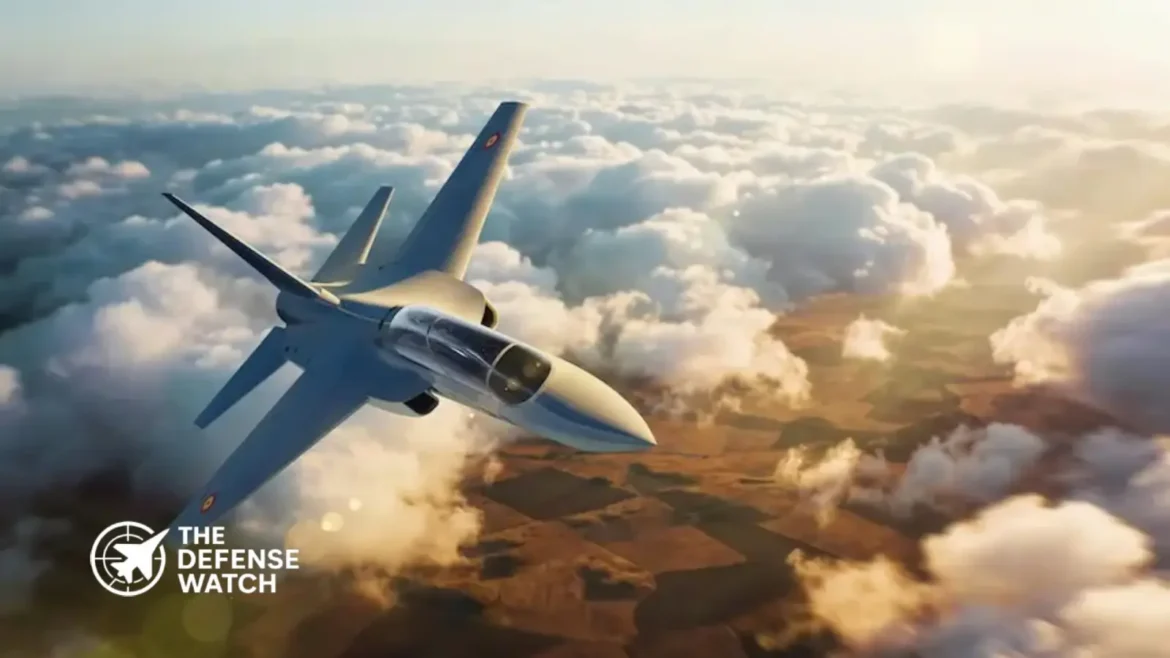
Spain’s SAETA II combat trainer program marks one of the country’s most important air force modernization efforts in years. Led by Airbus, the initiative will replace the Spanish Air and Space Force’s ageing F-5 aircraft with a new integrated pilot training system built around 30 advanced jet trainers.
KEY FACTS AT A GLANCE- Airbus is leading Spain’s new Integrated Combat Training System centered on the SAETA II aircraft.
- The program will replace Spain’s ageing Northrop F-5 trainer fleet used for fighter pilot instruction.
- Spain plans a 30 aircraft fleet derived from the Turkish Aerospace HÜRJET platform.
- Initial deliveries begin in 2028, with full Spanish-standard deliveries scheduled through 2035.
- The project includes 60% Spanish industrial participation and upgraded simulators.
The program is based on a co-development arrangement between Airbus and Turkish Aerospace, manufacturer of the HÜRJET trainer jet. Spain’s localized version will carry the historic SAETA II name, linking the new fleet to the country’s earlier HA-200 Saeta jet trainer heritage.
Why Spain Is Replacing The F-5 Now
Spain’s F-5 fleet has served for decades in advanced fighter training. However, aging airframes, rising maintenance needs, and the demands of modern pilot instruction have made replacement increasingly urgent.
Today’s fighter pilots must transition to digital cockpits, advanced sensors, networked warfare, and complex mission systems. Legacy trainers designed in an earlier era are less suited to preparing crews for platforms such as the Eurofighter Typhoon and future sixth-generation systems.
That makes the SAETA II more than a simple aircraft purchase. It is a training pipeline upgrade designed to support Spain’s long-term combat air readiness.
What The SAETA II Program Includes
The SAETA II program covers more than aircraft deliveries. Airbus said it includes:
- Customization of 30 jets to Spanish requirements
- Advanced simulators and synthetic training systems
- Maintenance and logistics support
- Base infrastructure modernization
- Future upgrade pathways under Spanish control
Airbus will also redesign the Fighter and Strike School Training Centre at Talavera la Real Air Base.
That matters because modern pilot training increasingly blends live flying with simulator missions. This approach lowers cost, increases training repetitions, and allows pilots to rehearse high-risk combat scenarios safely.
Delivery Timeline And Industrial Impact
The first phase begins in 2028 with 21 aircraft deliveries. One airframe will be used as a prototype for integrating next-generation avionics and mission systems. Ground-based training systems are expected to enter service during the 2029 to 2030 academic period. Final Spanish-standard aircraft deliveries are scheduled from 2031 through 2035.
Airbus says the project includes 60% Spanish industrial participation. Domestic firms including Indra, GMV, Sener and others will contribute avionics, mission systems, datalinks, and support equipment.
This gives Madrid stronger sovereign control over sustainment, upgrades, and future exports.
Strategic Meaning For Europe
The SAETA II program also reflects a wider European defense trend. Rather than relying only on off-the-shelf foreign solutions, governments increasingly want local assembly, domestic supply chains, and control over future software and systems integration.
Spain’s decision blends an existing aircraft platform with national customization. That can reduce development risk while preserving industrial benefits.
For NATO members facing tighter budgets and growing readiness demands, that hybrid model may become more common.
Bottom Line
Spain’s SAETA II combat trainer program is not just replacing an old F-5 fleet. It is rebuilding the country’s fighter pilot training system for the next generation. With Airbus leading the effort and major Spanish industry involvement, the project strengthens readiness, industrial autonomy, and long-term air power capacity.
AeroVironment Unveils Halo_Shield™ To Counter Drone Swarms And Cruise Missile Threats
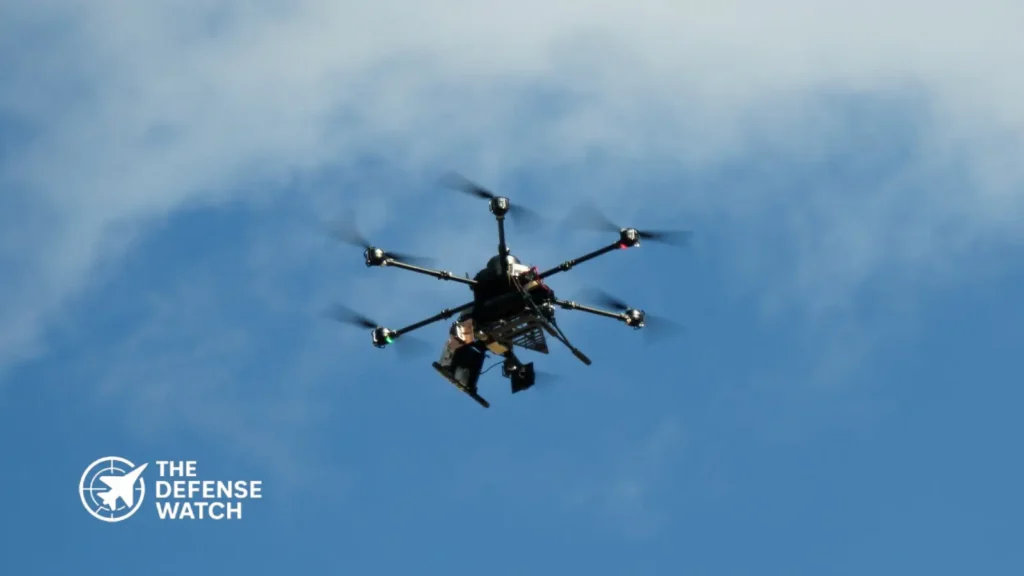
AeroVironment, Inc. has introduced Halo_Shield™, a new tile-based counter-unmanned aircraft system (C-UAS) that the company says fundamentally repositions how military and critical infrastructure operators defend against massed aerial threats.
🛡 KEY FACTS AT A GLANCE- AeroVironment (NASDAQ: AVAV) announced Halo_Shield™ on April 28, 2026, at the Modern Day Marine exposition in Washington, D.C.
- The system uses a distributed, tile-based architecture comprising five domain-specific tiles: Sentinel, Terrestrial, Nautical, Aerial, and Celestial.
- Halo_Shield™ is designed to detect, track, identify, and defeat Group 1–5 UAS, coordinated drone swarms, and subsonic cruise missiles.
- The system integrates AV’s LOCUST® laser weapon, Switchblade® loitering munitions, and Titan® RF C-UAS sensors, among other OEM components.
- Powered by AV_Halo™ unified software, Halo_Shield™ is deployable as portable fly-away kits and integrates with existing C2 frameworks.
The announcement came at the Modern Day Marine exposition at the Walter E. Washington Convention Center in Washington, D.C. — a venue that signals the system’s alignment with Marine Corps and ground force priorities as the Pentagon accelerates counter-drone modernization.
The Threat That Drove the Design
The drone threat environment has changed rapidly. Conflicts in Ukraine and the Middle East have demonstrated that low-cost, mass-produced unmanned systems can overwhelm traditional point defense architectures — exposing critical assets and forward-deployed forces to sustained attrition.
AeroVironment’s Halo_Shield™ is engineered to predict, detect, track, identify, and defeat advanced airborne threats including Group 1 through 5 UAS, coordinated drone swarms, and subsonic cruise missiles, protecting critical infrastructure and deployed forces worldwide.
That breadth of coverage — from small commercial quadcopters up to full-scale cruise missiles — reflects the reality that modern adversaries do not restrict themselves to a single threat vector.
What Is the Tile-Based Architecture?
The defining feature of Halo_Shield™ is its modular, distributed tile design. Rather than deploying a single, monolithic defensive system, AV has structured the platform around five domain-specific tiles:
The tile architecture comprises Sentinel, Terrestrial, Nautical, Aerial, and Celestial tiles, each delivering a specialized combination of sensors, effectors, and command-and-control capabilities. avinc
Each tile functions as a self-contained unit but is designed to snap together with other tiles to extend coverage, accelerate engagement timelines, and adapt to evolving mission requirements without requiring full system redesign or force retraining.
Halo_Shield™ is deployable as portable fly-away kits and integrates seamlessly with existing customer sensors, effectors, and command-and-control frameworks — delivering scalable, resilient, area-wide protection with minimal training and personnel demands.
This plug-and-play approach is a deliberate break from legacy C-UAS architectures, which typically require significant infrastructure investment and dedicated operator teams.
Integrated Weapons and Sensors
Halo_Shield™ is not a sensor-only platform. The tile architecture integrates a tailored mix of sensors and effectors from AV and its trusted partners, including AV’s LOCUST® laser weapon system, Switchblade® loitering munitions, and Titan® 4 and Titan MS RF C-UAS systems, among others.
The inclusion of directed energy — specifically the LOCUST® laser — alongside kinetic options like Switchblade® gives operators a layered response menu. Directed energy offers cost-per-shot advantages against small UAS at scale, while loitering munitions address more capable threats requiring a kinetic solution.
With AV_Halo™ COMMAND, each tile can operate independently or be rapidly combined to extend detection ranges, accelerate the kill chain, and expand coverage across large geographic areas for preferential engagement.
The AV_Halo™ software backbone is significant. It positions Halo_Shield™ as a living system — one that can absorb new sensors, effectors, and algorithms as the threat environment evolves, rather than requiring costly hardware replacement cycles.
Leadership Assessment
AV’s senior leadership was direct about what is driving the system’s development.
Wahid Nawabi, Chairman, President, and CEO of AV, stated that cheap, massed, and coordinated aerial systems are stressing traditional point defenses, and that Halo_Shield™ represents a collaborative, modular approach designed to close those gaps.
Larry Lloyd, Senior Vice President of Strategic Initiatives at AV, described each tile as a self-contained capability that can operate independently or combine with others to build exactly the defense architecture a mission demands — allowing operators to scale, adapt, and reconfigure in real time as threats evolve.
That operational flexibility is increasingly non-negotiable. In contested environments, the ability to rapidly reconfigure a defensive architecture without retraining personnel or acquiring new hardware represents a measurable force multiplier.
Strategic Context: Why This Matters Now
The timing of Halo_Shield™’s debut is not coincidental. The U.S. Department of Defense has made counter-UAS modernization a top acquisition priority following lessons learned from Ukraine, Red Sea shipping lane drone attacks, and emerging swarm tactics demonstrated by near-peer adversaries.
Halo_Shield™ directly addresses the capability gaps that Pentagon planners have flagged: the inability of point-defense systems to handle simultaneous, multi-axis, low-cost drone attacks against fixed and semi-fixed assets.
The system is designed to support emerging homeland defense priorities by enabling resilient, area-wide protection of high-value U.S. and allied partner assets, including borders, military installations, and other critical infrastructure.
The reference to homeland defense and border protection is notable — it signals that AV is positioning Halo_Shield™ not just for expeditionary military use, but for domestic security applications where drone threats to infrastructure are a growing concern.
AV is currently demonstrating capabilities and has deployed Halo_Shield™ tiles at select critical sites. That language suggests field testing is already underway, though AV has not disclosed specific locations or government partners involved in the current demonstrations.
What Comes Next
More information about each tile — Sentinel, Terrestrial, Nautical, Aerial, and Celestial — will be released in upcoming announcements.
That staged disclosure approach suggests AV intends to maintain momentum around Halo_Shield™ through a series of capability reveals, likely timed to major defense exhibitions and contracting cycles.
For defense analysts, the open architecture design and OEM supplier integration model are worth watching closely. By building Halo_Shield™ as a system-of-systems platform rather than a closed proprietary solution, AV is positioning itself to compete across a broader range of government C-UAS program requirements — including those that mandate multi-vendor interoperability.
Industry Significance
The C-UAS market has become one of the most competitive segments in the defense technology sector. Rivals including Dedrone (now part of Axon), Epirus, Anduril, and Leonardo DRS are all fielding or developing scalable counter-drone architectures targeting similar mission sets.
AV’s differentiator with Halo_Shield™ is the depth of its organic effector portfolio. Unlike many C-UAS competitors that rely solely on third-party weapons integration, AV can draw on its own Switchblade® loitering munitions and LOCUST® directed energy capabilities — giving the company tighter control over system performance and sustainment.
The tile model also reduces procurement risk for customers. Operators can begin with a single tile configuration and expand coverage incrementally as budgets and requirements evolve — a significant advantage in constrained defense spending environments.
Ukraine Long-Range FPV Drones Enter New Testing Phase
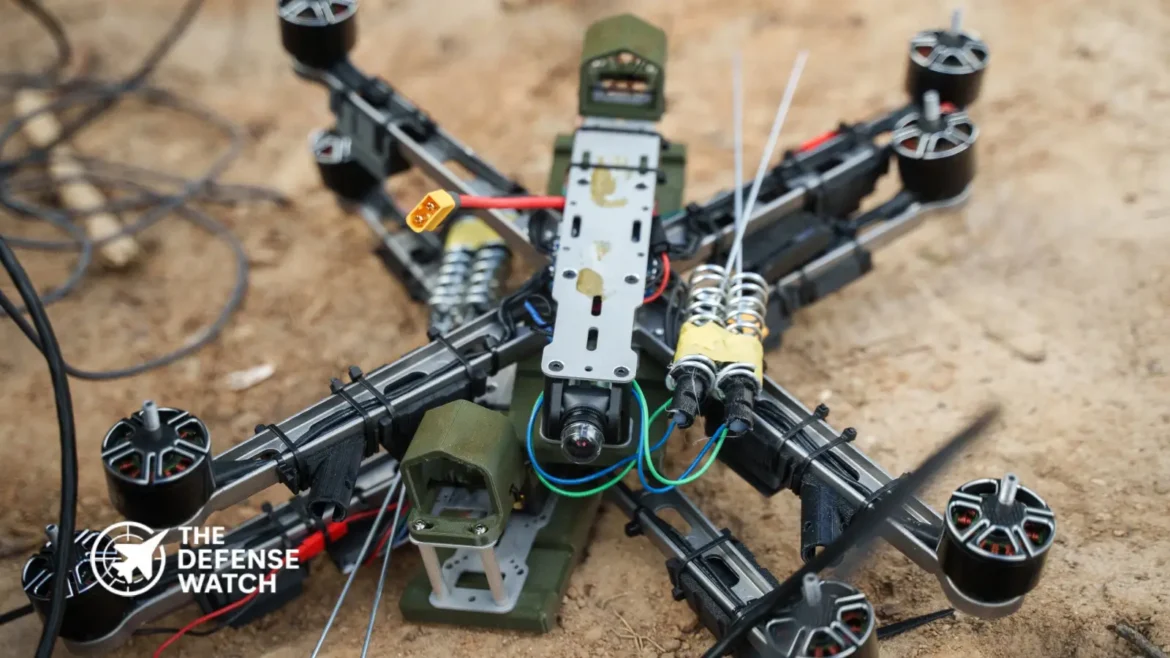
Ukraine long-range FPV drones moved closer to frontline deployment after the Ministry of Defense announced successful field trials of a new generation of strike drones developed with domestic industry support.
The tests were conducted at a training range with participation from eight Ukrainian manufacturers under the coordination of Ukraine’s defense innovation platform, Brave1. During the trials, systems reportedly flew missions at distances of up to 25 kilometers while engaging targets under several forms of electronic warfare pressure.
KEY FACTS AT A GLANCE- Ukraine tested a new generation of long-range FPV strike drones with eight domestic manufacturers.
- Trial systems reportedly struck targets at ranges of up to 25 kilometers.
- Some drones completed missions while operating under multiple electronic warfare conditions.
- Kyiv says procurement rules now favor battlefield-proven systems for faster delivery.
- Brave1 remains central to Ukraine’s rapid wartime defense innovation model.
Officials said some platforms completed the full testing cycle in conditions designed to mirror battlefield environments. Specific technical details were withheld for operational security.
Why The New FPV Drones Matter
The importance of these drones goes beyond range alone. Standard first-person-view drones are widely used across the Russia-Ukraine war for tactical strikes, but many shorter-range systems remain vulnerable to jamming and signal disruption.
By extending range to 25 kilometers while retaining strike capability under electronic warfare conditions, Ukraine appears focused on overcoming one of the battlefield’s biggest constraints, survivability in a contested electromagnetic environment.
That shift could allow operators to strike artillery, logistics hubs, command posts, and vehicle concentrations from safer standoff distances.
Brave1’s Rapid Procurement Model
Kyiv also highlighted structural reforms designed to speed battlefield adoption. According to the ministry, 80 percent of procurement funding is now directed toward systems that prove effectiveness through combat data, while 20 percent is reserved for emerging technologies.

Image Source : Brave1 That model matters because many militaries struggle to move prototypes into service quickly. Ukraine, under wartime pressure, has increasingly compressed that timeline by linking combat units, engineers, and procurement officials.
If a drone performs well in near-combat testing, officials say contracting can begin immediately.
Broader Drone War Context
The announcement comes as unmanned systems continue reshaping the war. Reuters reported this week that Ukraine is also expanding interceptor drone networks to counter Russian long-range one-way attack drones, including Shahed variants.
That means Kyiv is simultaneously investing in two drone tracks:
- Offensive FPV strike drones for tactical battlefield use
- Interceptor drones for homeland air defense
- Rapid domestic production to reduce dependence on foreign supply chains
This layered approach reflects how drones have become central to both front-line combat and strategic defense.
What Comes Next
Ukraine did not provide a timeline for mass deployment, but the emphasis on accelerated delivery suggests units could receive selected systems soon.
If these drones maintain effectiveness against jamming in operational use, they may represent another step in the fast-moving contest between low-cost unmanned systems and increasingly sophisticated electronic warfare tools.
For Western militaries watching the conflict, Ukraine’s model offers a real-world case study in wartime innovation, rapid procurement, and adapting faster than the threat.
U.S. Air Force E-3 Sentry Reinforces Arctic Readiness During Red Flag Alaska
The E-3 Sentry Red Flag Alaska mission underscored the continuing value of airborne warning and control aircraft in modern warfare, as the U.S. Air Force used the platform during Red Flag-Alaska 26-1 to coordinate air operations, expand surveillance coverage, and sharpen homeland defense readiness in the Arctic region. According to Joint Base Elmendorf-Richardson, crews from the 960th, 961st, and 962nd Airborne Air Control Squadrons supported the exercise from Alaska while fighter aircraft operated across the training area.
¦ KEY FACTS AT A GLANCE- U.S. Air Force E-3 Sentry aircraft took part in Red Flag-Alaska 26-1 from Joint Base Elmendorf-Richardson.
- Crews from the 960th, 961st, and 962nd Airborne Air Control Squadrons supported the exercise.
- The aircraft provides airborne surveillance, command, control, and battle management.
- Alaska remains a critical theater for homeland defense and northern approach monitoring.
- The mission highlights continued reliance on AWACS platforms despite modernization debates.
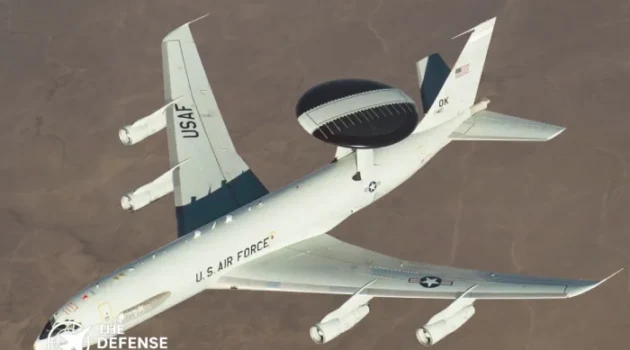
The Boeing-built E-3 Sentry, commonly known as AWACS, is instantly recognizable by its large rotating radar dome. The aircraft serves as an airborne command center, able to detect aircraft at long range, track multiple threats, manage friendly formations, and pass targeting or situational data to commanders in real time.
That role becomes especially important in Alaska.
Why Alaska Matters More Than Ever
Alaska sits at the northern edge of North America and remains one of the shortest air approaches between the United States and peer competitors operating in the Pacific or Arctic regions. Any military planner evaluating long-range bomber routes, cruise missile vectors, or reconnaissance flights must consider this geography.
That makes U.S. Air Force E-3 Sentry operations in Alaska more than a routine training event. It is a reminder that airborne battle management remains essential where terrain, distance, weather, and sparse ground infrastructure can limit radar coverage.
During the exercise, Air Force officials said the E-3 helps create a clearer picture of the airspace for leadership, aircraft, and allies. It also improves decision-making speed during complex operations.
Red Flag Alaska Tests Real Combat Conditions
Red Flag-Alaska is one of the Air Force’s premier large-force training exercises. It is designed to replicate contested combat scenarios involving multiple aircraft types, coalition forces, electronic threats, and fast-changing mission demands.
In that environment, the E-3 Sentry acts as the quarterback of the air battle.
Fighters can focus on their tactical missions while the AWACS crew tracks the broader fight, deconflicts aircraft, monitors threats, and redirects assets when conditions change. That capability is increasingly valuable as modern conflicts place pressure on communications networks and fixed command centers.
Why The E-3 Still Matters Despite Age
The E-3 fleet is aging, and the Air Force has explored replacement paths in recent years. However, exercises such as Red Flag Alaska show there is still no simple substitute for a dedicated airborne command-and-control platform.
Satellites, ground radars, stealth fighters, and networked sensors all contribute to the modern kill chain. But none alone combine persistence, mobility, human decision-making, and real-time control the same way an AWACS aircraft can.
That is particularly true in remote theaters like Alaska, where rapid adaptation may matter more than pure sensor range.
Strategic Message To Adversaries
The use of the E-3 Sentry Red Flag Alaska mission also sends a deterrence signal. It shows the United States continues investing in command resilience and northern defense readiness at a time of rising strategic competition in both the Indo-Pacific and Arctic theaters.
Potential adversaries increasingly rely on long-range strike systems, drones, and electronic warfare. Maintaining an airborne command layer complicates those plans and strengthens joint response options.
Bottom Line
The E-3 Sentry may be a legacy platform, but Red Flag-Alaska 26-1 demonstrates it still fills a frontline role. In vast and contested airspace, the aircraft remains one of the fastest ways to build a real-time battlespace picture and direct forces where they are needed most.
For the U.S. Air Force, that means the E-3 is not just an older aircraft. It is still a critical node in Arctic defense planning.