AC-130J Gunship Deployment Signals New Counter-Trafficking Focus
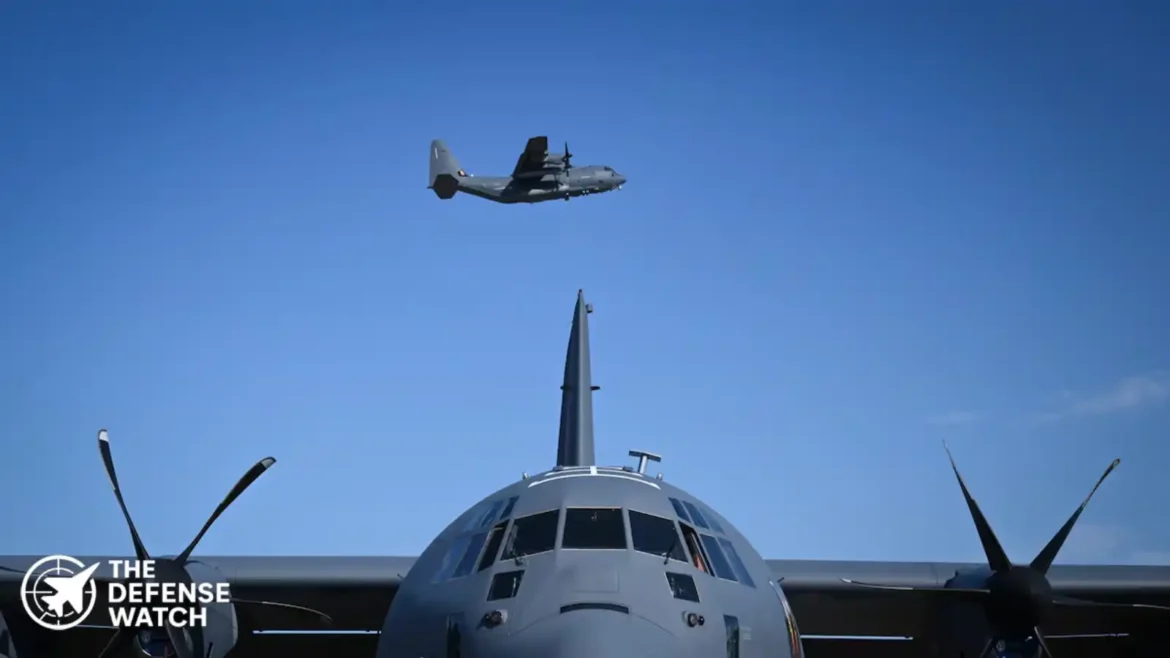
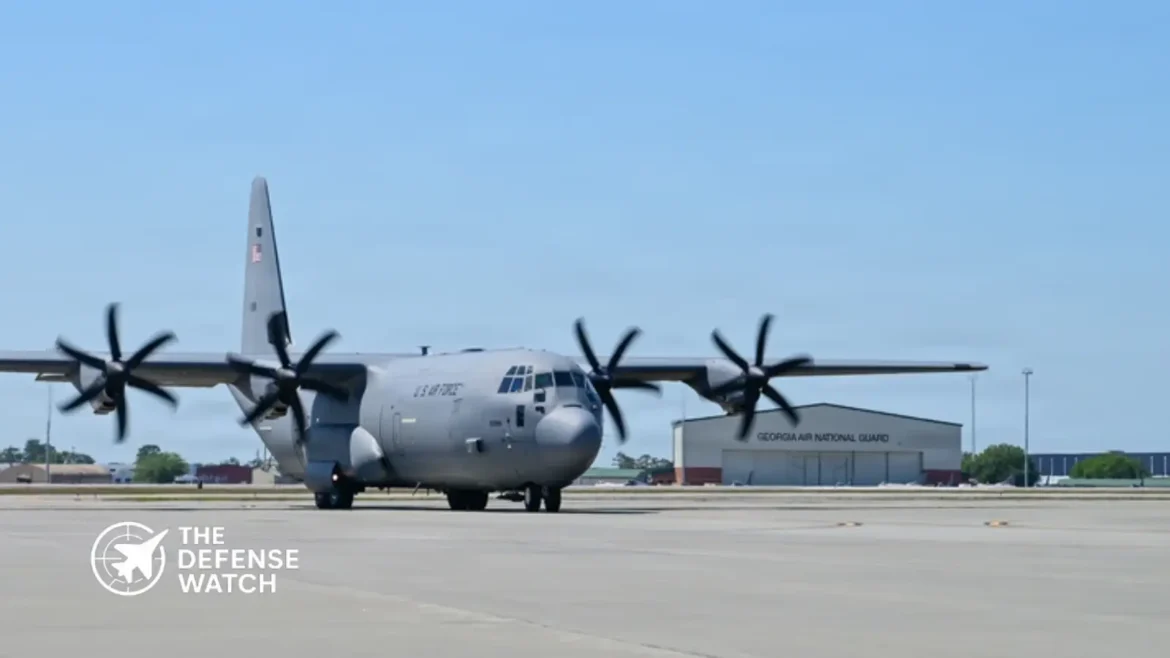
The AC-130J gunship has reportedly deployed to Central America carrying Hellfire missiles and precision bombs, a loadout that points to a more targeted U.S. approach against trafficking networks operating across land and maritime routes. The aircraft was positioned in El Salvador as part of a wider counter-trafficking mission.
- A U.S. Air Force AC-130J Ghostrider has reportedly deployed to El Salvador for counter-trafficking operations.
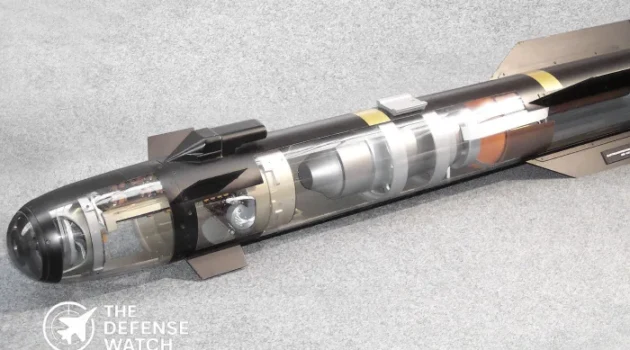
- The aircraft was described carrying AGM-114 Hellfire missiles and GBU-39/B Small Diameter Bombs.
- The AC-130J combines long loiter time, onboard sensors, and precision strike capability.
- Such deployments can support maritime surveillance, jungle interdiction, and rapid response missions.
- The move highlights growing U.S. use of military aviation in regional security operations.
The AC-130J Ghostrider is one of the most capable aircraft in the U.S. Air Force Special Operations Command fleet. Built on the C-130J airframe, it combines surveillance systems, precision-guided weapons, and persistent airborne presence. Official U.S. Air Force fact sheets list its core missions as close air support, air interdiction, and armed reconnaissance.
Why The Weapon Loadout Matters
The reported mix of AGM-114 Hellfire missiles and GBU-39/B Small Diameter Bombs is significant.
Hellfire missiles are suited for moving vehicles, small boats, and time-sensitive targets. The GBU-39/B offers greater stand-off range with low collateral damage, useful for fixed compounds, storage sites, or isolated infrastructure.
That combination suggests planners want flexibility. Trafficking organizations often shift routes quickly, disperse assets, and use remote terrain. A platform that can detect, track, and strike different target types in one sortie offers clear operational value.
This is where the AC-130J stands apart from fighters or drones. Fighters are fast but limited in loiter time. Many drones can remain overhead longer, but usually carry lighter payloads. The AC-130J merges endurance, sensors, and heavier precision firepower in a single aircraft.
Why Central America Is Important
Central America remains a critical transit corridor for narcotics, weapons smuggling, and organized criminal logistics moving north toward Mexico and the United States. Coastal waters, jungle zones, and lightly governed border regions create difficult surveillance conditions.
An aircraft like the AC-130J gunship can monitor maritime approaches, support partner forces, and rapidly respond when intelligence identifies a target. Its sensor suite enables day and night operations, while aerial refueling can extend mission endurance.
Strategic Meaning Beyond Trafficking
There is also a signaling element. Deploying a high-end special operations aircraft for a law-enforcement linked mission shows Washington is willing to apply military-grade ISR and strike assets where it sees organized crime as a national security threat.
That does not automatically mean frequent weapons use. In many deployments, the aircraft’s greatest value may be surveillance, command-and-control support, and deterrence. The visible presence of such a platform can pressure networks to relocate, slow movement, or expose themselves.
AC-130J Capability Snapshot
The U.S. Air Force states the AC-130J carries a 30mm cannon, 105mm howitzer, and precision-guided munitions. It also uses electro-optical and infrared sensors, advanced communications, and fire-control systems. Inventory figures previously listed 37 active aircraft by FY24.
Outlook
If the reported deployment continues, the AC-130J gunship could become a recurring feature of U.S. regional security operations, especially where traffickers rely on speed, concealment, and dispersed routes. It is an expensive tool, but for missions requiring persistence and precision, few aircraft offer the same blend of capabilities.

Greece C-390 Transport Aircraft Decision Nears
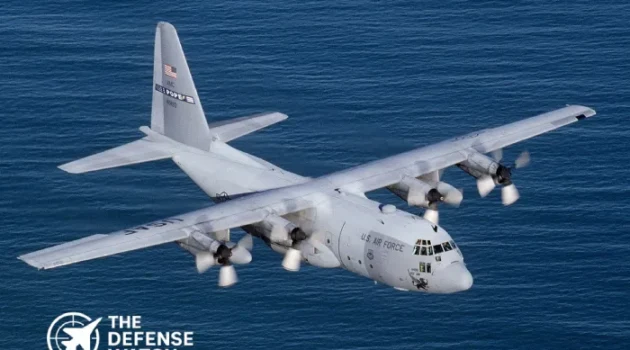
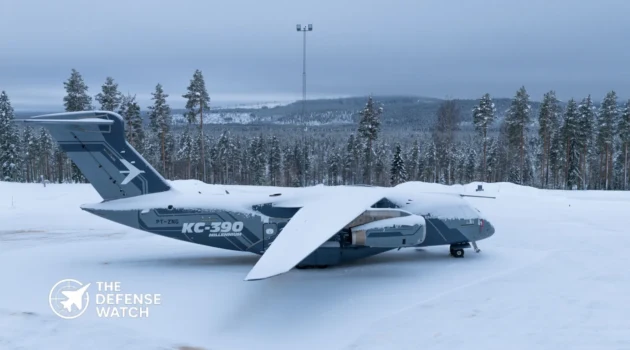
Greece C-390 transport aircraft plans appear to be moving closer to a formal decision as Athens looks to restore strained military airlift capacity. Reports indicate Greece could select up to three Brazilian-built Embraer C-390 Millennium aircraft by May 2026 as a replacement path for parts of its aging C-130 Hercules fleet.
- Greece is reportedly considering an initial purchase of three Embraer C-390 transport aircraft.
- The aircraft would help replace aging U.S.-made C-130 Hercules transports in Greek service.
- Only a limited number of Greek C-130 aircraft have recently remained operational.
- The C-390 offers higher cruise speed, modern avionics, and multi-mission capability.
- A Greek decision would further expand the C-390 footprint across Europe and NATO.
The issue is operational urgency. Greece has long depended on C-130 transports for troop movement, humanitarian response, island resupply, and NATO commitments. But fleet age, maintenance delays, and spare parts challenges have reduced aircraft availability in recent years. Previous reporting indicated only a small number of Greek C-130s were mission ready.
That makes this more than a procurement story. It is a readiness story.
Why The C-390 Is Gaining Ground
The Embraer C-390 Millennium has emerged as a strong global competitor in the medium airlift market once dominated by the Lockheed Martin C-130 Hercules.
The twin-engine jet transport offers:
- Payload capacity around 26 tons
- Faster cruise speed than legacy turboprop rivals
- Troop, cargo, medevac, tanker, and firefighting roles
- Modern fly-by-wire controls and digital avionics
- Compatibility with NATO-style missions and logistics networks
For Greece, speed matters. The country must support dispersed islands, remote garrisons, and rapid contingency movement across the Aegean and Eastern Mediterranean. A faster jet transport can shorten response timelines.
Strategic Meaning For Greece
A Greece C-390 transport aircraft purchase would also signal a broader shift in defense sourcing. Greece remains a major customer of U.S. and European systems, including fighters, helicopters, and naval platforms. Choosing a Brazilian aircraft would show Athens is willing to diversify suppliers when capability and delivery timelines align.
That does not mean abandoning U.S. systems. Instead, it reflects a practical trend seen across Europe, where governments increasingly seek faster acquisition cycles, lower lifecycle cost, and wider industrial partnerships.
Growing European Momentum
The C-390 has already secured customers including Portugal, Hungary, Austria, the Netherlands, Czech Republic, Slovakia, Sweden, and South Korea, helping Embraer build credibility in NATO-aligned markets. Reuters previously reported Austria and the Netherlands formalized a joint nine-aircraft order.
If Greece joins that list, the aircraft’s European presence would deepen further, improving training, sustainment, and interoperability opportunities.
What Happens Next
No official contract has yet been announced by Athens or Embraer. Final timing will depend on budget approvals and defense priorities. But if a May 2026 decision materializes, Greece could move quickly to rebuild a transport fleet that has become increasingly stressed.
For the Hellenic Air Force, replacing old aircraft is not optional forever. It is becoming urgent.
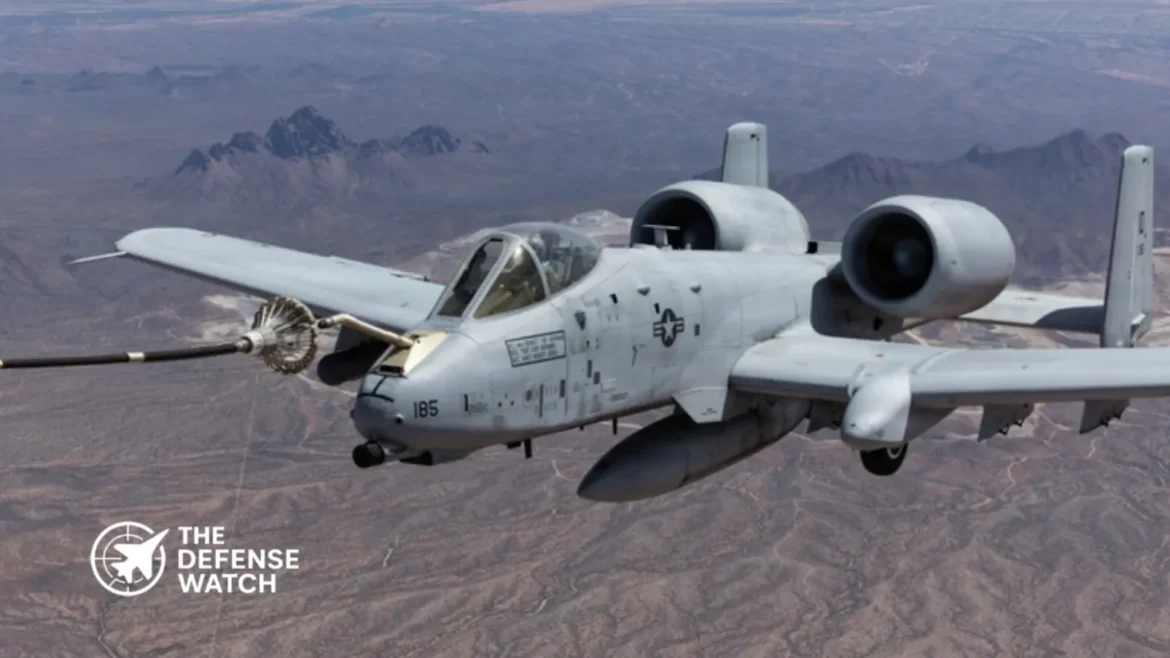
A-10 Warthog Service Extended To 2030
The A-10 Warthog service extended decision marks a major reversal in long-running U.S. Air Force plans to retire the iconic close air support aircraft. Air Force Secretary Troy Meink announced that the A-10 Thunderbolt II fleet will remain in service through 2030, citing the need to preserve combat power while the U.S. defense industrial base increases production of newer aircraft.
- The U.S. Air Force has extended A-10 Warthog service life to 2030.
- The aircraft had previously faced retirement as early as 2026 under earlier plans.
- Officials said the move preserves combat power while aircraft production ramps up.
- A-10 aircraft were recently used in operations linked to the Iran conflict.
- The decision highlights continuing demand for close air support capability.
The move follows renewed operational use of the aircraft during the current Iran conflict, where U.S. Central Command-linked reporting indicated A-10 aircraft were employed in combat missions.
Why The Pentagon Changed Course
For years, the U.S. Air Force argued that the A-10 was aging, costly to maintain, and increasingly vulnerable in highly contested airspace. Service leaders repeatedly sought to retire the aircraft and redirect funding toward newer platforms such as the Lockheed Martin F-35 Lightning II and Boeing F-15EX Eagle II.
But combat realities often shape procurement timelines more than planning documents.
The latest extension suggests the Pentagon still sees value in aircraft that can loiter for long periods, carry heavy ordnance, and provide direct support to ground forces. In lower-to-medium threat environments, the A-10 remains a practical tool even if it is no longer considered ideal for high-end peer conflict.
That distinction matters. The aircraft may not be central to a Pacific war scenario, but it can still be useful in regional conflicts, maritime security operations, convoy protection, and rapid response missions.
Why The A-10 Still Matters
The Fairchild Republic A-10 Thunderbolt II first entered service in the 1970s and was built around its powerful 30mm GAU-8/A cannon. It became famous during the Gulf War and later saw action in Afghanistan, Iraq, and operations against ISIS.
Its strengths remain clear:
- Long loiter time over the battlefield
- Heavy weapons load
- Rugged design and battle damage tolerance
- Strong close air support performance
- Lower operating complexity than some advanced fighters
Critics, however, note that survivability against modern integrated air defense systems remains a serious concern.
Strategic Meaning Behind The 2030 Extension
The extension is also a signal about industrial capacity. U.S. officials specifically tied the move to the need for more combat aircraft production. That implies replacement fleets are not arriving fast enough to fully absorb the A-10 mission set.
In practical terms, Washington appears to be choosing available combat mass over a cleaner retirement schedule.
That is a broader lesson across many air forces today. Legacy aircraft once marked for retirement are staying in service longer because new production, pilot training pipelines, and maintenance transitions take time.
What Comes Next
The A-10 Warthog service extended announcement does not guarantee the aircraft survives beyond 2030. Instead, it likely creates a bridge period while newer aircraft numbers grow and force structure decisions mature.
For now, the Warthog has won another reprieve.
And once again, a combat-tested legacy aircraft has outlasted retirement plans.


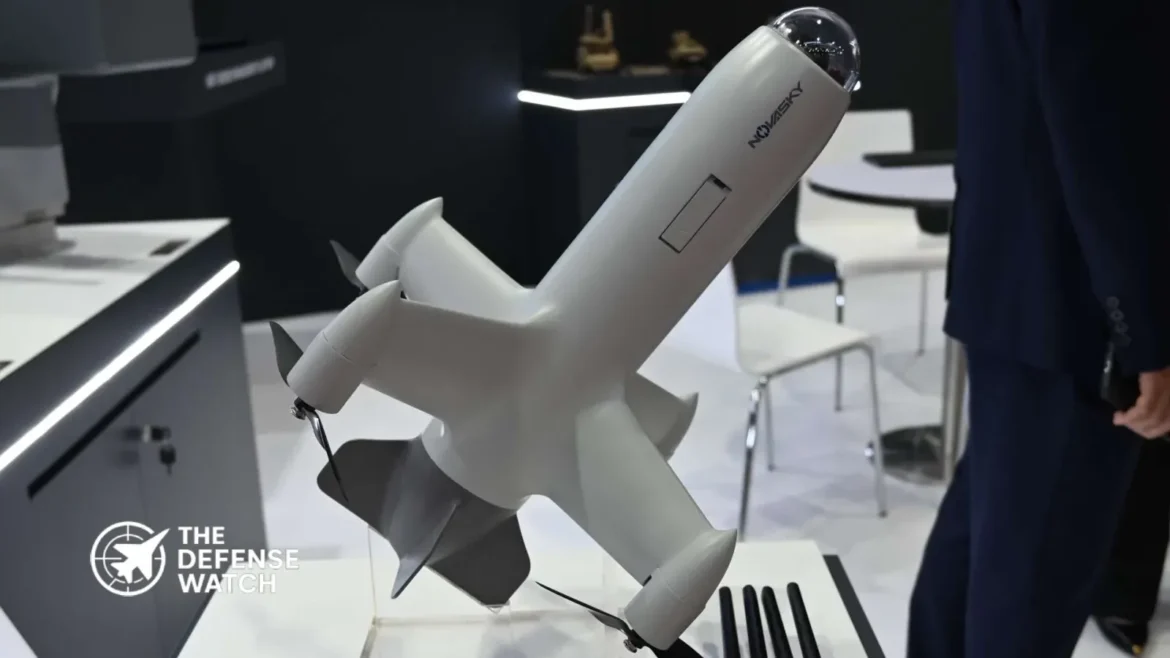
China’s Novasky Unveils KC300 Counter-Drone Interceptor At DSA 2026 To Stop Low-Altitude UAV Threats
China’s Novasky KC300 Kinetic Counter-Drone System Debuts At DSA 2026
At the 2026 Defence Services Asia (DSA) exhibition in Kuala Lumpur, Chinese defense technology company Novasky showcased its KC300 high-speed kinetic counter-drone interceptor, designed to address short-range unmanned aerial vehicle (UAV) threats and one-way loitering munitions. The system’s introduction underscores intensified global focus on layered counter-UAS defenses as low-altitude drone threats proliferate.
- Chinese firm Novasky showcased its KC300 high-speed kinetic counter-drone interceptor at DSA 2026 in Kuala Lumpur, aimed at short-range UAV threats. :contentReference[oaicite:0]{index=0}
- The system uses a four-cell vertical launcher and high-speed kinetic drones to strike hostile UAVs without explosive warheads. :contentReference[oaicite:1]{index=1}
- KC300 interceptors can reach speeds up to roughly 300 kph with a control radius of at least 5 km. :contentReference[oaicite:2]{index=2}
- Kinetic impact rather than explosives aims to reduce collateral risk in perimeter defense missions. :contentReference[oaicite:3]{index=3}
- The system reflects growing demand for layered counter-UAS architectures to defend bases, infrastructure, and urban sites. :contentReference[oaicite:4]{index=4}
The Novasky KC300 combines a four-cell vertical launcher with high-velocity interceptor drones built to physically ram hostile drones, offering a hard-kill option without explosive warheads. This kinetic approach seeks to limit unintended damage in crowded or infrastructure-dense environments.
Short-Range Kinetic Interception For Dense Threat Environments
The KC300 is positioned for point-defense missions around military bases, airports, ammunition depots, and other critical sites where hostile UAVs pose a near-term hazard. Each interceptor drone is reported to reach speeds of up to about 300 kilometers per hour, with an operator control radius of at least 5 kilometers and typical flight paths around 15 kilometers. Endurance is limited, reflecting a design centered on rapid interception rather than sustained patrol.
The system integrates tracking and targeting sensors with high-resolution cameras to capture the position, speed, and trajectory of incoming threats. Once cued, operators can launch the high-speed interceptor drones for final engagement.
This kinetic impact philosophy mirrors broader developments in counter-UAS strategies internationally, where many military planners seek options that complement electronic warfare, radar jamming, and traditional missile interceptors. Attritable interceptors are becoming more common as the cost and volume of small drones rise globally.
Context: The Evolving Counter-UAS Landscape
Low-altitude threats from relatively inexpensive UAVs have driven a shift in how militaries and security forces protect key assets. Missile-based systems and directed energy weapons remain part of this spectrum, but kinetic interceptors like the KC300 target the last kilometer of engagement where quick, decisive action against swarming or wave-based attacks is critical.
Emerging practices in counter-UAS defense increasingly blend sensor fusion, electronic attack, and kinetic options to balance effectiveness and cost. Ukraine’s experience with attritable interceptor drones and layered defenses has influenced this trend, showing the utility of lower-cost physical interceptors against large numbers of cheap drones.
For nations in Southeast Asia and beyond, where urban density and critical infrastructure may elevate collateral risk, pure kinetic interception without explosive payloads offers an appealing alternative to more costly missile interceptors or broadly disruptive jammers.
What This Means For Regional Operators
The appearance of the KC300 at a major regional exhibition reflects both market ambitions by Novasky and the growing demand among defense and security buyers for flexible, cost-conscious counter-drone tools. While the system is positioned mainly for short-range defense, its modular nature and smaller footprint suggest it could integrate into broader defensive architectures alongside radar systems and other counter-UAS technologies.
As military planners continue adjusting to evolving unmanned threats, options like Novasky’s KC300 will be evaluated for their fit in multi-layered airspace defense networks, particularly in Southeast Asia where a mix of territorial, infrastructure, and border security challenges persist.
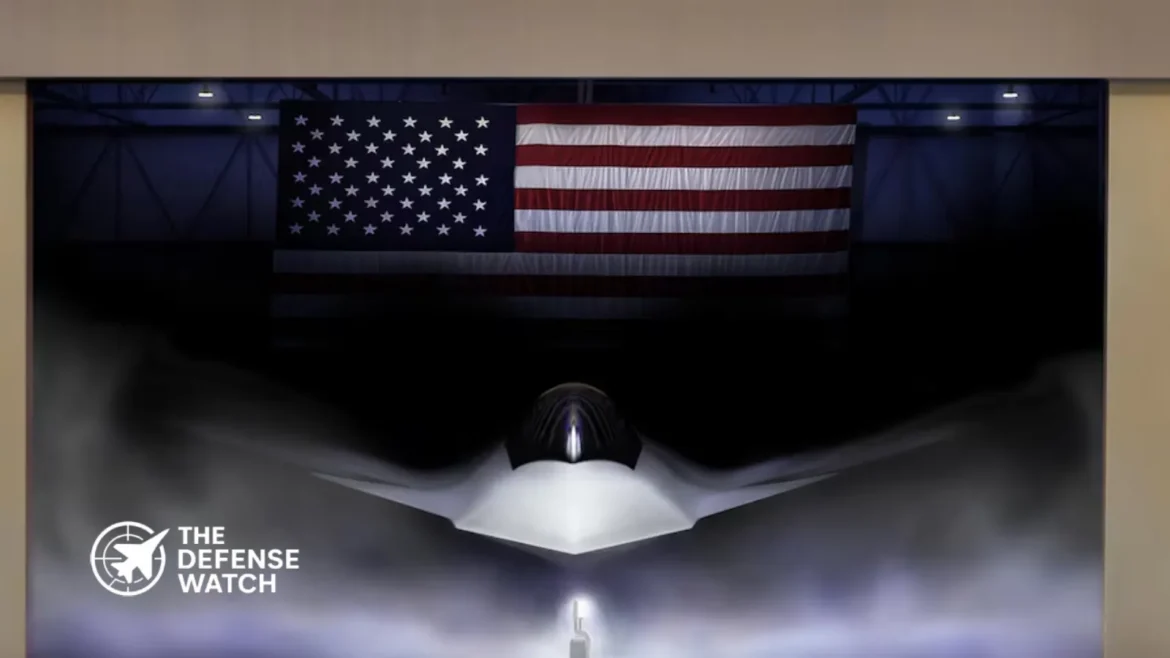
Boeing’s F-47 accelerates under a $4.4B budget while Edgewing consolidates three nations into a unified GCAP design authority — two programs, two strategies, one race for post-F-35 air dominance.
- On March 21, 2025, Boeing was awarded the NGAD Penetrating Combat Aircraft contract worth more than $20 billion, with the aircraft formally designated the F-47 — the first U.S. fighter designation beyond the F-35.
- The USAF FY2026 budget commits approximately $4.4 billion to the F-47 program — $3.5 billion in base funding plus $900 million in reconciliation spending — the largest single-year investment in a U.S. crewed tactical aircraft in over two decades.
- On April 1, 2026, the GCAP Agency awarded a £686 million ($905 million) contract to Edgewing — the tri-national joint venture of BAE Systems, Leonardo, and Japan Aircraft Industrial Enhancement Co. Ltd. (JAIEC) — marking the first unified international contract in the program’s history.
- GCAP Agency CEO Masami Oka confirmed the contract transitions activities “previously conducted under three nations’ contracts” into a single, fully-fledged international program for the first time.
- The F-47 requires a 1,200+ nautical mile unrefueled combat radius — nearly three times the F-22 Raptor’s 410 nm range — driven by the Pacific theater requirement to penetrate China’s A2/AD envelope from Guam or Japan.
- GCAP targets a 2035 operational service date, confirmed by the Japan Ministry of Defense in its FY2026 budget cycle. The F-47 targets service entry before 2029, with first flight estimated at 2028.
- Europe’s rival FCAS program (France, Germany, Spain) has no confirmed prime contractor, no firm first-flight timeline, and a slipping 2040 target date — trailing both NGAD and GCAP by a significant programmatic margin as of April 2026.
2026 Status Check: Two Programs, Two Turning Points
The global sixth-generation fighter competition has reached a decisive inflection point in the first quarter of 2026. Two programs have separated themselves from the field: the United States Air Force’s Next Generation Air Dominance (NGAD) program, now formally designated the Boeing F-47, and the trilateral Global Combat Air Programme (GCAP), operated by the United Kingdom, Italy, and Japan. Both have crossed significant programmatic milestones within weeks of each other — marking what analysts are calling the most consequential month in post-Cold War air power acquisition.
The F-47 Designation and FY2026 Budget Acceleration
On March 21, 2025, the Air Force formally announced that Boeing had won the NGAD Penetrating Combat Aircraft (PCA) competition, designating the aircraft the F-47 — the first new fighter designation beyond the F-35 in the U.S. inventory. The contract was valued at more than $20 billion. Boeing will design and produce a fleet of approximately 185 to 200 aircraft, intended to enter service before the end of this decade.
In the FY2026 budget request submitted to Congress, the Trump administration committed approximately $3.5 billion in base funding plus $900 million in reconciliation spending — a combined $4.4 billion — to accelerate the F-47’s Engineering and Manufacturing Development (EMD) phase. This represents the largest single-year investment in a U.S. crewed tactical aircraft program in at least two decades. The FY2026 National Defense Authorization Act (NDAA) reinforced this commitment, and the One Big Beautiful Bill Act (P.L. 119-21) added a further $400 million specifically to accelerate production timelines.
Complementing the F-47, the Air Force also doubled its investment in Collaborative Combat Aircraft (CCA) — autonomous loyal wingmen — from approximately $494 million in the prior cycle to $807 million in FY2026. The Air Force’s doctrine explicitly defines NGAD as a “family of systems,” with the F-47 serving as the crewed apex node of a broader manned-unmanned teaming architecture.
GCAP: The Edgewing Contract and the Shift to a Unified International Program
On April 1, 2026, the GCAP International Government Organisation (GIGO) awarded a £686 million (approximately $905 million) contract to Edgewing — the UK-headquartered industrial joint venture formed on June 20, 2025, by BAE Systems, Leonardo, and Japan Aircraft Industrial Enhancement Co. Ltd. (JAIEC). Each nation holds an equal 33.3 percent stake. Edgewing serves as the program’s prime contractor and unified design authority for the full service life of the aircraft, expected to extend beyond 2070.
GCAP Agency Chief Executive Masami Oka was unambiguous about the contract’s significance: “This contract is an important moment for GCAP, as activities previously conducted under three nations’ contracts will now be carried out as part of a fully-fledged international program.”
The transition from parallel national efforts into a single unified development framework is precisely the kind of governance consolidation that the FCAS program — the rival European sixth-gen effort — has conspicuously failed to achieve. Major industrial partners beneath the Edgewing prime include Rolls-Royce, Italy’s Avio Aero, and Japan’s IHI on propulsion; MBDA on weapons integration; and a trilateral sensor consortium led by Leonardo UK, Leonardo Italy, ELT, and Mitsubishi Electric.
Technical Comparison: F-47 NGAD vs. GCAP — Where the Programs Diverge
Surface-level comparisons of sixth-generation fighters inevitably focus on specifications that remain classified or unconfirmed. The more analytically useful approach is to examine what each program has chosen to optimize — and why those choices reflect different threat assessments, industrial capabilities, and operational doctrines.
Program Comparison Matrix — April 2026
Attribute F-47 NGAD — United States GCAP — UK / Italy / Japan Program Designation Boeing F-47 (NGAD Penetrating Combat Aircraft) GCAP — developed by Edgewing JV Partner Nations United States (USAF sole operator) UK, Italy, Japan — equal 33.3% each Primary Strategic Focus Long-range stealth penetration + sensor-shooter dominance in A2/AD environments Sovereign air superiority + multi-domain integration beyond US ITAR constraints Engine Technology XA-103 adaptive cycle engine (GE Aerospace/P&W NGAP); variable-cycle for cruise efficiency and combat thrust; advanced thermal management for IR signature reduction Advanced Power and Propulsion program; adaptive cycle demonstrators under Rolls-Royce, IHI, Avio Aero — optimized to support directed-energy system loads Crewing Model Human-in-the-loop crewed fighter; designed to operate with multiple CCA autonomous wingmen per sortie Optionally manned architecture under evaluation; autonomous wingmen integral to Combat Cloud concept Range Priority 1,200+ nm unrefueled combat radius for Pacific theater; large internal payload bay Broadly comparable range requirement; modular payload architecture for multi-role flexibility Target Entry to Service Late 2020s to early 2030s; administration has cited before 2029 aspirationally 2035 — confirmed by Japan MoD and GCAP Agency First Flight (Estimated) 2028 target widely cited; classified demonstrators may have already flown Demonstrator flight testing through late 2020s; prototype first flight targeting early 2030s Industrial Prime Boeing — sole-source, $20B+ contract Edgewing (BAE Systems, Leonardo, JAIEC) — equal national shares Multi-Domain Integration Integrated with JADC2; CCA swarms as distributed sensor-shooters GCAP Combat Cloud: satellites, ships, ground sensors, allied platforms in real-time shared data environment FY2026 Budget Commitment ~$4.4B (base + reconciliation) + $807M CCA £686M ($905M) Edgewing contract; Japan MoD FY2026 allocations separate The Collaborative Combat Aircraft Factor: Sixth-Gen as a System of Systems
The defining architectural shift of the sixth-generation era is the formal abandonment of the platform-centric paradigm. Neither the F-47 nor GCAP is designed primarily as a superior individual aircraft. Both are engineered as command nodes within a distributed, multi-domain kill chain — a concept that fundamentally changes how analysts should evaluate these programs.
F-47 and the Loyal Wingman Doctrine
The USAF’s CCA investment — now at $807 million annually — reflects a doctrine in which each F-47 sortie deploys multiple autonomous wingmen acting as sensor extensions, electronic warfare platforms, or expendable strike assets. The Air Force has publicly stated a goal of purchasing more than 1,000 CCAs — roughly two per F-47 and two per F-35A in the force structure. Current CCA competition entrants include designs from General Atomics and Anduril Industries.
The human pilot in the F-47 retains decision authority — a deliberate design choice in response to rules-of-engagement doctrine around lethal autonomous systems — but tactical workload is increasingly offloaded to AI-managed drone networks. A single F-47 sortie entering a contested environment could simultaneously present multiple radar returns, distribute electronic jamming across a wider aperture, and execute distributed strike options while the crewed aircraft remains at range. This is the operational logic that justifies the F-47’s projected unit cost — estimated at several hundred million dollars per airframe — as an acceptable premium for a low-density, high-demand platform that rarely needs to be placed at direct risk.
GCAP and the Combat Cloud Concept
GCAP’s equivalent architecture is the Combat Cloud — a networked operational environment linking the crewed fighter to satellites, surface ships, ground-based sensors, and allied aircraft in a persistent, real-time shared data environment. Where the USAF’s CCA concept emphasizes organic drone wingmen under direct pilot supervision, GCAP’s Combat Cloud is designed for interoperability across a broader joint and coalition force.
Japan’s Self-Defense Force will operate GCAP in an environment where it routinely integrates with U.S. Navy surface combatants, Aegis-capable destroyers, and E-2D Hawkeye airborne early-warning aircraft. The Combat Cloud architecture is therefore designed for seamless multi-domain integration across allied platforms — not merely within a single air wing. The trilateral sensor consortium of Leonardo, ELT, and Mitsubishi Electric is specifically tasked with ensuring GCAP’s data links remain interoperable with NATO and U.S. joint force architecture, while maintaining ITAR-independent design pathways for sovereign industrial capability.
Geopolitical and Industrial Context: Why Both Programs Matter in 2026
The Pacific Theater and the 1,200 Nautical Mile Benchmark
The F-47’s strategic rationale is anchored almost entirely in the Pacific theater and the requirement to operate within China’s expanding Anti-Access/Area-Denial (A2/AD) envelope. The PLA Air Force and Rocket Force have invested heavily in long-range surface-to-air missile systems, over-the-horizon radar networks, and anti-satellite capabilities specifically designed to deny U.S. air power the sanctuary from which it currently operates.
The USAF planning requirement for the F-47 centers on a 1,200+ nautical mile unrefueled combat radius — sufficient to reach targets deep inside Chinese-controlled airspace from bases in Guam or Japan without relying on forward bases vulnerable to ballistic missile strikes. For context, the F-22 Raptor — which the F-47 is designed to replace — has an unrefueled combat radius of approximately 410 nautical miles. The generational leap in required range reflects the honest operational assessment within Air Force planning circles that the threat environment of 2030 will look nothing like the one for which the F-22 was optimized.
Adaptive engine technology — specifically the XA-103 and its program siblings from GE Aerospace and Pratt & Whitney — is the enabling technology for this range requirement. Adaptive cycle engines dynamically reconfigure their thermodynamic cycle, providing maximum thrust for supersonic sprint or combat maneuvering while reverting to a highly fuel-efficient cruise mode for long transit legs. The thermal management benefits also reduce infrared signature — a vulnerability highlighted by recent operational experience in the Gulf region, where fourth-generation aircraft faced heat-seeking missile threats in contested airspace.
GCAP and Sovereign Capability: The ITAR Calculus
For the United Kingdom, Italy, and Japan, GCAP carries a strategic dimension that transcends the aircraft’s technical specifications. All three nations currently operate the F-35, a platform whose entire support chain — software updates, sensor packages, and certain maintenance activities — runs through ITAR-controlled U.S. systems. While manageable in peacetime, this dependency creates real operational constraints in scenarios where U.S. and partner-nation interests may diverge, or where operational tempo demands immediate capability changes that cannot wait for U.S. government approval cycles.
GCAP is explicitly designed to give its three partner nations a sovereign 6th-generation combat air capability that operates outside the ITAR constraint. Design authority resides with Edgewing, headquartered in the UK. Mission system architecture is developed by the trilateral sensor consortium. Weapons integration is managed by MBDA — a European firm. This is not an accident; it is the foundational industrial-policy rationale for why Japan, despite its deep alliance with the United States, chose GCAP over a U.S.-led program. Tokyo’s defense industrial strategy demands domestic content, sovereign sustainment capability, and technology transfer that the classified, sole-source F-47 program cannot provide.
Canada’s decision to join GCAP as an informal observer in March 2026 — with a formal announcement anticipated by June 2026 — further validates the program’s expanding geopolitical footprint. Germany’s reported February 2026 examination of GCAP as a fallback to the troubled FCAS program is another indicator of its credibility as the most viable non-U.S. sixth-generation option in the Western alliance.
FCAS in 2026: A Cautionary Contrast
The Future Combat Air System (FCAS) — the Franco-German-Spanish sixth-generation program — remains a relevant reference point precisely because its difficulties illustrate what GCAP and NGAD have managed to avoid. As of early 2026, FCAS has not selected an industrial prime contractor, does not have a firm first-flight timeline, and continues to navigate deep structural disagreements between Dassault Aviation and Airbus Defence and Space over work-share, intellectual property control, and system architecture authority.
Germany missed its end-of-2025 decision milestone without resolution, and reporting in February 2026 indicated Berlin was actively examining GCAP membership as a fallback. France has signaled continued commitment, but the program’s 2040 target date — already five years behind GCAP’s 2035 goal — has slipped further in credibility with each missed governance milestone. For defense analysts evaluating the Western sixth-generation landscape in 2026, FCAS occupies the cautionary position: a technically ambitious program whose governance architecture has proven unable to match its industrial ambition.
Key Question: Which Sixth-Gen Fighter Will Fly First?
This question requires separating two distinct metrics: first flight of a prototype and first operational deployment.
F-47 — Leading in Flight Testing Maturity
The F-47 is almost certainly ahead in flight testing. The USAF’s classified X-plane demonstration program produced prototype aircraft that have been flying at classified facilities for several years. When former Air Force Secretary Frank Kendall noted that “X-planes had been built and were successful” prior to the NGAD PCA competition, he confirmed that subsystem and configuration flight testing had already occurred. The F-47’s formal EMD first flight is publicly estimated at 2028 — though it is plausible that demonstrator variants have already exceeded this milestone under classification. The administration’s stated aspiration to field the F-47 before 2029 and the $4.4 billion FY2026 investment are explicitly structured to compress the traditional EMD timeline.
GCAP — Leading in International Industrial Consolidation
GCAP’s measurable lead is not in flight hardware but in governance and industrial architecture. The April 2026 Edgewing contract represents the kind of organizational consolidation — a single prime contractor with unified design authority, a co-located program office in Reading, and equal-share tri-national industrial structure — that FCAS has attempted for years without success. Engine demonstrator activity under the trilateral propulsion consortium is planned through the late 2020s, with prototype first flight targeting the early 2030s. The 2035 operational target, reaffirmed by Japan’s Ministry of Defense in its FY2026 budget cycle, remains credible.
The bottom line: the F-47 leads in flight testing maturity and production timeline ambition. GCAP leads in international industrial consolidation, governance robustness, and the ability to sustain program coherence across three sovereign governments with different procurement calendars and defense budgets. Whether either achieves its target decade will depend less on engineering and more on budget continuity across administration changes in Washington, Westminster, Rome, and Tokyo.
Analytical Conclusion: Complementary Programs, Not Competitors
A recurring misconception in sixth-generation analysis is that GCAP and the F-47 are competing programs. They are not. The F-47 is a U.S. sovereign capability optimized for the Pacific theater and USAF doctrine. GCAP is a trilateral sovereign capability optimized for post-ITAR independence, allied interoperability, and the specific political economies of UK, Italian, and Japanese defense industrial policy.
What makes 2026 analytically significant is that both programs have simultaneously reached the point of irreversibility. The F-47’s $20 billion-plus Boeing contract and $4.4 billion FY2026 budget commitment make program cancellation politically and industrially catastrophic. The Edgewing contract and unified GCAP governance structure make a similar reversal unthinkable for three allied governments that have invested years of political capital in the program’s architecture.
For U.S. defense analysts, the operational question is straightforward: the F-47 and its CCA ecosystem will define USAF air dominance doctrine through the 2040s. For analysts in London, Rome, and Tokyo, the April 2026 Edgewing contract marks the moment GCAP became real — not as a concept or political commitment, but as a funded, governed, internationally integrated program with a named contractor, a named CEO, and a named deadline.
Both programs represent the correct strategic answer to the same question: how does a first-tier air power maintain dominance in a world where F-35-generation stealth is no longer sufficient? The fact that they have chosen different architectures, different industrial models, and different timelines is not a weakness. It is the resilience of an alliance that retains multiple paths to the same objective.

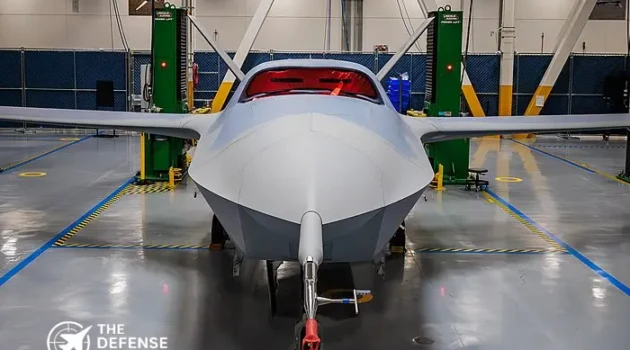
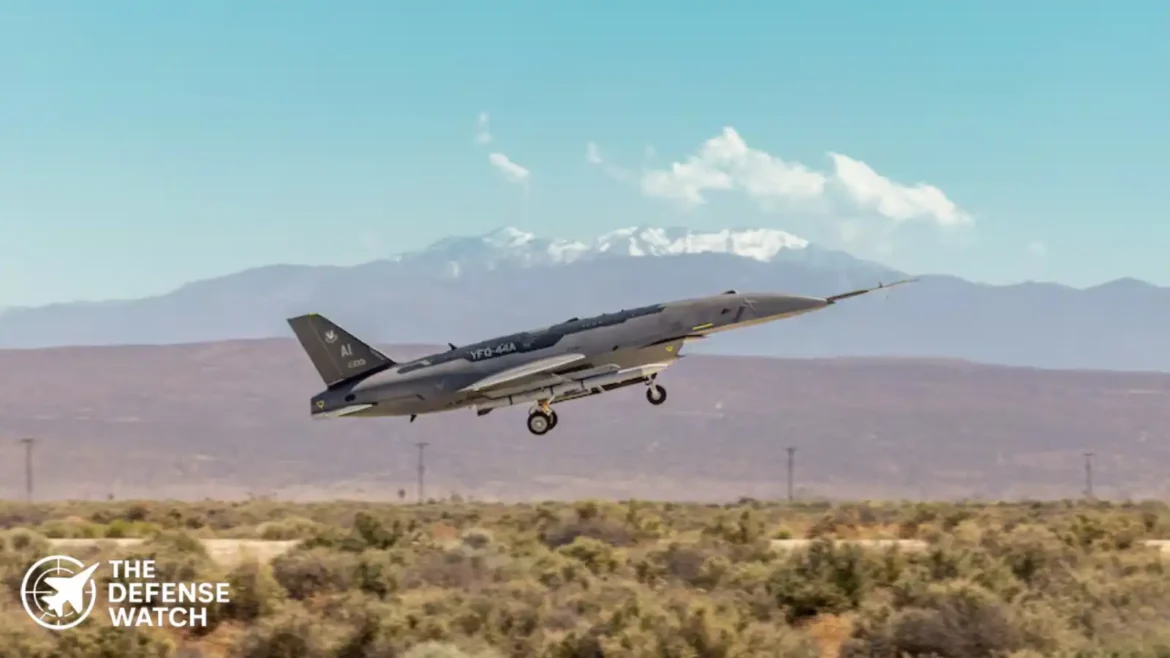
Anduril YFQ-44A Combat Drone Production Timeline: What We Know and What’s at Stake
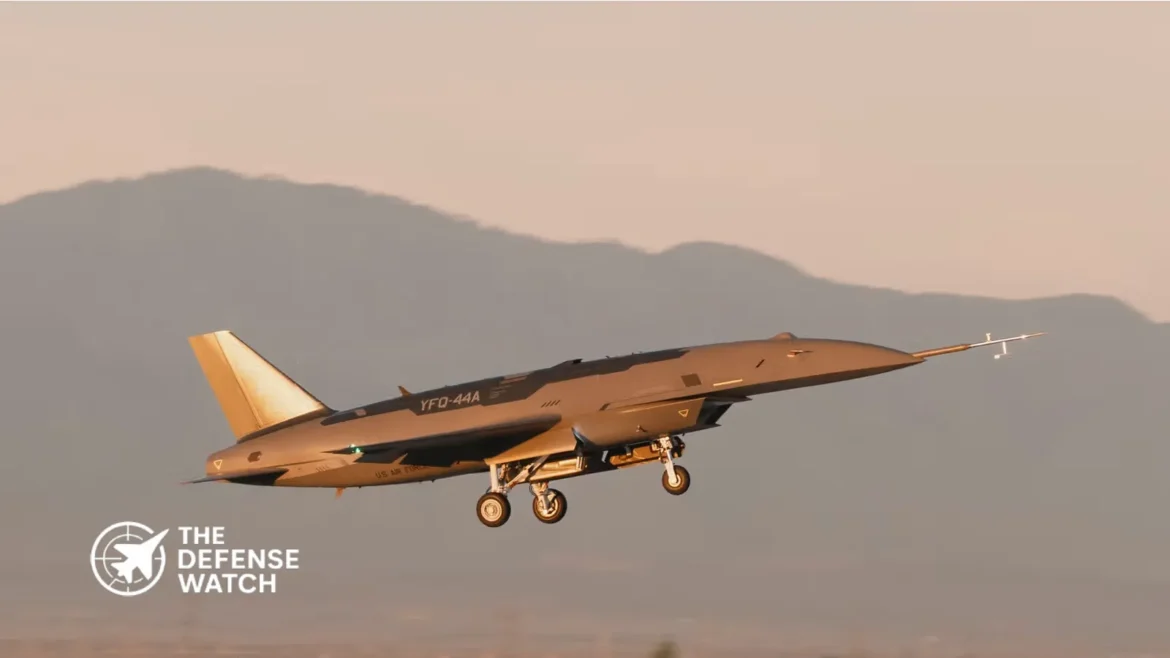
The United States Air Force’s push to field autonomous combat aircraft has entered its most consequential phase, with Anduril Industries’ YFQ-44A combat drone production timeline now drawing intense scrutiny from defense planners, industry analysts, and rival powers alike. Selected as a finalist for the Air Force’s landmark Collaborative Combat Aircraft (CCA) program in early 2025, Anduril is racing to transform a bold concept — an AI-driven unmanned wingman — into a deployable weapons system capable of operating in contested airspace against near-peer adversaries.
▌ KEY FACTS AT A GLANCE- Anduril Industries was selected by the U.S. Air Force in March 2025 as one of two contractors for the Collaborative Combat Aircraft (CCA) program, alongside General Atomics.
- Anduril’s entry is designated the YFQ-44A — a combat-capable autonomous drone designed to fly alongside crewed fighters such as the F-35 and F-22.
- The Air Force aims to field an initial CCA operational capability by the late 2020s, with full-rate production targeted in the early 2030s.
- The YFQ-44A is powered by Anduril’s Lattice AI autonomy platform, enabling real-time mission adaptation without continuous human input.
- The Pentagon has signaled intent to procure over 1,000 CCAs across both contractors, making this one of the largest unmanned combat aircraft programs in U.S. history.
This is no incremental upgrade to existing drone technology. The YFQ-44A represents a generational shift in how the United States intends to fight and win in the skies over the Pacific and beyond.
What Is the YFQ-44A? Understanding Anduril’s Autonomous Wingman
The YFQ-44A is Anduril’s candidate aircraft for the Air Force’s CCA Increment 1 program — a competition designed to develop low-cost, attritable autonomous aircraft that can accompany crewed fighters into high-threat environments. The “Y” prefix in its designation denotes a prototype development stage, while “FQ” indicates an unmanned fighter category — a designation class that did not exist in official U.S. military nomenclature until recently, underscoring just how new this entire domain is.
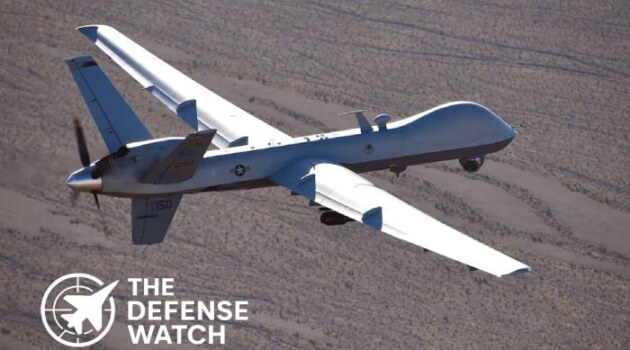
Unlike legacy remotely piloted aircraft such as the MQ-9 Reaper, which require continuous human control from a ground station, the YFQ-44A is designed for autonomous mission execution. It runs on Anduril’s proprietary Lattice AI operating system — the same platform that underpins the company’s Fury unmanned aircraft and its integrated defense network solutions. Lattice allows the YFQ-44A to process sensor data, identify threats, and execute tactical maneuvers without waiting for a human command input on every action.
The aircraft is intended to be affordable and producible at scale — a deliberate design philosophy in direct contrast to the eye-watering per-unit costs of the F-35. Pentagon planners have made clear they want a drone that can be purchased in the hundreds or thousands, accepting some degree of mission loss rather than designing an irreplaceable platform.
The CCA Program: How the YFQ-44A Fits the Bigger Picture
The Collaborative Combat Aircraft program is the Air Force’s answer to a strategic problem that has been building for years: the United States simply cannot afford — in time, money, or industrial capacity — to replace every aging crewed fighter with a next-generation manned platform fast enough to meet the pace of China’s military modernization.
In March 2025, the Air Force awarded CCA Increment 1 development contracts to Anduril Industries and General Atomics, selecting them over competing proposals from Boeing and Lockheed Martin in a decision that sent shockwaves through the traditional defense industrial base. General Atomics’ entry carries the designation YFQ-42A, making the two programs direct competitors for what could become a combined procurement of over 1,000 aircraft.
The Air Force’s decision to go with Anduril — a defense technology startup founded in 2017 — over legacy primes was a deliberate signal that the Pentagon is willing to restructure how it buys advanced weapons systems. Anduril’s ability to move faster and iterate software more rapidly than traditional contractors appears to have been a decisive factor.
The broader CCA vision calls for these autonomous wingmen to perform a range of missions including electronic warfare support, ISR (intelligence, surveillance, and reconnaissance), weapons carriage and release, and aerial attrition in contested environments — essentially acting as force multipliers for crewed aircraft like the F-35A and the next-generation F-47.
YFQ-44A Production Timeline: Key Milestones
While the Air Force and Anduril have not published a fully detailed, public production schedule, information gathered from Congressional testimony, industry briefings, and defense reporting allows for a reasonable reconstruction of the program’s trajectory.
2024–2025: Competitive Development Phase
Anduril conducted extensive ground testing and early flight evaluations of its CCA design during this period. The company’s Costa Mesa, California headquarters and its manufacturing facilities served as the nerve center for rapid prototyping. The contract award in March 2025 formalized what had been an aggressive development push, locking in Anduril as one of two official CCA developers.
2025–2027: Prototype Refinement and Operational Testing
Following the contract award, Anduril entered a phase of intensive prototype refinement. This includes integration testing with Air Force operational systems, Lattice AI software maturation, and early evaluations by Air Combat Command. Developmental testing flights are expected to occur at Edwards Air Force Base, California — the traditional home of U.S. flight test operations — as well as classified test ranges in the Nevada desert.
The Air Force is expected to conduct a Milestone B decision during this window, which formally authorizes entry into Engineering and Manufacturing Development (EMD) — a critical program gate that unlocks significant additional funding and production preparation activities.
2027–2029: Low-Rate Initial Production (LRIP)
If the program proceeds on schedule, Low-Rate Initial Production of the YFQ-44A could begin as early as 2027 to 2028. LRIP units will be used for operational testing with operational units, allowing pilots and mission commanders to develop the tactics, techniques, and procedures (TTPs) needed to integrate autonomous wingmen into actual combat formations. Early LRIP deliveries may go to Air Force test and evaluation units before transitioning to frontline squadrons.
Late 2020s to Early 2030s: Initial Operating Capability (IOC)
The Air Force has publicly signaled a desire to achieve Initial Operating Capability for the CCA program by the late 2020s, though official milestone dates have not been disclosed for classification reasons. IOC would mean at least one operational unit is equipped, trained, and certified to deploy the YFQ-44A in a combat scenario. Full-Rate Production, which would enable the large-scale fleet numbers Pentagon planners envision, is broadly projected for the early 2030s.
Anduril’s Industrial Strategy: Can It Deliver at Scale?
One of the most important — and underreported — dimensions of the YFQ-44A story is whether Anduril possesses the industrial infrastructure to actually manufacture these aircraft at the volumes the Air Force requires. Building a handful of prototypes in a modern machine shop is a very different challenge from standing up a production line capable of producing hundreds of combat aircraft per year.
Anduril has been investing heavily in manufacturing capacity. The company announced plans for a large-scale Arsenal facility in Columbus, Ohio — a purpose-built manufacturing campus intended to produce autonomous systems at volume. The Arsenal concept is central to Anduril’s pitch to the Pentagon: that it can deliver not just innovative technology, but the production capacity to back it up at wartime scale.
This industrial positioning matters enormously given the stated lessons from the war in Ukraine, where attrition rates for unmanned systems have been extraordinarily high. A combat drone that costs tens of millions of dollars and takes years to manufacture offers far less strategic value than one that can be built quickly, cheaply, and in quantity.
Strategic Analysis: Why the YFQ-44A Timeline Is Being Watched Globally
The pace at which Anduril brings the YFQ-44A to operational status carries implications well beyond U.S. Air Force force structure planning.
China’s People’s Liberation Army Air Force is actively developing its own loyal wingman concepts, most notably the GJ-11 stealth unmanned combat aerial vehicle. Beijing has demonstrated a consistent ability to move from development to deployment with disconcerting speed. If the YFQ-44A program encounters significant delays — a realistic risk given the technical and programmatic complexity of what is being attempted — the U.S. risks ceding an early mover advantage in autonomous air combat that may be difficult to recover.
There is also a deterrence value to a credible production timeline. An adversary that believes the United States will field 1,000+ autonomous combat aircraft within a defined window must factor that capability into its own strategic calculations today, not merely when the aircraft arrive at Kadena or Andersen Air Force Base. This means Anduril’s ability to demonstrate credible progress — through test flights, production contracts, and Congressional briefings — carries real geopolitical weight.
The YFQ-44A program also sets a precedent for how defense acquisition will function in the coming decade. If a seven-year-old startup can win and execute a major combat aircraft program, it validates a model of defense procurement built around speed, software-first design, and commercial manufacturing methods — a model that stands in sharp contrast to the cost-plus contracting structures that produced the F-35 at roughly $80 million per unit.
The Road Ahead
The Anduril YFQ-44A combat drone production timeline remains a closely held program, but the strategic logic driving it is unmistakable. The United States Air Force has concluded that future high-end conflict — particularly in the Pacific — will demand more combat aircraft than the nation can afford to build in the traditional manned fighter model. Autonomous wingmen, available in large numbers, flying into contested environments where human pilots cannot reasonably be sent, are no longer a speculative concept. They are a procurement priority.
Whether Anduril can execute — delivering a mature, producible, combat-ready aircraft on the timeline the Air Force needs — is the central question facing the program. The answer will significantly shape American airpower through the 2030s and beyond.
FAQs
What is the Anduril YFQ-44A?The YFQ-44A is Anduril Industries’ prototype autonomous combat drone developed for the U.S. Air Force’s Collaborative Combat Aircraft (CCA) program. It is designed to fly alongside crewed fighters as an AI-driven unmanned wingman.
When will the YFQ-44A enter service?The Air Force is targeting Initial Operating Capability for the CCA program by the late 2020s, with full-rate production expected in the early 2030s, though official milestone dates remain classified.
How does the YFQ-44A differ from the YFQ-42A?The YFQ-42A is General Atomics’ competing CCA entry. Both aircraft are developing under parallel Air Force contracts. The Air Force may ultimately select one or both for production based on performance and cost.
What AI system powers the YFQ-44A?The YFQ-44A operates on Anduril’s Lattice AI platform, which enables autonomous mission execution, real-time threat processing, and adaptive tactical decision-making.
How many CCAs does the Air Force plan to buy?Pentagon officials have indicated a desire to procure over 1,000 Collaborative Combat Aircraft across the program, though final procurement numbers will be subject to Congressional authorization and appropriations.
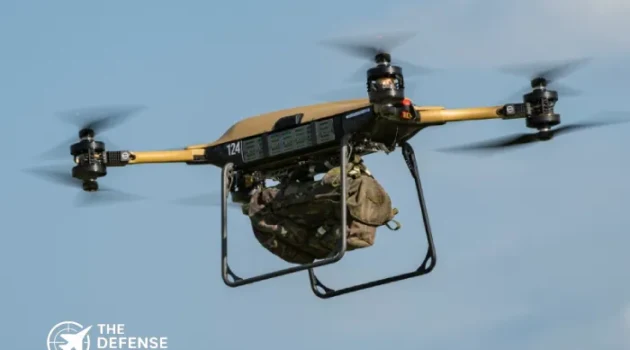
Royal Marines T-150 Drone Marks New Arctic Capability Step
The Royal Marines T-150 drone has completed operational activity in the Arctic, marking a notable step in British efforts to integrate uncrewed systems into cold-weather expeditionary missions. According to BAE Systems, the T-150 uncrewed air system supported Royal Marines activity in extreme northern conditions, demonstrating its ability to operate where terrain, weather, and distance often slow traditional resupply methods.
¦ KEY FACTS AT A GLANCE- Royal Marines used the T-150 uncrewed air system during Arctic operations.
- The drone can support cargo delivery, reconnaissance, and resupply missions.
- Arctic deployment reflects growing NATO focus on northern security routes.
- Trials were conducted in extreme cold conditions that challenge conventional systems.
- Small autonomous aircraft may reduce risk to troops in remote environments.
The development matters because Arctic operations place unique stress on manned aircraft, vehicles, and troops. Reliable autonomous systems can help close those gaps.
The Big Picture
Arctic security has moved sharply up the defense agenda for NATO members. Melting sea routes, increased military activity, and growing competition over northern access corridors have pushed nations such as the United Kingdom, United States, Norway, and Canada to strengthen high-latitude readiness.
For the UK, the Royal Marines play a central role in cold-weather warfare. They regularly train in Norway and are expected to provide rapid-response forces for northern flank contingencies. Integrating drones such as the T-150 aligns with a broader trend across allied militaries, using autonomous platforms for reconnaissance, logistics, and force protection.
What’s Happening
BAE Systems said the Royal Marines employed the T-150 during Arctic activity, making history for the platform in the region. The aircraft is an uncrewed air system designed for demanding missions including cargo movement and surveillance.
The Arctic creates serious operating barriers. Snow cover limits mobility, mountainous terrain complicates line-of-sight movement, and severe cold can degrade batteries, sensors, and mechanical systems. A successful trial in those conditions is more meaningful than a standard temperate-climate demonstration.
Why It Matters
Military logistics often determine whether forces can sustain operations. In remote Arctic zones, even short movements can take hours or days. A drone capable of moving supplies directly to dispersed troops can shorten timelines and reduce exposure.
That has several advantages:
- Fewer personnel exposed on hazardous ground routes
- Faster movement of medical stores, batteries, and ammunition
- Better support for small forward teams
- Lower burden on helicopters reserved for higher-priority missions
The Royal Marines T-150 drone therefore represents more than a technology test. It points toward a new operating model for distributed forces.
Strategic Implications
Britain’s northern defense role has grown since NATO renewed focus on deterrence in Europe. The High North links the North Atlantic, GIUK gap, and access routes between North America and Europe.
Any platform that improves persistence and mobility in that region strengthens alliance readiness. Small drones cannot replace large transport aircraft or helicopters, but they can fill the tactical layer between backpack carriage and manned aviation.
That middle tier is often where shortages appear during real operations.
Competitor View
Russia has long treated the Arctic as a strategic military zone, with air bases, missile coverage, and maritime presence across its northern territories. Western adoption of resilient logistics drones may be viewed as part of a broader NATO effort to sustain forces closer to contested northern areas.
China, while not an Arctic state, has shown growing commercial and strategic interest in polar shipping lanes and research access. NATO members are likely to interpret autonomous cold-weather systems as necessary preparation for future competition rather than niche experimentation.
What To Watch Next
Several indicators will show whether the T-150 moves beyond trials:
- Expanded Royal Marines field exercises using the system
- Integration with British Army or joint logistics units
- Maritime launch and recovery testing
- Secure data-link upgrades for contested environments
- Procurement decisions for wider fleet adoption
If the platform proves dependable across repeated deployments, it could become part of standard expeditionary force packages.
Capability Gap
Western militaries often possess advanced strike systems but still struggle with last-mile resupply in difficult terrain. The Royal Marines T-150 drone appears aimed directly at that weakness.
However, limitations remain realistic and important:
- Payload is smaller than helicopters or vehicles
- Weather can still restrict flight windows
- Electronic warfare threats may disrupt control links
- Batteries and maintenance remain critical in cold climates
Even so, those constraints do not remove its utility. They define where it should be used.
The Bottom Line
The Royal Marines T-150 drone shows how small autonomous aircraft can solve real battlefield logistics problems in one of the world’s most demanding theaters.
U.S. Air Force Completes Operational Testing Of Anduril’s YFQ-44A Autonomous Drone Wingman
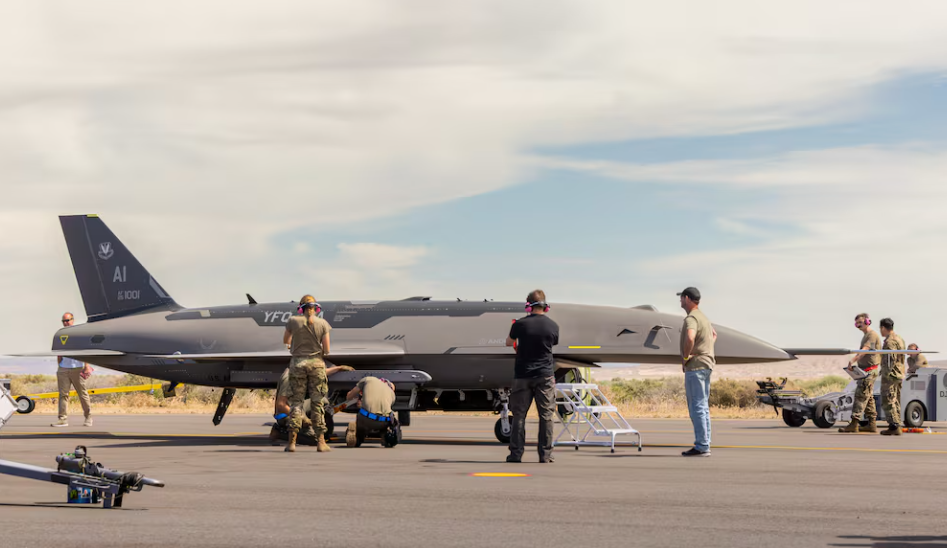
The U.S. Air Force has completed a significant operational test of Anduril’s YFQ-44A Fury — a semiautonomous, jet-powered Collaborative Combat Aircraft (CCA) — marking one of the most concrete demonstrations yet of the service’s push toward autonomous warfighting capabilities.
The Air Force’s Experimental Operations Unit (EOU), working alongside Air Force Materiel Command’s 412th Test Wing, conducted the exercise at Edwards Air Force Base, California, during the week of April 14, 2026. The test was confirmed in an official Air Force release on April 17 and corroborated by Anduril Vice President of Autonomous Airpower Mark Shushnar via social media.
¦ KEY FACTS AT A GLANCE- The U.S. Air Force’s Experimental Operations Unit conducted live sorties with Anduril’s YFQ-44A Fury semiautonomous combat drone at Edwards Air Force Base, California, in mid-April 2026.
- Operators used a ruggedized laptop — eliminating the need for fixed base infrastructure — to upload mission plans, initiate autonomous taxi and takeoff, and manage in-flight tasking.
- The YFQ-44A requires no traditional stick-and-throttle operator; the aircraft operates semiautonomously once mission parameters are uploaded.
- A small crew of EOU maintainers — with only a couple days of training — turned the aircraft between multiple sorties, demonstrating rapid-deployment potential.
- The Air Force has stated a goal of fielding a fleet of at least 1,000 Collaborative Combat Aircraft for strike, operational, and manned-unmanned teaming missions.
The exercise is more than a routine test flight. It represents a deliberate strategic and doctrinal shift in how the U.S. military intends to fight and sustain air combat operations in future high-threat environments.
No Stick. No Throttle. No Fixed Base Required.
Perhaps the most operationally significant aspect of the test was how it was executed: entirely without a traditional remote pilot.
“There is no operator with a stick and throttle flying the aircraft behind the scenes,” Jason Levin, Anduril’s Senior Vice President of Engineering for Air Dominance and Strike, stated in an October 2025 company release. That philosophy was put into practice at Edwards AFB.
EOU operators used a ruggedized laptop to upload mission plans, initiate autonomous taxi and takeoff, assign in-flight tasks to the aircraft, and handle post-flight data collection. The portable command setup eliminates the need for the large, established infrastructure that has historically anchored unmanned operations to fixed bases — a critical advantage if the United States ever faces a peer adversary capable of striking forward installations.
The implications are significant. A force that can launch, operate, and recover semiautonomous combat aircraft from austere or expeditionary environments dramatically changes the calculus for contested airspace operations against adversaries such as China or a reconstituted regional power.
Small Crew, Fast Turnaround
Another element of the test that drew attention was the YFQ-44A’s ease of maintenance and rapid turnaround between sorties.
Shushnar noted that a handful of EOU maintainers, with only a few days of training, successfully turned the aircraft between sorties — a notable contrast to the complex, crew-intensive logistics traditionally associated with unmanned combat aircraft.
The YFQ-44A Fury was specifically designed for low logistics burden. This quality is central to the Air Force’s vision of deploying CCAs in large numbers across distributed, potentially austere locations in the Pacific theater or other contested regions where traditional air support chains may be degraded or disrupted.
What Is The Collaborative Combat Aircraft Program?
The CCA program is one of the Air Force’s highest-priority modernization efforts. Conceived as a drone wingman concept, CCAs are intended to fly alongside crewed fighters — including the F-22, F-35, and the newly revealed F-47 — to extend their reach, absorb risk, and multiply combat mass without placing additional human pilots in harm’s way.
The Air Force announced in April 2024 that Anduril Industries and General Atomics had each been selected to develop competing CCA designs under the program’s initial increment. Anduril began flight testing its YFQ-44A in October 2025 and moved into production announcements in March 2026. General Atomics, competing with its own design, began ground testing in May 2025.
The service has stated a long-term objective of fielding at least 1,000 CCAs. These aircraft are envisioned to serve in a range of roles: conducting strike missions autonomously, executing suppression of enemy air defenses, carrying electronic warfare payloads, and flying in coordinated formations with manned aircraft.
However, the Air Force has indicated it may ultimately select only one of the two competing designs for the full production phase. That decision is expected sometime in 2026.
A New Acquisition Model: Operators First
Beyond the technology itself, the April exercise reflected a broader cultural and institutional shift in how the Air Force is approaching acquisition.
Col. Timothy Helfrich, Portfolio Acquisition Executive for Fighters and Advanced Aircraft, stated in the official release that embedding operators with acquisition professionals creates “a tight feedback loop that lets us trade operational risk with acquisition risk in real-time.”

This approach — termed the Warfighting Acquisition System — places front-line operators at the center of the development and testing process rather than treating them as end-users who receive a finished product. The EOU was designed precisely for this role: to inject warfighter feedback into programs while they are still actively being developed and refined.
By executing the entire exercise — from pre-flight checks and weapons loading to autonomous flight tasking and post-flight data review — EOU airmen effectively stress-tested both the aircraft and the operational doctrine surrounding it simultaneously. This compressed feedback loop is intended to accelerate the pace at which capable systems reach operational units.
Strategic Context: Autonomous Airpower And The Pacing Threat
The timing of these tests is not incidental. The United States Air Force is under sustained pressure to modernize faster, particularly in light of China’s rapid fielding of advanced combat aircraft and its own investments in unmanned systems.
The People’s Liberation Army Air Force has significantly expanded its inventory of advanced fighters and is actively developing its own loyal wingman and unmanned combat air vehicle programs. In this environment, the Air Force’s ability to field a large, affordable, expendable combat mass — represented by platforms like the YFQ-44A — is seen as a strategic hedge against a numerically and geographically challenging adversary.
CCAs are not intended to replace manned fighters. Rather, they serve as force multipliers: expanding the sensor coverage, strike range, and survivability of crewed aircraft while absorbing attrition that would otherwise reduce the irreplaceable human talent within the force.
What Comes Next
With sorties now under the EOU’s belt, the Air Force is expected to accelerate the CCA development timeline. The service’s decision on which company — Anduril or General Atomics — advances to the production phase remains the central near-term milestone.
Anduril’s March 2026 production announcement and the recent operational testing give the company visible momentum. However, General Atomics’ experience with platforms such as the MQ-9 Reaper and its established Air Force relationships make any outcome competitive.
The broader Collaborative Combat Aircraft program, meanwhile, is being closely watched by allied nations. Australia has expressed interest in similar autonomous wingman concepts through its own Loyal Wingman program — now known as the MQ-28 Ghost Bat — developed with Boeing. The U.S. Air Force’s CCA advances may further shape interoperability requirements with key Indo-Pacific partners.
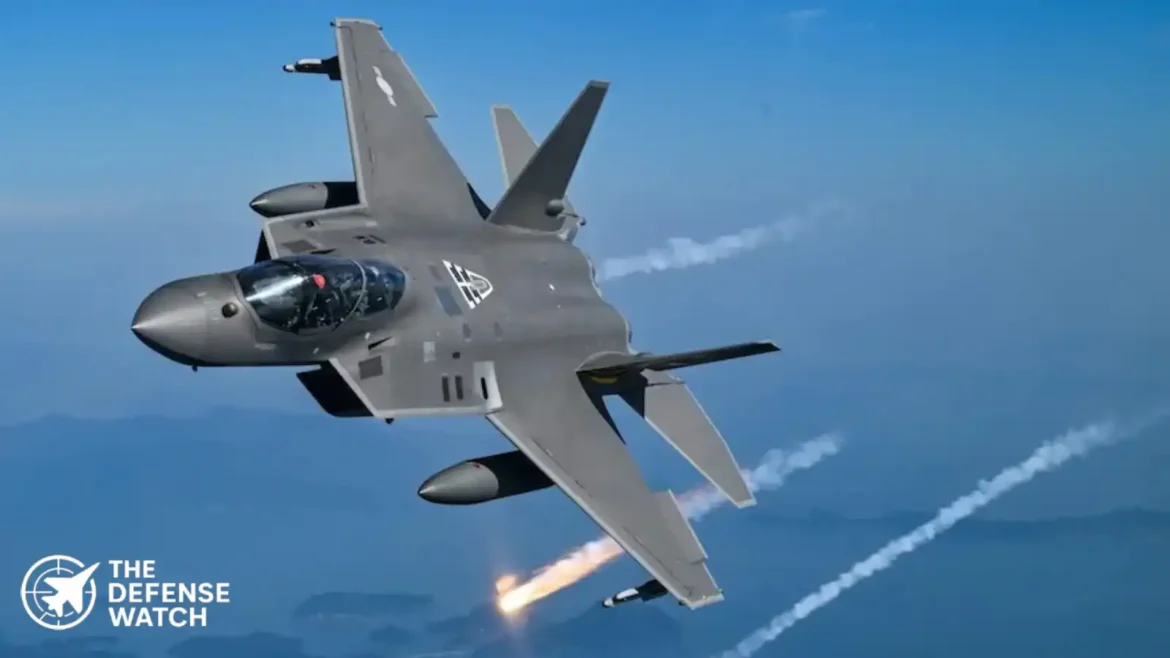
KF-21 Boramae Reaches First Production Flight Milestone
The KF-21 Boramae has entered a critical new phase after the first production aircraft successfully completed its maiden flight in South Korea, according to reporting by Defence Industry Europe citing program developments from Korea Aerospace Industries (KAI).
The successful test marks the transition from prototype development into serial production, one of the most important steps for any modern fighter aircraft program. It also signals that South Korea remains on track to begin delivering the new combat jet to the Republic of Korea Air Force later this year.
¦ KEY FACTS AT A GLANCE- First KF-21 Boramae production aircraft completed its maiden flight in South Korea.
- The milestone comes ahead of initial deliveries scheduled later in 2026.
- KF-21 is being developed by Korea Aerospace Industries for the Republic of Korea Air Force.
- The aircraft is intended to replace older F-4 and F-5 fighter fleets.
- The program supports South Korea’s drive for greater defense self-reliance and export growth.
For Seoul, the event is more than symbolic. It reflects years of investment aimed at reducing dependence on foreign fighter imports while strengthening domestic aerospace manufacturing capacity.
Why The KF-21 Boramae Matters
The KF-21 Boramae was designed as a next-generation multirole fighter positioned between legacy fourth-generation aircraft and more expensive fifth-generation stealth platforms.
That makes the aircraft strategically important. Many air forces need modern sensors, advanced avionics, networked warfare capability, and lower radar signature, but cannot afford or access top-tier stealth fleets in large numbers.
South Korea appears to be targeting that gap.
The KF-21 is expected to replace aging F-4 Phantom II and F-5 aircraft while operating alongside existing advanced fleets such as the F-35. This mixed-force model gives South Korea both high-end stealth capability and larger affordable fighter mass.
Production Milestone Shows Program Confidence
Moving a prototype into production is where many aerospace programs face delays, cost growth, or redesign pressure. Completing a maiden flight with the first production-standard aircraft suggests that engineering maturity is improving and manufacturing systems are stabilizing.
That matters for future customers as much as for South Korea itself.
Export buyers typically watch three indicators closely:
- Has the aircraft entered production
- Are deliveries happening on schedule
- Is the home nation fully committed
The KF-21 Boramae now strengthens its position on all three points.
Regional Security Context
The timing is notable. Indo-Pacific airpower competition continues to intensify as regional states modernize fleets and expand missile defense networks.
South Korea faces persistent threats from North Korea while also navigating a broader environment shaped by Chinese military expansion and increased great-power rivalry across Asia.
A credible domestically built fighter gives Seoul more flexibility in sustainment, upgrades, weapons integration, and long-term fleet planning.
What Comes Next
The next major benchmarks for the KF-21 Boramae program are expected to include:
- Delivery of first operational aircraft
- Continued flight testing and weapons integration
- Expanded production output
- Potential export negotiations with partner nations
If these stages proceed smoothly, the KF-21 could become one of the most significant non-U.S. fighter programs of the decade.
Bottom Line
The maiden flight of the first production KF-21 Boramae is a meaningful achievement for South Korea’s defense industry. It demonstrates growing industrial confidence, strengthens national airpower modernization, and could open future export opportunities in a highly competitive fighter market.
For Washington and allied planners, the rise of capable partner-built combat aircraft also adds resilience to broader regional security networks.
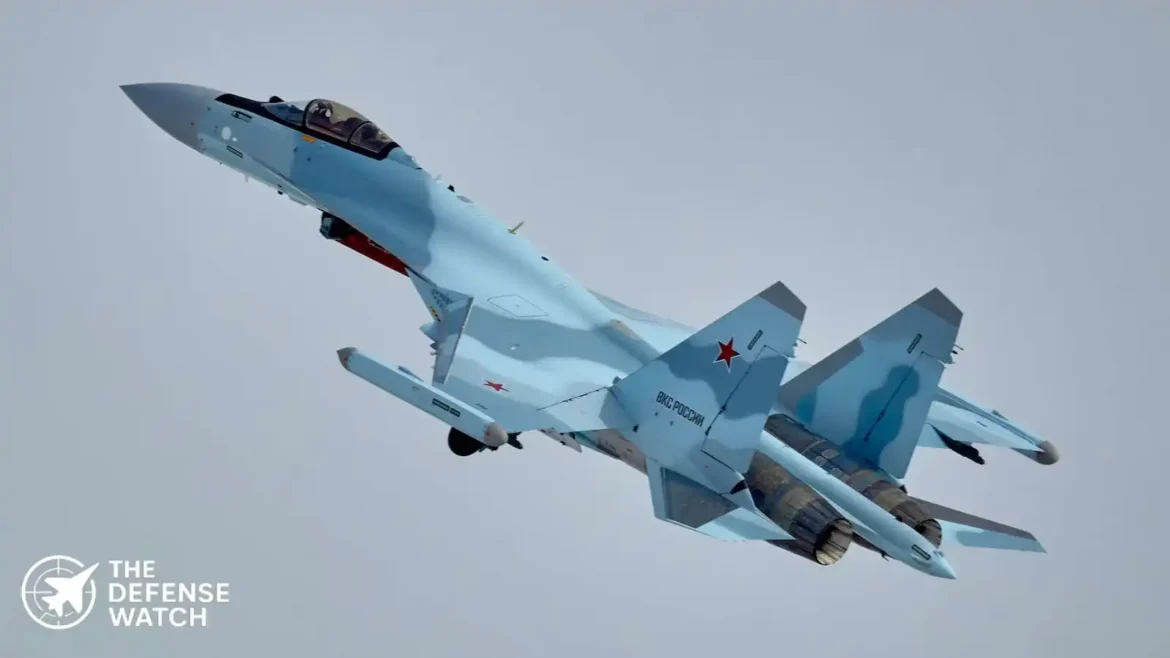
Russia Receives New Su-35S Fighters To Sustain Combat Air Power
Russia Su-35S fighters are entering service again as Moscow accepts a fresh batch of aircraft intended to reinforce tactical aviation forces. The latest delivery involves newly built Su-35S fighters transferred from Russian industry under the national defense procurement program.
The handover signals that Russia continues to prioritize fighter aircraft production despite wartime attrition, sanctions pressure, and heavy demand across multiple defense sectors. In practical terms, keeping fighter assembly lines active may matter as much as battlefield use, because replacing losses and rotating worn aircraft are now central to long-duration force planning.
¦ KEY FACTS AT A GLANCE- Russia has reportedly received a new batch of Su-35S multirole fighter aircraft from domestic industry.
- The aircraft were produced by United Aircraft Corporation under the state defense order.
- Su-35S fighters are designed for air superiority, long-range interception, and precision strike missions.
- Deliveries suggest Russia is prioritizing tactical aviation fleet replacement and sustainment.
- Continued fighter production remains strategically important amid ongoing operational pressure.
The Su-35S is one of Russia’s most capable non-stealth combat aircraft. Developed as an advanced derivative of the Su-27 family, it combines long range, high maneuverability, powerful radar systems, and a large weapons payload.
Why The New Su-35S Delivery Matters
New Su-35S delivery announcements often carry political and industrial messaging beyond the aircraft themselves. They show domestic production continuity, signal confidence in the aerospace sector, and reassure military planners that replenishment pipelines remain open.
That matters because modern fighter fleets consume readiness quickly during sustained operations. Airframes require maintenance cycles, engines need overhaul periods, and avionics support becomes increasingly important over time. Even if aircraft losses are limited, operational wear can reduce available combat numbers.
For Russia, adding new Su-35S fighters can help in several ways:
- Replace damaged or retired aircraft
- Support homeland air defense patrols
- Escort strike packages
- Extend long-range air presence
- Preserve readiness of other fighter types
Su-35S Capabilities And Operational Role
The Su-35S is generally categorized as a 4++ generation fighter, bridging older fourth-generation designs and fifth-generation stealth platforms. It uses thrust-vectoring engines, advanced sensors, and can carry air-to-air missiles, guided bombs, and anti-ship weapons.
Its strongest advantage is range and payload. Compared with lighter fighters, the aircraft can remain on station longer and carry more weapons. That makes it useful for large-area patrols or stand-off strike missions.
However, modern air combat increasingly favors stealth, networked targeting, and survivability against dense air defenses. While powerful, the Su-35S still reflects a design philosophy centered on kinematics and weapons load rather than low observability.
Industrial And Strategic Context
The latest Russia Su-35S fighters delivery also reflects the resilience of the country’s defense-industrial base. Western sanctions aimed to restrict access to components, finance, and aerospace technology. Continued aircraft output suggests Moscow has either adapted supply chains, substituted parts, or prioritized resources for key programs.
Still, sustaining production is different from expanding it. Analysts often watch delivery tempo, fleet modernization rates, and maintenance quality more closely than headline announcements.
If deliveries remain steady, Russia can preserve a credible tactical aviation force. If output slows, pressure on existing fleets could increase sharply.
Outlook
The arrival of additional Su-35S fighters indicates Russia intends to maintain airpower depth while broader modernization efforts continue. Though stealth aircraft attract most attention globally, proven multirole fighters still form the backbone of many air forces.
For now, the Su-35S remains a central pillar of Russia’s combat aviation inventory.