Takeaways
The U.S. Navy has disclosed the AIM-424 Malice, a new long-range air-to-air missile designed to extend the engagement range of current and future naval fighters.
U.S. Navy Reveals AIM-424 Malice Long-Range Air-to-Air Missile
The AIM-424 Malice is the U.S. Navy’s newly disclosed long-range air-to-air missile, with an officially stated range of more than 250 nautical miles, or 463 kilometers. The Navy identified the weapon as the Long Range Air-to-Air Missile, or LRAAM, and lists Raytheon as its contractor.
The Navy publicly disclosed the program at the Tailhook Symposium in Reno, Nevada, on August 22, 2026, before adding the AIM-424 to its official Fact Files. The service says the missile is intended to strengthen fleet defense and provide greater reach, survivability and tactical flexibility against advanced air threats.
The disclosure is significant because the AIM-424 is being designed across multiple generations of naval aircraft. The Navy identifies fourth-, fifth- and sixth-generation platforms as potential users, including the F/A-18, F-35 and future F/A-XX.
AIM-424 Malice Specifications
The Navy has released a limited but important set of technical specifications.
| Specification | AIM-424 Malice |
|---|---|
| Primary function | Air-to-air missile |
| Contractor | Raytheon |
| Propulsion | Solid-propellant rocket motor |
| Length | 13.5 feet, 4.11 meters |
| Diameter | 13.5 inches, 0.34 meters |
| Wingspan | 26.2 inches, 0.67 meters |
| Weight | 1,500 pounds, 680.4 kg |
| Stated range | More than 250 nautical miles, 463 km |
| Warhead | Blast fragmentation |
| Intended aircraft | F/A-18, F-35, F/A-XX |
| Generation compatibility | Fourth, fifth and sixth generation |
These figures come directly from the Navy’s AIM-424 fact sheet. The service has not released a public operational timeline or a complete description of the missile’s guidance and seeker systems.
A Much Larger Weapon Than the AIM-120
The physical dimensions of the AIM-424 show the engineering tradeoff behind its long-range mission.
At 13.5 feet in length and 1,500 pounds, Malice is considerably larger than the AIM-120 AMRAAM used by U.S. and allied fighters. The additional size provides considerably more volume for propulsion, control systems and other components needed for long-range flight, but it also creates integration challenges for aircraft that must carry the weapon internally or on external stations.
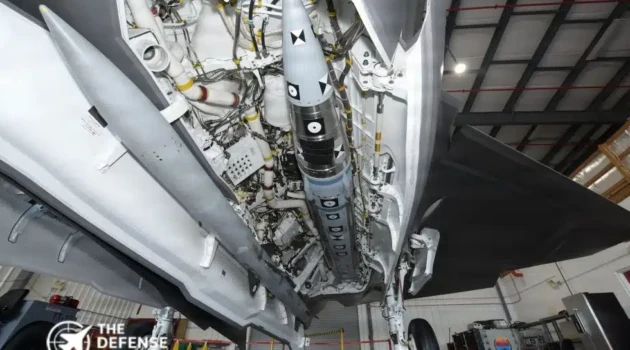
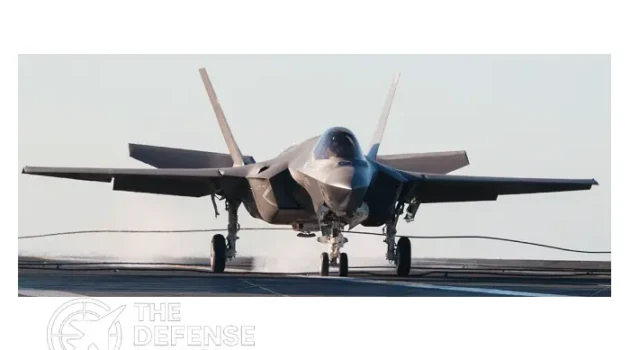
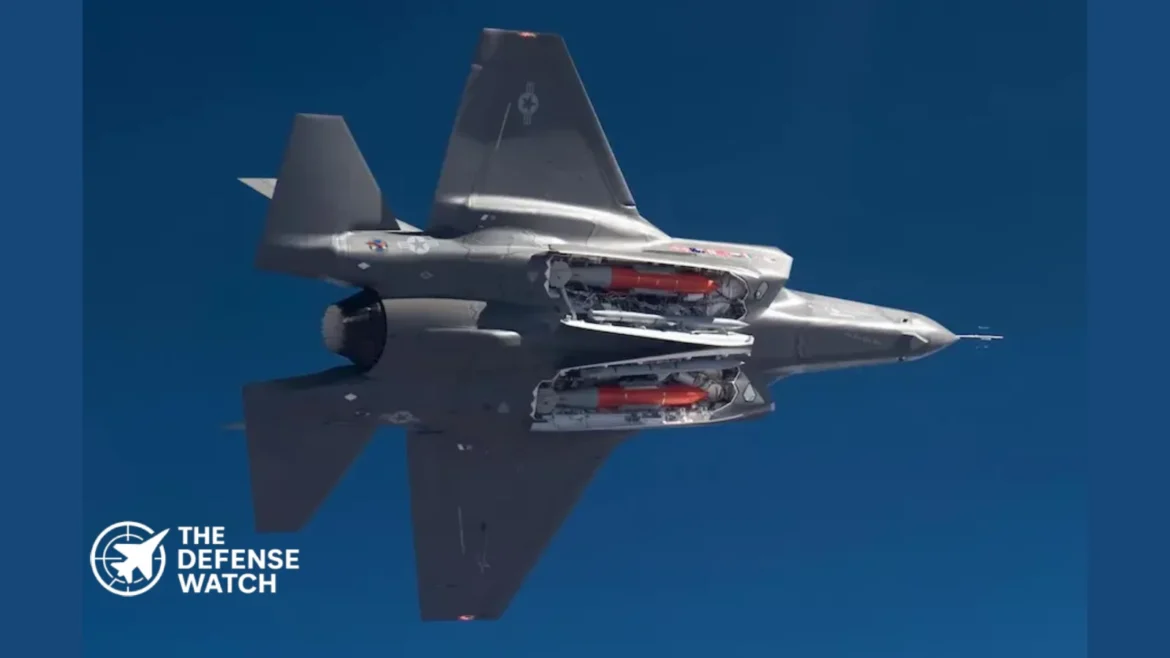
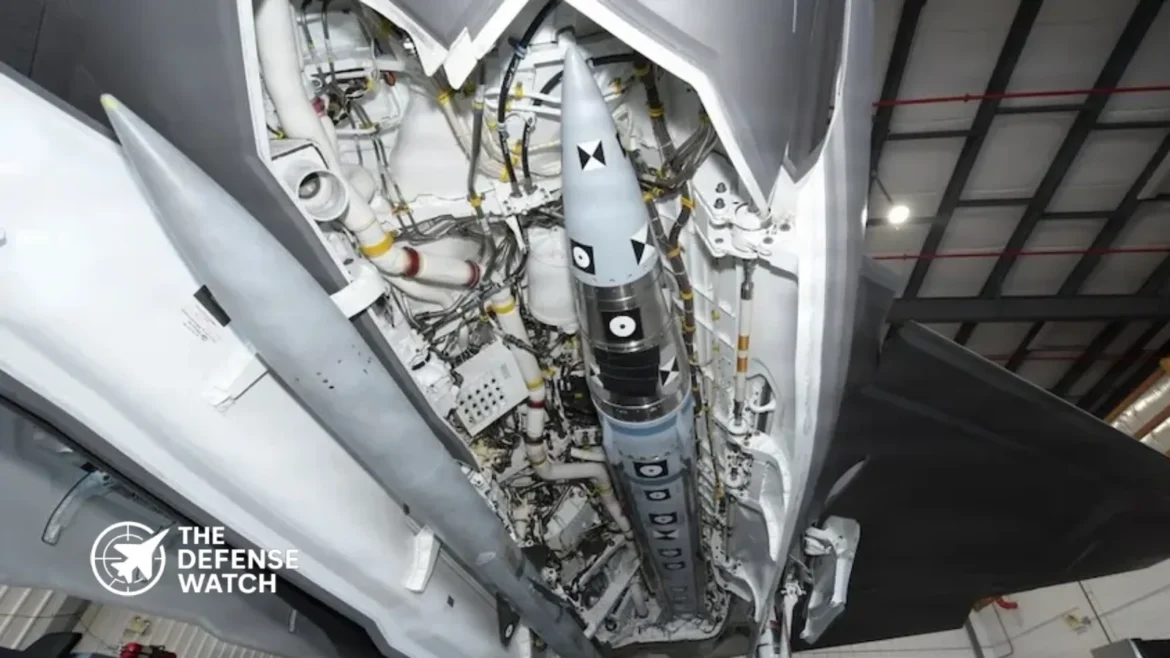
The Navy’s own imagery shows the AIM-424 associated with both the F/A-18E Super Hornet and F-35C. A Navy image released in August shows the missile installed in the F-35C’s internal weapons bay, demonstrating that internal carriage is part of the program’s aircraft integration effort.
That point matters for the F-35C. Internal carriage preserves the aircraft’s low-observable configuration, allowing a long-range weapon to be carried without relying exclusively on external pylons that can increase radar signature.
The F/A-18E/F, meanwhile, offers greater external carriage flexibility. Recent Navy imagery has shown test aircraft carrying multiple AIM-424 training or test missiles, indicating that flight testing has already progressed beyond a purely conceptual stage.
What the 250-Nautical-Mile Range Means
The Navy’s stated range of more than 250 nautical miles places the AIM-424 in a different class from conventional medium-range air-to-air weapons.
Range alone, however, does not determine the effective combat envelope of a missile. Actual engagement performance depends on launch conditions, altitude, speed, target maneuvering, seeker performance, guidance updates, electronic warfare conditions and the amount of energy remaining when the missile reaches the target area.
For that reason, the Navy’s 250-plus nautical mile figure should be treated as a published maximum range indicator rather than a guarantee that every target can be engaged at that distance.
The operational value is instead the ability to give naval aviators more options before entering the threat envelope of opposing aircraft or air-defense systems. A longer-range weapon can potentially allow a fighter to remain farther from an adversary while still contributing to an engagement.
That becomes particularly relevant to carrier aviation, where aircraft must operate from mobile platforms that can be exposed to increasingly long-range surveillance and strike systems.
Built for the F/A-18, F-35C and F/A-XX
The Navy explicitly identifies the AIM-424 as a weapon for fourth-, fifth- and sixth-generation platforms. That makes it more than a replacement weapon for a single fighter type.
The F/A-18E/F remains a major component of carrier aviation. The Navy’s 2025 year-in-review publication said the Super Hornet fleet is expected to continue operating into the 2040s, while the Navy’s sixth-generation strike fighter will eventually augment and replace the Super Hornet and EA-18G Growler.
The F-35C adds another important dimension. Its stealth characteristics and sensor architecture provide a different method of employing long-range weapons, particularly when the aircraft can detect, track or receive targeting information without exposing itself unnecessarily.
The future F/A-XX is expected to become another major carrier-based platform for the weapon. Navy aviation planning describes F/A-XX as a sixth-generation fighter intended to bring greater range, speed and sensor capability to the carrier air wing while operating alongside unmanned systems.
A common long-range missile across these aircraft could therefore provide continuity as the carrier air wing transitions between generations.
AIM-424 and the U.S. Long-Range Air Combat Requirement
The AIM-424 is emerging alongside other U.S. efforts to extend air-to-air engagement ranges.
The Navy has already introduced the AIM-174B Gunslinger, an air-launched adaptation of the SM-6 family, while the Navy and Air Force are also pursuing the AIM-260 Joint Advanced Tactical Missile. The emergence of Malice indicates that the U.S. is pursuing multiple long-range air-to-air options rather than relying on a single weapon architecture.
The distinction between these weapons is important. The AIM-424 is specifically described by the Navy as an LRAAM intended for fourth-, fifth- and sixth-generation aircraft, while the AIM-174B is derived from a larger surface-to-air missile family and provides a different combination of range and platform integration.
The AIM-260, meanwhile, is intended to provide a next-generation tactical air-to-air capability for U.S. fighters. The continued development of all three reflects the importance the U.S. military places on long-range air combat.
Why the Missile Matters for Carrier Aviation
The central issue for the Navy is not simply missile range. It is the changing geometry of combat in the Indo-Pacific.
Potential adversaries are developing aircraft, sensors and weapons that can threaten carrier air wings at increasingly long distances. A carrier-based fighter therefore needs to detect, identify, target and engage threats without necessarily approaching the range at which the opposing force can effectively attack the carrier or supporting aircraft.
A weapon such as Malice can contribute to that requirement by extending the reach of the fighter itself.
The Navy describes the program in terms of maintaining a first-look, first-shot and first-kill advantage. In practical terms, that concept depends on more than the missile. It requires a complete chain involving sensors, data links, airborne networking, electronic warfare, targeting information and reliable weapon guidance.
This makes aircraft integration particularly important. A very long-range missile has limited value if the launching aircraft cannot obtain a sufficiently accurate track, maintain the required data exchange or defeat electronic countermeasures during the engagement.
Internal Carriage Creates an Important F-35C Challenge
The F-35C presents a particularly demanding integration problem because the aircraft’s internal weapons capacity is constrained by bay dimensions and aerodynamic requirements.
The Navy’s released imagery indicates that the AIM-424 has been fitted into an F-35C weapons bay. That is an important development because the missile’s 13.5-foot length and 13.5-inch diameter make it a large weapon for internal carriage.
The integration effort will have to balance missile size against the aircraft’s internal weapon capacity, separation safety, flight characteristics and mission configuration.
If the AIM-424 can be carried internally without major restrictions, it could allow the F-35C to combine low-observable operations with substantially longer-range air-to-air effects. The Navy has not yet published enough information to determine the final operational loadout or restrictions.
What Remains Classified
The Navy has provided the missile’s basic dimensions, weight, propulsion type, warhead and range, but many of the characteristics that determine actual combat performance remain undisclosed.
Those include the specific seeker technology, guidance architecture, datalink capabilities, terminal engagement characteristics, maximum speed, no-escape-zone performance and resistance to electronic countermeasures.
The Navy has also not announced an operational deployment date. Defence Industry Europe reported that further details on specific capabilities and deployment timelines remain classified for operational security reasons.
That makes it premature to describe Malice as an operational replacement for an existing missile. The available information establishes that the Navy is developing the system and has conducted aircraft integration activity, but it does not establish an initial operational capability date.
A Decade-Long Development Path
The AIM-424 appears to have roots in earlier U.S. work on very-long-range air-to-air weapons.
Aviation Week reporting cited by Defence Industry Europe connects the program with a Long Range Engagement Weapon concept disclosed in 2017. Earlier budget documentation described a two-year technology demonstration before the technology was transferred to the military services.
That history helps explain why the Navy is now able to disclose an apparently mature weapon rather than a purely conceptual design.
Recent reporting has also identified flight-test activity involving F/A-18E aircraft and integration work with the F-35C. A Navy photograph shows the weapon associated with an F/A-18E test aircraft, while another image shows an AIM-424 in an F-35C weapons bay.
The public evidence therefore points to a program that has moved into aircraft integration and testing, although the Navy has not disclosed the complete test schedule or milestones.
Strategic Implications for U.S. Airpower
The most important feature of Malice is its combination of range and platform flexibility.
A missile designed for Super Hornets, F-35Cs and the future F/A-XX can potentially provide a common long-range air-to-air effect across several stages of the Navy’s fighter modernization plan.
For carrier aviation, that could reduce the gap between today’s force and the future air wing. The Super Hornet can provide near-term capacity, the F-35C brings stealth and advanced sensing, and F/A-XX is being developed for the next generation of carrier air combat.
The AIM-424 does not solve the broader challenge of long-range air warfare by itself. Its effectiveness will depend on the aircraft carrying it, the quality of the targeting network and the ability of the entire force to operate inside heavily contested electromagnetic and air-defense environments.
What the disclosure does show is that the Navy is placing substantial emphasis on increasing the reach of its carrier-based air-to-air weapons.
AIM-424 Malice: What Is Confirmed
Based on the Navy’s official fact sheet and publicly released imagery, the following points are confirmed:
- The weapon is designated AIM-424 LRAAM.
- Its official name is Malice.
- Raytheon is the contractor.
- The Navy lists its range as more than 250 nautical miles, or 463 kilometers.
- It uses a solid-propellant rocket motor.
- It has a blast-fragmentation warhead.
- It is 13.5 feet long.
- Its diameter is 13.5 inches.
- Its wingspan is 26.2 inches.
- Its listed weight is 1,500 pounds.
- It is intended for fourth-, fifth- and sixth-generation aircraft.
- The Navy identifies the F/A-18, F-35 and future F/A-XX as intended platforms.
- The Navy has not announced an operational deployment timeline.
Conclusion
The U.S. Navy’s disclosure of the AIM-424 Malice marks a significant addition to its long-range air-to-air weapon portfolio.
With an officially stated range beyond 250 nautical miles and planned compatibility with F/A-18E/F, F-35C and F/A-XX aircraft, the missile is designed to extend the reach of naval aviation as the carrier air wing moves toward a more distributed and networked combat model.
The weapon is still under development, and key information about its seeker, guidance system, speed, engagement envelope and deployment schedule remains unavailable. Those details will ultimately determine how the AIM-424 fits alongside the AIM-120, AIM-174B and AIM-260.
For now, the Navy’s disclosure establishes the core fact: the United States is developing a large, long-range air-to-air missile specifically intended to give naval fighters substantially greater reach against advanced air threats.
 (adsbygoogle = window.adsbygoogle || []).push({});
Takeaways
Sweden has moved its Taurus KEPD 350 and Gripen integration program into live missile testing, creating a new long range strike option for the Swedish Air Force.
Sweden Conducts First Taurus Launch From Gripen
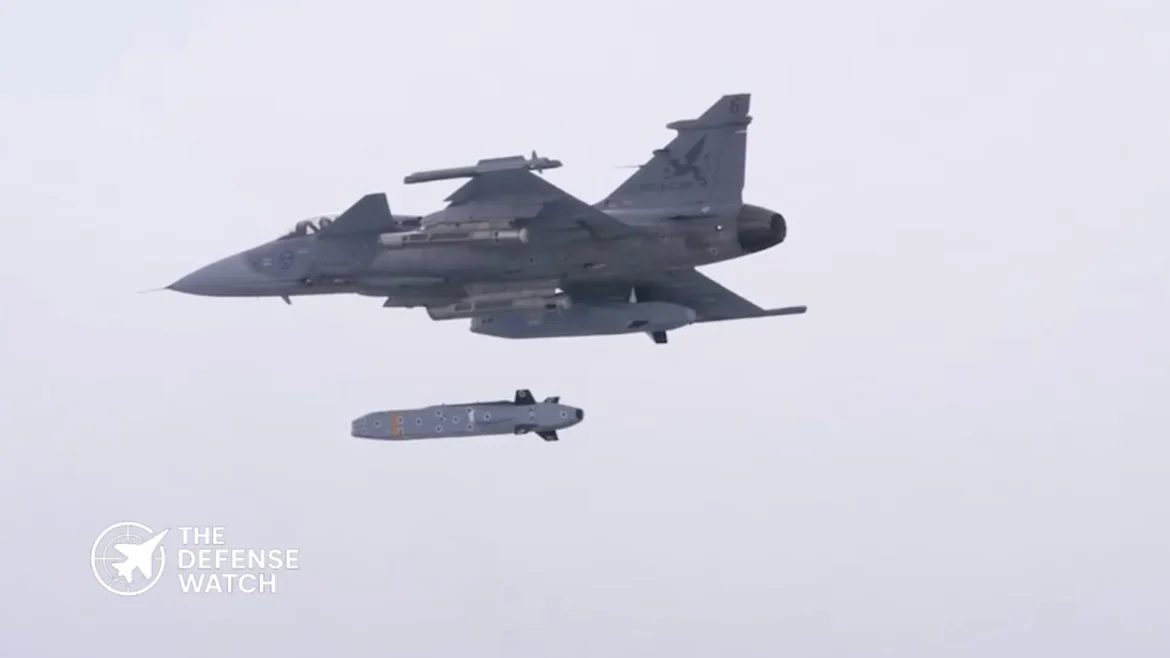
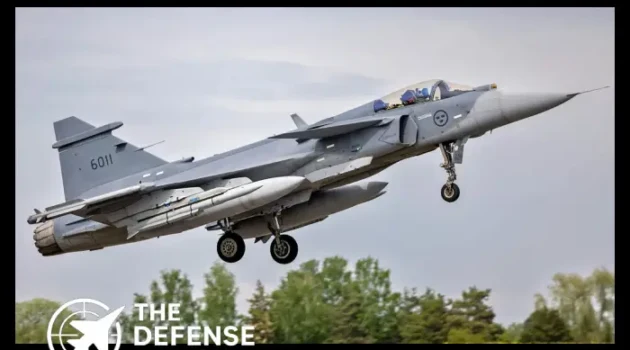
Sweden has conducted the first confirmed launch of a Taurus KEPD 350 cruise missile from a JAS 39 Gripen, marking a major milestone in the country’s effort to establish a long range precision strike capability. The Swedish Air Force said the test took place on August 21, 2026, at the Vidsel Test Range in Norrbotten, northern Sweden.
The Swedish Air Force described Taurus as a long range cruise missile that introduces a new deep strike capability. The test was supported by Sweden’s Defence Materiel Administration, FMV, which released imagery of the launch.
The event is significant because Sweden is moving from integrating the weapon with the Gripen platform toward demonstrating the complete weapon and aircraft combination during an actual missile launch.
What the Taurus KEPD 350 Adds to Gripen
The TAURUS KEPD 350 is a heavy air launched stand off cruise missile developed by TAURUS Systems, a joint venture involving Saab and MBDA Deutschland. The weapon is designed primarily for precision strikes against hardened and high value targets.
According to MBDA, the missile weighs approximately 1,400 kilograms and is about 5 meters long. Its operational range is stated as more than 500 kilometers. The weapon uses a dual stage warhead system and is designed to penetrate hardened targets while also providing blast and fragmentation effects against other target types.
Capability Taurus KEPD 350 Type Air launched stand off cruise missile Length About 5 meters Weight About 1,400 kg Range More than 500 km Propulsion Turbofan Navigation INS, GPS, terrain reference and image based navigation Mission Deep strike and precision attack Carrier JAS 39 Gripen and other compatible aircraft The missile is designed to fly at very low altitude and use terrain following to reduce exposure to ground based detection and air defenses. Its navigation architecture combines inertial navigation with GPS, terrain reference and image based navigation, allowing the weapon to maintain its planned route even when continuous GPS availability cannot be assumed.
That combination is important in heavily defended environments. A long range missile does not simply provide additional distance. Its value also depends on the ability to approach a target while reducing the opportunities for detection and interception.
(adsbygoogle = window.adsbygoogle || []).push({});Why the First Launch Matters
The August 21 launch represents more than another weapons test. It demonstrates that Sweden’s Gripen force is moving toward a different role in the country’s overall strike architecture.
Historically, the Swedish Air Force has placed considerable emphasis on air defense, dispersed operations and the ability to preserve combat aircraft in a demanding regional environment. The addition of Taurus creates a complementary offensive option that allows aircraft to attack targets from stand off distances rather than requiring the fighter to approach the target area directly.
Swedish Air Force commander Maj. Gen. Jonas Wikman previously described the deep strike requirement as an important change for Sweden, noting that the country had not previously possessed a comparable offensive counter air or deep strike capability.
This distinction is important. Taurus does not turn Gripen into a dedicated bomber. Instead, it expands the range of missions that can be performed by an existing multirole fighter fleet.
The Technical Challenge of Integrating Taurus With Gripen
A missile launch from a fighter is the visible part of a much larger integration process.
The aircraft must be able to safely carry and release a weapon weighing roughly 1.4 tons. Its avionics must also exchange the necessary mission data with the missile, while the aircraft’s flight control, weapons management and mission planning systems must account for the weapon throughout the launch sequence.
The missile itself requires accurate prelaunch mission data. Its navigation system then combines several methods to maintain the planned route and guide the weapon toward the designated target area.
Saab has long presented Taurus as compatible with the Gripen family. Saab’s earlier Gripen documentation lists the TAURUS KEPD 350 as a stand off weapon, while the company has also described Taurus as an option for Gripen E.
The recent Swedish test is therefore an important distinction between theoretical compatibility and demonstrated national operational integration.
Sweden’s 2028 Target and Acceleration Effort
Sweden announced plans to integrate and procure Taurus for its Gripen force in 2025. Public reporting has indicated that the original objective was to establish the capability by 2028, although Swedish authorities and industry have worked to accelerate the process.
The August launch suggests that the program has reached an advanced flight test stage before the planned operational date. However, a successful launch should not be interpreted as proof that the full capability is already operational.
Additional work normally remains after a first live firing, including qualification, mission planning validation, training, logistics, maintenance arrangements and broader operational certification.
What It Means for Swedish Air Power
The introduction of Taurus gives Sweden a new way to hold important fixed targets at risk without sending the launching fighter into the immediate vicinity of the target.
The missile is specifically designed for hardened and deeply buried targets, large radar installations and other high value fixed targets. Saab has described the weapon as a precision system intended for demanding air operations against defended targets.
This could strengthen several parts of Sweden’s wider air campaign architecture.
First, it can increase the separation between the aircraft and the target. Second, it can allow Gripen to contribute to deep strike missions while retaining the aircraft’s other multirole functions. Third, it adds another option for attacking fixed infrastructure that may be difficult to reach with shorter range weapons.
The capability also fits Sweden’s broader military modernization as the country adapts to its NATO membership and a more demanding European security environment.
Implications for NATO’s Northern Flank
For NATO, the significance of the Swedish Taurus integration extends beyond the Swedish Air Force.
Sweden occupies a strategically important position in northern Europe and controls territory and airspace that are central to the defense of the Nordic region and the Baltic Sea area. A long range air launched strike capability gives Swedish combat aviation another tool for contributing to wider alliance operations.
The combination of Gripen and Taurus also offers an example of how relatively compact fighter fleets can gain greater reach through stand off weapons rather than relying exclusively on larger aircraft.
This matters for countries operating under constrained force structures. The ability to launch a long range precision weapon from a multirole fighter can increase the number of aircraft capable of contributing to deep strike missions without creating a separate bomber fleet.
The Gripen Taurus Combination in a Wider European Context
Taurus is not a new weapon. The system has been associated with European combat aircraft for more than two decades, and Saab’s 2002 production announcement identified Gripen among the aircraft capable of carrying the weapon.
The missile has also been integrated with other aircraft, including the German Tornado, South Korean F-15K and Spanish F/A-18 variants. MBDA currently lists Gripen, Tornado, F-15K, Eurofighter Typhoon and EF-18 among Taurus carrier platforms.
What is new is Sweden’s move to validate the weapon within its own Gripen fleet and establish an indigenous operational capability.
The development also comes as Germany works on modernization of its existing Taurus inventory. Saab received a SEK 1.7 billion order in 2025 covering components, modernization and ten years of life cycle maintenance for German Taurus missiles.
MBDA has separately announced work on Taurus NEO, indicating that the Taurus family is being developed further rather than treated as a static legacy weapon.
What Comes Next
The immediate significance of the Swedish test is that the Taurus and Gripen combination has now completed a publicly confirmed live launch.
The next stage will be to translate that test milestone into a fully qualified and sustainable operational capability. That process includes continued flight testing, weapon certification, pilot and maintenance training, mission planning and integration into Sweden’s broader command and control architecture.
Sweden’s future fighter force also includes Gripen E, adding another dimension to the integration effort. FMV has already delivered Gripen E aircraft to the Swedish Armed Forces, while Sweden is also preparing a future Gripen E fleet for Ukraine under a separate agreement.
For the Swedish Air Force, however, the immediate priority is clear. The first Taurus launch from Gripen demonstrates that Sweden is making measurable progress toward a long range precision strike capability that can complement its established air defense and multirole fighter missions.
The August 21 test therefore represents a significant program milestone, but not the final step. The operational value of the capability will ultimately depend on completing certification, training and integration and placing the weapon into a reliable combat-ready structure.
U.S. Navy C-2A Greyhound Retirement Ends A Six-Decade Logistics Era
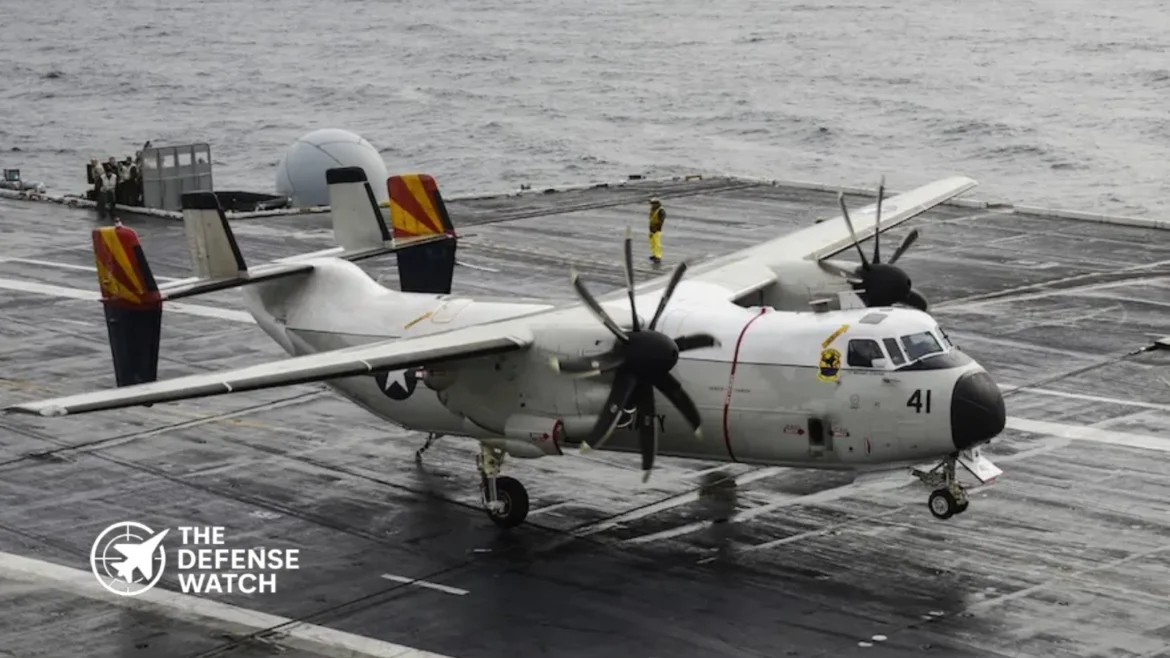
The C-2A Greyhound retirement marks the end of nearly 60 years of U.S. Navy carrier onboard delivery operations, closing the career of a specialized aircraft that routinely carried personnel, mail, aircraft parts and priority supplies between shore bases and aircraft carriers at sea.
Takeaways
The C-2A Greyhound has completed nearly six decades of U.S. Navy carrier logistics operations.
1. Six Decades Of Service
The C-2A Greyhound entered the Navy’s Carrier Onboard Delivery role in the 1960s and remained a key link between carriers and shore bases for nearly 60 years.
2. Final Carrier Landing In June
A C-2A assigned to VRC-40 made the platform’s final arrested landing and catapult launch from USS Nimitz on June 25, 2026.
3. More Than 250,000 Carrier Landings
The Navy says the Greyhound fleet accumulated more than 250,000 carrier landings and transported millions of personnel and more than 100 million pounds of cargo.
4. CMV-22B Takes Over
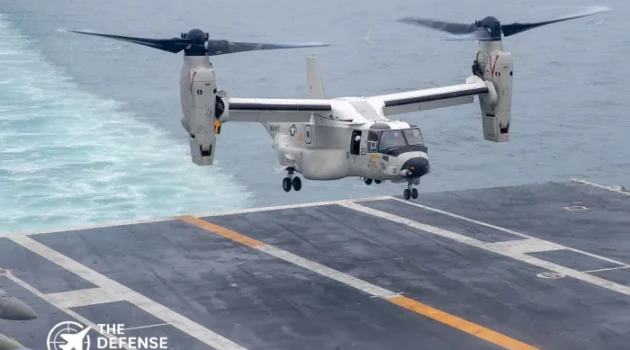
The Navy is replacing the fixed-wing C-2A with the CMV-22B Osprey, a tiltrotor designed to provide greater flexibility for maritime logistics operations.
5. Final Aircraft Goes To Museum
The final operational Greyhound was transferred to the National Naval Aviation Museum at Naval Air Station Pensacola for preservation and future display.
The Navy’s final C-2A, assigned to Fleet Logistics Support Squadron 40, or VRC-40 Rawhides, completed its final in-service flight at Naval Air Station Pensacola, Florida, on July 28, 2026. The aircraft subsequently joined the National Naval Aviation Museum collection.
The retirement represents a significant transition in naval aviation logistics. The C-2A has been replaced in the Carrier Onboard Delivery mission by the Navy’s CMV-22B Osprey tiltrotor, shifting the service from a conventional carrier-based transport aircraft to an aircraft capable of vertical and short takeoffs and landings.
Final C-2A Carrier Operations
The last carrier chapter for the U.S. Navy C-2A Greyhound came on June 25, when Greyhounds from VRC-40 conducted their final arrested landings and catapult launches aboard the Nimitz-class aircraft carrier USS Nimitz during Fleet Exercise 250.
The event ended the Greyhound’s carrier operations after decades of routine launches and recoveries aboard U.S. aircraft carriers. The final aircraft later flew from Norfolk, Virginia, to Pensacola for its last Navy flight.
The July Pensacola flight also provided a formal farewell. The final Greyhound flew with the U.S. Navy Blue Angels before landing at Sherman Field, where it was transferred for preservation.
The Navy said the aircraft accumulated more than 250,000 carrier landings during its service. Across its operational career, the C-2A transported millions of personnel and more than 100 million pounds of cargo.
A Purpose-Built Carrier Logistics Aircraft
The C-2A was developed from the Grumman E-2 Hawkeye design. Unlike the E-2, which was optimized for airborne early warning, the Greyhound featured a widened fuselage and rear cargo ramp for transporting people and equipment.
NAVAIR describes the aircraft as a high-wing, twin-engine Carrier Onboard Delivery aircraft. Its configuration allowed crews to move priority cargo, passengers, litter patients and critical aircraft components directly between shore facilities and carriers.
The aircraft could carry a payload of up to 10,000 pounds, making it particularly useful when carriers required urgent delivery of heavy or specialized equipment. Its rear loading ramp also allowed ground crews to load and unload cargo quickly.
The C-2A’s mission went beyond routine resupply. The aircraft also transported mail and personnel and could support medical evacuation requirements. For sailors deployed aboard carriers for months at a time, the arrival of a Greyhound could also mean the arrival of mail, replacement personnel or urgently needed equipment.
Keeping The Greyhound In Service
The aircraft’s long career required extensive maintenance and structural work.
NAVAIR began a Service Life Extension Program to address structural and electrical issues as the C-2A fleet approached its original service-life limits. The program included structural enhancements and electrical rewiring intended to extend the aircraft’s useful life.
That work helped keep the Greyhound available while the Navy developed and fielded a replacement.
The C-2A first flew in 1964, with the aircraft entering the Navy’s operational Carrier Onboard Delivery role in the following years. The platform became a familiar presence aboard carrier strike groups and supported Navy operations across multiple decades.
The aircraft also supported operations during major U.S. military campaigns, including Operations Desert Shield and Desert Storm, as well as later operations in Afghanistan and Iraq.
CMV-22B Osprey Takes Over Carrier Logistics
The C-2A carrier onboard delivery mission is now being performed by the CMV-22B Osprey.
The CMV-22B is a Navy variant of the V-22 tiltrotor family. It can take off and land vertically like a helicopter while using its engines and rotors in a forward-flight configuration for longer-distance transportation. NAVAIR identifies the aircraft as the replacement for the C-2A in the COD mission.
The change gives the Navy different operating options. Unlike the C-2A, the CMV-22B does not depend exclusively on conventional runway operations or carrier catapults for its basic takeoff and landing capability.
NAVAIR lists a cargo and personnel capacity of up to 6,000 pounds and a range of up to 1,150 nautical miles. The Navy variant also includes features such as a beyond-line-of-sight high-frequency radio, improved fuel dump capability, a passenger public-address system and improved cargo-loading lighting.
The aircraft is also designed to support the F-35C-equipped carrier air wing. One important requirement for the CMV-22B was the ability to transport the F-35’s F135 engine power module, an item that can be difficult to move through conventional maritime logistics channels.
The CMV-22B reached Initial Operational Capability in 2021, and the Navy has continued expanding its operational use as the Greyhound fleet approached retirement.
What The Retirement Means For Carrier Operations
The C-2A Greyhound retirement is more than the withdrawal of an aging aircraft. It changes how the Navy moves time-sensitive personnel and cargo between shore bases and carrier strike groups.
The Greyhound’s fixed-wing design was closely tied to carrier catapult and arresting gear operations. The Osprey brings a different operating model, combining tiltrotor performance with vertical and short takeoff and landing capability.
That flexibility can allow logistics aircraft to operate from a wider range of locations and interact with other elements of a carrier strike group without relying exclusively on conventional fixed-wing carrier launch and recovery procedures. NAVAIR describes the CMV-22B as a long-range, medium-lift element of the Navy’s intra-theater aerial logistics capability.
The transition also closes a distinctive chapter in naval aviation. The Navy’s final Greyhound flight marked the end of an aircraft type that had become closely associated with carrier life, from the delivery of aircraft components and supplies to the movement of sailors and mail.
The C-2A will now continue its service in a different form as a preserved aircraft. The final Greyhound transferred to the National Naval Aviation Museum, where it is planned for public display after rehabilitation.
The End Of The Greyhound Era
The C-2A Greyhound remained in service far longer than many of the aircraft that operated alongside it, adapting through structural upgrades and sustained maintenance to meet the Navy’s carrier logistics requirements.
Its retirement on July 28, 2026, formally closes that operational chapter. The CMV-22B Osprey now carries the responsibility for the Navy’s carrier onboard delivery mission, bringing a different combination of range, vertical landing capability and cargo flexibility to a role that remains essential to carrier operations.
For nearly six decades, the Greyhound’s job was straightforward but critical: connect the carrier at sea with the shore. Its final flight marks the end of that mission for the C-2A, but not the end of the Navy’s requirement for rapid, reliable aerial logistics.
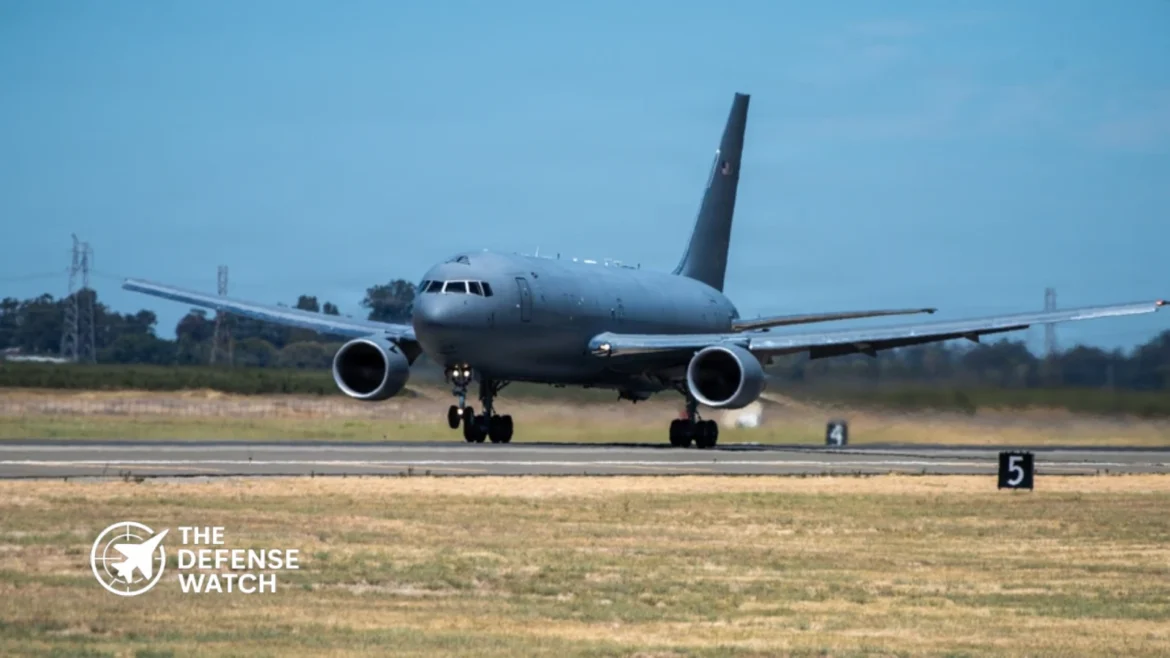
Qatar Seeks KC-46A Tankers In Potential $4.5 Billion U.S. Sale
Qatar is seeking up to four Boeing KC-46A Pegasus aerial refueling aircraft under a possible U.S. Foreign Military Sale valued at as much as $4.5 billion, according to the U.S. State Department’s congressional notification. The proposed package includes the tankers, engines, defensive systems, spare parts, training and long-term logistics support.
Takeaways
Qatar’s proposed KC-46A acquisition would add an aerial refueling capability to its growing combat aviation fleet.
1. $4.5 Billion Maximum Package
The U.S. State Department has approved a possible Foreign Military Sale to Qatar valued at up to $4.5 billion, including aircraft, equipment, training and logistics support.
2. Four KC-46A Pegasus Tankers
Qatar has requested four KC-46A aerial refueling aircraft, potentially making it the third international KC-46A customer after Japan and Israel.
3. Defensive Systems Included
The proposed package includes AN/ALR-69A radar warning receivers and Guardian Laser Transmitter Assemblies supporting the KC-46A’s infrared countermeasure systems.
4. Supports Qatar’s Combat Aviation Fleet
Qatar operates advanced combat aircraft including F-15QA, Rafale and Eurofighter Typhoon fighters, making tanker support relevant to long-range air operations and sustained sortie generation.
5. Sale Is Not Yet a Final Contract
The State Department approval is for a possible Foreign Military Sale. Completion would require an intergovernmental Letter of Offer and Acceptance, meaning the notification does not itself constitute a completed purchase.
The proposed sale would expand Qatar’s military aviation capabilities while giving Boeing another potential international customer for the KC-46A. Qatar already operates a large and increasingly sophisticated fleet of U.S. and European combat aircraft, including the Boeing F-15QA, Dassault Rafale and Eurofighter Typhoon.
The notification remains a potential sale rather than a completed contract. Under the Foreign Military Sales process, the proposed acquisition would still require an intergovernmental Letter of Offer and Acceptance before execution.
What Qatar Is Requesting
The aircraft form only part of the proposed package. Qatar has requested a broad set of equipment intended to establish an operational tanker fleet with associated defensive, support and training infrastructure.
Item Quantity KC-46A Pegasus aircraft Up to 4 Pratt & Whitney PW4062 engines 8 Installed PW4062 engines 4 Spare PW4062 engines 4 AN/ALR-69A radar warning receivers 10 Guardian Laser Transmitter Assemblies 15 LAIRCM processor replacements 8 The proposed package also includes missile warning sensors, cryptographic equipment, Identification Friend or Foe systems, precision navigation equipment and electronic warfare database support. Training, software, spare parts, maintenance, technical documentation, transportation and other government and contractor services are also included.
Boeing is expected to be the principal aircraft contractor. Pratt & Whitney, RTX and Northrop Grumman are also identified as principal contractors associated with the proposed sale. The U.S. government said it was not aware of an offset agreement connected to the transaction.
KC-46A Would Add A New Layer To Qatar’s Air Power
The most important operational element of the proposal is not the number of aircraft, but the capability they would add to Qatar’s existing combat aviation structure.
Aerial refueling allows fighter aircraft to remain airborne longer, operate farther from their home bases and conduct missions without relying exclusively on forward airfields. For a country operating multiple advanced fighter types, a dedicated tanker capability can also improve flexibility in managing aircraft range, fuel reserves and sortie planning.
Qatar’s F-15QA fleet is particularly relevant to this equation. The country also operates Rafale and Eurofighter Typhoon fighters, creating a diverse combat aircraft fleet with different weapons, sensors, training pipelines and sustainment requirements. A tanker fleet can support these aircraft by extending their operational reach and reducing some of the range limitations imposed by fuel consumption.
The KC-46A is designed to refuel both boom-equipped and probe-and-drogue aircraft. Boeing states that its boom and hose-and-drogue systems can support U.S., allied and coalition aircraft compatible with international aerial refueling procedures.
That interoperability matters for Qatar because its air force is closely tied to U.S. and allied air operations in the Gulf region.
KC-46A Brings More Than Aerial Refueling
The KC-46A is based on the Boeing 767 platform but was developed as a multirole tanker rather than simply a fuel carrier.
Boeing lists a fuel capacity of about 212,000 pounds and a maximum takeoff weight of 415,000 pounds. The aircraft uses two Pratt & Whitney PW4062 engines, each rated at 62,000 pounds of thrust.
Its aerial refueling system includes an advanced fly-by-wire boom, centerline hose-and-drogue equipment and wing-mounted refueling pods. Boeing lists a maximum boom offload rate of 1,200 gallons per minute and a 400-gallon-per-minute rate for its hose-and-drogue systems.
The aircraft can also perform cargo, passenger and aeromedical evacuation missions. Boeing says the KC-46A can be converted between mission configurations in about two hours, adding flexibility beyond the traditional tanker role.
For Qatar, that multirole design could provide additional utility during periods when dedicated tanker demand is lower. It could also support military mobility and evacuation missions during regional contingencies.
Defensive Systems Reflect The Tanker’s Operating Environment
The proposed Qatar configuration includes a substantial defensive equipment package.
Among the requested systems are AN/ALR-69A radar warning receivers and Guardian Laser Transmitter Assemblies associated with the Large Aircraft Infrared Countermeasure system. The package also includes missile warning sensors and other electronic warfare-related equipment.
This is significant because aerial refueling aircraft are high-value support assets. A tanker normally operates away from the most heavily defended portions of a battlespace, but its size, predictable mission role and importance to combat aviation make survivability a central design consideration.
The KC-46A incorporates defensive countermeasures intended to detect, warn against and help defeat threats. Boeing describes the aircraft as having infrared countermeasures, radio-frequency warning capabilities and other defensive features.
The proposed Qatar package therefore goes beyond simply purchasing four airframes. It seeks to establish the supporting systems required to operate the aircraft as military assets in a contested environment.
A Potential Boost For Boeing’s International KC-46A Campaign
If completed, the Qatar acquisition would further expand the KC-46A’s international customer base.
Japan and Israel are the existing foreign operators identified in current reporting. Japan has ordered six aircraft, while the U.S. State Department previously approved a possible sale of nine additional KC-46As to Japan in 2024. Israel has purchased four aircraft with an option for four more, with its acquisition supported through the U.S. Foreign Military Financing program.
Boeing says more than 100 KC-46 aircraft are currently in service globally, with 168 aircraft under contract. The company also highlights interoperability with allied fleets as a major feature of the platform.
A Qatari order would therefore add another operator within a U.S.-aligned security network and further broaden the platform’s presence outside the U.S. Air Force.
Why The $4.5 Billion Figure Needs Context
The headline value of $4.5 billion should not be interpreted as the expected purchase price of four tanker aircraft alone.
Foreign Military Sale notifications generally describe a maximum potential package. The figure can include aircraft, engines, weapons or defensive systems, spare parts, training, logistics, technical assistance, infrastructure and other services over the life of the proposed case.
In Qatar’s case, the proposed package contains significant equipment beyond the four aircraft, including eight engines, radar warning receivers, infrared countermeasure components, software, support equipment and training.
The final value could therefore differ from the notified maximum if Qatar and the U.S. government complete the acquisition with different quantities or configurations.
Regional Implications For U.S. Airpower
The proposed sale also fits into a wider pattern of Qatar investing heavily in advanced Western military aviation.
Qatar has acquired F-15QA fighters from Boeing, Rafale fighters from France and Eurofighter Typhoons through a European consortium. It also operates U.S.-built C-17 Globemaster III and C-130J Super Hercules transport aircraft.
Adding the KC-46A would connect another major U.S. aviation capability to that broader fleet.
For the United States, the proposed sale could improve interoperability with a strategically important Gulf partner. The State Department said the acquisition would strengthen Qatar’s defense capabilities, interoperability with U.S. and allied forces and its role in regional security.
For Qatar, the tanker capability would provide greater control over how its combat aircraft are employed during extended operations. It would also reduce reliance on external tanker support for missions requiring additional endurance, although the scale of that benefit would depend on the final fleet size, training and operational integration.
The Next Step Is A Government-To-Government Agreement
The proposed transaction is not yet a completed purchase.
The next major step would be negotiation and execution of a Letter of Offer and Acceptance between the United States and Qatar. Only after that process would the procurement move into contractual execution and production planning.
The proposed acquisition nevertheless represents an important development for the KC-46A program. It would give Qatar a dedicated aerial refueling capability built around a U.S. tanker platform and potentially strengthen the ability of its diverse combat aircraft fleet to conduct longer-duration operations.
For Boeing, the proposal would also reinforce the KC-46A’s position as an international tanker platform as the company continues to expand the aircraft’s presence among U.S. allies and partners.
Britain’s F-35A Plan Restores A Direct NATO Nuclear Role
Britain’s F-35A nuclear mission will add a new air component to the UK’s contribution to NATO deterrence, with the government planning to purchase at least 12 F-35A Lightning II fighters for the Alliance’s dual capable aircraft mission. The UK government announced the procurement in June 2025 as part of a broader effort to strengthen its contribution to NATO security.
Takeaways
Britain is restoring a direct RAF contribution to NATO’s nuclear deterrence posture.
1. At Least 12 F-35A Fighters
The UK plans to acquire at least 12 F-35A Lightning II aircraft and assign them to NATO’s dual capable aircraft mission.
2. RAF Returns To Nuclear Air Mission
The procurement will restore a direct nuclear role for the Royal Air Force for the first time since Britain retired its sovereign air-launched nuclear weapons in 1998.
3. U.S. Weapons Remain Under U.S. Control
The British aircraft could carry U.S. nuclear weapons assigned to NATO’s nuclear sharing arrangements, but custody and control of those weapons remain with the United States.
4. Aircraft Will Be Based At RAF Marham
The F-35As will operate from RAF Marham, which already serves as the UK’s main F-35 operating base.
5. Separate From Britain’s Strategic Deterrent
The NATO nuclear mission will complement, rather than replace, Britain’s independent submarine-based Trident deterrent.
The aircraft will be based at RAF Marham and will be capable of performing both conventional and nuclear roles. The British government has described the purchase as a major strengthening of the country’s nuclear posture, while making clear that the new mission will remain separate from the United Kingdom’s sovereign submarine-based nuclear deterrent.
The announcement represents a significant change in RAF force structure. Britain retired its final sovereign air-launched nuclear weapon, the WE177, in 1998. Since then, the country’s independent nuclear deterrent has been based exclusively on submarine-launched Trident missiles.
How The NATO Nuclear Sharing Mission Works
NATO’s nuclear posture combines the strategic forces of the United States, United Kingdom and France with U.S. nuclear weapons forward-deployed in Europe and allied conventional capabilities.
Under NATO nuclear sharing arrangements, participating allies provide dual capable aircraft, trained personnel, infrastructure and supporting capabilities. NATO states that the United States retains absolute control and custody of U.S. nuclear weapons forward-deployed in Europe.
Britain’s planned F-35A force will therefore not create a new independent British air-launched nuclear arsenal. Instead, RAF aircraft and crews will become part of the Alliance’s established nuclear sharing structure.
That distinction is important. The aircraft are British, but any U.S. nuclear weapons assigned to the NATO mission remain under U.S. control.
Capability Planned UK Role Aircraft F-35A Lightning II Planned quantity At least 12 Main operating base RAF Marham NATO role Dual capable aircraft Nuclear weapons U.S. weapons under U.S. control Conventional role Yes Independent UK nuclear deterrent Separate submarine-based Trident force Previous RAF air nuclear role Ended with WE177 retirement in 1998 Why The F-35A Is Suited To The Mission
The selection of the F-35A gives Britain a fifth-generation platform for the nuclear sharing role rather than introducing a separate aircraft fleet.
The F-35A combines low-observable characteristics with modern sensors, data links, electronic warfare capabilities and a weapons system designed for operations in heavily contested airspace. These characteristics are relevant to NATO’s broader requirement for survivable dual capable aircraft.
The U.S. Air Force completed a major stage of the F-35A’s nuclear design certification process in 2021 by conducting operationally representative releases of B61-12 Joint Test Assemblies. The testing involved F-35A aircraft from the U.S. Air Force and was part of the certification process for the aircraft and weapon combination.
The significance for Britain is that the F-35A is already integrated into the broader NATO transition toward fifth-generation dual capable aircraft. NATO reported that the F-35A played a prominent role in both conventional and nuclear strike roles during the 2025 Steadfast Noon exercise.
A Shift From F-35B To F-35A
The UK already operates F-35B short takeoff and vertical landing aircraft for carrier and land-based operations. The decision to procure F-35As instead of additional F-35Bs for the next tranche reflects the specific requirements of the NATO nuclear mission.
The British government said in 2025 that selecting 12 F-35As rather than 12 F-35Bs for the next procurement package could provide savings of up to 25 percent per aircraft. The government also said the UK expects to procure 138 F-35 aircraft over the lifetime of the program.
This creates a mixed F-35 fleet with different operational characteristics.
The F-35B supports the Royal Navy’s Queen Elizabeth class aircraft carriers and expeditionary operations. The F-35A, meanwhile, provides the UK with the conventional capabilities of the F-35 family while supporting the NATO dual capable aircraft mission.
What Changes For RAF Operations
The nuclear mission will require more than simply purchasing aircraft.
Dual capable aircraft require specialized training, maintenance arrangements, security procedures, infrastructure and command structures. Personnel must also maintain the readiness necessary to transition between conventional and nuclear mission requirements.
NATO’s nuclear policy states that participating aircraft are available for nuclear roles at varying levels of readiness and that personnel are trained for those missions.
For the RAF, this means the F-35A force at Marham will need to support a specialized mission set alongside its conventional combat responsibilities.
The arrangement also requires close coordination with NATO command structures and U.S. nuclear forces. That integration is a central feature of the Alliance’s nuclear burden-sharing system.
Implications For NATO Deterrence
Britain’s return to the NATO dual capable aircraft mission expands the number of allied forces directly prepared to support the Alliance’s nuclear deterrence posture.
NATO’s 2025 annual report specifically identified the UK’s decision to procure at least 12 F-35 aircraft and rejoin the dual capable aircraft mission as an additional contribution to the Alliance’s nuclear deterrence.
The move also comes as several European NATO members transition from older fourth-generation aircraft to F-35A fleets.
The Netherlands has already moved into the F-35A nuclear role, while Germany and other participating allies are also transitioning toward the aircraft. NATO’s annual nuclear exercise, Steadfast Noon, provides a recurring framework for participating nations to train nuclear-related procedures alongside conventional support aircraft, air refueling platforms, command and control assets and fighter escorts.
For the Alliance, the importance of Britain’s decision therefore extends beyond the number of aircraft. It adds another national force to the infrastructure, training and operational framework supporting NATO nuclear deterrence.
The F-35A Mission Will Complement Trident
Britain’s new nuclear air role should not be confused with the country’s independent nuclear deterrent.
The UK maintains four Vanguard-class ballistic missile submarines equipped with Trident II D5 missiles. The Vanguard fleet is scheduled to be replaced by four Dreadnought-class submarines beginning in the early 2030s.
The government continues to describe the submarine-based system as an independent minimum and credible deterrent. The F-35A force instead represents a contribution to NATO’s collective nuclear posture.
This gives London two distinct nuclear-related roles: an independent strategic deterrent based at sea and a conventional air force contribution to NATO’s nuclear sharing mission.
The separation also preserves the UK’s national decision-making authority over its sovereign nuclear forces. NATO’s nuclear arrangements involving U.S. weapons operate under a different control structure.
Strategic Significance For The United States
For Washington, Britain’s F-35A procurement adds another capable ally to NATO’s nuclear burden-sharing architecture while deepening the integration of U.S. and British air forces.
The F-35 program itself is already a major transatlantic industrial and operational undertaking. The UK government said more than 100 British suppliers contribute to the program and that approximately 15 percent of the global F-35 supply chain is based in Britain.
The nuclear mission therefore builds on an existing U.S.-UK defense relationship rather than creating an entirely new framework.
It also illustrates the broader evolution of NATO’s air forces toward common fifth-generation platforms. As European allies transition from F-16 and other fourth-generation aircraft to F-35As, the Alliance is developing a more standardized fleet for both conventional and specialized missions.
A Larger NATO F-35A Transition
Britain’s planned F-35A procurement is part of a wider European shift toward the aircraft.
NATO has stated that allied nations are continuing to transition to the F-35A as a dual capable aircraft. The Alliance’s nuclear deterrence structure depends not only on the aircraft themselves but also on trained personnel, protected infrastructure, command and control, surveillance, refueling and other conventional capabilities.
The British contribution will therefore be measured not simply by the 12 aircraft announced, but by the readiness and infrastructure eventually built around the mission.
The UK government has already linked the procurement to its wider defense modernization program. In 2026, the government said more than £63 billion would be allocated over four years to strengthen the nuclear deterrent and fund major nuclear programs, including Dreadnought and other nuclear-related work, while also funding the purchase of 12 F-35As.
For NATO, the result is a British air force once again prepared for a nuclear mission, but within a fundamentally different framework from the RAF’s Cold War air-delivered deterrent.
The F-35A force will not replace Britain’s Trident system. Instead, it will give London a renewed role in NATO’s nuclear sharing arrangements and add another fifth-generation aircraft capability to the Alliance’s broader deterrence posture.
China’s J-35 Stealth Fighter Draws Attention Over Reflective Surface
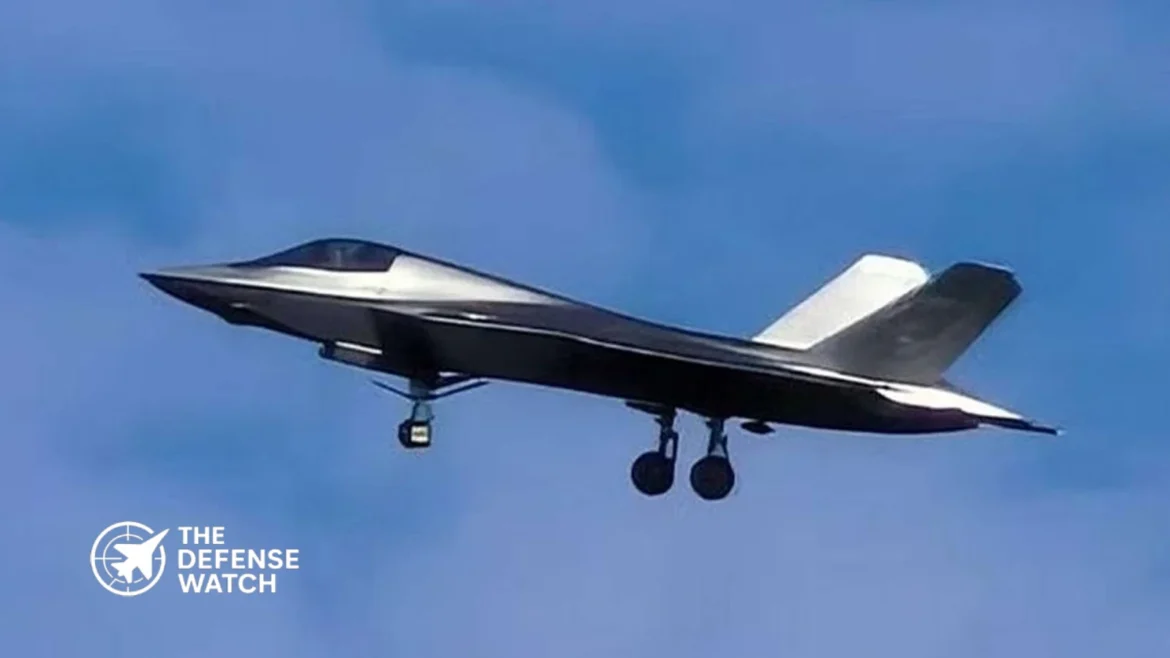
The J-35 stealth fighter has appeared in recent imagery with an unusually bright, mirror-like surface, prompting renewed interest in China’s efforts to develop and sustain low-observable aircraft. The photographs, which circulated during August 2026, show a carrier-based J-35 with a finish that appears significantly more reflective than the subdued gray surfaces normally associated with stealth aircraft.
Takeaways
New imagery highlights an unusual surface treatment on China’s carrier-based stealth fighter
1. Unusual Reflective Surface
Recent photographs appear to show a highly reflective, silver-like surface across portions of a Chinese J-35 carrier-based fighter.
2. Purpose Remains Unconfirmed
Chinese authorities have not publicly identified the material or confirmed that the finish represents a new radar-absorbing or infrared-signature technology.
3. U.S. Test Aircraft Provide A Comparison
Similar mirror-like treatments have previously been observed on U.S. F-22A Raptor and F-35C Lightning II test aircraft, although the objectives of those treatments have not been publicly established.
4. J-35 Is Already A Carrier-Based Stealth Platform
The J-35 has conducted catapult launches and arrested landings aboard China’s Fujian aircraft carrier, demonstrating its integration with the ship’s electromagnetic launch system.
5. Appearance Alone Cannot Prove Stealth Performance
Visible reflectivity does not establish radar cross-section reduction or improved infrared concealment. The material’s electromagnetic and thermal properties would require testing to determine its actual purpose.
The appearance has attracted particular attention because U.S. Air Force F-22A Raptor and U.S. Navy F-35C Lightning II aircraft have previously been photographed with experimental mirror-like treatments. Those American examples were associated with flight-test activity, but their precise purposes have not been publicly disclosed.
For the J-35, however, there is currently no public Chinese statement identifying the material or confirming that it represents a new stealth coating.
What The New J-35 Imagery Shows
Photographs circulating since mid-August appear to show a J-35 with a strongly reflective surface across parts of its fuselage, wings and tail. The aircraft can appear almost metallic when viewed under direct sunlight.
That visual effect is notable, but it should not be treated as proof of a new low-observable technology.
Several factors can affect how an aircraft surface appears in photographs. Sun angle, viewing geometry, camera exposure, image processing and compression can all increase apparent reflectivity. The surface could also represent an experimental treatment, protective film, revised topcoat, manufacturing-stage finish or another temporary application.
The distinction matters because visible appearance and radar signature are not the same thing.
A Mirror-Like Finish Does Not Automatically Mean Better Stealth
The effectiveness of a stealth aircraft depends on far more than what its surface looks like to the human eye.
Radar signature is affected by aircraft geometry, surface continuity, material properties, panel joints, access doors, antennas, sensor apertures and the electromagnetic behavior of coatings. A surface that looks reflective in visible light can interact with electromagnetic energy differently at radar frequencies.
The U.S. Air Force has described the F-22’s low-observable system as a multilayered coating system that requires continuous inspection and maintenance. The service has also noted that low-observable coatings are an important part of maintaining the aircraft’s stealth characteristics.
This provides useful context for interpreting the J-35 photographs. A visible change in the outer surface does not necessarily indicate that the aircraft has received a completely new stealth architecture.
Why The F-22 And F-35C Comparison Matters
The comparison with American aircraft comes from several earlier U.S. test aircraft.
In 2021 and afterward, F-22 Raptors were photographed with highly reflective, chrome-like surface treatments. Similar treatments were later observed on F-35C aircraft operated by the U.S. Navy’s VX-9 test squadron. The F-35C examples displayed distinctive geometric panels across portions of the aircraft.
The Aviationist reported that these treatments were applied around, rather than indiscriminately across, areas such as access panels, weapon bays, sensors and antennas. The exact purpose has not been officially confirmed. Various possibilities have been discussed publicly, including research into infrared signatures and other aspects of signature management.
That history makes the new J-35 imagery worth monitoring, but it does not demonstrate that China is using the same materials or pursuing the same test objectives.
J-35 Already Has A Major Naval Role
The reflective finish is appearing at an important stage in the development of China’s carrier aviation.
China has already demonstrated J-35 operations from the Fujian aircraft carrier. In September 2025, Chinese authorities reported that the J-35, J-15T and KJ-600 had conducted electromagnetic catapult launches and arrested recoveries from the carrier. The Fujian was subsequently commissioned in November 2025.
Janes has also reported that the J-35 has become part of the emerging air wing associated with the Fujian, alongside the J-15T and KJ-600.
That carrier environment creates a particularly demanding materials problem.
A naval stealth fighter must operate in salt-laden air, humidity, ultraviolet exposure and repeated cycles of launch, recovery, maintenance and flight. Surface treatments must also tolerate servicing and environmental stresses without creating excessive maintenance requirements.
For that reason, if the reflective J-35 finish is an experimental material, its long-term durability could be as important as its signature characteristics.
What Analysts Should Watch Next
The most useful evidence will come from repeated observations rather than a single photograph.
If the same treatment appears on multiple J-35 aircraft, particularly with consistent panel shapes and carefully defined areas around sensors, antennas and access points, that would provide stronger evidence of a deliberate engineering program.
Further evidence could also come from photographs after extended flight operations. Wear, peeling, repairs or changes in the treatment could reveal whether the surface is a temporary test application or a more durable material system.
Carrier operations would be particularly informative. Repeated catapult launches, arrested landings and maritime deployments would provide a much better indication of whether the treatment is intended for operational use.
The Larger Stealth Competition
The J-35 development reflects China’s broader effort to expand fifth-generation airpower and carrier aviation. The aircraft is designed around a low-observable configuration and is now associated with China’s increasingly capable carrier force. Chinese official reporting has highlighted its carrier integration and electromagnetic catapult compatibility.
For the United States, the development is relevant because carrier-based stealth aircraft are central to future operations in heavily defended environments. The U.S. Navy’s F-35C provides a mature example of a carrier-capable fifth-generation fighter, while the J-35 represents China’s effort to field a comparable category of naval combat aircraft.
The new reflective finish therefore deserves attention, but it should be viewed as an observation rather than a confirmed technological breakthrough.
At present, the strongest conclusion is straightforward: the J-35 has been photographed with an unusual mirror-like surface, but there is insufficient evidence to determine exactly what the treatment is designed to accomplish.
That distinction is important. The aircraft’s visible appearance can generate useful questions about Chinese signature-management research, but only additional imagery, official disclosures or technical testing can establish whether the treatment changes radar, infrared or other observable signatures.
Boeing Expands Japan F-15 EPAWSS Training Capability
Boeing has received a $17.6 million F-15 Japan EPAWSS contract modification to integrate electronic warfare functionality into the existing weapons system trainer supporting Japan’s F-15 Super Interceptor program. The U.S. Air Force said the $17,609,471 modification will fund software development, testing, simulator software updates, and aircrew and aircraft maintenance courseware. The work is being performed by Boeing in St. Louis, Missouri, and is scheduled for completion on Feb. 28, 2031.
Takeaways
Boeing is expanding Japan’s F-15 Super Interceptor training architecture to include EPAWSS electronic warfare capabilities.
1. $17.6 Million Contract Modification
Boeing received a $17,609,471 modification to an existing U.S. Air Force contract supporting Japan’s F-15 Super Interceptor program.
2. EPAWSS Training Integration
The work will integrate Eagle Passive/Active Warning and Survivability System functionality into Japan’s existing weapons system training architecture.
3. Software And Courseware Development
The modification covers software development, testing, simulator software updates and new aircrew and aircraft maintenance courseware.
4. Work Runs Through February 2031
Boeing will perform the work in St. Louis, Missouri, with completion scheduled for Feb. 28, 2031.
5. Supports Japan’s F-15 Modernization
The training modification follows broader U.S.-Japan investment in modernizing the F-15J fleet, including electronic warfare, radar, mission computer and weapons system upgrades.
The award is part of contract FA8634-22-C-2705, which supports Japan’s F-15 modernization program through the U.S. Foreign Military Sales system. The Air Force Life Cycle Management Center at Wright-Patterson Air Force Base, Ohio, is the contracting activity.
The modification is significant because it extends EPAWSS modernization beyond aircraft hardware. It brings the aircraft’s updated electronic warfare functions into the training environment, allowing the weapons system trainer and associated courseware to reflect the capabilities being introduced to Japan’s F-15 fleet.
What The $17.6 Million Modification Covers
According to the contract announcement, the modification covers several related activities rather than a standalone hardware purchase.
Area Contract Scope Contractor Boeing Location St. Louis, Missouri Contract FA8634-22-C-2705 Modification value $17,609,471 Customer Japan Acquisition Foreign Military Sales Acquisition method Sole source Main system EPAWSS Training element F-15 weapons system trainer Work included Software, testing, simulator updates and courseware Completion Feb. 28, 2031 The contract uses both cost-plus-fixed-fee and firm-fixed-price elements. The full amount is being obligated with Foreign Military Sales funds at the time of award.
The work is therefore focused on integrating the electronic warfare capability into the broader training architecture rather than procuring another operational aircraft modification package.
EPAWSS Brings Digital Electronic Warfare To The F-15
EPAWSS is designed to replace older F-15 electronic warfare technology with an integrated digital system capable of detecting, identifying and locating threats while supporting defensive responses against modern threat systems.
The U.S. Air Force has described EPAWSS as an integrated digital electronic warfare system designed to improve F-15 survivability in contested environments. The system can detect, identify and locate threat emitters and support functions intended to deny, degrade and disrupt hostile systems.
That represents a major change from the architecture used on earlier F-15 aircraft. Air Force documentation has noted that the legacy F-15E electronic warfare system was based on technology developed for Cold War-era threats. EPAWSS provides a modern digital architecture better suited to environments containing more sophisticated radar, electronic attack and integrated air defense systems.
For Japan, incorporating those functions into the training system is important because electronic warfare is not simply an aircraft equipment upgrade. Pilots and maintainers need to understand how the system detects threats, how its warning information is presented, and how the aircraft’s defensive functions interact with other mission systems.
Why Training Integration Matters
A modern electronic warfare suite changes the information available to an aircrew during a mission.
A simulator that does not accurately reproduce those functions can leave a gap between aircraft capability and crew training. By updating the weapons system trainer and associated courseware, Boeing is being tasked with bringing the training environment into closer alignment with the upgraded aircraft.
The modification specifically includes simulator software updates and aircrew courseware. It also includes aircraft maintenance courseware, which is important because the introduction of a modern digital EW architecture creates new training requirements for personnel responsible for operating, troubleshooting and maintaining the system.
The approach also allows training to be developed alongside the broader modernization effort rather than treating training as a separate activity after the aircraft upgrade is complete.
Japan’s F-15 Modernization Is A Broader Program
The EPAWSS training work is one element of a much larger Japanese F-15 modernization effort.
The original F-15 Japan Super Interceptor program was established to modify Japan Air Self-Defense Force F-15MJ aircraft and included development, testing and delivery of weapons system trainers. A 2021 contract announcement valued the initial contract action at up to $471.3 million and identified four weapons system trainers as part of the program.
The program has subsequently received additional modifications for electronic warfare, radar, self-protection and mission computer capabilities.
In December 2024, the U.S. Department of Defense announced a $450.5 million contract action for the F-15 Japan Super Interceptor program covering production Lot One requirements, including radars, self-protection systems and mission computer units.
The broader modernization architecture means Japan is not simply maintaining the existing F-15J configuration. It is updating key mission systems while preserving the airframe as a major component of its air defense force.
Japan’s Ministry of Defense identifies the F-15J/DJ as a principal fighter aircraft of the Japan Air Self-Defense Force. Its published specifications list a two-engine configuration, a maximum speed of approximately Mach 2.5 and a fleet presence across multiple fighter squadrons.
EPAWSS Connects Aircraft Modernization With Pilot Training
The operational value of an electronic warfare upgrade depends partly on whether crews can use the capability effectively.
EPAWSS provides threat detection and electronic warfare functions that can affect how an F-15 crew interprets the electromagnetic environment. Training systems therefore need to represent those functions with sufficient fidelity for pilots to build familiarity with the system before operating the aircraft.
This is where the new Boeing modification has broader significance.
The contract does not announce a new aircraft or a new electronic warfare system. Instead, it addresses an important integration problem created by modernization: ensuring that the training ecosystem keeps pace with changes to the aircraft.
For Japan’s F-15 force, this can support a more consistent transition between classroom instruction, simulator training and aircraft operations.
Japan Already Has A Dedicated EPAWSS Procurement Framework
Japan’s involvement with EPAWSS predates the latest training modification.
The Defense Security Cooperation Agency established a special nonrecurring cost for Japan associated with the EPAWSS AN/ALQ-250 system in 2022. The DSCA documentation specifically identifies the system as the Eagle Passive Active Warning Survivability F-15 System and lists a Japan-specific special nonrecurring charge of $1,868,224.
That documentation confirms that EPAWSS has been incorporated into the formal Foreign Military Sales framework supporting Japan’s F-15 modernization.
The latest Boeing modification consequently fits into an established modernization pathway rather than representing an isolated training investment.
F-15 Electronic Warfare Modernization Is Advancing In The U.S.
The U.S. Air Force is also moving EPAWSS into wider operational use on its own F-15 fleet.
In January 2025, the Air Force announced delivery of the first EPAWSS-equipped F-15E Strike Eagles to RAF Lakenheath in the United Kingdom. The aircraft were described as the first operational F-15Es equipped with the system and were assigned to the 48th Fighter Wing.
In 2026, the Air Force also established a dedicated EPAWSS Speedline at Warner Robins Air Logistics Complex to accelerate installation of the system on F-15E aircraft. The new line operates independently from standard programmed depot maintenance, allowing aircraft to receive the upgrade without waiting for their normal maintenance cycle.
These developments show that EPAWSS is transitioning from a development and testing effort toward broader fleet integration.
For Japan, aligning its training architecture with EPAWSS becomes increasingly relevant as the upgraded capability moves closer to operational use.
What The Contract Means For U.S.-Japan Defense Cooperation
The award also illustrates the role of Foreign Military Sales in sustaining common technology and training standards between the United States and an important Indo-Pacific ally.
Japan operates a large F-15J fleet and has been investing in modernization to keep the aircraft relevant as its principal fighter force evolves. The U.S. government, Boeing and Japanese defense organizations therefore have to manage not only aircraft hardware but also mission software, simulators, maintenance training and operational courseware.
The training component can be particularly important for long-term sustainment. A weapons system trainer must remain synchronized with aircraft configuration changes, while maintenance personnel require updated technical instruction as avionics and electronic warfare equipment evolve.
The $17.6 million modification addresses that supporting infrastructure.
Long Completion Timeline Reflects Complex Integration Work
The contract is scheduled to run until Feb. 28, 2031, nearly five years from the current award.
That timeline does not mean the F-15s will remain without training capability until 2031. Rather, the length of the effort reflects the software development, integration, testing and courseware work required to modify an established weapons system training architecture.
Electronic warfare training also has to account for interactions between sensors, warning systems, countermeasures and the wider mission system.
The challenge is therefore broader than reproducing individual cockpit displays. The training environment must accurately represent how the modernized aircraft responds to an electromagnetic threat environment and how aircrew and maintenance personnel interact with the new system.
Bottom Line
Boeing’s $17.6 million F-15 Japan EPAWSS contract modification is a training and systems-integration award supporting Japan’s broader F-15 Super Interceptor modernization program.
The work will bring EPAWSS functionality into the existing weapons system trainer while funding simulator software updates, testing and aircrew and maintenance courseware.
The award follows earlier U.S.-Japan investments in EPAWSS, radars, self-protection systems and mission computers for Japan’s F-15 fleet. It also comes as the U.S. Air Force expands operational fielding of EPAWSS on its own F-15E force.
The immediate result is not a new aircraft capability announcement, but a modernization of the training infrastructure needed to operate and maintain that capability. For a fleet undergoing extensive avionics and electronic warfare upgrades, keeping simulators and courseware synchronized with aircraft configuration is a central part of turning new hardware and software into usable operational capability.
Fastest Fighter Jet in the World
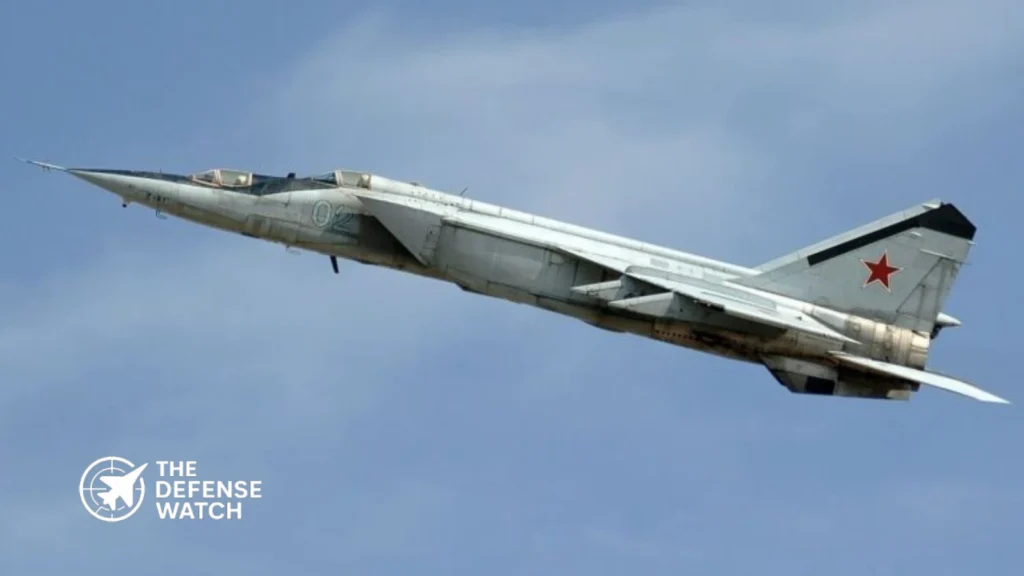
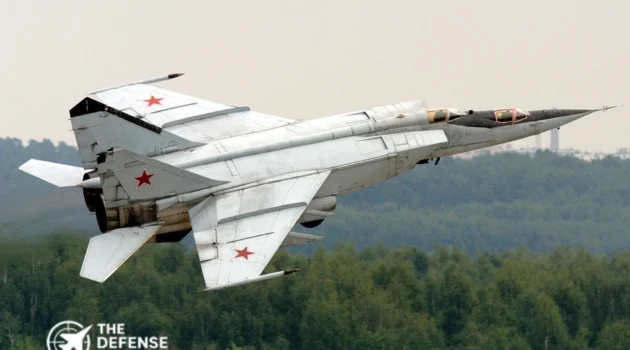
The fastest fighter jet in the world is generally identified as the Soviet-designed Mikoyan-Gurevich MiG-25 Foxbat, a high-speed interceptor that could reach an operational maximum of about Mach 2.83, or roughly 3,000 km/h at altitude. Guinness World Records identifies the MiG-25 as the fastest combat jet, while radar tracking of a reconnaissance version recorded approximately Mach 3.2 under exceptional conditions.
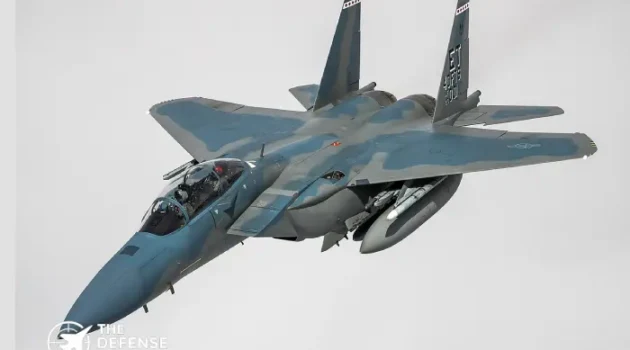
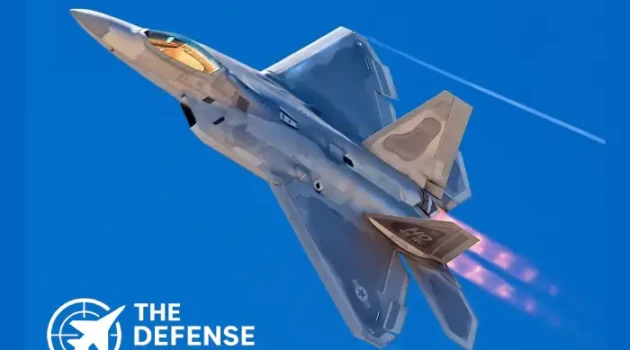
That distinction matters because maximum speed alone does not determine which fighter is most effective in modern air combat. The MiG-25 was designed around a Cold War requirement to intercept high-speed, high-altitude aircraft. Modern fighters such as the F-22 Raptor and F-15EX Eagle II place greater emphasis on stealth, sensors, electronic warfare, networking, weapons range and survivability.
So, what is the fastest fighter jet in the world? If the question is based on maximum speed among purpose-built fighter and interceptor aircraft, the answer remains the MiG-25 Foxbat, with the closely related MiG-31 Foxhound occupying the next position at approximately Mach 2.83.
Takeaways
Speed records tell only part of the story in modern fighter warfare
1. MiG-25 Holds the Speed Crown
The MiG-25 Foxbat is widely recognized as the fastest combat jet, with an operational maximum of about Mach 2.83.
2. Mach 3 Was Possible Under Extreme Conditions
A reconnaissance Foxbat was tracked at approximately Mach 3.2, but sustained operation at that speed could cause severe engine damage.
3. MiG-31 Is the Closest Successor
The MiG-31 Foxhound inherited the high-speed interceptor mission and can reach approximately 3,000 km/h while adding improved radar, range and weapons capabilities.
4. F-15EX Leads Among Modern U.S. Fighters
The F-15EX Eagle II has a published maximum speed of Mach 2.5 and combines high speed with a 29,500-pound weapons payload, AESA radar and electronic warfare capabilities.
5. Speed Is No Longer the Main Measure of Air Superiority
Fifth-generation fighters increasingly trade extreme top speed for stealth, sensor fusion, networking, electronic warfare and long-range weapons.
What Is the Fastest Fighter Jet in the World?
The MiG-25 Foxbat is the strongest answer to the question, what is the fastest fighter jet in the world?
Developed by the Soviet Mikoyan design bureau, the MiG-25 was created primarily as a high-speed interceptor and reconnaissance aircraft. Its design reflected a specific Cold War threat environment in which Soviet air defenses needed to respond to high-altitude, high-speed aircraft.

The aircraft used two powerful R-15-series afterburning turbojets, a large airframe and extensive use of stainless steel to tolerate the thermal loads associated with sustained high-speed flight. Available technical data places the MiG-25’s loaded maximum speed at approximately Mach 2.83, equivalent to around 3,000 km/h at altitude.
The aircraft could theoretically go faster. A reconnaissance Foxbat was tracked at about Mach 3.2 during an emergency high-speed flight. However, this was not a normal operating speed. Exceeding the aircraft’s intended limits could cause extreme engine temperatures and damage.
This distinction is important when comparing the fastest jet fighter plane in the world with other military aircraft.
MiG-25 Foxbat: Engineering Behind the Speed
The MiG-25’s speed came from an unusual combination of power, aerodynamics and mission specialization.
Its two afterburning engines generated enormous thrust, while the airframe was optimized for high-speed flight at altitude. The aircraft was not designed primarily for close-range maneuvering. Instead, its mission was to climb quickly, reach very high speeds and intercept or conduct reconnaissance against aircraft operating at extreme altitude.
The available technical data lists a maximum level speed of approximately Mach 2.83 in a loaded configuration, with an exceptional clean-aircraft figure reaching approximately Mach 3.2. It also records an absolute altitude achievement of approximately 37,650 meters during test operations.
The aircraft carried a powerful radar and could employ several types of air-to-air missiles depending on the variant. Its interceptor versions were built around the idea that speed and altitude could provide the opportunity to engage threats before they reached Soviet airspace.
The design philosophy was very different from that of modern stealth fighters.
Why the MiG-25 Was Built for Speed
During the Cold War, the Soviet Union faced concerns about high-altitude strategic aircraft, including U.S. bombers and reconnaissance platforms.
The response was an interceptor capable of operating at extreme altitude and speed.
The MiG-25 therefore prioritized:
- Very high maximum speed
- High-altitude performance
- Rapid climb
- Powerful radar
- Long-range air-to-air weapons
- Interception of high-speed targets
This explains why the aircraft could outperform many more maneuverable fighters in straight-line speed while being comparatively less effective in a close-range dogfight.
The MiG-25’s development also influenced the next generation of Soviet interceptors.
MiG-31 vs MiG-25: Which Is Faster?
The MiG-31 Foxhound is the direct successor to the MiG-25 interceptor concept and is often listed alongside the Foxbat among the fastest fighter aircraft ever built.
Russian state technology company Rostec states that the MiG-31 can reach approximately 3,000 km/h and operate at altitudes of up to 21 kilometers. The aircraft was developed to replace the MiG-25 in the Soviet air-defense interceptor role.
At maximum published speed, the MiG-31 and MiG-25 are therefore extremely close.
The difference is that the MiG-31 was developed as a more capable combat system rather than simply a faster aircraft. It introduced a two-person crew, improved avionics, longer range and a more advanced interception architecture.
The MiG-31 also became notable for its ability to coordinate with other aircraft and ground-based air-defense assets.
From a pure speed perspective, however, the MiG-25 retains the stronger historical claim to the fastest combat jet record. Guinness World Records specifically identifies the MiG-25 as the fastest combat jet.
Fastest Fighter Jet in the World: How the F-15 Compares
The F-15 Eagle is slower than the MiG-25, but it represents a very different approach to air superiority.
Boeing lists the F-15’s maximum speed at more than Mach 2.5, or more than 1,600 mph. The aircraft was designed as an air-superiority fighter with high thrust, maneuverability, radar capability and substantial weapons capacity.
The latest F-15EX Eagle II retains the high-speed characteristics of the Eagle family. Boeing publishes a maximum speed of Mach 2.5, a maximum payload of 29,500 pounds and a service ceiling of 50,000 feet. The aircraft also incorporates an AESA radar, electronic warfare systems, digital flight controls and an open mission architecture.
This makes the F-15EX particularly relevant to modern air forces.
The MiG-25 was designed to get to a target extremely quickly. The F-15EX is designed to combine speed with long-range weapons, advanced sensors, electronic warfare and networked operations.
That is a major difference between Cold War and modern air combat.
F-22 Raptor: Faster Does Not Always Mean More Capable
The F-22 Raptor illustrates why maximum speed is no longer the sole measure of fighter effectiveness.
The F-22 combines low-observable stealth, supercruise, agility and integrated avionics. Lockheed Martin identifies supercruise as a core capability, allowing the aircraft to sustain supersonic flight without relying on afterburners.
Its maximum speed is generally reported around Mach 2.0 to Mach 2.25, depending on the source and configuration, below the MiG-25’s maximum.
But a modern air-to-air engagement is not simply a race between aircraft.
A fighter may need to:
- Detect an opponent before being detected.
- Establish a firing solution.
- Launch a missile from advantageous geometry.
- Avoid or defeat enemy sensors and weapons.
- Share targeting information with other platforms.
- Survive after weapons employment.
Stealth, sensor fusion, electronic warfare and networking can therefore provide a greater combat advantage than several hundred additional kilometers per hour of maximum speed.
Fastest Fighter Jets Comparison
Aircraft Type Approx. Maximum Speed Primary Design Focus Status MiG-25 Foxbat High-speed interceptor Mach 2.83 operational High-altitude interception Largely retired MiG-31 Foxhound Long-range interceptor Mach 2.83 / 3,000 km/h Long-range air defense In service F-15 Eagle Air-superiority fighter Mach 2.5+ Air superiority and multirole missions In service F-15EX Eagle II Advanced multirole fighter Mach 2.5 Long-range weapons, payload, networking In service Su-27 family Air-superiority fighter About Mach 2.35 Air superiority and maneuverability Multiple variants in service MiG-29 family Multirole fighter About Mach 2.3 Air combat and multirole operations Multiple variants in service F-22 Raptor Fifth-generation air-superiority fighter About Mach 2+ Stealth and air dominance In service Speed figures should be treated as maximum performance figures rather than normal combat speeds. Aircraft often fly substantially slower when carrying weapons, external fuel tanks or other mission equipment.
How Fighter Jet Speed Is Actually Measured
A common mistake in discussions about the fastest fighter jet world rankings is treating every published speed figure as directly comparable.
Aircraft speed depends on:
- Altitude
- Air temperature
- Aircraft weight
- Fuel load
- External weapons
- External fuel tanks
- Engine condition
- Flight profile
- Airframe configuration
Mach number also changes with atmospheric conditions because Mach is based on the local speed of sound.
For this reason, a fighter reaching Mach 2.8 in a high-altitude test configuration does not mean it can sustain Mach 2.8 while carrying a full combat weapons load at low altitude.
The MiG-25 demonstrates this particularly well. Its extraordinary speed was achievable under conditions that imposed significant thermal and mechanical stress on the aircraft and engines.
The F-15EX and the Modern Meaning of Speed
The F-15EX is useful for understanding how the concept of speed has evolved.
Boeing describes the aircraft as a high-energy fighter optimized for large weapons loads, long-range strike and air-dominance missions. Its published specifications include Mach 2.5 maximum speed and a 29,500-pound payload.
The aircraft can also carry large numbers of air-to-air weapons. Boeing states that the F-15EX can accommodate up to 12 AMRAAMs or an equivalent combination of large ordnance, while its AESA radar and electronic warfare suite support operations in contested environments.
This creates a different kind of speed advantage.
The aircraft’s high-energy performance can help it reposition rapidly, extend weapon engagement opportunities and maintain energy during combat. But its value comes from the combination of speed, range, payload, sensors and networking.
Boeing is also positioning the F-15EX as a platform capable of working with future collaborative combat aircraft and other networked systems.
Why the Fastest Fighter Jet Is Not Automatically the Best Fighter
The MiG-25’s record demonstrates the limits of using one specification to rank combat aircraft.
A fighter’s effectiveness can depend on several interconnected capabilities:
Stealth
Low observability can reduce the range at which an opponent detects and tracks the aircraft.
Sensors
Modern AESA radars and distributed sensors provide improved target detection, tracking and identification.
Electronic Warfare
Electronic warfare can interfere with enemy radars, communications and targeting systems, helping an aircraft operate inside contested environments.
Weapons
Long-range air-to-air missiles can allow a fighter to attack without entering a traditional visual-range dogfight.
Networking
Modern fighters increasingly operate as nodes in a wider combat network involving aircraft, satellites, drones, ships and ground systems.
Sensor Fusion
The ability to combine information from multiple sensors can give pilots a more complete picture of the battlespace.
These factors explain why a Mach 2-class fifth-generation fighter can have a greater combat advantage than an older Mach 3-class interceptor in many scenarios.
The Strategic Legacy of the MiG-25
The MiG-25 remains important because it represented an extreme solution to a specific strategic problem.
Its speed, altitude and radar performance were designed around the possibility of confronting high-altitude strategic aircraft.
The aircraft also had an important indirect effect on U.S. fighter development. Western assessments of the Foxbat contributed to concerns about Soviet air-superiority capabilities and influenced the thinking that surrounded the development of the F-15.
The resulting F-15 became one of the most successful air-superiority fighters in aviation history.
Boeing’s modern F-15EX continues that lineage, combining the basic high-energy characteristics of the Eagle with modern avionics, electronic warfare and networked warfare capabilities.
What About the Fastest Jet Fighter Plane in the World Today?
If the question is strictly about maximum fighter or interceptor speed, the MiG-25 remains the key answer.
If the question is about the fastest widely deployed modern fighter, the answer changes.
The F-15 family remains one of the fastest major fighter families in active service, with the F-15EX officially listed by Boeing at Mach 2.5. The MiG-31 also retains a maximum speed of approximately 3,000 km/h and remains an important high-speed interceptor platform.
The distinction between historical speed records and current combat relevance is essential.
The MiG-25 is the stronger answer to the historical speed question. The MiG-31 is the more relevant successor to the Soviet high-speed interceptor concept. The F-15EX represents the modern U.S. approach to combining high speed with weapons capacity, networking and electronic warfare.
Challenges of Extreme Speed
Mach 3-class flight creates severe engineering problems.
As aircraft speed increases, aerodynamic heating rises dramatically. Engine components face greater thermal loads, while air intakes must manage enormous quantities of air at high Mach numbers.
The MiG-25’s experience demonstrated these limitations.
Its engines could support extraordinary speeds, but prolonged operation at the extreme end of the envelope could result in severe engine damage. This is one reason the aircraft’s practical operational limit was lower than the highest speed ever recorded by the type.
Extreme speed also carries penalties in:
- Fuel consumption
- Engine life
- Maintenance requirements
- Airframe heating
- Weapon integration
- Maneuverability
- Operating cost
Modern fighter development therefore generally seeks a balance rather than maximum speed at any cost.
The Future of Fighter Speed
The future of combat aviation is unlikely to be determined by maximum Mach number alone.
Sixth-generation fighter programs are expected to emphasize integrated sensors, low observability, electronic warfare, autonomous systems, long-range weapons and manned-unmanned teaming.
Speed will remain important because it affects reaction time, energy, range and survivability. But the more important question will increasingly be how quickly an aircraft can sense, decide, communicate and engage.
That is particularly relevant as air forces develop collaborative combat aircraft and other autonomous systems.
Boeing describes the F-15EX as having a growth path toward collaborative combat aircraft and manned-unmanned teaming, demonstrating how fighter operations are moving toward networked formations rather than isolated aircraft.
The result is a shift from speed as an isolated performance statistic toward speed as part of a broader kill chain.
Conclusion: Is the MiG-25 Still the Fastest Fighter Jet in the World?
Yes, with an important qualification.
The MiG-25 Foxbat remains the best-supported answer to the question, what is the fastest fighter jet in the world? Guinness World Records identifies the MiG-25 as the fastest combat jet, while its operational performance is generally cited at approximately Mach 2.83. A reconnaissance version was tracked at approximately Mach 3.2, but that was not a normal sustainable operating speed.
The MiG-31 comes very close, with a published maximum speed of approximately 3,000 km/h, while the F-15 family reaches approximately Mach 2.5.
Yet the fastest fighter jet is not necessarily the most capable fighter.
Modern air superiority increasingly depends on stealth, sensor fusion, electronic warfare, network connectivity, weapons range and the ability to operate as part of a wider multi-domain force.
The MiG-25 therefore remains a remarkable answer to the speed question, but modern air warfare has moved beyond the simple pursuit of maximum Mach number. The defining competition is now about who can detect first, decide first, engage first and survive inside an increasingly contested battlespace.
RAF Rivet Joint Deployment Adds ISR Capacity in Norway
The RAF Rivet Joint Norway deployment adds a specialized airborne intelligence capability to an increasingly active NATO operating environment in the High North. The Royal Air Force has confirmed that 51 Squadron has deployed an RC-135W Rivet Joint to Ørland Air Base in Norway during 2026, using the deployment to demonstrate the aircraft’s ability to operate from a dispersed location with limited support.
Takeaways
The RAF is expanding airborne intelligence support for Allied operations in Norway and the High North.
1. Rivet Joint Deploys to Norway
The RAF has deployed an RC-135W Rivet Joint to Norway as part of its wider effort to operate from dispersed locations and support Allied activity in the High North.
2. Electronic Intelligence Is Central
The aircraft specializes in collecting and analyzing communications intelligence and electronic signals intelligence, providing information that can improve Allied situational awareness.
3. Norway Is a Key NATO Air Hub
NATO has strengthened its Arctic posture through Arctic Sentry, while Norway hosts important air command, surveillance and fighter operations supporting the Alliance’s northern flank.
4. Rivet Joint Complements F-35A Operations
F-35A aircraft provide advanced sensing and combat capabilities, while Rivet Joint contributes specialized electronic intelligence that can add depth to the wider operational picture.
5. High North ISR Is Becoming More Integrated
The deployment fits a broader NATO effort to combine national aircraft, command centers, space systems, maritime platforms and uncrewed systems across the Arctic and North Atlantic.
The deployment comes as NATO increases its focus on Arctic security and integrates more Allied airpower across northern Europe. NATO launched Arctic Sentry in February 2026, bringing national military activities in the Arctic and High North into a broader Alliance framework led by Joint Force Command Norfolk.
The result is a more connected operating environment in which intelligence collection, air operations, command and control, and fifth-generation fighter activity increasingly need to function together.
What the RAF Rivet Joint Brings to the High North
The RC-135W Rivet Joint is an airborne intelligence, surveillance and reconnaissance platform operated by RAF 51 Squadron.
Its primary mission is different from that of a fighter aircraft. Rather than providing direct combat power, the aircraft collects and analyzes electronic information, including communications and other signals, to build a clearer picture of activity in the operating environment. The RAF describes the aircraft as a specialized ISR platform capable of collecting, analyzing and sharing electronic signals intelligence and communications intelligence.
That distinction is important in the Arctic, where geography, distance and limited infrastructure create significant challenges for persistent surveillance.
An airborne intelligence aircraft can operate over large areas and contribute information to commanders without needing to rely exclusively on fixed ground-based sensors. Its value therefore extends beyond the aircraft itself, because the information it produces can support wider intelligence and command networks.
Norway’s Growing Role in NATO Arctic Operations
Norway has become an increasingly important operating location for NATO’s northern posture.
NATO describes the Arctic and High North as critical to collective defense because the region connects North America and Europe through important air, maritime and communications routes. Seven of the eight Arctic states are now NATO members, with Finland and Sweden adding significant geographic depth to the Alliance’s northern posture.
The Alliance opened a Combined Air Operations Centre in Bodø in October 2025. NATO says the center oversees air operations across the Nordic region, Baltic Sea, North Atlantic and Barents Sea, providing additional operational awareness and flexibility for the northern flank.
This command infrastructure gives deployments such as the RAF Rivet Joint mission greater relevance. Intelligence aircraft operating in Norway can contribute to a broader architecture that links airborne sensors with national and NATO command structures.
F-35A Integration Adds a Fifth-Generation Layer
The Rivet Joint deployment also fits with the expanding use of F-35A aircraft in northern Europe.
During Cold Response 26, U.S. Air Force F-35A aircraft from the 48th Fighter Wing operated from Ørland in Norway alongside Norwegian F-35s. U.S. Air Forces in Europe said the exercise tested Allied interoperability in demanding Arctic conditions, including complex night operations.
The integration continued during Ramstein Flag 2026. F-35 aircraft from Denmark, Italy, Norway and the United States operated from multiple northern European locations, with the exercise testing integrated air and missile defense, intelligence sharing, counter-A2/AD operations and Agile Combat Employment.
The combination of these platforms is significant because they perform complementary functions.
Capability Primary Contribution Operational Value RAF RC-135W Rivet Joint Electronic and communications intelligence Builds awareness of electromagnetic activity F-35A Lightning II Stealth, sensing and combat operations Provides advanced tactical sensing and strike capability NATO command centers Command and control Fuse information and coordinate Allied air operations Space-based systems Persistent regional observation and communications Extends surveillance and connectivity Maritime and uncrewed systems Additional sensing and monitoring Broadens multi-domain awareness The value is therefore not simply the presence of one more aircraft. It is the ability to connect different sensors and platforms into a common operational picture.
Why Electronic Intelligence Matters in the Arctic
The High North presents a difficult surveillance problem.
The region covers enormous distances, contains relatively sparse infrastructure and imposes severe environmental demands on aircraft, personnel and ground systems. NATO therefore identifies ISR as one of the capabilities required to strengthen its Arctic posture.
Electronic intelligence can provide information that conventional visual surveillance cannot easily obtain.
Signals collected from communications and electronic systems can help analysts understand activity, identify patterns and support wider intelligence assessments. The information can then be combined with data from fighters, maritime platforms, satellites, uncrewed systems and other intelligence sources.
NATO describes Joint Intelligence, Surveillance and Reconnaissance as a core element of Alliance operations because it brings together information from national and NATO assets across air, land, maritime, space and cyber domains.
For the High North, this approach is particularly important because no single sensor can provide complete coverage across such a large and complex area.
Agile Deployment Is Another Part of the Mission
The RAF’s June 2026 deployment to Ørland also demonstrated an operational concept beyond intelligence collection.
The service said 51 Squadron used the deployment to show that the Rivet Joint could operate from a location with minimal support. The exercise was part of an Agile Combat Employment activity intended to improve the RAF’s ability to operate from different locations alongside NATO partners.
This matters because fixed operating locations can become vulnerabilities during a high-intensity conflict.
Dispersing aircraft across multiple locations can complicate an adversary’s targeting problem and provide commanders with additional options for sustaining operations. In northern Europe, that concept has particular importance because NATO is working to operate across a large geographic area while maintaining access to reinforcement routes between North America and Europe.
The RAF has also demonstrated multinational tanker and intelligence interoperability. In June 2026, an RAF Rivet Joint participated in a three-nation air-to-air refueling activity involving a French A330 MRTT Phénix and a U.S. TC-135 used for training.
Arctic Sentry Provides the Wider NATO Framework
The Rivet Joint deployment should also be viewed within NATO’s broader Arctic Sentry activity.
NATO launched Arctic Sentry in February 2026 to strengthen deterrence and defense across the Arctic and High North. The activity is led by Joint Force Command Norfolk and coordinates with Allied Command Transformation, NORAD, U.S. Northern Command and U.S. European Command.
That command relationship is particularly relevant for the United States.
The Arctic is simultaneously connected to the European theater and the defense of North America. Intelligence collected in the High North can therefore have relevance for NATO’s European command structure as well as the wider North American security architecture.
The challenge is increasingly one of information integration. Multiple national forces are operating aircraft and other sensors across the same geographic area, making data sharing, command relationships and common operating pictures as important as individual platform performance.
Implications for U.S. and Allied Airpower
For the United States, the RAF deployment reinforces a broader trend toward greater Allied responsibility in the northern approaches.
U.S. forces remain deeply involved in Arctic exercises. During Cold Response 26, U.S. Air Force F-35As operated alongside Norwegian F-35s from Ørland, while other U.S. aircraft supported operations from additional Norwegian locations. More than 25,000 personnel from more than a dozen NATO nations participated across Norway, Sweden and Finland.
This creates an increasingly integrated northern airpower network.
The operational benefit is not simply additional aircraft. It is the ability to combine specialized capabilities. F-35s can contribute advanced sensing and combat power, Rivet Joint can collect electronic intelligence, tankers can extend aircraft endurance, command centers can coordinate operations, and space and maritime systems can add information from other domains.
That layered approach is consistent with NATO’s broader move toward multi-domain operations in the Arctic.
The Bigger Strategic Picture
NATO’s Arctic posture has changed significantly with the addition of Finland and Sweden, the creation of Arctic Sentry and the development of additional command and surveillance infrastructure.
The RAF’s Rivet Joint deployment is one element of that larger shift.
Its immediate contribution is specialized airborne intelligence collection. Its broader significance is the demonstration that Allied ISR aircraft can deploy into Norway, work alongside partner forces and feed information into a multinational operating framework.
For U.S. and European defense planners, that integration is increasingly important as NATO seeks to maintain awareness across the northern flank while ensuring that air, maritime, land, space and cyber capabilities can operate together.
The High North is becoming less of a peripheral theater and more of a connected part of NATO’s overall defense architecture. The continued integration of Rivet Joint, F-35A and other Allied capabilities shows how the Alliance is building that architecture around shared intelligence, distributed operations and multinational command and control.
Boeing And U.S. Navy Modernize The EA-18G Growler
Boeing and the U.S. Navy are continuing upgrades to the EA-18G Growler to strengthen airborne electronic attack against increasingly sophisticated radar, communications and air defense systems. Boeing highlighted the modernization effort as the Growler reaches 20 years since its first flight in August 2006.
Takeaways
The U.S. Navy is modernizing the EA-18G Growler to keep airborne electronic attack effective against increasingly capable threats.
1. Growler Reaches 20 Years Since First Flight
The first EA-18G Growler flew on August 15, 2006, beginning the replacement of the EA-6B Prowler as the Navy’s dedicated airborne electronic attack aircraft.
2. Growler Capability Modification
The Navy’s Growler Capability Modification program adds upgrades intended to increase processing power, detection capability and compatibility with new electronic warfare systems.
3. Next Generation Jammer Integration
The EA-18G is being adapted to employ the AN/ALQ-249 Next Generation Jammer, which uses digital and electronically scanned technologies to improve airborne electronic attack against modern threats.
4. Mid-Band Capability Is Already Operational
The Navy declared Initial Operational Capability for Next Generation Jammer Mid-Band in December 2024, with the capability subsequently deployed operationally aboard a carrier strike group.
5. Modernization Extends the Growler’s Relevance
The upgrade approach allows the Navy to improve a proven carrier-based aircraft rather than replace its airframe, while adding new electronic warfare hardware and software as the threat environment changes.
The modernization centers on the Growler Capability Modification program, increased onboard processing and detection capabilities, and integration of the Next Generation Jammer family. These changes are intended to keep the aircraft effective as adversaries field more capable and networked electromagnetic systems.
The Navy describes the EA-18G as a derivative of the F/A-18F Super Hornet that combines the aircraft’s carrier suitability with a specialized electronic warfare suite. The platform replaced the EA-6B Prowler and provides airborne electronic attack, electronic surveillance and support for suppression of enemy air defenses.
From EA-6B Replacement To Core Electronic Warfare Platform
The first EA-18G flew from Lambert International Airport in St. Louis, Missouri, on August 15, 2006. The aircraft subsequently entered the Navy’s test and fleet organizations before achieving its first combat deployment in 2011.
The first fleet Growler was delivered to Electronic Attack Squadron VAQ-129 in June 2008. Boeing delivered the 100th aircraft to the Navy in May 2014, while Australia became the first international operator of the aircraft.
The aircraft is designed to operate from aircraft carriers while conducting electronic attack missions that can include stand-off and escort jamming. Its role is not limited to disrupting hostile emitters. The Growler can also collect electronic intelligence, provide threat information and support the wider air wing with targeting and warning data.
This makes the aircraft an important part of the carrier air wing’s broader sensing and survivability architecture rather than simply a dedicated jammer.
Growler Capability Modification Targets The Aircraft’s Electronic Warfare Architecture
The Navy began its five-year Growler Capability Modification program in 2021. NAVAIR described the effort as the first major capability upgrade to the EA-18G since the aircraft entered service.
The program supports modifications required to integrate the Next Generation Jammer Mid-Band system and establish a foundation for further upgrades.
Boeing’s current description of the aircraft identifies Growler modernization with H16 and Next Generation Jammer integration. The company also emphasizes the aircraft’s open mission systems approach, which is intended to support the insertion of additional capabilities as requirements evolve.
Modernization area Purpose Processing power Supports faster handling of electronic warfare information Detection Improves identification and characterization of electromagnetic threats Next Generation Jammer integration Enables newer external jamming capabilities Software and mission systems Provides a path for future capability insertion Growler Capability Modification Integrates multiple aircraft and electronic warfare improvements The importance of processing power is particularly significant because modern electronic warfare is increasingly dependent on rapidly identifying emitters, determining their characteristics and selecting appropriate responses.
An aircraft that can detect more signals but cannot process them quickly enough may gain less operational value than one able to turn electromagnetic information into timely decisions.
Next Generation Jammer Replaces The Legacy ALQ-99
The most important part of the modernization effort is the transition from the legacy ALQ-99 Tactical Jamming System toward the Next Generation Jammer family.
The Navy says the Next Generation Jammer is designed to augment and eventually replace the ALQ-99. It uses digital technologies and electronically scanned arrays to provide greater airborne electronic attack capability, including improved ability to disrupt, deny and degrade hostile air defense and communications systems.
The transition is occurring incrementally rather than through a single replacement program.
The Next Generation Jammer Mid-Band, or NGJ-MB, addresses the middle portion of the electromagnetic spectrum. The Navy declared the system operationally ready in December 2024, and it was subsequently deployed with an EA-18G squadron aboard USS Abraham Lincoln during a carrier strike group deployment.
The Navy identifies NGJ-MB as the AN/ALQ-249(V)1. Production pods began reaching the fleet in 2023 after the program passed Milestone C in 2021.
Why The Upgrade Matters For Carrier Aviation
The strategic value of the Growler is closely linked to the changing character of air defense.
Modern integrated air defense networks can combine multiple radar types, communications networks, command systems and mobile missile units. These systems can also operate across different frequency ranges, making electronic attack more complicated than simply overpowering one radar.
The Navy’s Next Generation Jammer architecture is therefore being developed in multiple frequency bands.
NAVAIR identifies NGJ-MB as the mid-band component and NGJ-LB as the low-band component. The low-band system remains in the Engineering and Manufacturing Development phase, demonstrating that the broader replacement of the ALQ-99 is a continuing modernization effort rather than a completed transition.
This incremental approach also matters for fleet availability. Rather than waiting for an entirely new electronic warfare architecture to mature, the Navy can introduce individual capabilities as they become available while retaining legacy equipment where necessary.
Growler Supports More Than Jamming
Electronic attack is only one part of the EA-18G mission.
The aircraft can contribute to electronic surveillance and threat characterization while supporting other aircraft operating in contested electromagnetic environments. Boeing says the Growler can provide threat warnings and targeting information to platforms including the F/A-18 and F-35.
That role becomes increasingly important as aircraft depend on networked sensors and communications.
For a carrier air wing, electronic warfare can affect the conditions under which other aircraft operate. A Growler may help reduce the effectiveness of hostile sensors while simultaneously improving the air wing’s understanding of the electromagnetic environment.
The aircraft therefore functions as both an electronic attack platform and an airborne contributor to the wider kill chain.
The Technical Challenge Is Keeping Pace With Threat Evolution
The central challenge for the EA-18G modernization program is not simply adding more power to a jammer.
Electronic warfare is a contest between sensing, processing and adaptation. Hostile systems can change frequencies, alter waveforms, use different emitters or operate as part of distributed networks. An effective airborne electronic attack system must therefore respond to a changing electromagnetic environment rather than rely exclusively on fixed threat libraries.
The Navy’s use of digital and electronically scanned technologies in the Next Generation Jammer reflects this requirement. NAVAIR specifically identifies rapid hardware and software updates as part of the NGJ architecture, allowing the system to adapt as threats evolve.
That adaptability also explains why aircraft processing and mission-system upgrades are important.
A new jammer pod alone does not determine the effectiveness of the electronic warfare aircraft. The aircraft must be able to carry, communicate with and employ the new system while integrating information from its own sensors and other platforms.
Modernization Extends A Proven Carrier Aircraft
The EA-18G’s commonality with the F/A-18 Super Hornet provides an important sustainment advantage.
Boeing says the Growler shares more than 90 percent of its components and systems with the Super Hornet family. That commonality supports carrier operations, maintenance infrastructure and training across the two aircraft types.
The Navy’s modernization strategy consequently combines an established airframe with new mission systems.
This is significant because electronic warfare technology can change considerably faster than an aircraft’s basic airframe. Upgrading processors, software, sensors and external jamming equipment can allow the platform to absorb new capabilities without requiring the Navy to develop an entirely new carrier-based electronic attack aircraft.
The Navy’s FY2026 budget documentation also identifies Growler Capability Modification as supporting H16 and Airborne Electronic Attack System Enhancement and Next Generation Jammer Mid-Band software and hardware integration.
What Comes Next For The EA-18G
The Growler’s modernization path is likely to remain centered on incremental improvements rather than a single major redesign.
The immediate foundation is the integration of current Next Generation Jammer capabilities, continued aircraft modifications and improvements to processing and detection. The longer-term objective is a broader electronic warfare architecture capable of operating across additional portions of the electromagnetic spectrum.
For the U.S. Navy, the value of this approach is operational continuity. Carrier air wings can retain a dedicated airborne electronic attack aircraft while progressively replacing aging electronic warfare equipment.
For allied forces operating alongside U.S. naval aviation, the Growler also provides an electronic warfare capability that can support fourth- and fifth-generation aircraft operating in the same battlespace.
Twenty years after its first flight, the EA-18G remains a specialized component of U.S. naval aviation. Its future effectiveness will depend less on the age of the airframe than on the Navy’s ability to keep its sensors, processors, software and jamming systems ahead of changing electromagnetic threats.