

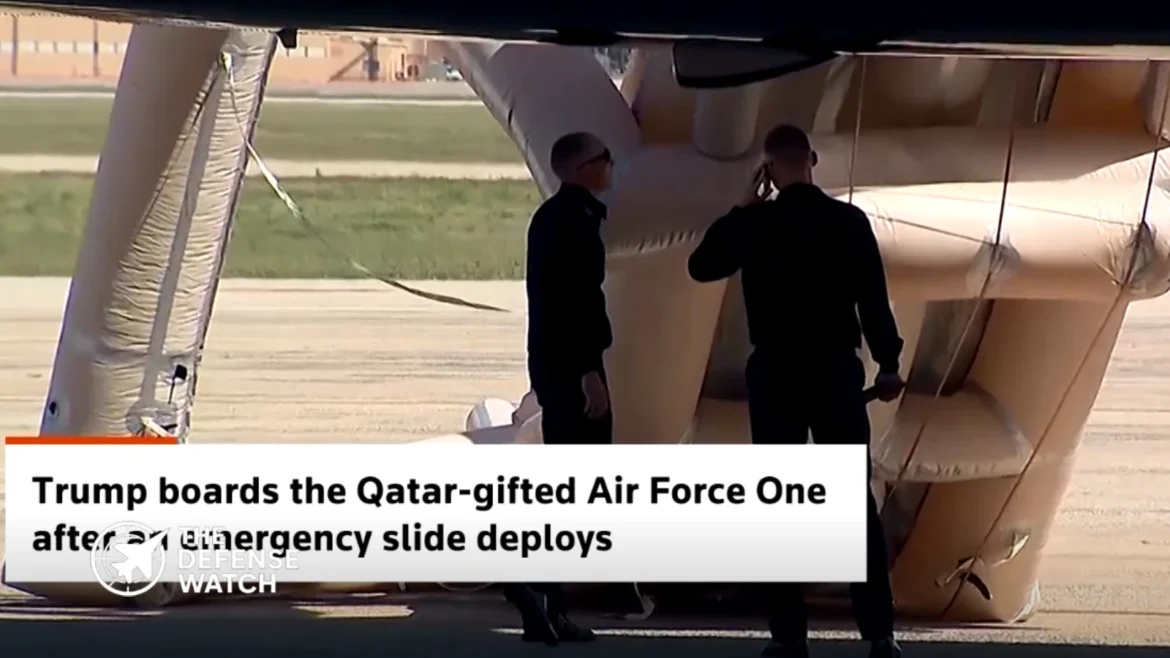
An accidental emergency slide deployment briefly delayed President Donald Trump’s departure aboard the Qatar-gifted Boeing 747, highlighting the safety checks required on the aircraft now serving as an interim presidential transport.
Takeaways
The Qatari-gifted Air Force One experienced an accidental emergency slide deployment before President Donald Trump’s September 9 departure from Joint Base Andrews.
Qatari-Gifted Air Force One Experiences Emergency Slide Deployment
The Qatari-gifted Air Force One experienced an accidental emergency slide deployment on September 9 as President Donald Trump prepared to depart Joint Base Andrews, Maryland, for Dallas, Texas.
The incident caused a short delay before the aircraft departed. Reuters reported that the inflatable evacuation slide was accidentally deployed by military personnel shortly before boarding. The slide was removed before takeoff, and Trump subsequently traveled aboard the aircraft.
The incident involved one of the aircraft’s emergency evacuation slides. Reuters reported that the Boeing 747 has 12 inflatable evacuation slides intended to provide emergency evacuation capability for passengers.
The U.S. Air Force had not publicly provided a detailed explanation of the incident at the time of the Reuters report.
Trump Continues To Use Qatar-Gifted Aircraft
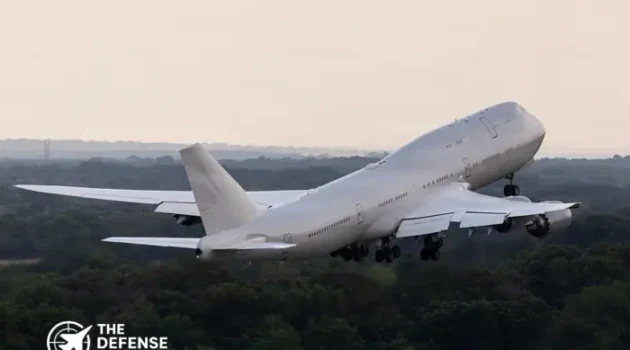
The aircraft involved is a Boeing 747-8 that was provided by Qatar and subsequently modified for presidential transportation.
Trump began using the aircraft on July 1, following an accelerated refurbishment program. The aircraft has been used as an interim presidential transport while the U.S. Air Force moves toward its longer-term replacement for the aging VC-25A fleet.
The Air Force identified the modified aircraft as a VC-25B Bridge aircraft when it arrived at Joint Base Andrews in June. The service said the aircraft had received government modifications and would undergo commissioning flights to validate safety, security and communications systems before entering presidential service.
The distinction is important because Air Force One is technically a radio call sign used when the president is aboard a U.S. Air Force aircraft. The aircraft itself is a presidential transport platform.
The existing VC-25A fleet consists of two heavily modified Boeing 747-200B aircraft assigned to the Presidential Airlift Group at Joint Base Andrews. The Air Force describes their mission as providing presidential air transportation with specialized communications and other systems.
Why The Emergency Slide Incident Matters
An accidental evacuation slide deployment is primarily a safety and maintenance issue based on the information currently available. There is no evidence in the Reuters report that the incident was caused by a structural failure, hostile action or an aircraft-wide safety problem.
The timing nevertheless matters because the aircraft is being used for one of the most sensitive transportation missions in the U.S. government.
Presidential aircraft must combine conventional aviation safety with secure communications, specialized mission systems and procedures designed to support the continuity of government. That makes commissioning, inspection and maintenance particularly important for an aircraft that has been rapidly converted for presidential use.
The U.S. Air Force said in June that the VC-25B Bridge aircraft was beginning commissioning flights to validate safety, security and communications systems. The service described the aircraft as a temporary capability intended to reduce pressure on the aging VC-25A fleet while the longer-term presidential aircraft program continues.
The September 9 slide deployment therefore does not, by itself, establish a broader aircraft safety deficiency. It does show why operational checks remain important when a modified commercial widebody aircraft is introduced into the presidential airlift mission.
Additional Security Upgrades Remain Planned
The emergency slide incident comes after months of attention surrounding the security configuration of the Qatari-gifted aircraft.
In July, Trump said the aircraft would undergo additional upgrades after questions were raised about its defensive capabilities. Reuters subsequently reported that experts had questioned whether a short upgrade period would be sufficient to significantly enhance the aircraft’s defenses.
The exact configuration of presidential security systems is not publicly disclosed, and specific capabilities should therefore not be inferred from the aircraft’s commercial origins or from the emergency slide incident.
Trump has also said the aircraft would be taken out of service for additional work. Reuters reported on September 9 that the aircraft was expected to undergo a 60-day period of unspecified security upgrades beginning in October.
This planned work is separate from the emergency slide deployment. No public evidence currently connects the two events.
Air Force One Role And Aircraft Transition
The Qatari-gifted aircraft is being used during a transition period for the U.S. presidential airlift fleet.
The current VC-25A aircraft have served presidents since the early 1990s. The Air Force says the aircraft include specialized communications equipment, medical facilities, presidential accommodations and the ability to support in-flight refueling.
The VC-25B Bridge aircraft provides an interim option while the next-generation presidential aircraft program progresses.
That transition creates a practical requirement for the Air Force to balance availability with the extensive testing and certification requirements associated with presidential transportation.
For the Qatari-gifted aircraft, the September 9 incident was resolved before departure, and the aircraft completed the planned flight to Dallas.
What Happens Next
The immediate issue is expected to remain focused on determining why the emergency slide deployed and confirming that the aircraft is ready for continued operation.
The incident should not be treated as evidence of a larger technical failure without additional findings from the Air Force or other authorities.
More significant for the aircraft’s longer-term role will be the planned security and mission-system upgrades scheduled for the coming months. Those modifications are expected to determine how the aircraft is configured for future presidential missions and how long it remains in the interim fleet.
For now, the Qatari-gifted Air Force One remains an operational presidential transport. The accidental slide deployment caused a delay, but the aircraft departed after the issue was addressed.
Executive Summary:
The Boeing Company has received a $125 million contract modification from the U.S. Air Force for initial long lead spare parts tied to two VC-25B presidential aircraft. The award supports the ongoing modernization of the future Air Force One fleet and raises the overall contract value to more than $4.4 billion. The work will be carried out in San Antonio, Texas, with fiscal 2026 RDT&E funds already obligated.
Boeing VC-25B Contract Expands Air Force One Modernization Program
The Boeing VC-25B contract program received another financial boost after the U.S. Air Force awarded the company a $125 million contract modification for long lead spare parts tied to two fully mission capable presidential aircraft.
According to the Department of Defense contract announcement, the modification, identified as P00176 under contract FA8625-16-C-6599, increases the total cumulative contract value from approximately $4.32 billion to more than $4.44 billion.
The award was issued to Boeing’s facility in Tukwila, Washington, while the work itself will be performed in San Antonio. The Air Force Life Cycle Management Center at Wright-Patterson Air Force Base is serving as the contracting authority.
Fiscal 2026 research, development, test, and evaluation funds totaling $41.9 million were obligated at the time of award.
Spare Parts Procurement Signals Long Term Sustainment Focus
The latest Boeing VC-25B contract action focuses specifically on initial long lead spare parts procurement. In defense aviation programs, long lead components typically include critical systems and hardware requiring extended manufacturing timelines before aircraft delivery or operational deployment.
The procurement effort reflects the Pentagon’s continued emphasis on sustainment planning early in the lifecycle of high value strategic aircraft programs. For presidential airlift operations, spare parts availability is considered mission critical because the aircraft must maintain near constant readiness.
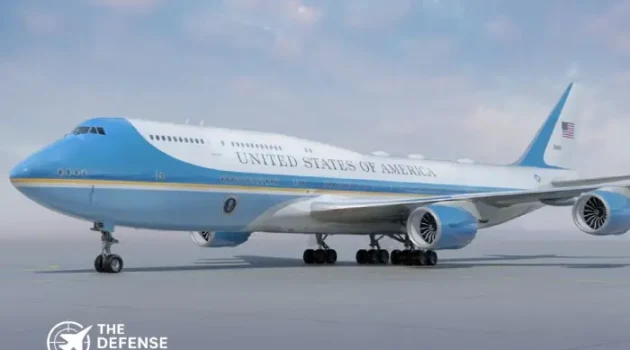
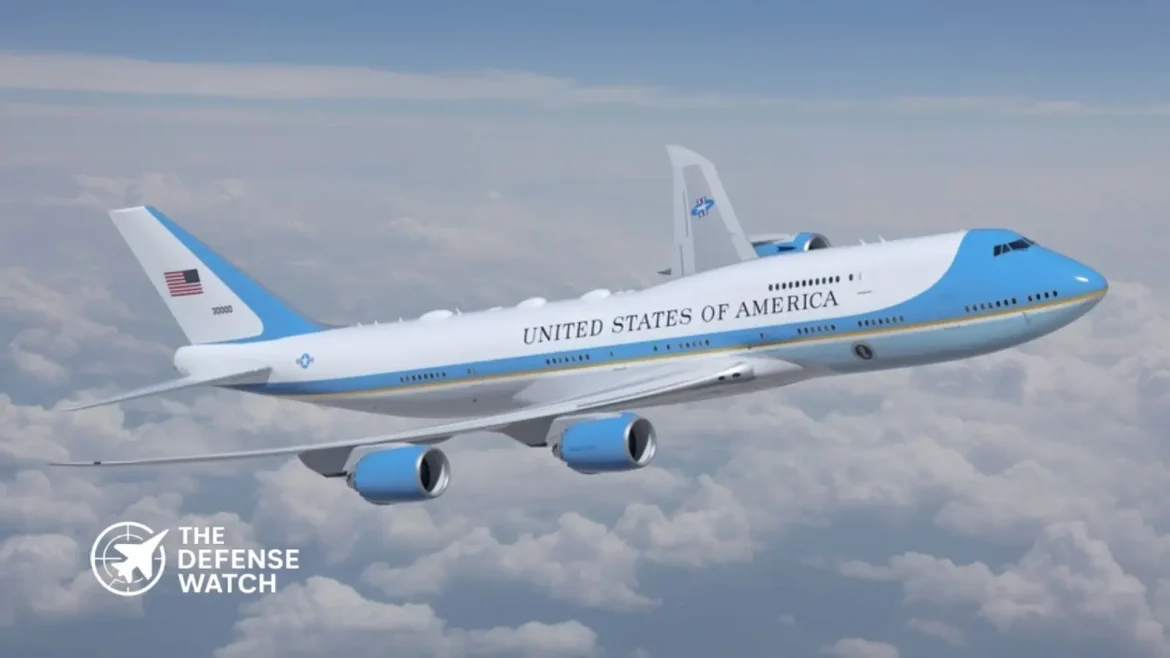
The VC-25B fleet is intended to replace the aging VC-25A aircraft currently used for presidential transport under the Air Force One mission. The existing aircraft are heavily modified versions of the Boeing 747-200B platform that entered service in the early 1990s.
The replacement VC-25B aircraft are based on the newer Boeing 747-8 airframe and are being extensively modified to support secure communications, survivability systems, executive transport, and command-and-control operations.
Program Continues Under Cost And Schedule Pressure
The Boeing VC-25B contract program has faced years of scrutiny tied to schedule delays, rising costs, and technical integration challenges.
Originally negotiated during the first Trump administration, the Air Force One replacement effort became one of Boeing Defense’s most closely watched fixed-price military aviation programs. Boeing has previously disclosed significant financial losses linked to the program due to engineering complexity, supply chain disruptions, and inflationary pressures.
Despite these challenges, the Pentagon has continued funding key procurement and integration milestones to maintain progress toward aircraft delivery.
The latest contract modification suggests the Air Force is moving deeper into sustainment preparation and operational readiness planning as the program advances toward later production and testing phases.
Defense analysts have noted that presidential aircraft programs involve requirements beyond standard military transport platforms. The aircraft must function as secure airborne command centers capable of supporting the president during crises, including nuclear contingencies and global military operations.
That complexity significantly increases integration demands for communications security, electromagnetic hardening, defensive countermeasures, and redundant mission systems.
Strategic Importance Of The VC-25B Fleet
Although the VC-25B program represents a relatively small fleet, its strategic importance remains exceptionally high within the U.S. national command authority structure.
The aircraft serve not only as executive transport platforms but also as symbols of U.S. global power projection and continuity of government capability.
The future VC-25B aircraft are expected to feature upgraded communications architecture, improved avionics, modernized power systems, and enhanced operational efficiency compared with the legacy VC-25A fleet.
The Air Force has not publicly confirmed an exact delivery timeline in the latest contract announcement, though previous projections indicated delays beyond initial target dates.
The continued flow of funding into spare parts procurement indicates the Pentagon remains committed to fielding both aircraft as fully operational assets despite ongoing program management pressures.
Industrial Base And Defense Aviation Implications
The Boeing VC-25B contract also highlights the broader importance of sustaining specialized aerospace manufacturing capabilities within the U.S. defense industrial base.
Work associated with the presidential aircraft program supports highly specialized engineering, modification, and systems integration expertise concentrated in the American aerospace sector.
San Antonio has emerged as a major hub for aircraft modification and sustainment work across multiple U.S. military aviation programs. The region supports extensive depot maintenance, modernization, and aircraft conversion activity for both government and commercial customers.
For Boeing Defense, the Air Force One replacement effort remains one of its most visible strategic aviation programs despite its relatively limited production scale.
The program continues to attract congressional and public attention because of its symbolic value, high technical requirements, and cost profile.