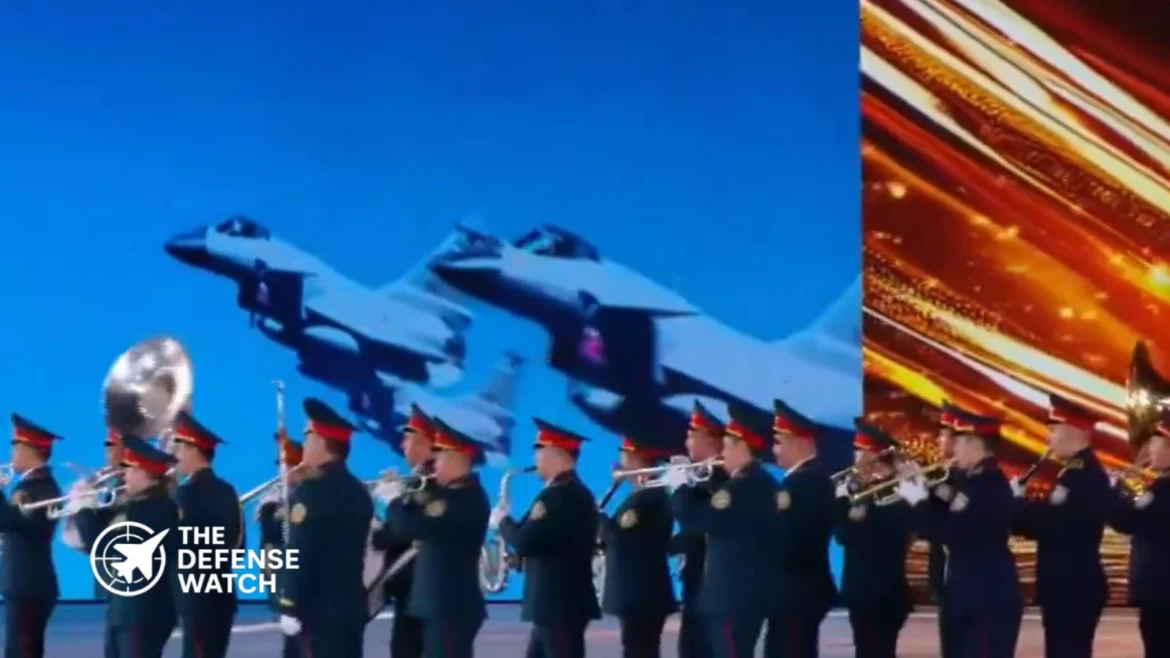
Uzbekistan J-10CE Fighters Officially Break Cover
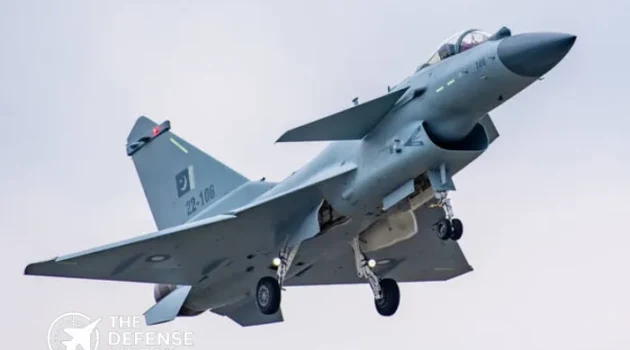
The Uzbekistan J-10CE fighter acquisition has moved from months of unconfirmed reporting to clear visual evidence after Uzbek state media showed Chinese-built J-10CE aircraft during the country’s 35th Independence Day celebrations. At least six aircraft were shown operating together, with Uzbek military markings visible on the fighters.
Takeaways
Uzbekistan has publicly revealed Chinese-built J-10CE fighters, providing the clearest confirmation yet that the country has begun operating the export version of China’s J-10C multirole fighter.
The development follows the publication of photographs earlier in August showing J-10CE airframes believed to be allocated to Uzbekistan. Those images included an aircraft carrying the number 1020, although identifying markings were initially obscured.
The latest footage is important because it provides a much stronger basis for assessing the acquisition. Earlier reports had suggested that Uzbekistan was purchasing the Chinese fighter, but the absence of official imagery had left the status of the program uncertain.
At Least Six Aircraft Shown In Uzbek Service
Footage released around the independence celebrations showed at least six J-10CEs on the ground and in formation. The aircraft were also shown receiving a water-cannon salute, a traditional ceremony associated with significant aircraft arrivals.
The appearance of the Uzbek markings is particularly significant. It establishes that the aircraft are not simply J-10C test or production aircraft photographed in China, but airframes associated with the Uzbek military.
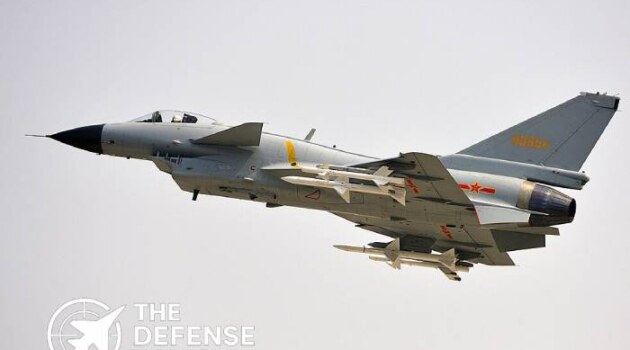
The J-10CE is the export version of the J-10C family developed by Chengdu Aircraft Industry Group under China’s state-owned AVIC aerospace structure. China’s Ministry of National Defense describes the J-10CE as an all-weather, single-engine, single-seat multirole fighter capable of supersonic flight and beyond-visual-range engagement operations.
What Is Known About The Aircraft
Item Current Assessment Aircraft Chengdu J-10CE Operator Uzbekistan Air Force Confirmed aircraft visually shown At least 6 Reported total requirement 24 aircraft Manufacturer Chengdu Aircraft Industry Group Export designation J-10CE Configuration Single-engine, single-seat multirole fighter Foreign operators Pakistan and Uzbekistan First foreign operator Pakistan Reported Uzbek serials 1014, 1020 and related 10xx series Contract value Not officially disclosed The six aircraft shown publicly should not automatically be treated as the complete Uzbek order. Earlier reports have repeatedly cited a potential 24-aircraft acquisition, but neither Tashkent nor Beijing has publicly confirmed the complete number or financial value.
Why The J-10CE Matters To Uzbekistan
Uzbekistan’s fighter inventory has historically reflected the country’s Soviet legacy. Its combat aviation fleet has included Russian-designed MiG-29 and Su-27 fighters alongside Su-25 attack aircraft.
The arrival of the J-10CE therefore represents more than an additional aircraft type. It introduces a modern Chinese combat aircraft ecosystem into a force whose fast-jet inventory has traditionally been tied to Soviet and Russian designs.
This creates a significant modernization opportunity, but it also introduces new requirements for training, weapons integration, maintenance, technical personnel and logistics.
A modern fighter fleet is not defined by airframes alone. Uzbekistan will need trained pilots, mission planners, maintainers, spare parts, ground support equipment, simulators and an appropriate weapons inventory if the J-10CE is to provide a meaningful increase in combat capability.
The J-10CE’s Combat-System Advantage
The J-10CE belongs to a generation of fighters built around modern sensors, digital avionics and networked weapons rather than relying primarily on the legacy radar and analog systems associated with older Soviet-era aircraft.
China describes the aircraft as capable of engaging multiple targets beyond visual range in complex electromagnetic environments and conducting precision attacks against ground targets using multiple guidance methods.
That combination gives the J-10CE a broad mission set.
The aircraft can perform air-to-air missions, air defense, interception and precision strike roles. Its single-engine configuration also provides a relatively compact platform compared with heavier twin-engine fighters such as the Su-27 family.
The practical value of these capabilities will depend heavily on the sensors, electronic warfare systems and weapons supplied under the Uzbek configuration. Public information on the exact Uzbek weapons package remains limited.
A Different Procurement Path From Russia
The strategic significance of Uzbekistan selecting a Chinese fighter becomes clearer when viewed against the country’s broader defense modernization.
For decades, Russia remained the dominant supplier of combat aircraft across much of Central Asia. Uzbekistan’s move toward a Chinese fighter provides another major supplier option and reduces the assumption that future modernization must follow a Russian equipment pathway.
This does not necessarily mean Uzbekistan is abandoning military relationships with Russia. Tashkent continues to maintain broad international relationships and has pursued a multi-vector foreign policy.
Instead, the J-10CE acquisition demonstrates that Uzbekistan has greater freedom to diversify its military technology base.
That matters because combat aircraft procurement creates long-term dependencies. The supplier controls or strongly influences aircraft upgrades, spare parts, training pipelines, weapons compatibility and technical support.
Selecting the J-10CE therefore creates a substantial Chinese industrial and training relationship alongside Uzbekistan’s existing defense partnerships.
Central Asia Is Becoming More Important To China’s Fighter Export Strategy
Uzbekistan’s appearance as a J-10CE operator comes at a time when China is attempting to expand international sales of its advanced combat aircraft.
Pakistan was the first foreign customer for the J-10CE. Chinese state media has highlighted the aircraft’s export status and its development as a modern multirole fighter.
Bangladesh is also moving toward negotiations for the J-10CE, although the number of aircraft and final contract terms remain unresolved. Reuters reported in August that Bangladesh was advancing toward formal discussions with China over the fighter.
The Uzbek acquisition therefore arrives at a useful moment for China’s defense industry. A second confirmed foreign operator provides an additional reference customer for a fighter that Beijing is marketing internationally.
For prospective customers, an aircraft operated by more than one foreign air force can be easier to evaluate in terms of training, maintenance and long-term support.
The Pakistan Experience Adds Context
Pakistan’s experience with the J-10C has also increased international attention on the platform.
Pakistan inducted J-10CE fighters beginning in 2022, and Chinese official reporting documented their appearance at Pakistan Day events that year.
The aircraft subsequently received significant international attention following the May 2025 India-Pakistan conflict. Claims concerning individual aircraft losses and the performance of specific weapons remain politically contested, so those claims should not be treated as independently established measures of the J-10CE’s combat effectiveness.
What can be established is that the Pakistan experience has placed the J-10C family under far greater international scrutiny than it received before 2025.
That visibility could influence future export decisions, particularly among countries seeking a modern fighter without entering the cost and political framework associated with some Western platforms.
What Remains Unknown About The Uzbek Program
Despite the new evidence, several important questions remain unanswered.
The exact size of the Uzbek fleet has not been officially disclosed. The reported 24-aircraft figure has appeared repeatedly in defense reporting, but it should remain classified as a reported requirement rather than a confirmed final delivery total.
The contract value is also not public.
There is no confirmed public breakdown of the associated weapons package, training arrangement, simulator fleet, maintenance support or future modernization provisions.
Those details will ultimately determine how much capability Uzbekistan receives from the acquisition.
The difference between receiving a modern fighter and operating a modern combat aviation system is substantial. The latter requires sustained investment in infrastructure, training, weapons and support.
What The J-10CE Means For Uzbekistan’s Air Force
The most important effect of the J-10CE acquisition may be its role as a bridge between Uzbekistan’s legacy fleet and a more modern combat aviation structure.
If additional aircraft arrive, the J-10CE could become one of the country’s principal multirole fighters. That would provide Uzbekistan with a modern platform capable of performing missions that would be increasingly difficult for older MiG-29 and Su-27 aircraft to support economically.
The transition will also test Uzbekistan’s ability to integrate Chinese aircraft into its existing command, control, air-defense and logistics architecture.
That integration is particularly important in Central Asia, where air forces operate across large geographic areas and must maintain credible readiness without the infrastructure available to much larger military powers.
A Broader Shift In Central Asian Defense Procurement
The J-10CE’s arrival should be viewed as part of a broader evolution in Central Asian defense procurement.
Countries in the region are increasingly seeking options beyond traditional Russian suppliers while maintaining relationships with Moscow. China is well positioned to benefit from this trend because it can offer a wide range of military systems, including fighters, air-defense systems, unmanned aircraft, missiles and supporting technologies.
Uzbekistan already has a growing defense relationship with China. The Uzbek presidency has described bilateral ties with Beijing as an all-weather strategic partnership and has emphasized expanding practical cooperation.
The fighter acquisition adds a high-value military dimension to that broader relationship.
For China, the significance is equally clear. Establishing the J-10CE in Uzbekistan places a Chinese fourth-generation-plus fighter in a strategically important Central Asian country bordering Afghanistan and located within a region where Russia has historically maintained extensive defense relationships.
The development does not by itself indicate a formal realignment of Uzbekistan’s security policy. It does, however, demonstrate the growing diversity of military technology available to Central Asian states.
What To Watch Next
The next indicators will be the delivery of additional J-10CEs, confirmation of the total Uzbek order, identification of the aircraft’s weapons and the development of dedicated training and maintenance infrastructure.
Public appearances of additional aircraft could also establish whether the reported 24-aircraft figure represents the final requirement or an earlier planning figure.
The integration of the J-10CE into Uzbekistan’s wider air-defense network will be another important measure of the program’s long-term impact.
For now, the clearest fact is that Uzbekistan has moved beyond speculation. At least six Chinese-built J-10CE fighters have been publicly shown carrying Uzbek markings, confirming that China’s modern fighter export presence has expanded into Central Asia.
That makes the Uzbek J-10CE program an important development not only for Tashkent’s air force modernization, but also for the changing defense-industrial balance across the region.
Gripen F Completes First Flight In Sweden
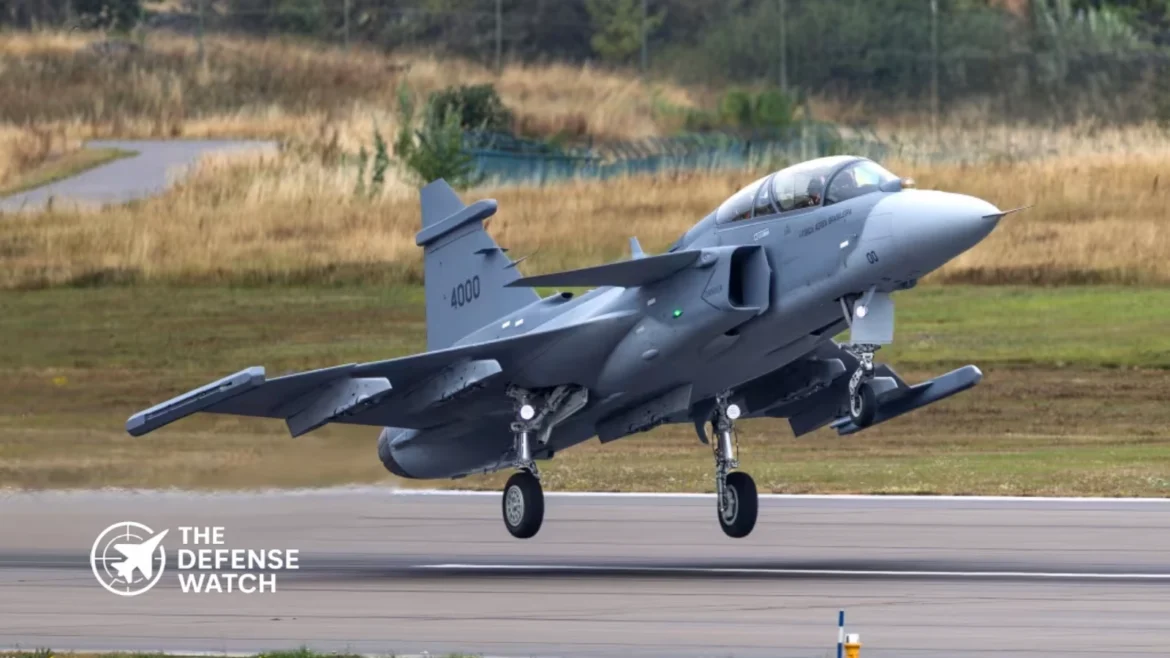
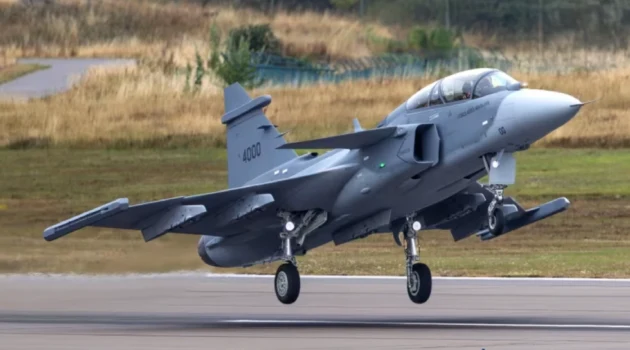
The Gripen F first flight has moved Saab and Brazil’s two-seat fighter program into its airborne test phase, with the aircraft completing a 40-minute inaugural sortie from Saab’s airfield in Linköping, Sweden, on August 28. Saab said the flight verified the functionality of the aircraft’s core systems and its initial flight performance.
Takeaways
Saab’s Gripen F has completed its first flight, moving Brazil’s two-seat fighter into the airborne phase of its test and acceptance program.
The flight was conducted by Saab chief test pilot Jakob Högberg and Brazilian Air Force test pilot Lieutenant Colonel Aviator Abdon de Rezende Vasconcelos. The participation of both Swedish and Brazilian pilots reflects the joint character of the aircraft’s development and its eventual operational role with the Brazilian Air Force.
From Ground Testing To The Flight Test Campaign
The first flight is an important transition in the Gripen F program because it allows Saab and Brazil to begin validating the aircraft under actual flight conditions.
Saab said the next stage will involve progressive expansion of the aircraft’s flight envelope. Testing will gradually address its limits in speed, altitude, G-load and angle of attack rather than attempting to clear the complete performance envelope at once.
The test campaign will also examine capabilities specific to the two-seat configuration. This includes tactical functions and systems associated with the rear cockpit, which is a key distinction between Gripen F and the single-seat Gripen E.
Once the planned flight activities and aircraft acceptance procedures are completed, Saab says the aircraft will be prepared for delivery to the Brazilian Air Force.
Gripen F Program At A Glance
| Item | Detail |
|---|---|
| Aircraft | Saab Gripen F |
| Configuration | Two-seat fighter |
| First flight | August 28, 2026 |
| Flight location | Linköping, Sweden |
| First flight duration | 40 minutes |
| Launch customer | Brazilian Air Force |
| Original Brazilian order | 36 aircraft |
| Gripen E | 28 aircraft |
| Gripen F | 8 aircraft |
| Development | Saab and Brazilian industry |
| Current phase | Airborne testing |
The underlying Brazilian program was established through a 2014 agreement covering development and production of 36 Gripen E/F aircraft. Saab’s current program information identifies 28 Gripen E aircraft and eight Gripen F aircraft in the original Brazilian order.
Why The Two-Seat Configuration Matters
The Gripen F is not simply a trainer version of the Gripen E. Saab describes the aircraft as a combat-capable two-seat platform designed to combine operational missions with pilot conversion and training requirements.
The second cockpit provides another crew position with its own displays and controls. Saab previously stated that the aircraft can operate in a training configuration, where one crew member receives instruction, as well as an operational configuration in which the two crew members can divide workload using different display settings.
That distinction is important for modern fighter training. A two-seat aircraft allows an instructor to accompany a pilot during more representative mission profiles while retaining the basic characteristics and systems architecture of an operational fighter.
The arrangement can also support missions in which workload management is important. Saab says the Gripen F is intended to improve operational performance through the ability of two crew members to share tasks and use different display configurations.
Brazil’s Role Goes Beyond Aircraft Procurement
The Gripen F represents one of the more significant industrial aspects of the Brazilian Gripen program. Brazil was not simply an end user of a completed foreign aircraft. It became directly involved in the development of the two-seat variant through technology transfer and industrial cooperation.
Saab says more than 350 Brazilian engineers, technicians, operators and pilots have participated in training connected with the Gripen program. The training covered areas including development, flight testing, production and maintenance.
Brazilian participation was particularly relevant to Gripen F. Saab’s technology-transfer documentation says Brazilian engineers contributed to modifications required to add the second crew position, including work involving seats, displays, controls, electrical and environmental systems, oxygen and anti-G systems, and structural and fuselage engineering.
This makes the first flight significant beyond the aircraft itself. It demonstrates the transition of a jointly developed configuration from engineering and production work into formal flight testing.
A Long-Running Brazil-Sweden Fighter Partnership
The Gripen partnership dates back to Brazil’s selection of the fighter and the 2014 agreement for 36 aircraft. Saab and Brazilian companies subsequently established a broad industrial framework involving development, production, systems integration, flight testing and maintenance.
Brazilian companies including Embraer, AEL Sistemas, Akaer and Atech have participated in the wider Gripen program. Saab has also established the Gripen Design and Development Network in Brazil, connecting Brazilian engineering activity with Saab’s development organization in Sweden.
The partnership has therefore created a domestic Brazilian capability base around the fighter rather than limiting local participation to aircraft operation and maintenance.
For Brazil, that industrial dimension is strategically relevant because the value of a fighter program extends beyond the number of aircraft delivered. Engineering expertise, systems integration experience and maintenance knowledge can influence a country’s ability to sustain and modify a combat aircraft throughout its service life.
What Happens Next For Gripen F
The immediate priority is flight-test expansion. Saab will progressively evaluate the aircraft across its planned flight envelope while simultaneously testing functions associated with the second cockpit and the aircraft’s tactical employment.
The program must then complete the relevant acceptance procedures before the aircraft can be prepared for delivery to Brazil.
The first flight therefore marks the beginning of another phase rather than the completion of the Gripen F development effort. Flight testing will provide the data needed to validate the aircraft’s systems and performance under increasingly demanding conditions.
For the Brazilian Air Force, the eventual arrival of Gripen F will add a two-seat variant to a fighter fleet built around the Gripen E family. For Saab and its Brazilian partners, the aircraft also provides a tangible result of years of joint engineering, industrial participation and technology transfer.
The significance of the August 28 flight is consequently broader than a conventional first-flight milestone. It marks the point at which the jointly developed Gripen F moves from development and production into systematic airborne evaluation, bringing Brazil’s two-seat fighter closer to operational service.
See video from the first flight here: https://saab.screen9.tv/
Key Facts at a Glance
| Specification | F-22 Raptor |
|---|---|
| Manufacturer | Lockheed Martin, Boeing |
| Generation | 5th generation |
| Primary Mission | Air dominance, air superiority, multirole combat |
| Maximum Speed | Mach 2 class |
| Supercruise | Above Mach 1.5 without afterburner |
| Combat Radius | Approximately 410 nautical miles, depending on mission configuration |
| Ceiling | Above 50,000 ft |
| Engines | 2 × Pratt & Whitney F119-PW-100 |
| Thrust | Approximately 35,000 lb class per engine |
| Radar | AN/APG-77 AESA |
| Electronic Warfare | AN/ALR-94 integrated electronic support system |
| Primary Air-to-Air Weapons | AIM-120 AMRAAM, AIM-9 Sidewinder |
| Internal Cannon | M61A2 20 mm |
| Production | 195 aircraft delivered |
| Current Inventory | About 184 aircraft in the U.S. Air Force fleet |
Executive Summary
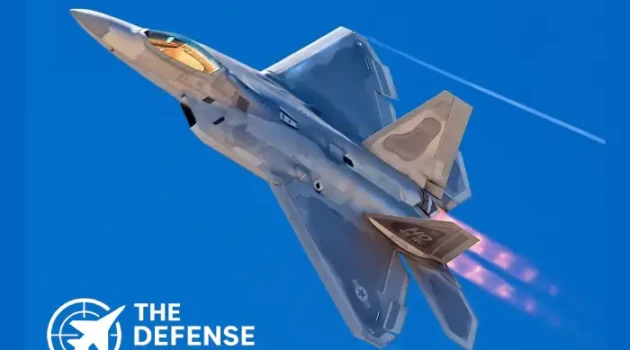
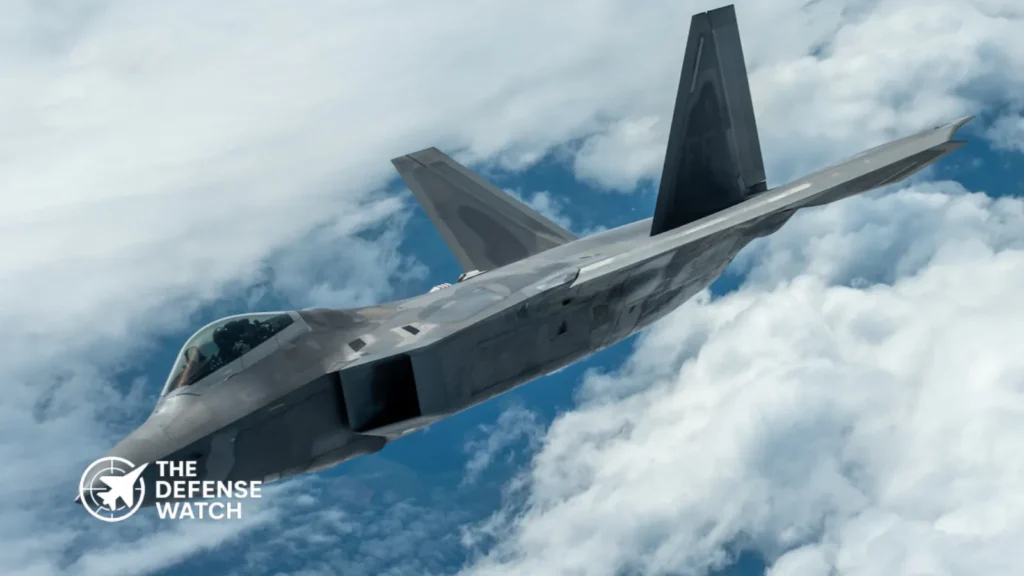
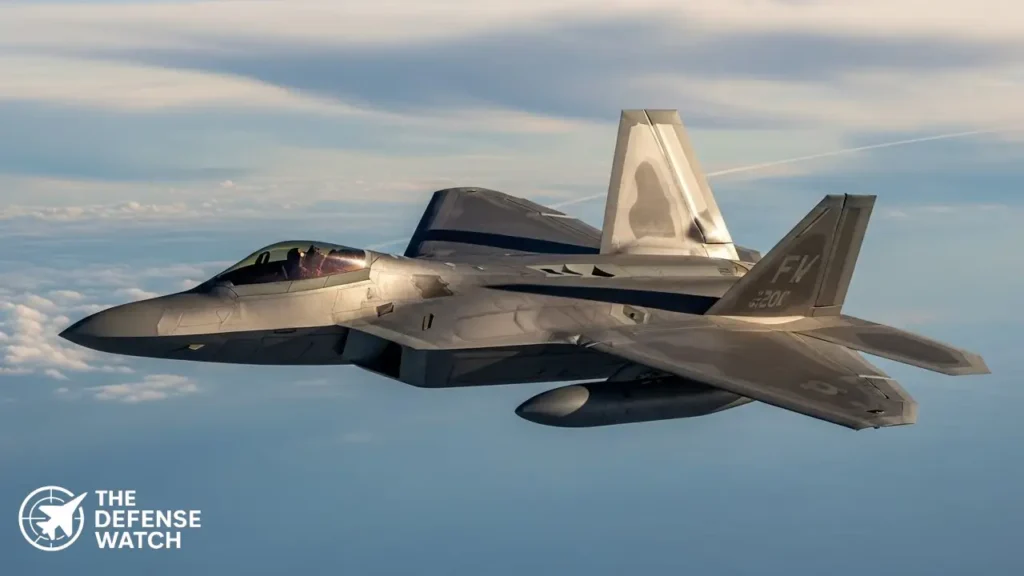
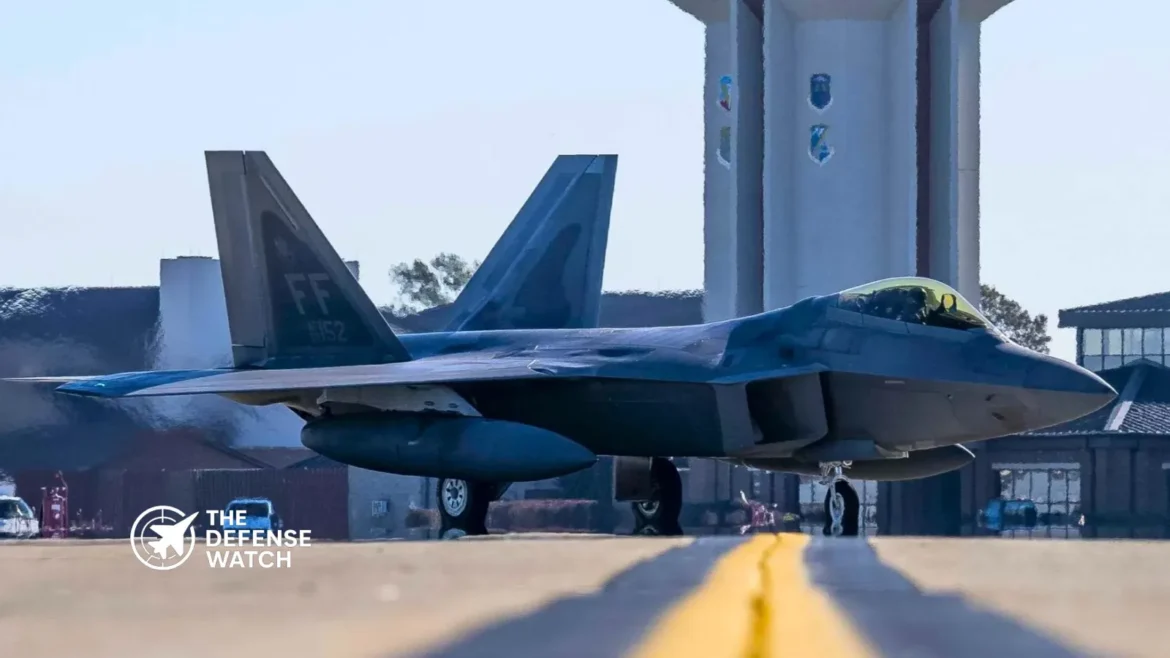
The F-22 Raptor remains one of the most capable air-superiority fighters ever fielded by the United States. Designed around stealth, supercruise, advanced sensors, high maneuverability and internal weapons carriage, the aircraft was built to establish air dominance against sophisticated fighter and air-defense threats.
The central question behind searches such as how many F-22s does the U.S. have has a relatively clear answer, although inventory figures can vary according to accounting year and aircraft status. The U.S. Air Force has about 184 F-22s in its fleet in 2026, while 195 aircraft were produced and delivered during the program. Nine aircraft were used as test aircraft, according to Lockheed Martin’s production history, leaving the operational fleet smaller than the total production figure.
The F-22 has also been used in combat, beginning with strikes against ISIS targets in Syria in 2014. Despite combat deployments, no F-22 has been confirmed shot down in combat.

Image: U.S. Air Force. How Many F-22s Does the U.S. Have?
For the question how many f-22s does the us have, the most useful current figure is approximately 184 aircraft.
Air & Space Forces Magazine’s 2026 weapons-platform data lists the F-22 inventory at 184 aircraft. A June 2026 congressional development was particularly significant because the House Armed Services Committee approved an amendment that would keep all 184 Raptors in service until at least the end of fiscal 2032.
This figure should not be confused with the number originally manufactured.
The F-22 production program ended in 2011, with the final aircraft delivered to the Air Force in May 2012. Lockheed Martin states that 195 F-22s were delivered, including aircraft used for testing.
Therefore:
Question Answer How many F-22s were built? 195 How many F-22s does the U.S. have? About 184 in the 2026 inventory How many F-22s are operationally combat coded? Fewer than the total inventory because some aircraft are assigned to test, training or other roles How many F-22s have been shot down? No confirmed combat losses The difference between production and current inventory reflects aircraft attrition, testing, accidents and fleet accounting rather than exports. The F-22 has never been offered as a conventional foreign military sales fighter.
How Many F-22s Were Built?
The answer to how many f 22s were built is 195 aircraft.
Production began after years of development and testing, with the first F-22 flight taking place in 1997. The Air Force declared the aircraft operational in December 2005. The final Raptor was delivered on May 2, 2012.
Of the 195 aircraft delivered, Lockheed Martin identified 187 as operational fleet aircraft and eight as test aircraft at the time of final delivery.
The relatively small production run is strategically important. Unlike the F-35, which was designed for large-scale international production and operation, the F-22 was developed primarily as a high-end U.S. air-superiority platform.
How Many F-22s Are There?
The question how many f-22s are there can produce different answers depending on whether the question concerns aircraft ever produced, current inventory or combat-capable aircraft.
The most useful distinction is:
195 F-22s were produced and delivered, while about 184 remain in the U.S. Air Force inventory in 2026.
Not every aircraft in the inventory should be treated as immediately available for combat. Maintenance, modernization, training, testing and aircraft availability affect the number that can be generated for operational missions at any particular time.
The fleet also includes different modernization configurations. Earlier Block 20 aircraft have significantly less combat capability than the more heavily upgraded Block 30 and Block 35 Raptors.
F-22s Airframe and Stealth Design
The F-22s design combines stealth with aerodynamic performance rather than treating low observability as a separate feature.
Its airframe uses carefully aligned edges, internal weapon bays, shielded engine faces and extensive radar-absorbent materials to reduce radar returns. The exact radar cross section of the Raptor is classified, so publicly available numerical RCS claims should be treated cautiously.
The internal weapons arrangement is particularly important. Keeping missiles and bombs inside the fuselage reduces external stores that would otherwise increase radar signature and aerodynamic drag.
The aircraft also uses serrated or carefully shaped access panels and doors, while its engine exhaust and inlet design contribute to its low-observable characteristics.
Avionics and Sensor Fusion
The F-22’s core advantage is not simply its radar.
The AN/APG-77 AESA radar provides long-range detection and tracking while supporting low-probability-of-intercept operations. The aircraft also incorporates the AN/ALR-94 electronic support system, which provides passive detection and characterization of electromagnetic emissions.
Together with the aircraft’s mission computers and other sensors, these systems create a highly integrated tactical picture for the pilot.
The original F-22 configuration did not include a conventional internal IRST sensor comparable to systems developed for some newer fighters. However, current modernization efforts are adding new infrared sensing capabilities. In 2026, the Air Force is continuing development and testing of infrared search and track targeting systems, alongside defensive infrared missile-warning improvements.
F-22s Propulsion and Performance
The F-22 is powered by two Pratt & Whitney F119-PW-100 afterburning turbofan engines, each producing approximately 35,000 pounds of thrust in the thrust class identified by the Air Force.
The engines incorporate two-dimensional thrust-vectoring nozzles, allowing the aircraft to control pitch through exhaust-vectoring authority in addition to aerodynamic control surfaces.
The aircraft is rated at Mach 2 class speed and can supercruise at speeds above Mach 1.5 without afterburners. Supercruise allows the Raptor to maintain supersonic flight with lower fuel consumption and a smaller infrared signature than sustained afterburner operation.
How Many F-22s Have Been Shot Down?
The answer to how many f 22s have been shot down is zero confirmed combat losses.
The F-22 has conducted combat operations. Its first combat use came in September 2014, when Raptors participated in U.S.-led strikes against ISIS targets in Syria. F-22s later supported operations in the region, including protection missions during the April 2018 strikes against Syrian chemical-weapons facilities.
In February 2023, an F-22 also gained a highly publicized air-to-air kill when it fired an AIM-9X against a Chinese high-altitude surveillance balloon off the South Carolina coast. That was not a fighter-versus-fighter engagement, but it demonstrated the aircraft’s ability to conduct an unusual high-altitude intercept.
No F-22 has been confirmed destroyed by an enemy aircraft or surface-to-air missile in combat.
Modernization and Strategic Outlook
The F-22 is now entering a different phase of its service life. The aircraft remains strategically important, but the fleet is aging and the Air Force is simultaneously developing the F-47 and next-generation air-dominance architecture.
Current modernization includes Increment 3.2B, sensor enhancements, improved electronic warfare capabilities, infrared defensive systems, Link 16 networking and new range-extension concepts. Low-drag external fuel tanks and pylons are also being tested to increase range while limiting the impact on the aircraft’s aerodynamic and stealth characteristics.
The Air Force previously sought to retire 32 older Block 20 aircraft, but congressional opposition has repeatedly complicated that plan. In June 2026, the House Armed Services Committee moved to prohibit F-22 retirements through fiscal 2032, potentially preserving the entire 184-aircraft fleet for longer than earlier Air Force planning anticipated.
Unlike some modern fighters, the F-22 has no international customer roadmap. U.S. law and policy have prevented its export, making international F-22 operators nonexistent.
Conclusion
The F-22s Raptor remains a uniquely important U.S. air-superiority asset despite its relatively small fleet.
The clearest answers to the major questions are straightforward: 195 F-22s were built, about 184 remain in the U.S. Air Force inventory, and no F-22 has been confirmed shot down in combat. The aircraft has nevertheless seen real combat, including operations over Syria and the 2023 high-altitude balloon intercept.
Its combination of stealth, supercruise, thrust vectoring, AESA radar, electronic warfare and internal weapons carriage continues to give the F-22 a powerful role in contested airspace.
The central challenge is now fleet age. The Air Force is investing in upgrades while preparing for the next generation of air dominance. The result is a fighter that remains highly relevant, but one whose long-term future depends on modernization decisions, fleet availability and the arrival of its successor.

F-35C And F-22 Train Against Complex Air Defenses
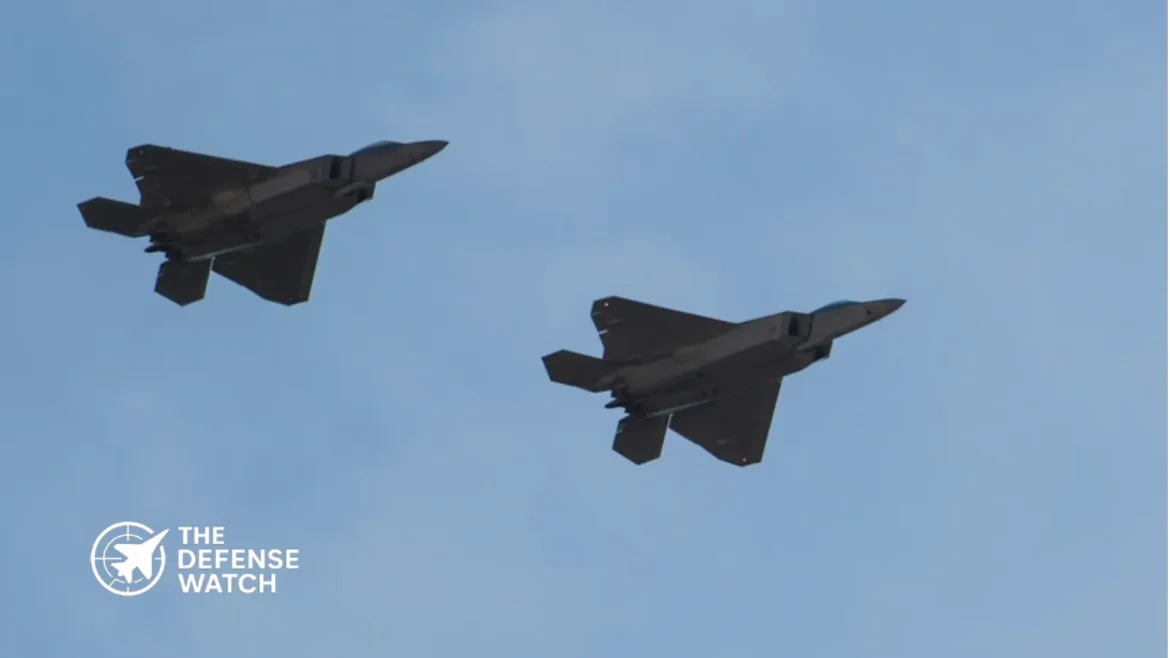
The F-35C Lightning II and F-22 Raptor operated together during Red Flag Alaska 26-3, where U.S. forces trained against simulated peer and near-peer threats, complex air defenses and battlefield disruptions. The exercise ran from Aug. 14 to Aug. 18 and represented the third and final Red Flag Alaska iteration of 2026.
Takeaways
F-35C Lightning II and F-22 Raptor fighters trained together against simulated peer threats and complex air defenses during Red Flag Alaska 26-3.
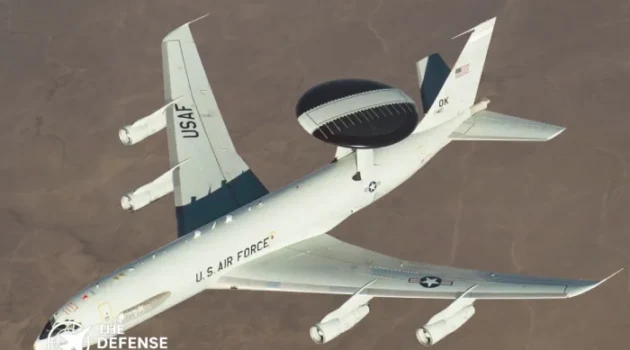
The fighter force included F-35Cs from Marine Fighter Attack Squadron 251 at Marine Corps Air Station Cherry Point, North Carolina, and F-22s from the Air Force’s 3rd Wing at Joint Base Elmendorf-Richardson, Alaska. An E-3 Sentry from the 961st Airborne Air Control Squadron at Kadena Air Base, Japan, also participated.
The combination placed two different fifth-generation fighter types within a larger air battle framework supported by airborne command and control. The training was designed to move beyond individual aircraft proficiency toward coordinated operations in a contested environment.
Why Red Flag Alaska Matters
Red Flag Alaska uses the Joint Pacific Alaska Range Complex, which covers approximately 120,000 square miles of airspace. The range allows U.S. and partner forces to progress from individual tactical skills to large-scale engagements involving multiple aircraft and mission areas.
The size of the training area is particularly important for air combat exercises because it allows forces to practice operations across greater distances rather than limiting engagements to a small training box.
The Air Force said Red Flag Alaska 26-3 brought together 79 aircraft from 10 units across the Joint Pacific Alaska Range Complex. The exercise concluded Aug. 28 after two weeks of realistic combat training, although the F-35C and F-22 activity highlighted in this report took place Aug. 14 to Aug. 18.
F-35C And F-22 Bring Different Strengths
The F-35C is the carrier-capable variant of the F-35 family. The U.S. Navy describes the F-35C as a fifth-generation aircraft with stealth, enhanced lethality and survivability, a robust communications suite and the ability to employ internal or external weapons.
The F-22, meanwhile, was developed primarily around air dominance. The Air Force identifies stealth, supercruise, maneuverability and integrated avionics as core characteristics of the Raptor. Its sensor and avionics architecture is designed to provide pilots with a high level of situational awareness while operating against advanced air threats.
That difference is important when considering the value of combined training.
The exercise was not simply about placing two stealth fighters in the same formation. It provided an opportunity to practice how different aircraft, sensors, weapons and command-and-control systems function together when the battlespace becomes increasingly difficult to manage.
Aircraft Primary Service Key Training Relevance F-35C Lightning II U.S. Marine Corps Stealth, sensing, networking and carrier-capable multirole operations F-22 Raptor U.S. Air Force Air dominance, stealth, supercruise and advanced air combat E-3 Sentry U.S. Air Force Airborne command and control Training Included Battlefield Disruptions
One of the more significant elements of Red Flag Alaska 26-3 was its designation as a Special Technical Operation exercise.
According to the exercise organizers, scenarios introduced operational disruptions intended to replicate conditions associated with peer and near-peer conflicts. These included non-kinetic effects designed to disrupt coordination and complicate operations.
That matters because modern air warfare is not limited to aircraft engaging aircraft or missiles engaging targets.
A major air operation depends on communications, data exchange, command networks, navigation, sensors and decision-making. If those functions become degraded or disrupted, pilots and commanders must continue operating with incomplete or delayed information.
The exercise therefore tested an important part of modern air combat readiness: the ability of a force to maintain coordinated operations when its normal information flow is under pressure.
The Role Of The E-3 Sentry
The participation of an E-3 Sentry added another layer to the training.
The E-3 is an airborne command-and-control platform that can support the broader air picture. Its presence alongside F-35Cs and F-22s reflects the reality that air dominance operations normally depend on more than fighter aircraft alone.
The operational value comes from connecting different capabilities into a functioning force. Fighters provide combat power, while airborne command and control can help coordinate the wider engagement.
This type of integration becomes increasingly important as forces operate across larger areas and against opponents equipped with advanced sensors, aircraft, electronic warfare systems and air-defense networks.
Complex Air Defenses Remain A Major Challenge
Red Flag Alaska 26-3 specifically required participants to coordinate joint and coalition operations against complex air-defense systems. The exercise combined multiple effects to train forces to overcome those threats in a contested environment.
For fifth-generation aircraft, the challenge is not simply achieving low observability.
Stealth can reduce an aircraft’s detectability, but modern air-defense networks can combine multiple sensors, communications links and weapons systems. Training therefore has to account for the wider system rather than treating an air-defense battery as an isolated target.
This makes large-force exercises valuable. Pilots can practice the interaction between aircraft, command-and-control assets and other supporting capabilities while facing simulated disruptions.
The F-22’s air-dominance role is particularly relevant in this context. The Air Force says the aircraft combines stealth, integrated avionics and supercruise to support operations against advanced air threats.
The F-35C brings a different set of capabilities, including stealth, advanced sensing and networking. The Marine Corps aircraft therefore contributes to the broader force rather than functioning only as a conventional strike platform.
What The Exercise Says About Joint Air Operations
The most important lesson from the training is the emphasis on integration.
The F-35C and F-22 are operated by different U.S. military services and were designed around different primary missions. Yet a real contingency would require them to function as parts of the same air campaign.
Red Flag Alaska creates a controlled environment where those relationships can be tested repeatedly.
The exercise also included allied and partner participation across its broader 2026 schedule. Red Flag Alaska 26-2, for example, involved more than 70 aircraft and approximately 2,100 personnel from U.S. and partner nations.
That multinational element matters for Pacific operations, where U.S. forces could be required to operate alongside allied aircraft and other joint capabilities across large distances.
The Broader Pacific Relevance
Alaska’s geography gives the training environment particular relevance to Pacific air operations.
The Joint Pacific Alaska Range Complex provides a large overland training area where forces can practice operations at a scale that is difficult to reproduce at smaller ranges. Pacific Air Forces describes Red Flag Alaska as a venue for realistic deployed-environment training, interoperability and contingency response.
For the United States, that supports a broader readiness requirement: maintaining the ability to generate and coordinate combat airpower under contested conditions.
The exercise does not prove how the aircraft would perform in an actual conflict. Instead, its value lies in giving crews and supporting units the opportunity to identify problems, refine procedures and improve coordination before those capabilities are required operationally.
What Comes Next For Fifth-Generation Integration
The U.S. Air Force is also moving toward a future force in which fifth-generation fighters operate alongside newer systems and autonomous aircraft.
In June 2026, the Department of the Air Force announced contracts connected with development and production of its first-generation Collaborative Combat Aircraft, while also establishing a competitive market for mission-autonomy software.
That development increases the importance of exercises that test not only individual aircraft but the ability of different platforms to share information and perform complementary missions.
Red Flag Alaska 26-3 provides a current example of that approach. F-35Cs, F-22s and an E-3 operated within a scenario that included simulated advanced air defenses and disrupted battlefield conditions.
For U.S. air forces, the objective is increasingly broader than mastering a single aircraft. It is building the ability to operate a connected force when an adversary is actively trying to disrupt that force.
Bottom Line
The F-35C and F-22 training during Red Flag Alaska 26-3 demonstrated the continuing U.S. emphasis on integrated air operations against sophisticated threats.
The exercise combined fifth-generation fighters, airborne command and control, complex simulated air defenses and Special Technical Operations effects inside one large training environment.
Its significance is less about a particular simulated engagement and more about the operational problem being addressed: how to maintain air combat effectiveness when advanced defenses and battlefield disruptions make coordination harder.
That remains a central requirement for U.S. airpower in the Indo-Pacific and other contested theaters.
Spain A330 MRTT Procurement Moves Toward Final Contracts
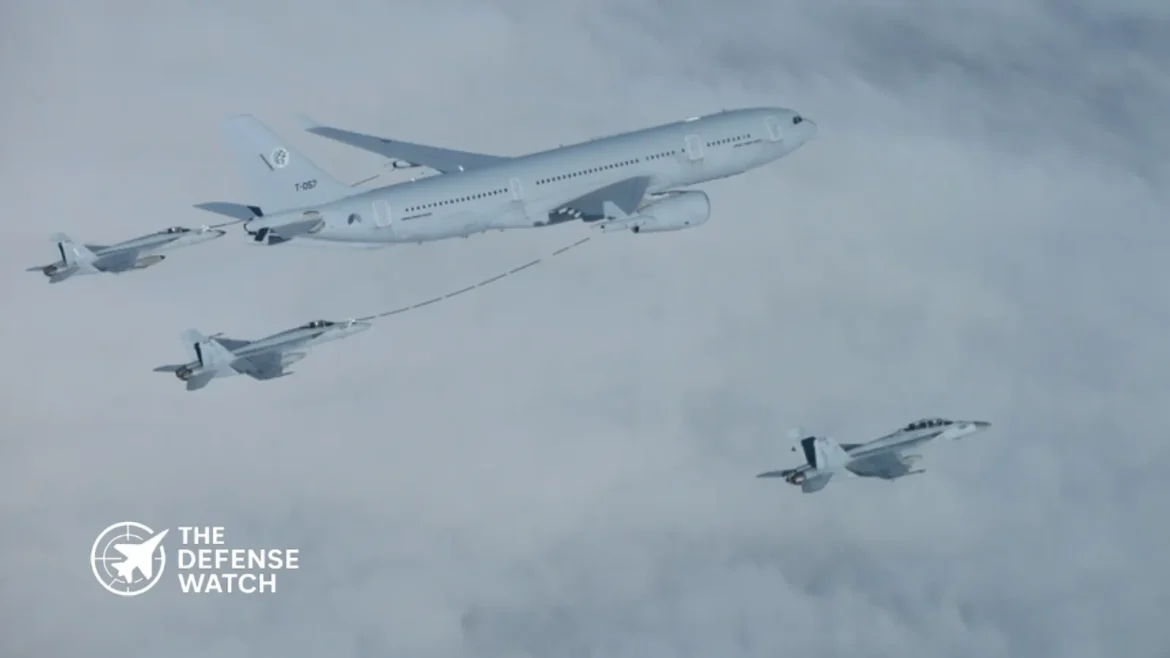
Spain A330 MRTT procurement plans with Poland have reached a major milestone after Madrid approved a seven-year framework agreement valued at an estimated €5.4 billion for the joint acquisition of Multi Role Tanker Transport aircraft.
The Spanish Council of Ministers approved the framework on August 25, 2026. The agreement covers the aircraft as well as the logistics and support required to bring them into service. It also incorporates Poland’s participation through the European Union’s Security Action for Europe, or SAFE, financing instrument.
Takeaways
Spain has approved a €5.4 billion framework with Poland for at least seven Airbus A330 MRTT aircraft, with four planned for Poland by 2030.
The framework is not itself the final aircraft purchase contract. Spain and Poland still need to negotiate and sign the implementing agreements that would authorize individual orders.
Poland is expected to receive four aircraft by 2030, while three aircraft are planned for Spain under the current arrangement. Polish Defense Minister Władysław Kosiniak-Kamysz has described the planned acquisition as at least seven aircraft.
€5.4 Billion Framework Covers Aircraft and Support
The Spanish government says the framework has an estimated value of €5.4 billion and will remain in force for seven years after formalization.
Importantly, that figure should not be treated simply as the unit price for seven aircraft. The framework also covers logistical support needed to place the aircraft into operational service, while the final contracts will determine the precise procurement arrangements.
The arrangement gives Poland a path toward establishing its own national air-to-air refueling capability. Until now, Poland has had to rely on allied tanker assets for this type of support.
That capability is particularly relevant as Poland expands its combat aircraft fleet. Polish officials have previously linked the tanker requirement to the operational needs of its F-35 fleet, with aerial refueling allowing fighters to remain airborne longer and operate farther from their bases. Janes reported in June that Poland was already in the final stages of discussions over an MRTT acquisition financed through SAFE.
A330 MRTT Provides More Than Air Refueling
The Airbus A330 MRTT is designed as a multi-mission aircraft rather than a tanker dedicated only to refueling.
Based on the commercial A330 platform, the aircraft can conduct aerial refueling while also supporting strategic transport, passenger movement, cargo operations and medical evacuation.
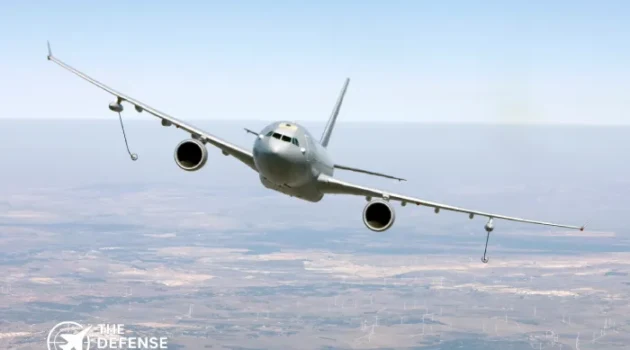
Airbus says the aircraft has a fuel capacity of 111 tonnes and can be configured with both a refueling boom and underwing hose-and-drogue systems. This allows it to support a broad range of aircraft used by different air forces.
The aircraft can therefore function as a strategic enabler for fighter operations while retaining significant airlift utility.
That flexibility is important for European air forces that are expanding combat aviation fleets but also need additional support aircraft to sustain operations over longer distances.
MRTT+ Could Offer Additional Efficiency
The exact configuration of the aircraft for the Spanish-Polish procurement has not been fully confirmed.
However, reporting has pointed to the possibility of Airbus offering the newer A330 MRTT+ configuration, which incorporates technology from the A330-800neo commercial aircraft. Aviation Week reported that the procurement could involve the latest MRTT configuration, although the final aircraft specification remains subject to the procurement process.
Airbus says the A330 MRTT+ uses Rolls-Royce Trent 7000 engines, revised aerodynamics and updated wingtip technology. These changes are intended to reduce fuel consumption by up to 8 percent compared with the earlier configuration.
The MRTT+ also raises maximum takeoff weight from 233 tonnes to 242 tonnes, providing additional flexibility for fuel, payload and range.
For Poland, the potential acquisition would add a capability that directly supports long-range combat aviation and strategic mobility.
EU SAFE Financing Supports Joint Procurement
The Spanish-Polish arrangement also demonstrates how the EU SAFE instrument is being used to support major defense acquisitions.
SAFE provides up to €150 billion in EU loans for defense investment. The program is designed to encourage member states to conduct common procurement and strengthen Europe’s defense industrial base.
Air-to-air refueling and strategic airlift are specifically identified as eligible strategic capabilities under the SAFE framework.
The common procurement requirement is significant. SAFE is intended to encourage cooperation between European countries, helping reduce duplication and fragmentation while supporting larger procurement programs.
In Spain’s case, the framework with Poland fits that model by combining national requirements into a joint acquisition.
Spain itself has already been granted access to up to €1 billion in SAFE loans under a February 2026 EU Council decision. Poland has also been approved for SAFE financial assistance, creating a broader funding framework for defense procurement by both countries.
What the Deal Means for Poland
For Poland, the most immediate benefit is the creation of a dedicated tanker capability.
The Polish Air Force has undergone a major modernization program centered on new combat aircraft and supporting systems. The addition of A330 MRTTs would address one of the less visible but important requirements of that modernization effort: keeping fighters supplied with fuel during extended operations.
A tanker fleet can also support deployments away from Poland, strategic mobility and wider NATO operations.
The planned delivery of four aircraft by 2030 would give Warsaw a national capability rather than requiring it to depend entirely on multinational tanker arrangements.
The move also fits Poland’s broader defense investment strategy, which has placed substantial emphasis on combat aircraft, air defense, long-range fires and other high-priority capabilities.
Spain Strengthens Its Existing MRTT Fleet
Spain is already an A330 MRTT operator.
The Spanish Air and Space Force operates three converted A330 aircraft, giving Madrid experience with the platform and its associated support infrastructure.
The new framework could therefore expand an existing national capability while creating a common procurement relationship with Poland.
The industrial dimension is also important. Airbus Defence and Space performs the conversion of A330 aircraft into MRTT tankers at its Getafe facility near Madrid, giving Spain a significant role in the aircraft’s European production and support ecosystem.
The joint procurement could consequently support both national operational requirements and Spain’s position within Europe’s defense aerospace industry.
Final Contracts Remain the Next Major Step
The Spanish government approval represents a procurement milestone, not the completion of the aircraft purchases.
The framework establishes the basis for the joint acquisition, but individual implementing contracts still have to be negotiated and signed.
The number of aircraft, final configuration, delivery schedule and other contractual details will therefore become clearer as the procurement moves forward.
For Poland, the key target remains delivery of four MRTTs by 2030. For Spain, the framework provides a mechanism to acquire additional aircraft while sharing the procurement structure with another European operator.
More broadly, the agreement shows how SAFE is beginning to translate EU-level defense financing into specific multinational procurement projects.
The A330 MRTT is particularly suited to that approach because aerial refueling and strategic airlift are capabilities that can provide benefits beyond the country operating the aircraft.
As European air forces expand their fighter fleets and seek greater ability to operate across the continent and beyond, tanker aircraft are becoming an increasingly important part of the supporting force structure.
Danish F-35 Precision Strike Training
Danish F-35 pilots have conducted live precision strike training with 500-pound and 2,000-pound laser and GPS-guided bombs at the Oksbøl shooting and training area, according to the Danish Armed Forces. The exercise, reported Aug. 28, involved not only pilots but also weapons specialists and Joint Terminal Attack Controllers, providing training across the full process of a precision airstrike.
Takeaways
Denmark has used live 500-pound and 2,000-pound laser and GPS-guided bombs to train its F-35 force in realistic precision strike operations.
The training is significant because it moves beyond simulated weapons employment and gives Danish personnel practical experience with live munitions, aircraft loading procedures, target coordination and weapon delivery under realistic range conditions.
The Danish Armed Forces said the exercise involved precision attacks against ground targets. The targets were retired and environmentally cleared, allowing live weapons to be used under controlled conditions.
500-Pound and 2,000-Pound Weapons
The exercise used two broad bomb weight classes, 500 pounds and 2,000 pounds. Danish Defence documentation for Oksbøl identifies the Mk 82 500-pound class and Mk 84 2,000-pound class among the aircraft bomb types authorized for range activities, although the latest Danish report does not identify the specific weapon models used in this particular F-35 event.
The latest exercise also involved laser and GPS-guided weapons. These guidance methods give aircrews different options depending on the target, mission conditions and available targeting information.
Laser-guided weapons rely on laser designation to provide terminal guidance toward a designated target. GPS-guided weapons use satellite navigation, normally combined with an inertial navigation system, to guide the weapon toward programmed coordinates.
That distinction matters operationally. GPS-guided weapons are well suited to targets whose locations can be accurately established before the strike, while laser guidance can provide a flexible option when a target can be designated during the engagement.
Training the Entire Strike Chain
One of the most important aspects of the Danish exercise was that the training did not stop with the pilot.
According to the Danish Armed Forces, personnel practiced the complete sequence involved in using live weapons, beginning with bomb assembly and preparation, followed by loading the weapons onto F-35 aircraft and ending with delivery against the designated target.
This type of training is essential for maintaining an operational strike capability. A precision strike depends on more than aircraft performance. Weapons handling, mission planning, targeting, communications, aircrew procedures and post-strike safety all have to work together.
For Denmark, this also provides an opportunity to develop the support infrastructure needed to operate the F-35 as a combat system rather than simply as a fighter aircraft.
The F-35 program depends heavily on the integration of sensors, mission systems, weapons and information networks. Lockheed Martin describes the aircraft’s sensor suite as supporting precision targeting, navigation, threat detection and intelligence, surveillance and reconnaissance functions.

JTACs Add the Ground-to-Air Element
Joint Terminal Attack Controllers were another central part of the Oksbøl training.
JTACs are trained to identify and designate targets and coordinate air support with aircraft crews. During the Danish exercise, target designation could be conducted with laser equipment or through radio communications, according to the Danish Armed Forces.
The inclusion of JTACs makes the exercise particularly relevant to joint operations. In a real combat environment, an F-35 may receive information from multiple sources, including forces operating on the ground, other aircraft and command networks.
Practicing these interactions helps ensure that pilots and ground personnel use common procedures before they are required to operate together in an actual conflict.
The training also highlights an important characteristic of modern airpower. The effectiveness of a fifth-generation fighter is increasingly tied to the wider force around it, including sensors, communications, targeting teams, weapons crews and command structures.
Why Live Weapons Training Matters
The Danish Armed Forces specifically emphasized the value of training with live weapons even when personnel regularly practice weapon employment in simulators. Live weapons introduce practical factors that cannot be completely reproduced in a virtual environment.
Those factors include physical weapon handling, aircraft loading, safety procedures, coordination between maintenance and weapons personnel, and the actual release of a munition against a designated range target.
For an emerging F-35 operator, that experience is part of the broader process of building combat readiness.
Photo: Lockheed Martin. Denmark received its first F-35 fighters in 2023. The Danish Defence says the aircraft reached the point of supporting the national air policing mission in 2025, while its current milestone plan identifies 2027 for full implementation and participation in selected international missions.
The Oksbøl exercise therefore fits into a longer progression from aircraft delivery and pilot conversion toward a more complete operational capability.
Denmark’s Expanding F-35 Force
Denmark is also increasing the size of its planned F-35 fleet.
The Danish government and parliamentary parties agreed in 2025 to acquire another 16 F-35 aircraft, increasing the planned Danish fleet to 43 aircraft. The acquisition is part of Denmark’s wider defense modernization program under its 2024 to 2033 Defence Agreement.
The larger fleet gives Denmark greater capacity to maintain aircraft for training, national readiness, international deployments and other missions at the same time.
It also increases the importance of weapons training. A larger F-35 fleet requires a corresponding ability to generate qualified aircrews, weapons specialists, maintainers and mission-support personnel.
The Broader NATO Context
Denmark’s F-35 development is taking place within a broader NATO effort to integrate fifth-generation aircraft across Europe.
Danish F-35s participated with Norwegian, Italian and U.S. F-35 aircraft during Ramstein Flag 2026, an exercise designed to strengthen fifth-generation fighter integration and demonstrate the ability of allied aircraft to operate across dispersed locations.
Denmark has also participated in international F-35 training activities, including the multinational Weapons Instructor Course in the Netherlands earlier in 2026.
These activities provide a larger operational context for the Oksbøl live weapons event. The objective is not simply to qualify individual pilots to drop bombs. It is to develop an air force capable of integrating its F-35s into multinational operations while maintaining national readiness.
What the Oksbøl Exercise Demonstrates
The most important takeaway from the Danish F-35 precision strike training is the emphasis on complete mission execution.
The exercise combined the aircraft, live precision weapons, weapons personnel, pilots, JTACs and a controlled target environment. That combination provides a more realistic test of the systems and procedures required to conduct an air-to-ground mission.
The exercise also demonstrates that Denmark is continuing to build practical experience with the F-35 rather than relying solely on simulator-based training.
For NATO, that matters because the value of a fifth-generation aircraft depends partly on how effectively it can operate with other forces. Danish participation in multinational F-35 exercises, combined with domestic live weapons training, helps build the procedures and personnel skills required for that role.
The Oksbøl event was therefore a training activity rather than a new weapons announcement. Its importance lies in the operational proficiency being developed around Denmark’s growing F-35 fleet.
Key Facts
Category Details Aircraft F-35 Lightning II Operator Royal Danish Air Force Training location Oksbøl Shooting and Training Area, Denmark Weapons 500-pound and 2,000-pound guided bombs Guidance Laser and GPS guidance Training Live precision strike Ground element Joint Terminal Attack Controllers Targeting Laser designation and radio coordination Training scope Weapon preparation, aircraft loading and delivery Planned Danish F-35 fleet 43 aircraft Bottom Line
Denmark’s latest F-35 exercise at Oksbøl shows the country’s fifth-generation fighter program moving further into practical live weapons employment.
The use of 500-pound and 2,000-pound guided bombs, combined with JTAC coordination and full weapons-handling procedures, provided training across the broader precision strike chain.
As Denmark expands its F-35 fleet to 43 aircraft and continues integrating with other NATO F-35 operators, this type of live training will remain an important part of developing a deployable and interoperable combat capability.
B-2 Spirit Demonstrates Precision Strike Capability in Nevada
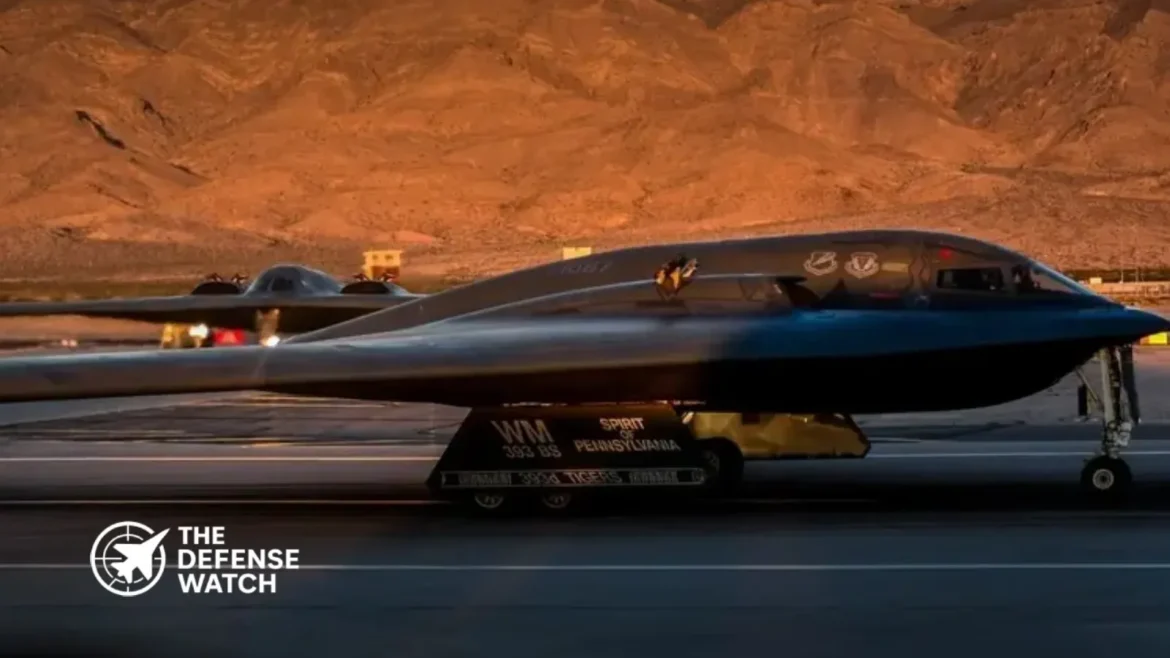
The U.S. Air Force used two B-2 Spirit stealth bombers for live-fire precision strike training at the Nevada Test and Training Range on Aug. 3, 2026, demonstrating the aircraft’s ability to integrate long-range bomber operations with terminal attack and command-and-control elements. The event was documented by Nellis Air Force Base and the Defense Visual Information Distribution Service.
Takeaways
The U.S. Air Force used two B-2 Spirit bombers for live-fire precision strike training at the Nevada Test and Training Range, integrating bomber crews with joint terminal attack controllers.
The aircraft were assigned to the 325th Weapons Squadron at Whiteman Air Force Base, Missouri. Personnel from the 66th Weapons Squadron provided command and control during the training, while joint terminal attack controllers and bomber aircrews worked together during the live-fire event.
The U.S. Air Force described the exercise as an opportunity to demonstrate precision strike capabilities in a realistic training environment. The released video shows B-2 aircraft dropping munitions over the Nevada range, but the publicly released material does not identify the specific weapons used.
What the Training Demonstrates
The significance of the event extends beyond the B-2’s ability to release weapons. Precision strike missions depend on the integration of aircraft, weapons, communications, targeting information and personnel operating at different points in the kill chain.
The presence of the 66th Weapons Squadron is particularly relevant. Official imagery shows Lt. Col. Ridge Flick, commander of the 66th Weapons Squadron and lead joint terminal attack controller, communicating with the two B-2 aircraft during the live-fire training.
That relationship illustrates an important element of modern air operations: the bomber is one component of a larger strike architecture. The ability to execute a precision attack depends not only on aircraft survivability and weapons, but also on accurate target information, command relationships and reliable communications.
The training therefore provides a useful look at how the Air Force practices the coordination required for complex strike operations without revealing sensitive operational tactics.
Why the Nevada Test and Training Range Matters
The Nevada Test and Training Range, operated in support of Nellis Air Force Base, is one of the Air Force’s principal environments for advanced combat training, operational test and evaluation, and tactics development.
Nellis says the range provides more than 15,000 square miles of airspace and 4,700 square miles of restricted land. The Air Force also states that more than 75 percent of its live training munitions are dropped on the range.
This scale allows aircraft and weapons crews to conduct training that would be difficult to reproduce at conventional ranges. The available airspace supports complex scenarios involving multiple aircraft, ground controllers and other operational elements.
For the B-2 community, such training is important because the aircraft is designed for long-range conventional and nuclear missions and is intended to operate against heavily defended targets. The Air Force identifies penetration of sophisticated air defenses as a central feature of the B-2’s low-observable design.
B-2 Spirit: Key Capabilities
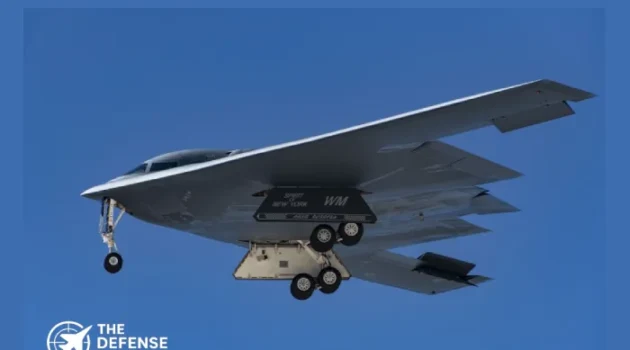
The B-2 remains one of the United States’ most specialized long-range strike aircraft. Its design combines a flying-wing configuration, composite materials and other low-observable technologies intended to reduce radar, infrared, acoustic, electromagnetic and visual signatures.
According to the Air Force’s current fact sheet, many details of the B-2’s low-observable technology remain classified. The publicly available specifications provide the following baseline information:
Capability B-2 Spirit Primary role Multi-role heavy bomber Crew Two pilots Engines Four General Electric F118-GE-100 Thrust 17,300 pounds per engine Maximum takeoff weight 336,500 pounds Payload Up to 60,000 pounds Wingspan 172 feet Length 69 feet Ceiling 50,000 feet Unrefueled range Approximately 6,000 nautical miles Speed High subsonic Mission types Conventional and nuclear These specifications explain why the B-2 remains relevant to U.S. long-range strike planning. Its combination of range, payload and low observability allows the aircraft to perform missions that require both substantial weapon capacity and a reduced probability of detection.
Precision Strike Is More Than Weapon Accuracy
The Nevada training event also highlights an important distinction in modern air warfare. A precision weapon is only one part of a precision strike capability.
A successful strike requires the target to be identified and located accurately, the appropriate authority to approve the engagement, the aircraft and weapon to receive reliable information, and the crew to execute the mission under the required rules and constraints.
The integration of the 325th Weapons Squadron and 66th Weapons Squadron therefore matters as much as the visible weapons release. The exercise tested the interaction between the bomber force and personnel responsible for directing and coordinating the strike.
This is particularly important for penetrating aircraft. A B-2’s low observability is intended to improve survivability, but the aircraft still operates as part of a wider command, control, communications, intelligence, surveillance and reconnaissance architecture.
The Nevada range provides a controlled environment where these relationships can be trained repeatedly without requiring an operational combat mission.
The B-2’s Role During the B-21 Transition
The B-2 training also comes as the Air Force prepares to expand the B-21 Raider fleet.
Air Force Global Strike Command’s 2026 bomber fact sheet states that the B-21 is expected to replace the B-1B and B-2, with initial capability planned for 2028. Until the B-21 is fully fielded, the command says it will continue balancing modernization and sustainment of the existing bomber fleet while maintaining readiness.
The Air Force is simultaneously expanding B-21 production capacity. In February 2026, the Department of the Air Force announced an agreement with Northrop Grumman to increase production capacity for the next-generation bomber, using $4.5 billion in previously authorized and appropriated funding.
That transition does not make current B-2 training less important. Instead, it creates a period in which the Air Force must keep the existing penetrating bomber force operational while building the infrastructure, workforce and training system required for the next-generation aircraft.
Whiteman Air Force Base is part of that transition. The Air Force has selected the Missouri installation as the second main operating base for the B-21, alongside its existing role as the home of the B-2 force.
What the Training Says About U.S. Strike Readiness
The most important takeaway from the Nevada event is not the weapons release itself. It is the continued emphasis on realistic, integrated training for a small but highly specialized bomber force.
The Air Force’s publicly released material confirms that two B-2 aircraft conducted live-fire operations, while the 66th Weapons Squadron provided command and control and joint terminal attack controllers worked with the bomber crews.
That combination reflects the broader direction of U.S. airpower, where individual platforms increasingly operate as nodes within a connected force rather than as independent weapons systems.
For the B-2, this remains particularly relevant because its value comes from the combination of penetration, range and weapons capacity. Maintaining proficiency in the entire strike process is essential while the Air Force moves toward a future bomber fleet centered on the B-21 and B-52.
The Aug. 3 training therefore represents a routine but strategically important component of bomber readiness. It demonstrates that the B-2 fleet continues to train for precision strike missions while the Air Force prepares the next generation of penetrating long-range aircraft.
UK Helicopter Forces Face Growing Support Requirements
The UK helicopter forces support deal is being developed by the Ministry of Defence to provide additional engineering, logistics and other specialist personnel at three British military aviation locations.
The planned requirement is valued at approximately £37 million excluding VAT, or £44.4 million including VAT. The proposed arrangement would support the Support Helicopter Force and Commando Helicopter Force at RAF Odiham, RAF Benson and RNAS Yeovilton.
Takeaways
The UK is preparing a £37 million support requirement aimed at strengthening engineering, logistics and aviation support for its helicopter forces.
The procurement comes as the UK continues to invest in the availability and modernization of its rotary-wing fleet while facing constraints in some military engineering and logistics functions.
Five-Year Contract Planned
The proposed £37 million helicopter support contract is expected to begin on November 1, 2027, and run through October 31, 2032.
The Ministry of Defence is also planning an option that could extend the arrangement for another two years, potentially taking the contract through October 2034.
The formal tender is currently expected to be published on December 1, 2026. The MOD intends to use a competitive flexible procurement procedure.
Importantly, the planned contract does not establish a fixed number of personnel or guaranteed volume of work.
Instead, the requirement is structured around outputs. The contractor would provide qualified personnel capable of supplementing military staff when service capacity is constrained.
This approach would allow the MOD to adjust contractor support according to flying schedules, maintenance workloads, readiness requirements and other operational demands.
Engineering And Logistics Are Central To The Requirement
The planned UK helicopter forces support deal covers several functions that directly influence aircraft availability.
These include aviation engineering, logistics information systems, airworthiness records, supply activities and other enabling functions. The procurement also covers engineering support services, helicopter repair and maintenance support, and wider air transport support services.
The requirement is particularly focused on areas where the MOD says military workforce capacity is limited.
Rather than permanently assigning a fixed number of contractors to specific posts, the planned arrangement would allow personnel and resources to move between requirements as operational conditions change.
That flexibility could be important for a helicopter force because maintenance demand is not constant. Flying programs, scheduled servicing, unexpected repairs, training cycles and operational commitments can all affect the workload placed on engineering and logistics teams.
The procurement notice therefore calls for support that can respond to changes in workload across functions, locations and time.
Three Locations Will Receive Support
The contract is intended to support three important UK military aviation locations.
RAF Odiham is a major base for the RAF’s heavy-lift helicopter capability and is associated with the Chinook fleet.
RAF Benson supports the UK’s medium-lift battlefield helicopter capability.
RNAS Yeovilton is the principal base for the Commando Helicopter Force and provides aviation support to Royal Marines operations and wider littoral missions.
Together, these locations represent important elements of Britain’s rotary-wing force structure.
The proposed support arrangement is intended to improve aircraft availability, maintenance throughput, logistics resilience and airworthiness assurance across the three sites.
Wider Investment In British Helicopter Capability
The proposed procurement forms part of a broader period of investment in Britain’s military helicopter capability.
In April 2026, the UK Ministry of Defence awarded Boeing Defence UK a three-year, £879 million contract covering maintenance and support for British Army Apache attack helicopters and RAF Chinook heavy-lift helicopters. The arrangement combines support for both fleets under the Rotary Wing Enterprise and is expected to support more than 1,000 UK jobs.
The MOD has also committed major funding to the New Medium Helicopter program.
In March 2026, Leonardo UK was selected for a £1 billion contract to provide 23 new medium-lift helicopters based on the AW149. The program is intended to consolidate several medium-lift requirements and support more than 3,300 jobs in Yeovil and thousands more across the UK supply chain.
These investments show that the UK’s helicopter modernization effort involves more than acquiring new aircraft. Sustainment, engineering, logistics, training and industrial capacity remain important parts of maintaining operational readiness.
Support Is Being Expanded Alongside New Capabilities
The UK is also pursuing changes in how helicopters operate with emerging autonomous systems.
In May 2026, the MOD announced £10 million in funding for Project NYX, an Army program developing uncrewed aircraft intended to operate alongside Apache attack helicopters. Four companies were selected to develop competing concepts, with up to two expected to proceed to prototype development.
The UK subsequently included Project NYX in a wider drone investment program announced in June 2026. The government said up to 24 autonomous armed drones could become operational by 2030 to operate alongside upgraded Apache helicopters for missions including reconnaissance, precision strike and electronic warfare.
That development adds another layer to the support challenge facing Army aviation. Future helicopter operations are likely to involve a broader mix of crewed aircraft, uncrewed systems, digital mission equipment and supporting infrastructure.
What The £37 Million Requirement Means
The planned UK helicopter forces support deal should not be interpreted as the purchase of additional helicopters.
Instead, it is primarily a personnel and support-services requirement designed to supplement existing military capacity.
The distinction is important. The procurement notice states that the MOD will retain responsibility for directing and assuring Defence outputs, while contractors provide qualified personnel and services to help meet those outputs.
The contract also does not guarantee a fixed workload for the eventual supplier. Historic workload information and planning assumptions will be used as guidance, but actual demand will be shaped by operational and maintenance requirements.
For the UK military, the practical objective is to have enough engineering, logistics and support capacity available when aircraft and units require it.
Outlook
The next major step will be the publication of the formal tender, currently expected in December 2026.
Until that process is completed, the £37 million figure remains an estimated procurement value rather than an awarded contract. The final scope, supplier and precise level of contractor support will depend on the competition and subsequent contracting process.
The requirement nevertheless highlights a broader issue facing modern military aviation: aircraft availability depends not only on the platforms themselves, but also on the people, engineering systems, logistics networks and airworthiness infrastructure needed to keep them operational.
For Britain’s Support Helicopter Force and Commando Helicopter Force, the proposed arrangement is intended to provide additional capacity where military manpower is constrained while allowing support to shift as operational requirements change.
That makes the planned contract an important sustainment measure within the UK’s wider effort to maintain helicopter readiness while modernizing its rotary-wing forces.
Takeaways
Key facts from the F-15 Eagle Crest contract
1. $131.23 Billion Contract Ceiling
The Air Force awarded Boeing an indefinite-delivery/indefinite-quantity contract with a maximum ceiling of $131.23 billion for F-15-related work.
2. No Aircraft Were Ordered at Award
The contract establishes a framework for future orders. The award notice did not include an order for a specific number of F-15 aircraft.
3. Work Extends Through 2037
The contract covers production, modernization, upgrades, retrofits, sustainment and organic depot maintenance capabilities through August 2037.
4. Seven Foreign Customers Are Listed
The contract involves Foreign Military Sales cases involving Japan, Israel, Saudi Arabia, South Korea, Singapore, Indonesia and Poland.
The U.S. Air Force has awarded Boeing a $131.23 billion ceiling indefinite-delivery/indefinite-quantity contract covering production, modernization, upgrades, retrofits and sustainment of the F-15 fighter family. The contract also establishes organic depot maintenance capabilities and supports both U.S. and foreign customers.
According to the U.S. Department of War contract announcement dated Aug. 24, 2026, the award was made to Boeing through a sole-source acquisition for the F-15 Eagle Crest program. The work will be performed in St. Louis, Missouri, and is expected to continue through August 2037.
The size of the contract ceiling is significant, but it should not be interpreted as $131.23 billion already committed to Boeing. The IDIQ structure provides the government with a framework under which future orders can be placed over time. Only $343,740 in fiscal 2026 research, development, test and evaluation funding was obligated when the contract was awarded.
What the Contract Covers
The F-15 Eagle Crest contract brings several categories of F-15 work under one acquisition framework.
The official notice lists:
- Aircraft production
- Systems integration
- Modernization
- Upgrades
- Retrofits
- Sustainment
- Establishment of organic depot maintenance capabilities
The work supports the Air Force, Air National Guard and other Department of War customers. The contract also incorporates Foreign Military Sales requirements for seven countries.
The ordering period is expected to run through Aug. 24, 2031, with an option allowing the period to be extended to Aug. 24, 2036. The overall contract is expected to be completed by August 2037.
Importantly, the Aug. 24 award did not include an order for a specific number of F-15 aircraft. Future production or modernization requirements can therefore be placed through subsequent orders under the contract.
Technical and Operational Context
The F-15 family remains an important part of U.S. tactical aviation, while the F-15EX Eagle II represents the current production version being acquired by the Air Force.
Air Force budget documents describe the F-15EX as a multirole fighter based on the two-seat F-15QA configuration and equipped with U.S.-specific capabilities. The aircraft incorporates systems including the Eagle Passive Active Warning Survivability System, or EPAWSS, and an open mission systems architecture.
The Air Force’s fiscal 2027 procurement documentation lists F-15EX missions including defensive and offensive counter-air operations, homeland defense and operations in highly contested environments. The documents also indicate that F-15EX procurement and modernization activities extend into the early 2030s.
The new Eagle Crest framework is broader than simply buying new F-15EX aircraft. Its inclusion of modernization, retrofit and sustainment work allows the government to address different requirements across the aircraft’s lifecycle.
Why the Award Matters
One important feature of the contract is its support for organic depot maintenance.
Under this approach, Air Force depots will gain the capability to conduct heavy maintenance and overhaul work on F-15 aircraft rather than depending exclusively on the original equipment manufacturer. Boeing will perform the contracted work in St. Louis, while the Air Force Life Cycle Management Center at Wright-Patterson Air Force Base, Ohio, serves as the contracting activity.
From an acquisition perspective, consolidating production, modernization, sustainment and depot-support activities into a long-term framework can give the service greater flexibility when requirements change. However, the contract ceiling itself does not establish how much of that potential value will ultimately be ordered.
The F-15EX program is also moving into a period of expanded procurement. Air Force fiscal 2027 budget documents show that the program’s overall procurement quantity can reach 268 aircraft when additional reconciliation-funded aircraft are included.
The aircraft is also being prepared for expanded operational use. In June 2026, F-15EX aircraft from the 85th Test and Evaluation Squadron deployed to Kadena Air Base, Japan, for integration and familiarization activities ahead of the aircraft’s longer-term role there.
Contract Breakdown
Contract Value
The maximum contract ceiling is $131.23 billion.
That figure represents the potential value of orders that can be placed under the IDIQ contract. It is not an immediate $131.23 billion expenditure or obligation.
Only $343,740 in fiscal 2026 RDT&E funding was obligated at the time of award.
Contractor
Boeing Co., St. Louis, Missouri, received the award through a sole-source acquisition.
Contract Type
The award is an indefinite-delivery/indefinite-quantity contract, commonly known as an IDIQ.
An IDIQ contract establishes the framework for future government orders without requiring the government to purchase the entire potential contract value when the framework is established.
Work Locations
The official contract notice identifies St. Louis, Missouri, as the work location.
Performance Period
The contract is expected to be completed by August 2037.
The ordering period is expected to end Aug. 24, 2031, with an option to extend the ordering period through Aug. 24, 2036.
Funding
The initial obligation consists of $343,740 in fiscal 2026 RDT&E funding.
The announcement did not identify a corresponding aircraft production order at the time of award.
Options or Follow-On Work
The contract allows orders to be placed through Aug. 24, 2031, with an option to extend the ordering period to Aug. 24, 2036.
Future aircraft production, upgrades, modernization, sustainment and other work would be ordered under the contract as requirements are established and funded.
Industry and Acquisition Implications
The award gives the Air Force a long-term contracting mechanism for maintaining and developing the F-15 fleet while supporting continued production of the F-15EX.
The foreign military sales component is also notable. The contract identifies Japan, Israel, Saudi Arabia, South Korea, Singapore, Indonesia and Poland as participating foreign customers.
Several of these countries already operate F-15 aircraft, while Indonesia and Poland are not current F-15 operators. The contract notice does not specify the individual quantities or configurations associated with each country’s FMS requirements.
Israel is already purchasing new F-15 aircraft from Boeing’s St. Louis production line. The fiscal 2027 F-15EX Selected Acquisition Report cited by Defense News identified a December 2025 agreement covering 25 F-15IA aircraft, with an option for another 25.
The broader production environment also remains relevant to the U.S. program. Air Force documentation reported that a 2025 strike at Boeing’s St. Louis facility interrupted F-15EX production, while subsequent Air Force reporting described efforts to resume deliveries and recover from the disruption.
What Happens Next
The next steps will come through individual orders placed against the Eagle Crest contract.
The Aug. 24 contract announcement does not specify the number of new aircraft to be purchased under the award, nor does it provide a detailed schedule for future production or modernization orders. Those details will become clearer as the Air Force places funded orders against the contract.
The long-term framework is expected to support F-15 production and sustainment through 2037, while the ordering authority can remain available until 2031 or, if exercised, 2036.
For the F-15EX program specifically, Air Force procurement documents show continued aircraft acquisition and modernization funding into the early 2030s, while operational units are preparing for the aircraft’s expanded role, including at Kadena in Japan.
 (adsbygoogle = window.adsbygoogle || []).push({});
Takeaways
The Freedom 250 Grand Prix flyover brought together U.S. stealth fighters and a long-range stealth bomber in a highly visible demonstration of American airpower.
B-2 Spirit Leads Freedom 250 Grand Prix Flyover
A U.S. Air Force B-2 Spirit joined F-35 Lightning II and F-22 Raptor fighters over Washington, D.C., during the Freedom 250 Grand Prix, providing a public demonstration of the aircraft and capabilities that underpin the United States‘ long-range and fifth-generation airpower. Official Air Force imagery identified a formation consisting of one B-2, two F-35A Lightning II aircraft, two F-22 Raptors and four U.S. Marine Corps F-35B aircraft.
The flyover took place in connection with the IndyCar Freedom 250 Grand Prix, an event held in Washington as part of celebrations marking the 250th anniversary of the United States. The U.S. Air Force described the military participation as a way to connect the armed forces with the American public.
The formation itself was ceremonial rather than a combat mission. Its significance, however, extends beyond the spectacle because the aircraft represent several distinct elements of the U.S. air combat architecture.
- (adsbygoogle = window.adsbygoogle || []).push({});
What the B-2 Brings to the Formation
The B-2 Spirit remains one of the U.S. Air Force’s most specialized long-range combat aircraft. The service describes it as a multirole bomber capable of delivering conventional and nuclear weapons while using low-observable technology to penetrate sophisticated air defenses.
The aircraft’s flying-wing configuration, composite construction and specialized coatings reduce multiple signatures, including radar, infrared, acoustic and electromagnetic signatures. The Air Force states that many details of the B-2’s low-observable technology remain classified.
The B-2 also has the endurance required for intercontinental operations. The Air Force lists an unrefueled range of approximately 6,000 nautical miles and a maximum payload of 60,000 pounds. The aircraft has a two-person crew and four General Electric F118 engines.
B-2 Spirit characteristic U.S. Air Force figure Primary role Multirole heavy bomber Crew 2 Engines 4 × F118-GE-100 Wingspan 172 feet Maximum takeoff weight 336,500 pounds Payload 60,000 pounds Unrefueled range Approximately 6,000 nautical miles Maximum altitude 50,000 feet Speed High subsonic Current Air Force inventory 20 aircraft, including 1 test aircraft These figures are current to the Air Force fact sheet dated May 2026.
(adsbygoogle = window.adsbygoogle || []).push({});F-35 and F-22 Add Different Fighter Capabilities
The inclusion of the F-35 and F-22 is significant because the two fifth-generation fighters were designed around different primary operational priorities.
The F-35A is a multirole fighter built around stealth, sensor fusion and situational awareness. Its sensor architecture includes the Distributed Aperture System and Electro-Optical Targeting System, while its communications and data links allow information to be shared with other aircraft and forces.
The F-22 Raptor, by contrast, was developed primarily as an air-dominance fighter. The Air Force highlights its combination of stealth, integrated avionics, maneuverability and supercruise, allowing the aircraft to sustain supersonic flight without afterburners under appropriate conditions.
The different designs are complementary. In a high-end operational environment, an F-22’s principal value lies in controlling the air domain and countering airborne threats, while the F-35 can contribute sensing, targeting, information sharing and multirole strike capabilities.
The eight-fighter element seen in the Washington formation therefore represented more than a collection of modern aircraft. It showed the distinct roles assigned to stealth fighters within a broader airpower system.
- atOptions = {
‘key’ : ‘3d48d603f906e3fe9f205be3c4433835’,
‘format’ : ‘iframe’,
‘height’ : 250,
‘width’ : 300,
‘params’ : {}
};
Why the B-2 and Fifth-Generation Fighters Matter Together
The B-2’s long-range penetrating mission and the fighters’ ability to operate in contested airspace address different parts of the same operational problem.
A modern air campaign against a capable opponent requires aircraft to locate threats, establish and maintain air superiority, penetrate defended areas, deliver weapons and exchange information across the force. No single aircraft needs to perform every one of those functions.
The B-2 is particularly important because its value comes from the combination of range, payload and low observability. Its design allows the bomber to conduct missions where a conventional large aircraft could face greater detection and engagement risks. The Air Force describes this penetrating capability as central to the B-2’s role against sophisticated defenses.
The F-35 adds a different advantage. Its sensors and data links are designed to collect and distribute information across the battlespace, making it an important node in joint and coalition operations.
The F-22 contributes another layer through air dominance. Its stealth, supercruise and maneuverability are intended to improve its ability to operate against advanced airborne threats while reducing the opportunities for adversaries to detect and engage it.
This combination illustrates why modern U.S. airpower increasingly depends on aircraft working as a force rather than operating as isolated platforms.
The B-2’s Role in the U.S. Bomber Force
The Washington flyover also comes as the United States continues transitioning its bomber force for future operations.
The Air Force’s 2026 bomber capability information describes the B-2 as a long-range nuclear and conventional stealth bomber, while the B-21 Raider is being developed as the future penetrating strike aircraft that will form the backbone of the bomber force alongside the B-52.
That transition does not make the B-2 irrelevant. The aircraft remains an operationally important part of the existing penetrating bomber fleet, while its design experience provides context for understanding the requirements of the next-generation B-21.
The Air Force currently lists 20 B-2 aircraft in the active inventory, including one test aircraft. That small fleet makes each operational aircraft a high-value national asset, particularly for missions requiring a combination of stealth and long-range strike capacity.
A Public Demonstration With Strategic Context
The Freedom 250 Grand Prix flyover should not be interpreted as an operational deployment or evidence of a specific military mission. It was a public event conducted to commemorate the nation’s 250th anniversary and showcase U.S. military aviation.
Nevertheless, the aircraft selected for the formation carried clear strategic symbolism. The B-2 represented long-range penetrating strike, the F-22 represented air dominance and the F-35 represented networked fifth-generation multirole combat power.
Official U.S. Air Force imagery also documented a separate tri-bomber formation involving a B-1B Lancer, B-2 Spirit and B-52 Stratofortress over Washington on Aug. 23, demonstrating the broader role of Freedom 250 events in showcasing the U.S. bomber force.
Earlier Freedom 250 events likewise featured B-2 and F-35 formations above the National Mall. On June 24, the Air Force documented a B-2 leading four F-35A aircraft over Washington.
Taken together, these appearances provide a public view of the U.S. approach to airpower: long-range bombers, stealth fighters, air-dominance aircraft and other supporting capabilities operating within a larger force structure.
What the Flyover Shows About U.S. Airpower
The most important takeaway from the Freedom 250 formation is not simply the presence of several famous aircraft over Washington. It is the contrast in their designed functions.
The B-2 provides penetrating long-range strike capacity and substantial weapons carriage. The F-22 is designed to establish air dominance in contested environments. The F-35 provides stealthy multirole operations while using advanced sensors and data links to connect information across the force.
That combination reflects a broader U.S. emphasis on integrated air operations. Future combat environments are expected to place greater demands on survivability, information sharing, stand-off weapons, electronic warfare and long-range strike, making coordination between different aircraft types increasingly important.
The Freedom 250 Grand Prix flyover was therefore a ceremonial event, but the platforms involved represented capabilities that remain central to U.S. airpower planning. The B-2 continues to provide a penetrating bomber capability today, while the F-35 and F-22 provide complementary fifth-generation fighter capabilities across the air domain.
- atOptions = {
‘key’ : ‘3d48d603f906e3fe9f205be3c4433835’,
‘format’ : ‘iframe’,
‘height’ : 250,
‘width’ : 300,
‘params’ : {}
};