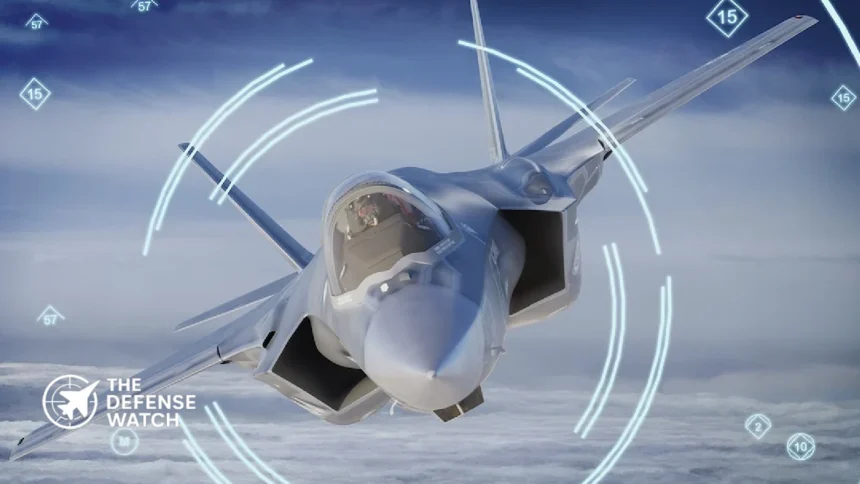
BAE Systems has delivered more than 1,500 electronic warfare systems for the F-35 Lightning II program and has begun shipping production equipment associated with the fighter’s Block 4 modernization, according to information released by the company on November 24, 2026.
The milestone reflects the scale of BAE Systems’ role in supplying one of the F-35’s central survivability systems. The company is continuing development and testing of upgraded capabilities while delivering production shipsets intended for the next generation of the aircraft’s electronic warfare equipment.
The system, designated AN/ASQ-239, supports threat detection, radar warning, electronic countermeasures and situational awareness. Its functions are particularly relevant as modern air defense networks combine increasingly sophisticated radars, missiles and electronic sensors.
BAE Systems Vice President of F-35 Solutions Amber Dolan said the company is developing and testing Block 4 capabilities while delivering production systems for the program. The company also said it is expanding manufacturing capacity and using automation to support production requirements.
AN/ASQ-239: The F-35’s Electronic Warfare Architecture
The AN/ASQ-239 is an integrated electronic warfare and countermeasure suite designed to help F-35 pilots identify and respond to electromagnetic threats.
According to the F-35 Joint Program Office, the system combines several functions:
- Radar warning: Identifies potentially hostile radar activity.
- Threat identification: Helps detect, monitor and analyze electromagnetic signals.
- Electronic protection: Supports aircraft survivability against hostile radar and other threats.
- Electronic attack: Provides capabilities to counter or disrupt selected threat systems.
- Situational awareness: Helps generate a 360-degree picture of the surrounding battlespace.
The system also contributes targeting support and provides information that can help pilots decide whether to evade, engage or employ electronic countermeasures.
Unlike a conventional radar, which actively transmits signals to detect objects, electronic support functions can passively collect and analyze emissions from other systems. This can help an aircraft identify potential threats without necessarily revealing its own position through radar transmissions.
The Joint Program Office describes AN/ASQ-239 as an integrated platform-level solution that combines radio-frequency and infrared countermeasure capabilities.
Its importance extends beyond individual aircraft protection. Electronic warfare information can contribute to the F-35’s wider sensor-fusion architecture, helping pilots understand the electromagnetic environment before entering or operating inside contested airspace.
What Changes With the Block 4 Configuration?
Block 4 is a broader modernization effort intended to expand the F-35’s combat capabilities through improvements to mission systems, software, sensors, weapons integration and other aircraft subsystems.
The electronic warfare component is one part of that effort.
BAE Systems says its Block 4 AN/ASQ-239 configuration incorporates updated hardware and software intended to improve the system’s ability to recognize and respond to evolving threats.
The company has identified several technology areas supporting its development work:
- Advanced signal-processing algorithms.
- Machine-learning research.
- Improved sensor technologies.
- Broader electromagnetic-spectrum capabilities.
- Hardware and software improvements for threat identification and response.
These are company-described development priorities. BAE has not publicly disclosed a complete technical specification for the upgraded system, including detailed detection ranges, frequency coverage or the performance of individual countermeasure functions.
An important distinction is that the delivery of Block 4 electronic warfare production shipsets does not establish that the complete Block 4 modernization package is operational across the F-35 fleet.
The aircraft’s wider modernization program involves multiple contractors, software releases, hardware upgrades and integration activities. Individual subsystem deliveries can progress independently of the full aircraft upgrade.
Production Lots 20 to 22 and Older Aircraft Retrofits
The production activity is linked to a contract BAE Systems received from Lockheed Martin in October 2026.
According to BAE’s October 6 announcement, the agreement covers electronic warfare systems for F-35 production Lots 20 through 22. It also includes equipment intended to retrofit and modernize some aircraft already in service.
The distinction matters because the F-35 fleet contains aircraft produced with different configurations of mission systems.
Introducing upgraded electronic warfare equipment into new production aircraft provides a route to incorporate newer hardware during manufacturing. Retrofitting earlier aircraft provides another route to improving the capabilities of the existing fleet.
BAE has not disclosed the total value of the October contract or the number of systems covered by the agreement.
Air & Space Forces Magazine reported on October 9 that the new Block 4 electronic warfare systems are intended to improve threat detection, situational awareness and responses to modern threats.
The publication also reported that Lockheed Martin previously awarded BAE Systems contracts worth $491 million in 2023 and $493 million in 2021 for F-35 electronic warfare work. Those earlier awards provide context for the continuing investment in the subsystem, although they should not be confused with the undisclosed value of the October 2026 agreement.
Why Manufacturing Capacity Matters
Delivering more than 1,500 systems demonstrates the industrial scale required to support the multinational F-35 program.
BAE Systems designs, manufactures, tests and supports the AN/ASQ-239. Its production and engineering activities for the system are based in Austin, Texas, and Manchester, Merrimack and Nashua, New Hampshire.
The company says it is using automation, updated manufacturing processes and digital engineering tools to accelerate production and improve the efficiency of design, integration and testing.
This industrial capacity has two connected requirements.
First, BAE must supply new systems at a rate compatible with F-35 aircraft production. Second, it must maintain support for aircraft already delivered, including upgrades, replacement equipment and long-term sustainment.
The second requirement is particularly important because electronic warfare systems face continuing changes in the threat environment. A system designed around one generation of radar and missile technology may require new software, processing improvements or hardware modifications as potential adversaries introduce different sensors and operating techniques.
BAE’s investment in manufacturing therefore supports more than the initial production of equipment. It also contributes to the longer-term modernization and maintenance of the existing F-35 fleet.
Electronic Warfare and the Changing Air Defense Environment
The F-35’s electronic warfare capabilities are relevant to the increasing complexity of modern integrated air defense systems.
Potential adversaries are developing layered networks that combine surveillance radars, fire-control radars, mobile missile launchers and other sensors. These systems can operate across different frequency bands and may use changing emission patterns to complicate detection and identification.
For a stealth aircraft, reducing radar visibility is only one part of survivability.
Stealth does not make an aircraft invisible to every sensor, nor does it eliminate the risk posed by modern air defense systems. Pilots still need information about radar activity, potential missile threats and other electromagnetic signals.
This is where the AN/ASQ-239 contributes to the F-35’s overall design.
Its passive sensing functions can help identify and locate electromagnetic emitters, while its countermeasure capabilities provide options for responding to detected threats.
The system also complements the aircraft’s other sensors and mission systems. Rather than treating electronic warfare as a separate defensive function, the F-35 integrates it into a broader architecture for collecting, processing and sharing battlefield information.
However, electronic warfare performance cannot be assessed solely through the number of systems delivered. Its operational effectiveness depends on software maturity, threat-library updates, sensor integration, mission planning and the ability to respond to changing adversary tactics.
Public information does not provide enough detail to independently evaluate the classified performance of the Block 4 AN/ASQ-239 configuration against specific modern air defense systems.
The Next Challenge Is Keeping the System Current
The delivery milestone comes as BAE Systems continues to develop the F-35’s electronic warfare architecture for a long service life.
In its November 24 interview, the company identified reliability, maintainability and the ability to introduce new capabilities as continuing priorities.
That requirement reflects the nature of electronic warfare. Unlike a platform whose basic performance can be measured through speed, altitude or payload, an electronic warfare suite must continually adapt to changes in the electromagnetic environment.
The delivery of 1,500 systems establishes the scale of BAE’s contribution to the F-35 program. The next measure of progress will be how effectively the upgraded equipment moves through testing, production, integration and eventual operational use.
For the F-35 fleet, the significance of Block 4 electronic warfare modernization will ultimately depend on the capabilities delivered to operational aircraft, rather than production milestones alone.
Enjoying our coverage?
Make The Defense Watch a preferred source on Google to see more of our geopolitical and defense insights when relevant to you.